6 Annuals That Bloom All Summer Long
Choose six long-blooming annuals for sun, pollinators, cutting, and containers, plus practical tips for planting, watering, and deadheading.
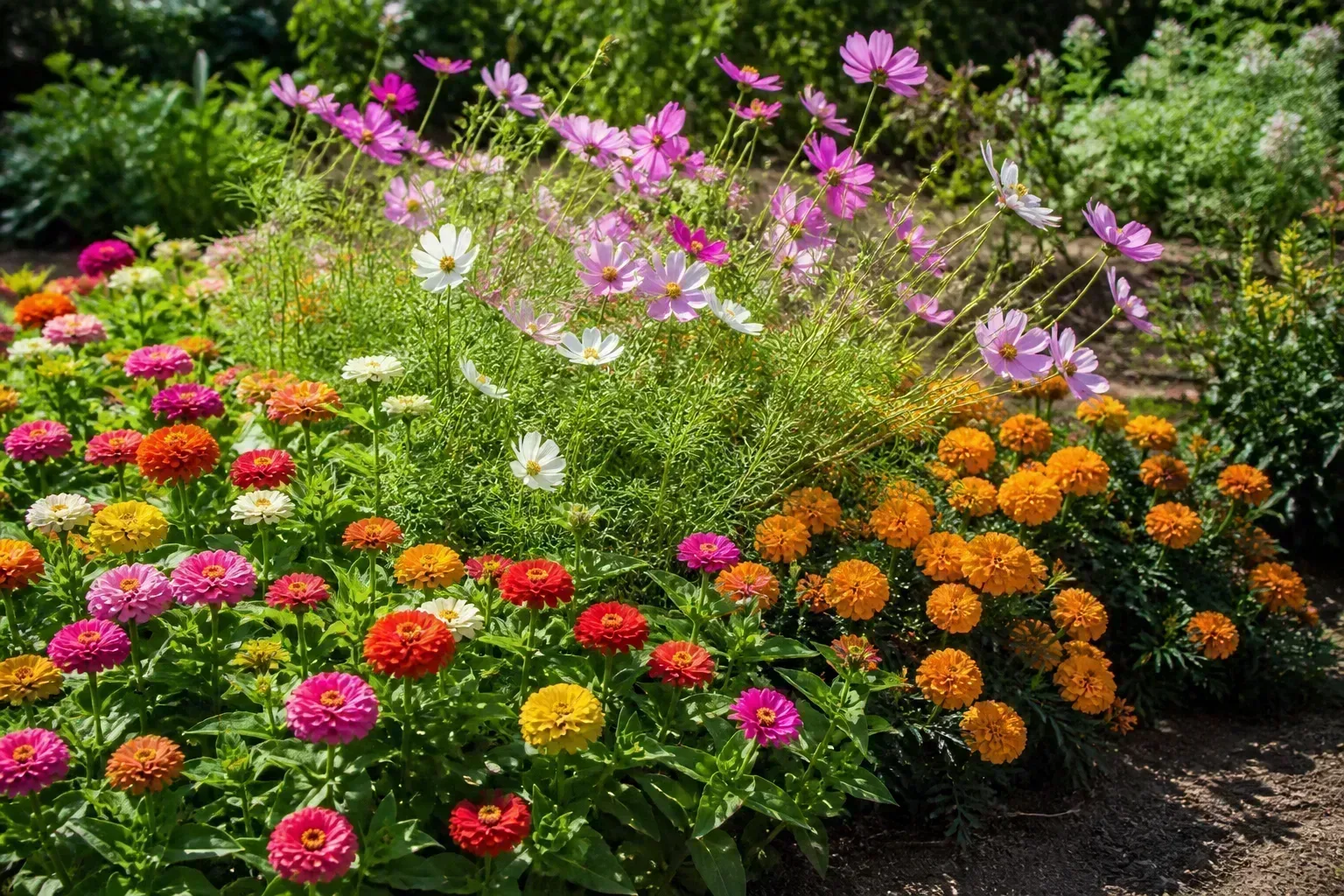
Annual flowers are the fastest way to turn an empty bed, patio pot, or cutting patch into a season-long color show—but “blooms all summer” is not a promise that one plant will flower without interruption. The best performers keep producing new buds after the first flush, recover from a trim, and tolerate the weather that arrives after planting. In a cool-summer climate, that may mean June through September; in a warm region, the same plant may start earlier, pause during extreme heat, or continue until frost.
The six choices below cover different jobs. Zinnias are hard to beat for cut flowers, cosmos are relaxed and generous, calendula handles cool edges of the season, salvia gives vertical color, rudbeckia brings bold golden flowers, and dianthus can keep color going when other cool-loving flowers slow down. Several are called annuals in one garden and perennials or biennials in another, so the label and local climate matter as much as the name.
What makes an annual bloom all summer?
A long-blooming annual keeps making flowers because its growing point continues producing buds instead of switching quickly to seed. Regular cutting or deadheading can help by removing mature flowers before the plant spends as much energy on seed production. The Royal Horticultural Society describes deadheading as a way to redirect energy toward more flowers, but it also points out that some gardeners should leave seedheads for birds or seed collection.Deadheading advice from the RHS
Weather controls the other half of the equation. Full sun usually supplies the energy needed for heavy flowering, but a plant can stop blooming when its roots repeatedly dry, soil stays waterlogged, nights become too cold, or temperatures exceed what the cultivar handles well. That is why a “full-sun annual” still benefits from good soil, consistent moisture, airflow, and a planting date that avoids its worst stress.
It also helps to read “annual” as a garden-use category rather than a fixed botanical identity. Some rudbeckias, dianthus, and salvias are perennial in suitable climates, while others are grown as annual bedding plants. Team Flower makes the same practical distinction: plants traditionally treated as perennials may need to be replanted each year in colder zones.Team Flower’s annual-flower overview
Six annuals worth growing for a long summer display
These are not interchangeable dots of color. Use them as a palette: low or compact plants at the edge, taller flowers toward the back, airy shapes between dense forms, and at least two bloom styles so the bed still looks interesting when one plant takes a short break. If you want the longest possible display, sow or plant more than one batch instead of placing every plant in the ground on the same weekend.
Rudbeckia gives a durable golden backbone
Annual or short-lived rudbeckias, especially Rudbeckia hirta types, bring golden-yellow petals around a dark central cone. Purdue Extension lists Rudbeckia hirta as a long-season annual flower for sun, with a June-to-September bloom window under its regional conditions.Purdue’s annual-flower table The species is not identical to every perennial black-eyed Susan sold at a garden center, so check the tag before assuming the plant will return.
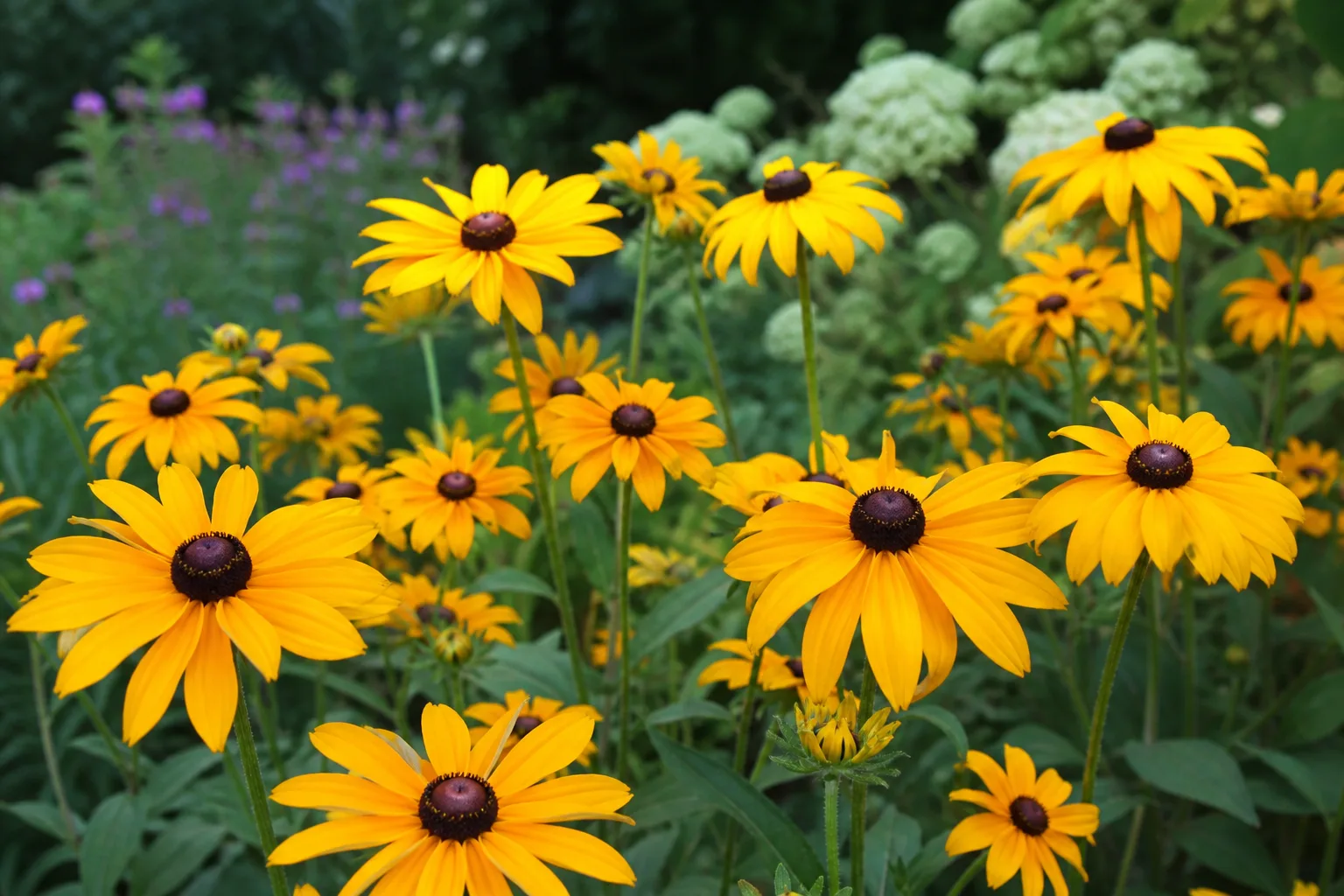
Give rudbeckia full sun, ordinary well-drained soil, and enough room for air to move through the stems. It is a useful bridge between a formal annual bed and a pollinator planting because the open flower centers are easy for insects to use. Deadhead for a tidier, more continuously flowering display, or leave a few late seedheads if you want fall texture and food for birds; removing every last head is not required for a healthy plant.
Choose rudbeckia when you need height and a strong warm color that can hold its own beside purple, blue, or white flowers. It is less useful when your garden has heavy shade or chronically wet soil. A plant that flops in rich, damp ground is not necessarily weak—it may simply be in a site that pushes soft growth faster than the stems can support it.
Zinnias are the cut-and-come-again workhorse
Zinnias are the most dependable choice here if your main goal is armfuls of flowers. They grow quickly from seed once the soil is warm, come in single, semi-double, and fully double forms, and offer a wide color range. The RHS notes that zinnias flower from summer into early autumn, and that taller cultivars can benefit from close spacing or support when grown for long stems.RHS zinnia growing guide
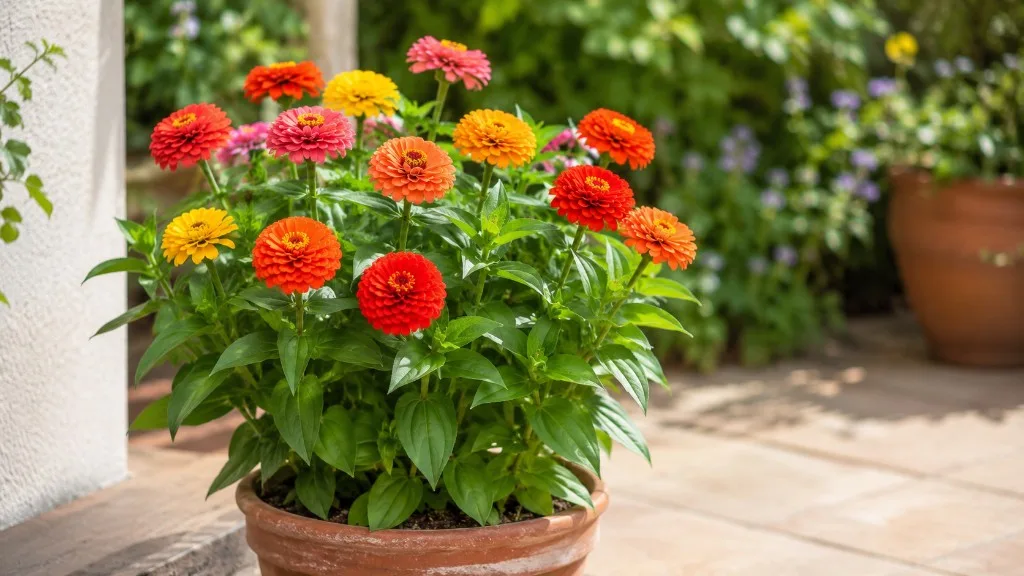
Plant zinnias after frost has passed and the soil is warming. Direct sowing is often the least stressful method because zinnias dislike having their roots disturbed, but young transplants are useful when you need earlier flowers. Space them according to the cultivar: crowded plants can support one another, but tight, humid foliage is more prone to powdery mildew.
Harvest zinnias instead of waiting for every flower to fade. Cut long stems just above a leaf pair, and the plant will branch below the cut. If you are not cutting bouquets, remove spent flowers before they become dry seedheads. In a heat wave, consistent watering matters more than extra fertilizer; drought-stressed zinnias may survive but produce smaller flowers and rougher foliage.
Use compact cultivars for containers and front-of-border color, and tall Zinnia elegans types for a cutting row. If summers are humid, choose a variety with a track record in your area and water the soil in the morning. The goal is not to keep leaves perfectly dry forever; it is to avoid dense, wet foliage that stays damp overnight.
Cosmos bring airy flowers and easy reseeding
Cosmos offer a different texture from zinnias: finely cut foliage, slender stems, and simple daisy-like flowers in white, pink, rose, or warm shades. They can bloom for months when sown into warm soil and regularly cut. Their light habit makes them excellent for filling gaps between sturdier plants, but it also means tall plants may need a fence, twig support, or neighboring stems to keep them upright.
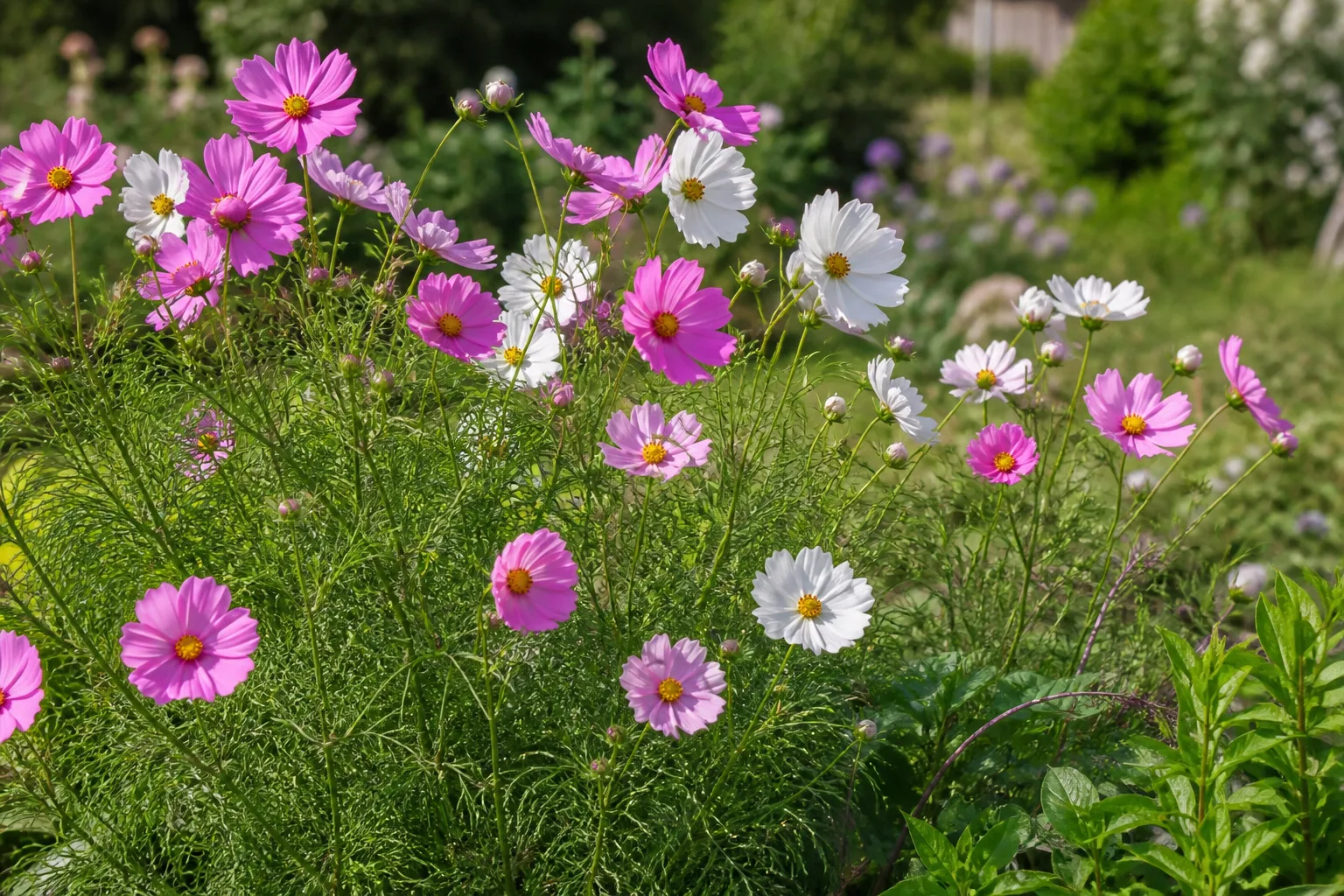
Do not overfeed cosmos. Fertile soil and heavy nitrogen often produce a great deal of foliage and fewer flowers, especially when light is marginal. Give them strong sun, water during establishment, and enough room that the airy stems do not disappear under more aggressive neighbors.
Deadhead cosmos when you want the neatest display and the most deliberate repeat flowering. Leave a few late flowers to ripen if you want the plant to self-sow; seedlings may appear next year, but they will be scattered and may not match the parent cultivar exactly. That is a benefit in a relaxed cottage garden and a nuisance in a tightly designed bed, so decide before every flower becomes a seedhead.
Calendula bridges spring into summer
Calendula, often called pot marigold, is a hardy annual that can start earlier than heat-loving bedding plants. The RHS describes it as an easy flower for summer through early autumn, with edible petals, good cutting value, and a tendency to self-sow.RHS calendula profile In hot climates, it may flower heavily in spring, pause during the hottest weeks, and return when temperatures ease rather than performing at peak intensity through midsummer.
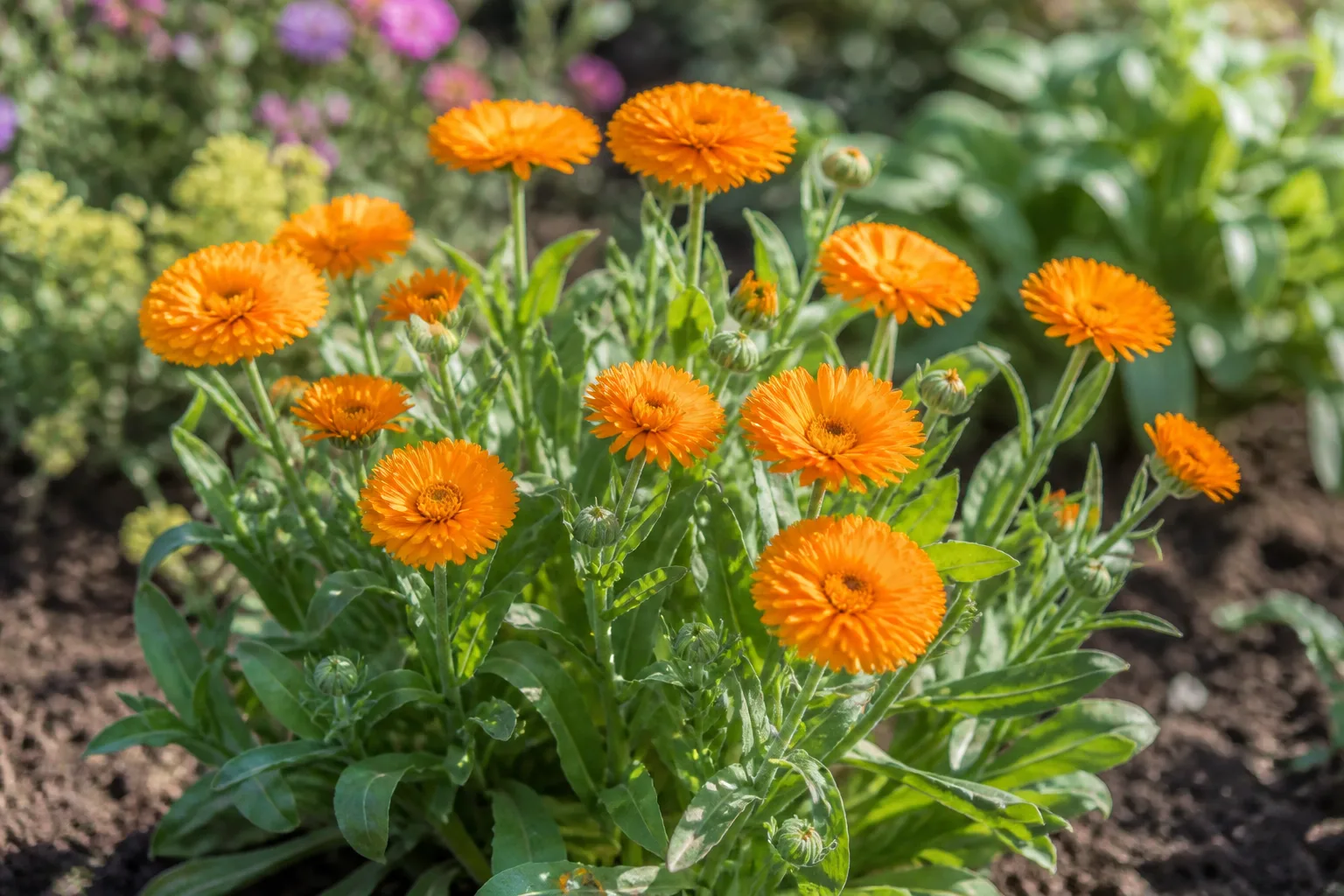
Grow calendula in full sun or light shade in ordinary soil that drains well. Avoid treating it like a thirsty tropical annual: very wet, overly fertile ground can produce disappointing growth, while a dry, sunny bed can keep it compact and floriferous. Harvest the flowers when they are open for the vase, and remove fading heads if you want to delay seed formation.
The petals are edible, but use only flowers grown without pesticides or other products not labeled for edible crops. “Edible” also does not mean every person will tolerate them; introduce a small amount if you are eating them and stop if you react. For most gardeners, calendula’s bigger advantage is timing: it gives the bed color before zinnias and many salvias reach full stride.
Salvia adds upright color and pollinator value
Salvia is a genus, not a single care profile. Annual bedding salvias such as Salvia splendens and mealycup sage, Salvia farinacea, differ from perennial border salvias and tender shrubby types. The RHS separates annual, biennial, border, and tender salvias in its growing guide, which is a useful reminder to follow the plant label rather than applying one pruning rule to every salvia.RHS salvia growing guide
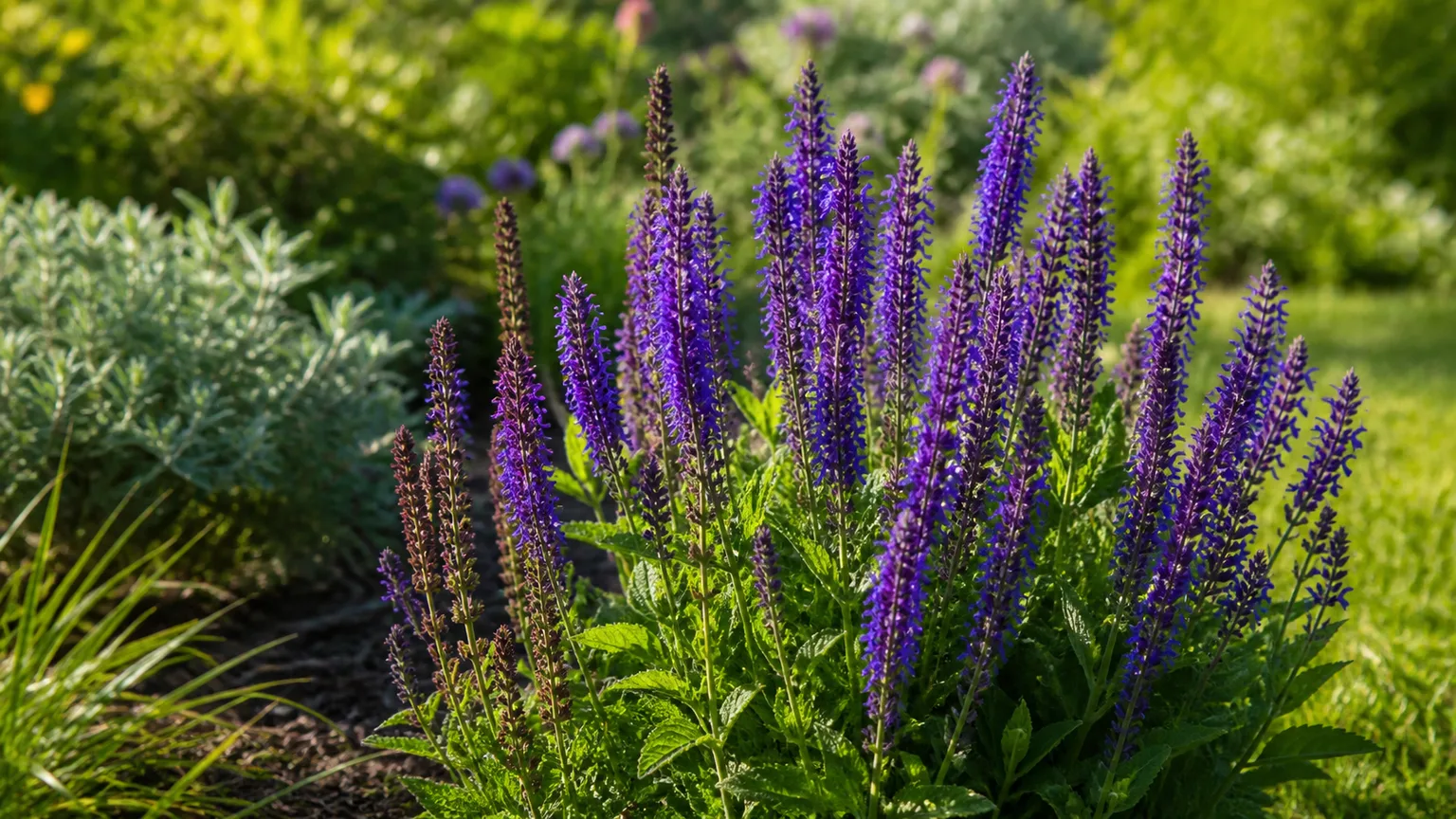
Annual salvias are useful when you want vertical flower spikes, strong color, and a plant that can tolerate a bright site with average moisture. Many are attractive to bees and hummingbirds, although the exact pollinator value depends on flower shape, local species, and whether the flowers are accessible. Place them where the spikes can be seen above lower mounding flowers without being shaded by a wall or dense shrub.
Some annual types continue without frequent deadheading, while others look better and branch more after faded spikes are removed. Cut just below a spent flower stem rather than shearing the whole plant by habit. If a salvia stops flowering, check the light, root moisture, and whether you bought a cool-season or perennial type before adding fertilizer.
Dianthus supplies color when nights stay warm
Dianthus includes pinks, sweet William, and carnations, so “dianthus” covers plants with very different season and hardiness profiles. Modern heat-tolerant bedding series can flower through summer more reliably than traditional carnations, while classic dianthus may prefer cooler conditions and give its strongest flush in spring or early summer. The RHS lists dianthus among useful cut flowers, with perennial, biennial, and annual forms represented in its cut-flower guidance.RHS cut-flower plant guidance
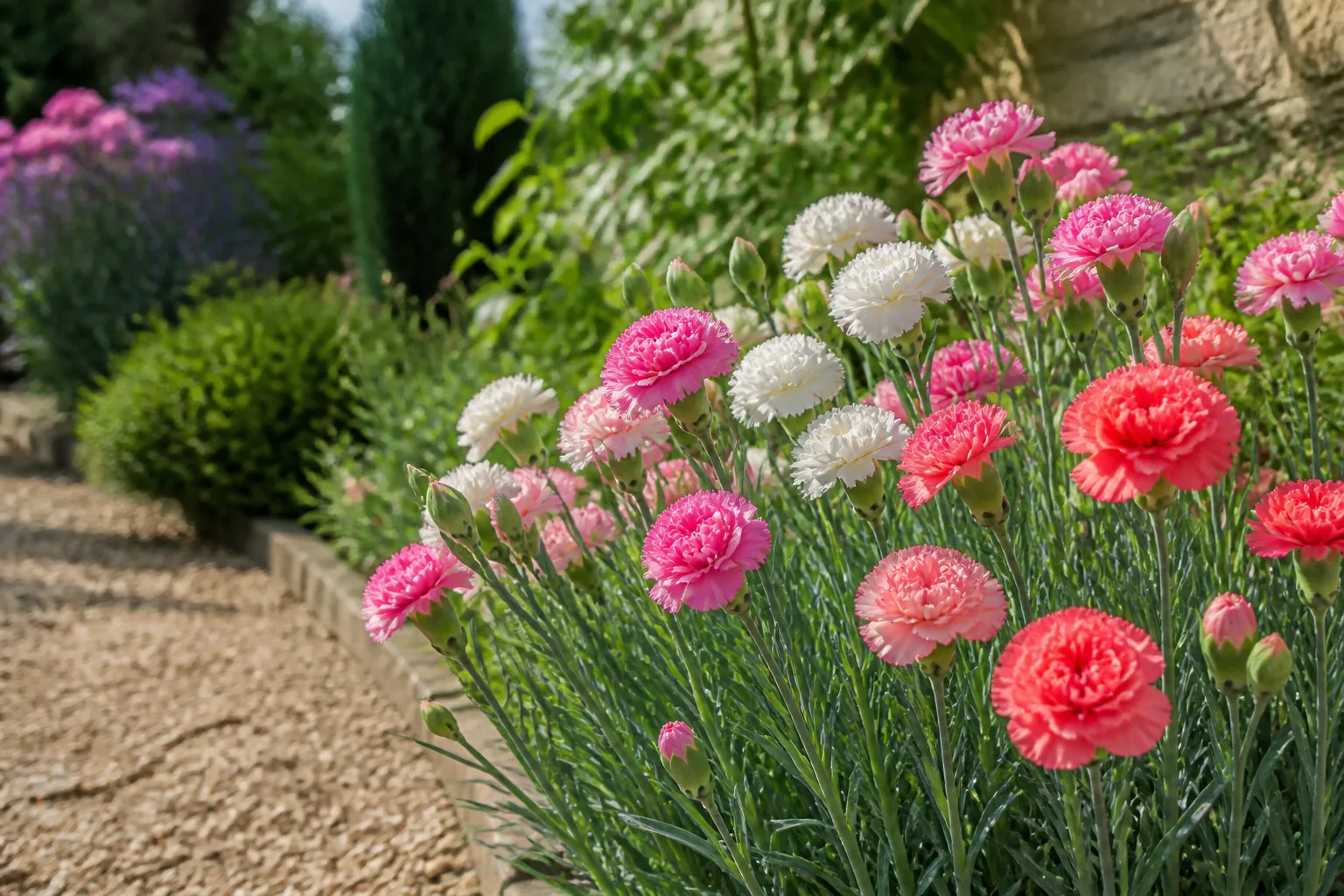
Choose a cultivar sold for summer bedding if the planting site stays hot. Dianthus wants sun, excellent drainage, and space around the foliage; heavy wet soil is more dangerous than a short dry spell. A light trim after a flush can encourage fresh growth, and deadheading keeps the plant from directing all of its energy into seed.
Dianthus is the best pick of this group for a more structured, compact edge or a fragrant cutting garden, but it is not the universal answer for a humid, poorly drained bed. If the leaves yellow at the base or the crown stays damp, correct the site before reaching for fertilizer. The plant may be perfectly healthy aboveground and still fail because the roots cannot breathe.
Build the bed around sun, airflow, and moisture
Choose the site before choosing the flower
Start with the number of hours of direct light, not the color you want. UMass Extension groups zinnia and salvia among annuals for full sun and average moisture, and recommends planting sturdy young plants after the last frost.UMass Extension annuals for sun Six or more hours is a useful target for most of this list, but late-afternoon shade can be a feature in hot regions, not a defect.
Match height to the bed. Put tall cosmos, rudbeckia, and tall zinnias where they will not shade short dianthus or calendula for half the day. Use salvia as an upright accent, then repeat the same color or texture in at least two other places so the bed reads as a composition rather than six unrelated specimens.
Airflow is especially important in humid climates. Give plants the mature spacing listed on the tag, thin seedlings early, and avoid tucking a pot against a heat-reflecting wall. For a balcony or small patio, moving a container a few feet can change the temperature and wind exposure enough to affect flowering.
Improve soil without making it too rich
Most flowering annuals prefer soil that drains promptly but does not dry into a hard crust. Add mature compost to poor soil, loosen compacted areas, and use a thin mulch after plants are established. Do not assume that more organic fertilizer always means more flowers: excessive nitrogen can produce tall, soft foliage and delay flowering, especially in cosmos and other naturally vigorous plants.
Containers need a real potting mix and drainage holes, not garden soil packed into a decorative bowl. Zinnias, calendula, compact dianthus, and some salvias can thrive in pots, while tall cosmos and large rudbeckia usually need a wider, heavier container to stay upright. A container in full sun may need water far more often than the same plant in a deep bed, so choose a pot size you can realistically monitor.
Keep summer flowers blooming instead of merely surviving
Water deeply and watch containers closely
Water at the soil line when the root zone begins to dry, then let excess drain. A fixed schedule is less useful than a daily glance during a heat wave because sandy soil, wind, small pots, and reflected heat can double water use. Newly transplanted annuals need the most consistent attention while roots are spreading; established plants tolerate short dry periods better, but drought during bud formation can still shorten the display.
Morning watering is the safest default. It gives leaves time to dry and lets you notice wilt before the plant reaches the point of permanent stress. If foliage wilts in the afternoon but recovers by evening, check the soil before watering again; temporary heat response is not proof that the roots are dry.
Feed modestly and support tall stems
Build fertility before planting, then use a balanced, label-directed fertilizer only when growth or a soil test justifies it. Flowering annuals do not need weekly feeding by default. Too much nitrogen can make zinnias and cosmos leafy, while salt buildup in containers can damage roots and reduce flowering.
Support tall varieties before they flop. A small ring, discreet stake, or horizontal netting installed while stems are still short is easier to hide than emergency support after a storm. Cutting flowers also acts as maintenance: zinnias and cosmos branch from strategic cuts, and regular harvesting keeps the canopy from becoming top-heavy.
Deadhead with a purpose
Deadheading means removing a fading flower before it completes seed production. It is most useful on zinnias, cosmos, calendula, and many dianthus because it improves appearance and can encourage more buds. The RHS recommends removing spent flowers regularly, but it also notes that the interval can range from daily for bedding plants to every week or two for other flowers.RHS deadheading advice
Do not deadhead on autopilot. Leave some rudbeckia or cosmos seedheads if you want food for birds, autumn structure, or volunteer seedlings. For a cut-flower garden, harvest flowers when they are ready rather than waiting for every bloom to fade; cutting is often the most productive form of deadheading.
Troubleshoot heat, mildew, weak growth, and fading flowers
When a plant stops flowering, start with light and weather before assuming it needs food. Shade, a sudden heat wave, drought, waterlogged roots, and plant age can all reduce buds. A short pause during extreme heat does not mean the plant is finished; water consistently, remove damaged flowers, protect the root zone, and look for fresh growth when temperatures moderate.
Powdery mildew appears as a pale coating on leaves and is more likely when foliage is crowded, shaded, or damp overnight. Improve spacing and airflow, water in the morning, and remove severely affected leaves. Avoid wetting foliage late in the day and do not compost diseased material if your local compost system will not heat sufficiently to destroy pathogens.
Leggy plants usually point to inadequate light, crowding, or too much nitrogen. Move containers into brighter light if possible, thin seedlings, and pinch or cut young stems only when the plant responds well to branching. Do not pinch a plant that is already stressed and dry, because pruning cannot substitute for better growing conditions.
If flowers fade quickly, check whether the plant is being grown outside its preferred season. Calendula may slow in intense midsummer heat; dianthus may resent humid soil; salvia may be a perennial type that follows a different bloom cycle; and zinnias may lose quality in prolonged wet weather. The right fix is often a better cultivar or a new sowing, not more intervention on a plant whose season has passed.
Choose a planting method that fits your season
Direct sow zinnias, cosmos, and calendula when soil and weather match their needs. Direct sowing saves transplant shock and lets roots develop in place, but it gives you a later display. Nursery transplants buy earlier color and are useful for dianthus, salvia, and rudbeckia when spring is short, although a root-bound or poorly hardened plant may stall after planting.
Use succession sowing for the longest display. Start one small batch early, another a few weeks later, and reserve a final space for a midsummer replacement if the first plants succumb to heat or disease. This is more reliable than sowing one large bed and expecting every plant to peak from June through October.
Harden transplants by moving them outdoors for gradually longer periods before planting. Set them at the same depth they occupied in their pots, water the root zone, and protect them from the harshest first afternoon. Plant after frost for warm-season annuals, but do not use a calendar date from another region as a substitute for your local last-frost forecast.
Use a simple weekly rhythm for color through frost
Once a week, walk the bed with three questions: what is blooming, what is drying out, and what is getting crowded? Harvest or deadhead what is finished, water deeply where the root zone is dry, and remove leaves that are diseased or lying on wet soil. This short inspection catches problems while they are still easy to correct.
Every few weeks, take a wider look at the composition. If one plant has gone tall and bare at the base, cut flowers for the vase and tuck a shorter succession planting nearby. If a container is drying by midday, move it from reflected heat, group it with other pots to slow evaporation, or replace the planting with a more compact cultivar rather than accepting repeated wilt.
As the season turns, decide which plants should be left for seed and which should be removed. Save seed only from healthy plants and label it, because open-pollinated seedlings can vary and hybrids may not come true. Clear diseased debris, protect any tender plants you plan to overwinter, and let the final healthy seedheads serve birds or next year’s volunteers.
Conclusion: plant for succession, not a single flush
The best annuals that bloom all summer are not the plants with the most exaggerated promise on a label. They are the plants matched to your light, heat, soil, and attention: zinnias for cutting, cosmos for airy abundance, calendula for a cool-season bridge, salvia for upright color, rudbeckia for golden durability, and dianthus for a compact, structured display.
Give them sun and airflow, keep roots evenly moist without making the bed soggy, feed sparingly, and remove spent flowers when that serves your goal. Then sow or plant a second wave before the first one fades. That small shift—from waiting for one planting to perform perfectly to planning a sequence—turns a short burst of annual color into a garden that keeps changing and blooming until frost.