Bone Meal Fertilizer: Pros, Cons, and Uses
Is bone meal right for your garden? Compare its phosphorus benefits, pH limits, slow release, animal attraction, runoff risk, and practical uses.
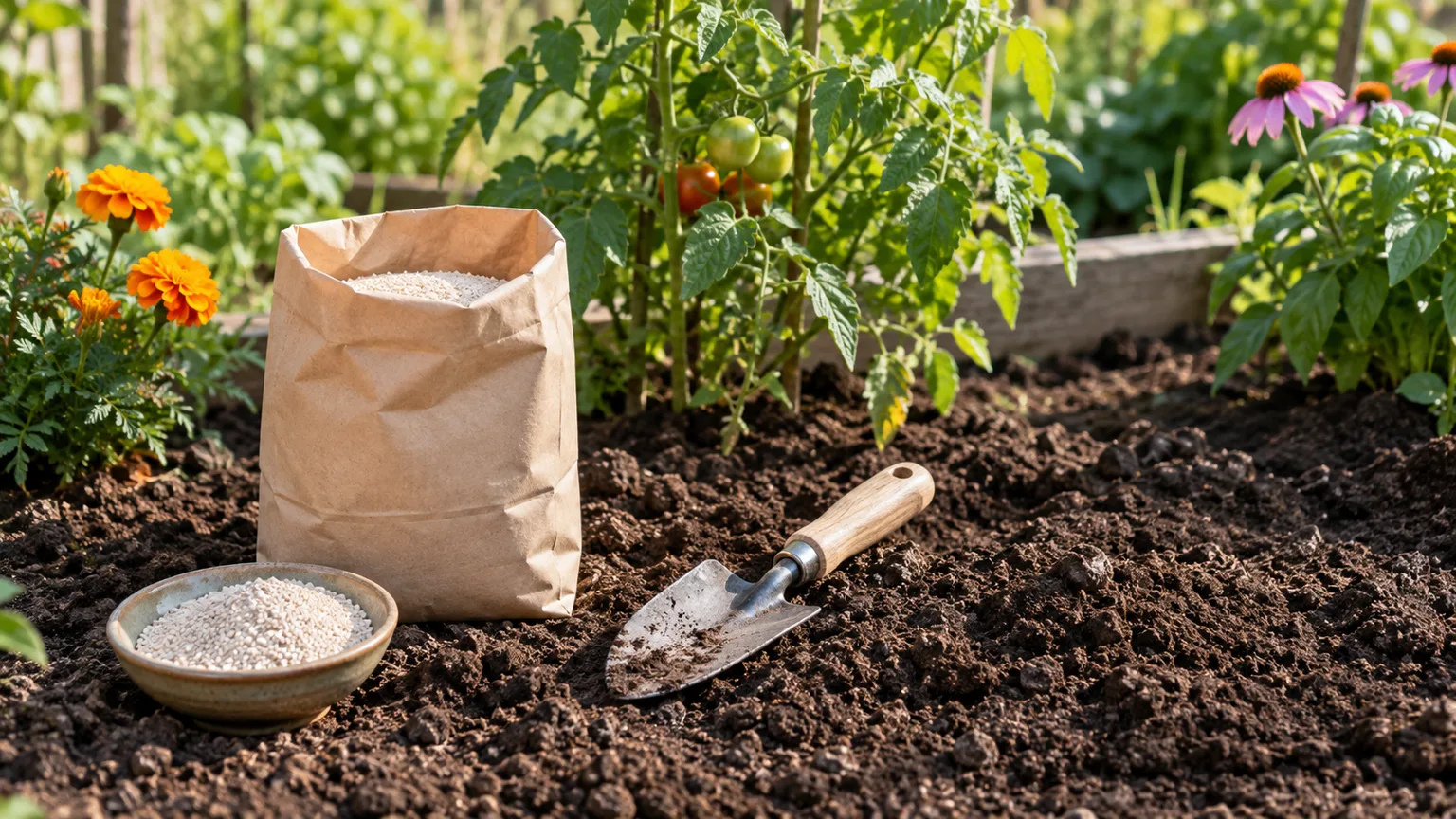
The quick verdict: use it as a targeted amendment
Bone meal fertilizer can be useful when a soil test shows that a garden needs more available phosphorus and the product’s analysis fits the job. It is a processed animal-bone meal that usually supplies phosphorus, some calcium, and a smaller amount of nitrogen, but the exact nutrient profile varies by product.
The mistake is treating it as a universal bloom booster. Adding phosphorus to soil that already contains enough can waste money, contribute to nutrient buildup, and in some situations reduce the plant’s access to micronutrients. Start with the soil report, then choose the smallest label-directed application that solves the documented problem.
Here is the practical decision rule: use bone meal for a measured phosphorus need, not as insurance. If your soil test is adequate or high in phosphorus, a complete fertilizer, compost, or no additional fertilizer is usually the better choice.
What bone meal fertilizer is
Bone meal is made by cleaning, heat-processing, drying, and grinding animal bones into a powder or small granule. Commercial products may be steamed or otherwise processed, and they can be made from different animal sources. That processing makes the material easier to handle than raw kitchen scraps, but it does not make every bag nutritionally identical.
Think of bone meal as a nutrient amendment, not a soil-structure cure. It can add mineral nutrients, but it does not replace the organic matter, pore space, moisture management, and biological activity that come from improving a poor soil with finished compost and good cultivation practices.
Most of the attention goes to phosphorus because bone is rich in calcium phosphate. Plants need phosphorus for energy transfer, root development, genetic material, and reproductive growth, including flowers and seeds. They need calcium for cell walls and growing tissues, but adding calcium to a bed does not automatically correct every calcium-related plant symptom; calcium uptake also depends on water movement and root conditions.
The label matters more than the name on the front of the bag. One product may be a fine powder with a relatively high phosphate analysis, while another may be a lower-analysis granule blended with other meals or minerals. Read the guaranteed analysis, ingredients, directions, and any warnings before deciding what the material will do.
How to read a bone meal fertilizer label
The three numbers on a fertilizer label are the N-P-K analysis: nitrogen, phosphate, and potash. A bag marked 3-15-0, for example, is not promising 15 percent elemental phosphorus; the middle number is conventionally reported as phosphate, or P2O5, and the final number is potash, reported as K2O.
That distinction is useful because gardeners often compare a bone meal number with the phosphorus percentage in a soil report as if they were the same unit. They are not. Use the soil laboratory’s recommendation and the product’s directions rather than trying to convert a whole bed by eyeballing the bag.
The first number also tells you what bone meal will not do well. A product with low nitrogen will not correct a nitrogen shortage in leafy vegetables, pale older leaves, or a bed that has been heavily cropped. A zero or very low third number will not supply potassium for crops that need it. Bone meal is a narrow tool; a complete fertilizer may be more appropriate when several nutrients are short.
Do not assume “organic” means “mild” or “safe in any amount.” Organic fertilizers can be concentrated sources of nutrients, and meal-based products can attract pets. The Pet Poison Helpline’s fertilizer guidance notes that meal-based fertilizers can form a stomach concretion after a large ingestion, while products may also contain other ingredients that change the risk.
The real benefits and limits of bone meal
The main potential benefit is slow nutrient release. Bone particles break down as soil organisms, moisture, temperature, and chemistry allow, so the material does not behave like a quick liquid feed. That can suit a bed being prepared for a long season, but “slow release” also means it is a poor rescue treatment for a plant that needs an immediately available nutrient.
Phosphorus is relatively immobile in soil compared with nitrate. It tends to stay near where it is placed and can bind with iron and aluminum in acidic soils or calcium in alkaline soils. A review of phosphorus fertilizer efficiency in peer-reviewed research describes how soil pH, calcium, and metal oxides influence phosphorus availability, which is why the same amendment can behave differently in a sandy acidic bed and a calcareous raised bed.
The form of phosphorus also matters. A 2023 incubation study indexed by PubMed compared several phosphorus sources, including cattle bone meal, in acid and alkaline soils. It found that phosphorus availability depended on soil type and source, and its results do not support the simple idea that any organic phosphorus source will outperform a fertilizer selected for the soil.
Bone meal can therefore be worthwhile in a specific context: a soil report shows low phosphorus, the crop has a meaningful phosphorus demand, the soil conditions allow that phosphorus to become available, and the product is applied at a sensible rate. Without those conditions, the same bag may deliver little visible benefit while still adding to the nutrient load.
When bone meal is useful
New beds and transplants
Bone meal makes the most sense when you are preparing a new bed and have enough time for the amendment to blend into the root zone. Incorporating it before planting distributes the material through the soil rather than leaving an attractive-smelling patch at the surface. It also gives you a chance to mix in compost separately if the actual problem is low organic matter.
For a transplant, phosphorus can support early root establishment, but a handful in every hole is not automatically better than the soil around it. Roots that encounter a concentrated pocket of fertilizer can be stressed, especially in a small planting hole or container. If the label allows an in-hole application, mix the directed amount thoroughly with surrounding soil so the roots are not pressed directly against a dense layer.
Newly planted tomatoes, peppers, squash, and other fruiting crops are often used as examples because they need phosphorus as part of normal root and reproductive growth. That does not mean a healthy plant in adequately fertile soil will produce more tomatoes merely because you add bone meal. Sunlight, temperature, pollination, water consistency, cultivar, and nitrogen balance can matter more.
Bulbs, roots, and fruiting crops
Gardeners commonly use bone meal around bulbs and root crops because phosphorus is associated with root and reproductive development. A measured, incorporated application can be reasonable when a soil test supports it, particularly during bed preparation before bulbs or transplants go in.
Root vegetables such as carrots and beets still need more than phosphorus. They need loose soil, appropriate moisture, and enough potassium and nitrogen for the crop and stage of growth. Bone meal cannot repair compacted soil, poor drainage, a shallow bed, or a seedbed that dries into a crust.
Flowering perennials and roses may also receive bone meal, but flower quantity is not controlled by phosphorus alone. A plant that is shaded, drought-stressed, recently pruned at the wrong time, or overfed with nitrogen will not become a better bloomer just because bone meal is sprinkled around its base.
When to skip bone meal
When your soil already has enough phosphorus
Skip bone meal when the soil report rates phosphorus as adequate or high, unless a local crop recommendation gives you a specific reason to add it. Phosphorus can accumulate because plants remove only a portion of what is applied each season. Utah State University Extension warns that phosphorus and potassium can build up in soils and that excess phosphorus can interfere with micronutrient uptake, including zinc.
This is also the point where a symptom should not overrule a test. Purple foliage, slow growth, poor flowering, or small plants can have several causes, including cold soil, root damage, pH-related nutrient lockout, drought, disease, or inadequate light. Diagnose the growing conditions before treating a visual symptom as proof of phosphorus deficiency.
When pH, moisture, or ethics point elsewhere
Bone meal is not a reliable way to change soil pH. Its calcium content does not make it a substitute for lime in acidic soil or sulfur in alkaline soil, and adding it to alter pH can create a phosphorus surplus before it achieves the intended pH change. Test pH separately and use an amendment chosen for that job.
Very alkaline or calcium-rich soil deserves particular caution because phosphorus can become less available there. Cold, waterlogged, or compacted soil also limits root activity, so adding more fertilizer while roots lack oxygen is unlikely to solve the problem. Improve drainage and root-zone conditions first.
Skip bone meal if you do not want animal-derived inputs in a vegetable or flower garden. It is not vegan, regardless of whether the rest of the product is marketed as organic. A plant-based or mineral fertilizer can meet the same nutrient goal when its analysis fits the soil and crop.
How to apply bone meal without guessing
Start with a soil test and the product label
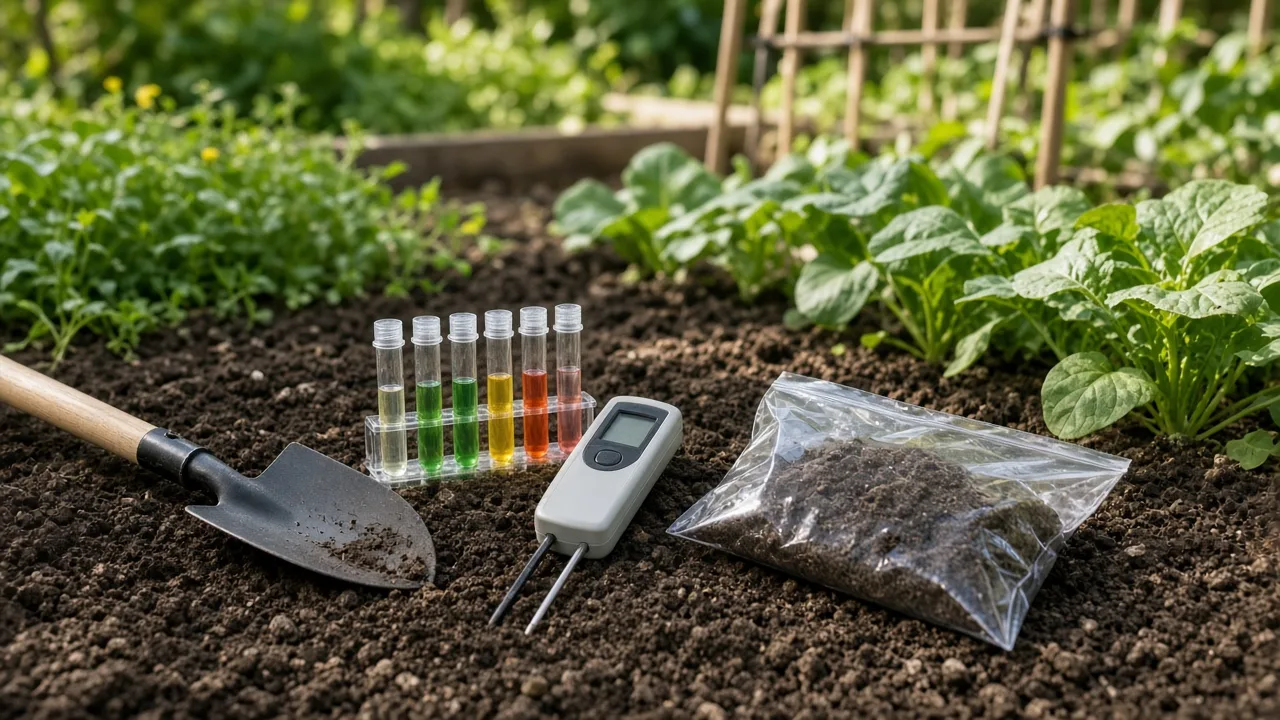
Collect a representative soil sample before buying or applying the amendment. For a bed, sample several spots from the same growing area, mix the cores as the laboratory directs, and keep separate samples for areas managed differently. A professional test is more useful than a cheap color kit when you are making a nutrient decision, because it can report phosphorus, pH, organic matter, and sometimes soluble salts and micronutrients.
The USDA NRCS guidance on phosphorus testing explains why phosphorus testing is part of nutrient management and environmental protection, not merely a way to chase bigger plants. Use the lab’s crop recommendations when available; do not try to translate a high phosphorus result into a bone meal dose by instinct.
Next, read the bag. Check whether the directions are for garden beds, planting holes, containers, trees, or established plants, because those instructions are not interchangeable. Note the guaranteed analysis, application rate, reapplication interval, ingredients, dust precautions, and pet or storage warnings.
Measure, mix, water, and wait
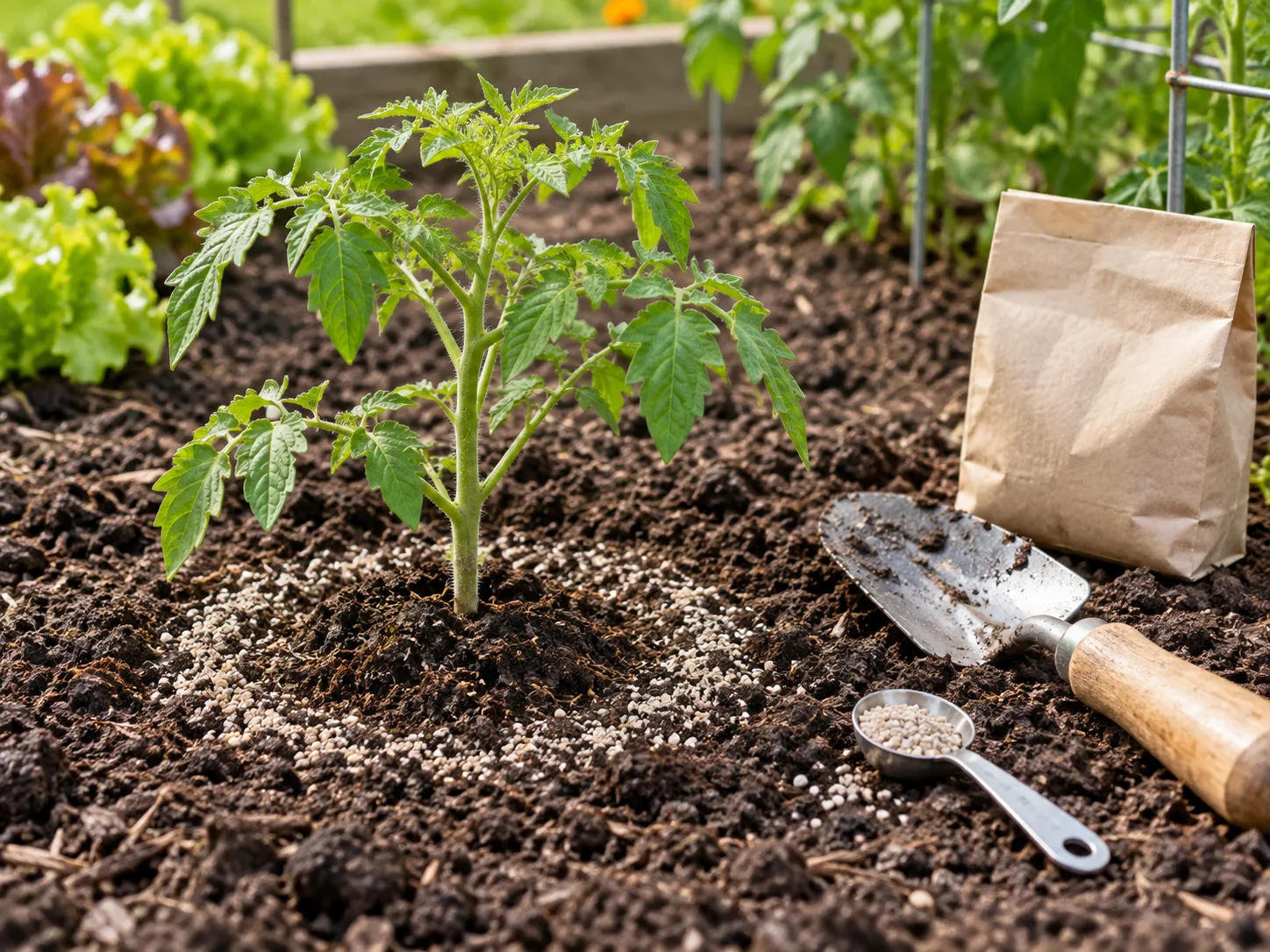
For a bed, spread the label-directed amount evenly over the measured area and incorporate it into the top layer of soil. Do not create a thick stripe in a planting row. For a transplant, use the label’s in-hole rate only if it is specified, and blend the granules with backfill soil rather than placing a concentrated pocket against the root ball.
For established plants, a light, even application in the root zone is safer than a mound at the stem. Avoid putting dry fertilizer against stems, crowns, or foliage. In a container, be especially conservative: a pot contains little soil to dilute an error, and repeated additions can accumulate faster than they do in a large bed.
Water after incorporating the amendment if the label calls for it and the soil is not already saturated. Water helps settle dust and begin the breakdown process, but it does not make an excessive dose disappear. Never apply immediately before heavy rain to sloped ground, drainage ditches, or water bodies; phosphorus moving off-site can contribute to water-quality problems.
Write down the date, product analysis, amount, bed, and soil-test recommendation. This simple record prevents the common mistake of reapplying because the granules are no longer visible. Bone meal can remain in the root zone for months, and the absence of a visible powder does not mean the nutrients have been used.
Pet safety, dust, and storage
Bone meal smells like an animal product, and that can turn a carefully planted bed into a digging target. Mix the amendment into the soil, close the bag, sweep up spills, and avoid leaving a measuring cup or open bucket where a dog can investigate. A surface layer is also more exposed to rain and runoff than incorporated material.
The Pet Poison Helpline’s bone-meal guidance says ingestion can cause gastrointestinal distress, with large ingestions potentially leading to an intestinal blockage or pancreatitis. Keep the product away from dogs, cats, children, poultry, and wildlife, and do not use bone meal as a pet deterrent or assume that “natural” means harmless.
If a pet eats bone meal, do not wait for symptoms or attempt to induce vomiting unless a veterinarian instructs you to do so. Contact your veterinarian or a recognized animal poison service, provide the product name and guaranteed analysis, and report the estimated amount and the animal’s weight. Watch for drooling, vomiting, diarrhea, abdominal pain, abnormal posture, breathing difficulty, or delayed worsening while you seek professional advice.
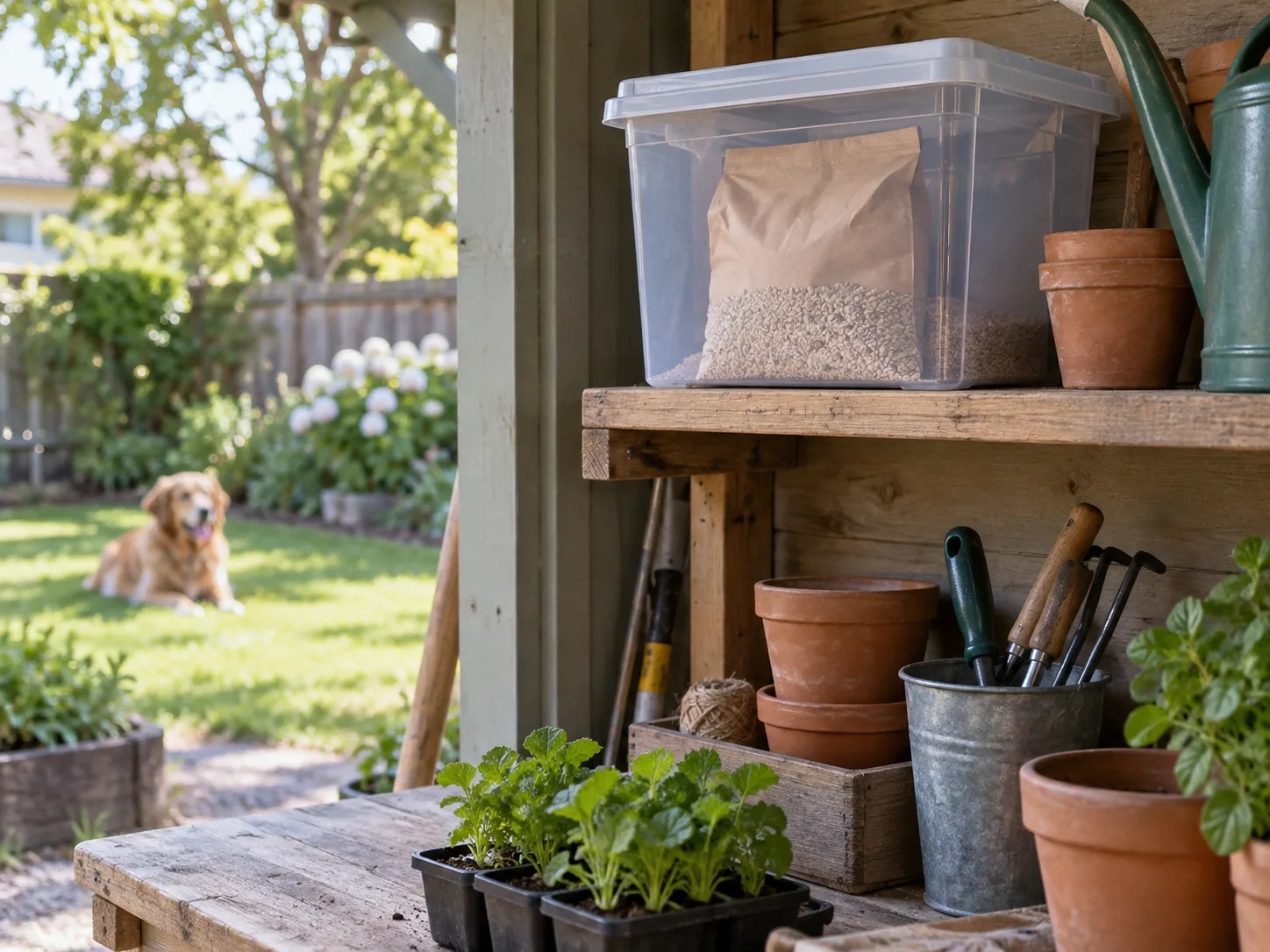
Avoid breathing powder during application. Wear gloves, keep the material out of your eyes and mouth, and follow the bag’s protective directions. Store it sealed, cool, and dry in a secure cabinet or shed rather than in an open garage bin that pets can reach.
Should you make bone meal at home?
You can process leftover bones at home, but homemade bone meal is a different proposition from buying a labeled fertilizer. Practical gardening writers such as MIgardener describe boiling or baking bones, removing remaining meat and fat, drying them until brittle, and grinding them with dedicated equipment. Rural Sprout likewise presents homemade bone meal as a way to reuse kitchen or farm leftovers.
The main problem is inconsistency. You will not know the N-P-K analysis, particle size, salt content, cleanliness, or actual nutrient availability without laboratory testing. Meat, fat, seasoning, and salt left on the bones can attract animals or add unwanted material to soil, while a partially dried bone can damage a blender or spoil in storage.
Do not use your best kitchen blender, create airborne dust, or grind bones in a living space. If you still choose to make it, process only thoroughly cleaned, fully dried bones, dedicate tools to the job, wear eye and respiratory protection appropriate to the dust, and store the finished powder securely. For a food garden, a labeled commercial product gives you a more traceable analysis and clearer directions.
Homemade bone meal can be a resource-reuse project, but it is not automatically cheaper or more sustainable once you include time, energy, equipment, storage, animal attraction, and the risk of applying an unknown rate. Composting clean plant residues may provide a more predictable household soil-building benefit.
Better alternatives for common garden goals
Choose the amendment that matches the deficiency rather than choosing the most famous organic product. These are practical substitutions, not a ranking:
| Garden goal | Better first choice | Why |
|---|---|---|
| Low overall fertility | Complete fertilizer matched to the soil report | Supplies more than phosphorus when N, P, and K are all needed |
| Low nitrogen | A label-directed nitrogen source or mature compost | Bone meal is too low in nitrogen for this job |
| Low organic matter or poor structure | Finished compost plus drainage and cultivation improvements | Bone meal adds nutrients but little bulk organic matter |
| Low phosphorus with neutral-to-acid soil | Bone meal or another labeled phosphorus source | Choose by soil test, crop, and product analysis |
| High phosphorus | No phosphorus fertilizer; address the actual limiting factor | More P can worsen imbalance and runoff risk |
| Vegan garden | Plant-based or mineral fertilizer with a suitable analysis | Avoids animal-derived ingredients |
| High-pH soil | A crop-appropriate pH plan based on a soil test | Bone meal is not a pH correction product |
Rock phosphate may appear alongside bone meal in organic gardening discussions, but it is not a universal replacement. Its effectiveness depends on particle size, soil acidity, biology, and time. A balanced fertilizer may be a better choice for a container or a crop with several nutrient needs, while compost is the more useful choice when the soil’s physical condition is the problem.
The most sustainable fertilizer is often the one you do not need to apply. Test, correct the limiting condition, feed according to the crop, and reassess rather than layering bone meal, compost, manure, and a bloom fertilizer onto the same bed.
Conclusion: let the soil test make the call
Bone meal fertilizer has a legitimate place in gardening, but its place is narrower than the label and folklore often suggest. It can supply slow-release phosphorus and calcium for a soil that actually needs them, especially during bed preparation, but it cannot replace good soil structure, appropriate pH, sufficient nitrogen, sunlight, water management, or a complete nutrient plan.
Before applying it, test the soil, read the guaranteed analysis, choose the rate for the exact situation, incorporate it, keep it away from pets, and record what you used. If phosphorus is already adequate, or if your real problem is compacted soil, high pH, low nitrogen, poor drainage, or an ethical objection to animal inputs, choose the corresponding solution instead.



