12 Brussels Sprout Companion Plants for a Healthier Crop
Choose Brussels sprout companion plants by job, spacing, and season, with twelve practical options and a small-bed layout that avoids common mistakes.
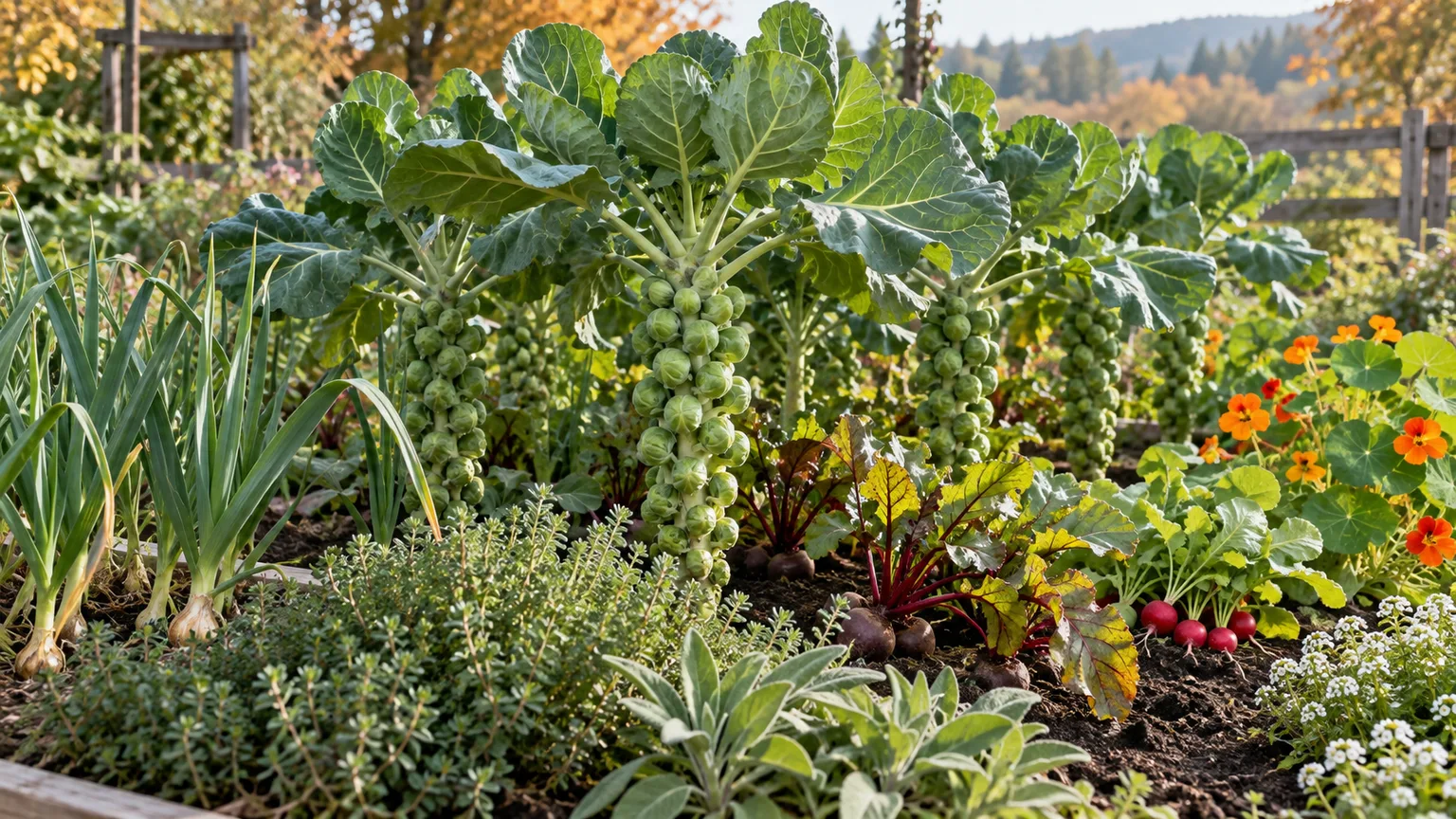
The best Brussels sprout companion plants do not perform one magical job. They help in specific, limited ways: a few create a fragrant border, some provide nectar for beneficial insects, one can act as a deliberately monitored trap crop, and several let you harvest more from the same patch of ground before the sprouts reach full size.
That distinction matters because Brussels sprouts are a long-season, cool-weather crop. They need full sun, fertile soil, regular moisture, room for air to move, and enough time to form sprouts up a tall central stalk. A companion that crowds the root zone, shades the leaves, or attracts the same pests may be a poor neighbor even if it appears on a popular planting chart.
The list below is organized around what each plant can realistically contribute. Use it as a menu: choose one pest-management companion, one space-filling crop, or one flowering plant that fits your bed. You do not need all twelve.
What companion planting can—and cannot—do for Brussels sprouts
Companion planting means growing two or more plant species close enough that their structure, timing, scent, roots, or flowers influence how the bed functions. The effect can be physical, such as a small radish crop occupying empty ground while sprouts are young; biological, such as flowers providing nectar to adult hoverflies; or behavioral, such as a trap crop giving a pest another host to find.
Research reviews describe several possible pest-management mechanisms, including drawing insects toward a preferred plant, disrupting the odor or visual cues pests use to find a crop, and providing food or shelter for predators and parasitoids. The same review also cautions that results depend on species, arrangement, density, distance, and timing, and that companion planting works best as one part of integrated pest management rather than as a stand-alone cure. Read the evidence summary in this peer-reviewed review of companion plants for aphid management for the useful distinction between a mechanism that is plausible and a result that is dependable in every garden.
The RHS companion-planting guidance likewise treats mixed planting as useful but variable. Choose companions you can place, time, and monitor sensibly.
Choose the benefit before you choose the plant
Start by identifying the constraint in your bed. If cabbage moths and aphids arrive early, aromatic herbs or a physical row cover deserve attention. If your main problem is wasted space, choose a quick root crop that will be harvested before the Brussels sprout canopy expands. If you want more natural enemies, choose flowers that bloom when pests are active and keep them close enough to be useful without turning the bed into a thicket.
Do not treat a companion as a substitute for good crop culture. Brussels sprouts still need a fertile, well-drained bed, a soil pH around 6.0 to 7.0, consistent moisture, clean plant debris, and a rotation that separates cole crops from the same ground for several years. WVU Extension’s Brussels sprouts guidance recommends 18 to 24 inches between transplants and about 3 feet between rows, along with scouting, early row covers, and rotation.
The 12 best Brussels sprout companion plants
The table is a quick selection guide, not a promise of guaranteed pest control. The “best use” column is the reason to try the plant, while the “watch for” column keeps the pairing honest.
| Companion | Best use beside Brussels sprouts | Watch for |
|---|---|---|
| Garlic | Aromatic diversity and a narrow row footprint | It is not a complete aphid barrier |
| Onions | Compact allium border and efficient space use | Bulb size suffers in crowded, wet soil |
| Thyme | Low aromatic edging and flowers for insects | Keep woody stems out of the sprout canopy |
| Sage | Aromatic end-of-row anchor | Mature plants become broad and woody |
| Nasturtiums | Perimeter trap crop and flowers | Remove or prune heavily infested growth |
| Sweet alyssum | Nectar for hoverflies and other beneficials | Benefits vary by crop and timing |
| Mustard | Monitored trap crop for some brassica pests | It can concentrate pests if ignored |
| Beets | Cool-season gap crop with a different root zone | Thin seedlings so tops do not crowd sprouts |
| Carrots | Deep-rooted space sharing | Do not disturb sprout roots while harvesting |
| Radishes | Fast harvest and row marker | Harvest before they bolt or become woody |
| Bush beans | A short, lower legume crop when timing fits | Avoid tall shade and excessive fertility |
| Celery | Similar moisture needs and lower canopy | It needs steady water and a long season |
Garlic and onions
Garlic and onions are practical allium companions for a small Brussels sprout bed because they occupy a narrow vertical footprint. Their scent adds plant diversity around the crop and may make it harder for pests to locate one host by sight and smell; that is a design goal, not a guarantee against aphids or cabbage moths.
Plant garlic in the fall if your climate allows overwintering, or use spring garlic when that is the season available to you. Onion sets or transplants can be tucked along the front edge of a bed, provided they will not be shaded by mature Brussels sprouts. Leave enough space for bulb swelling and keep the allium row out of the wettest, most compact soil.
Garlic and onions also make good companions when your primary goal is harvest efficiency. They do not need a trellis, they can be harvested before the sprout plants finish, and their roots do not occupy exactly the same zone as a large mature Brussels sprout. For a mixed bed, place them on the sunny side or outer edge rather than underneath the sprout canopy.
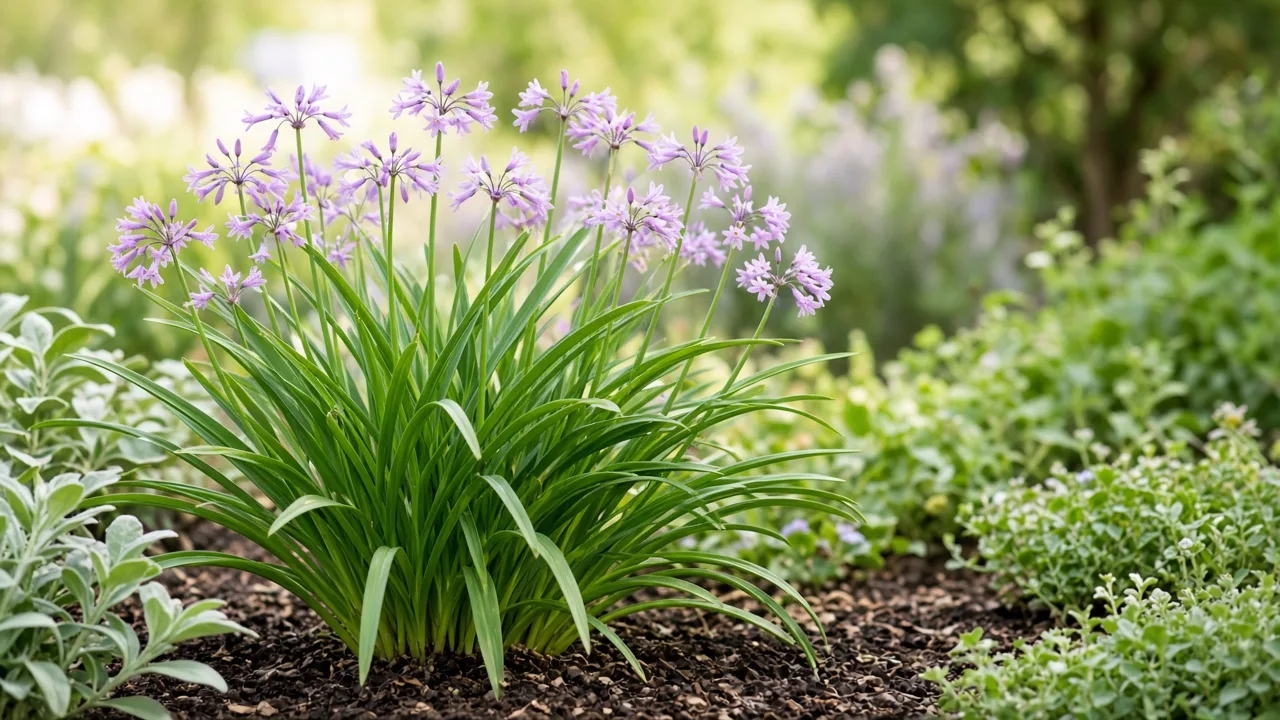
One important exception: do not put alliums next to beans if you are trying to maximize the bean crop in the same small bed. Keep the garlic or onion row separated from bush beans by a buffer or use them in different beds. The practical lesson is to design pairings as a whole system, not to assume that every “good companion” is compatible with every other companion.
Thyme and sage
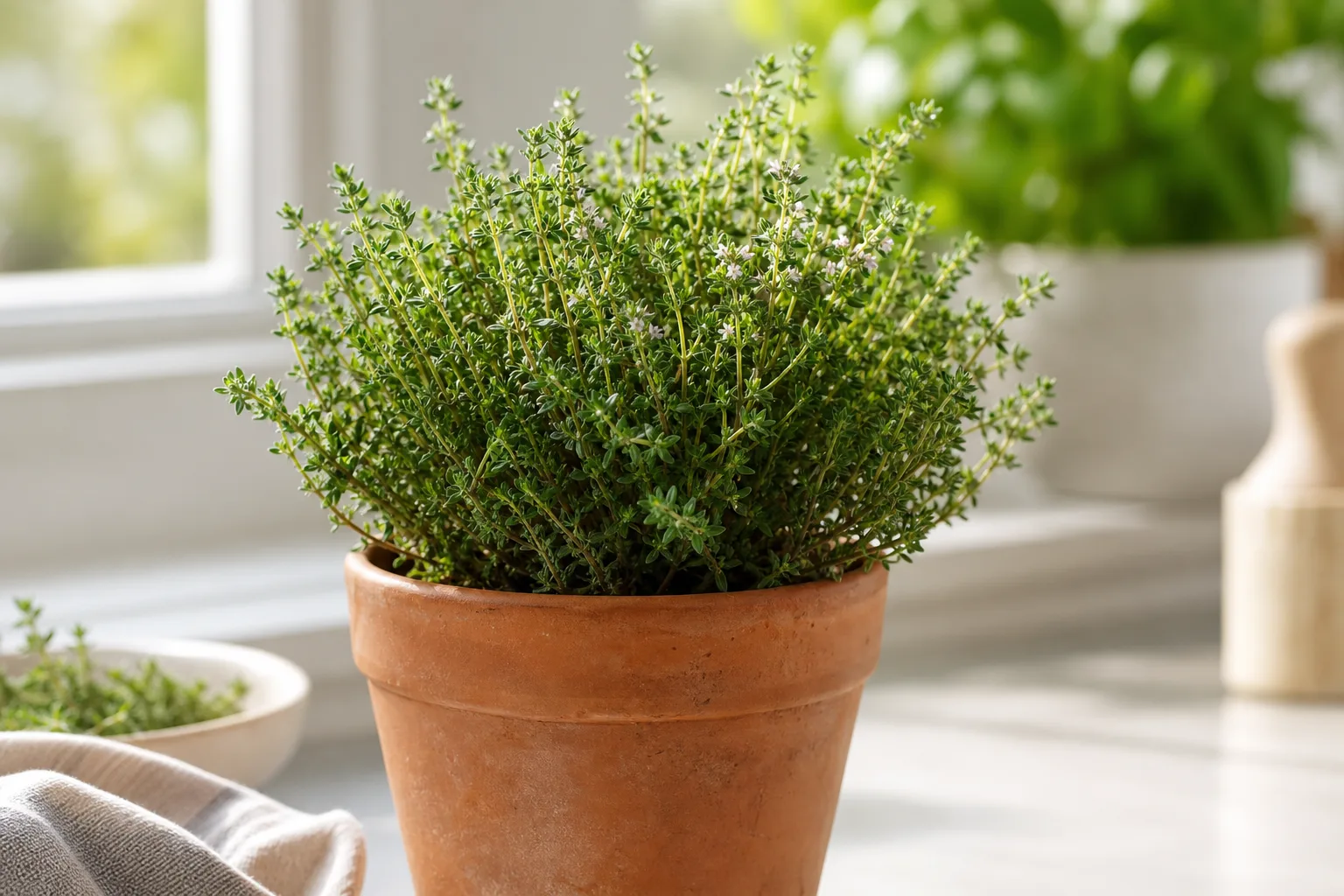
Thyme is a strong choice for the front edge of a sunny bed. It stays relatively low, tolerates leaner soil than Brussels sprouts, and flowers when allowed to grow rather than being clipped constantly. Its aromatic foliage may interfere with how some insects locate host plants, but the safer way to describe the benefit is as a possible reduction in pest-finding success, not as a force field around the sprouts.
Set thyme where it will not be overwatered by an irrigation line aimed at the Brussels sprout root zone. Space it far enough from the stems that the herb can spread without trapping damp leaves against the crop. A narrow border or a few plants at the sunny front corners usually works better than a dense carpet woven through the vegetable row.
Sage is useful as a larger end-of-row anchor. It is aromatic, attractive to pollinators when it flowers, and substantial enough to mark the bed’s corners. Give it more room than thyme, and remember that a perennial sage plant can become woody and shade nearby vegetables in future seasons. Prune or relocate it if the foliage begins to lean into the sprout row.
Use thyme or sage when you want a low-input aromatic structure, especially along a bed that is otherwise a solid block of one crop. Do not rely on either herb to correct a cabbageworm outbreak; the first response is still to inspect the undersides of leaves, remove eggs or caterpillars, and cover young plants when appropriate.
Nasturtiums, sweet alyssum, and mustard
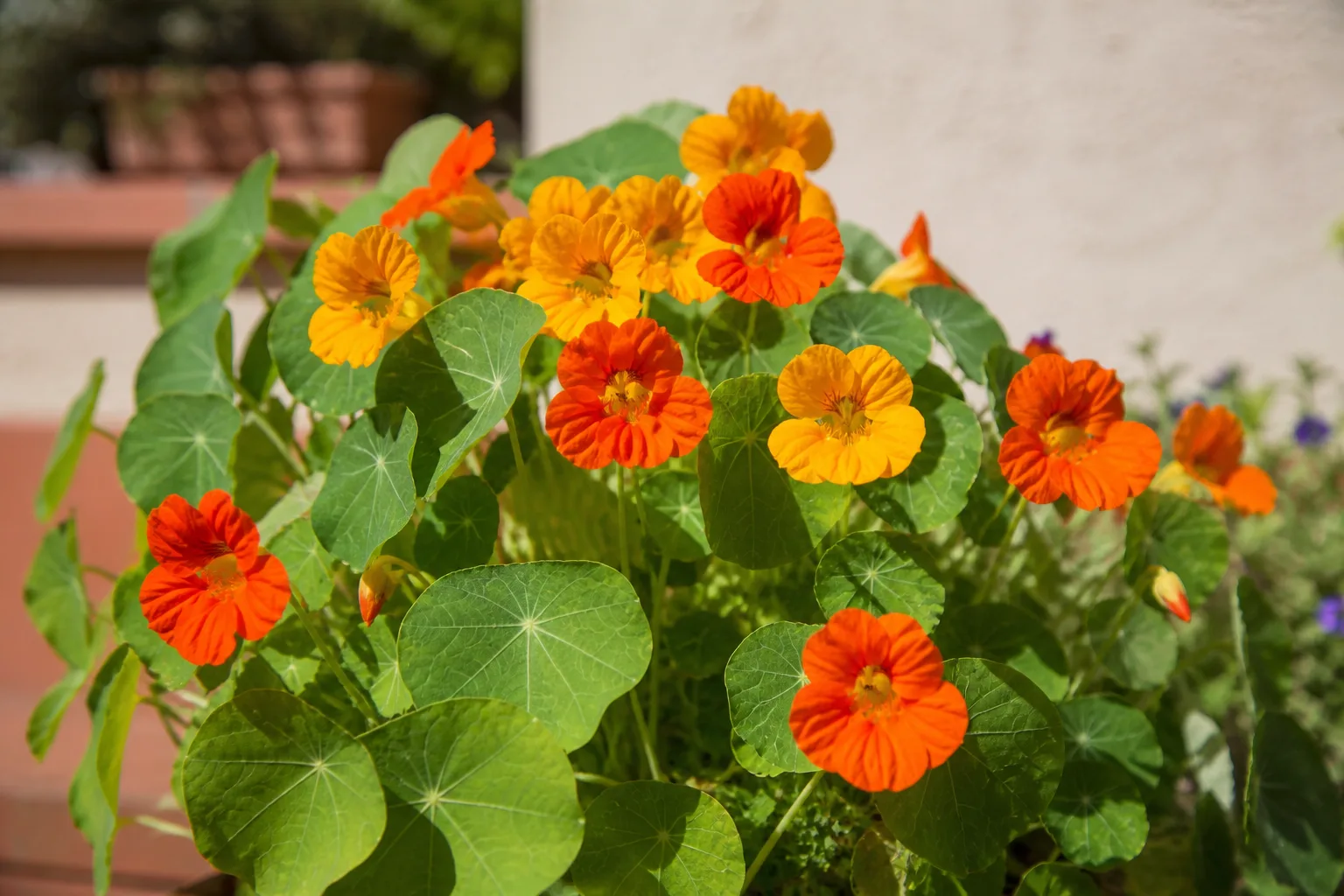
These three plants can all support pest management, but they do it differently. Nasturtiums are best treated as a perimeter trap crop, sweet alyssum as a nectar source for beneficial insects, and mustard as a deliberately monitored sacrificial crop. Keeping those roles separate prevents a common mistake: planting a pest-attracting plant beside the crop and then forgetting to check which plant the pests are using.
Nasturtiums can attract aphids and caterpillars to soft, easily inspected foliage. Plant them outside the main sprout row rather than threading vigorous vines through the crop. A buffer of roughly 18 to 24 inches is a useful starting point in a small garden, adjusted for the variety’s mature spread. Inspect them weekly; if they become heavily infested, prune off the affected growth or remove the plant before pests spill into the Brussels sprouts.
Sweet alyssum offers a different service. Its small flowers provide accessible nectar and pollen for adult hoverflies and other beneficial insects. USDA Agricultural Research Service researcher Eric Brennan describes alyssum as a way to provide food for hoverflies in vegetable fields, while also noting that results with broccoli and cabbage-family crops can be more difficult than the well-known lettuce example. That nuance is important for Brussels sprouts: alyssum is worthwhile habitat, but it is not a guaranteed reduction in cabbage aphids.
The USDA Agricultural Research Service discussion of alyssum and natural enemies is especially useful here because it separates the successful lettuce system from the more difficult results seen with broccoli. Brussels sprouts are also harvested from a long-lived plant with tight folds and crevices, so a flower strip may recruit predators without eliminating aphids.
Sow alyssum along the bed edge or in small gaps that will remain accessible after transplanting. Choose a variety that blooms during your local pest season, and avoid letting flowers or stems block air movement around the lower leaves. The point is to add a small, flowering resource—not to turn the crop row into a dense living mulch.
Mustard can be useful as a trap crop because it is itself a Brassica and can be very attractive to pests that also feed on Brussels sprouts. That is precisely why it needs a management plan. Plant a small patch away from the main row, inspect it frequently, and remove it when pest pressure builds. Do not compost a visibly infested plant in a slow backyard pile; bag it or dispose of it according to local guidance so the insects do not simply move back into the bed.
For a second practical perspective on the crop-family trade-off, Gardening Know How’s Brussels sprout companion overview lists mustard as a possible trap crop while warning that related cole crops also share pests and diseases. That is the right way to use a planting list: as a starting hypothesis that still needs observation in your garden.
Marigolds are often suggested for brassica beds, but they do not make this core list because the evidence is frequently broader than the promise. You can grow marigolds for color and beneficial-insect habitat, but do not count on a few plants to control flea beetles or cabbageworms. A physical barrier and early scouting are more dependable first lines.
Beets, carrots, and radishes
Beets, carrots, and radishes are the most useful companions when the goal is to make better use of space. Brussels sprouts take a long time to mature and eventually occupy a tall, wide form. Quick or underground crops can produce a harvest before the sprout canopy becomes dominant, reducing the amount of bare soil without forcing a permanent companion into the bed.
Beets are a good cool-season gap crop. Sow them between young sprout plants, then thin them early so the beet tops do not press against the lower leaves. Harvest the roots as they size up. This timing gives you a crop from the space before the Brussels sprouts need every inch of light and air.
Carrots use a deeper root zone and can remain in the ground longer than radishes. They work best in soil that has been loosened deeply and cleared of stones, not in a compact bed where harvesting will wrench the neighboring sprout roots. Sow carrots in a line parallel to the sprout row and leave a visible path so you can pull them without stepping into the crop.
Radishes are the fastest option and can double as a row marker while slower Brussels sprout transplants establish. Harvest them young, succession-sow only if the weather remains suitable, and pull the plants before they bolt. Overmature radishes add little value and can make the bed harder to weed.
The space-sharing benefit of these crops is real even if they never repel a pest. RHS horticulture guidance specifically describes fast-maturing plants such as radishes being intercropped between larger, slower crops including Brussels sprouts, with the small crop harvested before it is shaded. That is a stronger reason to plant them than a vague claim that their scent will protect the entire bed.
Bush beans and celery
Bush beans can fit beside Brussels sprouts when they are timed as a short, lower crop and the soil does not already contain more nitrogen than the plants can use. Legumes can contribute nitrogen to the wider soil system through their relationship with root bacteria, but that does not mean a growing bean plant instantly feeds its neighbor. In a home bed, the practical benefit is usually the bean harvest and a different canopy, not a guaranteed fertilizer effect for the sprouts.
Choose bush beans rather than pole beans if you try this pairing. Pole beans can climb into the light path, compete for support, and shade the Brussels sprouts during the part of the season when the tall crop is still building leaves. Keep bean plants far enough away that you can harvest them without brushing through the sprout foliage.
Celery shares Brussels sprouts’ preference for fertile soil and steady moisture, and its lower form can occupy space beneath a taller crop. The pairing is most useful in a bed that can be irrigated consistently. Celery is not a drought-tolerant filler; if the bed repeatedly dries out, it will suffer while also competing with the sprouts for water.
Plant celery on the side that receives enough light and remains easy to reach. Do not use the Brussels sprout canopy as an excuse to plant it in deep shade. The upper crop can soften intense afternoon light in a hot climate, but the celery still needs enough sun to grow strongly.
How to arrange companions without crowding the crop
The best list of plants will fail if the bed is too dense. Space Brussels sprouts first, then place companions in the leftover niches. For a starting layout, leave 18 to 24 inches between sprout transplants and about 3 feet between rows, then account for the mature width of every herb or flower. A companion that is technically planted “near” the sprouts but blocks airflow is not helping.
Use spacing, timing, and root zones as the design rules
Place tall or broad plants on the north side of the bed in the Northern Hemisphere so they are less likely to cast afternoon shade across the sprouts. Keep low herbs at the sunny edge, root crops between—not directly against—the sprout stems, and trap crops on the outside where they can be inspected or removed.
Timing is just as important as distance. A flower that is planted after the main pest flight has passed cannot provide the same service as one already blooming. A radish planted with a mature Brussels sprout will be shaded immediately, while the same radish sown several weeks earlier can be harvested before the canopy closes.
Keep the surface mulched, but do not bury the stems. Organic mulch reduces evaporation and suppresses weeds, which protects a moisture-demanding crop more reliably than a weak companion claim. Avoid grass clippings or other plant material if you cannot confirm that it was free of herbicide residues.
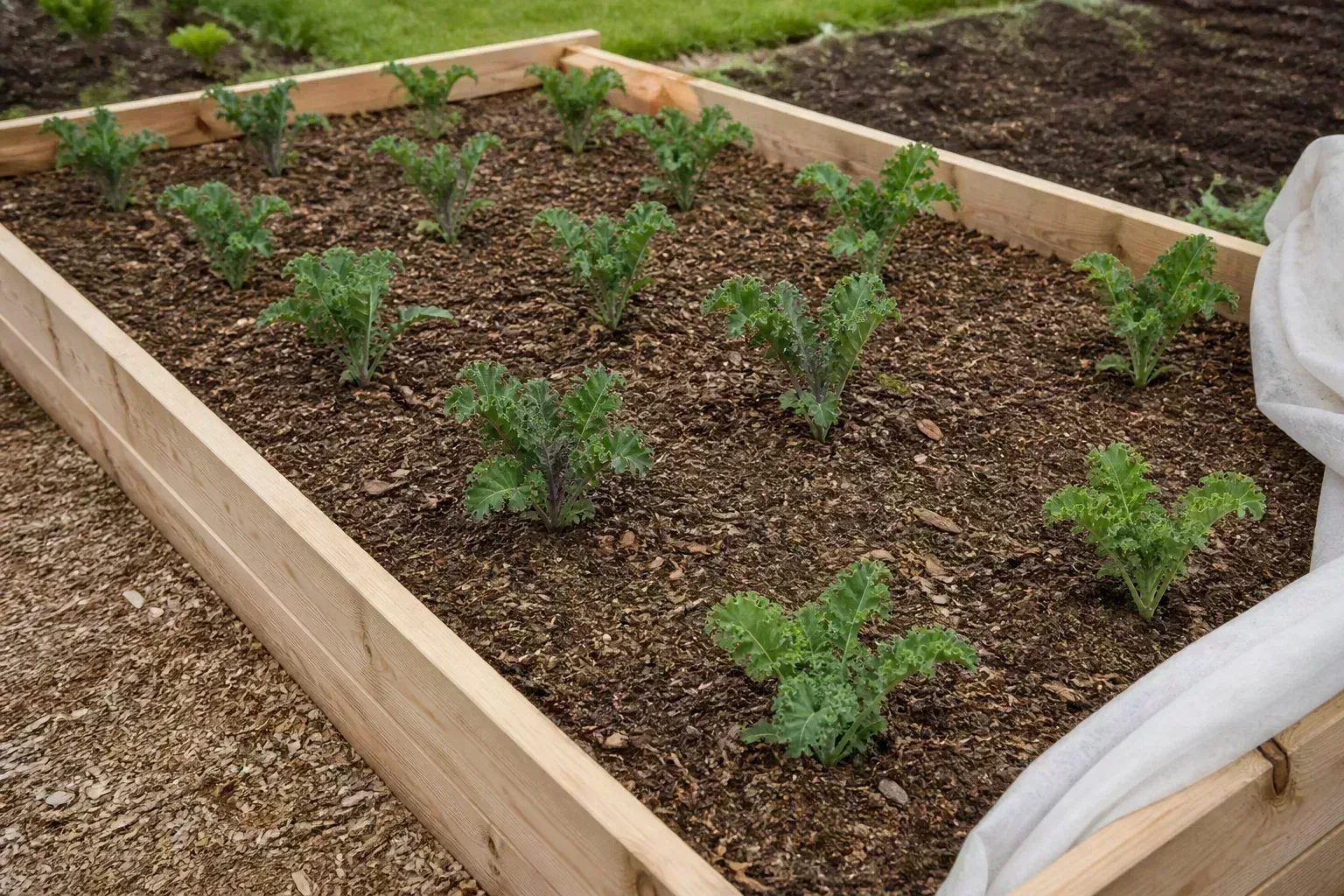
Plants to keep away from Brussels sprouts
Some plants are poor choices because they share pests or disease, compete heavily for space, or create a management problem. “Avoid” does not mean a single volunteer plant will destroy a crop; it means the pairing is usually a poor use of limited bed space.
Other brassicas and fennel
Broccoli, cabbage, cauliflower, kale, collards, kohlrabi, turnips, and other Brassica relatives have similar light, soil, and water needs, so they can look like obvious companions. Their downside is equally important: they share many pests and diseases. If cabbageworms, aphids, flea beetles, or a soil-borne disease reaches one plant, a solid block of related crops gives the problem more hosts and makes rotation less useful.
Planting a few different Brassicas together is not automatically wrong, especially in a large garden where the bed can be covered and scouted. But do not mistake shared culture for pest protection. If disease has occurred, rotate the entire crop family away from that bed rather than simply swapping Brussels sprouts for kale.
Fennel belongs in its own space. It is a poor neighbor for many vegetables because of its size, strong root zone, and possible allelopathic effects. A container or a separate bed keeps it from becoming a hidden source of competition.
Strawberries, pole beans, lettuce, and melons
Strawberries and Brussels sprouts can both be hungry, space-demanding crops, and strawberries may also create a moist, sheltered habitat for slugs. Keep the perennial strawberry patch separate so it can be mulched and managed without interfering with a seasonal vegetable rotation.
Pole beans are not forbidden, but they are a risky small-bed pairing. Their height and trellis can shade the sprouts, and their harvesting traffic can damage broad leaves. Bush beans are the more manageable choice when a bean crop fits the season.
Lettuce can be intercropped early, but it is not a strong choice for a packed, mature bed because both crops need reliable moisture and fertility. Use lettuce only as a fast early harvest with enough room for the sprouts to expand, not as a permanent understory.
Melons and other sprawling vines should stay elsewhere. Their leaves can cover the sprouts, their vines can make access difficult, and their roots compete for water over a wide area. A companion has to make the bed easier to manage, not merely make the soil look full.
Build a layered pest plan around the companions
Brussels sprouts can attract cabbage aphids, cabbage loopers, imported cabbageworms, flea beetles, cutworms, and other pests during a long growing season. The most useful plan combines prevention, observation, and targeted action. Companion plants can support that plan, but they should never be the only line of defense.
Row covers, scouting, watering, and crop rotation
Use a lightweight floating row cover over young transplants when the main risk is flying moths or flea beetles. Anchor the edges so pests cannot crawl underneath, and remove or open the cover when the crop needs pollination or when heat becomes excessive. Brussels sprouts do not need pollinators for the edible sprouts, but they do need ventilation and reasonable temperatures.
Scout at least weekly, looking at leaf undersides, growing points, and the stalk where sprouts form. Small holes, sticky residue, curled leaves, pale stippling, or green frass each suggest a different problem. Identify the insect before treating; a lady beetle larva or a paper wasp carrying a caterpillar is helping, not harming.
Water the root zone deeply and consistently rather than repeatedly wetting the foliage. Drought stress can produce underdeveloped or bitter sprouts, while cool, wet leaves and poor airflow increase disease risk. Drip irrigation or a soaker hose is often more useful than adding another aromatic herb.
At season’s end, remove diseased debris and rotate Brussels sprouts, cabbage, broccoli, kale, and related crops away from the bed. WVU Extension notes that a three-year separation from cole crops can reduce the carryover of disease and pest problems. The recommendation is less decorative than a flower border, but it protects the next crop far more reliably.
A practical 4-by-8-foot planting plan
For a small raised bed, start with four Brussels sprout plants in a single staggered row, leaving enough space for each plant to reach its mature width. Put the row toward the north side or center of the bed, depending on the direction of your strongest light, and keep a clear path along one long edge.
Use the front edge for thyme, with two or three plants spaced so they will not merge into the lower sprout leaves. Place one sage plant at a sunny corner only if you can give it room beyond the bed or prune it before it shades the crop. Add garlic or onions along the opposite edge, where their narrow leaves will not be trapped beneath the mature canopy.
Sow a short line of radishes or beets between the young sprouts, but plan to harvest them before the leaves touch. Put carrots in the remaining deep, stone-free strip if your soil is loose enough to pull them without disturbing the sprouts. A small patch of sweet alyssum can occupy a bed corner, while nasturtiums belong outside the bed as a monitored perimeter rather than in the central row.
If flea beetles or cabbage moths are your recurring problem, use mustard as a separate trap-crop patch several feet away when possible. That distance gives you room to inspect and remove it without brushing pests directly across the crop. In a very small garden, a row cover may be the better choice because it is more predictable and takes less growing space.
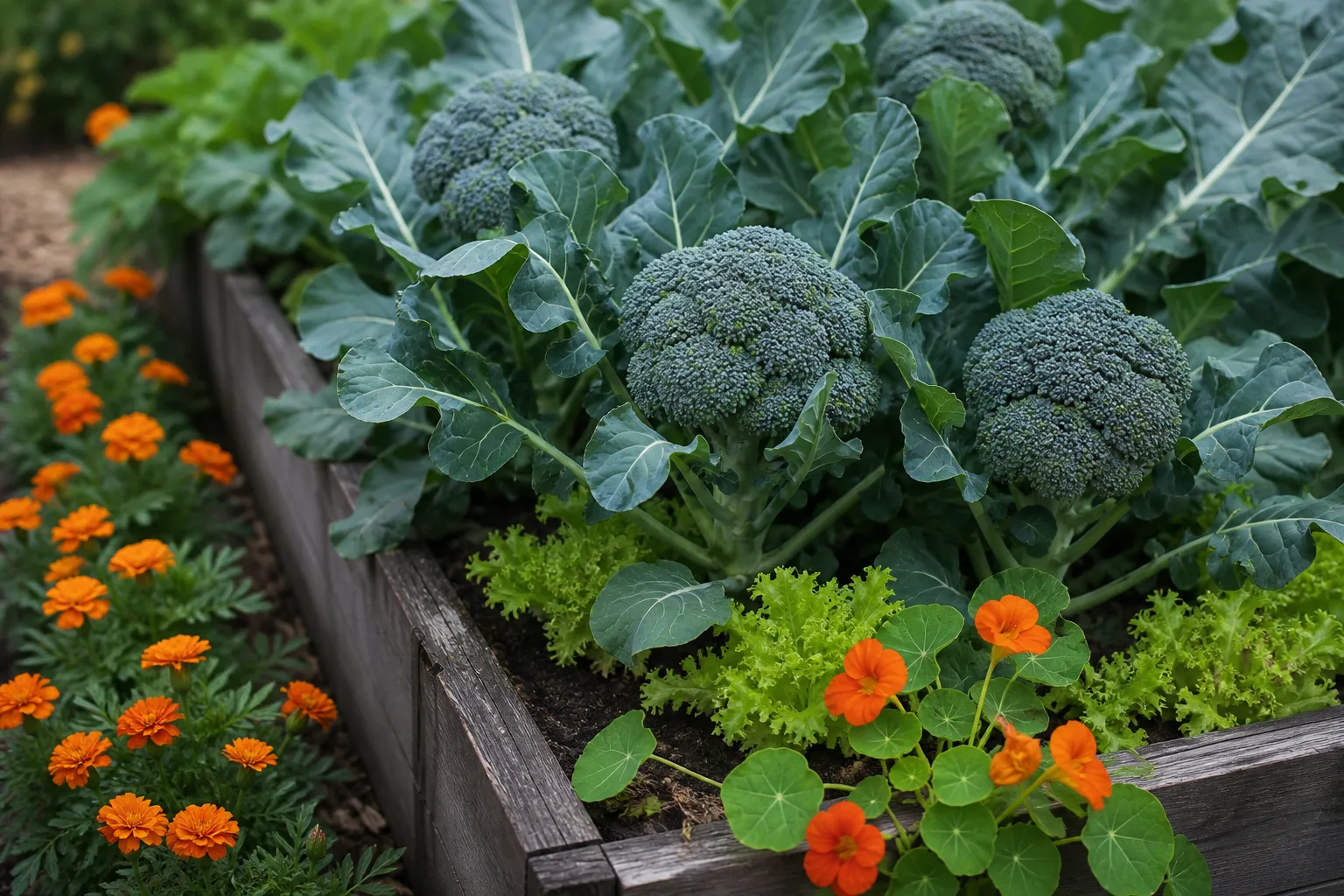
When a companion is not worth the space
Skip the companion if it creates a bigger problem than the one it is supposed to solve. A nasturtium covered in aphids is not helping when it is woven through the sprouts; a sage plant that shades half the bed is not worth its scent; and a mustard trap crop that is never inspected is simply another pest reservoir.
Also skip a companion when the basic growing conditions are wrong. Brussels sprouts in compact, waterlogged soil will not be rescued by garlic. Plants weakened by drought will remain vulnerable even in a diverse bed. Fix the soil, water, timing, spacing, row cover, or rotation first, then add one companion whose job you can actually observe.
The most useful test is simple: after one season, record whether the companion improved harvestable space, made scouting easier, attracted beneficial insects, or reduced a specific pest problem. If it did none of those things, remove it and try a different strategy next season. Good garden design is allowed to be experimental, but it should also be willing to abandon a pairing that consumes resources without returning value.
Conclusion
The best Brussels sprout companion plants are the ones that fit the crop’s long season and your actual garden problem. Garlic, onions, thyme, and sage add aromatic diversity; nasturtiums and mustard can serve as monitored trap crops; sweet alyssum supports beneficial insects; and beets, carrots, radishes, bush beans, and celery help you use space without automatically crowding the sprouts.
Choose two or three companions, give every plant enough room, and match bloom or harvest timing to the sprout crop. Then build the dependable foundation around them: fertile well-drained soil, steady water, mulch, row covers when needed, weekly scouting, clean-up, and crop rotation. That combination gives Brussels sprouts a healthier bed than any companion-planting chart can provide on its own.