How to Grow and Care for English Bluebells
English bluebell care from bulb to bloom: where to plant under trees, how to water and feed, when to divide, and how to avoid common hybrid and rot mistakes.
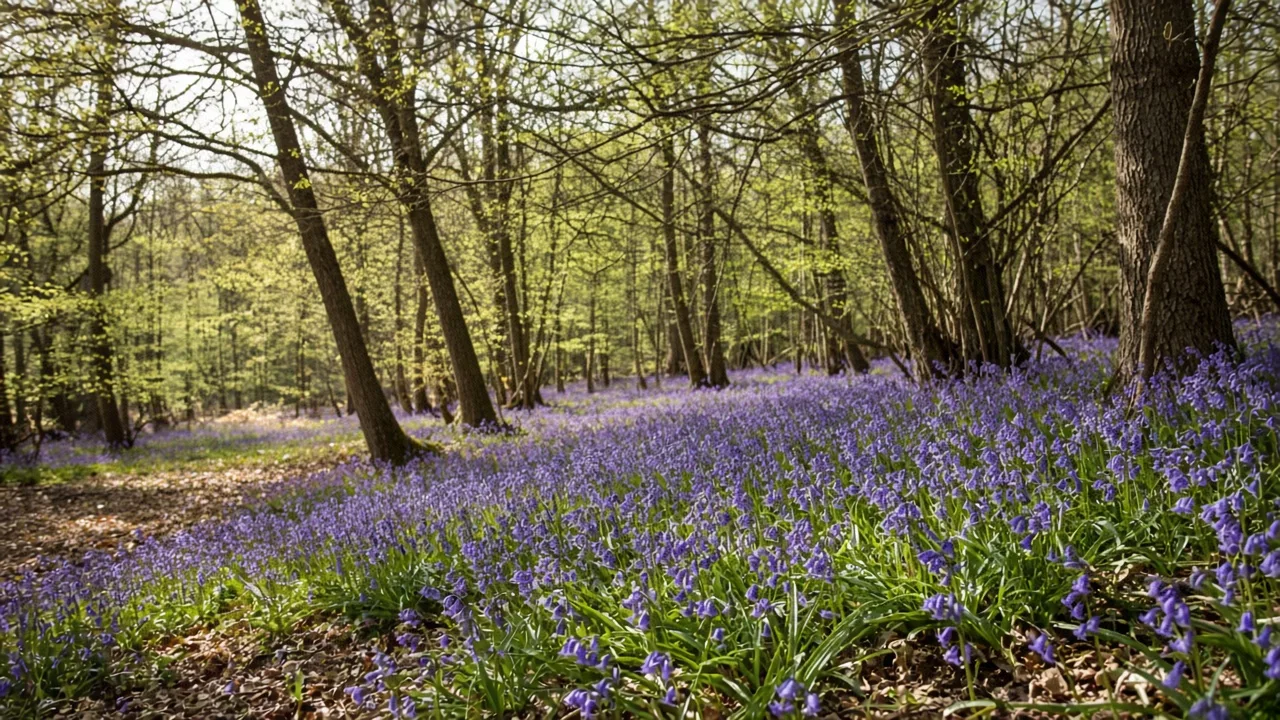
English bluebells (Hyacinthoides non-scripta) are spring-flowering bulbs that behave like woodland wildflowers even when you grow them in a suburban shade bed. In late March through May, depending on your climate, they send up slender stems of nodding violet-blue bells above narrow green leaves, perfume the air on warm days, and then disappear underground by early summer. That vanishing act is normal. Treat them as spring ephemerals, not as evergreen groundcovers, and most of the “mystery problems” gardeners report simply never happen.
The reward for getting the basics right is a colony that thickens year after year with very little intervention. English bluebells multiply by bulb offsets and, if you allow it, seed. They tolerate deer and rabbits better than many spring bulbs, thrive beneath deciduous trees, and pair beautifully with hostas, ferns, and later-emerging perennials that hide fading foliage. The work is front-loaded: buy the right bulbs, plant at the correct depth in drained soil, and leave the leaves alone until they yellow.
What English Bluebells Are (and Why They Behave Like Woodland Wildflowers)
Botanically, English bluebells belong to the asparagus family (Asparagaceae) and are also called common bluebells or wild hyacinth. They are native to western Europe, and the United Kingdom holds a large share of the world’s wild populations. In old woodlands, dense bluebell carpets are so characteristic that the species is used as an ancient woodland indicator where it occurs naturally.
In the garden, that heritage explains their preferences: cool rooting seasons, bright spring light, summer shade, and soil enriched by years of leaf fall. They are perennial bulbs, not annuals. Once established, the same planting can bloom for decades if you avoid digging during growth, prevent summer waterlogging, and do not mow or cut green leaves after flowering.
You may still see older labels such as Endymion non-scriptus or Scilla non-scripta on bulbs or in reference books. Those are prior names for the same plant.
Quick identity cues for Hyacinthoides non-scripta
True English bluebells are easiest to confirm in bloom. Flowers hang from one side of an arching stem, creating a nodding raceme with a sweet fragrance. Petals curl back at the tips, and the anthers are cream-colored, not blue. Stems and foliage are relatively slim compared with Spanish bluebells. If a “bluebell” stands upright on a stiff stem, smells little, and shows blue anthers, you are likely looking at Hyacinthoides hispanica or a hybrid.
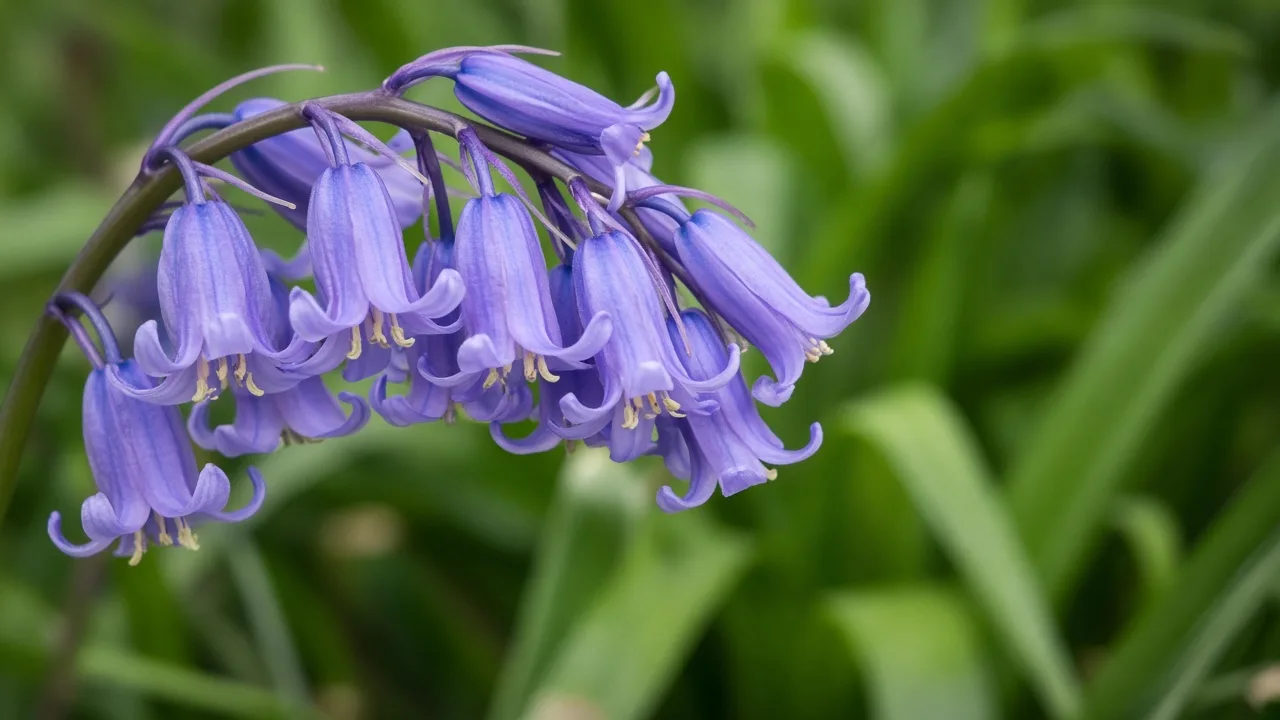
English Bluebells vs Spanish Bluebells and Hybrids
This distinction matters for both appearance and ecology. Spanish bluebells (Hyacinthoides hispanica) are taller, upright, and often paler blue or pink. They are widely sold because they tolerate sun and garden conditions aggressively. In the UK, Spanish bluebells and their hybrid Hyacinthoides × massartiana threaten native populations through cross-pollination. Spanish bluebells are also treated as invasive in parts of the Pacific Northwest.
English and Spanish plants hybridize readily when planted near each other. If you want a true English colony, buy from suppliers that specify Hyacinthoides non-scripta, inspect flowers in bloom when possible, and remove Spanish plantings from the same garden. Hybrids can look intermediate: somewhat upright, somewhat scented, with mixed anther color. When in doubt, choose a reputable specialist bulb source rather than generic “bluebell mix” bags.
For North American gardeners who want a native blue look without European bulbs, Virginia bluebells (Mertensia virginica) are a separate species with very different culture (moist soil, eastern US native). They solve a different design problem and are not interchangeable with Hyacinthoides.
Buying Bulbs Responsibly: Dry Fall Stock vs Spring “In the Green”
You can start English bluebells three main ways: dry bulbs, potted or lifted plants in the green (while leaves are still active), or seed. Bulbs are the practical choice for most gardeners.
Dry bulbs arrive dormant and ship in autumn alongside other spring bulbs. Plant them before the ground freezes so roots can develop during cool fall weather. In-the-green plants are lifted and sold while still in leaf, often in spring. The Woodland Trust notes that in-the-green transplants can establish quickly because the roots are alive, though the display may be modest the following year while plants resettle.
In the UK, wild bluebells are protected. It is illegal to dig up or sell wild-collected plants. Even where you garden under different rules, ask sellers to confirm bulbs are cultivated, not stripped from native woods. Responsible sourcing protects wild genetics and reduces pest and disease import risk.
Inspect bulbs before planting. Firm, intact bulbs with a pointed tip and basal plate are ready to go. Soft, moldy, or deeply scarred bulbs belong in the compost, not in your best shade bed.
Where to Plant: Light, Shade, and the Deciduous-Tree Advantage
English bluebells are often described as partial-shade plants, but the better mental model is seasonal light under deciduous trees. They want bright, open conditions while they leaf out and bloom in spring, then protection from hot, dry summer sun once canopy trees leaf out. A bed beneath oaks, maples, birches, or fruit trees that lose leaves in winter is ideal.
They also grow in open woodland edges and, according to field observations summarized by Gardener’s Path, can persist in sunny meadows that were once wooded. Full sun in cool, moist climates is possible; deep, dry shade all year is not. If your site is permanently dark and dusty under evergreen conifers, bluebells will struggle unless you improve moisture and open the canopy.
Match exposure to your climate. In USDA zones 8–9, prioritize shade and steady soil moisture through spring. In zones 4–5, a sheltered woodland edge with winter mulch is usually enough; bulbs are cold-hardy when dormant.
Soil, Drainage, and pH for Long-Lived Bulbs
Drainage is the non-negotiable soil trait. Like most bulbs, English bluebells rot in soggy, airless ground, especially during summer dormancy. Sandy loam, loam, and improved clay can all work if water moves through the profile. Heavy clay should be loosened and amended with compost or leaf mould before mass planting.
They prefer moist but well-drained soil rich in organic matter. Epic Gardening recommends a pH range of roughly 5.5 to 7.5; slightly acidic conditions mirror many natural woodland soils, but neutral beds perform well too. A soil test saves guesswork if you garden on limestone or very sandy coastal fill.
When preparing a new area, work organic matter into the top 6–8 inches rather than burying fine compost in a single hole. Bluebells spread horizontally over time; a uniformly improved zone supports even colonization.
How to Plant English Bluebells in the Ground
Timing depends on what you bought. Plant dry bulbs in autumn while soil is cool and workable. Plant in-the-green clumps in spring at the same depth they were growing before—use the white-to-green junction on leaves as your guide, as recommended by the Woodland Trust.
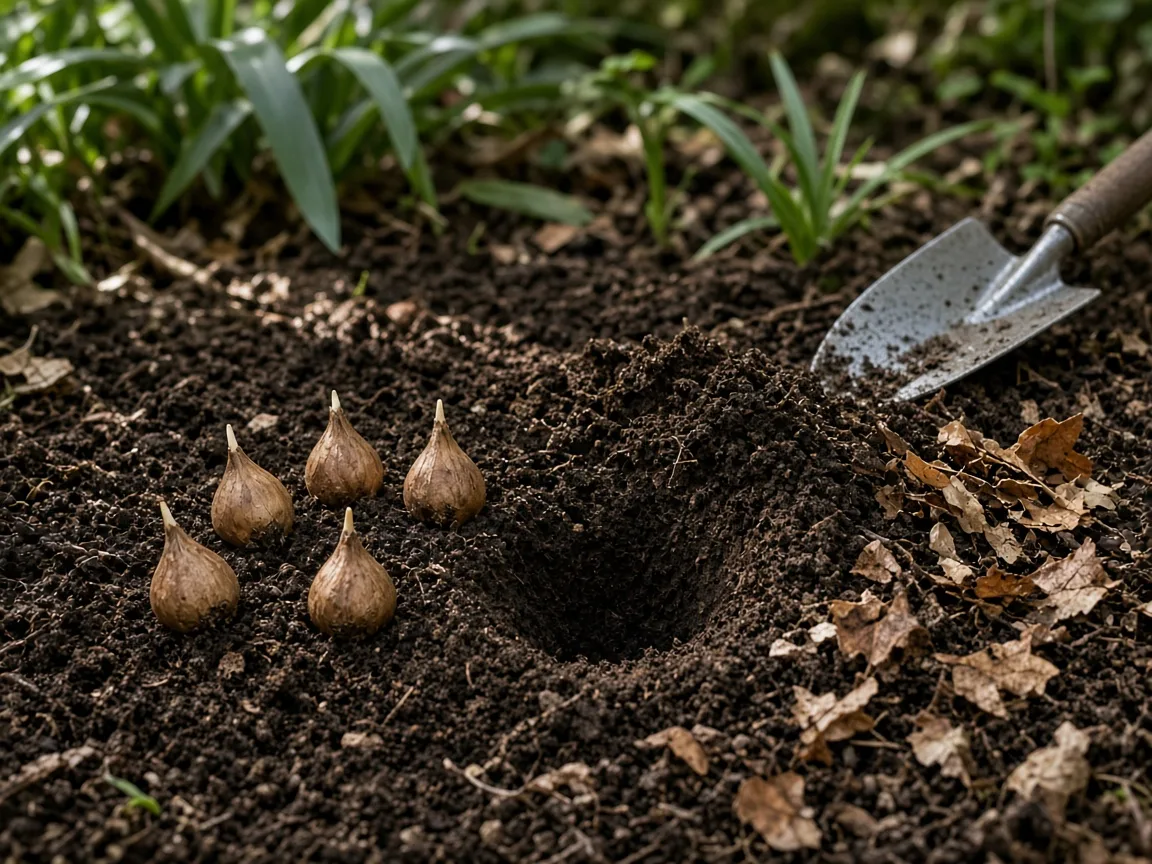
Depth and orientation errors cause more failures than climate ever will. Set dry bulbs about 4 inches (10 cm) deep, pointed tip up, root plate down. A bulb planted upside down may not emerge. Space bulbs 4–6 inches apart in drifts, or cluster 5–7 bulbs per square foot for a faster carpet effect.
For a natural look, scatter bulbs randomly and plant where they land, or dig informal patches rather than rigid rows. Water once thoroughly after planting to settle soil and initiate rooting. Mulch lightly with shredded leaves or compost if your soil dries quickly; avoid smothering thick mulch over the planting zone before shoots appear in spring.
Naturalizing a Bluebell Carpet Under Trees or in Lawn Edges
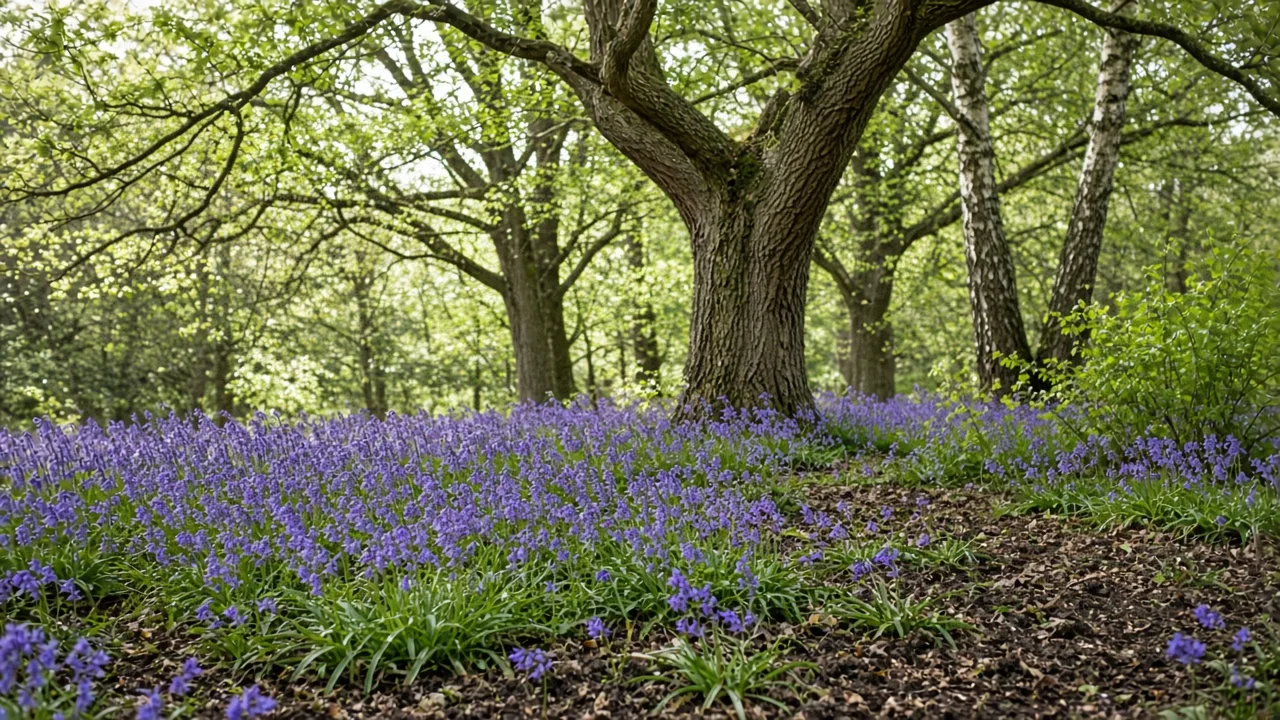
Naturalizing means planting so the bulbs look as if they arrived on their own: irregular groups, varied spacing, and companions that respect the spring calendar. Under deciduous trees, plant in the drip line where spring sun reaches the ground but summer shade follows. Avoid disturbing tree roots excessively; use a hand trowel or dibber between major roots rather than deep rototilling.
Bluebells can also grow in lawns if you treat the lawn as a spring meadow. The critical rule is mowing: do not cut until foliage has fully yellowed and died back, usually by early summer. Early mowing starves bulbs and weakens next year’s display. Mark bulb areas if you need a visual reminder while grass is still green.
Established colonies thicken by offsets and self-sowing. If you want faster spread, allow some seed to mature. If you need to contain hybrids or prevent crossing with Spanish plants nearby, deadhead promptly after bloom.
Watering Through Rooting, Bloom, and Dormancy
Watering should follow the bulb’s annual rhythm, not a fixed weekly schedule. After autumn planting, one deep watering is enough unless your region is in an extended dry spell. During late winter and spring growth, keep soil evenly moist but never waterlogged. Gardener’s Path suggests watering when the top 2 inches of soil feel dry; that is a useful check in beds and containers.
After flowers fade, leaves remain active for weeks, photosynthesizing and refilling the bulb. Continue moderate moisture until foliage yellows. Once plants are dormant, summer rain is usually sufficient in temperate climates. Supplement only if tree roots create exceptionally dry shade and leaves desiccate prematurely.
In containers, expect to water more often than in open ground because soil volume is limited and pots dry faster.
Fertilizer: When Bulbs Need Feed and When They Do Not
English bluebells are not heavy feeders. In woodland soil with periodic leaf litter, they may never need supplemental fertilizer. In sandy or depleted beds, a low-nitrogen, bulb-appropriate feed in early spring as shoots emerge can support flowering. Epic Gardening emphasizes phosphorus and potassium over high nitrogen; excess nitrogen pushes leaves at the expense of blooms.
A second light feeding after bloom, while leaves are still green, can help bulbs store energy for the following year. Compost mulch applied in autumn often replaces synthetic feeds entirely. If your colony blooms reliably and increases slowly, skip fertilizer rather than forcing growth.
Propagation by Division and Offsets
Division is the fastest way to expand a true English planting while preserving type. Mature clumps produce offsets that can be separated when dormant. The usual window is late summer, after foliage has died back and you can see where clumps have thickened.
Dig carefully with a fork, lift the clump, and gently tease offsets apart with your hands. Replant immediately at the same depth, spacing divisions 4–6 inches apart, and water in. Expect a bloom skip of a year or two after disturbance while bulbs re-anchor. Mark the area so you do not accidentally dig there during autumn bulb-planting season.
Division is also how you control overcrowding. Very dense patches may outcompete smaller spring ephemerals such as wood anemones. Thin every few years if diversity, not maximum blue, is your goal.
Growing English Bluebells from Seed (Patience Required)
Seed propagation works, but it is a long game. Seeds ripen in summer; sow fresh if you can. Surface-sow on moist, humus-rich soil in shade, barely cover, and keep consistently damp. Germination can be slow and irregular—sometimes months—and seedlings may take four to five years to reach flowering size, according to Woodland Trust and Gardener’s Path timelines.
Seeds are practical if you want a gradual, natural carpet and do not mind waiting. They are a poor choice if you need impact next spring. If Spanish bluebells grow nearby, seed from your garden may not yield pure English plants; division or verified bulb stock remains the reliable path for species purity.
Containers, Repotting, and Overwintering Pots
English bluebells can grow in pots, though open ground is easier long term. Choose a deep container with drainage holes and fill it with a well-draining, organic-rich potting mix. Plant bulbs at the same depth as in beds, grouped snugly but not touching. Place the pot in bright spring light and partial shade once summer heat arrives.
Containers dry faster and freeze harder. In cold-winter regions, sink pots in garden soil over winter or move them to an unheated garage after foliage dies back. Do not store pots bone-dry for months, but also avoid saturated cold mix. Repot when crowns push against the sides or bloom size shrinks for several years running.
Pruning, Deadheading, and Foliage Care After Bloom
There is almost no pruning in the traditional sense. Do not cut green leaves after flowering; they recharge the bulb for next year. Tieing, braiding, or mowing green foliage weakens the colony the same way it weakens daffodils.
You may deadhead spent flowers if you want to limit seeding or prevent hybrid seed when Spanish bluebells are near. Deadheading does not replace leaving the foliage intact. Once leaves yellow, they pull away easily; that is your signal that dormancy has begun and summer care can stop.
If dying foliage looks messy in a formal border, interplant with hostas, ferns, or late-emerging perennials that expand as bluebell leaves fade. The companion leaves hide the senescence without stealing spring light from the bulbs.
Pests, Diseases, and Wildlife Pressure
English bluebells are relatively trouble-free. Deer, rabbits, rodents, and squirrels usually ignore them, which makes them valuable in woodland gardens where tulips become snacks.
Slugs and snails can damage emerging shoots in wet springs. Hand picking, beer traps, or iron phosphate baits used according to label directions can help without declaring chemical war on the whole bed.
Bluebell rust (Uromyces muscari) appears as yellow leaf patches with dark pustules. Gardener’s Path notes it is mostly cosmetic and rarely threatens long-term health. Remove heavily affected leaves if you wish, avoid overhead watering that keeps foliage wet overnight, and accept that rust may recur in humid springs. Reserve fungicides for high-value display beds where cosmetic damage matters; many naturalized plantings need no spray.
Troubleshooting Weak or Missing Blooms
When bluebells fail to flower, the cause is usually cultural and fixable. Recently divided or transplanted bulbs often skip a bloom cycle. Seed-grown plants simply may not be old enough yet. High-nitrogen fertilizer or rich lawn runoff produces lush leaves with few bells.
Less obvious issues include planting too shallow or upside down, dry shade under thirsty tree roots, and premature foliage removal by mowing or tidy-up pruning. Deep evergreen shade without spring sun is another common mismatch: the leaves may persist weakly, but flower initiation suffers.
If a once-strong colony declines, check for changed light conditions—tree removal or new construction can alter shade patterns—and for summer drainage problems after grading or compaction. Digging a few bulbs in summer dormancy can reveal mushy rot (too wet) or shriveled scales (too dry).
Design Uses and Companion Plants for Spring Layers
English bluebells shine where spring color is scarce: under bare branches, along north-facing fences with bright spring light, and at woodland edges. Mass plantings read as a river of blue; smaller groups punctuate shade beds without overwhelming them.
Layer companions by bloom time and height. Early daffodils and tulips provide contrast in color and form; choose daffodils for rodent resistance in the same bed. Hostas, ferns, epimediums, and Solomon’s seal emerge later to cover dying bluebell foliage. Avoid aggressive summer groundcovers that smother dormant bulbs during establishment.
White and pink English forms exist but are rare in the wild; most garden pinks are Spanish or hybrid. Design accordingly if species purity matters to you.
Toxicity, Pets, and Safe Garden Placement
All parts of bluebells contain toxic glycosides that can cause serious stomach upset if eaten, with greater risk from bulb ingestion because bulbs resemble small onions or garlic. The Woodland Trust reports toxicity to humans, dogs, horses, and cattle, and notes that sap may irritate skin in sensitive people.
That does not mean you must ban them from pet-friendly gardens, but it does mean treating bulbs and dug clumps like any other toxic spring bulb: store purchases out of reach, supervise curious diggers, and teach children not to sample garden plants. Contact medical or veterinary poison guidance promptly if ingestion occurs.
Wear gloves if you know sap bothers your skin, and wash after handling large quantities of bulbs.
Conclusion
English bluebells reward gardeners who respect their woodland rhythm: plant verified bulbs at proper depth in drained, humus-rich soil; give them spring sun and summer shade; water through the green-leaf period; and resist tidying foliage too early. Choose English stock carefully when Spanish hybrids would contaminate your display or local wild genetics. Divide mature clumps if you want faster expansion, or let seed and offsets do the work slowly.
Done well, a small bag of autumn bulbs becomes a self-maintaining spring event that returns for years beneath the trees you already have. That is the whole point of this bulb— not a one-week container stunt, but a seasonal carpet that makes your garden feel older and wilder every April.



