Calathea Leaves Turning Yellow: Causes and Fixes
Yellow calathea leaves? Run a 5-minute soil-and-light check first, then match overwatering, low light, dry air, tap water, or pests to the right fix.
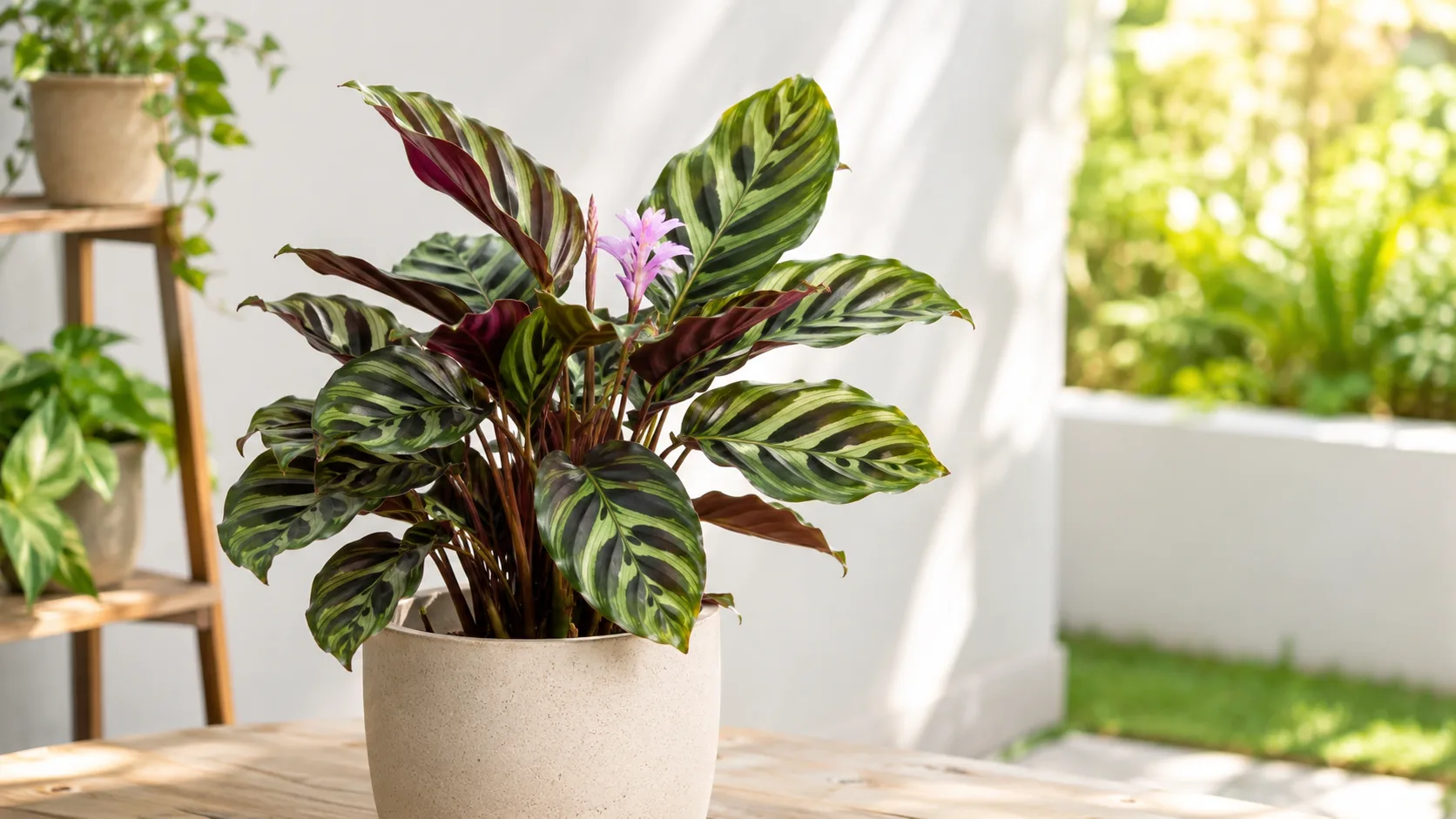
Your calathea was perfect yesterday—patterned leaves lifting toward the window at dawn, folding at dusk—and now a whole section is turning butter yellow. Before you repot, fertilize, or drag it to a brighter sill, check the soil moisture and the pot’s weight. On calatheas, that two-minute test eliminates more wrong fixes than any product you can buy.
Calatheas (many now reclassified as Goeppertia species) are rainforest floor plants dressed up as living art. They need steady moisture, filtered light, and humid air. When any of those drift, leaves yellow as the plant sheds tissue it can no longer support. The pattern matters: one older leaf at the base often means normal aging; several leaves yellowing at once usually means water, light, humidity, temperature, water chemistry, or pests—and the fix depends on which stress came first.
This guide gives you the diagnostic order plant pros use, then walks through each cause with specific rescue steps. For baseline care after you stabilize the plant, see the calathea care guide and the calathea hub.
Why Calathea Leaves Turn Yellow
Yellowing—chlorosis when tissue loses chlorophyll, or simple senescence when an old leaf finishes its life—is how calatheas communicate stress. Unlike succulents that shrivel obviously when dry, calatheas can look unhappy in several ways at once: yellow patches, brown edges, limp stems, or leaves that stay folded in daylight.
What yellow foliage actually means on a prayer plant
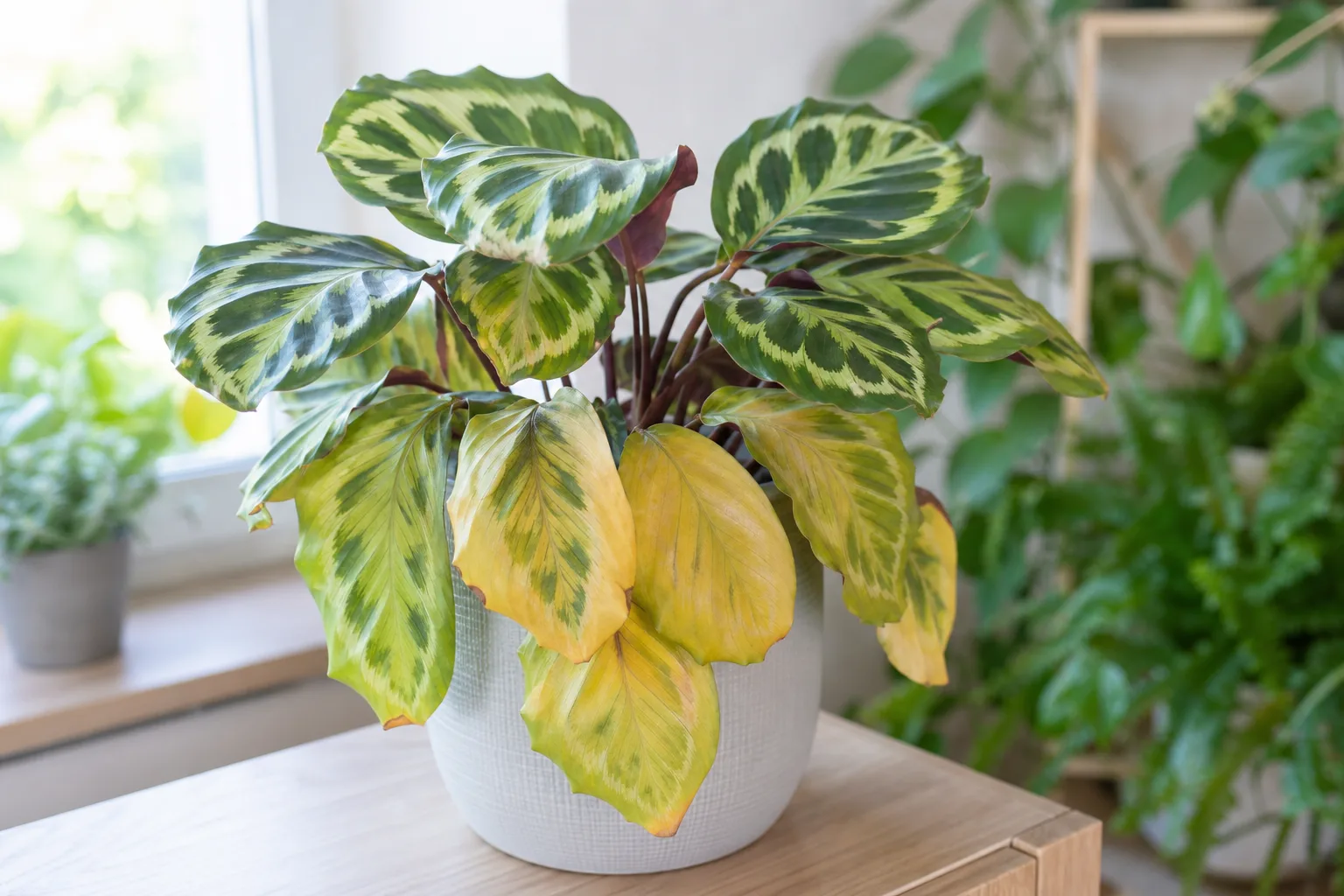
On healthy calatheas, older leaves at the bottom eventually yellow and die while new patterned leaves emerge from the center. That is normal turnover on an evergreen tropical. Abnormal yellowing shows up as multiple leaves changing color together, yellow spreading from the margins inward, or yellow paired with black mushy stems, fine webbing, or soil that smells sour. Center-of-plant yellowing is more serious than a single lower leaf, because it often means roots or crown tissue are failing—not just one leaf aging out.
Calatheas also move leaves daily (nyctinasty), so a folded leaf is not automatically a cry for water. Judge health by soil moisture, new growth, and how many leaves are involved—not by one dramatic pose at 2 p.m.
Start Here: The 5-Minute Yellow-Leaf Diagnostic
Do not start by moving the plant, trimming every yellow leaf, or adding fertilizer. Run this sequence. Each step narrows the cause before you commit to a fix.
Step 1 — Finger-test the root zone. Push your finger or a bamboo skewer two inches into the potting mix. Light, dusty, and dry? Lean toward underwatering. Clinging, cool, and wet for days? Lean toward overwatering and possible root stress.
Step 2 — Lift the pot. A calathea in soggy mix feels heavy even days after you last watered. A chronically dry plant feels feather-light.
Step 3 — Scan light exposure. Is the plant in a dim corner, or getting direct afternoon sun through glass? Both cause yellowing—one from weak photosynthesis and slow water use, the other from scorch.
Step 4 — Check the microclimate. Heat registers, air-conditioning vents, and single-pane winter windows create hot or cold drafts that yellow leaves within days.
Step 5 — Count which leaves are affected. One or two oldest lower leaves only? Often natural aging. New growth plus multiple older leaves yellowing together? Active stress—keep investigating water, humidity, or pests.
Step 6 — Review recent changes. New purchase, repot, fertilizer dose, or seasonal shift to dry heating air? Calatheas hate stacked stresses. Fix one variable at a time.
Wet soil vs dry soil — the fork that matters most
This fork prevents the most common calathea mistake: watering a plant that is already drowning.
| What you find | Pot feel | Leaf pattern | Likely cause | First action |
|---|---|---|---|---|
| Top 2 in. dry; pot light | Very light | Crispy edges, dull pattern, slow new growth | Underwatering | Deep soak until drainage; discard saucer water |
| Mix wet 5+ days; pot heavy | Heavy | Yellow from base up; limp stems; sour smell | Overwatering / root rot | Stop watering; inspect roots (overwatered plant rescue) |
| Evenly moist, good drainage | Moderate | Yellow with brown tips; no soggy smell | Low humidity or water quality | Raise humidity; flush salts; try filtered water |
| Moist but dim location | Moderate to heavy | Pale new leaves; weak pattern; soil stays wet | Too little light | Move to bright indirect light |
| Dry air; soil OK | Moderate | Yellow speckling + fine webbing | Spider mites | Isolate; shower foliage; treat pests |
If wet soil and a dark corner both apply, fix drainage and light first. A shaded, waterlogged calathea declines fast.
Overwatering and Root Stress
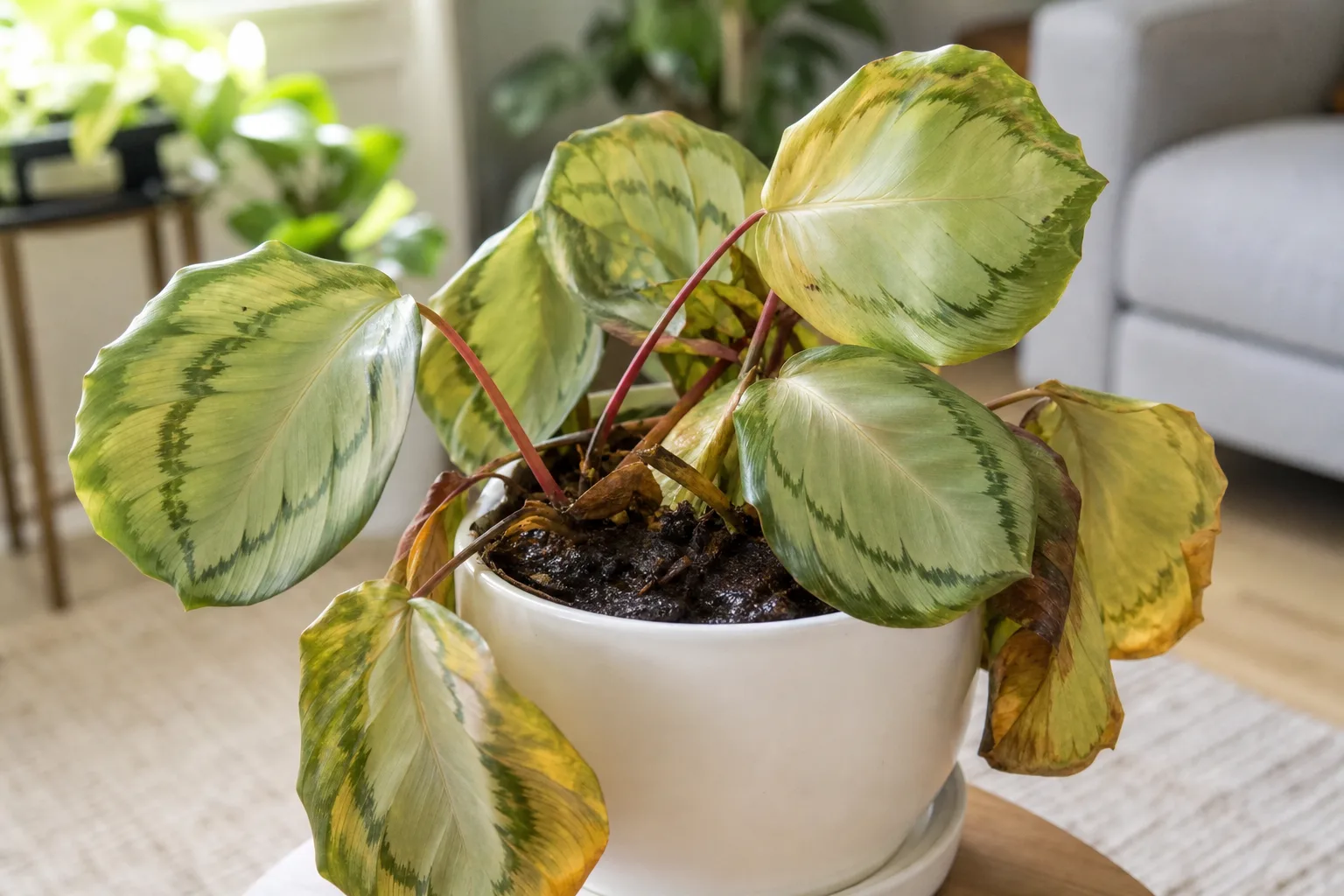
Overwatering is the number-one reason calathea leaves turn yellow indoors. These plants want evenly moist—not saturated—mix. When roots sit in oxygen-poor, waterlogged soil, they cannot absorb nutrients. Lower leaves yellow first, then stems soften. Left unchecked, root rot follows.
The RHS calathea growing guide warns that roots standing in saucer water can rot easily, and recommends tipping away excess after every watering. Winter makes overwatering worse: shorter days slow water use, yet many growers keep the same summer schedule.
Signs your yellowing is water-related on the too-wet side:
- Soil stays dark and wet more than three days after watering
- Pot feels heavy; drainage holes may drip constantly
- Yellow leaves feel soft, not crispy
- White roots turning brown and mushy when you unpot
- Fungus gnats hovering over the surface
How to rescue a waterlogged calathea without making it worse
Stop watering immediately and move the plant to bright indirect light with good air flow—not direct sun, which stresses wet roots further. Slide the plant out of the pot. Healthy roots are firm and white or tan. Trim brown, mushy roots with clean scissors. Repot into fresh, airy peat-free mix with perlite or bark in a pot only slightly larger than the root ball, with open drainage holes.
Do not fertilize until you see firm new leaves unfurling. Recovery can take weeks. If more than half the root mass is gone, consider propagating healthy stems with nodes while the base recovers. Full step-by-step: overwatered plant guide.
Bottom-watering from a tray can work for even moisture, but only if you remove the pot once the surface glistens and never let the roots sit submerged overnight.
Underwatering and Chronic Dry Soil
Calatheas are moisture-loving, and chronic dryness yellows leaves too—often with crispy brown tips and leaves that curl or stay folded in daytime. Underwatering is easy to miss because calathea leaf movement is not a reliable thirst gauge.
Dry-soil yellowing clues:
- Top half-inch to two inches bone dry before you expected
- Pot noticeably light when lifted
- Older leaves yellow while new tips may brown
- Soil has pulled away from the pot sides (hydrophobic dry pockets)
Fix with a slow, thorough soak: water until it runs from drainage holes, let the pot drain 15 minutes, empty the saucer. For severely dry mix, bottom-water for 30–45 minutes, then top-water once to rewet the center. Going forward, water when the top inch starts to dry—not on a calendar. Compare with underwatered plant rescue if fine roots have desiccated.
Insufficient Light and Fading Growth
Calatheas are shade-tolerant in nature but not darkness-tolerant in your living room. Missouri Botanical Garden recommends bright indoor areas with little direct sun for Calathea makoyana (peacock plant). The RHS places them in a bright spot out of direct sunlight, with an east-facing window ideal in summer and a brighter south exposure in low winter light.
Too little light produces pale, yellow-green new growth, weak patterns, and soil that stays wet too long because the plant is not using water. Too much direct sun scorches patterns into bleached yellow patches with brown crisping.
Where to move a yellowing calathea indoors
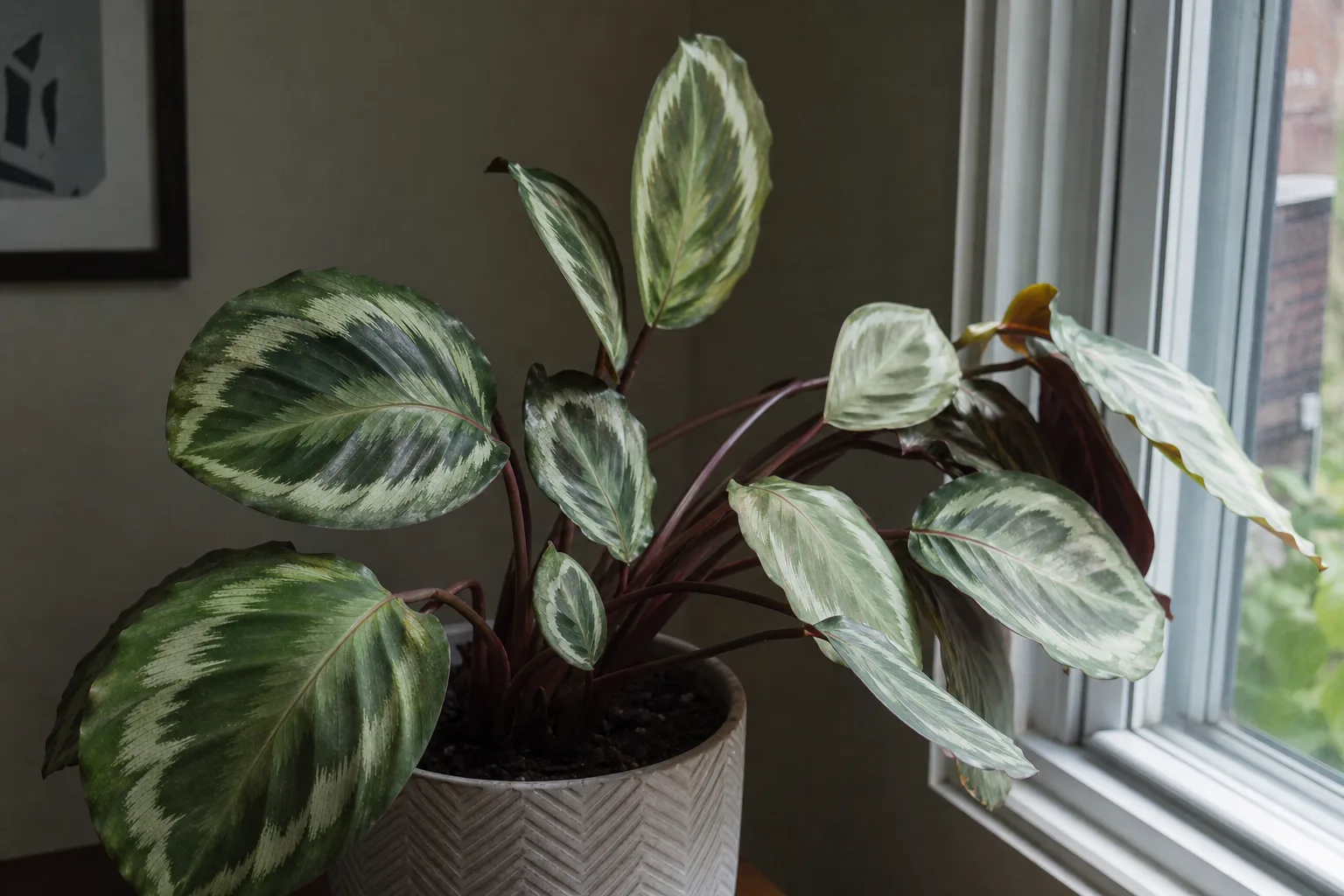
Aim for bright, indirect light roughly equivalent to an east window or a few feet inside a south or west window behind sheer curtains. Gentle morning sun is usually fine; midday and afternoon sun through clear glass is not. If the only bright spot is hot afternoon sun, filter it or move the plant back until leaves look vivid but unburned.
Rotate the pot a quarter turn weekly so new growth does not lean. If you must keep a calathea in a dim room, accept slower growth—or add a grow light rather than overwatering to “compensate.”
Low Humidity and Dry Winter Air
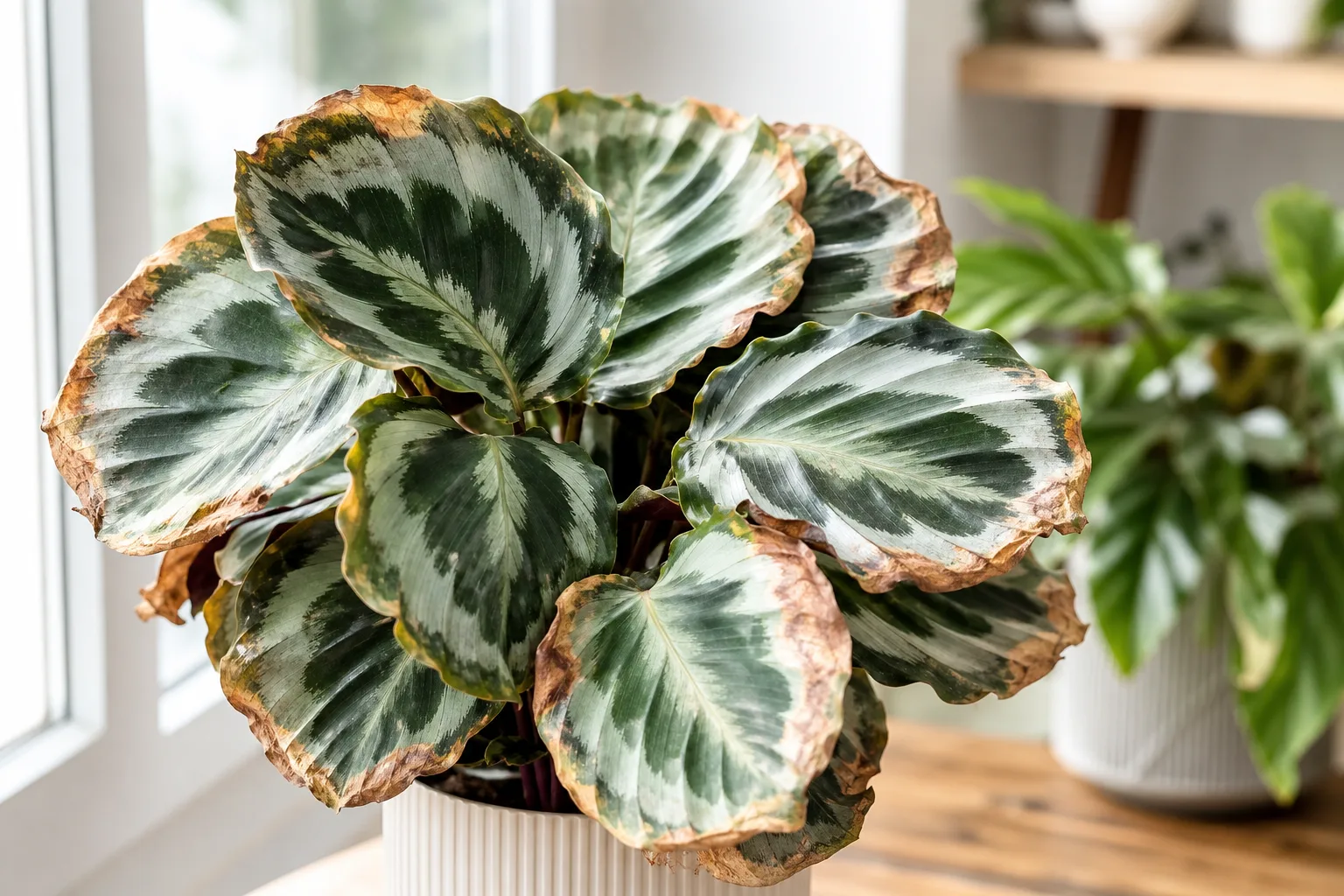
Calatheas evolved in steam-filtered understory air. Missouri Botanical Garden notes they need high humidity and that leaves may roll or brown in dry air—yellowing often appears alongside those symptoms. Indoor heating can drop relative humidity below 30% in winter, far below the 50–70% range many tropicals tolerate.
Low-humidity yellowing usually shows as:
- Brown leaf edges progressing to yellow margins
- Leaves curling or not opening fully in daytime
- Worsening in winter or near heat sources
- Spider mites appearing (they thrive when air is dry)
What actually helps: grouping plants, a cool-mist humidifier nearby, or growing in a bright bathroom with shower humidity. The RHS suggests pebble trays and misting; Penn State Extension notes that misting and pebble trays have limited whole-room impact but grouping and humidifiers are more reliable. For tray setup that keeps roots above the waterline, see DIY pebble tray and pebble tray vs humidifier.
Do not respond to dry air by overwatering the soil—that doubles the stress.
Temperature Swings, Drafts, and Heat Vents
Calatheas prefer a steady 16–21°C (61–70°F) range per the RHS. Brief exposure to blasts of hot or cold air—air-conditioning vents, drafty winter windows, fireplace heat, or space heaters—can yellow leaves within days. Leaves may yellow suddenly after you moved the pot to a new sill or after the first cold snap against the glass.
Fix by moving the plant at least a few feet from blowing vents and insulating against cold window panes in winter. Avoid placing pots on radiators or inside closed cars. Stability matters more than chasing a perfect thermometer reading.
Tap Water, Minerals, and Salt Buildup
Calatheas are more sensitive to water chemistry than pothos or snake plants. Municipal tap water may contain chlorine, chloramine, fluoride, and dissolved minerals. Over time, salts accumulate in the mix and burn roots and leaf margins—yellowing and browning follow even when watering rhythm looks correct.
The RHS recommends rainwater when possible, or tap water left to stand 24 hours so chlorine can dissipate; distilled water from dehumidifiers is another option. Avoid softened water high in sodium.
If yellowing persists despite good moisture and light:
- Flush the pot monthly: run lukewarm water through for several minutes at normal watering time, let drain fully
- Switch to filtered or rainwater for four to six weeks and compare new growth
- Check whether fertilizer salts compound the problem—brown tips with crusty soil surface are a clue
Damaged yellow leaves will not re-green; judge success by healthy new unfurling leaves.
Natural Aging: When One Yellow Leaf Is Normal
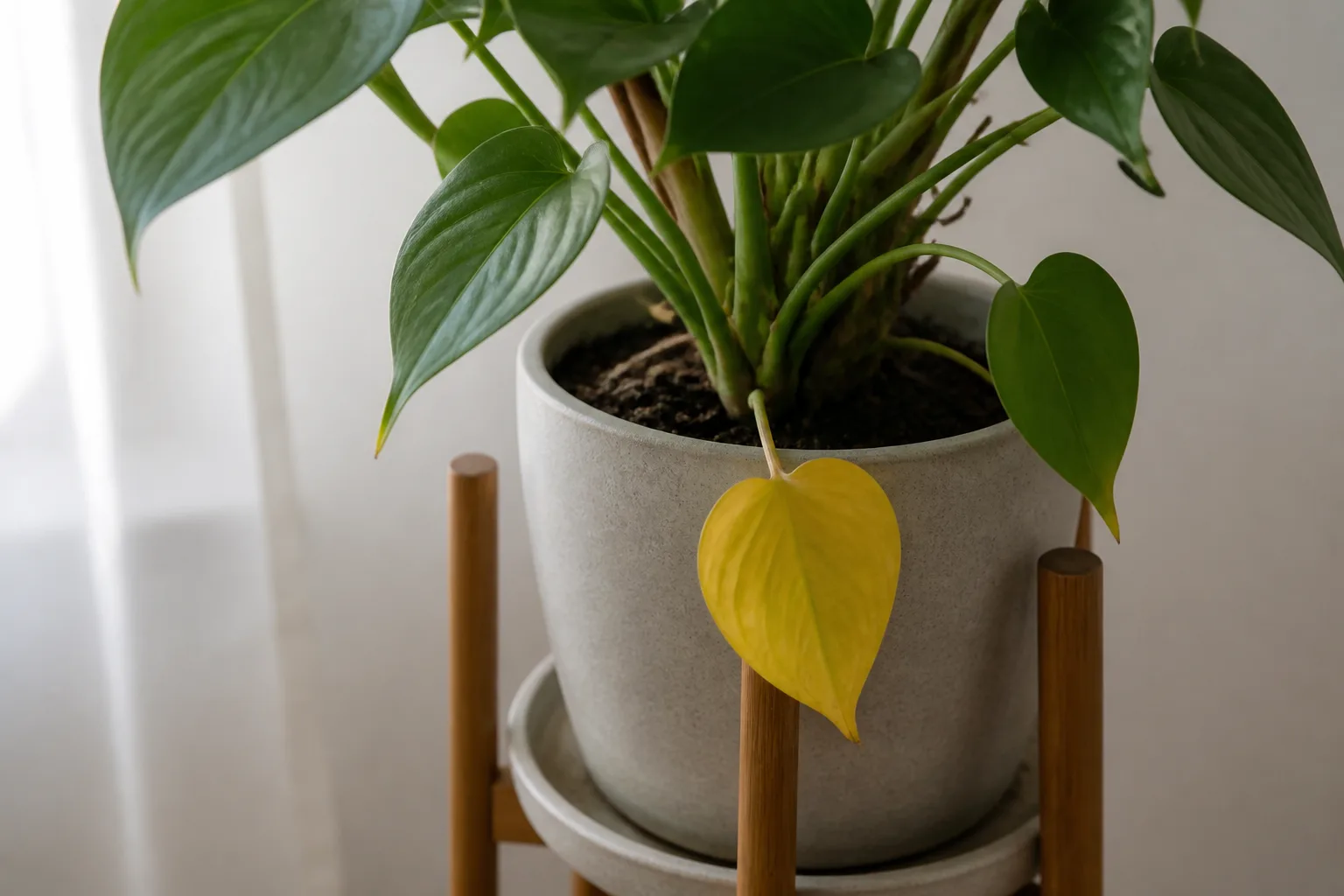
Each calathea leaf has a lifespan. The oldest leaf or two yellowing slowly at the base while new patterned leaves emerge from the center is normal senescence—not a crisis. These leaves often pale evenly, then dry, without mushy stems or a sour pot smell.
Trim fully yellow leaves at the base with clean pruners to redirect energy to new growth. Worry when multiple leaves yellow at the same time, when yellow climbs the plant, or when new leaves emerge small and pale. That pattern points to care stress, not old age.
Pests That Yellow Calathea Leaves
Insects rarely top the list, but spider mites, aphids, mealybugs, and scale can stipple or yellow foliage by draining sap. Mites are especially common when humidity crashes in heated rooms.
Spider mites and other sap feeders
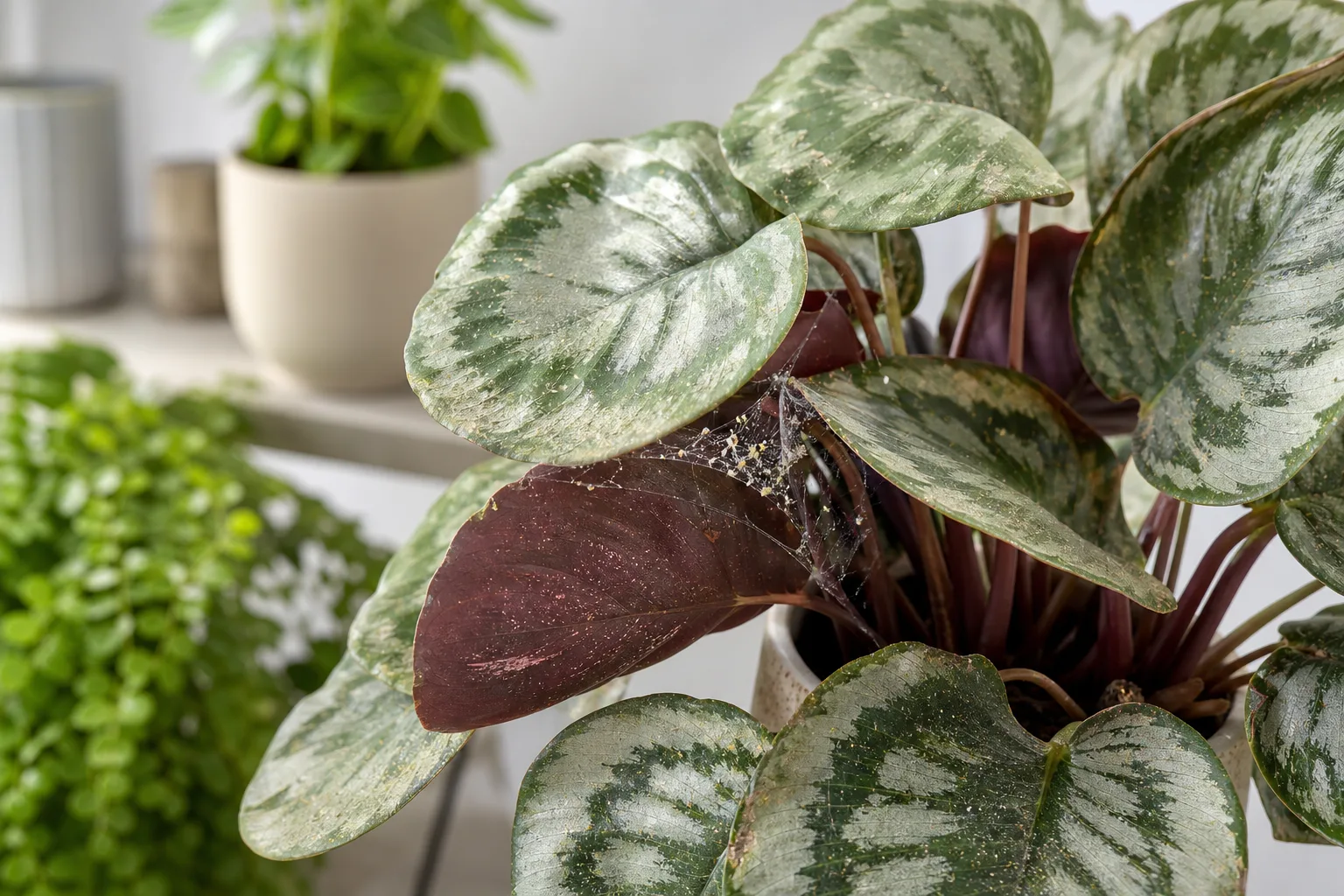
Spider mites leave fine webbing, speckled yellow or silvery patches, and gritty dust on leaf undersides. The RHS lists speckled yellowing with webbing as a mite warning on calatheas.
Isolate the plant. Shower leaves with lukewarm water, increase humidity, and treat with horticultural soap or oil per label directions—repeat weekly until clear. Do not fertilize or repot while fighting an infestation. Check neighboring plants; mites spread on dry air currents.
Acclimation Shock and Repot Stress
A calathea that yellowed right after you brought it home or moved rooms is often reacting to light, humidity, and temperature change—not your long-term care skills. Leaf movement cycles reset slowly in new conditions. Give it two to three weeks of stable care before major interventions.
Repotting and fresh fertilizer on a stressed plant frequently worsen yellowing. Unless roots are rotting, wait until new growth looks normal before repotting. If you must repot after root rot surgery, use only a slightly larger pot and do not bury stems deeper than before.
Over-fertilizing causes yellow or burned leaf edges too. Calatheas need light feeding only in active growth; skip fertilizer on yellowing plants until they recover.
Conclusion
Yellow calathea leaves look alarming because the plant is normally so expressive—but color change is diagnostic data, not a verdict. Check soil moisture and pot weight first, then match your pattern to the cause: soggy mix and mushy roots mean stop watering and rescue roots; dry, light pots mean a deep, draining soak; dim rooms mean brighter filtered light; winter heating means humidity support; sudden yellow after a move means patience; speckles and webbing mean pests.
Trim leaves that are fully yellow—they will not turn green again. Watch new growth as your scoreboard. Firm, patterned unfurling leaves mean your fix worked. If multiple causes overlapped, address water and light before repotting or feeding. For ongoing care once the crisis passes, keep the rhythm in the calathea care guide and watering basics. Your calathea can recover. It just needs the right correction—not every correction at once.



