Hardy Hibiscus: Plant Care & Growing Guide
Grow hardy hibiscus (Hibiscus moscheutos) with planting timing, wet-soil placement, late-spring patience, pruning, propagation, and fixes for no-bloom summers.
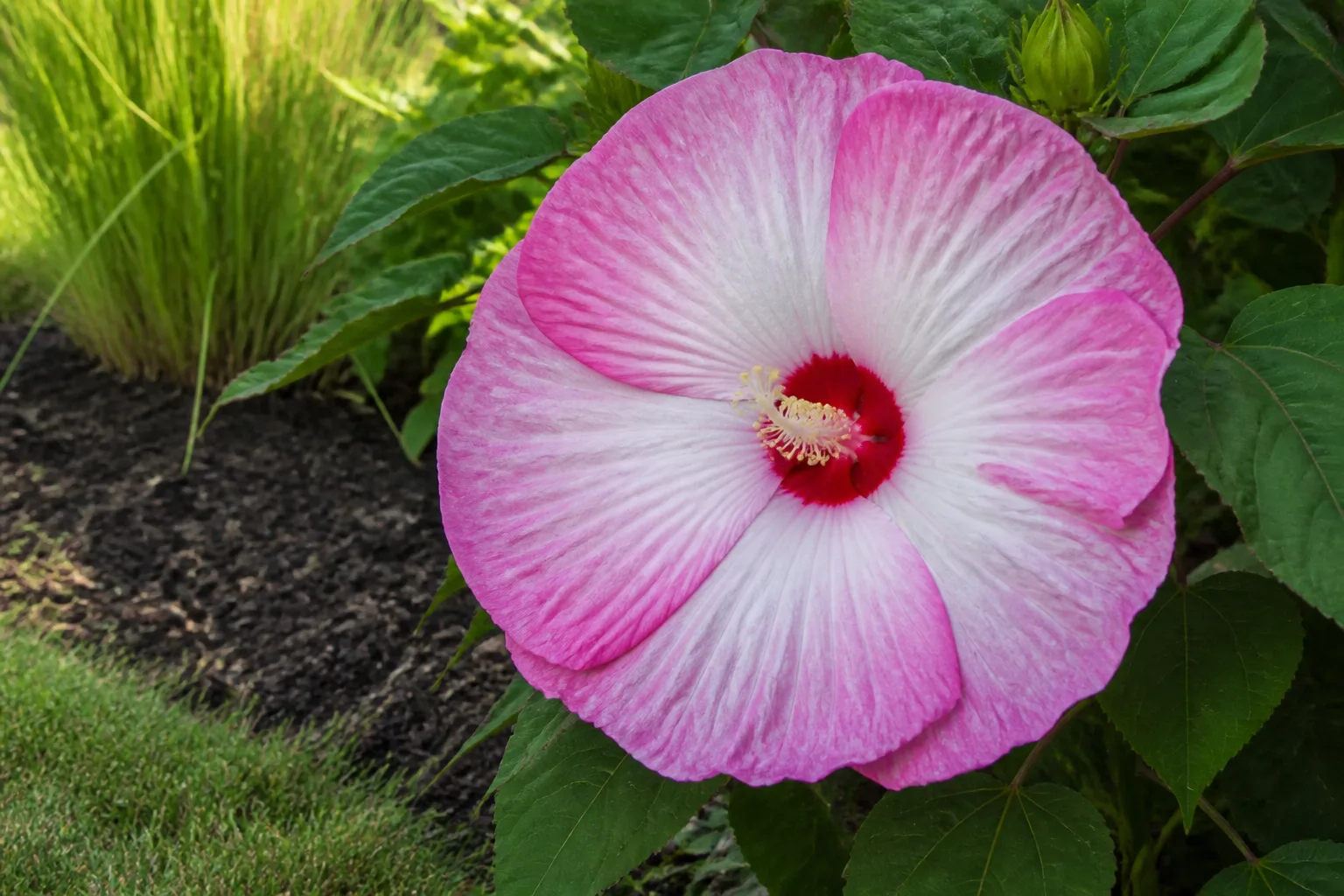
Hardy hibiscus (Hibiscus moscheutos), also called rose mallow or swamp rose mallow, is a North American perennial that dies to the ground every winter and pushes up dinner-plate flowers on new stems each summer. The blooms look tropical. The hardiness is not. That mismatch is why so many gardeners either fall in love with the plant in July or dig it up in May thinking it failed.
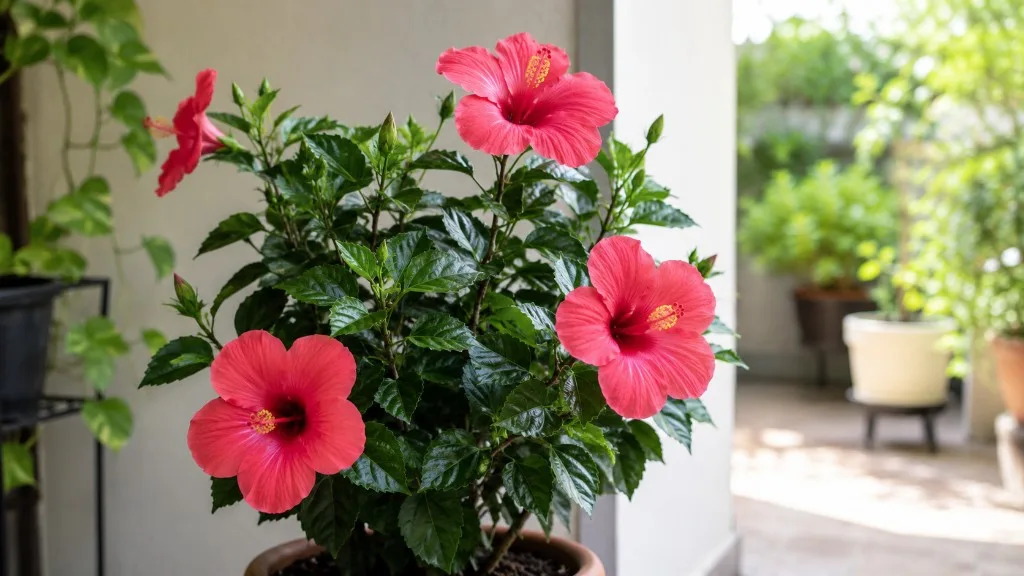
If your goal is a shrub that stays leafy through winter indoors, you want tropical hibiscus (Hibiscus rosa-sinensis), covered in the hibiscus care guide. If you want a woody landscape shrub with smaller flowers, look at Rose of Sharon (Hibiscus syriacus). Hardy hibiscus is its own plant: herbaceous, wetland-adapted, late to wake up, and spectacular for about a month when conditions are right.
What Hardy Hibiscus Actually Is (and What It Is Not)
Hibiscus moscheutos is a mallow-family perennial native to wet places across eastern North America—from marshes and floodplains to ditch edges and moist meadows. North Carolina State Extension describes it as a tall, woody-based herbaceous perennial with hollyhock-like flowers up to 8 inches across on stems that typically reach 2 to 6 feet tall and 2 to 5 feet wide. Modern cultivars can push blooms toward 10 to 12 inches on compact plants.
Each flower lasts only a day or two, but new buds open in succession for several weeks from midsummer into early fall. The plant is not trying to behave like a tropical hibiscus with year-round foliage and continuous indoor bloom. It is a back-of-the-border or rain-garden perennial that earns its space in a short, intense flowering window.
Quick Facts at a Glance
| Trait | Hardy hibiscus (H. moscheutos) |
|---|---|
| Plant type | Herbaceous perennial (dies back in winter) |
| Mature size | 3–7 ft tall, 2–4 ft wide (cultivar-dependent) |
| Sun | Full sun (6+ hours) for heaviest bloom |
| Soil | Rich, moist to wet; tolerates average garden soil if watered |
| Bloom time | July–September in most regions |
| Flower size | 4–12 inches across |
| USDA zones | 4–9 (confirm cultivar tag in Zone 4) |
| Native range | Eastern North America |
Hardy Hibiscus vs Tropical Hibiscus vs Rose of Sharon
Buying errors happen at the nursery label, not in your garden. Use this comparison before you checkout.
| Feature | Hardy hibiscus (H. moscheutos) | Tropical hibiscus (H. rosa-sinensis) | Rose of Sharon (H. syriacus) |
|---|---|---|---|
| Winter habit | Stems die to ground; roots survive | Needs frost-free shelter or indoor move | Woody stems persist; deciduous shrub |
| Typical hardiness | USDA 4–9 | Zones 9–11 outdoors | Zones 5–9 |
| Flower size | 4–12 inches, often with dark eye | 3–6 inches, many colors | 2–4 inches, shrub quantity |
| Best use | Rain gardens, perennial borders, wet margins | Containers, frost-free patios | Hedges, late-summer shrub color |
| Spring behavior | Very late to emerge | Evergreen in warm climates | Leafs out mid-spring |
The LeafyPixels hibiscus hub focuses on tropical culture—daily watering checks, bud-drop triage, and overwintering pots. Hardy hibiscus belongs in the ground (or large outdoor containers) in climates where the roots survive freezing. For a wider look at species and hybrids, see types of hibiscus.
Where Hardy Hibiscus Belongs in Your Yard
Hardy hibiscus is not a foundation shrub for dry shade. It is a statement perennial for sunny, moisture-retentive sites where many drought-loving plants struggle. Missouri Botanical Garden notes it grows easily in average garden soil as long as it does not dry out, but performs best in organically rich, medium to wet soils in full sun with good air circulation.
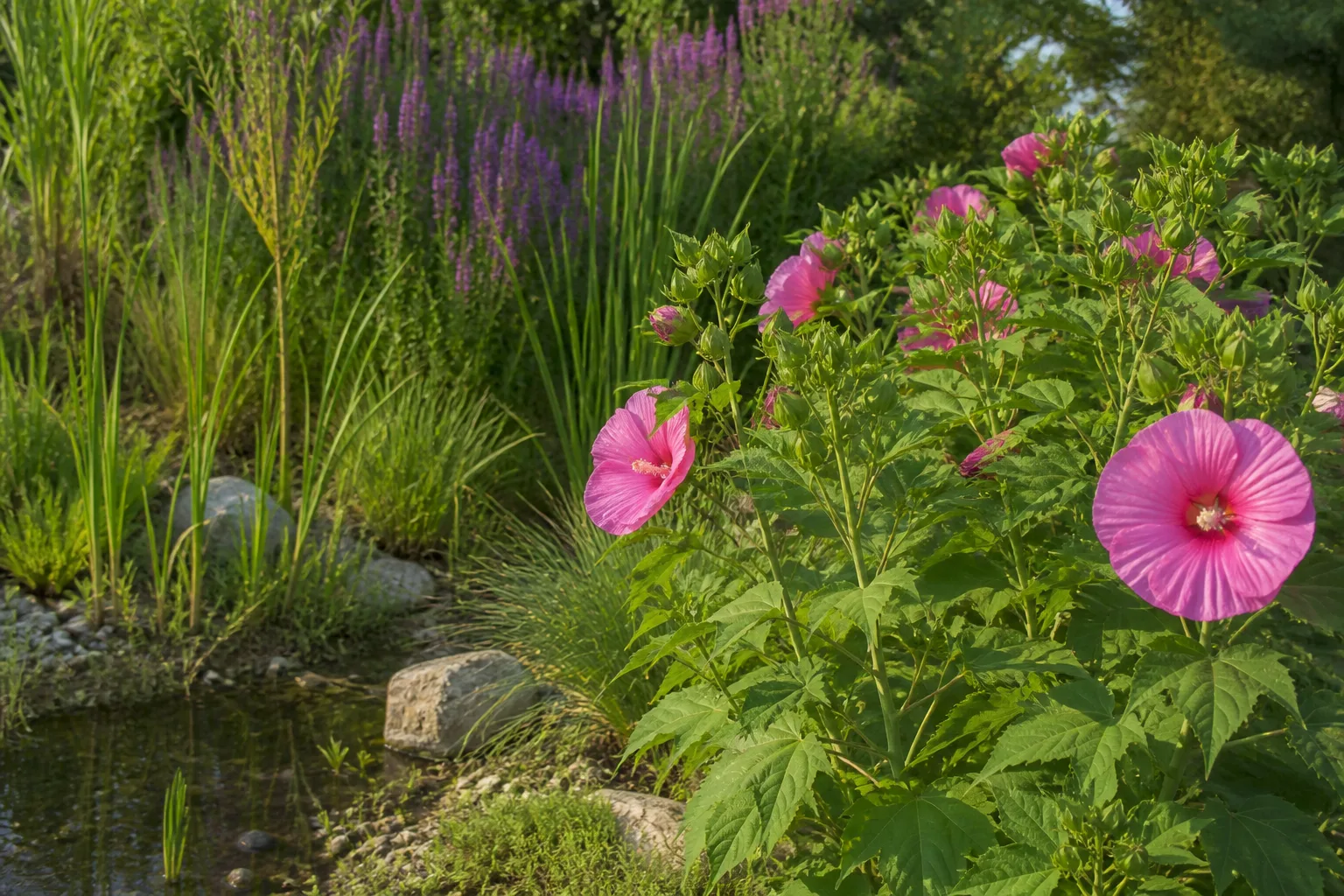
Site it where you can see the flowers at eye level. Back of a perennial border, center of a rain-garden bowl, or margin of a pond where soil stays damp are all strong fits. Protect from strong wind when possible—large petals tear easily, and wind-battered blooms look spent after one day anyway.
Rain Gardens, Pond Margins, and Wet Borders
New Moon Nursery, a native-plant grower, classifies H. moscheutos as a rain-garden and wetland species that tolerates clay, muck, and shallow standing water after establishment. That does not mean you must plant it in a bog. It means the plant forgives—or prefers—soil that stays moist through summer.
Pair it with other moisture-loving natives such as cardinal flower (Lobelia cardinalis), swamp milkweed (Asclepias incarnata), and switchgrass (Panicum virgatum) for a cohesive pollinator planting. If your yard is sandy and fast-draining, plan on supplemental watering rather than forcing the plant into a dry rock garden.
How to Plant Hardy Hibiscus
Spring planting after the last frost is the straightforward path for nursery pots. Seeds and cuttings follow different calendars (covered under propagation), but a container-grown plant goes in when the soil is workable and nights are reliably above freezing.
When to Plant
Plant potted hardy hibiscus in spring once frost danger passes. Fall planting can work in Zones 6 and warmer if you allow six to eight weeks of root establishment before the ground freezes, but spring is safer for beginners because you watch the full emergence cycle that first year.
Starting seeds indoors requires more lead time: soak and scarify seeds, then sow 8 to 12 weeks before your last frost date, or direct-sow after soil warms in late spring.
Spacing, Depth, and First-Year Watering
Space plants 3 to 4 feet apart for standard cultivars, or follow the mature width on the tag for compact series such as Summerific. Dig a hole as deep as the root ball and two to three times wider. Set the crown at the same depth it grew in the pot—burying the stem invites rot.
Water deeply at planting and keep soil evenly moist through the first growing season. Missouri Botanical Garden recommends regular deep watering even after establishment; leaf scorch appears when roots dry out in heat. A 2- to 3-inch mulch layer helps, but pull mulch back slightly from the crown in spring so you can see new shoots emerge.
Light Requirements for Maximum Bloom
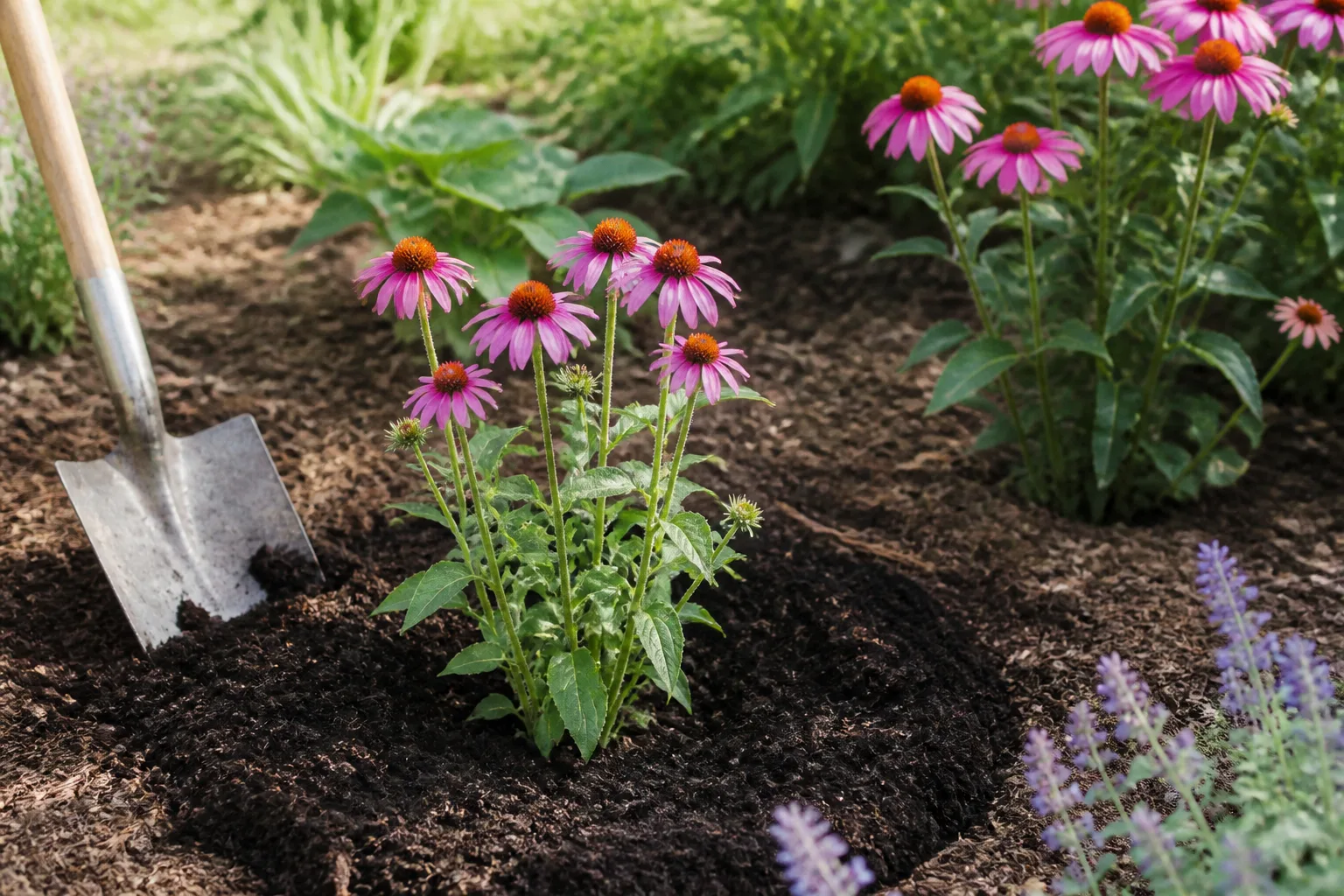
Full sun—six or more hours of direct light daily—produces the strongest stems, the largest flowers, and the best disease resistance. NC State Extension lists full sun to partial shade, but partial shade all day usually means fewer blooms and leggier growth.
In very hot, dry climates, light afternoon shade can reduce leaf scorch without eliminating flowering, provided the plant still receives a solid block of morning sun. Do not tuck hardy hibiscus under eaves where roof runoff creates drought one week and flood the next.
Soil and Water: The Moisture Balance That Matters
Think “moist meadow,” not “swamp or desert.” Hardy hibiscus accepts a wide soil texture range—loam, silt, clay with organic matter—when moisture stays consistent. Slightly acidic to neutral pH (roughly 6.0 to 7.0) is typical for garden performance.
Check moisture by pushing a finger 2 inches into soil. If it is dry at that depth during active growth, water slowly until the root zone is soaked. In a rain garden, natural rainfall may carry the plant through much of summer; in a raised bed, you may water twice weekly during heat waves. Yellow leaves in midsummer often trace back to drought stress or sudden moisture swings rather than mysterious disease.
Fertilizer for Strong Summer Blooms
Hardy hibiscus is a hungry perennial when pushing large flowers on new wood. A balanced slow-release fertilizer applied in early spring, after new growth is several inches tall, supports the season ahead. A second light application after the first heavy bloom flush can help if your soil is lean.
Avoid heavy nitrogen late in summer—it encourages leafy growth when the plant should be hardening off for dormancy. Organic compost worked into the planting area at install time often supplies enough baseline nutrition in rich soils. Container plants in outdoor pots benefit from diluted liquid feed every two to three weeks during bloom because nutrients leach faster.
Best Hardy Hibiscus Varieties to Know
Breeding has expanded color and habit beyond the species’ white-with-crimson-eye look. These names appear frequently at garden centers:
- Lady Baltimore — Classic light pink flowers with red eye; 4 to 5 feet tall. A long-standing landscape favorite.
- Robert Fleming — Compact 2 to 3 feet with deep red velvety blooms; good for smaller beds.
- Summerific Perfect Storm — Dark purple foliage with whitish-pink flowers and red eye; 3 by 4 feet.
- Summerific Berry Awesome — Magenta-pink flowers on a similarly compact frame.
- Kopper King — Copper-purple foliage with pale pink blooms; dramatic even before flowers open.
Read the tag for mature height in your zone. A cultivar listed at 3 feet in Zone 7 may grow taller in Zone 8 with a longer season. More hibiscus types—including tropical and shrub forms—are compared in the types of hibiscus guide.
Pruning and Late-Season Cutback
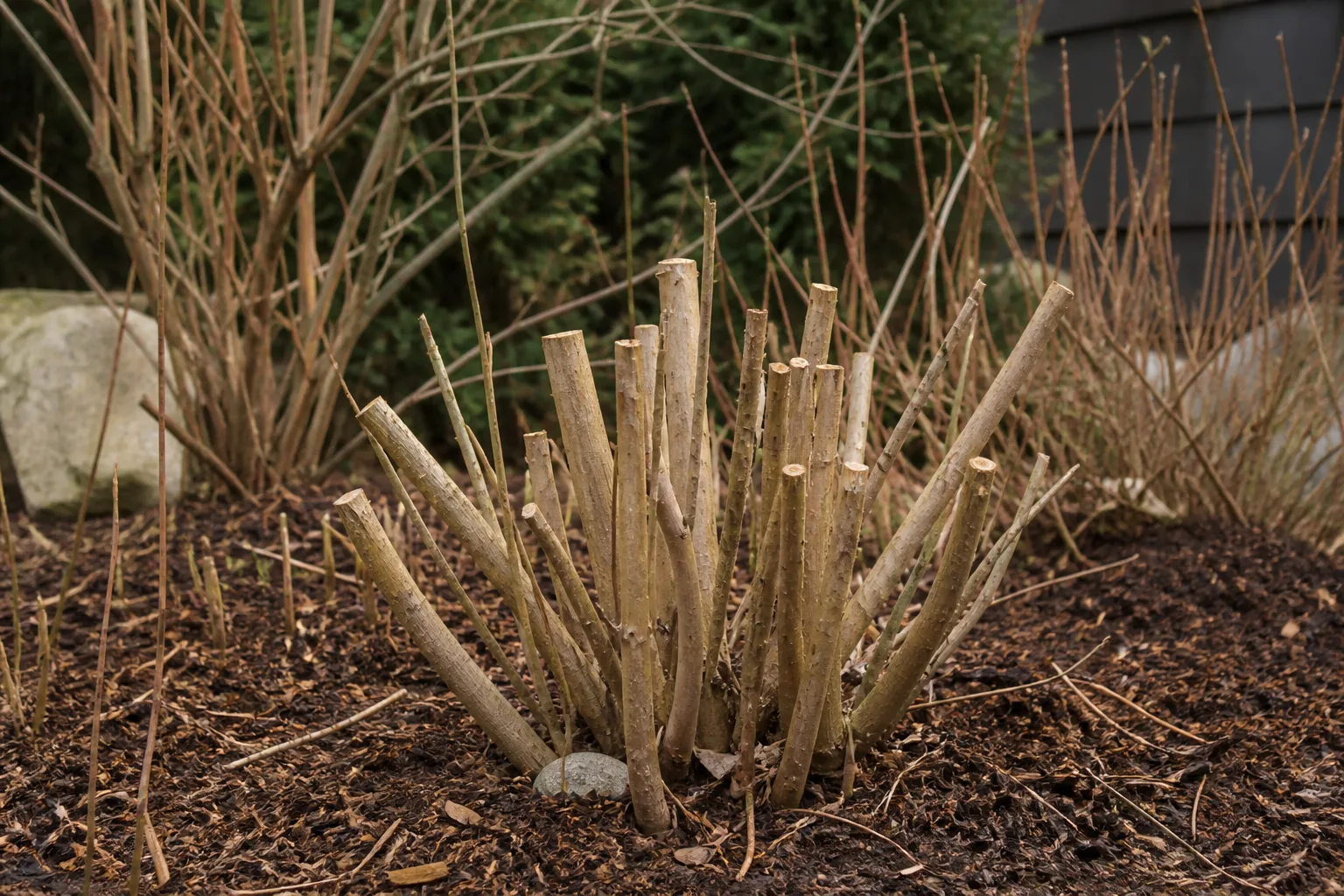
Hardy hibiscus flowers on new season growth, so winter stems are expendable. Cut plants back to 3 to 6 inches above ground in late fall after frost browns the stems, or in early spring before new shoots appear. Use loppers on woody stems from the previous year.
Deadheading spent flowers improves appearance during the bloom wave but is optional for plant health. Pinching growing tips at 8 and 12 inches in late spring—recommended by Missouri Botanical Garden—produces bushier plants if you want more stems at the cost of slightly later first bloom.
Pollinator note: NC State Extension notes that native bees nest in dead hollow stems. Instead of cutting flush to the ground the first winter, you can leave stems 12 to 24 inches tall and remove them the following year once they break down. That trade-off sacrifices tidy winter beds for stem-nesting habitat—a worthwhile compromise in wildlife-focused gardens.
Propagating Hardy Hibiscus
You can multiply hardy hibiscus by stem cuttings, division, or seed. Cuttings and division give you a clone of the parent; seed-grown plants vary in flower color unless you start with a stabilized line.
Stem Cuttings, Seeds, and Division
Softwood cuttings (spring to early summer): Take 3- to 5-inch cuttings from new growth without flower buds. Dip the cut end in rooting hormone, insert into moist potting mix, cover with a humidity dome or bag, and keep at 70°F or warmer. Roots typically form in six to eight weeks. Overwinter young plants in a cold frame or protected pot if they are not garden-sized by fall.
Division (early spring): Dig the clump as new shoots emerge and split it with a sharp spade, ensuring each division has roots and buds. Replant immediately and water well. Division rejuvenates old clumps that have hollow centers.
Seed (winter to spring): Collect brown capsules in fall or buy seed. Seeds need scarification—nick the coat or rub between sandpaper—and cold moist stratification for 4 to 8 weeks in the refrigerator before sowing. Soak overnight, sow ¼ inch deep, and keep warm under bright light. Seedlings may take two to three years to reach full bloom size. See the hibiscus propagation hub page for cutting technique overlap with tropical types.
Winter Care and Late Spring Patience
In USDA Zones 4 through 9, hardy hibiscus roots survive freezing ground temperatures while top growth dies back. Mulch the crown with shredded leaves or straw after the ground freezes in cold zones—avoid thick, wet mulch piled against green fall stems.
The hardest part of hardy hibiscus culture is psychological: it is among the last perennials to emerge in spring. New shoots may not appear until late May or even June in cool climates, long after daylilies and hostas have leafed out. Mark the planting site so you do not accidentally dig it up. Once growth starts, it accelerates quickly—sometimes several inches per day.
Potted hardy hibiscus in Zone 5 and colder should move to an unheated garage or bury the pot to the rim for root protection. The goal is buffered cold, not houseplant conditions. Do not treat outdoor hardy hibiscus like tropical hibiscus that must overwinter indoors above 55°F.
Pests, Diseases, and Troubleshooting
Japanese beetles and sawfly larvae are the most damaging insect pests—beetles chew flowers and leaves; sawfly larvae skeletonize foliage in bad years. Hand-pick in morning on small plants, knock beetles into soapy water, or use targeted organic controls that spare pollinators. Aphids, whiteflies, and scale appear occasionally on stressed plants.
Fungal leaf spot, rust, and blight show up when foliage stays wet or air circulation is poor. Water at the base, space plants for airflow, and remove heavily infected leaves. Deer may browse young shoots; fencing or repellents are more reliable than hoping they will ignore a tasty succulent perennial.
| Symptom | Likely cause | First fix |
|---|---|---|
| No spring growth until June | Normal late emergence | Wait; scratch stem lightly—green cambium means alive |
| Yellow leaves in summer | Drought or moisture swing | Deep soak; check drainage |
| Buds drop before opening | Drought, heat stress, or beetle damage | Water; inspect flowers at dawn |
| Leggy stems, few flowers | Too much shade | Move or prune overhanging branches |
| Skeletonized leaves | Sawfly larvae | Inspect leaf undersides; remove larvae by hand |
| Wilting in wet soil | Root rot or stem disease | Reduce water; improve drainage; may not recover |
For yellowing on tropical potted plants, see why hibiscus leaves turn yellow—many causes overlap, but hardy plants in ground rarely match indoor chlorosis patterns.
Getting More Dinner-Plate Blooms
Bloom failure usually traces to shade, drought, or impatience in year one. First-year plants often bloom lightly while building root mass. By year two, full sun plus steady moisture should deliver the show.
Deadhead spent flowers to keep the display tidy and redirect energy to new buds. Avoid high-nitrogen feeds that favor leaves over flowers. If blooms are smaller than expected, verify you bought a large-flowered cultivar—not every H. moscheutos seedling produces 10-inch plates.
Remember each flower is short-lived. Plan the planting where you walk daily in July so you catch the one-day giants. Cut flowers wilt quickly in vases; enjoy them on the plant.
Conclusion
Hardy hibiscus rewards gardeners who read the plant correctly: moist sunny soil, late-spring faith, and a hard cutback once a year. Identify it as Hibiscus moscheutos, not tropical hibiscus. Give it space and water. Protect it from beetles during the bloom window. Mark the spot in winter so you do not assume it died.
Do those few things and you get one of the largest flowers any temperate perennial can produce—without a greenhouse or a frost-free garage. For tropical container culture, bud-drop fixes, and indoor overwintering, continue with the hibiscus care guide and the hibiscus plant hub.