Hibiscus Care Guide: Light, Watering, Soil and Problems
Learn tropical hibiscus care: full sun for bloom, even watering, rich draining soil, overwintering, and why buds drop before opening.
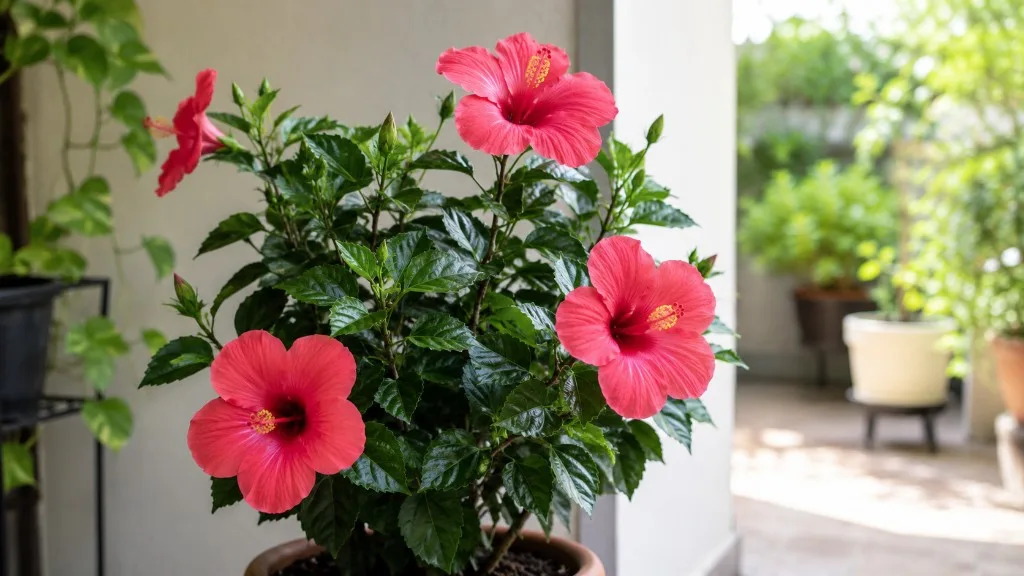
Hibiscus care for the plant most people buy in nursery pots means treating Hibiscus rosa-sinensis—Chinese hibiscus, China rose, shoe flower—as a warm-climate shrub that blooms on strong light and even root-zone moisture. Individual flowers last only a day or two. Continuous buds are what make the plant look “always flowering,” and those buds are also the first thing the plant drops when water, temperature, or placement swings.
Most container failures follow one pattern. The plant blooms hard on a sunny patio, then aborts every unopened bud after a dry weekend, a cold night, a move indoors, or a shift from daily summer soaks to calendar watering in a dim room. Fix identity (tropical vs hardy), light, and watering consistency first. Fertilizer and fancy soil rarely rescue a shaded, stressed plant. Symptom drills and topic depth live on the hibiscus care hub once the basics below are honest.
Written by Sai Ananth (B.Pharmacy, Andhra University; LeafyPixels lead writer) and reviewed by the LeafyPixels Review Board.
Who Wrote This Guide and How We Reviewed It
This page was researched and written by Sai Ananth, whose pharmacy background shapes how LeafyPixels handles pet-toxicity wording, and whose growing practice focuses on real balcony and patio constraints rather than greenhouse idealizations. Editorial review sits with the LeafyPixels Review Board, which cross-checks care thresholds against extension and botanical-garden sources before publication. Our editorial policy covers sourcing and correction standards.
How this guide was built (hibiscus-specific):
- Compared NC State full-sun, moist well-drained soil, move-related bud drop, and half-height spring prune notes with Clemson HGIC free watering, lower-50s indoor move, and one-third spring prune guidance.
- Mapped RHS bright humid culture, outdoor-to-indoor cutoff near 12°C, winter bud drop in low light, weekly feed timing, and softwood cutting temperatures onto container setups.
- Pulled cold-leaf yellowing, aphid/whitefly/mealybug scouting, and the malathion prohibition from UF/IFAS Gardening Solutions.
- Reconciled Clemson’s gentler one-third prune with NC State’s harder half cut into an explicit plant-condition rule (below).
- Fact-checked pet wording against the ASPCA Hibiscus listing (H. syriacus on the listing) and kept a GI-upset caveat for chewing any plant material.
- Folded LeafyPixels hibiscus watering, light, and bud drop hub notes into labeled container dry-down ranges under named conditions.
Experience notes (labeled conditions, not universal guarantees):
- A 12-inch unglazed terracotta on a west-facing balcony in peak summer heat often needed a deep soak every 1–2 days once the top inch felt barely dry and the pot felt feather-light by late afternoon; the same cultivar in a plastic nursery pot indoors at ~68°F stretched to 5–7 days between soaks.
- After a patio-to-indoors move in mid-October (nights already in the low 50s °F), expect 7–14 days of leaf and bud shed even when moisture is even—stabilize the bright spot, reduce water as growth slows, and judge recovery by the next bud cycle, not the aborted ones.
- A full-double red cultivar aborted a flush under an AC draft that a nearby single orange kept through; treating doubles as a narrower care margin mattered more than chasing fertilizer.
Diagnostic photos below reuse LeafyPixels plant-problem assets for teaching—not claimed as personal garden diary shots. Your climate, pot, and cultivar will differ; treat intervals as benchmarks.
Confirm You Have Tropical Hibiscus (Not Hardy or Rose of Sharon)
Garden-center tags often say only “hibiscus.” Before you water, feed, or overwinter, decide which plant you actually have.
Tropical / Chinese hibiscus (H. rosa-sinensis) has smaller, dark green, glossy leaves and soft shrubby stems. Flowers come in red, pink, yellow, orange, salmon, peach, and bicolors, often single or double. It is evergreen in frost-free climates and hardy outdoors only in roughly USDA Zones 9–11. Clemson notes Chinese hibiscus is only hardy in a narrow Zone 9 coastal strip in South Carolina and is otherwise grown as a summer container plant or houseplant. UF/IFAS adds that tropical hibiscus stay green year-round in South and Central Florida, may freeze to the ground in North Florida, and drop lower leaves after cold snaps.
Hardy / dinner-plate hibiscus (H. moscheutos and hybrids) has larger, matte leaves and enormous summer flowers. Plants die back after frost and resprout from the crown in spring in colder zones. Rose of Sharon (H. syriacus) is a woody deciduous shrub hardy to about Zone 5, with different pruning and winter expectations.
If your plant has glossy tropical leaves and lives in a patio pot you haul indoors each fall, follow this guide. If it dies to the ground every winter outdoors, you need hardy-hibiscus culture—not China-rose windowsill rules.
Naming Traps, Cultivars, and Single vs Double
NC State describes flowers up to about six inches across and outdoor plants commonly 4 to 10 feet tall and 5 to 8 feet wide in warm climates, with a medium growth rate. The RHS notes that in Britain the plant is tender and typically grown as a pot plant that may reach about 2 m (6½ ft) indoors under warm, bright conditions. Cultivar lists churn constantly; RHS highlights compact variegated forms such as H. rosa-sinensis ‘Cooperi’ for foliage interest with red flowers.
Practical cultivar care difference: singles usually hold buds through minor drafts and short dry spells better than heavily petaled doubles. Compact patio types stay manageable in a 10–14 inch pot; tall landscape selections need larger containers or hard spring cuts. Flowers form on new growth, so spring pruning that stimulates branching also sets up the next bloom flush.
Indoors and on balconies, keep tropical hibiscus in a large pot with drainage. Slightly root-restricted plants often flower more freely than plants swimming in oversized, wet mix—but chronic root binding that makes the pot dry in hours is a signal to step up one pot size, not three.
Care Decisions at a Glance
| Care factor | Baseline target | Open this when you need depth |
|---|---|---|
| Light | 6+ hours direct sun for best bloom; brightest indoor spot in winter | Hibiscus light guide |
| Water | Soak when top inch dries; never leave the pot in standing water | Hibiscus watering guide |
| Soil | Rich, moisture-retentive, well-drained mix; pH roughly 5.5–7.0 | Hibiscus soil guide |
| Feed | Balanced liquid feed in active growth; pause in cool rest | Hibiscus fertilizer guide |
| Temp | Warm growth; protect from nights near 45–50°F (7–10°C) | Overwintering section below |
| Prune | Early spring on new-wood bloomers; choose one-third or half by habit | Hibiscus pruning guide |
A small pot on a hot balcony does not dry on the same clock as a large nursery pot in a cool living room. Treat calendar ranges as reminders to check the mix—not as commandments.
Light: Full Sun for Flowers, Bright Indoors for Survival
Light is the bloom throttle. NC State lists full sun (six or more hours of direct light) and partial shade as acceptable outdoor ranges, with flowering reduced as light declines. Clemson recommends full sun or light afternoon shade for Chinese hibiscus in the landscape or patio.
Indoors, the RHS frames tropical hibiscus as needing bright, humid conditions, with a warm conservatory or south-facing windowsill as a practical home setup, and notes that flower buds and leaves often yellow and drop in winter when indoor light is low. That is not a contradiction with outdoor full-sun advice—it is a climate translation. In strong outdoor sun the plant wants hours of direct light. Behind glass in a northern winter, “bright” may mean the brightest window you have plus reduced watering while the plant rests.
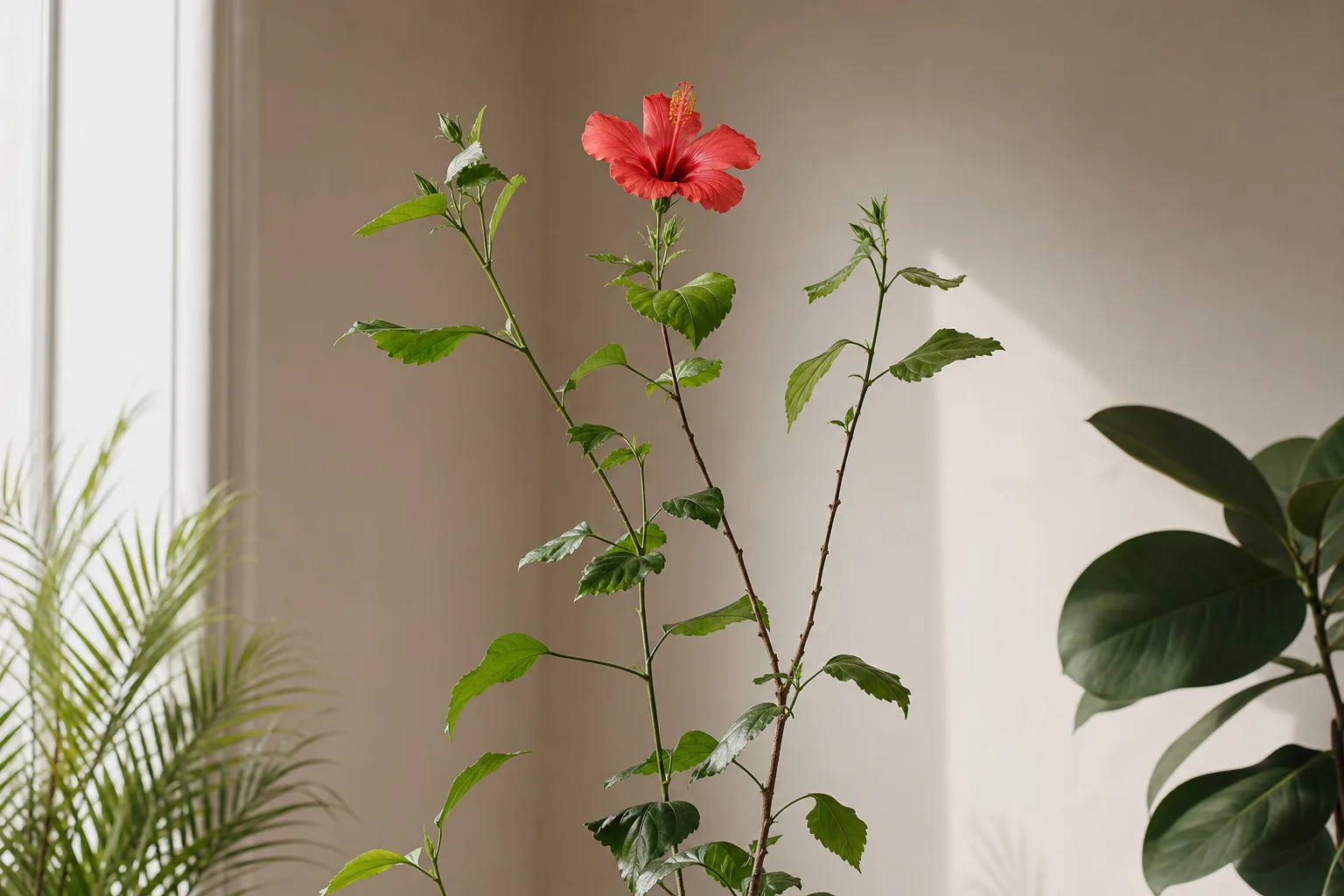
Put patio pots where they get morning-to-midday sun without baking against a west wall that cooks roots. Indoors, keep the canopy close to the glass without pressing leaves against freezing panes. A plant several feet into a room is not getting windowsill light.
Acclimating Patio Plants and Grow Lights
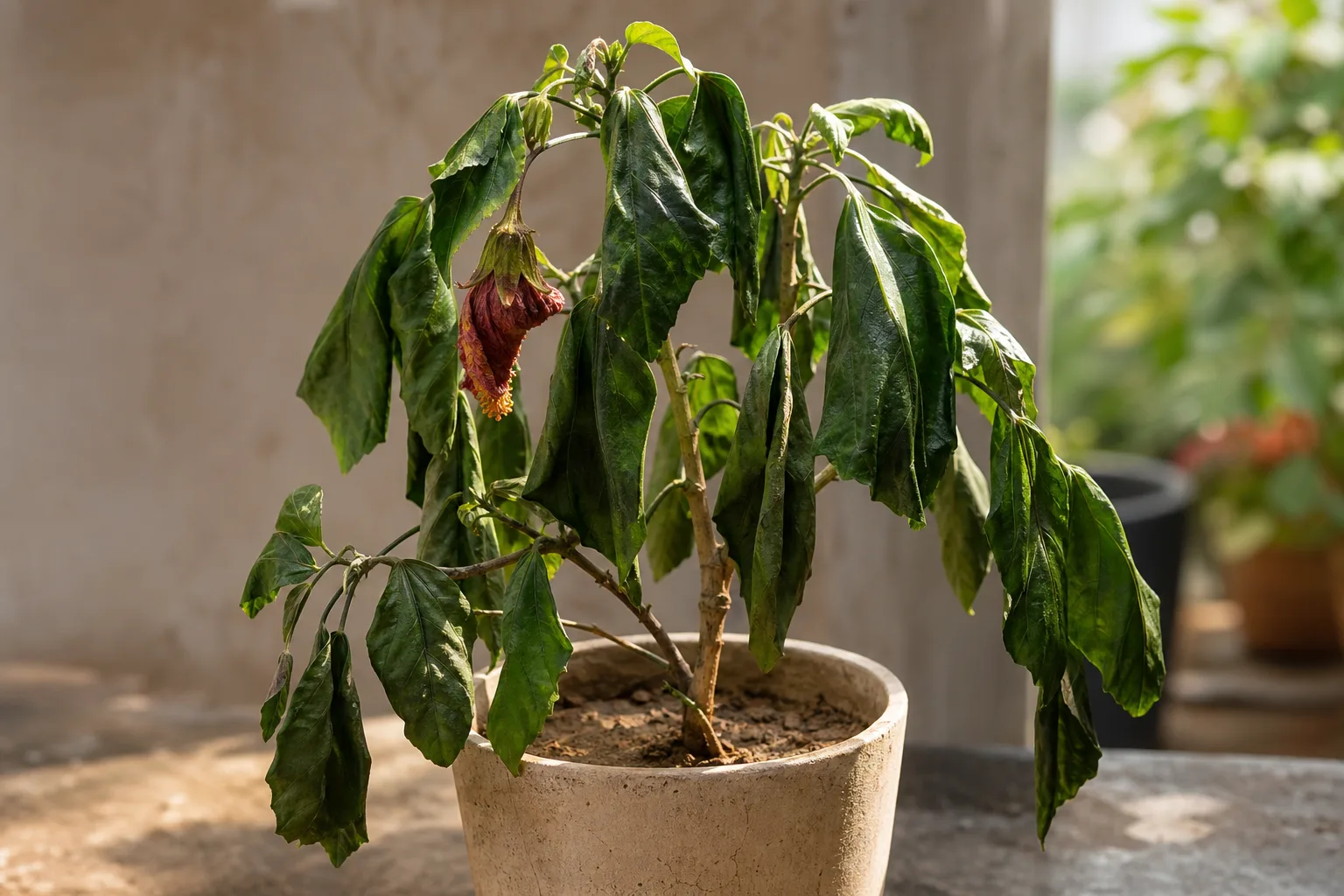
Chinese hibiscus is sensitive to environmental changes. NC State warns that moving the plant can cause leaf and bud drop. Clemson likewise stresses gradual acclimation when returning overwintered plants outdoors after frost risk passes.
Step exposure up over one to two weeks when shifting from shade to full sun or from indoor LEDs to outdoor glare. Sudden bleached patches on the sun-facing side are scorch on shade-grown leaves—not a fertilizer shortage. If natural winter light is weak, a full-spectrum LED above the canopy on a timer helps hold foliage quality; it will not fully replace a summer patio for continuous bloom. For placement details, use the hibiscus light guide and not enough light.
Watering: Even Moisture Without Standing Water
Tropical hibiscus wants moist roots with oxygen, not a swamp and not a drought cycle. NC State says roots should be kept moist in soil with good drainage. Clemson says water freely during the growing season. The RHS increases watering as light and temperatures rise in spring, then reduces watering in winter so you only water when the top layer of compost is dry.
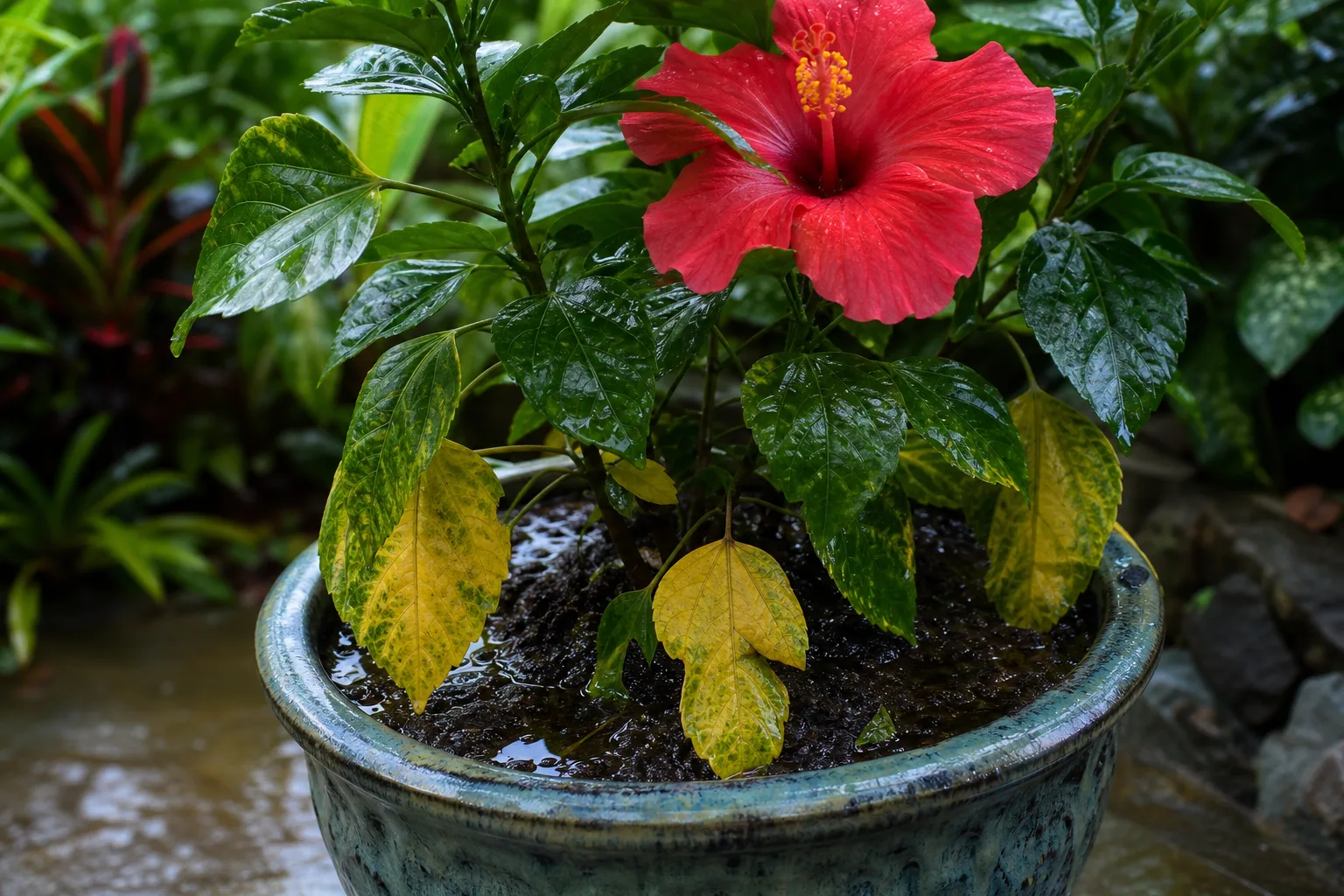
Practical container rule: when the top inch (2–3 cm) feels barely dry and the pot feels lighter than after the last soak, water thoroughly until excess drains, then empty the saucer. In peak summer heat on a sunny balcony, that check may be daily. In a cool indoor room in December, it may be weekly or longer. Calendar watering that worked in August is a common cause of winter yellowing.
Buds are expensive tissue. Moisture swings—bone-dry afternoons followed by a flood, or a pot left sitting in runoff—often abort buds before petals open. That pattern is covered in depth on the hibiscus bud drop page.
Pot-Weight Triage and Seasonal Rhythm
Lift the pot before you “fix wilt.”
| What you notice | Likely cause | First action |
|---|---|---|
| Light pot + dry mix + afternoon wilt | Drought swing | Deep soak; shorten dry-down in heat |
| Heavy pot + limp yellow leaves | Wet roots / poor drainage | Hold water; empty saucer; check holes |
| Buds fall after a room change | Relocation stress | Stabilize placement 1–2 weeks |
| Buds fall + nights in low 50s °F / drafts | Chill | Move in on schedule; block vents |
| Sticky buds / pests on undersides | Aphids / soft pests | Scout and treat; never use malathion |
After bringing plants indoors for winter, expect slower water use. The RHS advises reducing watering as growth slows and ceasing feeding during cool rest. Keep the mix evenly lightly moist, not bone dry for weeks and not constantly soggy. Experience heuristic after you correct moisture and placement: new buds that stay attached often appear within 2–4 weeks in active growth if light is strong—labeled as editorial observation, not a lab guarantee. See also underwatering and overwatering.
Soil, Drainage, and Repot Timing
Soil has two jobs: hold enough moisture for a sun-loving shrub, and let excess water leave so roots can breathe. NC State specifies high organic matter with good drainage and moist conditions. Clemson prefers rich, well-drained soil with plenty of organic matter. The RHS suggests repotting in February or early March into peat-free houseplant compost or a soil-based mix such as John Innes No. 2.
A practical container blend used in LeafyPixels hibiscus plant-detail guidance is roughly 40% quality potting base, 30% compost, 20% coarse sand, and 10% perlite, targeting slightly acidic to near-neutral pH. Always use a pot with a drainage hole. Unglazed terracotta dries faster in heat; plastic holds moisture longer indoors—match pot material to your climate and watering habits.
Repot when roots circle heavily or the pot dries within hours of a thorough soak in normal weather—often every one to two years in late winter or early spring before the growth flush. Jump only one pot size. Oversized containers leave a wet outer zone that roots cannot colonize quickly, which invites rot and fungus gnats. Full recipes live in the hibiscus soil guide and repotting guide.
Temperature, Humidity, and Overwintering Indoors
Treat tropical hibiscus as frost-intolerant. Clemson says bring Chinese hibiscus indoors when nighttime temperatures fall into the lower 50s °F. The RHS lists a minimum night temperature around 7–10ºC (45–50ºF), notes plants can summer outdoors, and says bring them in before temperatures drop below 12ºC (59ºF). UF/IFAS warns that even a slight cold wave can yellow and drop lower leaves.
Practical synthesis: start planning the move when nights settle in the lower 50s °F; do not wait for a hard chill near the mid-40s if you want to keep buds. Indoors, avoid radiators, open fires, cold drafts, and frosty window glass. Raise humidity with a tray of damp gravel (pot above the water line) or by grouping plants—methods the RHS recommends for winter culture. Misting alone does not replace even soil moisture and often does little against spider mites in dry heated air; inspect leaf undersides weekly instead.
First Week After the Patio-to-Indoors Move
Some bud and leaf drop during the first week or two after the patio-to-indoors move is common—even when you did everything “right.” Stabilize placement in the brightest warm spot you have, keep moisture even (usually less water than outdoors), and hold fertilizer until new growth resumes. Do not fertilize, repot, and spray on the same week while buds are aborting—stacking changes multiplies stress.
Realistic winter expectation: continuous outdoor-style bloom indoors without supplemental light is uncommon. The RHS notes plants can survive a semi-dormant winter state if watering is reduced when buds and leaves yellow from low light. Aim to hold healthy structure, then rebuild bloom outdoors after frost risk passes with a 7–14 day harden-off.
Fertilizer, Spring Prune Severity, and Cuttings
Feed during active growth, not during cool rest. The RHS begins weekly balanced liquid fertilizer for houseplants about six to eight weeks after spring repotting, then ceases feeding in winter. Apply to moist soil at label or half strength. Soft, dark, leafy growth with few buds often means excess nitrogen or too little light—not a need for more product. Details live in the hibiscus fertilizer guide.
Prune to keep plants bushy and to generate flowering wood. Flowers form on new growth, so early-spring cuts matter. The RHS shortens the previous season’s growth in February or early March and tips young plants for bushiness. Propagation is reliable from softwood or tip cuttings in late spring or early summer: the RHS uses 7–10 cm (3–4 in) cuttings in sandy cutting mix with bottom heat around 24–27ºC (75–80ºF) and high humidity, with rooting often in about two weeks. Step-by-step timing is on the hibiscus propagation guide.
One-Third vs Half: Which Spring Cut to Choose
Extension sources disagree on severity—and both can be right depending on the plant.
- Use Clemson’s gentler one-third cut on established patio shrubs you want to keep roughly the same size while refreshing old wood.
- Use NC State’s harder half-height cut when correcting a leggy indoor or winter plant that stretched under weak light.
Always cut before the main growth flush because flowers form on new wood. For structure diagrams and timing, open the hibiscus pruning guide.
Bud Drop Causes and Fixes
Bud drop means unopened flower buds detach before petals open. Leaves may still look mostly fine. On tropical hibiscus, buds are often the first stress signal because the plant aborts reproductive tissue before obvious leaf collapse.
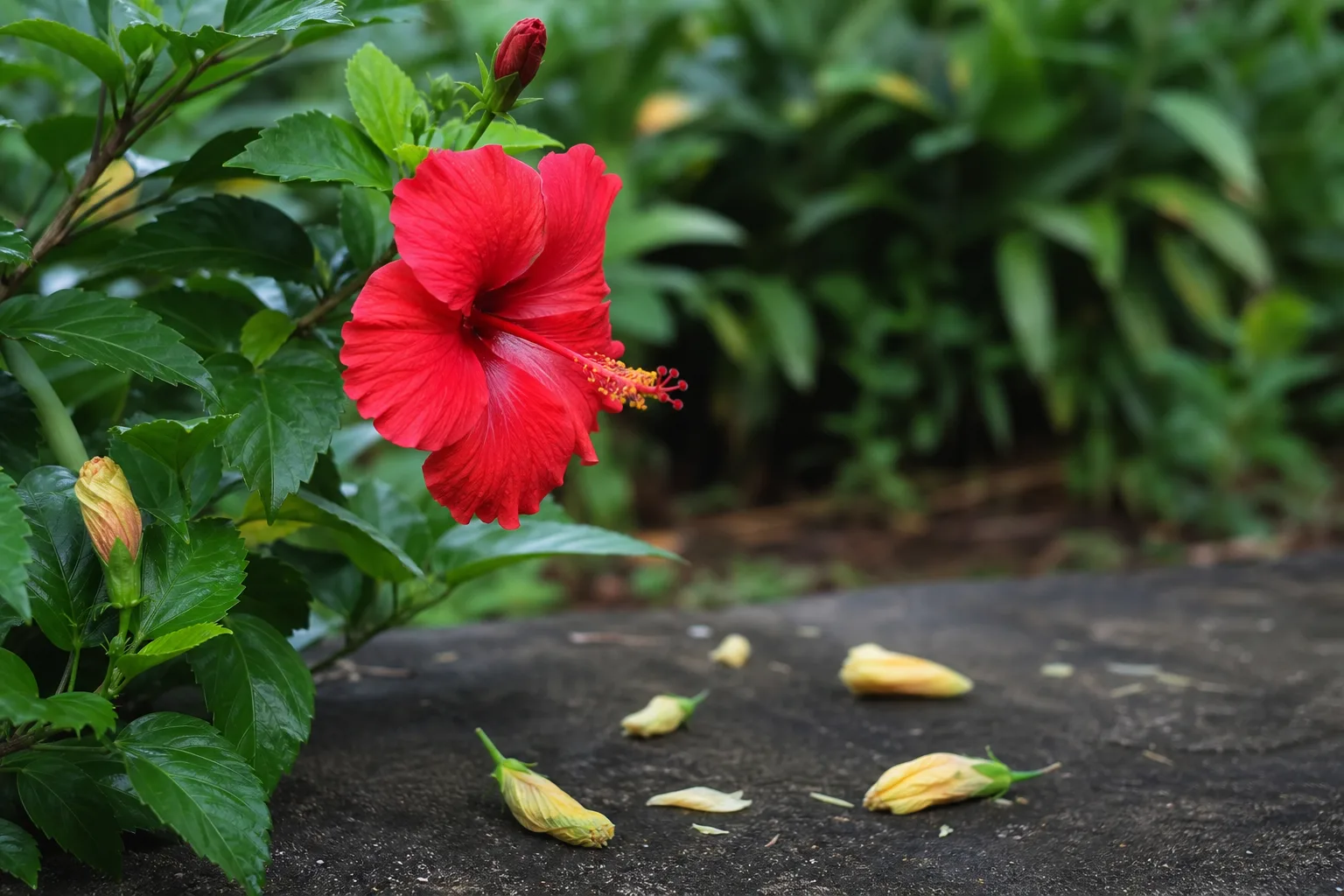
First check: lift the pot and probe the top inch of mix. Then review recent temperature swings, moves, and pests on bud undersides. Do not fertilize, repot, and spray on the same day while buds are aborting.
Moisture, Chill, Moves, Doubles, and Pests
Drought swings pair with a light pot, dry mix at depth, and afternoon wilt. Soak thoroughly and keep the next dry-down shorter in heat.
Chronic wet mix pairs with a heavy pot, yellow limp leaves, and buds that yellow and fall. Hold water, empty saucers, and confirm drainage holes are open. See overwatering and root rot if stems soften.
Chill and drafts drop buds even when soil moisture looks “fine.” Nights near the mid-40s to low-50s °F, AC vents, and cold entryways are classic triggers. Bring patio plants in on schedule.
Relocation alone can drop leaves and buds. NC State explicitly links moving the plant to leaf and bud drop. After a move, leave the pot in its new bright spot, keep moisture even, and wait for the next bud cycle rather than chasing the plant around the house.
Double and full-double cultivars often abort buds more readily under the same stress that singles tolerate. Treat that as a narrower care margin—not as proof that doubles are “defective.”
Inspect fallen buds and tight clusters for aphids or other soft-bodied pests. UF/IFAS notes aphids, whiteflies, and mealybugs commonly cluster on leaves and flower buds and can be managed early with insecticidal soaps or horticultural oils—and warns never to use malathion on hibiscus.
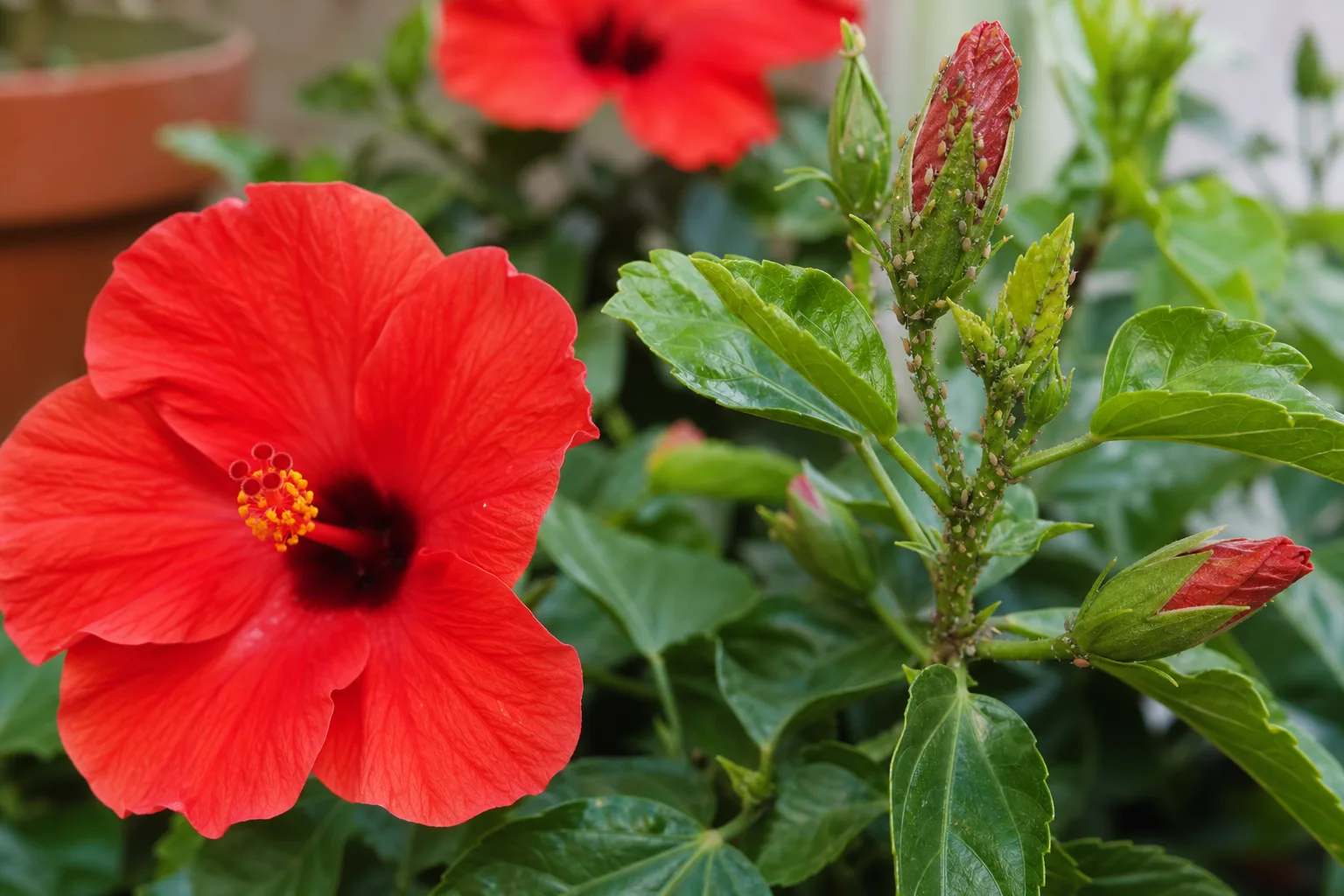
Skip fertilizer until moisture, light, and temperature are stable and new leaves look firm for a couple of weeks. Excess feed will not glue stressed buds back on. Once a bud aborts, that flower is gone; recovery means new buds that stay attached.
Yellow Leaves, Pests, and Other Common Problems
Yellow leaves on tropical hibiscus usually track watering mismatch, low light, chill, natural older-leaf shed after a move, nutrient imbalance, or pests—not a single universal deficiency. Check pot weight first, then light and leaf undersides. Symptom workflows live on yellow leaves, wilting, brown tips, and no flowers.
Scout weekly for aphids on buds, spider mites (fine stippling and webbing in dry indoor air), whiteflies, mealybugs, and scale. The RHS lists aphids, red spider mites, and glasshouse whitefly as common glasshouse pests on hibiscus. NC State flags scale as a watch item. Start with mechanical removal and labeled insecticidal soap or horticultural oil; avoid malathion on this plant.
Leggy growth with long internodes and few buds is almost always a light problem. Pruning without brighter placement only resets soft stems temporarily—see leggy growth and spider mites.
Pet Safety
The ASPCA lists Hibiscus (scientific name on the listing: Hibiscus syriacus; additional common names include Rose of Sharon and Rose of China) as non-toxic to dogs, cats, and horses. Tropical H. rosa-sinensis is widely treated as a better pet-aware choice than many flowering ornamentals, but non-toxic does not mean chew-proof. Eating any plant material or potting mix can still cause vomiting or stomach upset. Keep fertilizers, pesticides, and fallen leaves out of reach, and contact a veterinarian or ASPCA Animal Poison Control at (888) 426-4435 if a pet eats a large amount or shows repeated vomiting, lethargy, or loss of appetite.
Related Guides
- Hibiscus care hub — overview plus topic and problem pages
- Hibiscus watering — even moisture without standing water
- Hibiscus light — full sun outdoors vs bright indoor rest
- Hibiscus bud drop — triage for aborted buds
- How to water indoor plants the right way — shared finger-and-pot-weight habit
- Hot-weather plant watering guide — peak-heat dry-down checks
- Repotting houseplants — pot sizing and mix changes
- West-facing balcony plants (India) — harsh afternoon sun placement
Conclusion
First 14 days with a new patio tropical hibiscus:
- Confirm it is H. rosa-sinensis (glossy tropical leaves), not hardy dinner-plate or Rose of Sharon.
- Count real direct-sun hours—aim for six or more outdoors if you want continuous buds.
- Water when the top inch is barely dry; lift the pot before you “fix wilt.”
- Use a rich mix with a drainage hole; empty saucers after every soak.
- Harden off shade-grown nursery stock over 7–14 days before hard afternoon sun.
- If nights hit the lower 50s °F, plan the indoor move before a hard chill.
- In spring, choose a one-third cut to refresh size or a half cut to correct legginess—before the growth flush.
- When buds abort, stabilize moisture, placement, and chill first; do not stack fertilize + repot + spray.
- Scout buds for aphids; never use malathion on hibiscus.
- When basics are stable, use the hibiscus hub for watering, pruning, propagation, and symptom deep-dives.