Grass Cutting Height Chart by Grass Type
Use this grass cutting height chart by species and season. Learn the one-third rule, cool- vs warm-season targets, and how to set your mower deck correctly.
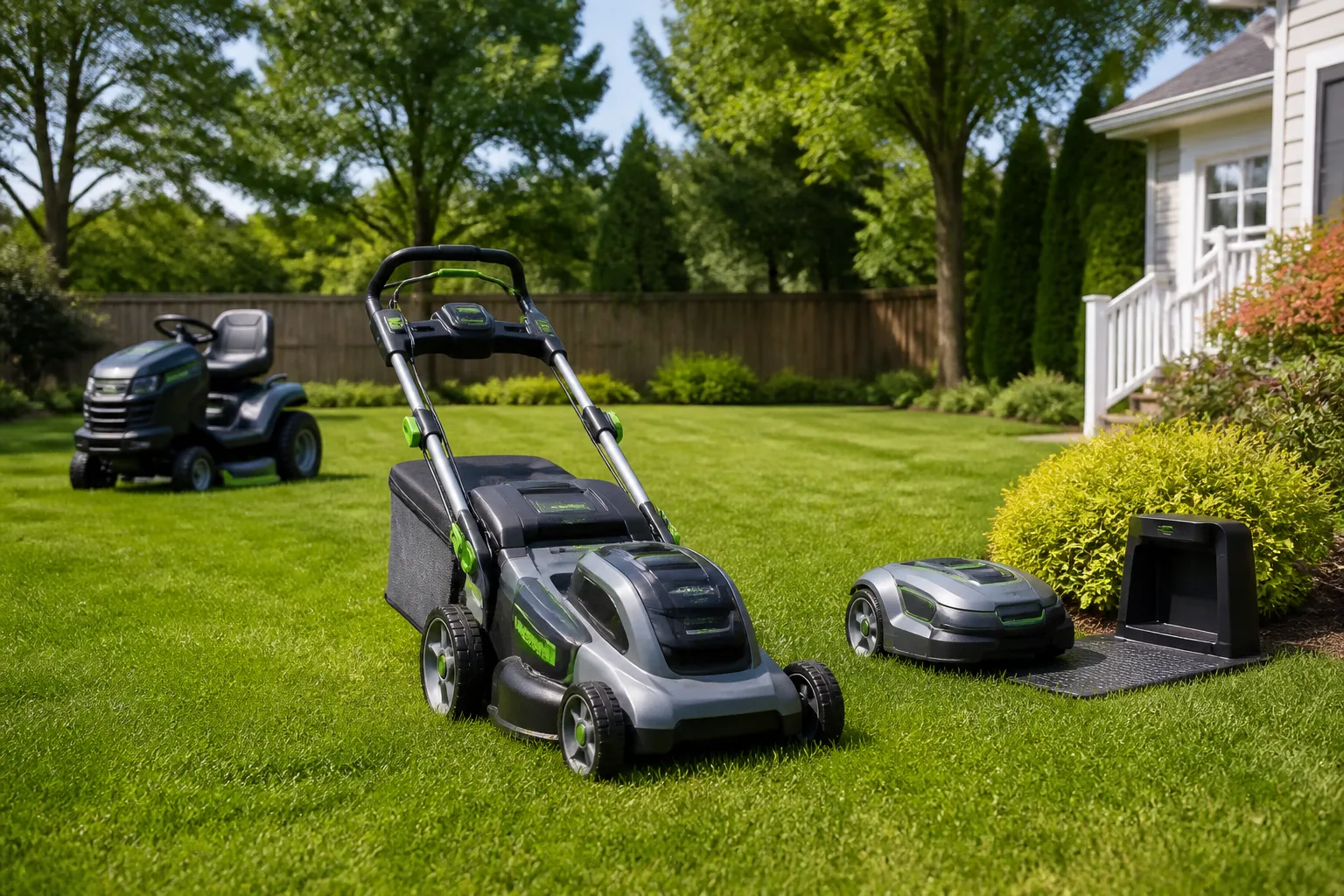
The height you set on your mower is not a cosmetic choice. It controls how much leaf area your grass can use for photosynthesis, how deep the roots grow, how well the soil stays shaded in summer, and whether weeds get enough light to move in. Most homeowners pick a deck setting once in spring and leave it there until fall. That single habit is why otherwise decent lawns thin out in July, scalp brown in stripes, or mat under snow.
This guide gives you a grass cutting height chart by species, the seasonal adjustments that actually matter, and a practical way to verify what your mower is really cutting—not what the plastic lever claims.
The Quick Answer: Your Target Mowing Height
Cool-season lawns—Kentucky bluegrass, tall fescue, fine fescue, and perennial ryegrass—usually perform best mowed to 2.5 to 3.5 inches, with tall fescue toward the top of that range. Warm-season lawns run shorter overall, but the spread is wider than most charts admit: common bermudagrass often sits at 1 to 1.5 inches, zoysiagrass at 1 to 2 inches, centipedegrass at 1 to 2 inches, and St. Augustinegrass at 2.5 to 4 inches—the tallest warm-season cut because it needs its own leaf canopy for shade.
No matter the species, follow the one-third rule: never remove more than one-third of the current blade length in a single mowing. If your target finished height is 3 inches, mow before the lawn reaches about 4.5 inches. Mow by growth, not by the calendar.
Why Mowing Height Changes Everything About Lawn Health
Grass blades are the plant’s solar panels. Cut them short and you reduce the energy flowing to roots. Shallow roots cannot reach deep soil moisture, so the lawn wilts faster in heat and recovers slower after traffic or drought. Thin turf also lets more sunlight hit bare soil, which is an open invitation for crabgrass, foxtail, and other weeds that love disturbed, bright ground.
Taller mowing within the recommended range does the opposite. More leaf area supports deeper roots. Taller blades shade the soil surface, slowing evaporation and keeping crown tissue cooler. Dense, properly mowed turf outcompetes many weeds simply by leaving no room at the soil line.
The One-Third Rule: Never Remove More Than One-Third at Once
The University of California IPM program states plainly that no more than one-third of the grass blade should be removed at a time. Cutting deeper impairs root growth because the plant redirects resources to heal leaf tips instead of expanding below ground. Repeated violations thin the stand, encourage weeds, and can build excess thatch.
Here is the math in a usable form:
| Target height after mowing | Mow when grass reaches about |
|---|---|
| 1.5 in. | 2.25 in. |
| 2 in. | 3 in. |
| 2.5 in. | 3.75 in. |
| 3 in. | 4.5 in. |
| 3.5 in. | 5.25 in. |
| 4 in. | 6 in. |
Multiply your target height by 1.5 to get the maximum height before the next cut. That single calculation prevents most accidental scalping.
Wet-spring exception: Purdue Turfgrass Science notes that during rainy springs you may not be able to mow often enough to stay inside the one-third rule every time. An occasional cut that removes slightly more is unlikely to cause long-term damage if you return to normal frequency afterward. The goal is a habit, not perfection on one rainy weekend—but do not use that exception as permission to drop from 6 inches to 2 inches in one pass.
What Happens When You Mow Too Short
Scalping means cutting into the pale stem tissue below the green blades and sometimes into the crown, the growth point where new leaves emerge. Scalped patches turn brown within a day or two, recover slowly, and stay vulnerable to weeds until new tillers fill in.
Other consequences of chronic low mowing include:
- Reduced drought tolerance because roots stay shallow.
- More heat stress as soil temperatures rise without blade shade.
- Increased disease pressure on stressed plants with less energy reserves.
- Striped or uneven cuts on bumpy ground when the deck rides low.
- More clumping when wet grass is cut short, smothering crowns underneath wet mats.
If you already see thin brown patches after aggressive mowing, treat them as a repair job—not a reason to mow even shorter. Our guide on repairing bare patches walks through reseeding cool-season turf and patching warm-season lawns at the right time of year.
Grass Cutting Height Chart by Grass Type
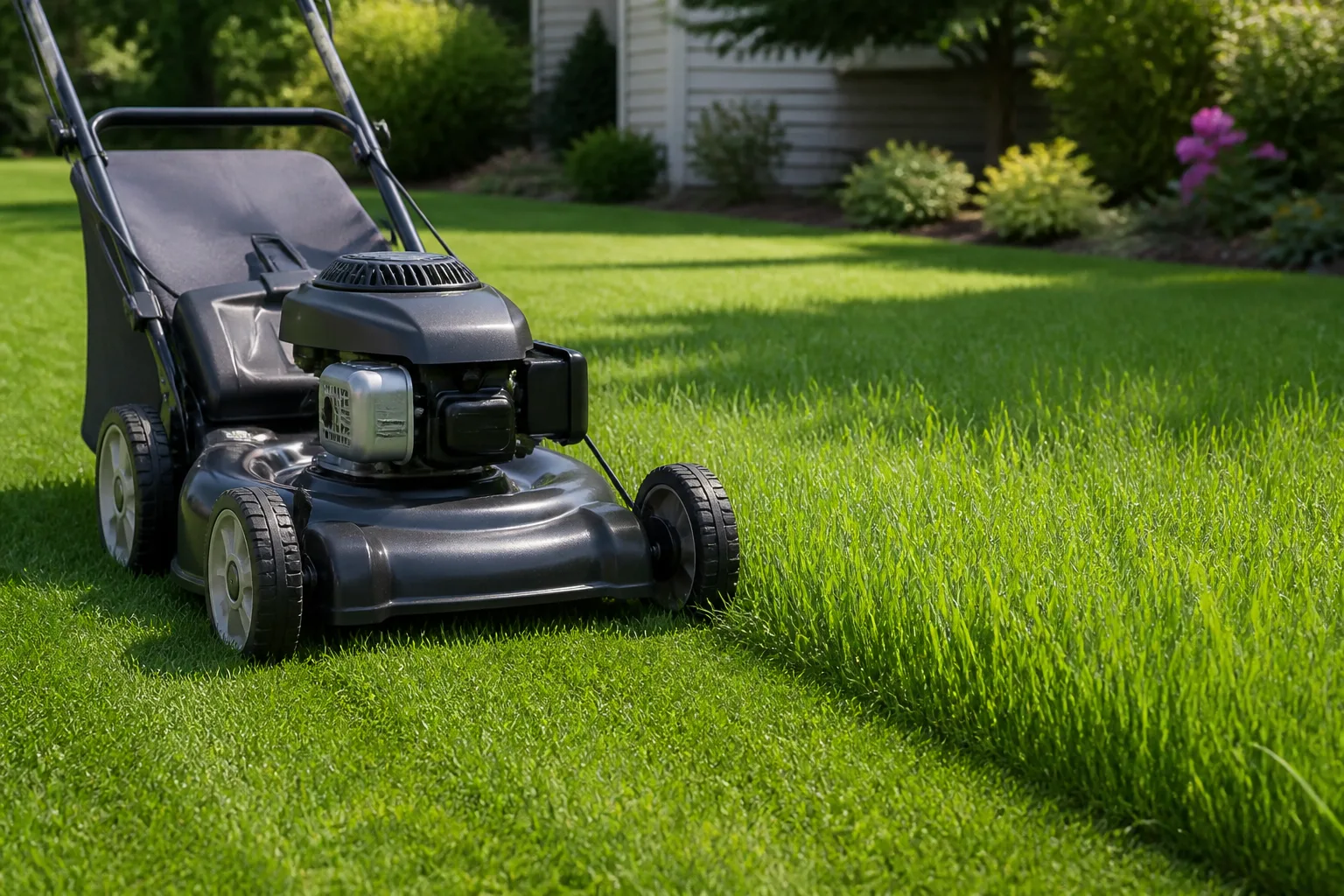
Use this chart as your baseline. Stay within the range for your species, then fine-tune with the seasonal section below and your site conditions—shade, irrigation, and traffic all nudge the dial slightly up or down.
| Grass type | Season type | Recommended mowing height | Mow when grass reaches about |
|---|---|---|---|
| Tall fescue | Cool-season | 3 to 3.5 in. | 4.5 to 5.25 in. |
| Kentucky bluegrass | Cool-season | 2.5 to 3.5 in. | 3.75 to 5.25 in. |
| Fine fescue | Cool-season | 2.5 to 3.5 in. | 3.75 to 5.25 in. |
| Perennial ryegrass | Cool-season | 2.5 to 3.5 in. | 3.75 to 5.25 in. |
| Bermudagrass (common) | Warm-season | 1 to 1.5 in. | 1.5 to 2.25 in. |
| Bermudagrass (hybrid) | Warm-season | 0.5 to 1 in. | 0.75 to 1.5 in. |
| Zoysiagrass | Warm-season | 1 to 2 in. | 1.5 to 3 in. |
| Centipedegrass | Warm-season | 1 to 2 in. | 1.5 to 3 in. |
| St. Augustinegrass | Warm-season | 2.5 to 4 in. | 3.75 to 6 in. |
| Bahiagrass | Warm-season | 2 to 4 in. | 3 to 6 in. |
These ranges align with residential guidance from university extension programs and turf references across the United States. Colorado State Extension recommends mowing Kentucky bluegrass, ryegrass, and fescue to 2 to 3 inches in its climate, with a firm minimum of 2 inches and a preference for 2.5 to 3 inches—and it stresses mowing often enough that no more than one-third is removed per pass.
Cool-Season Grass Mowing Heights
Cool-season grasses grow most actively in spring and fall when air temperatures sit roughly between 60°F and 75°F. They slow in summer heat, which is exactly when taller mowing helps most.
Tall fescue tolerates—and often prefers—the top of the cool-season range. Its deep root habit pairs well with a 3- to 3.5-inch cut, especially on sunny sites and during drought. Kentucky bluegrass and perennial ryegrass lawns commonly sit at 2.5 to 3 inches for everyday maintenance, rising toward 3.5 inches in summer. Fine fescues in shade can stay at 3 to 3.5 inches year-round; cutting fine fescue too short in sun invites stress quickly.
If you are not sure which cool-season species dominates your yard, look at texture and growth habit: wide, coarse blades usually mean tall fescue; medium blades in a dense mat suggest bluegrass; very fine thread-like leaves point to fine fescue. When in doubt, mow toward the taller end of the cool-season range—3 to 3.5 inches is a safe default for mixed northern lawns.
Warm-Season Grass Mowing Heights
Warm-season grasses peak in summer heat and spread by stolons or rhizomes. Most prefer a shorter, consistent cut—but St. Augustinegrass is the major exception.
Bermudagrass and zoysiagrass lawns maintained for a manicured look are often kept at 1 to 2 inches. Hybrid bermuda on golf-course-style lawns may go lower, but residential yards rarely need that. The trade-off at low heights is less forgiveness: miss a mowing cycle and you will scalp when you try to catch up.
Centipedegrass is a low-maintenance southern lawn that actually loses density if kept too tall; 1 to 2 inches is typical. St. Augustinegrass needs 2.5 to 4 inches because its wide, coarse blades protect the crown and roots from sun and heat. Cutting St. Augustine to bermuda height is one of the fastest ways to weaken a southern lawn.
Bahiagrass spans a wide range depending on use—ornamental lawns toward 3 to 4 inches, utility turf lower. Match height to how often you are willing to mow and how tidy you want the stand to look.
Cool-Season vs Warm-Season: Which Chart Row Is Yours?
If you live in the transition zone—roughly the band from Kansas east through the Mid-Atlantic where both grass types can survive—you may have a mixed lawn or a species you did not choose. Warm-season grass greens up late and goes dormant after first frost; cool-season grass stays greener into fall and greens first in spring.
A simple field test: pull a handful of grass in midsummer. Warm-season turf feels tough and wiry with prominent runners at the soil surface. Cool-season blades feel softer and upright without obvious stolons. Still unsure? Mow cool-season turf taller (3+ inches) and warm-season turf shorter (1.5 to 2.5 inches for most types except St. Augustine) and watch which patches respond best over a month.
Your latitude is not the only clue. A bermudagrass lawn overseeded with perennial ryegrass for winter color follows the ryegrass height until the bermuda takes over in summer—then shift to bermuda rules. Document what you have before you buy a mower tuned for the wrong cut.
Seasonal Mowing Height Adjustments
A single deck setting all year is one of the most common lawn-care mistakes. Grass growth rate and environmental stress change by season; your height should move with them within the species range—not outside it.
Spring Mowing Heights
In spring, cool-season lawns wake up fast after rain and warming soil. Start the season within your normal species range—3 to 4 inches for tall fescue and bluegrass mixes, not a dramatic low cut. A slightly lower position within the range (about 0.5 inch below your summer height) can tidy winter-damaged tips and encourage lateral spread, but do not scalp dormant crowns on the first pass.
Warm-season lawns green up later. Wait until the turf is actively growing before dropping to summer height. Mowing dormant or half-green warm-season grass too low damages crowns that have not yet replaced winter tissue.
Spring is also when debris and winter mold show up. Mowing removes ragged leaf tips, but only after the lawn is growing strongly enough to replace what you cut. Pair the first cuts with edging and debris cleanup rather than aggressive height drops.
Summer Mowing Heights
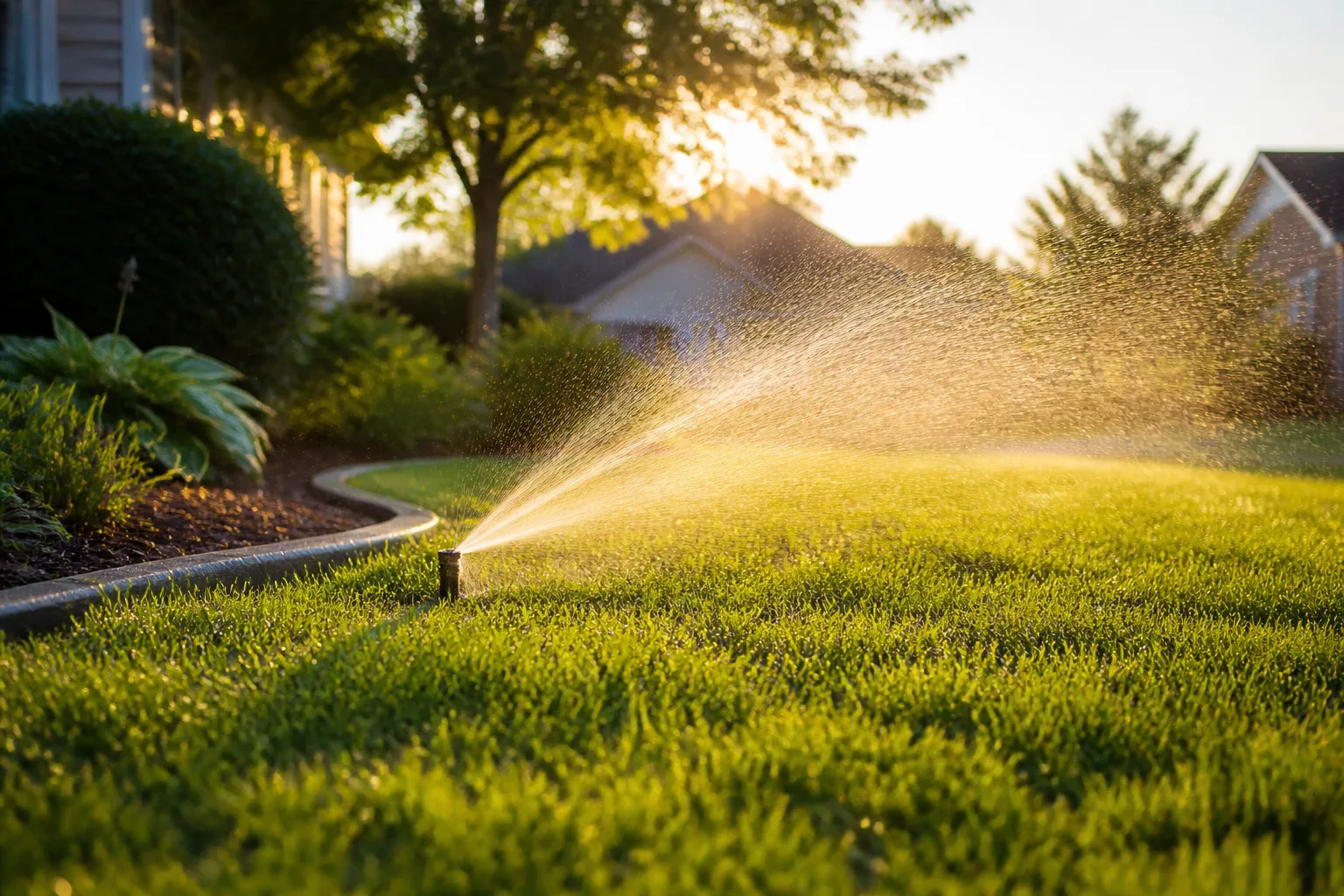
Summer is when height saves lawns—or sinks them.
Cool-season grasses: Raise the deck 0.5 to 1 inch above your spring setting. If you normally cut tall fescue at 3 inches, move to 3.5 inches during heat and drought. Taller blades shade soil, slow evaporation, and keep crowns cooler. Colorado State Extension emphasizes that mowing below 2 inches on cool-season turf increases drought stress, insect problems, and weed invasion.
Warm-season grasses: Hold your standard summer height for bermuda, zoysia, and centipede—they are built for heat. Do not drop extra low thinking it reduces mowing frequency; it reduces recovery capacity. For St. Augustine, stay at the upper half of its range (3 to 4 inches) in peak sun.
The biggest summer mistake is chasing a golf-course look on a home lawn during a heat wave. If you cannot remember the numbers, remember the direction: when in doubt, mow higher, not lower. Our summer lawn health guide ties mowing height to watering and fertility for the same reason—leaf area and root depth move together.
Fall and the Final Pre-Winter Cut
Fall growth accelerates again on cool-season lawns. Return to your standard height—roughly 2.5 to 3.5 inches depending on species—as temperatures cool and rainfall returns.
For the final mow before winter on cool-season turf, many turf managers drop height slightly—about 0.5 inch below the summer setting—for the last one or two cuts before the ground freezes. The goal is to prevent long, floppy blades from matting under snow and encouraging snow mold. Do not scalp; a final height around 2 to 2.5 inches on bluegrass or 2.5 to 3 inches on tall fescue is a common target in northern climates.
Warm-season lawns should be mowed at normal height until dormancy. Dropping bermuda or zoysia dramatically before winter does not help the way it can on cool-season turf and may expose crowns to cold injury at the margins of their hardiness range.
If fall thinning appears while you adjust height, consider whether overseeding makes sense for your grass type and timing—not every thin lawn needs seed, but scalped or drought-stressed cool-season turf often benefits from fall renovation.
How to Set and Verify Your Mower Deck Height
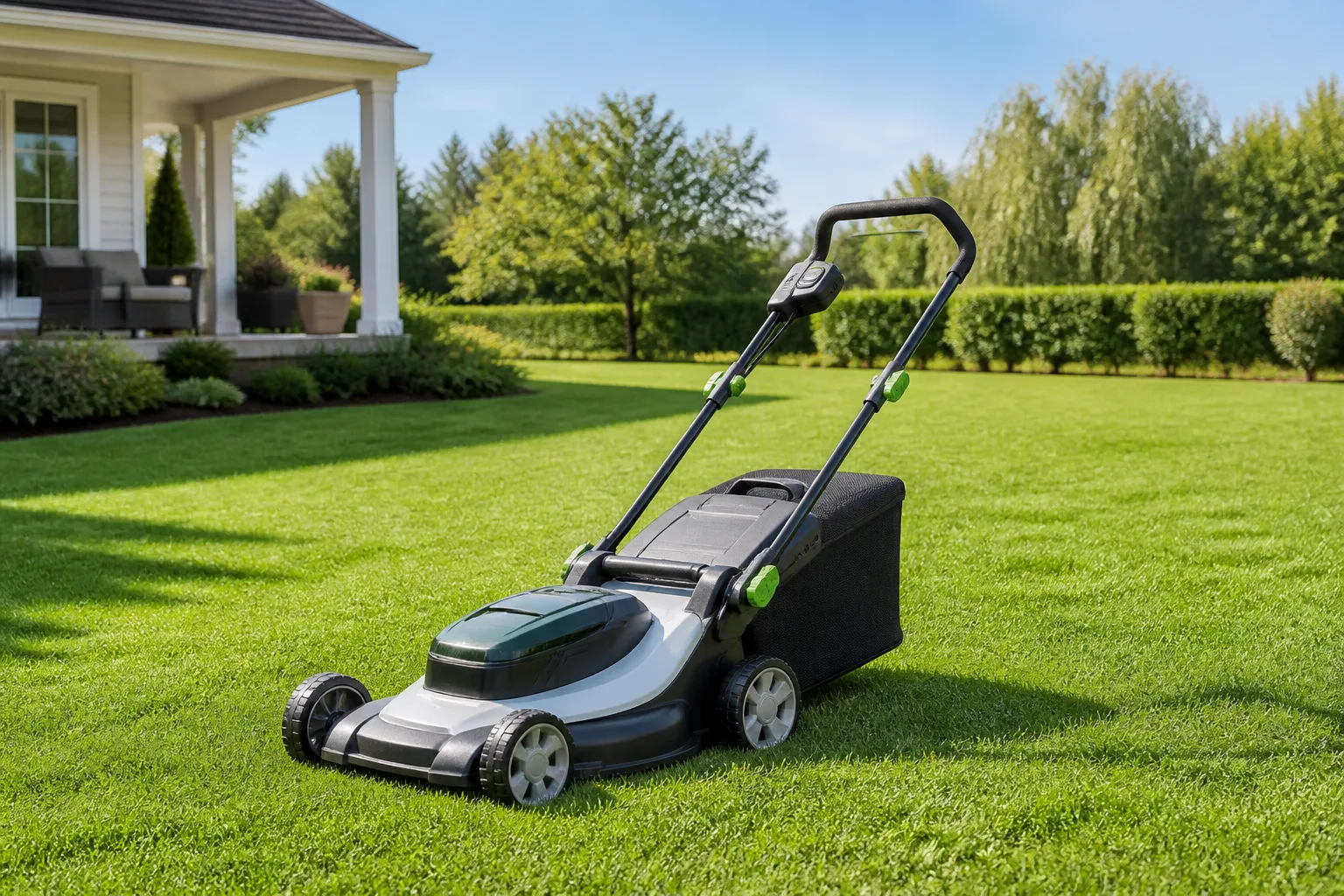
Mower height levers are approximate. Wheel pins wear, decks sag, and one low corner scalps every pass while the other side leaves grass standing. Treat the dial as a starting guess, then verify.
Step 1: Park on a flat hard surface. A driveway or garage floor works. Disconnect the spark plug or remove the battery on electric models before reaching under the deck.
Step 2: Measure blade housing to ground. Measure from the pavement to the bottom edge of the mower deck housing—not the blade tip. On turf the wheels sink slightly, so pavement gives a consistent baseline.
Step 3: Match all four wheels. Per-wheel adjustment systems need each corner set identically. One pin one notch off pitches the deck and causes the striped scalping pattern that looks like a mower problem but is really a setup problem.
Step 4: Test strip on the lawn. Mow one pass, then kneel and look for exposed brown stem tissue. Brown stubble immediately after mowing means the deck is too low. Grass bending over without a clean cut means the deck is too high or the blade is dull.
Rotary mowers dominate residential yards; reel mowers cut lower and more precisely but demand level ground. If you are shopping for equipment suited to your target height, see our push lawn mower comparison for deck adjustment types and cutting ranges.
Measuring Actual Cutting Height (Don’t Trust the Dial)
A deck leveling gauge—an inexpensive plastic tool that sits under each deck corner—removes guesswork. Without one, use a ruler on pavement as described above, then mow a small test area and measure residual blade height by sliding a ruler into the turf until it hits soil. Compare that real-world number to your chart target.
Reel mowers are marked differently from rotary decks; consult the manual because reel height numbers refer to the shear point, not housing clearance. Riding mowers with multiple blades need level decks even more critically—a 21-inch walk-behind’s mistake is annoying; a 42-inch rider’s mistake is a brown yard in one afternoon.
Mark your verified setting on the lever with tape or paint once you know it. Next spring you will not relearn the same lesson.
When the Lawn Grew Too Tall: Step-Down Recovery
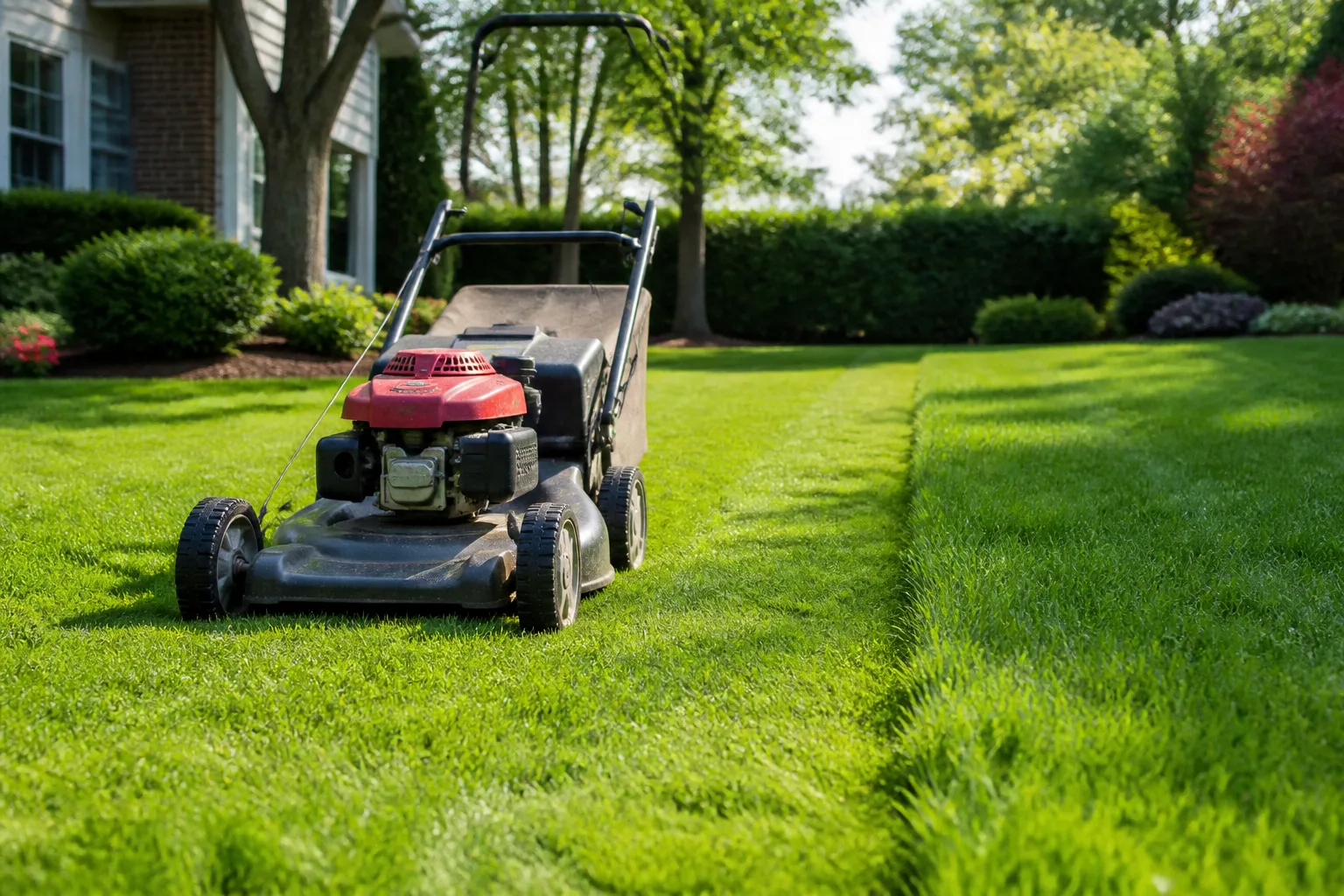
Vacation, broken mower, or two weeks of rain can leave grass far above the one-third threshold. The wrong response is to drop the deck to your normal height and push through. The right response is a step-down:
- Raise the deck higher than your target for the first pass—high enough that you remove only one-third of the current height.
- Wait two to four days and mow again, lowering slightly.
- Repeat until you reach your normal mowing height, usually over two to four mowings.
Example: tall fescue at 6 inches with a 3-inch target. First cut at roughly 4 inches (removing 2 inches, one-third of 6). Second cut to about 3.5 inches. Third cut to 3 inches. Clippings may be heavy; rake or bag only if mats smother living turf—otherwise return light clippings to recycle nitrogen.
Colorado State Extension gives the same advice: if weather prevents timely mowing, temporarily raise the height, then resume normal settings a few days later. Bagging clumps on the first recovery cut is worthwhile when wet spring growth creates thick mats.
Common Mowing Height Mistakes
Same height every month. Cool-season lawns scalped in summer and warm-season lawns left shaggy in spring both suffer. Adjust within the species range as seasons change.
Chasing stripes with a too-low deck. A patterned lawn is not worth crown damage. Striping kits and roller attachments work on healthy turf mowed at proper height—not on grass cut to half its recommended size.
Mowing wet grass at low height. Wet blades clump, clog mulching decks, and tear rather than slice. Purdue’s wet-turf guidance recommends raising the deck, using side discharge if needed, and avoiding sharp turns that rut soft soil—not dropping lower because the lawn “looks messy.”
Confusing species. Bermuda height on St. Augustine thins the lawn permanently until it recovers from crowns that were never meant to see that much sun.
Ignoring dull blades. A dull mower at the “correct” height still shreds leaf tips, leaving brown tips that look like drought stress. Sharpen rotary blades several times per season on actively growing cool-season lawns.
Thinking short grass means less mowing. It means more stress, more weeds, and often more frequent rescue watering. Mow high within range and mow often enough to follow the one-third rule—that combination usually costs less water and fewer repairs than a chronically short cut. For weed pressure tied to thin turf, pair proper height with the tactics in our lawn weed control guide.
Conclusion
The right mowing height is the cheapest lawn upgrade you can make. Set it by grass species, adjust it by season, and verify it with a tape measure instead of a worn plastic lever. Stay inside the chart ranges, follow the one-third rule, and step down gradually when growth gets ahead of you.
Cool-season lawns want taller blades—especially in summer. Warm-season lawns generally want shorter, consistent cuts, except St. Augustine, which needs height for its own protection. Get those three ideas right and mowing stops being a guessing game. Your grass gets deeper roots, fewer weeds, and faster recovery from heat, drought, and the rainy week when the mower stayed in the shed.



