Why November Is a Smart Time to Edge Your Lawn
Learn how to edge your lawn in fall around beds, sidewalks, and driveways without damaging roots, gouging hardscape, or leaving debris at storm drains.
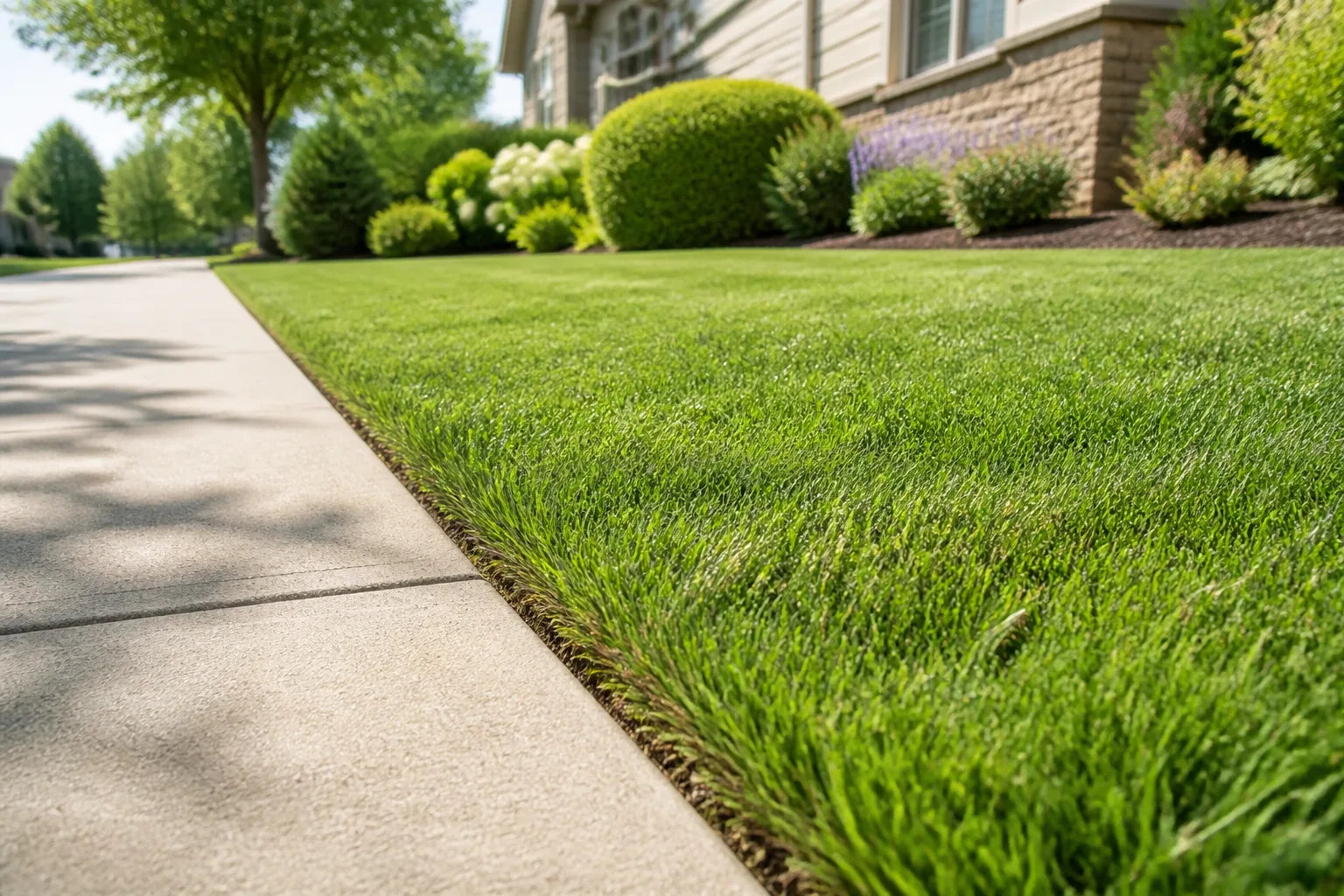
November can be an excellent time to edge a lawn because growth has slowed, the summer rush is over, and the border is easy to see before winter leaves or snow hide it. But the useful rule is not “edge every lawn on November 1.” Edge when your grass is still green enough to mow, the soil is workable, and the forecast gives the cut time to settle.
That timing makes the job a tidy finishing pass rather than a desperate attempt to reshape a neglected yard. A clean border also makes spring mowing easier, but edging is primarily a boundary-maintenance task: it stops turf from creeping into beds and hardscape; it does not eliminate weeds or replace healthy mowing, watering, and soil management.
The short answer: November is a window, not a rule
If your lawn is still growing in November, edging it after the last few mowings can leave a crisp line through winter and make spring cleanup simpler. If the grass has fully gone dormant, the ground is frozen, or autumn rain has turned the border into mud, wait. Cutting a line under those conditions can create more repair work than curb appeal.
Late fall works because you can see the accumulated encroachment from the growing season while the lawn is no longer filling the border every few days. It is also easier to combine the job with leaf management and the final practical mow. The Mississippi Watershed Management Organization’s fall yard-care guidance makes the same broader point: grass grows more slowly in fall, but it still grows until dormancy, so the lawn should be managed according to what it is doing rather than a fixed date.
Why late fall can be an efficient edging moment
Edging removes the soft, ragged strip where turf meets a sidewalk, driveway, fence line, or open planting bed. By November, that strip often shows exactly where grass has migrated, where mulch has spilled over the line, and where mower wheels have gradually blurred the boundary. A single careful pass can restore the geometry before winter weather makes the edge harder to read.
The timing is especially useful for cool-season lawns such as tall fescue, Kentucky bluegrass, and perennial ryegrass, which commonly remain green and active later into the year than warm-season grasses. It is less useful to force the same schedule on a warm-season lawn that has already slowed sharply or entered dormancy. A fall edge is a finishing detail, not a reason to disturb dormant turf.
Why grass type and weather matter more than the date
Look at the lawn before looking at the calendar. If you have mowed recently and the grass has visibly grown again, edging is probably still worthwhile. If the blades are brown and brittle across the lawn, growth has stopped, and the edge can usually wait for the next active-growth period.
Weather matters just as much. The ideal soil is slightly moist but firm: a spade or half-moon edger should enter cleanly, while your shoes should not sink or leave deep tracks. A light watering can soften hard soil, but never try to improve a muddy edge by adding more water. On a cold, wet week, postpone the job until the surface drains and the forecast is dry enough for loose clippings and soil to be swept up.
Choose the right edge for the border
Not every lawn boundary needs the same shape. The best-looking edge follows the job the border needs to do, not a universal depth copied from a different part of the yard. Before you cut, decide whether you are separating grass from hardscape, creating a small no-grow trench beside an open bed, or simply trimming a place where digging would be risky.
Match the cut to hardscape, beds, and trees
Use a flush cut along a sidewalk, driveway, curb, or patio. The goal is to remove the turf overhanging the hard surface and leave the soil line even with it. Do not dig a dramatic trench beside concrete; it creates a gap that collects soil, invites erosion, and can expose the edge of the slab.
An open flower or vegetable bed can use a shallow vertical cut or a modest V-shaped trench. A manual spade can remove the thin strip of unwanted sod, while the bed side can be skimmed smooth and lightly remulched. Better Homes & Gardens describes a deeper four- to six-inch V-trench for establishing a new cut edge in a bed, but that is a landscape-border installation, not a reason to excavate that deeply every November. For seasonal maintenance, remove only the encroaching turf and preserve the bed’s existing grade.
Trees are the exception that deserves restraint. Do not run a blade in a circle around a trunk just to make the lawn look outlined. Surface roots can be damaged by repeated cutting, and a power tool can nick bark. Leave a generous no-mow ring, use mulch or groundcover as the transition, and hand-trim stray grass well away from the trunk if needed. The tree-root caution is also emphasized in Better Homes & Gardens’ lawn-edging guide.
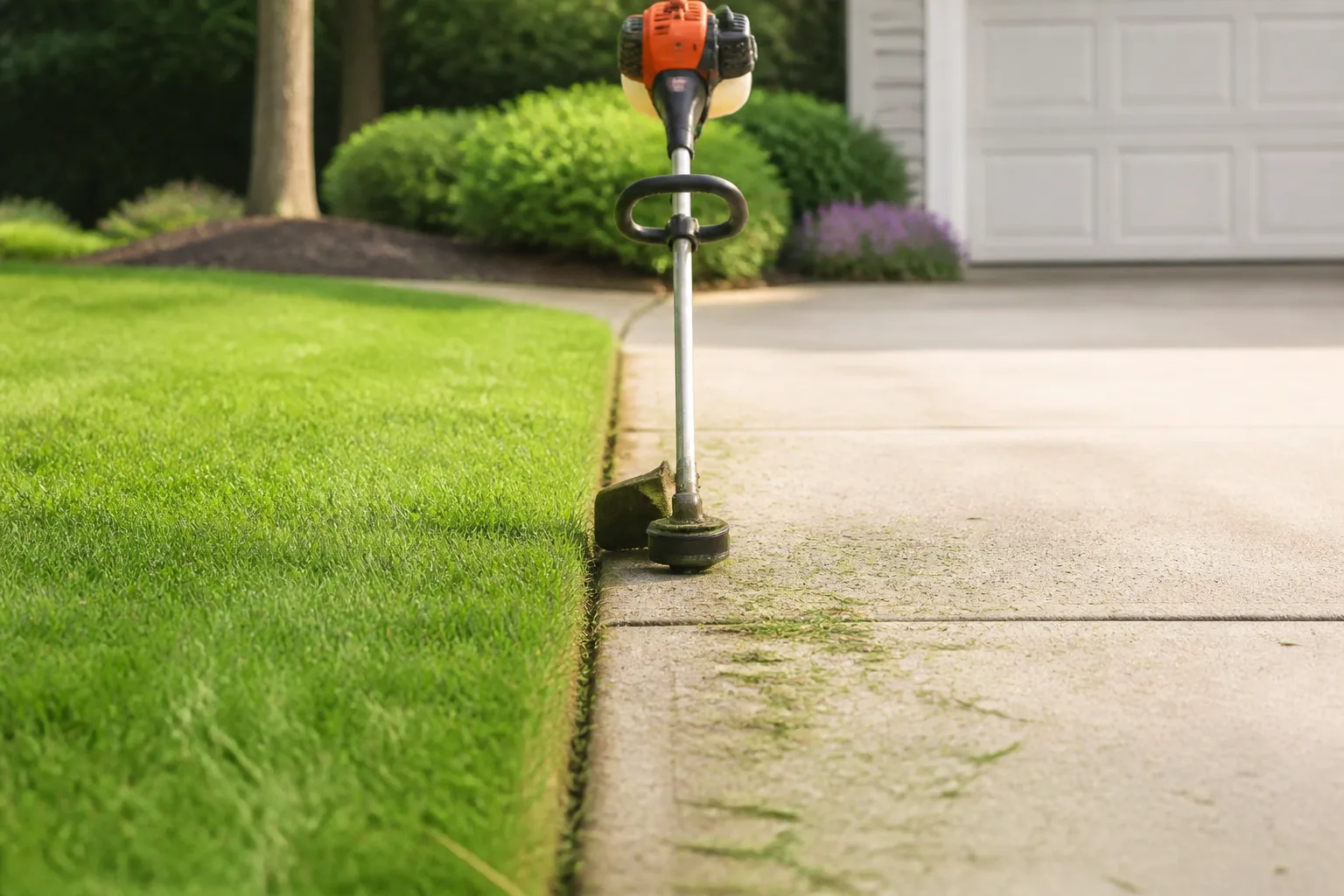
The border determines the tool and the depth: a flush cut for concrete, a shallow maintained trench for open soil, and no blade trench around surface-rooted trees.
Choose your tools and safety gear
For most fall edging, the useful kit is short: a half-moon edger or sharp flat spade, a string trimmer with an edging function if you prefer power, a garden hose or straight board for layout, a rake or blower, gloves, sturdy shoes, eye protection, and hearing protection for powered equipment. Long pants are sensible because small stones and dry clumps of turf can move quickly.
Manual edger or powered trimmer?
Choose a manual edger when you want a precise line beside a bed, need to remove a narrow strip of sod, or have a small area that would be awkward to manage with a motor. A half-moon blade makes a clean vertical incision; a flat spade is more versatile when the old edge is overgrown and needs lifting. Manual work is slower, but you can feel roots, stones, and buried debris before a machine turns them into a problem.
A powered stick edger or string trimmer is efficient along long sidewalks and driveways. It is best for maintaining an established line, not for inventing a new border by eye. A trimmer can scar wood, vinyl, painted edging, and soft plastic, so keep the cutting head oriented for the surface and make a conservative first pass. Martha Stewart’s practical edging guidance similarly recommends matching shovels, trimmers, and rotary scissors to the border and warns that string trimmers can damage steps and plastic or wooden borders.
Do not use a string trimmer to substitute for a bed redesign. If the edge has migrated several inches into the planting bed, cut the new line with a spade, lift the unwanted sod, and then use the powered tool for light maintenance later. That sequence produces a boundary you can actually follow.
Check utilities and soil before you cut
If you are putting a shovel into previously undisturbed ground, check the local utility-locate requirement before digging. In the United States, Call 811’s safe-digging guidance notes that utilities can be buried only a few inches below the surface and advises contacting the 811 center every time you dig, even for a small planting project or a spot that was marked in the past. A shallow-looking bed edge is still a digging project if you are removing soil.
Also inspect for irrigation tubing, low-voltage lighting, invisible pet fencing, and edging stakes. A powered tool is not a locator. Mark or avoid anything that could be damaged, and use a hand tool near known lines.
The workable-soil test is simple: press a boot into the grass beside the proposed line. If the soil springs back without a deep impression, it is usually firm enough. If the tread fills with mud or the ground shines with standing water, wait. Wet soil smears instead of cutting cleanly, and the extra weight of a person or mower can compact the border.
How to edge your lawn in fall: a clean seven-step method
The reliable order is mow, clear, mark, cut, lift, refine, clean. That order limits double work and makes it easier to see whether you are cutting the line you intended.
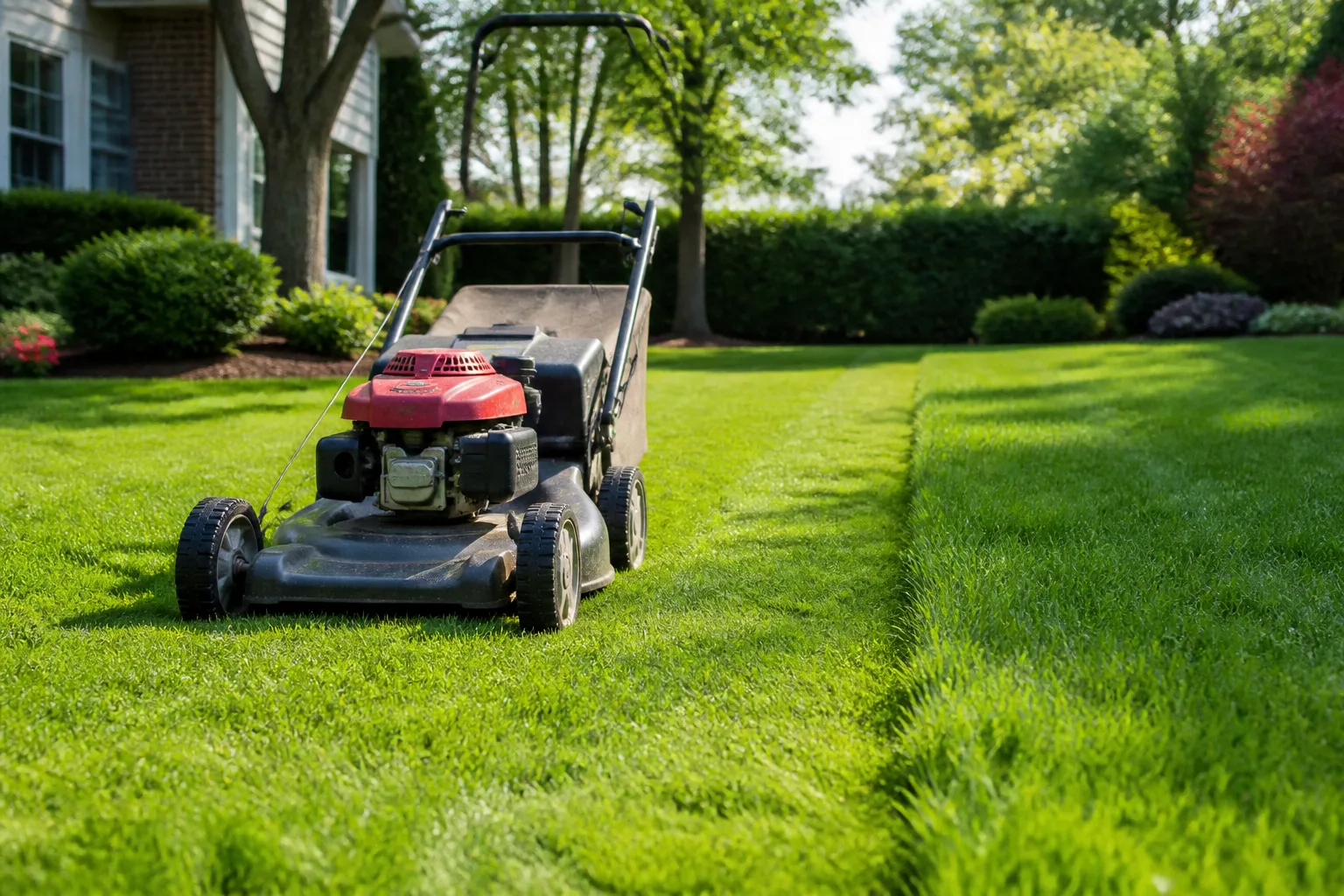
Mow and clear the strip first
Mow if the lawn needs it, using the height appropriate for your turf and local conditions. Do not scalp the lawn to make edging easier. The Pacific Northwest Pest Management Handbooks notes that maintaining adequate mowing height supports deeper rooting and reduces weed establishment by limiting light at the soil surface; its turfgrass mowing guidance also shows why mowing height is a turf-health choice, not just a visual preference.
After mowing, rake or blow away leaves, sticks, stones, and loose clippings from the border. Clear the hardscape so the true line is visible. Pull mulch back a couple of inches from a bed edge if it has spilled over the turf; otherwise you may mistake mulch for soil and cut the border too far into the bed.
Mark the line before making a permanent cut
For a straight boundary, lay a board, PVC pipe, or taut string along the desired path. For a curve, use a garden hose and step back to inspect the shape from the house and sidewalk. Gentle curves are easier to mow than a series of tight turns, and a line that is visually attractive but difficult for the mower to follow will create more trimming later.
If an existing border is already sound, follow it rather than moving it for a tiny improvement. New lines should be judged from several angles before the blade touches the ground. A few extra minutes of layout can prevent the common mistake of creating a wavy edge that looks worse after the grass is cut.
Use a conservative depth and steady passes
Along hardscape, set the powered edger to remove the overhang without gouging below the slab’s edge. Along an open bed, make a controlled vertical cut only deep enough to separate the turf you intend to remove. A small V-shaped trench can help keep runners out of a bed, but the maintenance goal is to define the boundary, not excavate a moat.
Start with a shallow pass. You can always remove another thin slice; you cannot put a deep gouge back neatly in one afternoon. Keep the tool upright and move at a steady walking pace. With a string trimmer, hold the head so debris travels away from people, windows, vehicles, and delicate plants, and stop the tool before inspecting a snag.
If the line is heavily overgrown, do not lean harder into the tool. Make one pass to reveal the edge, then a second light pass to sharpen it. That is safer for the machine and gives you a better view of roots, stones, and irrigation parts.
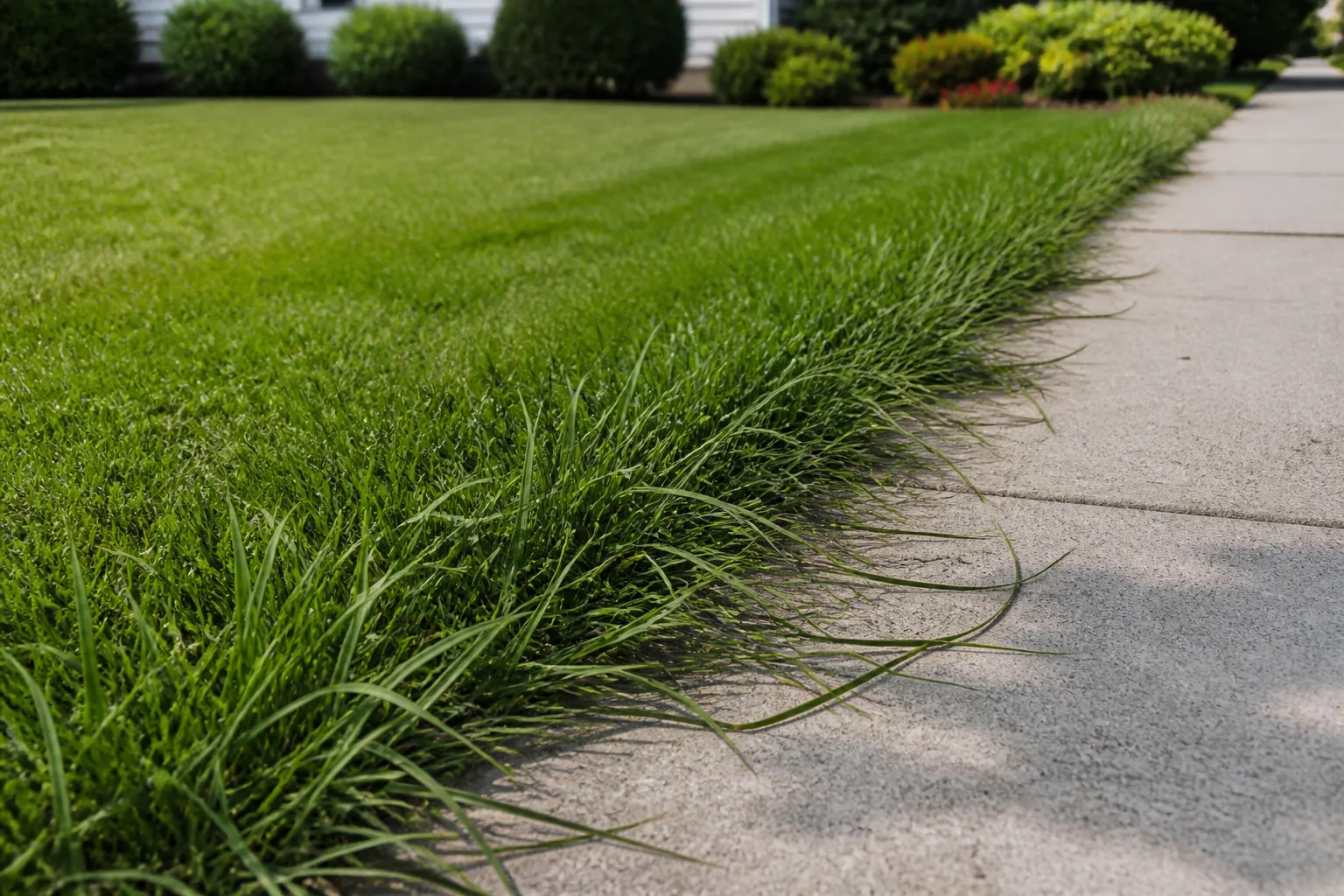
Lift only the turf that belongs outside the border
At an open bed, work from the bed side with a spade to lift the severed strip. Remove the grass crown and the attached shallow soil that actually crossed the line, then stop and look again. If you keep shaving soil simply because the trench is visible, the bed can sink, mulch can wash toward the lawn, and plant roots may be exposed.
Shake loose soil back into the bed when it is clean and free of viable weeds. Compost healthy sod only if your compost system gets hot enough to destroy living crowns and rhizomes; otherwise use the local yard-waste route. Do not scatter chunks of creeping grass along the border and expect them to disappear.
Where the edge meets a path or driveway, you usually need to lift only the clump that hangs over the hard surface. A neat flush line is more durable than a wide strip of bare soil beside the pavement.
Clean the edge and protect the surrounding yard
Brush soil and clippings away from the pavement, return displaced mulch to the bed, and inspect the line while standing back. The final edge should read as one continuous curve or straight run, not a chain of tool marks. If a section looks too deep, fill it with the removed soil and tamp lightly rather than widening the cut.
Keep leaves, loose turf, and fertilizer out of streets and storm drains. The Mississippi Watershed Management Organization explains that whole leaves can form a soggy mat on turf and that leaf matter washed into storm drains carries nutrients into waterways. Mulch a light leaf covering with the mower if it is dry and thin enough to break down, rake and compost a heavy mat, and keep the hardscape clean after blowing.
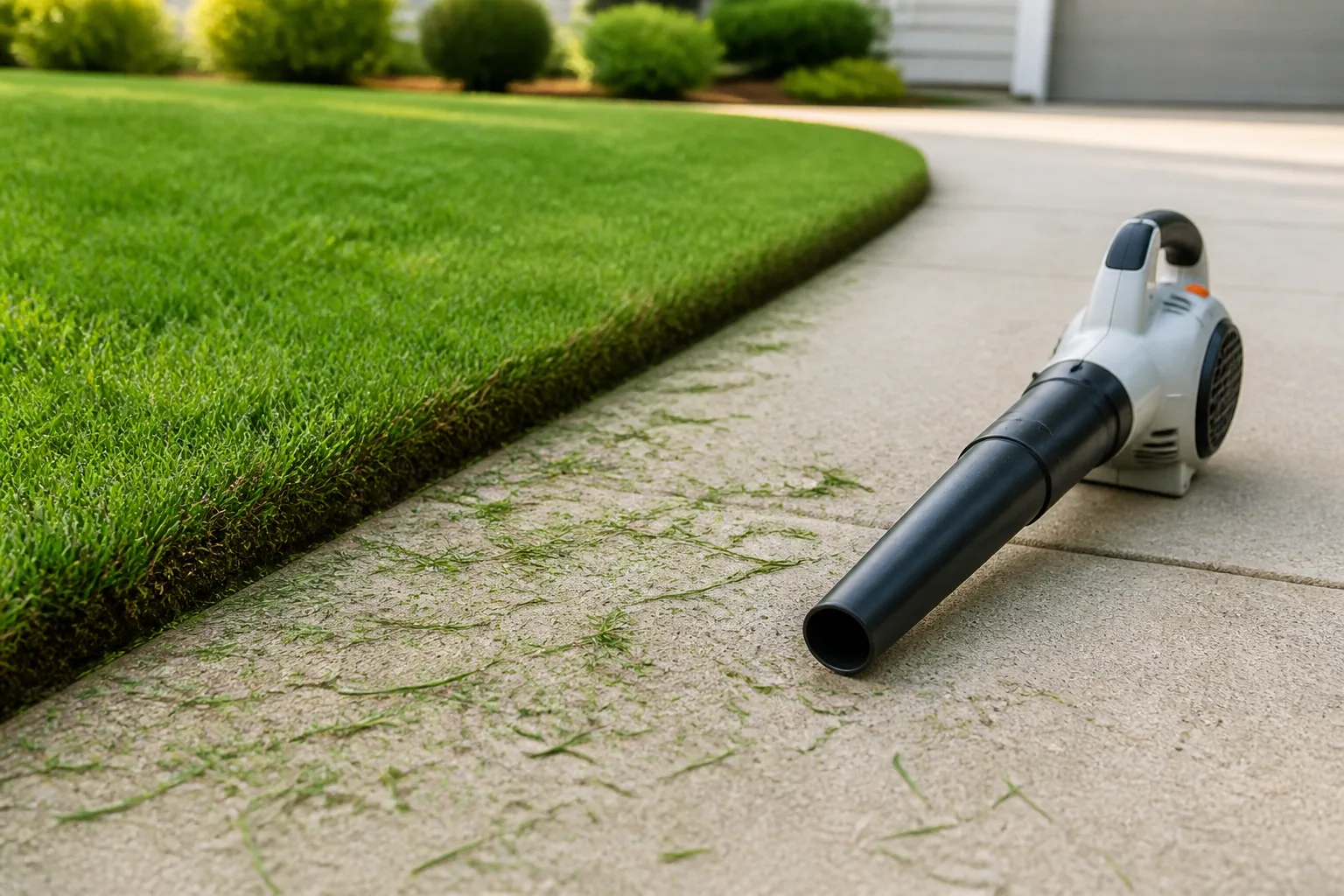
The cleanup is part of the edging job, not an optional cosmetic extra. Debris left on a walkway becomes slippery when wet, and debris pushed into a street can move into a drain during the next rain.
Adjust the November plan for cool- and warm-season grass
Cool-season and warm-season lawns do not share one fall timetable. Tall fescue, Kentucky bluegrass, fine fescue, and perennial ryegrass commonly stay active in cool weather, so a November mow-and-edge cycle may still make sense if the blades are growing. A lawn that is green but barely moving may need only a final light trim and a single edge refresh.
Warm-season grasses such as Bermudagrass, zoysiagrass, and St. Augustinegrass often slow or brown earlier as soil temperatures fall. If the lawn is already dormant, do not disturb it repeatedly for a sharper line. Remove leaves that mat the turf, hand-clean the hardscape, and wait for spring growth when a cut will heal and blend more naturally.
Regional guidance can differ even within the same grass type. For example, NC State Cooperative Extension’s fall-yard-care advice discusses tall fescue feeding and cleanup in North Carolina while emphasizing that grass should be green, not actively growing, for one of its November examples. That is a useful reminder to treat regional extension calendars as context, not a universal command for every lawn.
Do not bundle edging with every other fall lawn treatment automatically. Aeration, overseeding, irrigation, and fertilizer each have their own timing and conditions. The USGA’s recent review of late-season nitrogen applications emphasizes that uptake becomes more variable as temperatures approach freezing, so “November” alone is not a reason to apply fertilizer. Edge the border because the border needs it; make separate, evidence-based decisions about turf renovation.
Know when to skip fall edging
Skip or postpone the job when any of these conditions apply:
- The ground is frozen, saturated, or so dry and hard that the blade bounces.
- The lawn is fully dormant and the edge is not creating a safety or access problem.
- Heavy rain, snow, or a freeze is expected immediately after the cut.
- You cannot identify the location of buried utilities or irrigation lines.
- The proposed line crosses major surface roots, exposed tree roots, or fragile plant crowns.
- Leaves or debris are hiding stones, wire, toys, or other objects that could become projectiles.
- You are too close to a window, vehicle, person, or pet to control the direction of powered-tool debris.
In these cases, the correct fall task may be as simple as raking the hardscape, lifting a leaf mat, hand-pulling grass from a crack, or marking the border for spring. A good lawn edge is not worth a damaged tree, broken irrigation line, or muddy trench.
Finish with a small fall-lawn checklist
Once the edge is clean, spend five minutes on the tasks that protect the result:
- Walk the perimeter. Look for places where grass still overhangs the pavement or where the cut is too deep.
- Clear leaves from turf and drains. Mulch a light layer in place or remove a heavy, wet mat.
- Check the last mowing height. Avoid scalping; keep enough leaf surface for the grass type and season.
- Return mulch to the bed. Keep it off trunks and out of the trench.
- Store and inspect tools. Remove packed grass, check the blade or trimmer head, and let equipment dry before storage.
- Note the date and conditions. A quick phone note about grass type, soil moisture, and what worked makes next fall faster.
Edging is most valuable when it becomes a small maintenance habit instead of a once-a-year excavation. During active growth, a light refresh when the lawn needs mowing is usually enough. Recutting a full bed trench too often removes soil and can gradually change the grade.
Conclusion
November is often the best time to edge a lawn when the grass is still growing, the soil is firm, and the border is visible. The winning method is simple: mow first, clear the strip, mark the line, make a shallow controlled cut suited to the border, lift only unwanted turf, and sweep every fragment away from paths and storm drains.
Use a manual edger for precision, a powered tool for long established runs, and a completely different plan around trees, buried utilities, frozen ground, and saturated soil. If your lawn is dormant, waiting is not neglect—it is the safer choice. The edge will be easier to repair when active growth returns.



