5 Best Push Lawn Mowers for 2026
Compare five push lawn mowers for battery, gas, corded, and reel power—plus a buying guide on deck width, clipping modes, and when push beats self-propelled.
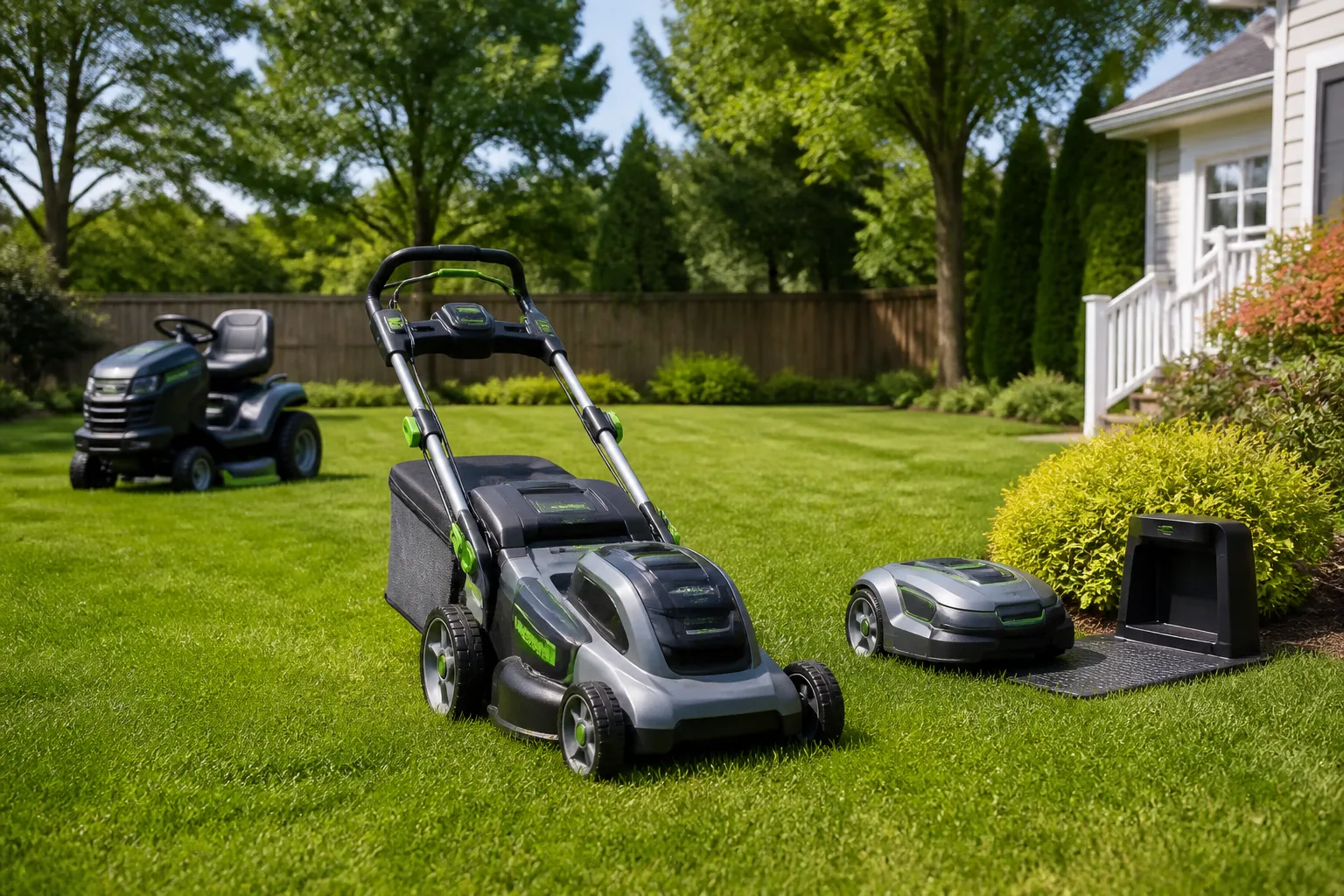
The best push lawn mower is the one you can actually push across your whole route without dreading the job. That sounds obvious, but most buying guides sort models by voltage or engine size before asking whether you need propulsion at all, whether your gate fits a 21-inch deck, or whether your lawn is flat enough that muscle power is reasonable.
A push mower powers the blade with gas, a battery, a cord, or nothing at all in the case of a reel model—but it does not drive the wheels. You supply the forward motion. That keeps purchase price, complexity, and maintenance lower than a self-propelled machine, which is why push mowers remain the right answer for many small and medium suburban lawns.
Quick answer: which push mower fits your lawn?
Use the table as a first filter, then read the limitation under each pick. Manufacturer runtime and yard-size claims assume maintained grass, sensible cutting heights, and often flat ground.
| Best for | Push mower pick | Deck / power | Why it fits | Main compromise |
|---|---|---|---|---|
| Most flat suburban lawns | Ryobi 40V HP Brushless 21-inch | 21-inch / 40V battery | Strong battery push with three clipping modes and fold storage | Heavy for some operators; hills are tiring |
| Fine mulch on level turf | Toro 60V Recycler SmartStow | 21-inch / 60V battery | Recycler deck chops clippings small | Poor fit for steep slopes |
| Unlimited session length | Craftsman M110 140cc | 21-inch / gas | Easy-start gas reserve for thick grass | Oil changes and exhaust |
| Tiny yards and tight turns | Ryobi 13-inch corded | 13-inch / corded | Lightest powered option here | Cord length and management |
| Small flat eco-minded lawns | American Lawn Mower 14-inch reel | 14-inch / manual | Quiet, inexpensive, clean scissor cut | Not for tall grass or debris |
Do you actually need a push mower?
Push mowers make sense when the lawn is roughly half an acre or less, the terrain is mostly flat, and you are willing to trade physical effort for a lower price and simpler machine. They are also easier to lift into a shed, easier to turn around beds and fence posts, and less likely to surprise you with drive-belt or transmission repairs because there is no drive system.
The moment that math changes is usually slope, not square footage. A 6,000-square-foot lawn on a moderate hill can feel harder than a larger flat lot because you are fighting gravity on every pass. If you regularly stall halfway up a grade or finish mowing sore for two days, a self-propelled walk-behind is not a luxury—it is the correct category.
Push vs. self-propelled walk-behind
On a push mower, the motor or engine spins the blade only. You walk behind and push. On a self-propelled mower, the same power source also turns the wheels at a set speed while you steer. Self-propulsion adds weight, cost, and another system that can fail, but it preserves energy on long straight passes and modest hills.
Choose push when the lawn is flat, the route has many tight turns, storage space is limited, or budget matters more than convenience. Choose self-propelled when slopes, fatigue, or long mowing sessions are the bottleneck. Our broader lawn mower guide walks through riding, robotic, and zero-turn options when walking the entire property is no longer realistic.
When a push mower is the wrong tool
Skip push and move up a category when any of these are true: the steepest section feels unsafe to walk while pushing weight uphill; grass is routinely more than one week overdue and you need sustained torque for recovery cuts; the property is mostly open ground above about half an acre and time on foot is the real problem; or you need to mow wet slopes where traction and footing are already questionable.
Push mowers also struggle when the lawn is dominated by weeds, sticks, or rough ground that a reel mower cannot slice cleanly. In those cases, a rotary deck with enough power—usually gas or a larger battery platform—handles mixed debris more forgivingly than a manual reel.
How these push mower picks were evaluated
These recommendations compare current manufacturer specifications and published feature sets against the jobs each mower is realistically built to do. The goal is not to crown a single winner for every yard, but to match power source, deck width, clipping options, and weight to common residential constraints.
Every pick is a true push model: no self-propulsion. Each has a clear best-use case, a current retailer or manufacturer listing, and a limitation that should matter before checkout. Where turf health intersects mower choice—cutting height, blade sharpness, and what to do with clippings—the article uses extension guidance from Penn State Extension and Colorado State Extension rather than marketing copy.
Walk-behind power mowers sold as consumer products must meet the federal walk-behind mower safety standard summarized by the CPSC. That is useful compliance context, not a performance ranking: a mower can be certified and still be the wrong fit for your slope or gate width.
The 5 best push lawn mowers
Ryobi 40V HP Brushless 21-inch — Best overall battery push
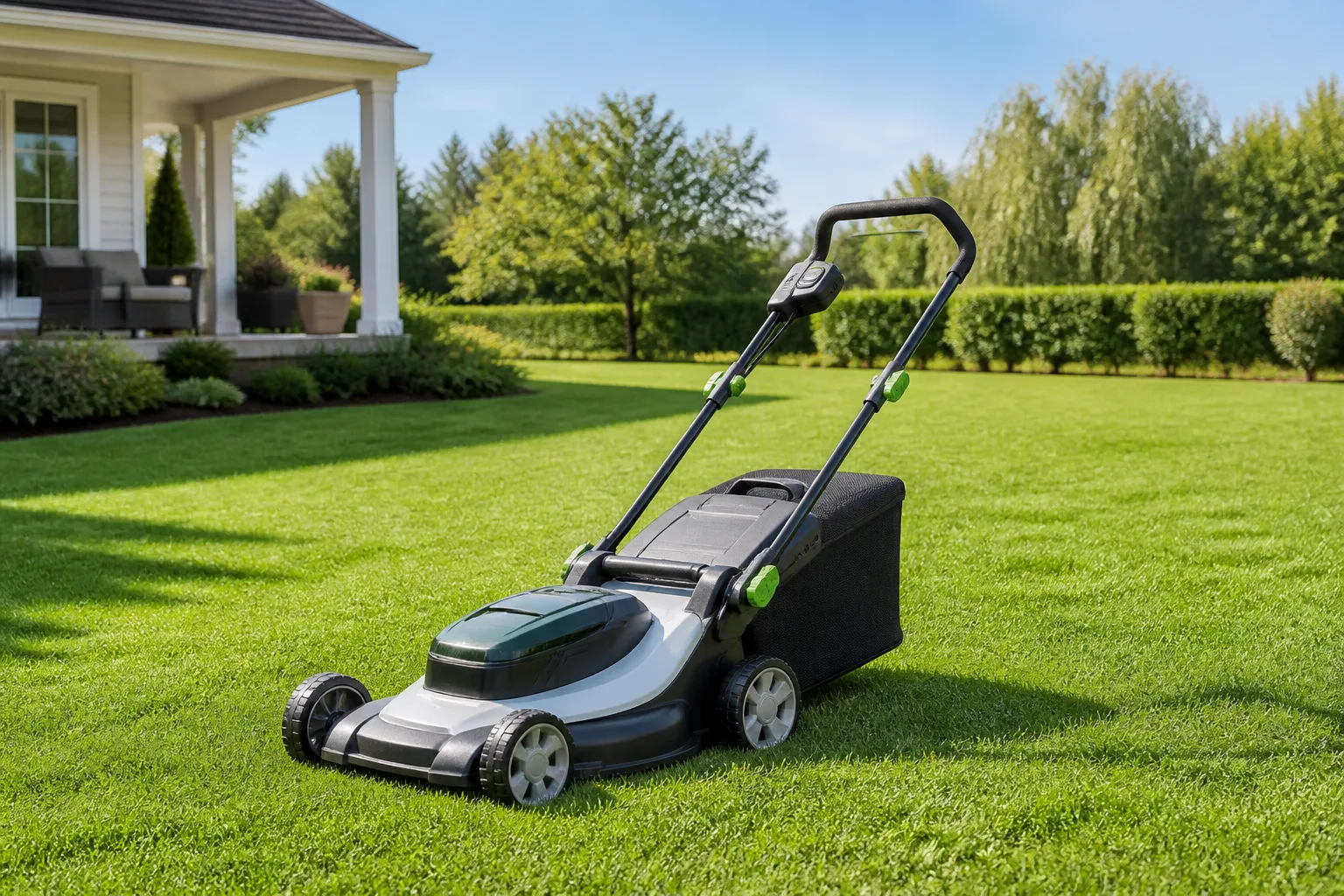
The Ryobi 40V HP Brushless 21-inch push mower (RY40HPLM05K) is the strongest default in this list for a flat to gently rolling suburban lawn that needs a full-size deck without self-propulsion. Ryobi lists a brushless motor, a 21-inch steel deck, a 40V 8.0Ah battery and charger in the kit, seven cutting heights from 1.5 to 4 inches, and three-in-one bagging, mulching, and side discharge.
The practical case for this mower is platform economics. The 40V battery works across Ryobi’s outdoor tool lineup, so the mower can share packs you already own. Foldable handle storage matters in crowded garages, and a single-lever height adjustment beats resetting four wheels independently when you alternate between summer height and a slightly lower spring cleanup pass.
Treat published runtime as a planning range, not a promise. Thick, damp, or overgrown grass, low cutting heights, and repeated turbo or high-load modes all draw more power. For a maintained lawn around a quarter to half acre on flat ground, an 8.0Ah pack is usually enough for one session with margin; overdue grass may require a higher deck, a second pass, or a recharge.
Do not choose this model just because 21 inches sounds faster. At roughly 64 pounds, it is a real push mower. On steep hills or lawns with soft wet soil, the weight that helps stability on flat turf becomes a liability. If your property has a serious grade, compare the self-propelled Ryobi 40V options before committing to push.
Toro 60V Recycler SmartStow — Best mulching push mower
The Toro 60V Recycler SmartStow push mower is the pick when fine mulch matters more than minimum effort. Toro’s Recycler deck design is aimed at chopping clippings small enough to filter down through the turf canopy instead of sitting in clumps on top. The kit includes a 60V 4.0Ah battery, charger, 21-inch deck, bag, and mulching capability, with side discharge available through Toro’s accessory path depending on the exact listing.
Mulching is not magic—it depends on dry grass, a sharp blade, and mowing often enough that you are not removing more than one-third of the leaf tissue at once. Penn State Extension notes that returning clippings recycles nitrogen and other nutrients, which can materially reduce fertilizer needs on healthy turf. Colorado State Extension likewise recommends letting clippings fall back on the lawn when they decompose quickly and are not carried to garden beds where herbicide residues could be a concern.
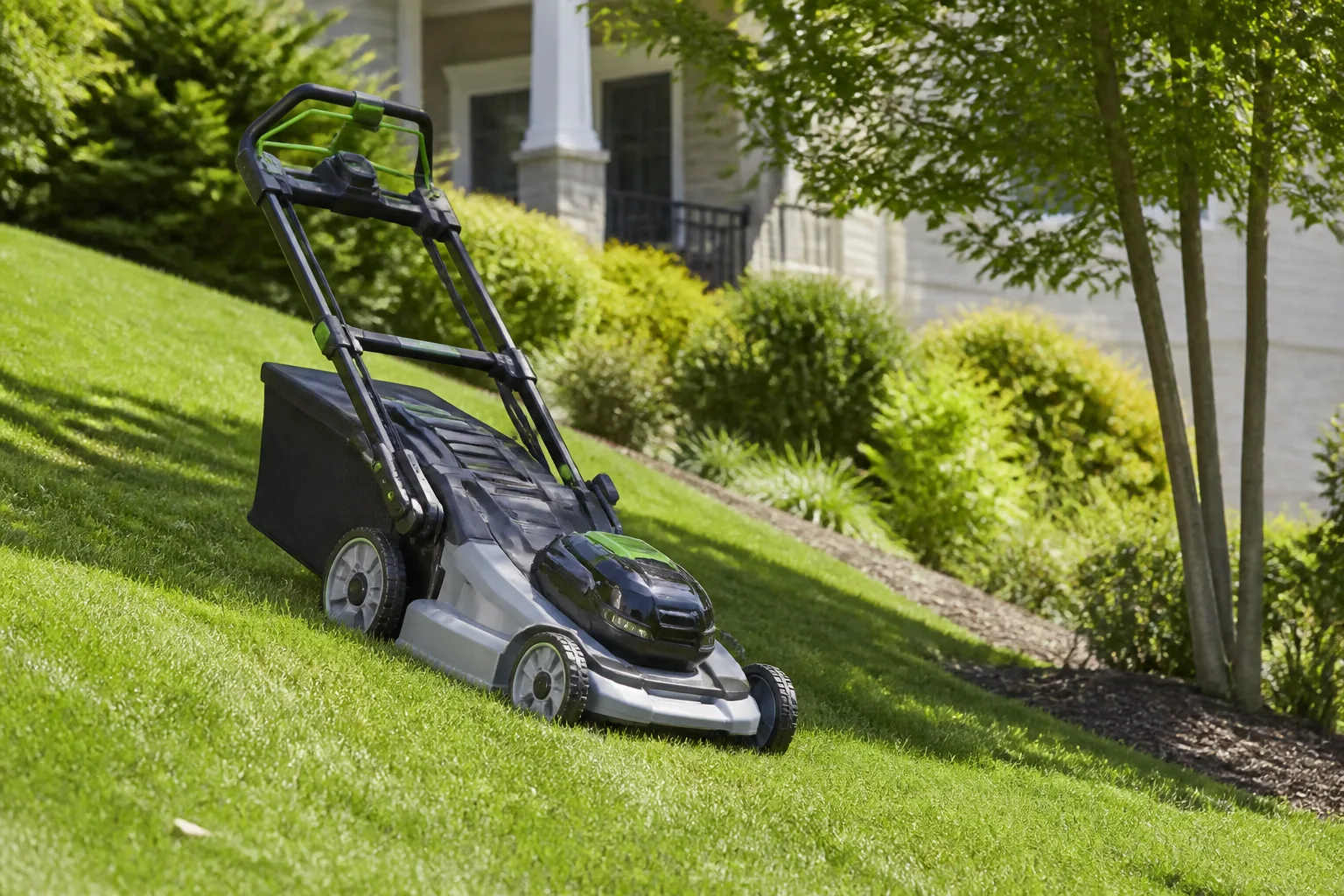
This Toro is a poor match for hilly yards. At about 64 pounds on a push platform, climbing a steep slope while maintaining control is genuinely hard work, and the deck can catch on inclines when set low. Keep it on level or gently rolling lawns where mulch quality is the priority. SmartStow vertical storage is excellent, but confirm whether your routine requires removing the bag each time—that step annoys some owners more than the space savings are worth.
Craftsman M110 140cc — Best gas push mower
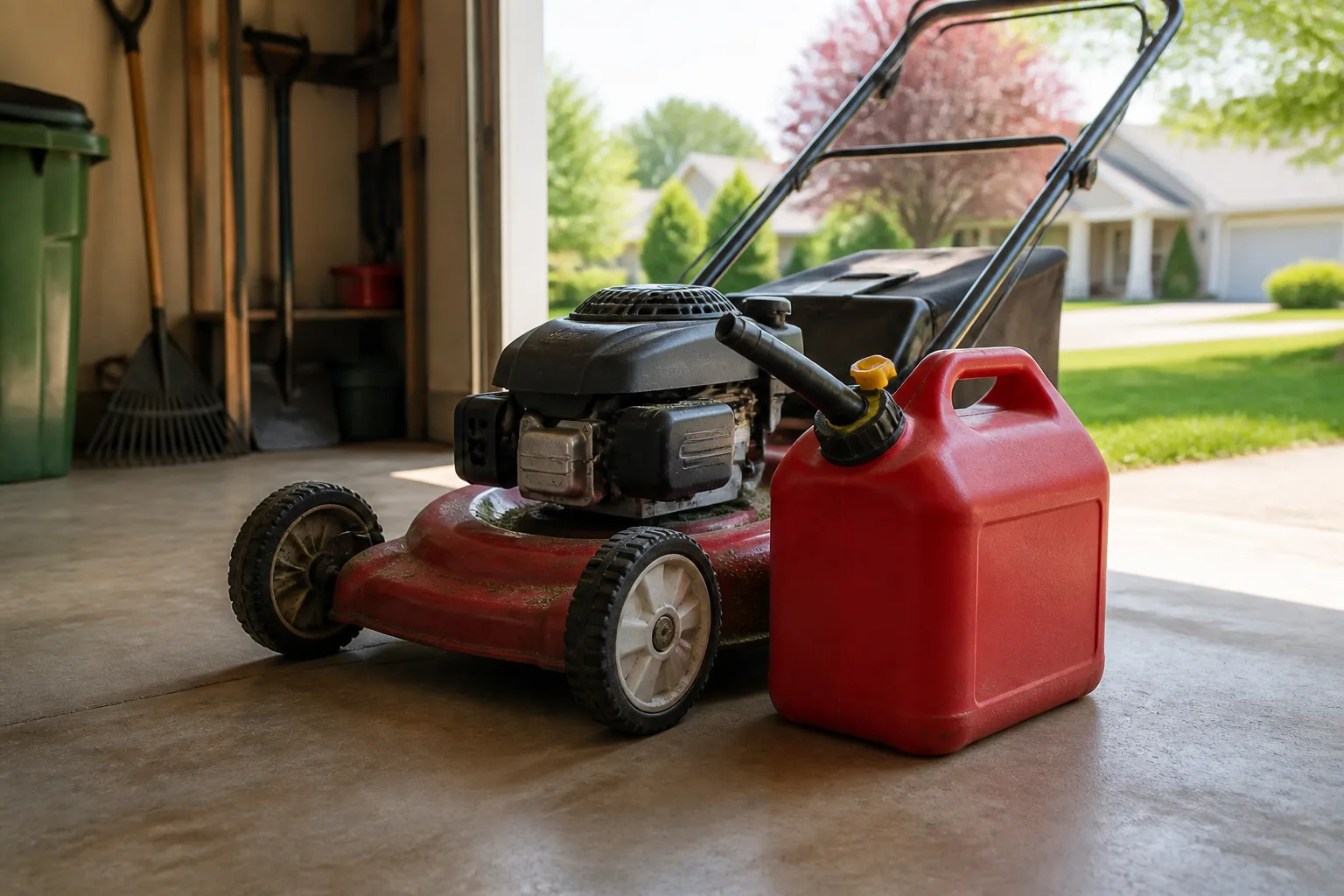
The Craftsman M110 140cc push mower is the gas answer when you want refill-and-go session length and do not want to think about state of charge. The Briggs & Stratton 140cc engine, 21-inch deck, and ready-start system target homeowners who are tired of cold-pull frustration on older gas machines. Craftsman lists mulch, bag, and side-discharge capability, with a rear bag included on the standard kit.
Gas still wins on open-ended runtime for recovery cuts. If your lawn occasionally gets away from you after travel or heavy rain, a tank of fuel and a sharp blade will keep cutting long after a single battery would have asked for a break. The trade is ownership overhead: oil changes, fuel stabilization if the mower sits for weeks, exhaust, and noise. Plan on annual oil service at minimum, with more frequent checks if you mow dusty or sandy areas.
At about 65 pounds, the M110 is not light, but it is manageable on flat turf and generally easier to push through thick grass than undersized electric decks because torque does not collapse when the blade loads. Craftsman markets it toward smaller yards around a quarter acre, but the real limit is your time and strength, not an arbitrary acreage sticker. A flat half acre on a push gas mower is doable; a hilly half acre probably is not.
Ryobi 13-inch corded electric — Best for small yards
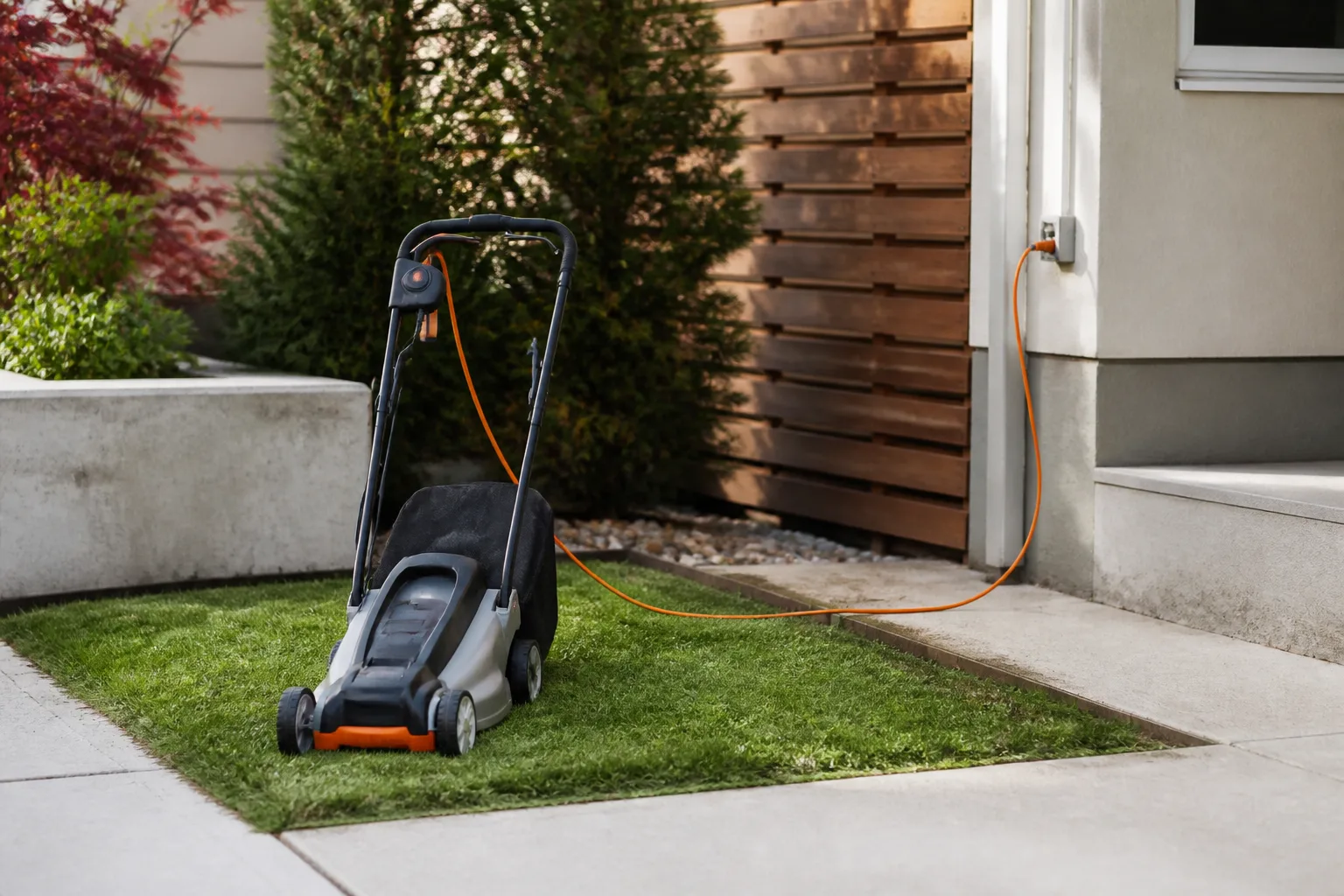
The Ryobi 13-inch 11-amp corded push mower (RYAC130-S) is the value play for tiny lawns, side yards, and townhouse plots where a 21-inch deck cannot turn anyway. At about 23 pounds, it is the lightest powered mower here by a wide margin. The 13-inch path trades coverage per pass for maneuverability around mailbox posts, tree trunks, and fence lines.
Corded electric removes fuel, oil, and batteries from the equation entirely. As long as you have a suitable outdoor outlet and a correctly sized extension cord, runtime is unlimited. That is the strength and the weakness. You must route the cord away from the blade path on every turn, and undervolting from a too-thin or too-long cord can make the motor feel weak on thick grass.
Use a 14-gauge outdoor extension cord up to 100 feet for this class of mower, or 12-gauge if you must go longer—check the owner’s manual for the exact amp draw and maximum length. The mower does not include a cord. Bagging and mulching are supported, but the small catcher fills quickly on anything beyond a postage-stamp lawn.
Choose corded when the entire mowing area sits within a continuous cord path and you mow often enough that grass never gets tall enough to bog an 11-amp motor. Skip it when the yard wraps around the house with no practical outlet loop, or when you need to cross gravel drives where cord snags are inevitable.
American Lawn Mower Company 14-inch — Best reel mower
The American Lawn Mower Company 14-inch reel mower is the manual choice for a small, flat, frequently mowed lawn where noise, emissions, and storage size matter more than speed. At about 19 pounds, it is easy to hang on a wall hook and genuinely pleasant on a 1,000-square-foot patch of fine turf.
Reel mowers cut with a scissor action between fixed bed knife and spinning blades rather than tearing grass with a single high-speed rotary blade. The result is a clean, even finish on healthy grass kept within the mower’s height window—typically not above about four inches before performance falls apart. There is no engine to service, only occasional blade adjustment and sharpening every few years.
The limitations are non-negotiable. Sticks, walnuts, and rough weeds stop reel mowers cold. Slopes multiply effort. You cannot blast through a neglected spring lawn in one pass. Fine Gardening’s eco-friendly lawn guidance aligns with reel use on small plots: mow higher, mow regularly, and let short clippings recycle rather than hauling them away.
If your lawn is larger than a few thousand square feet, grows fast, or includes bumpy tree-root zones, a rotary push mower from earlier in this list will finish faster with less frustration. The reel wins when mowing is a ten-minute ritual, not a weekend project.
What to look for in a push lawn mower
Power source trade-offs: gas, battery, corded, and reel
Gas push mowers deliver the longest uninterrupted sessions and the most forgiving torque for thick grass, at the cost of fuel storage, oil changes, noise, and emissions. Battery push mowers remove fuel and most engine maintenance while staying quiet enough for early morning mowing in many neighborhoods, but runtime and recharge logistics become your new constraint—compare complete kits and whether you already own compatible packs on the same voltage platform. Our electric mower roundup covers corded, cordless, riding, and robotic formats if you want the full electric landscape beyond push.
Corded push mowers are the budget and weight winners for micro lawns with reliable outlet access. Reel mowers are the environmental and simplicity winners for tiny, flat turf mowed on schedule. None of these replace self-propulsion on a hard hill; they replace complexity on easy ground.
Deck width, wheels, and maneuverability
Most full-size push decks are 20 to 21 inches wide. That is the sweet spot for suburban rectangles: enough coverage per pass without becoming a ship around obstacles. Decks under 18 inches—like the 13-inch Ryobi corded—excel in tight yards at the cost of more passes on open areas.
High rear wheels (often 10 inches or more) roll more easily over rough turf, tree roots, and slight crown changes. They also make it marginally easier to pivot the mower at the end of a row. Tread pattern matters on dewy mornings: deeper grooves grip wet grass better than smooth plastic. Measure your narrowest gate and shed door before assuming a 21-inch deck fits.
Mulching, bagging, and side discharge
Mulching chops clippings fine and drops them on the lawn. It is the default choice for healthy, regularly mowed turf because nutrients recycle and clippings do not build thatch when managed correctly. Bagging collects clippings in a rear catcher—useful when grass is wet, diseased, weed-seedy, or so long that mulch would clump. Side discharge shoots clippings out a chute to the side; helpful for heavy spring cuts when you may rake afterward.
The right mode changes week to week. For a deeper comparison of when to collect versus return clippings, see whether you need to bag every mow and our guide to mulching vs bagging vs leaving material on the lawn.
Push mower maintenance that protects your lawn
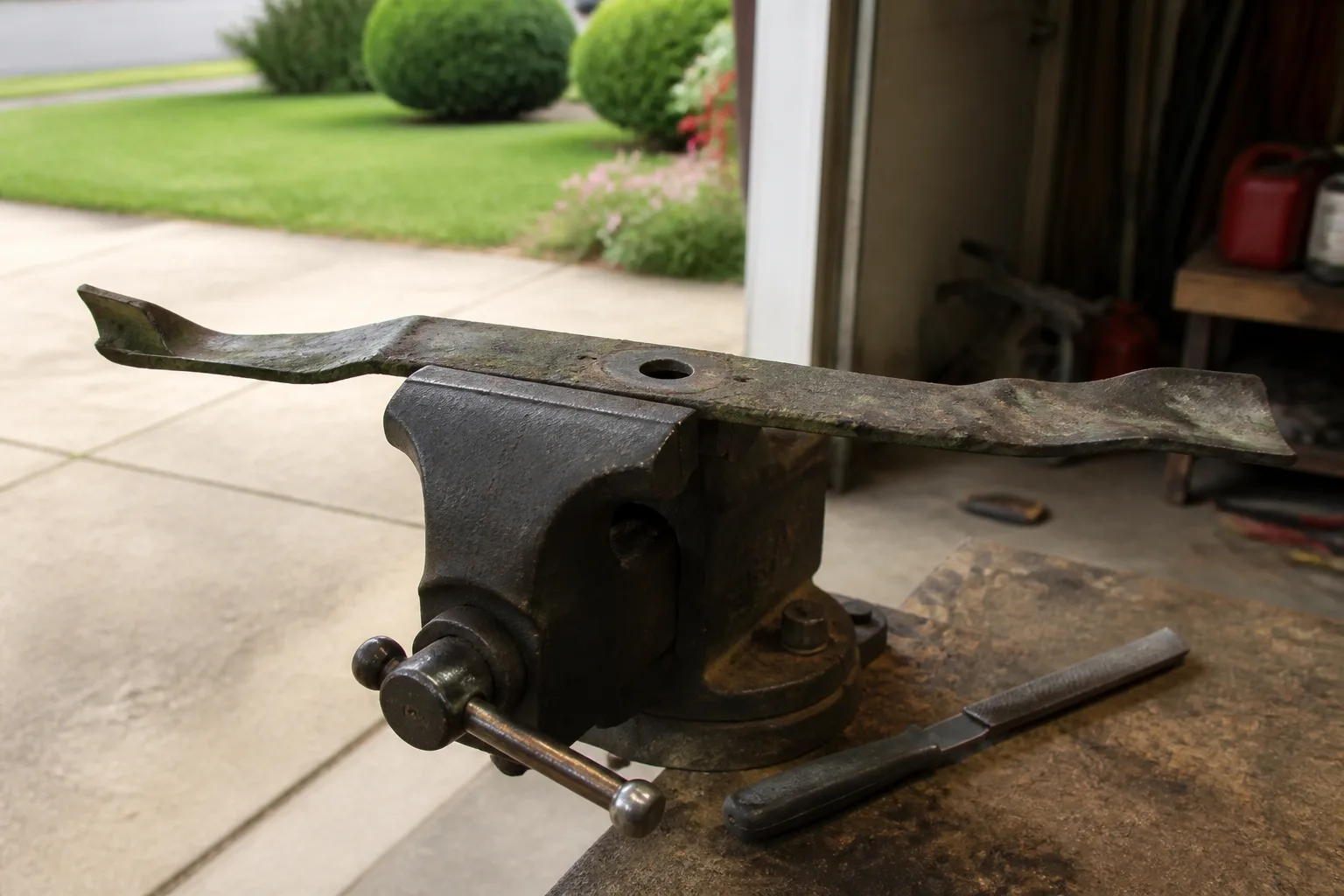
A dull blade does more damage to turf than most homeowners realize. Torn leaf tips brown at the edges, lose water faster, and look uneven even when height is correct. Inspect the blade whenever the cut looks frayed, after hitting a rock or hidden stake, and at least once per season on typical residential use. Remove the battery or disconnect spark-plug boot before handling the blade, follow the manual, and replace blades that are bent or cracked.
Mowing height is a turf decision first and a mower decision second. Colorado State Extension recommends keeping cool-season lawns around 2.5 to 3 inches for most of the year and never removing more than one-third of the grass height in a single pass. If weather delays mowing and grass is tall, raise the deck for the first cut, then lower it a few days later—do not scalp an overgrown lawn back to normal in one go.
Gas push mowers need annual oil changes at minimum, plus air-filter checks and fresh fuel if the tank sat for more than 30 days without stabilizer. Battery mowers need clean decks, dry storage, and batteries charged per manufacturer guidance—avoid leaving packs on the charger indefinitely unless the manual allows it. Corded models mainly need cord inspection and debris cleared from vents. Reel mowers need blade gap adjustment and occasional sharpening.
Store any push mower under cover, wheels down or hung per manual, with the fuel tank empty or stabilized on gas models. Winter is also when big-box stores discount last year’s inventory—useful if you are buying in the off-season, provided the model is still current enough to get parts.
Conclusion
The right push lawn mower is less about finding the most powerful machine on the shelf and more about matching effort, deck size, and power source to a lawn you will actually mow on schedule. For most flat suburban lots, the Ryobi 40V HP 21-inch push mower balances runtime, clipping flexibility, and storage. Choose the Toro Recycler when mulch quality on level turf is the priority, the Craftsman M110 when you want gas reserve, the Ryobi corded 13-inch for tiny cord-friendly yards, and the American Lawn Mower reel for the smallest flat plots.
Before you buy, walk your mowing route once with a tape measure at the narrowest gate and an honest eye on slope. If the hill wins that walkthrough, step up to a self-propelled mower instead of fighting physics with a push deck. If the lawn is open and time-consuming, the broader lawn mower guide covers riding and robotic paths. Pair whichever machine you choose with sharp blades, sensible cutting height, and clipping management that feeds the grass instead of smothering it—that is what separates a neat lawn from a expensive repeat purchase.