Best Battery-Powered Lawn Mowers for Every Yard
Compare the best battery-powered lawn mowers for small lawns, hills, large properties, and hands-off mowing, with honest runtime and buying advice.
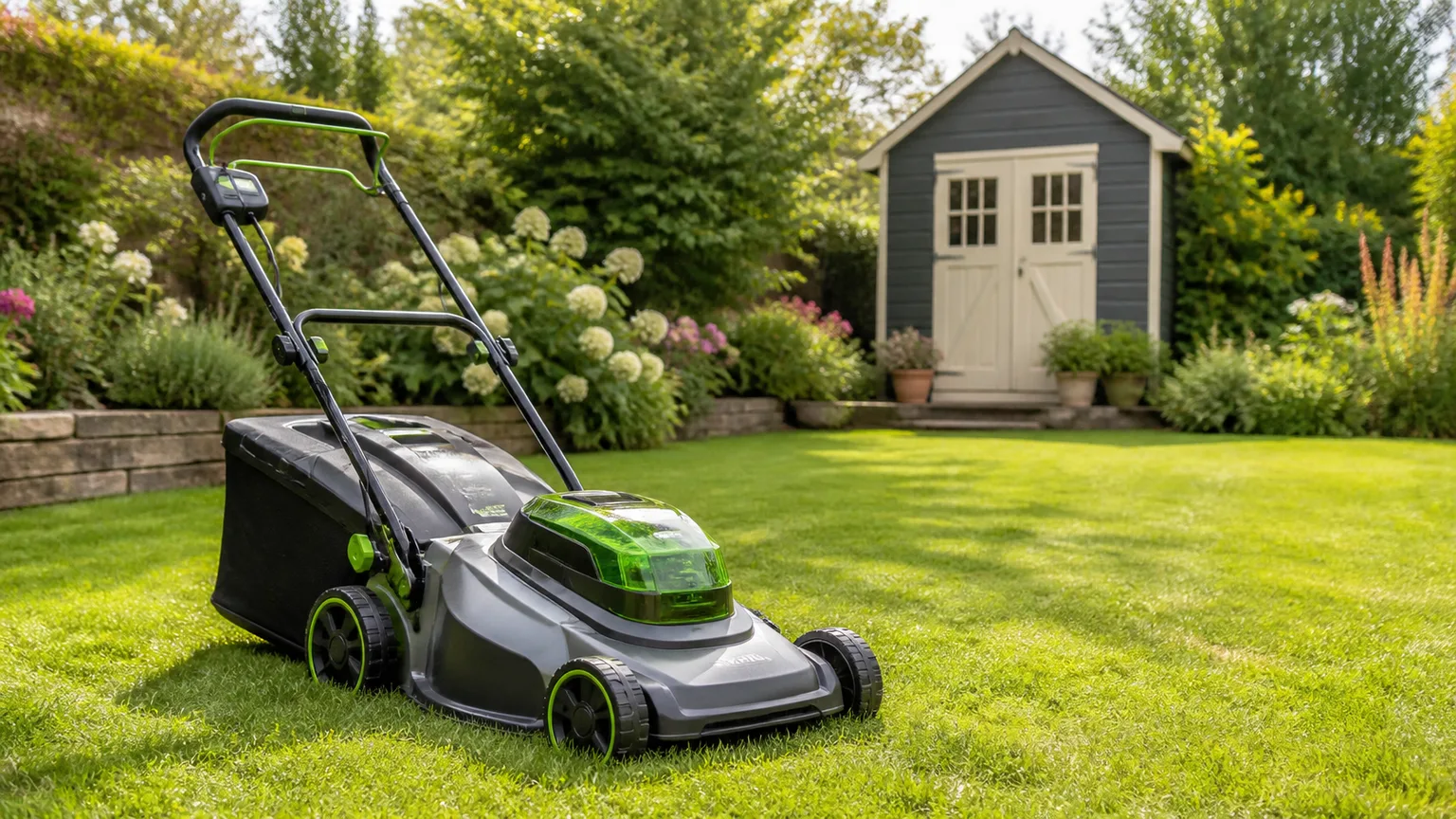
The best battery-powered lawn mower is not necessarily the one with the biggest voltage, longest advertised runtime, or widest deck. It is the one that can finish your actual lawn at a comfortable pace, with enough reserve for thick patches and without locking you into an expensive battery system you will never use again.
For most homeowners with a small-to-medium lawn, the EGO POWER+ 21-inch Self-Propelled Mower is the most balanced choice. A small, flat yard may be better served by a lighter push mower, while a property measured in acres calls for a lawn tractor, zero-turn, or robotic system. This guide compares all three categories instead of pretending they solve the same problem.
Quick answer: match the mower to the property
Use this short list as a starting point:
- Best overall walk-behind: EGO POWER+ 21-inch Self-Propelled Mower for a typical lawn up to roughly half an acre, especially when you want self-propulsion, bagging, mulching, and simple storage.
- Best easy-to-use self-propelled mower: Toro 60V Recycler 21466 for a smaller property where a handle that follows your walking speed is more valuable than maximum runtime.
- Best value for a broad walk-behind cut: RYOBI 40V HP Brushless 21-inch Push Mower when the ground is mostly flat and you already want to share 40V batteries with other tools.
- Best mulching-focused option: Husqvarna Lawn Xpert LE-322R for a homeowner who wants self-propulsion and quick changes between mulching, bagging, and side discharge.
- Best for acres: a riding or robotic mower, not an oversized walk-behind. The EGO POWER+ T6 is a lawn tractor for hands-on control, while the ECOVACS GOAT A3000 and Yarbo Pro Module reduce the amount of mowing you do yourself.
Coverage figures below are manufacturer-stated ceilings, not promises. Battery temperature, grass height, slope, cutting height, blade condition, self-propulsion, and mulch or turbo modes can all reduce the area or minutes you get from a charge.
How we compared battery lawn mowers
We compared current model specifications, included batteries, cutting width, propulsion, cutting options, height adjustment, charging and storage details, and the kind of property each mower can realistically serve. A product page is useful for identifying what a machine is designed to do, but it cannot predict your lawn’s density or slope, so the recommendations pair a specification with a use case and a limitation.
The official EGO mower page lists a 21-inch deck, a 56V 6.0Ah battery, up to 50 minutes of runtime, seven height settings, and three cutting modes. Toro’s 21466 specifications list a 22-inch deck, a 60V 6.0Ah battery, up to 40 minutes, and Personal Pace rear-wheel drive. Those numbers are close enough to compare, but the machines feel different in use: EGO emphasizes adjustable control and flat-fold storage, while Toro emphasizes following your walking speed.
Runtime is a range, not a promise
Treat an advertised runtime as a best-case planning number. A mower will usually run longer on short, dry grass at a taller cut height and with the drive system disengaged. It will run for less time when it is cutting dense growth, climbing, mulching, or propelling itself through soft ground.
Battery capacity is easiest to compare within one brand’s platform. Voltage describes the electrical system and power potential; ampere-hours, or Ah, describe how much charge a battery stores in that system. A 6.0Ah pack on a 56V platform is not directly comparable to a 6.0Ah pack on an 18V platform without considering the whole system. Watt-hours, calculated from volts multiplied by Ah, provide a better rough cross-platform comparison, but motor efficiency and workload still matter.
Battery platform, deck width, and cut height work together
A wide deck covers more ground per pass, but it can also demand more power and make a mower harder to maneuver between trees, beds, and gates. A 13-inch mower may be perfect for a courtyard and frustrating on a quarter-acre open lawn; a 42-inch riding deck is efficient in open space but ridiculous for narrow passages.
Cutting height matters to both the lawn and the battery. Penn State Extension and Purdue Turfgrass Science both emphasize the one-third rule: do not remove more than one-third of the leaf blade in one mowing. If grass has gotten too tall, raise the deck and make more than one pass rather than forcing a low cut that stresses turf and drains the battery.
The 9 best battery-powered lawn mowers
1. EGO POWER+ 21-inch Self-Propelled Mower — Best Overall
The EGO POWER+ 21-inch Self-Propelled Mower is the best default for a homeowner who wants one walk-behind machine to handle routine mowing, occasional thick grass, and mixed bagging or mulching. Its current kit uses a 56V 6.0Ah ARC Lithium battery, and EGO lists up to 50 minutes of runtime, a 21-inch deck, seven cutting-height positions from 1.25 to 4 inches, and three-in-one bagging, mulching, and side discharge.
The dual-toggle self-propel controls are useful when one hand is occupied steering around a bed or tree. The mower folds for storage, includes a two-bushel bag, and works across the wider EGO 56V battery system. Its main limitation is not power but fit: a 21-inch self-propelled mower is still a poor substitute for a riding mower on several acres, and self-propulsion consumes some of the available charge. Choose it when you value a complete, polished walk-behind setup and have a place to store a 70-pound-class mower.
2. Toro 60V Recycler 21466 — Best for Easy Self-Propulsion
Toro’s 21466 is the best choice when you want the mower to adapt to your walking pace instead of asking you to manage a separate speed control. Its Personal Pace Auto-Drive system uses the handle as the input, and the official specification lists a 22-inch steel deck, rear-wheel drive, a 60V 6.0Ah battery, up to 40 minutes of runtime, and an included bag. Mulching is standard; side discharge is optional.
The shorter runtime and heavier body make it a better match for lawns under about one-third of an acre than for a broad, hilly property. The 22-inch deck can save passes, but the extra width and weight are noticeable in tight spaces. Check the model number carefully because the 21466T tool-only version does not include the battery and charger. The manufacturer’s 21466 listing also notes the 60V Flex-Force platform, which may make the mower more attractive if you already own compatible Toro tools.
3. RYOBI 40V HP Brushless 21-inch Self-Propelled Mower — Best for Three-Quarter Acre Lawns
The RYOBI 40V HP Brushless 21-inch Self-Propelled Mower is a practical pick when you want a longer stated coverage range and already plan to build around RYOBI’s 40V system. The current RY40HPLM01B product page lists a brushless motor, rear-wheel-drive self-propulsion, up to 80 minutes with two 40V 6Ah batteries, and a suggested lawn size of three-quarters of an acre or less.
The two-battery setup is the important detail. It can deliver useful reserve for a wider route, but it also means more cost, weight, and charging logistics than a one-pack mower. The Cut Command Center, turbo mode, integrated mulch plug, pass-through bag removal, and folding handles improve day-to-day usability. This is the right type of mower for a larger walk-behind lawn with mostly manageable grades; if your property is steep, rough, or mostly open acreage, compare the cost against a riding machine instead.
4. RYOBI 40V HP Brushless 21-inch Push Mower — Best Push Mower
The RYOBI 40V HP Brushless 21-inch Push Mower makes sense for flat lawns where you would rather spend less and avoid paying for a drive system. The model has a 21-inch deck, brushless motor, turbo mode, bagging, mulching, and side discharge, and its platform shares batteries with a large range of outdoor tools. The official product listing is the place to confirm the current kit contents before ordering.
Because you provide all the forward force, this mower can be simpler and lighter than a comparable self-propelled model. That is a benefit on flat ground and a drawback on slopes, thick spring growth, or soft soil. Choose a push mower only if you can comfortably push it for the full route; saving money is not a good trade if the machine makes you postpone mowing until grass is too tall for a single pass.
5. Husqvarna Lawn Xpert LE-322R — Best for Mulching
The Husqvarna Lawn Xpert LE-322R stands out for a homeowner who changes cutting modes often. Husqvarna lists a 21-inch cutting width, self-propulsion, two battery compartments, and three-in-one mulching, rear bagging, and side discharge. Its control system is designed to balance sensing and power, and the current manufacturer page includes two batteries with the kit.
This mower is a good fit for a quarter- to half-acre lawn that is maintained regularly. Mulching works best when the grass is dry and you are removing only a modest amount of leaf tissue; it is not a way to hide a lawn that has grown far too tall. The tradeoffs are price, weight, and the possibility of extra wear around hard edging. Pick it for the convenient cutting-mode controls and dual-battery setup, not simply because its headline runtime is longer than a smaller mower’s.
6. EGO POWER+ T6 TR4204 — Best Lawn Tractor
The EGO POWER+ T6 TR4204 is the most sensible step up when a walk-behind mower turns a normal mowing session into an endurance event. EGO’s T6 product page describes a 42-inch deck, six 56V 6.0Ah batteries, up to 1.5 acres of stated coverage, a 15-inch turning radius, cruise control, headlights, and a tow hitch.
That capacity comes with real ownership demands. Delivery and assembly are more involved, bagging and mulching accessories may be separate, and a riding mower needs a level, secure storage space and a route wide enough for its deck. It is a strong choice for a property with open areas, slopes the machine is rated to handle, and attachments you will actually tow. It is not a sensible buy for a small suburban lawn where gates, trees, and tight corners eliminate the time saved by the wide deck.
7. RYOBI ZR3 80V HP — Best Zero-Turn
The RYOBI ZR3 80V HP is for a different problem than a walk-behind mower: cutting a large, mostly open lawn quickly while maneuvering around trees and obstacles. The current ZR3 listing specifies a 42-inch zero-turn deck, two 80V 14Ah batteries, and up to two acres of runtime in ECO mode. It also includes a hitch rated for towing up to 250 pounds.
Zero-turn control is highly maneuverable but takes practice. A flat, dry property is the right environment; wet grass can reduce traction, and a steep slope can create a safety problem that no battery or motor rating solves. Leave extra room around ponds, retaining walls, drop-offs, and fences while learning the steering levers. The ZR3 earns its place for acreage and obstacle density, not because zero-turn is automatically better than a lawn tractor.
8. ECOVACS GOAT A3000 — Best Robotic Mower
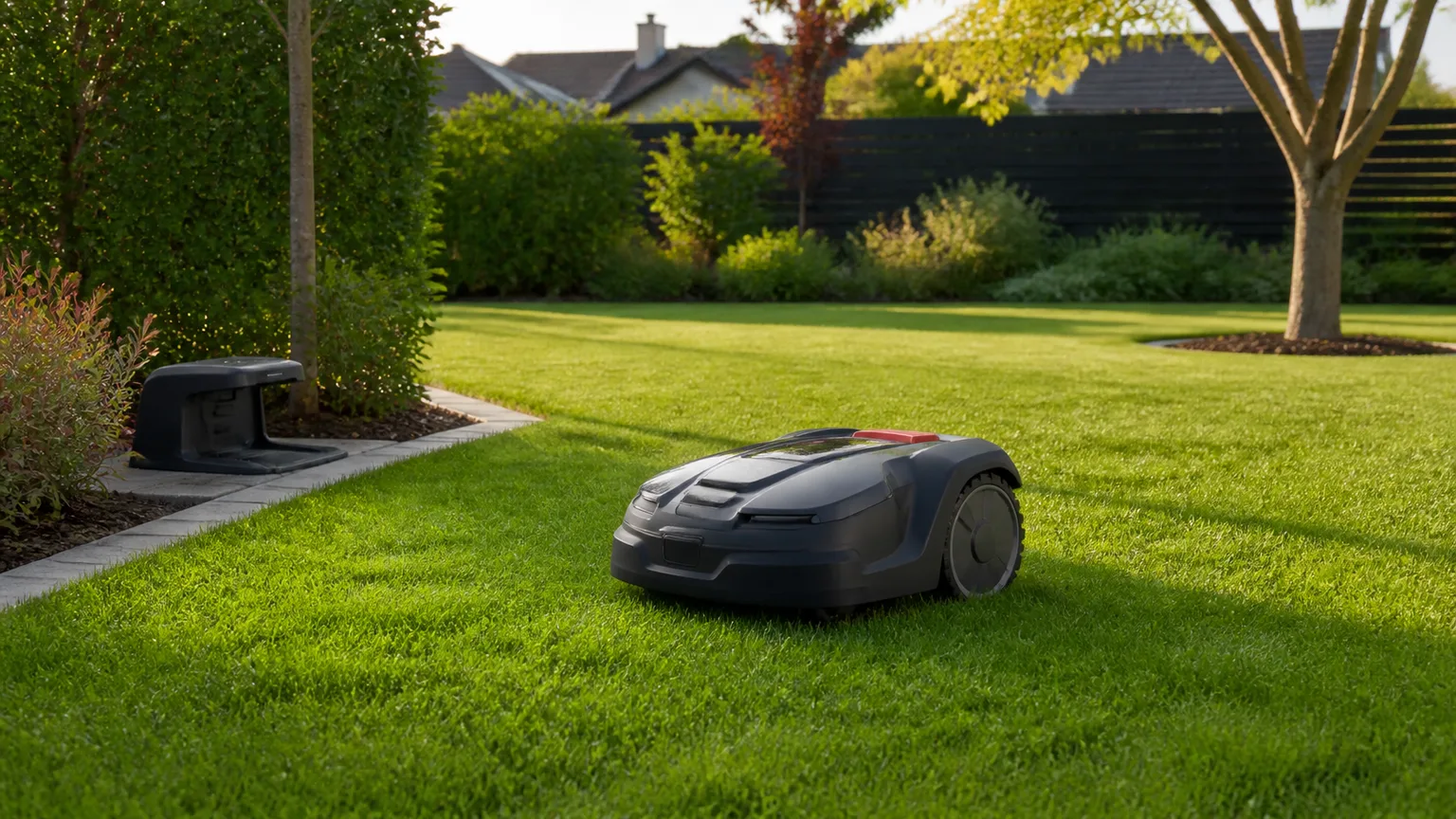
The ECOVACS GOAT A3000 is the best match for someone who wants to remove the weekly mowing task rather than make it faster. Its official product page describes a robotic system with boundary mapping, app-based scheduling, obstacle sensing, and automatic returns to the charging station. The exact version and package should be checked before purchase because the GOAT range includes multiple configurations.
Robotic mowing works by making frequent light cuts, not by attacking a week’s worth of tall growth in one session. That means you must map the lawn carefully, keep toys and hoses out of the route, protect the charging station, and decide how the mower will handle narrow passages and lawn edges. It is a poor fit for an irregular yard with many disconnected patches or a property where the boundary cannot be secured. It is a compelling fit for a maintained lawn where saving time matters more than a large single-session cut.
9. Yarbo Pro Module — Best for Very Large Properties
The Yarbo Pro Module is the outlier for very large properties and owners who want a robotic platform that can do more than mow. The Yarbo mower page describes a 20-inch cutting module, app mapping, obstacle avoidance, and a system designed to cover properties measured in acres. It can also connect with other seasonal modules, but those accessories change the total cost substantially.
The main drawback is setup complexity. A large robotic system still needs a reliable map, clear boundaries, an appropriate charging location, and time to learn the controls. Buy it only when you will use the broader platform or when the labor saved on a large property justifies the investment. If you simply want a faster way to mow two open acres by hand, a conventional riding mower may be easier to understand and maintain.
Choose by lawn size and terrain
Small, flat, obstacle-filled lawns
Choose a lighter push mower when the grass is kept short and the route includes narrow gates, garden beds, or many trees. A small deck turns more easily and is easier to carry up a step, but the time savings disappear if you must make many more passes. For a small lawn with slopes or a user who wants less physical effort, a compact self-propelled mower is worth the extra weight.
Do not buy an acre-rated riding or robotic mower for a 3,000-square-foot lawn just because the specification sounds impressive. The machine may not fit through the gate, and a wide deck can create more trimming work around beds. Match the width to the open runs in the yard, not to the maximum area printed on the box.
Hills, rough ground, and thick grass
Rear-wheel-drive self-propulsion is usually the more useful feature for a walk-behind mower on a slope because it helps keep traction while the front wheels are guided around obstacles. It does not make a slope automatically safe. Mow only within the owner’s manual limits, keep your footing, avoid wet grass, and never use a machine if controlling its direction would be difficult.
For thick grass, raise the deck, mow when the lawn is dry, and slow your pace. Penn State Extension’s guidance on turf care and Purdue’s mowing research support the practical reason: removing too much leaf tissue at once increases stress, while a sharp blade and a sensible height improve the cut. A mower with a turbo or high-power mode can help with a dense patch, but using that mode for the entire lawn will reduce runtime.
Battery, blade, and storage checklist
Before buying, confirm these details on the exact model number:
- Battery and charger: Is this a complete kit, or tool only? Price the replacement battery before assuming the bare tool is a bargain.
- Real route length: Measure the grass you mow, not your entire lot. Buildings, beds, woods, and hardscape do not count as cutting area.
- Cutting modes: Bagging is useful for long, wet, or clumped grass. Mulching is efficient for short, dry clippings. Side discharge is useful when you need to clear a large amount without stopping.
- Height adjustment: A single lever is easier to use consistently than four separate wheel adjustments. Look for a range that matches your grass type and season.
- Weight and storage: Add the battery to the advertised tool weight. Confirm whether the folded mower fits through the shed door and whether the battery can be stored separately.
- Blade access and parts: Check that replacement blades, bags, and chargers are available through the manufacturer’s support network.
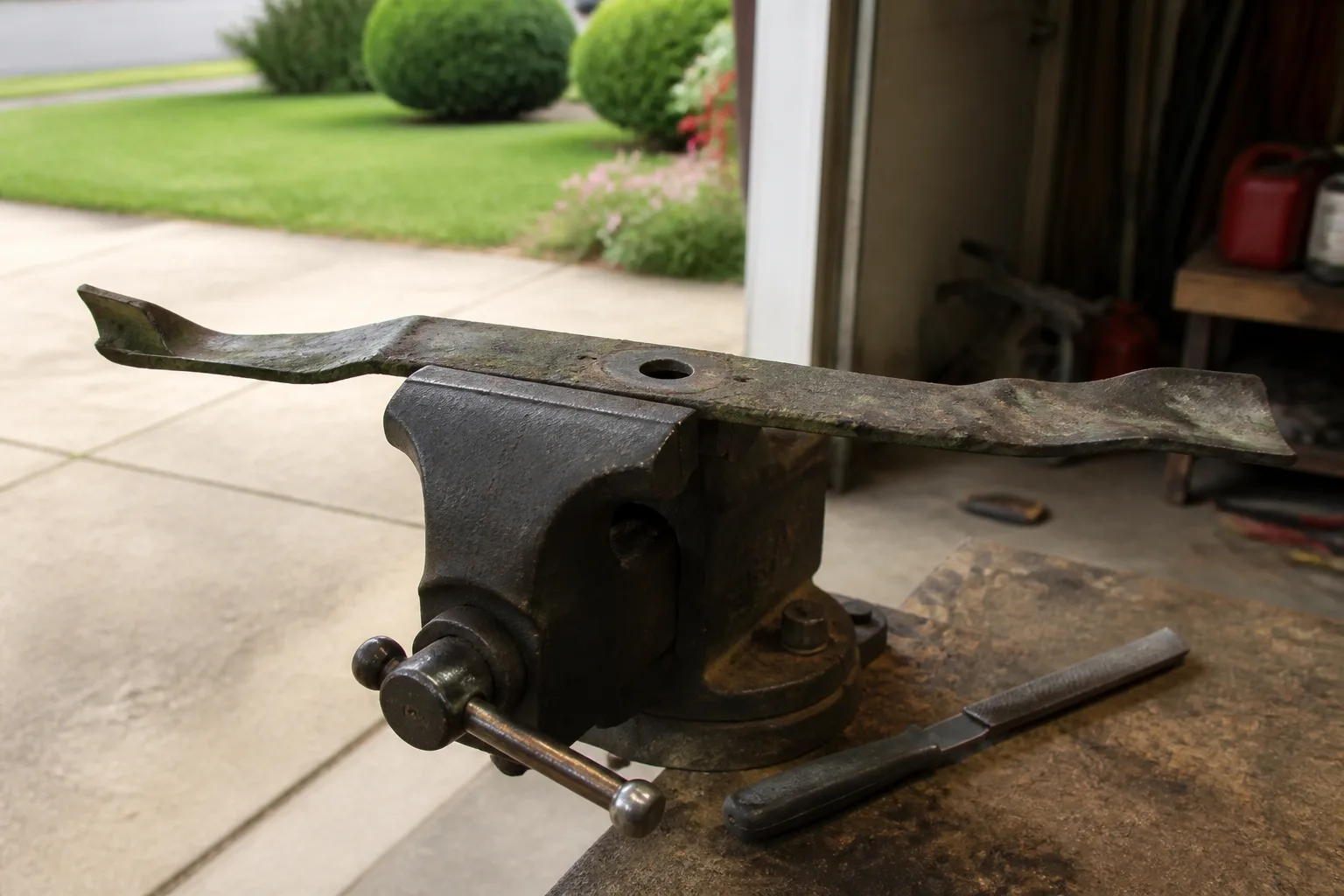
After mowing, remove the battery or safety key before clearing clippings, and follow the manual for cleaning the deck. Keep the blade sharp and balanced; a dull blade tears grass, leaves a ragged appearance, and makes the motor work harder. Store lithium-ion batteries dry and away from extreme heat or cold, and let a hot battery cool before charging. If the pack is swollen, cracked, wet inside, or unusually hot, stop using it and follow the manufacturer’s disposal or service instructions.
Return short, dry clippings to the lawn when they fall through the canopy instead of forming piles. BBC Gardeners’ World recommends raising the cut in dry summer conditions, and Fine Gardening’s grasscycling guidance explains that short clippings can return nutrients to the lawn while thicker layers are better handled through composting or a thinner mulch layer. If the grass is wet, diseased, excessively long, or clumped across the surface, bag it or spread it out rather than leaving a mat that shades the turf.
Conclusion
For most homeowners, the EGO POWER+ 21-inch Self-Propelled Mower is the best battery lawn mower because it combines a useful deck size, self-propulsion, three cutting modes, height control, and a widely supported battery platform. The Toro 21466 is easier to match to your walking pace, the RYOBI 40V models make sense for shoppers building a shared tool system, and the Husqvarna is a strong mulching-focused alternative.
Once a property reaches acreage, the right answer changes. Choose the EGO T6 or RYOBI ZR3 for a riding mower you control, or choose ECOVACS or Yarbo when the setup work is worth reducing the weekly mowing task. Whichever model you buy, plan around your real route, keep the blade sharp, respect slope and wet-grass limits, and treat advertised runtime as a ceiling rather than a guarantee.



