9 Best Bird Feeders for Every Backyard
Compare nine bird feeders by bird, seed, capacity, squirrel resistance, and cleanup so you can choose a model that fits your yard.
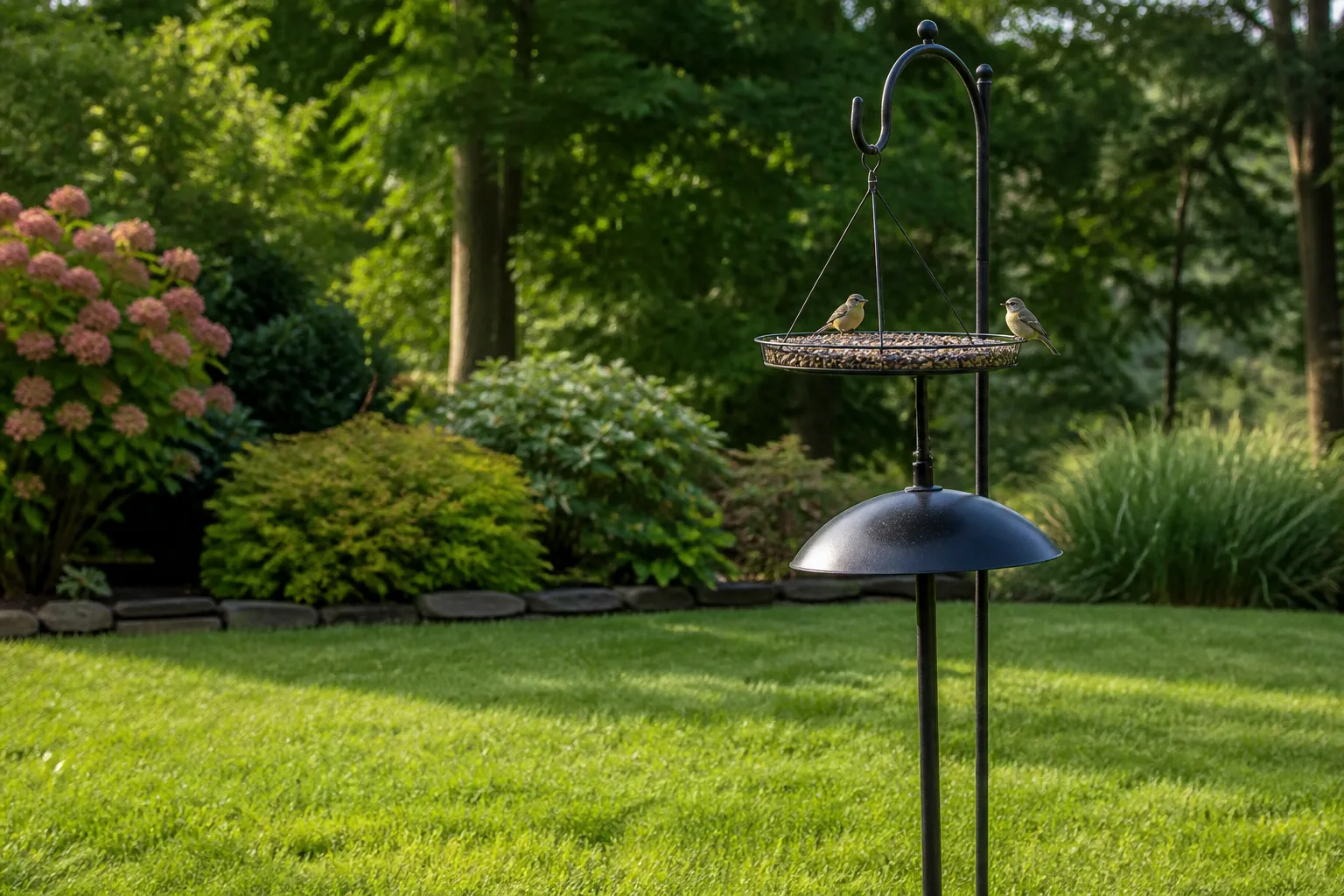
The best bird feeder is not the one with the biggest hopper, the fanciest camera, or the most convincing “squirrel-proof” label. It is the feeder that matches the birds you want to see, the food you are willing to buy, the predators and pests in your yard, and the cleaning routine you will actually keep.
This guide narrows the field to nine useful starting points: a weight-sensitive tube feeder for squirrel pressure, a low-cost hopper, a large-capacity motorized feeder, a broad platform, a hummingbird feeder, a smart camera feeder, a nyjer screen, a cardinal-friendly metal mesh feeder, and a window feeder. The product examples are current reference points, but prices, stock, and model details change. Treat the design logic as the durable part of the recommendation.
Quick answer: which feeder fits your yard?
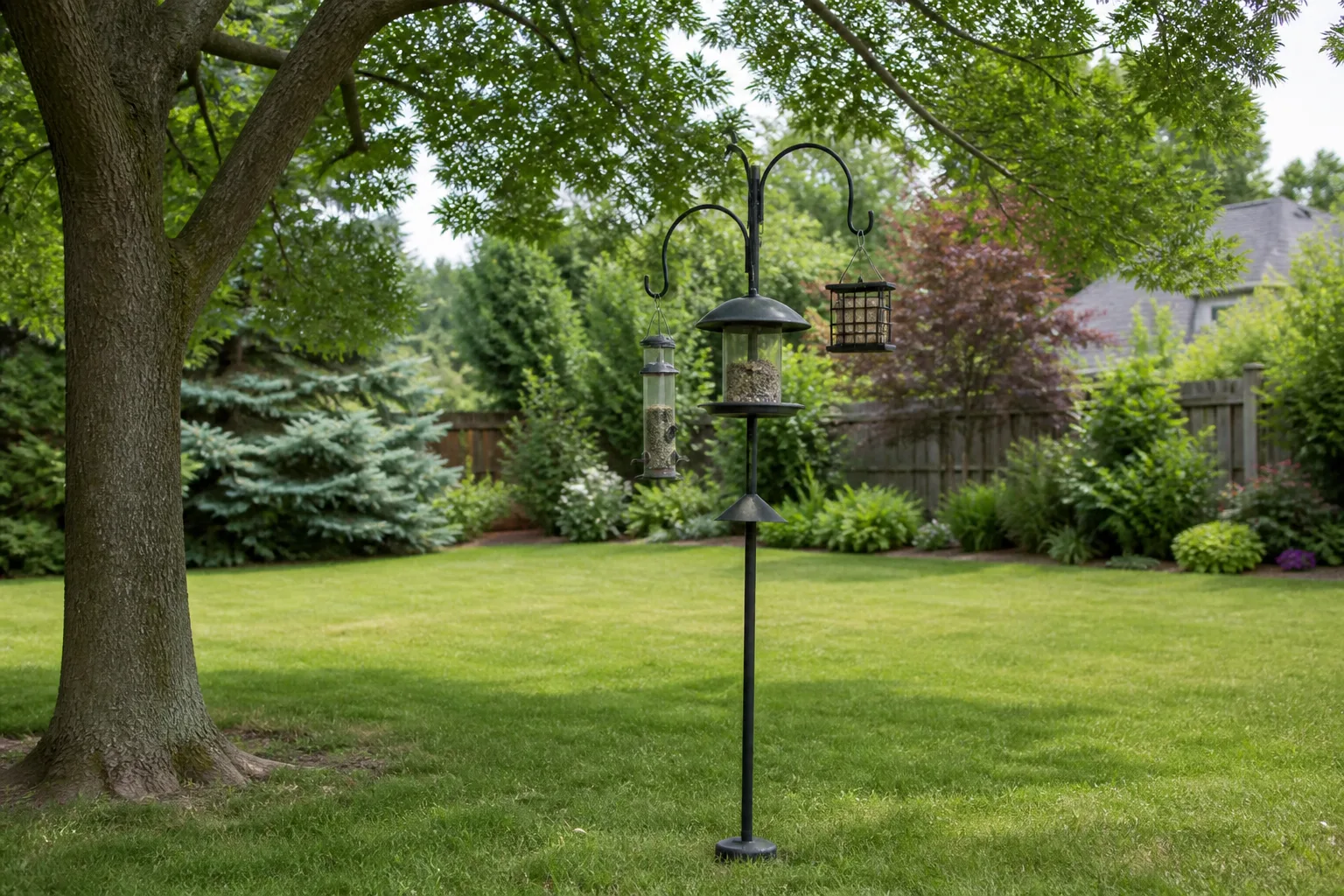
| If your priority is… | Start with… | The trade-off |
|---|---|---|
| One dependable seed feeder in a squirrel-heavy yard | Brome Squirrel Solution 200 | It is more expensive and its weight mechanism is not a guarantee against every large animal or clever approach. |
| An inexpensive first hopper | Twinkle Star Wild Bird Feeder | It is easy to use but does not solve squirrel access. |
| Fewer refills for a busy station | Droll Yankees Yankee Flipper | The motorized perch adds cost, weight, and a charging step. |
| The widest mix of seed-eating birds | Nature’s Way Cedar Hanging Platform | Open trays collect more debris and invite squirrels, rodents, and larger birds. |
| Hummingbirds | Sewanta Plastic Hummingbird Feeder | Nectar feeders need much more frequent cleaning than seed feeders. |
| Bird videos and identification help | Bird Buddy 2 Solar | You are buying a camera-and-app system, not a low-maintenance squirrel solution. |
| Goldfinches and other finches | More Birds/Stokes Select 38194 | Nyjer attracts a narrower audience and can spoil if left wet. |
| Cardinals and larger perching birds | Perky-Pet Red Cardinal C00322 | The open mesh is not squirrel-proof and needs a stable, protected location. |
| Close-up viewing from inside | Nature Anywhere Birds-I-View | Small capacity means more refills, and the window still needs collision protection. |
How to choose by bird, seed, and maintenance
Start with the food, not the feeder’s decoration. Cornell’s bird-feeding guidance recommends black-oil sunflower as a strong all-purpose starting seed because it attracts a broad range of species; the feeder’s construction, ability to keep seed dry, and ease of cleaning then determine whether that food remains practical in your yard (Cornell Lab of Ornithology).
Tube, hopper, platform, suet, nyjer, nectar, and window feeders
Tube feeders hold seed in a vertical reservoir and dispense it through ports. Short perches and smaller ports favor finches, chickadees, and other small birds; longer perches and larger openings admit bigger visitors. They keep seed relatively contained, but the ports and perches create repeated contact points, so a tube must come apart far enough to scrub inside.
Hopper feeders have a roof and gravity-fed reservoir. They are a good fit when you want a few days of capacity and a sheltered place for cardinals, jays, chickadees, and other perching birds. Their downside is the same feature that makes them convenient: a deep reservoir can hide damp, clumped seed, and many hoppers are awkward to clean.
Platform feeders offer the broadest invitation. Cardinals, doves, juncos, sparrows, towhees, jays, and larger birds can use a flat tray, but an open feeding surface also collects droppings and spilled hulls. Choose a screened or well-drained bottom, offer only a small amount at a time, and be prepared to clean the ground below it. UF/IFAS Extension specifically warns that platform feeders need extra care because droppings can mix with food (UF/IFAS Extension).
Suet feeders are wire cages for high-energy cakes and are useful for woodpeckers, nuthatches, chickadees, wrens, and other insect-eating birds. In warm weather, ordinary suet can melt or spoil; Tennessee Wildlife Resources Agency advises avoiding it at temperatures around 80°F and above unless the product is formulated for heat (Tennessee Wildlife Resources Agency).
Nyjer feeders use very small openings or fine mesh so the tiny seed does not pour straight through. They are a focused choice for goldfinches, siskins, and similar finches, not a universal feeder. Nectar feeders are designed for hummingbirds and demand the most disciplined maintenance because sugar water ferments quickly. Window feeders offer unmatched viewing but require clean suction cups or mounts, a safe glass setup, and patience while birds learn the new station.
Match the seed to the birds you want
Black-oil sunflower is the best first experiment for most yards. If squirrels or large birds dominate it, try a weight-sensitive feeder, a baffle, or a cleaner single-seed setup before assuming you need a more expensive bird food.
Safflower is useful for cardinals, grosbeaks, finches, and titmice, although it is not a magic squirrel repellent. Nyjer belongs in a finch feeder with ports small enough to prevent waste. White proso millet suits many ground-feeding birds, while suet brings in species that may ignore a seed tube. Cheap mixes can be false economy: birds often pick out the sunflower and discard filler grains, leaving a messy pile that attracts rodents. UF/IFAS recommends paying attention to the actual ingredients and avoiding dyed seed intended for planting, which may be treated with a fungicide (UF/IFAS Extension).
The nine best bird feeders
These are category picks, not a claim that one feeder wins every backyard. For each one, ask whether the advantage matches your problem and whether the drawback is acceptable before buying.
Best overall: Brome Squirrel Solution 200
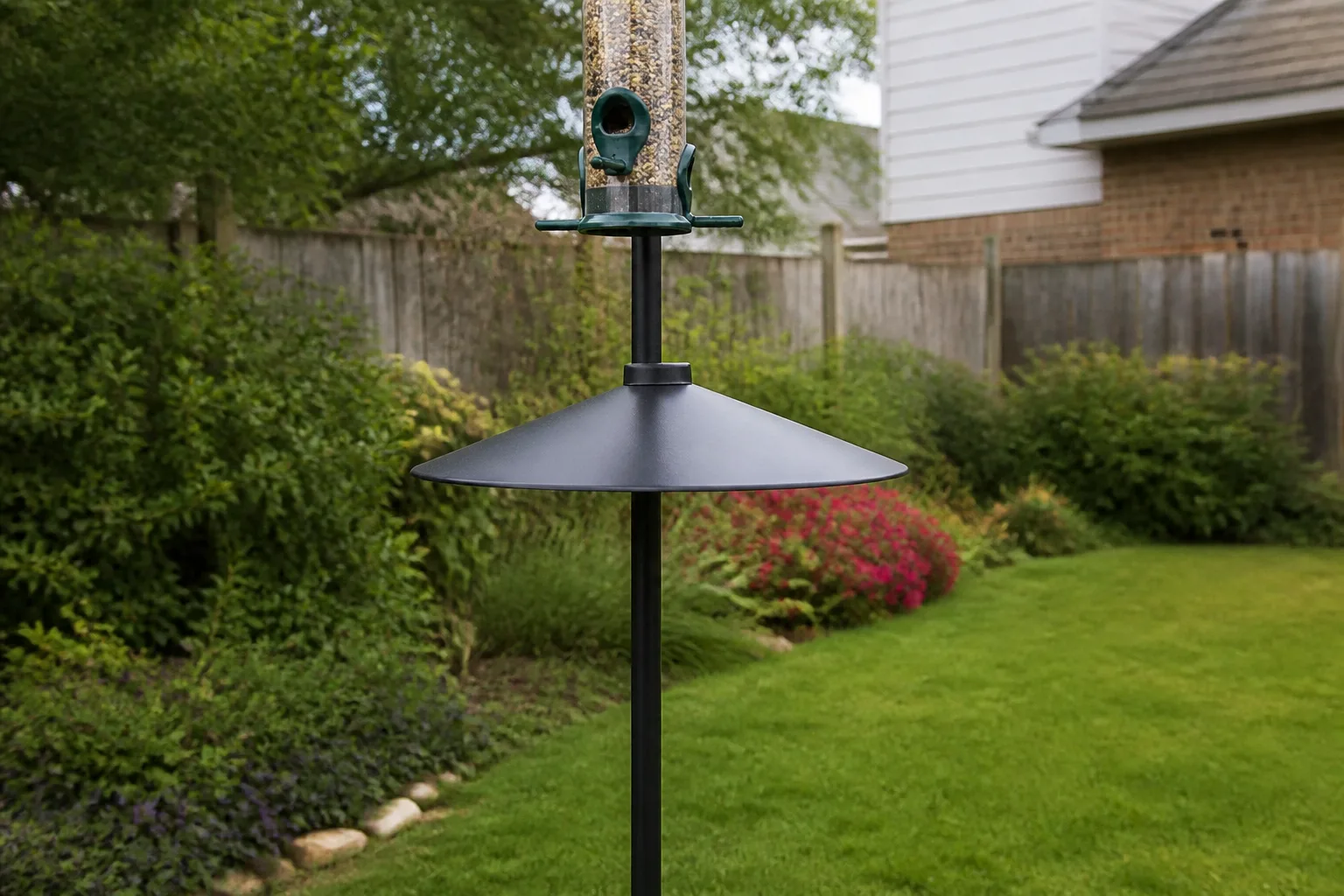
The Brome Squirrel Solution 200 is the strongest all-around choice when squirrels are emptying ordinary tube feeders. Its weight-sensitive shroud closes access to the seed ports when a heavy animal lands on the feeder, while the cage protects much of the plastic body from chewing. The manufacturer lists six ports and a 3.4-pound capacity, enough for a busy small-bird station without becoming a giant reservoir of forgotten seed (Brome Squirrel Solution 200).
The mechanism works only when the squirrel has to bear its weight on the feeder. Brome recommends leaving clearance around the feeder so a squirrel cannot reach over from a branch, railing, or wall and avoid the trigger. It also does not stop every nuisance species: grackles, raccoons, chipmunks, deer, and bears are outside the simple “squirrel-proof” promise. Choose it for a hanging or pole-mounted black-oil sunflower station, and pair it with a baffle when the approach route is complicated.
Skip it if: you mainly want cardinals, doves, or jays, which may find the compact ports and cage less comfortable than a hopper or platform.
Best budget hopper: Twinkle Star Wild Bird Feeder
The Twinkle Star Wild Bird Feeder is a reasonable starter for someone who wants a roofed hopper with clear panels, a simple top refill, and no assembly project. Its appeal is not advanced pest control; it is a low-friction way to discover whether birds use a particular spot before you invest in a heavier metal feeder or pole system.
Use it with a modest amount of seed and a sheltered location. The small hopper format can serve chickadees, finches, cardinals, and occasional larger visitors, but its open access will also serve squirrels. Keep a tray or sweepable surface beneath it, and do not fill the reservoir farther than the amount your birds will eat before rain and heat can turn the bottom layer stale. If the first visitors are squirrels, the next purchase should be a baffle or a squirrel-resistant feeder—not a larger version of the same open design.
Skip it if: a squirrel can jump to the feeder from your fence, roof, or tree, or if you cannot reach it easily for frequent cleaning.
Best for fewer refills: Droll Yankees Yankee Flipper
The Droll Yankees Yankee Flipper is for high-traffic yards where a five-pound seed capacity genuinely saves time. The motorized perch spins when a heavy animal lands on it, so the feeder combines a large tube with a mechanical squirrel deterrent. Droll Yankees describes it as a UV-stabilized tube feeder with a sturdy metal base and five-pound capacity (Droll Yankees).
Large capacity is useful only when the seed stays fresh. A feeder that holds five pounds can also hide damp or aging seed for much longer than a small feeder, so check the reservoir rather than topping it off automatically. Charge the battery before installation, turn the mechanism off before filling, and mount the feeder where you can remove the motor module without wrestling the whole unit down. Its weight and price make it more appropriate for a permanent station than a balcony hook.
Skip it if: you refill small amounts anyway, do not want a battery-powered mechanism, or have raccoons and other animals that can defeat the perch.
Best platform feeder: Nature’s Way Cedar Hanging Platform
The Nature’s Way Cedar Hanging Platform Feeder (CWF3) is the right choice when variety and visibility matter more than squirrel resistance. Its 12-inch tray format can take sunflower, safflower, peanuts, fruit, or other foods that do not fit neatly in a narrow tube. Nature’s Way lists a two-quart capacity and calls out cardinals and jays as examples of larger birds that can use the tray (Nature’s Way Cedar Hanging Platform Feeder).
The trade-off is biological, not cosmetic. An open tray gives birds more room but also lets droppings, wet seed, and unwanted visitors share the same surface. Hang it where you can lift or hose the tray, use small amounts, and never let old seed form a permanent layer. A screened bottom or generous drainage holes are more valuable than an ornate roof. If disease is reported locally or you see sick birds, pause tray feeding first and clean the surrounding ground.
Skip it if: you need selective feeding, have heavy rodent pressure, or cannot commit to cleaning both the feeder and the soil beneath it.
Best hummingbird feeder: Sewanta Plastic Hummingbird Feeder
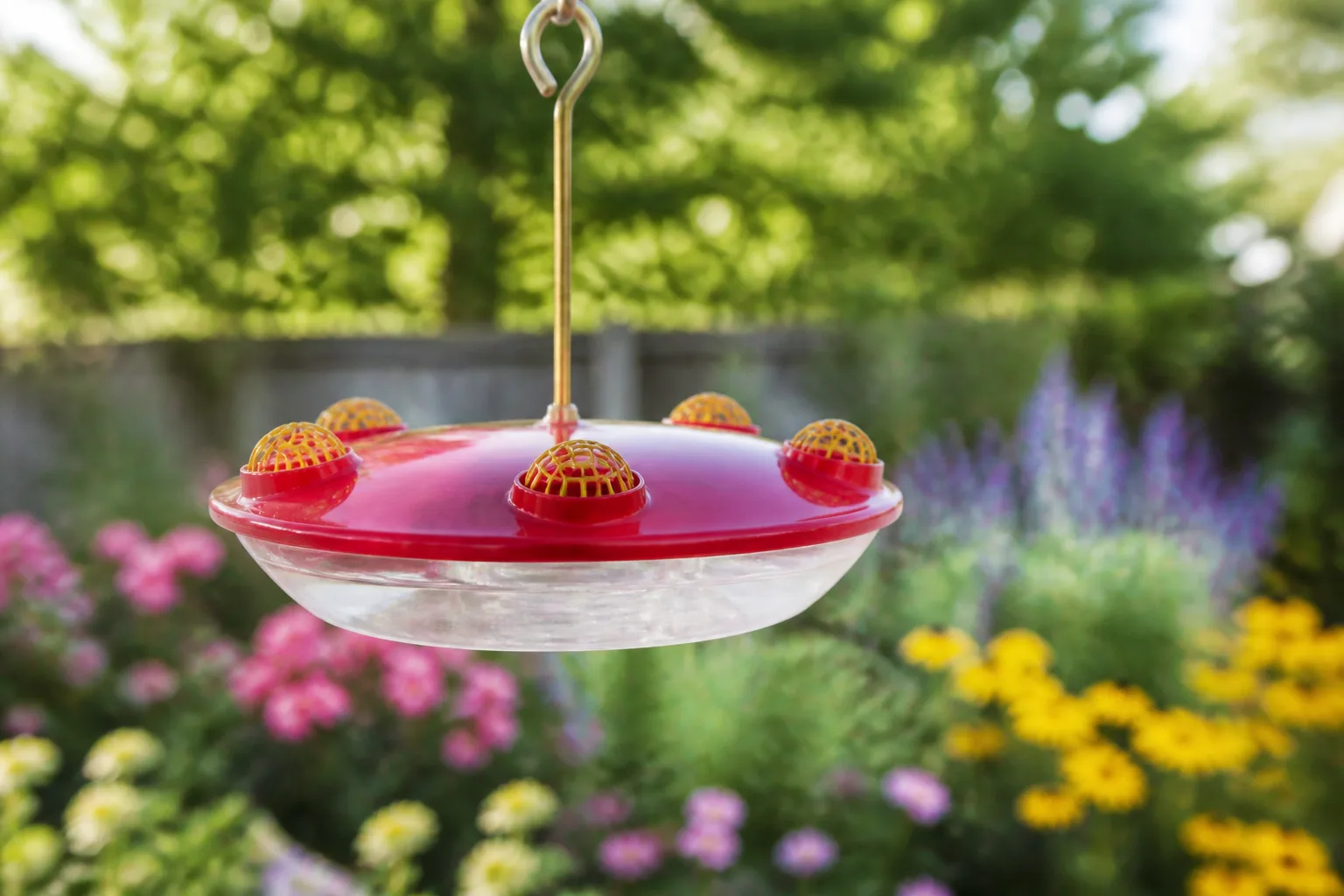
The Sewanta Plastic Hummingbird Feeder earns this category because its wide-mouth reservoir and lightweight plastic body make the two jobs that matter—refilling and cleaning—less awkward than narrow-neck designs. A clear reservoir lets you see the nectar level, while a removable base makes it easier to reach the ports and seams where sugar residue collects.
Nectar feeders are not “fill it and forget it” equipment. Use a simple solution of one part white sugar to four parts water, cool it completely, and make only as much as the birds will use promptly. Do not add red dye, honey, brown sugar, or artificial sweetener. Project FeederWatch recommends cleaning hummingbird feeders every couple of days, and ideally every time they are refilled during warm, busy periods (Project FeederWatch). If bees crowd the ports, clean leaks first, move the feeder away from dense flower beds, and choose red-forward ports or bee guards rather than spraying insects. Our guide to bees in hummingbird feeders covers that troubleshooting sequence.
Skip it if: you want a feeder that can safely sit unattended for a week in hot weather.
Best smart feeder: Bird Buddy 2 Solar
The Bird Buddy 2 Solar is the best fit for readers who want the feeder to double as a wildlife camera. Its current specifications include a solar-assisted rechargeable battery, a 2K camera, five-megapixel photos, weather resistance, and a seed capacity of about 0.9 liter (Bird Buddy 2 specifications). The camera is the point: it can turn a brief visit into a photo or video and help a beginner slow down long enough to identify a bird.
Smart features do not remove ordinary feeder duties. Keep seed dry, empty it before it becomes stale, inspect the perch and camera housing for droppings, and mount the feeder where a squirrel cannot leap from a nearby branch. A camera feeder can also create a false sense of success: an app may identify a visitor, but it cannot tell you that seed underneath the feeder is molding or that a cat is stalking the station. Buy this one for observation and convenience, not because “smart” means hygienic or squirrel-proof.
Skip it if: you want the lowest purchase cost, a large capacity, or a feeder you can clean without caring about electronics.
Best for nyjer seed: More Birds/Stokes Select 38194
The More Birds/Stokes Select 38194 Yellow Screen Feeder is a focused finch feeder. Its screen-style body lets goldfinches and other small birds cling and pull out nyjer seed instead of standing on a large perch where bigger birds can monopolize the food. That matches the biology of the seed: Cornell notes that nyjer is tiny, attracts finches such as American Goldfinches and Pine Siskins, and needs small openings to prevent waste (Project FeederWatch seed guide).
Expect fewer total visitors than you would get from a sunflower feeder. Nyjer costs more, and a mesh feeder can get wet, so fill only what the birds will eat promptly and shake out clumps after rain. A yellow finish may look like a flower, but it is not the reason finches visit; the seed and the fine access points are. Place this feeder beside, rather than instead of, a general tube or hopper if you want a broader species list.
Skip it if: you want one feeder for cardinals, jays, doves, or mixed seed.
Best for cardinals: Perky-Pet Red Cardinal C00322
The Perky-Pet Red Cardinal Wild Bird Feeder (C00322) uses a circular perch and metal mesh so both clinging and perching birds can reach the seed. The manufacturer lists an all-metal build, rust-resistant zinc-plated finish, a 2.5-pound black-oil sunflower capacity, and room for multiple birds (Perky-Pet Red Cardinal Wild Bird Feeder).
This is a good match for cardinals because it gives them a broad feeding area rather than forcing them onto tiny tube perches. It is not a squirrel barrier, however, and cardinals prefer a stable feeding place. Hang it where wind cannot swing it into a branch, leave a clear escape route, and use safflower or black-oil sunflower according to which birds you want to favor. If larger birds or squirrels empty it immediately, move from open mesh to a weight-sensitive or caged feeder rather than assuming the red color will filter visitors.
Skip it if: you need a selective finch feeder or your only available location is exposed to strong wind and jumping squirrels.
Best window feeder: Nature Anywhere Birds-I-View
The Nature Anywhere Birds-I-View is the best choice for close-up viewing, apartment patios, and households that want to watch birds from a kitchen or living-room window. Its transparent body and sliding feed tray make the seed visible and the tray removable, which is exactly the kind of access a window feeder needs. Nature Anywhere describes the feeder as a clear, suction-mounted design with a sliding tray and all-weather construction (Nature Anywhere window feeders).
Window feeders have two special failure modes: suction cups lose grip when the glass or rubber is dirty, and birds can still strike nearby glass. Clean and dry the window before mounting, inspect the cups after temperature swings, and start with a small amount of seed while birds learn the station. Cornell notes that a window feeder can help birds see the obstacle before reaching the glass, but the larger collision-prevention rule still matters. Audubon recommends placing feeders either very close to windows or at least 30 feet away; the middle distance gives birds room to build speed toward a reflection (Audubon).
Skip it if: the window has no way to be marked for collisions, the feeder is difficult to reach safely, or you cannot tolerate frequent tray cleaning.
Place the feeder to protect birds and seed
Placement is part of the feeder. A perfect feeder in the wrong spot becomes a squirrel launch pad, a cat ambush point, a wet seed bin, or a collision hazard. The useful compromise is near cover but not inside a jumping route: birds should be able to reach a shrub or tree quickly, while squirrels should not be able to leap from that same structure onto the feeder. BBC Gardeners’ World recommends a quiet, sheltered site away from tree, fence, and shrub jump points, and Tennessee Wildlife Resources Agency advises mounting a beginner tube feeder at least five feet above the ground (BBC Gardeners’ World, Tennessee Wildlife Resources Agency).
Squirrels, cats, and window collisions
For squirrels, use a layered setup: a feeder designed for the seed, a pole baffle or overhead baffle, and enough distance from trees, roofs, fences, and rails that a squirrel cannot jump around the mechanism. Cornell’s guidance notes that squirrels can jump to a feeder less than 10 feet from a tree or building, and that baffles are usually more dependable than relying on a “squirrel-proof” label alone (Project FeederWatch). Never grease a pole or hanger. Sticky products can mat feathers on woodpeckers, nuthatches, and chickadees; use a baffle instead, as explained in our bird-feeder pole safety guide.
Cats change the placement decision. Avoid ground feeding in a yard where cats roam, keep cats indoors, and do not place a platform immediately beside dense shrubs where a cat can hide and pounce. Sweep spilled seed before it becomes a rodent attractant. In bear country or any location with local wildlife restrictions, follow the local agency’s guidance; a feeder that is harmless in a suburban yard can become a dangerous food-conditioning problem in bear habitat.
Clean the feeder on a schedule you can keep
If you cannot reach every seam, port, tray, and reservoir, choose a different feeder. Project FeederWatch recommends cleaning seed and suet feeders about every week or two, more often during heavy use or wet weather; it recommends cleaning hummingbird feeders every couple of days and ideally every refill. Take feeders apart, scrub with warm water and dish soap, rinse thoroughly, and allow every part to dry before adding food. The organization also recommends keeping the ground below the station clear of old seed and waste, wearing gloves while handling feeders, and washing your hands afterward (Project FeederWatch).
Use smaller fills in hot or rainy weather. Dump clumped, damp, moldy, or foul-smelling food instead of trying to rescue it, and do not top fresh seed over a hidden old layer. If you see fluffed feathers, lethargy, crusty eyes, or other signs of a sick bird, increase cleaning and consider temporarily taking down the feeder. Project FeederWatch notes that tube feeders with ports can be especially important to disinfect when eye disease is suspected, while tray feeders may be a poor choice during diseases spread through droppings.
The most sustainable station is not the one with the biggest capacity. It is the one you can inspect, clean, refill, and move when the yard’s conditions change. Native shrubs, seed-bearing plants, and clean water also give birds food and cover without concentrating every visitor on one small surface.
Conclusion
Choose the feeder by the decision you are actually trying to make. Start with a sturdy tube feeder and black-oil sunflower for a general-purpose station; choose the Brome when squirrel pressure is the main problem, the Nature’s Way platform when variety matters more than selectivity, the More Birds screen for finches, the Perky-Pet mesh for cardinals, or the Sewanta for hummingbirds you can care for every few days. The Droll Yankees is worthwhile when capacity saves real time, Bird Buddy when the camera is the point, and Nature Anywhere when the window view is the reason you are feeding at all.
Then make placement and hygiene part of the purchase. Keep launch points and cats in mind, protect nearby glass, use baffles instead of grease, fill only what stays fresh, and clean often enough that the feeder remains a safe supplement to a bird-friendly yard—not a dirty pile of seed that happens to have a roof.



