18 Roses for Shade That Need 4–6+ Hours of Sun
Extension guidance puts roses at 6+ hours of sun. See 18 varieties that still hold up at 4–6 hours, with size, zones, and disease risk.
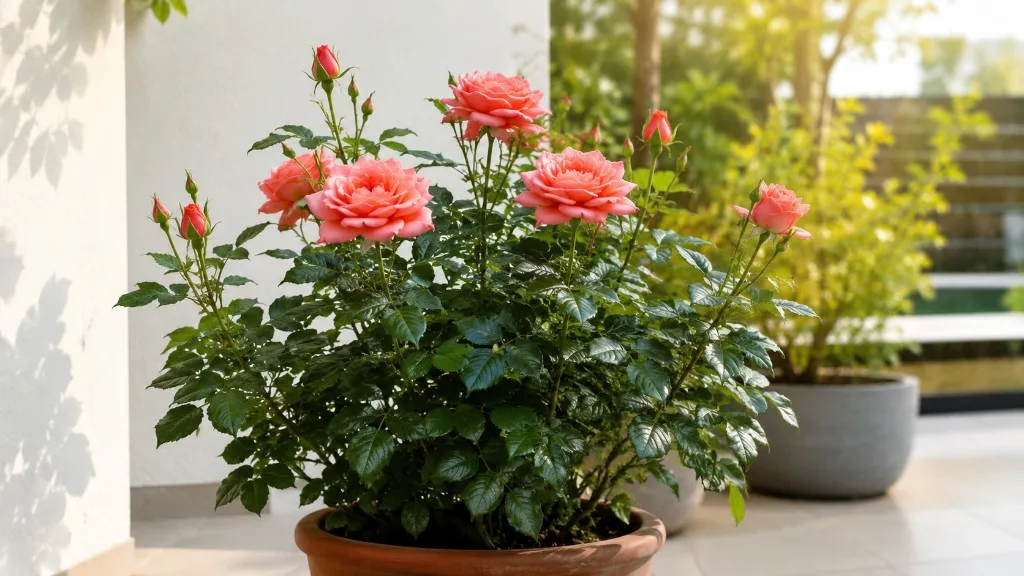
“Roses for shade” is sold on nursery tags, in catalog copy, and across the entire gardening internet, and it has quietly misled a generation of gardeners. What it actually means is this: a rose performs acceptably in part shade — a real but reduced display rather than a full one — and it still needs a solid block of direct sun, not zero. NC State Extension’s genus page states the position without hedging: “Roses require full sun,” and its own light requirement is listed as “Full sun (6 or more hours of direct sunlight a day).”NC State Extension That is the honest starting point, and any page telling you otherwise is selling something.
The narrower figure you will see everywhere, four to six hours, is not in any of the sources behind this list. It is our own working band, and we label it that way throughout: roughly four to six hours of direct sun plus bright indirect or dappled light for the remainder is where the varieties below still give you a real display instead of a few token flowers. Below about four hours, most roses set few buds, stretch into leggy sparse canes, and spend the season losing a fungal disease race they were never going to win.
That correction is why this page exists. A list of eighteen names with no differentiation is a list you cannot make a decision from, which is exactly the problem with most shade rose coverage. The cultivars below were assembled from published horticultural sources — the Royal Horticultural Society’s roses guidance, Missouri Botanical Garden’s Plant Finder, NC State Extension’s Plant Toolbox cultivar records, and named editorial horticulture publications — then cross-checked against each other. This is a research-compiled list, not a field trial from a private garden.
One more thing up front: a USDA hardiness zone number is a minimum winter temperature, not a performance promise. Zone 6 tells you a rose will usually survive your winter. It says nothing about blooming, black spot, or August. Zones are given per cultivar below where the sources publish one, and omitted where they do not rather than guessed at.
What “shade tolerant” actually means for roses
Roses are light-hungry, and their flowering response is driven by the total light their leaves intercept over the season. Bud initiation is the first thing to degrade when that light drops. Sunlight also matters regionally in ways catalog copy ignores: six hours in coastal Washington is a different environment from six hours in inland Texas, where afternoon light brings enough heat to scorch pale petals.
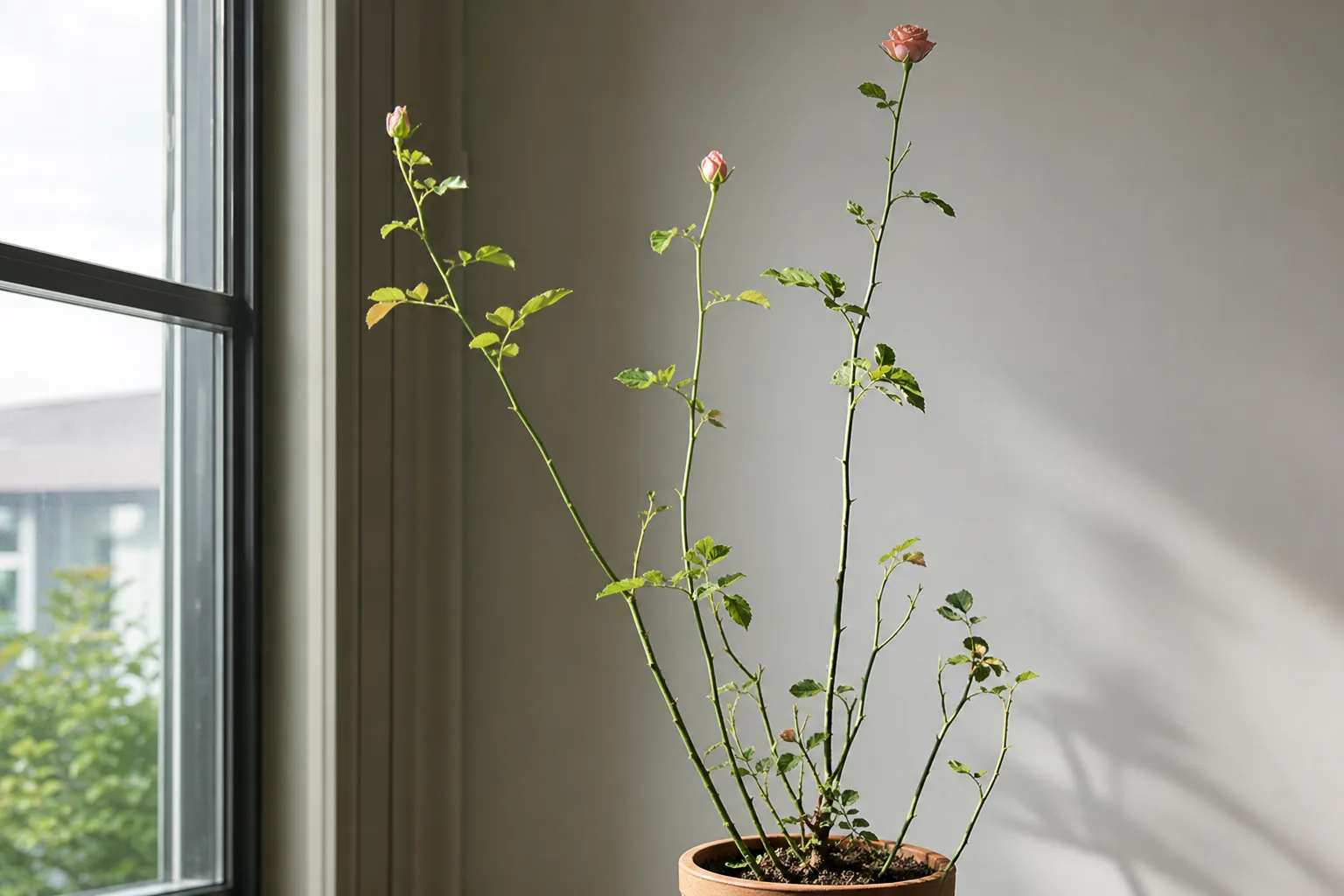
The extension standard is six or more hours of direct sun, and Epic Gardening puts the same requirement higher: “the queen of flowers demands 6-8 hours of sun per day.”Epic Gardening Where the varieties below diverge from that standard is the honest subject of this article. Our own tolerance band for the list is four to six hours of direct sun, with bright indirect or dappled light for the remainder — not a figure any source states, but the band we can justify from how these specific cultivars are described below. Above six hours they outperform themselves. Between four and six, expect a real but reduced display — often more flowers than expected, because the vigorous types listed here make a lot of buds. Below four hours, you are not growing a rose in shade; you are growing a thorny green stick with maybe two flowers on it.
The Missouri Botanical Garden’s entry for Rosa ‘Zéphirine Drouhin’ shows how careful institutions phrase it. The plant is listed with “Sun: Full sun,” the culture note says it is best grown in full sun to very light shade, and it adds: “Best flowering and disease resistance generally occur in full sun, however.”Missouri Botanical Garden That is a nursery-grade promise stated with botanical-garden honesty. Not one of these roses is a shade plant. They are the least demanding roses in a demanding genus, and every one of them is closer to a compromise than a solution.
The 6-hour standard, and the 4–6 hour band this list works in
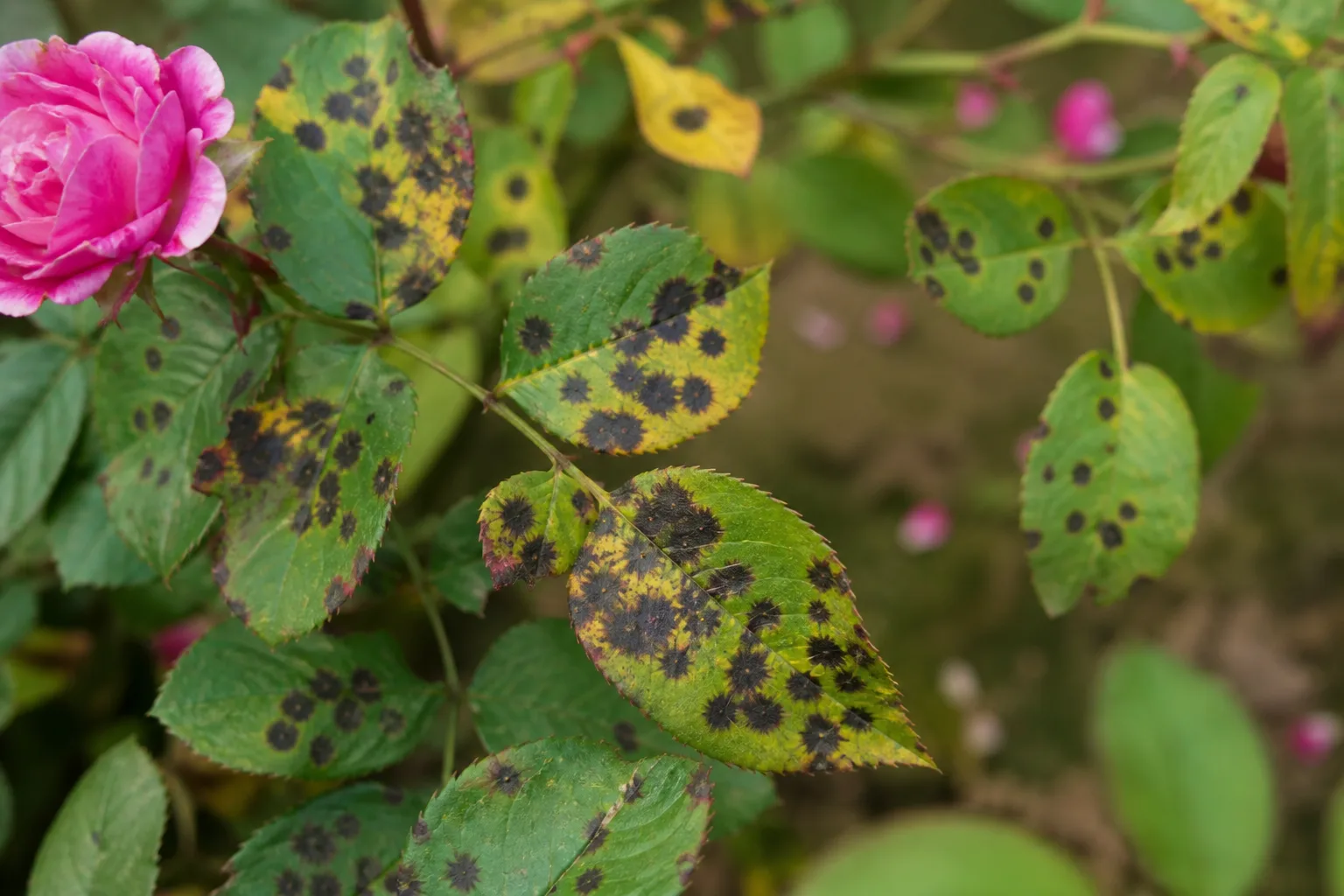
There is a predictable failure sequence when light falls short. First, internodes lengthen and the plant opens up: roses build buds at the tips of current-season growth, so a stretched shoot has fewer flowering points. Second, flower size drops, because bloom development is energy-limited. Third, air movement through the canopy drops as leaf density goes up, so wet leaves linger longer. Black spot and powdery mildew do not wait for you to decide.
Four shade types, four different rose problems
“Part shade” collapses four different situations into one phrase, and each points to a different part of this list. Dappled light under a deciduous canopy is the best: a birch or cherry canopy lets spring and autumn sun reach the rose while it blooms under full leaf cover, and this is where the woodier ramblers and loose shrubs thrive. Morning sun with afternoon shade is the classic east-facing situation, and it suits pale and mid-tone roses because the hottest part of the day never lands on them.
Bright north-facing walls are harder than the label suggests, because a north wall typically gives a climber diffuse light and little direct sun. The Royal Horticultural Society names specific cultivars for this job — Rosa ‘Madame Alfred Carrière’ for a shady or north wall, Rosa ‘Adélaïde d’Orléans’ and Rosa ‘Albéric Barbier’ for north-facing walls, and Rosa ‘Paul’s Himalayan Musk’ for climbing into trees.RHS Trust these over a floribunda. Dense dry shade under mature trees is the hardest case, because the problem is not the canopy overhead but root competition underneath.
Score your site before you buy a rose
Buy the rose last. The most useful thing you can do is spend half an hour on your own site first, because two gardens can both call themselves “shady” and have nothing in common.
Start with light. Pick a week in midsummer when the canopy is fully leafed out, and check the spot at mid-morning, solar noon, and mid-afternoon. Note what actually hits the ground rather than what you assume hits it. A fence you assume casts shade may reach the bed for only one hour, while a deck overhang produces far more usable shade than most people expect.
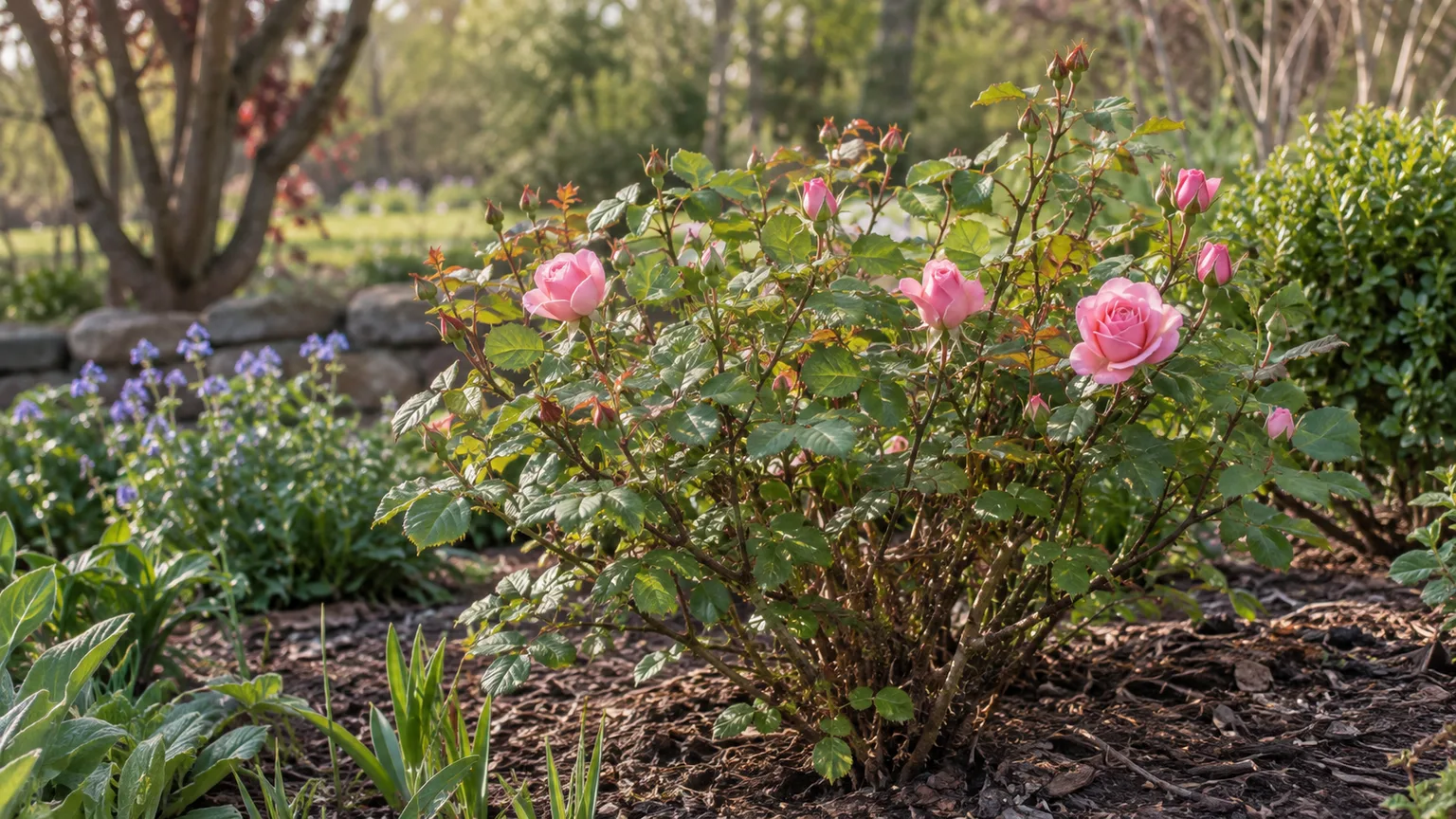
Then check soil moisture twice — midsummer and early spring. This split sorts your problem more decisively than anything else on this page. Moist through a week of no rain means wet shade, where the disease advice applies hard. Bone dry within three days means dry shade, where watering is the number-one task.
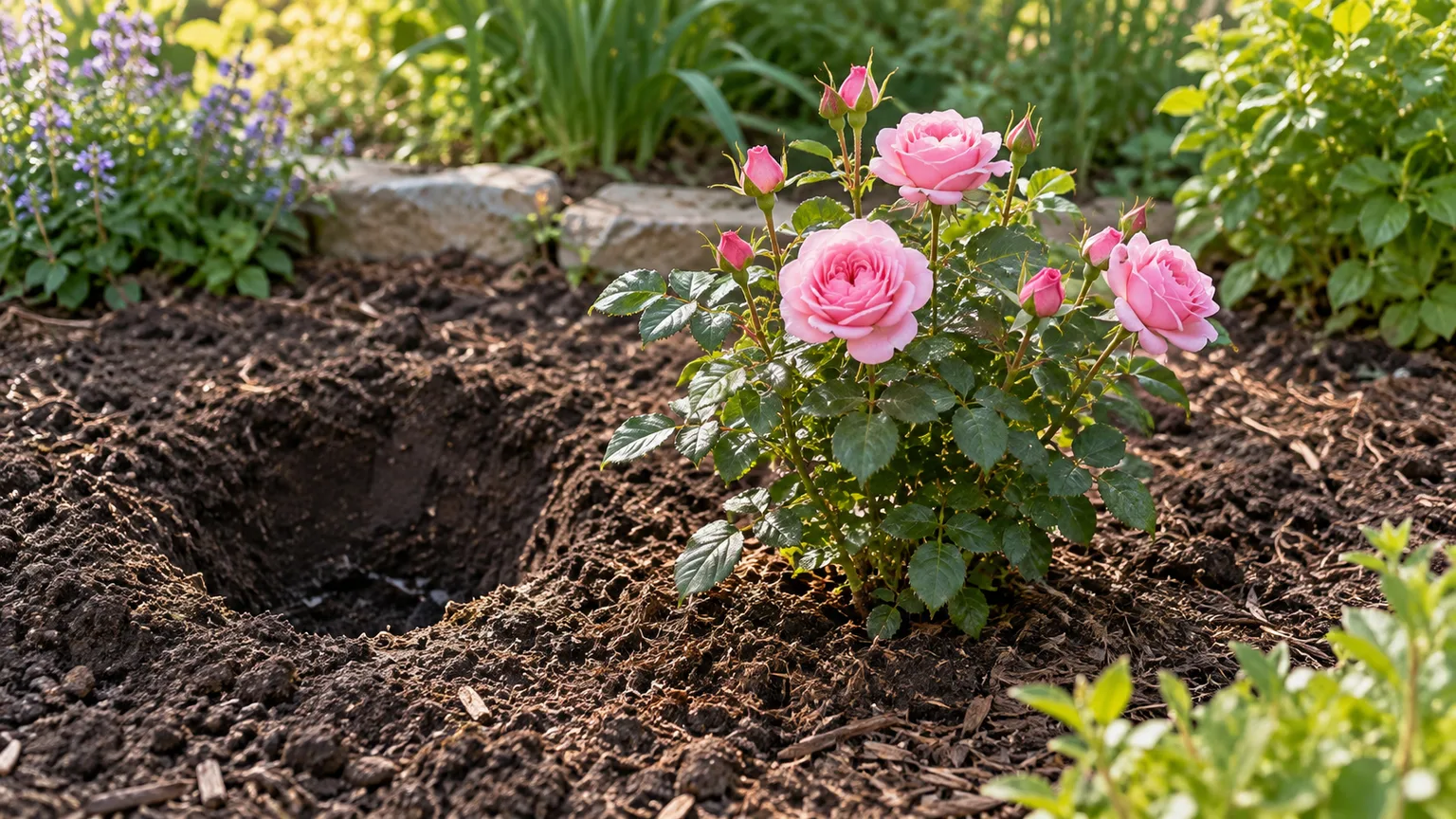
Dry shade versus wet shade changes the whole list
Dry shade is the more common problem in the American Midwest and the West, and it is where the rugosas on this list earn their place. Rugosa roses tolerate drought and poor soil, and they add very large textured foliage, big hips for wildlife, and salt and pollution tolerance. A dry, hot, neglected corner is exactly where Rosa rugosa ‘F. J. Grootendorst’ and its relatives keep flowering.
Wet shade — a north foundation bed, a low pocket near a fence, a clay corner in a rainy climate — is where disease pressure lives, and it changes which rose you want. In wet shade you want open single or semi-double flowers, glossy foliage, and a documented disease-resistance rating, not a double hybrid tea whose petals ball in damp weather. That is why the wet-shade shortlist leans toward modern bred roses and away from the old-fashioned types.
The 18 roses, grouped by the job they do
Any list could be eighteen, but these entries are not filler. Each does a specific job well and carries a real “choose this if” condition. Grouped by job, the decision gets much faster. Where a source publishes a hardiness zone for a cultivar, it is given inline; where none of the sources does, it is left out rather than estimated, because a guessed zone is worse than no zone.
Shrub and English roses for borders and loose hedging
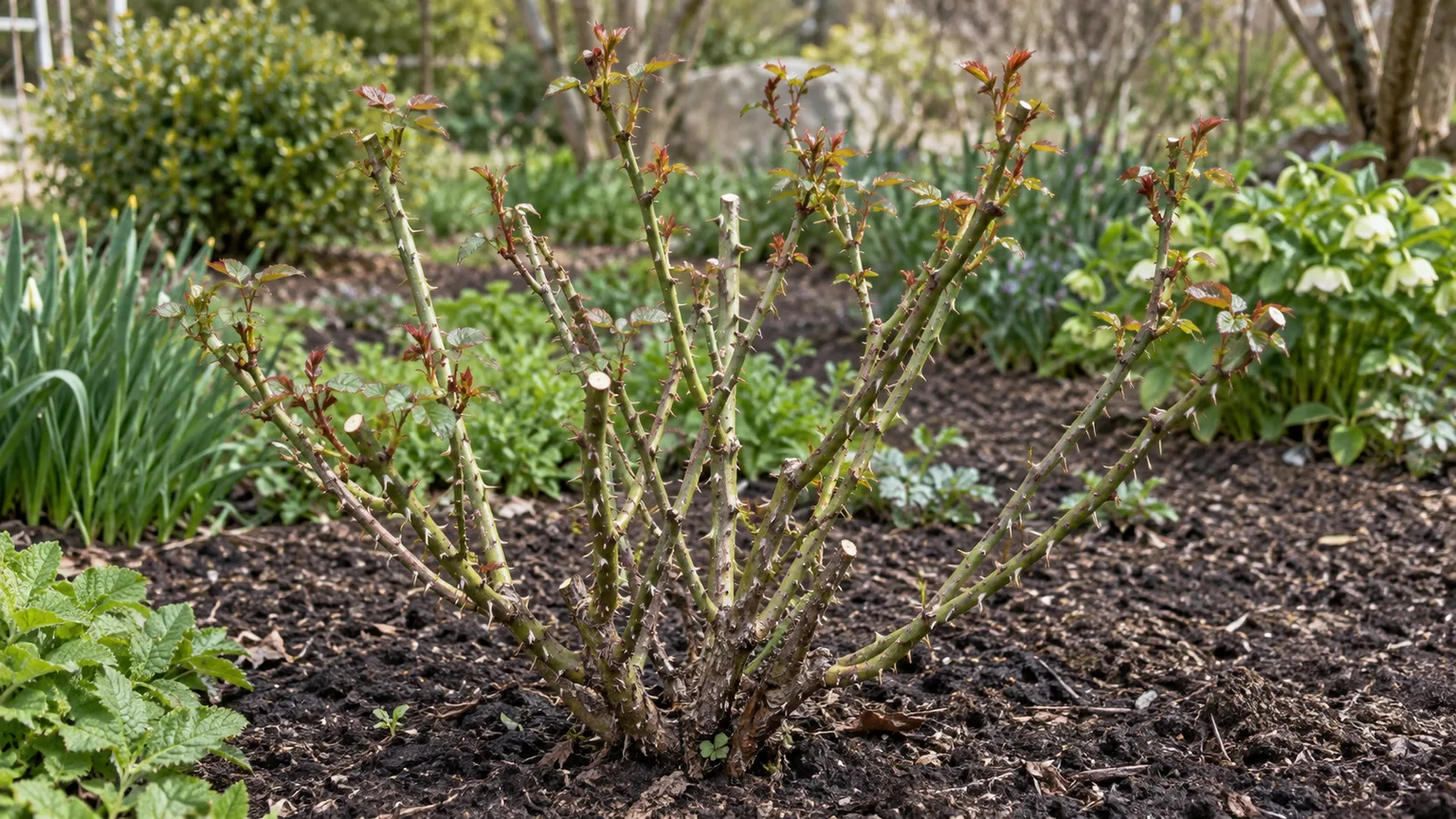
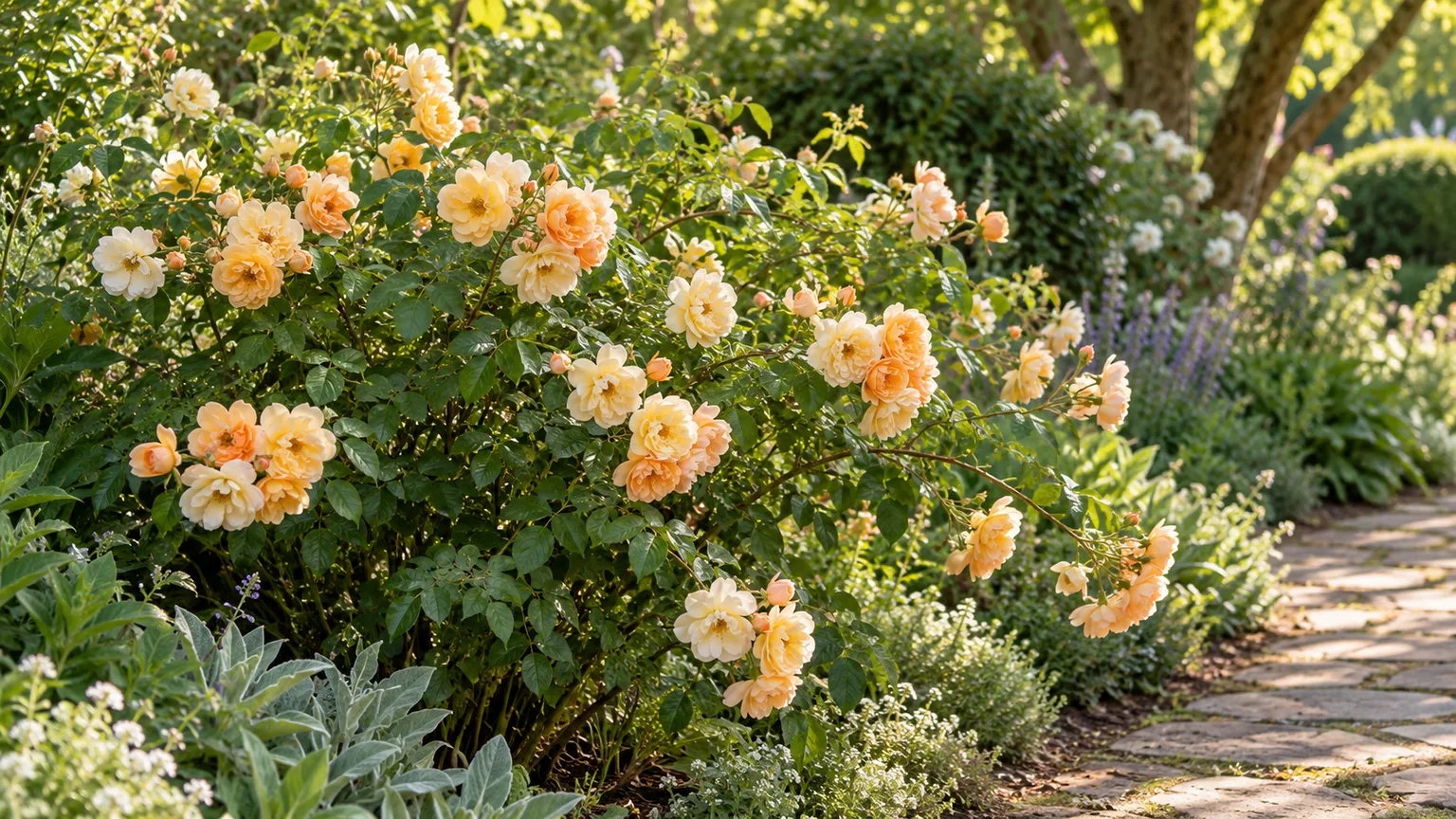
Rosa ‘Buff Beauty’ is a 1939 hybrid musk that the RHS lists among “shrub roses for partial shade,” with apricot-yellow flowers at about 1.5 metres and a warm, slightly spicy scent.RHS Light shade protects its pale colouring from bleaching, which makes it a strong choice for a dappled or east-facing spot. Choose it for a relaxed, non-architectural shrub near a path where you can smell it. Epic Gardening rates it in zones 5 to 10 and notes it is “highly shade tolerant,” capable of growing from 11 to even 20 feet if you let it train.Epic Gardening The trade-off is that its arching habit needs room, and the blooms read as texture rather than feature.
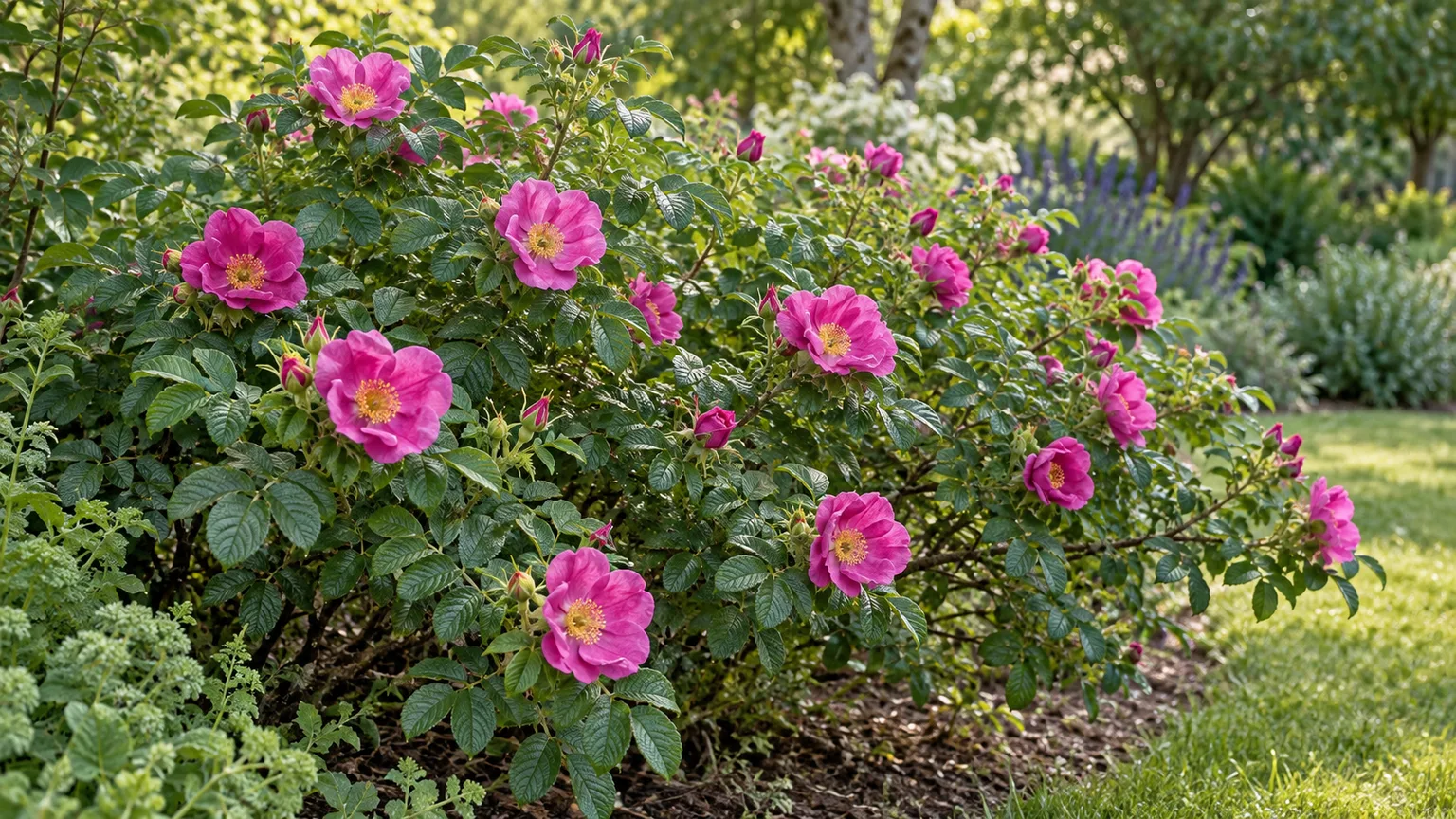
Rosa ‘Wild Edric’ (‘Aushedge’) is the rugosa-hybrid-type rose that actually looks like one, and the RHS places it in its partial-shade shrub grouping at roughly 1.2 metres, with purple-pink buds opening to deep pink and prominent golden stamens.RHS Those exposed stamens make it worth planting even in a corner with no other flowers. Choose it for an open, informal, repeat-flowering shrub that looks wild on purpose. HelpMeFind’s grower record gives it as USDA zone 6b through 9b and rates it drought resistant.HelpMeFind
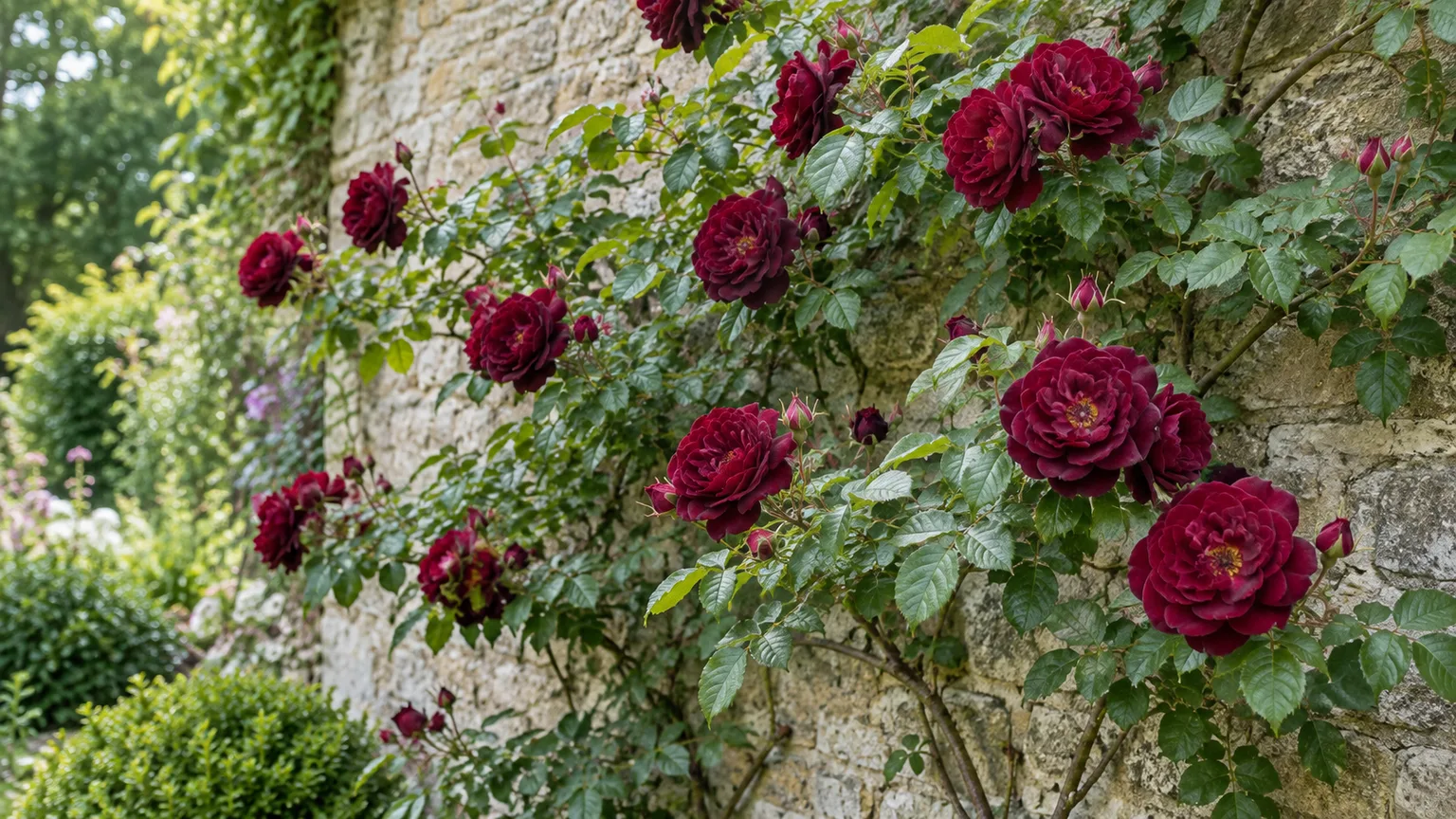
Rosa ‘Souvenir du Docteur Jamain’ is the strongest option here for a genuinely low-light vertical surface. The English Garden makes a useful argument for it: it “prefers shade,” and in exposed sun its velvet petals scorch and fade, whereas protected from the hottest afternoon light it holds rich crimson and healthy foliage.The English Garden That is the inverse of most rose advice, and exactly right for a north- or east-facing wall — though the RHS lists it only for climbing roses for north-facing or shady walls rather than among its partial-shade shrubs, and gives it as 3 metres.RHS Choose it if you want deep colour more than a huge plant, and note it needs a 4-to-9 zone range.Gardenia
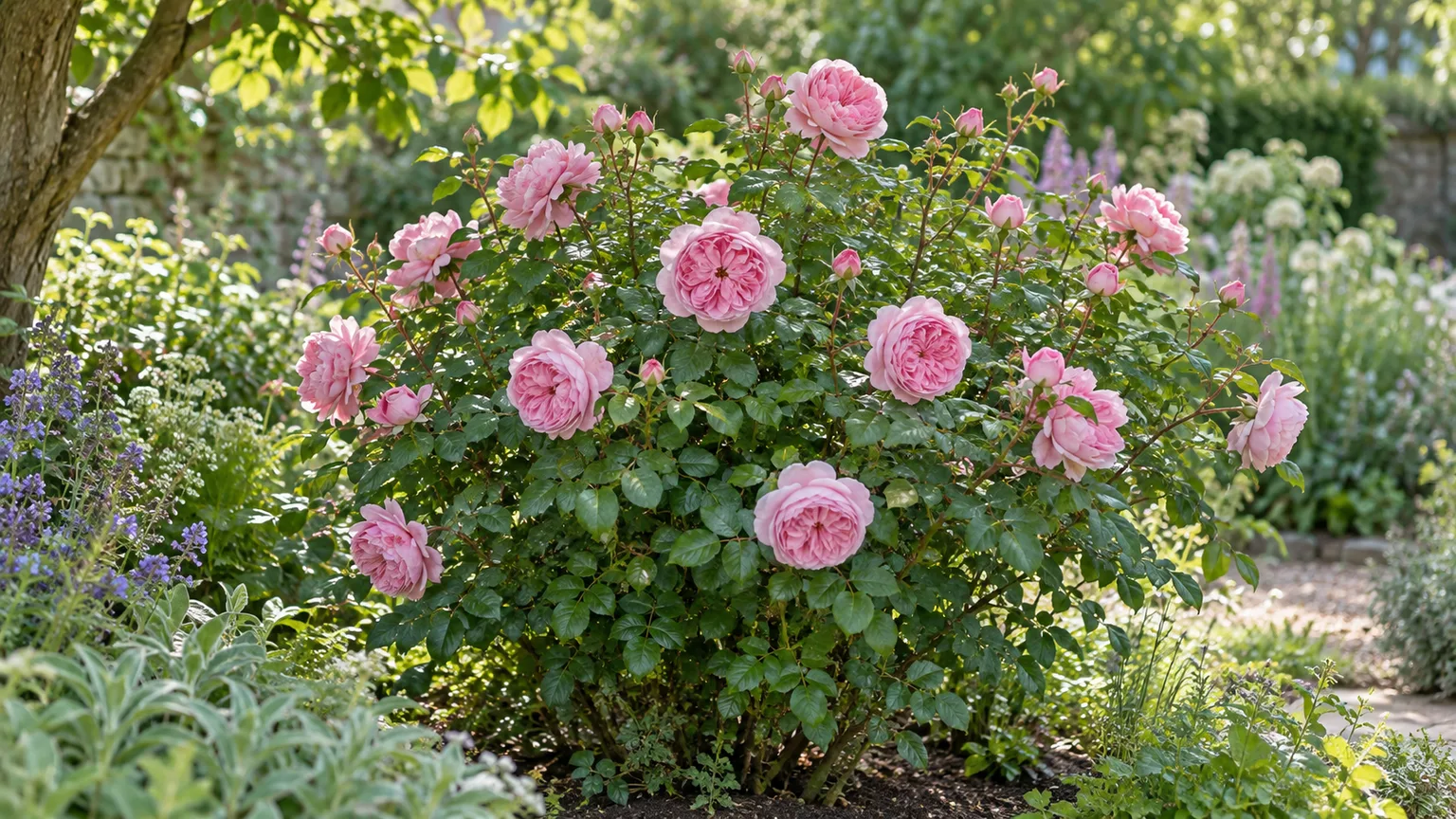
Rosa ‘Mary Rose’ (‘Ausmary’) is the David Austin shrub rose for readers who want the old-fashioned rosette look. NC State Extension’s record describes it as a hybrid shrub rose bred by David Austin in 1983, growing 4 to 5 feet tall and wide, with pink 3- to 4-inch flowers, fully double with 40 to 60 petals in a loose-petalled form, a strong fragrance, and a habit of reliably repeating blooms through frost — zones 5a to 10b.NC State Extension Worth noting honestly: that same record gives it “Good disease resistance,” and it lists full sun as the preferred position, so this is a part-shade compromise rather than a shade plant. Our own judgement, which no source ranks for you, is that the loose rosette form and the heavy petal count are exactly the two traits that make a rose harder in low light and wet air — so plant it where air moves. If black spot is your main fear, Rosa ‘Fair Bianca’ (‘Ausca’) is the swap: NC State Extension describes white to white-blend, very full 2- to 3-inch quartered flowers with a strong myrrh fragrance, blooming in clusters nearly continuously for the season, zones 5b to 10b — but its problems list names black spot, rose rust and powdery mildew explicitly, so it trades bloom size for no immunity.NC State Extension
Floribundas and polyanthas for continuous, small-headed bloom
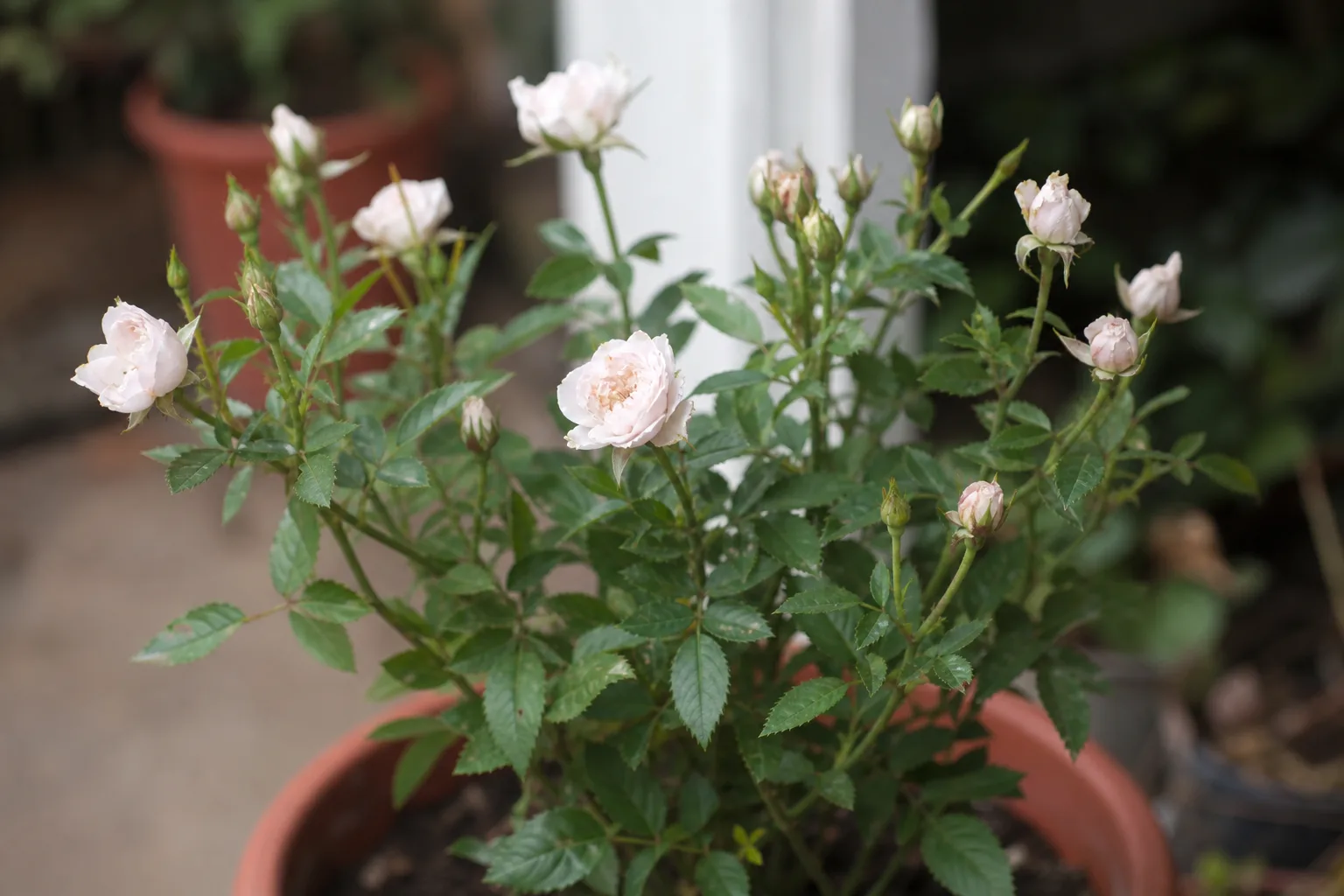
Rosa ‘Iceberg’ is the answer to “what is the most shade-tolerant rose,” and it is not close. It has been the benchmark floribunda for decades, a World Federation of Rose Societies Hall of Fame inductee, and an RHS Award of Garden Merit holder. The English Garden describes it as flowering almost continuously from June to first frosts in a partially shaded border, with afternoon shade helping its white flowers stay fresh in heat.The English Garden Choose it for sheer flower count and colour retention in a dim corner.
One honest disagreement, because two cited sources bracket this rose. The English Garden calls it “both disease-resistant and wonderfully easy to grow.”The English Garden NC State Extension’s record is more qualified: it gives “Good disease resistance” but adds “Watch for black spot in humid areas,” and specifies full sun to partial shade in zones 5a to 9b.NC State Extension Read those together rather than picking the one you like. ‘Iceberg’ is a disease-resilient rose that can still take black spot where humidity is high, which is precisely the condition a shaded bed creates. The practical response is the same either way: give it air movement and water at the base.
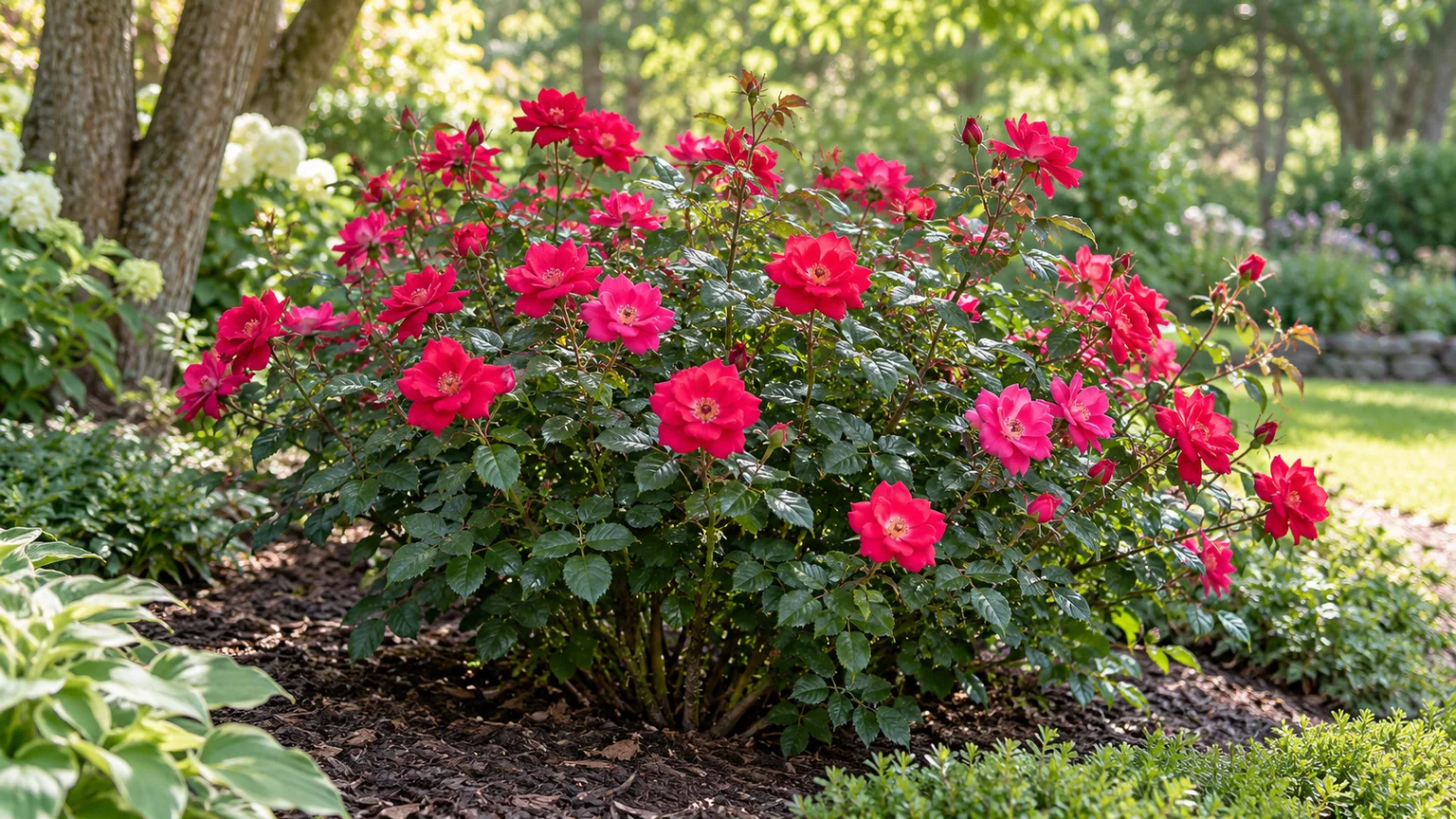
Knock Out ‘Radrazz’ is the answer for a reader who wants a shrub that performs as expected. NC State Extension’s own record for the group is unusually direct about shade: these are “woody, deciduous shrubs… bred to have a long bloom season and be particularly resistant to blackspot,” to be grown “in full sun to partial shade,” and “one of the few roses that will bloom reasonably well in partial shade.” They grow to 3 to 4 feet tall and wide, need little pruning, tolerate heat and humidity, and run zones 4a to 11b — and ‘Radrazz’ specifically is listed as “the original rose of this group with cherry red, hot pink blooms.”NC State Extension Choose it for a 3- to 4-foot shrub that flowers from early spring to frost without a spray programme. The trade-off is aesthetic: it is a modern, self-cleaning shrub, not a romantic one.
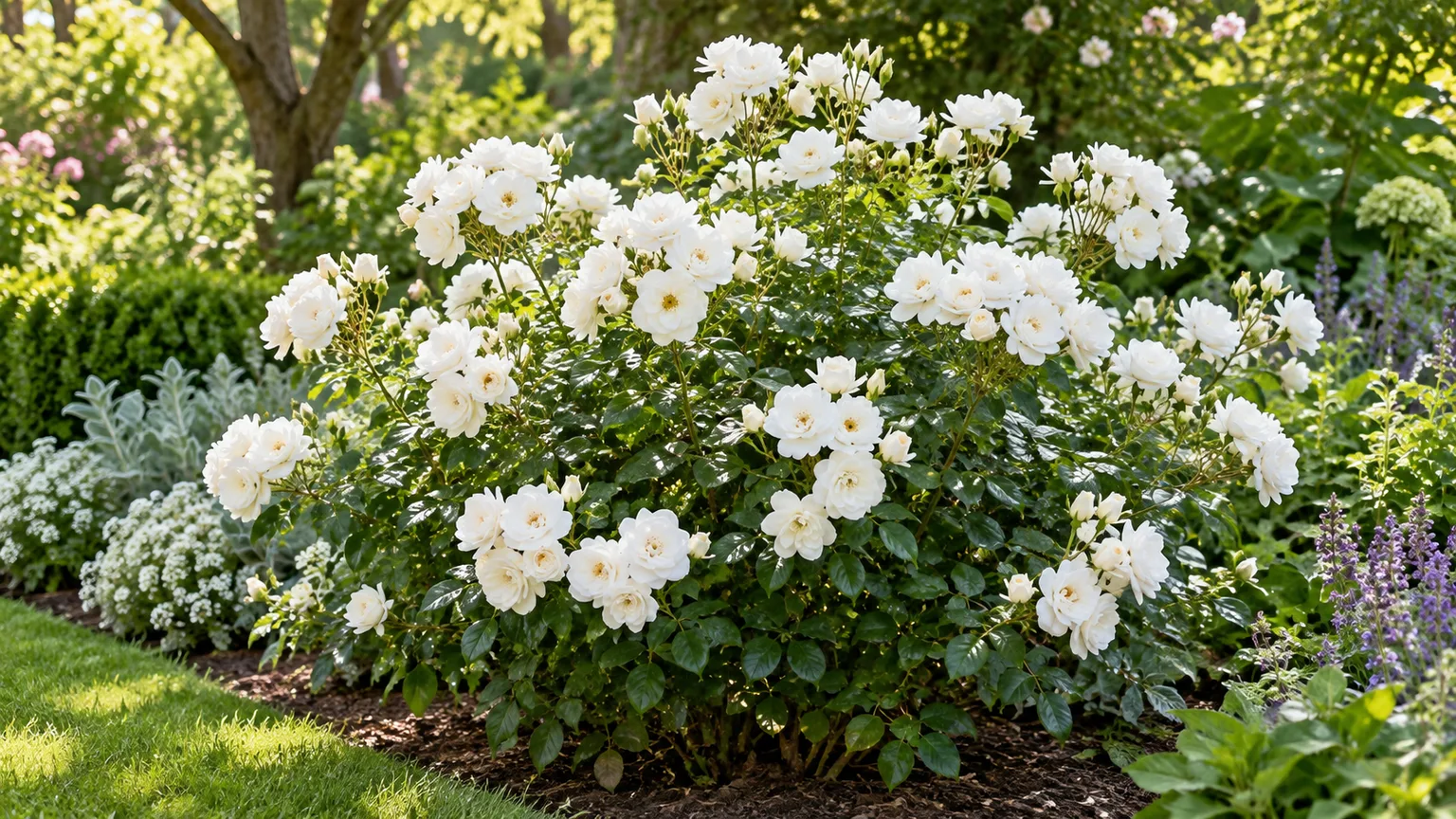
Rosa ‘Ballerina’ is the 1937 hybrid musk on most credible shade lists, and Epic Gardening describes it as a woodland variety of hardy roses “that grow well in the shade and thrive in dappled sunlight,” rated full sun to part shade, 3 to 6 feet, zones 5 to 9.Epic Gardening Choose it if you have dappled light under trees and want dainty single flowers in frosted white and ballet-slipper pink, a delicate sugary scent, and a plant that spills gracefully from a large container. Its single, open flowers are a genuine advantage in shade, because open forms shed water and dry faster than doubles.
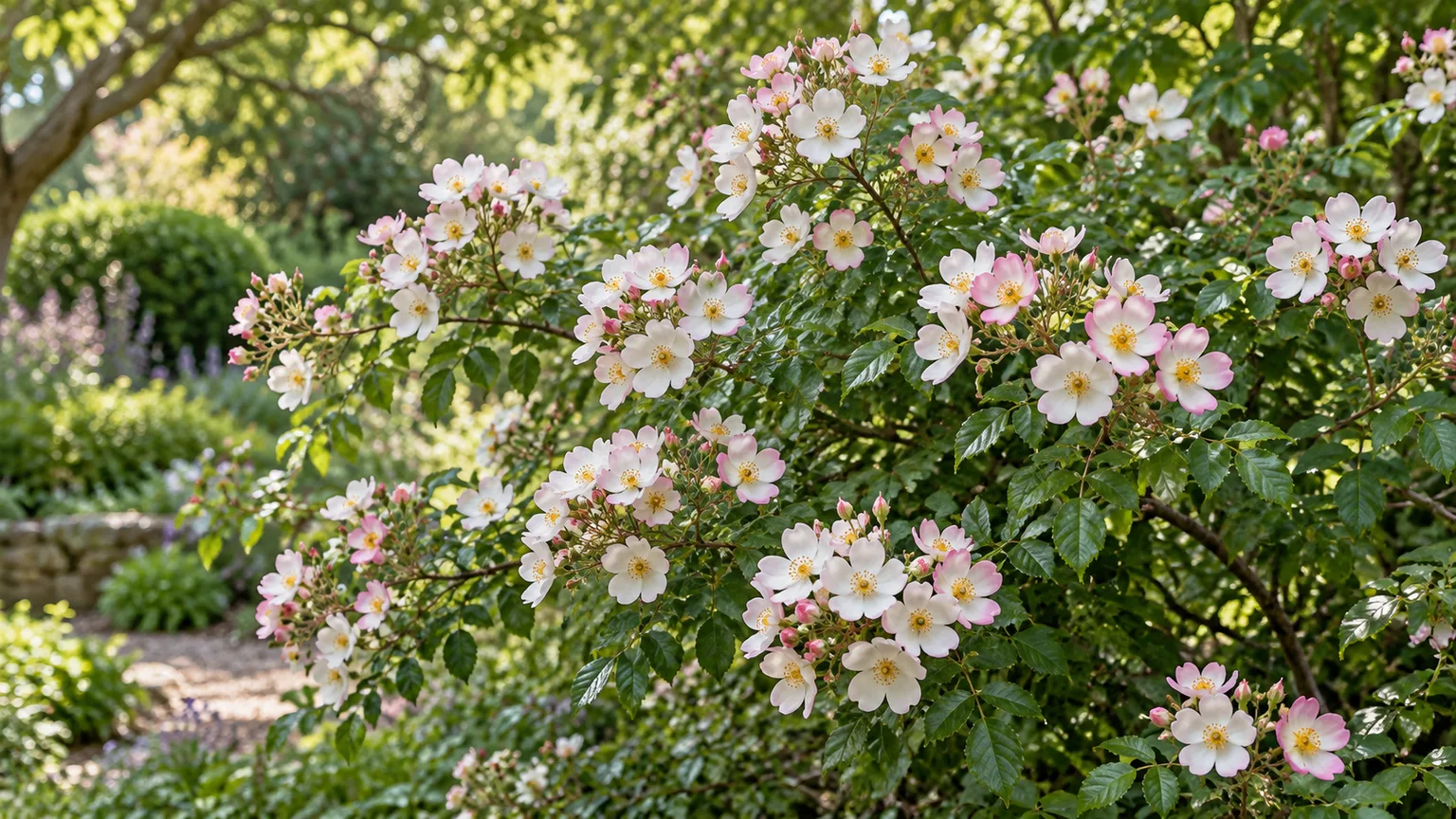
Rosa ‘The Fairy’ is the polyantha answer for a small, dim, awkward spot. Epic Gardening lists it at 2 to 4 feet, full sun to part shade, zones 5 to 10, and specifically suited to a shady garden as a ground cover or low hedge.Epic Gardening NC State Extension’s record is fuller: a 1932 polyantha from J.A. Bentall’s ‘Paul Crampel’ × ‘Lady Gay’, growing about 3 feet tall and wide, with profuse one-inch double pink flowers continuously from May until frost, an RHS Award of Garden Merit, and an Earth Kind designation — and it “tolerates partial shade but is less prone to diseases and flourishes in full sun.”NC State Extension Choose it for a small, densely flowering shrub that tolerates less light than almost anything else here.
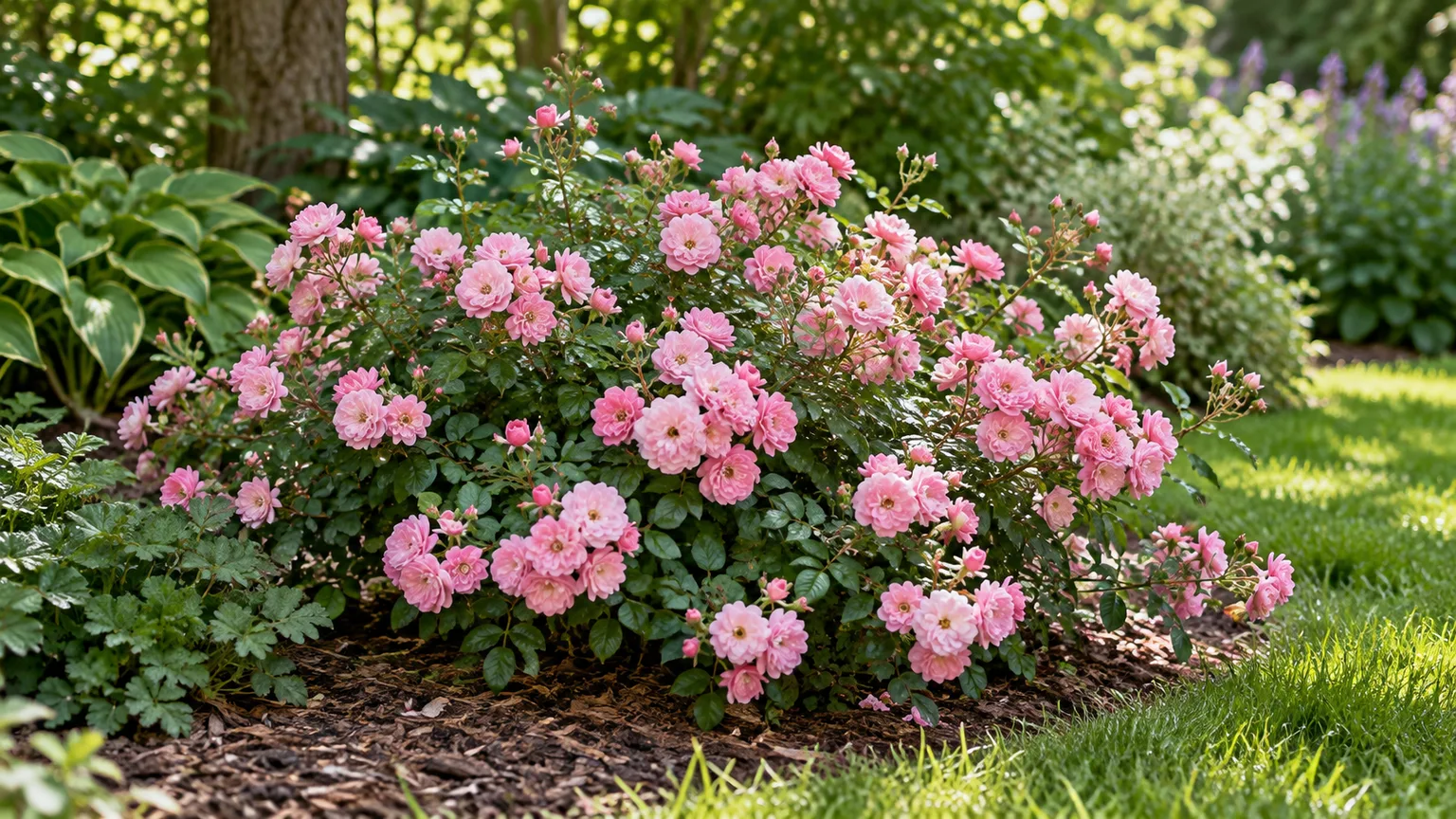
Rosa ‘Lyda Rose’ (‘LETTlyda’) is the modern shrub answer for readers who want big, dogwood-like sprays instead of dozens of tiny flowers. Epic Gardening notes it flowers “abundantly, despite some shade,” is 4 to 5 feet in zones 4 to 9, and that “‘Lyda’ will tolerate just a few hours of sun and reliably resist diseases,” blooming in flushes from spring through frost.Epic Gardening Choose it for a light, natural look and a strong, sugared spice fragrance.
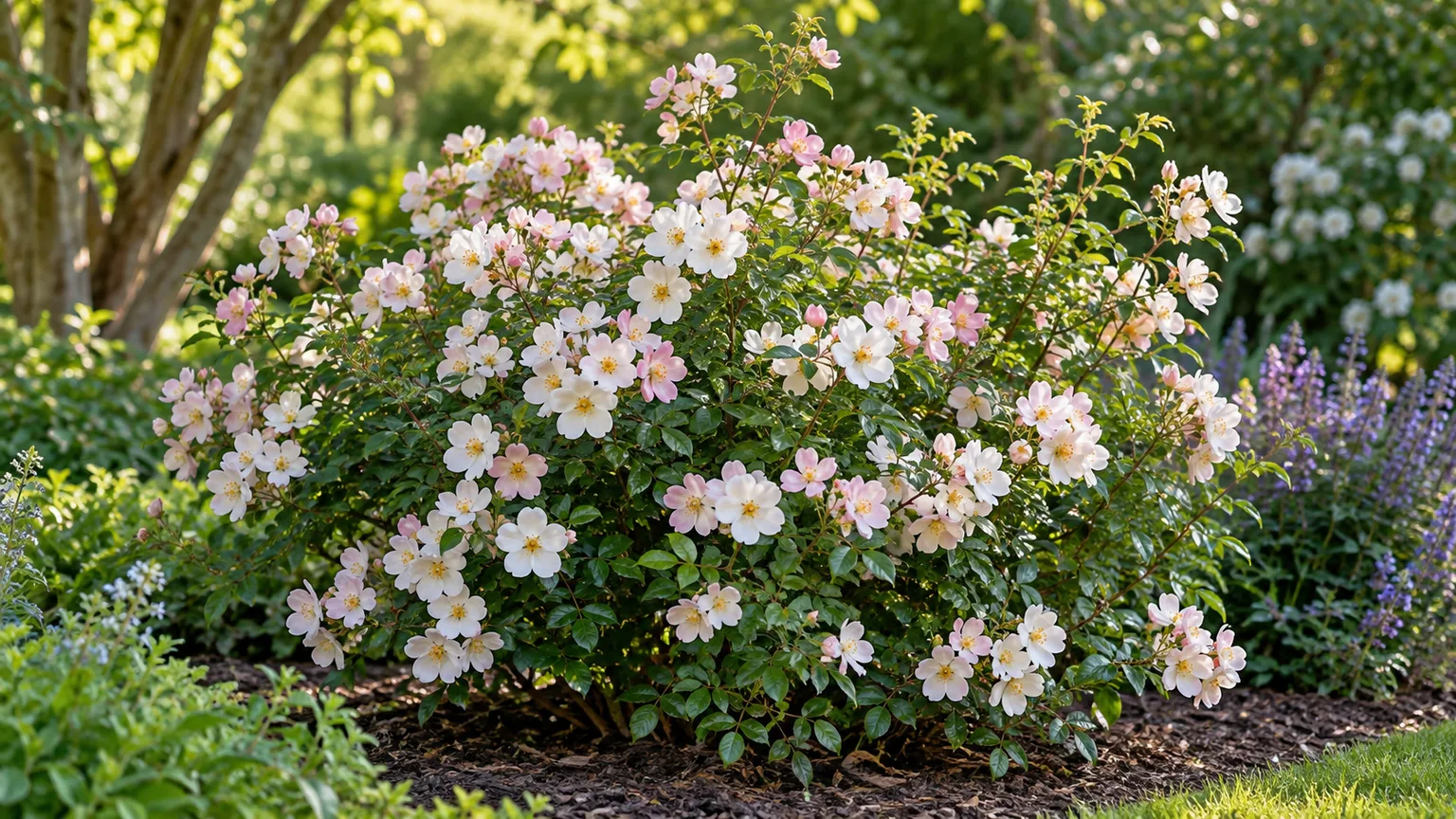
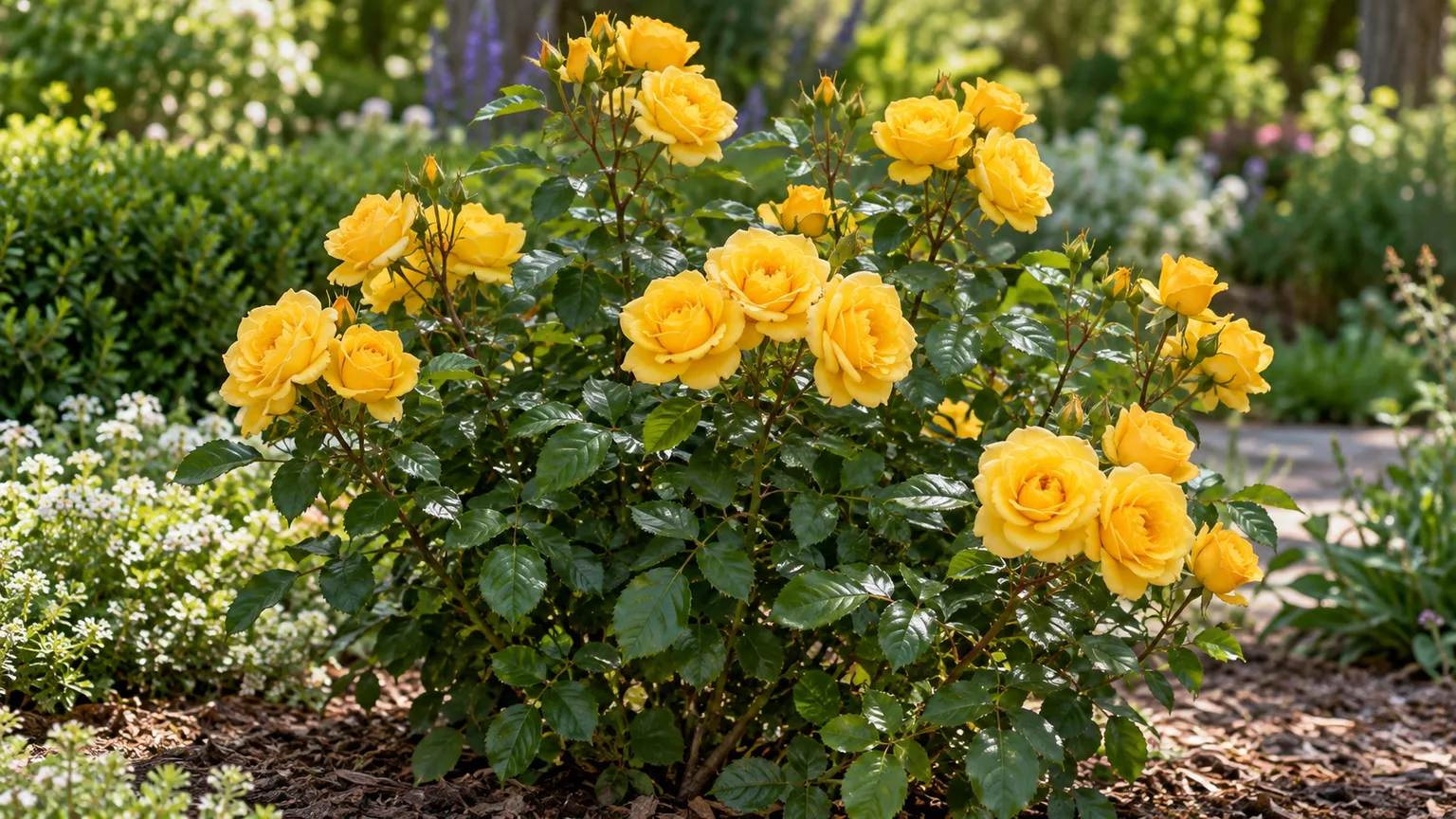
Rosa ‘Anthony Meilland’ is the deep-yellow option, and it is on this list as a colour decision rather than as a light decision. High Country Roses describes the 1990 Meilland floribunda as “a rare, non-fading yellow rose with large blooms accented by a light crisp fragrance,” blooming in clusters of three to five per stem through the growing season, rated for zones 5 and up, 2 to 4 feet tall and 2 to 3 feet wide, with good repeat in flushes and a 7.9 ARS rating.High Country Roses Devil Mountain Wholesale Nursery’s record for the same rose gives a wider zone range of 4 to 10 and lists its light needs as “Full Sun, Partial Sun, Filtered Sun” — the filtered option is the reason it earns a place here.Devil Mountain Wholesale Nursery
Be clear-eyed about the caveat, and it is ours rather than a source’s: a saturated yellow is the hardest colour to hold in low light, and a compact floribunda carries less total leaf area than a big shrub. It will flower in part shade because it is a vigorous modern bred rose, not because yellow is well suited to dim corners. Choose it if your corner needs a bright, warm hit of colour.
Climbers and ramblers for walls, arches, and trees
A climbing habit lets you route a plant into whatever light you have, which is why climbers are the highest-leverage choice in a shady garden. If a wall, fence, or obelisk near your dark spot can be used, you are buying yourself hours of sun by growing vertically.
Rosa ‘Eden’ (‘Meiviolin’, sold as Pierre de Ronsard) is the most widely planted climbing rose here, and it earns its place on this list the hard way: it is number nine on Gardener’s Path’s own roundup of 35 best shade-tolerant roses, described there as “Elegant ‘Eden’ might be one of Meilland’s most beloved roses,” with the practical note that it can climb to 12 feet but “will stay more petite in shadier spots.”Gardener’s Path That is a romantic, high-climbing double, and high climbing plus limited light is a real tension: give it the best wall you have rather than the darkest corner, because the room it has to climb into is where its light comes from. NC State Extension’s record for the same rose, entered as Rosa Pierre de Ronsard® ‘Meiviolin’, rates it very disease resistant and notes that after a heavy first flush “it blooms continuously throughout the season,” in zones 5 to 9.NC State Extension Choose it for the classic romantic look and the reassurance of real disease resistance.
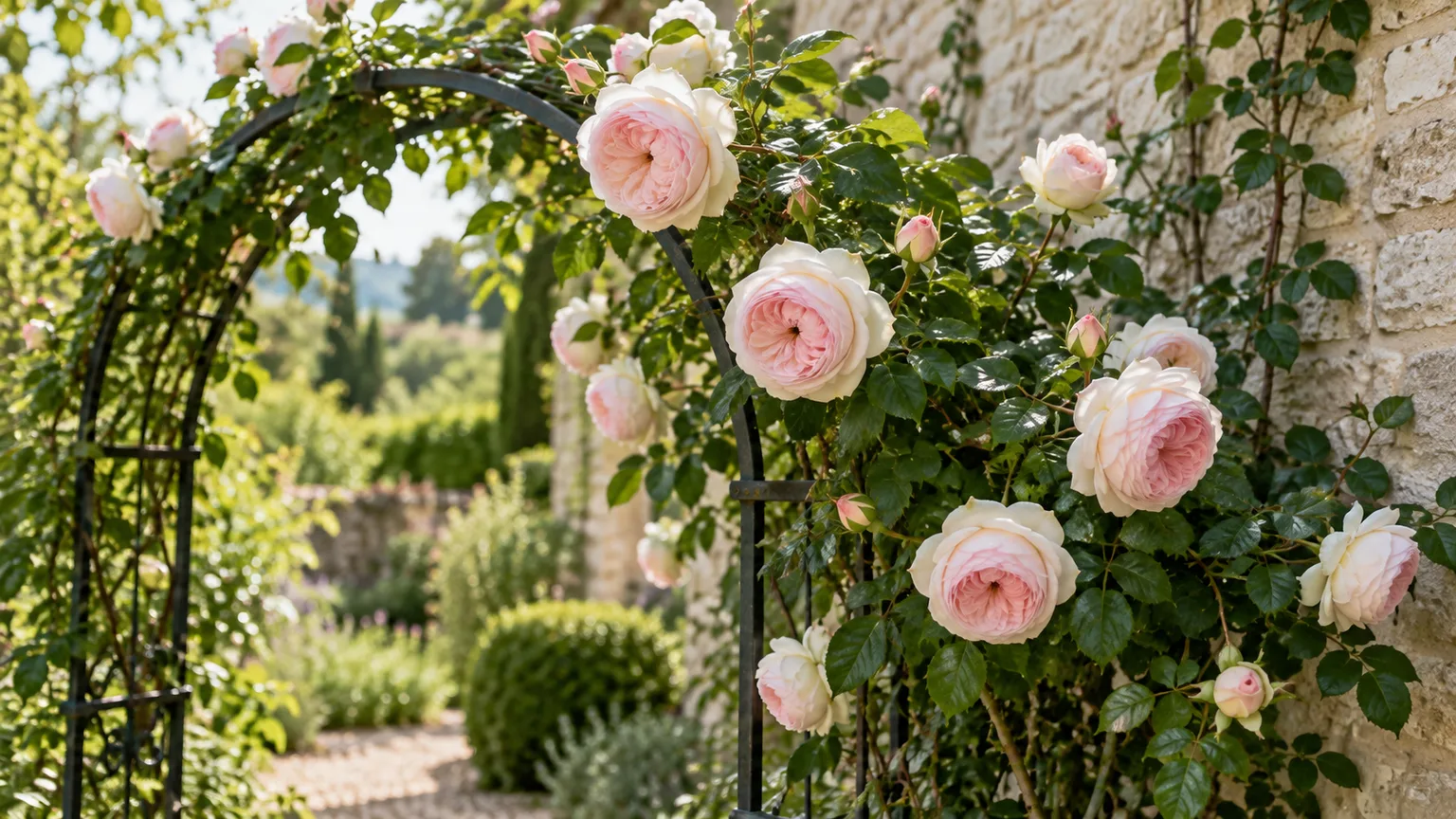
Rosa ‘New Dawn’ is the climber for readers whose main worry is disease pressure. NC State Extension describes it as a light pink climbing rose cultivar discovered in 1930 as a sport of ‘Dr. W. Van Fleet’, doing best in “full sun to light shade,” 10 to 15 feet tall, blooming heavily in June then repeating through fall, with “Good disease resistance with good cultural practices” — and it was voted the most popular rose in the world in 1997 and is an Earth-Kind rose, zones 5a to 9b.NC State Extension Choose it for height without the usual foliage problems — a practical, unglamorous, extremely useful choice, and the one to put on a north-ish wall before a romantic double.
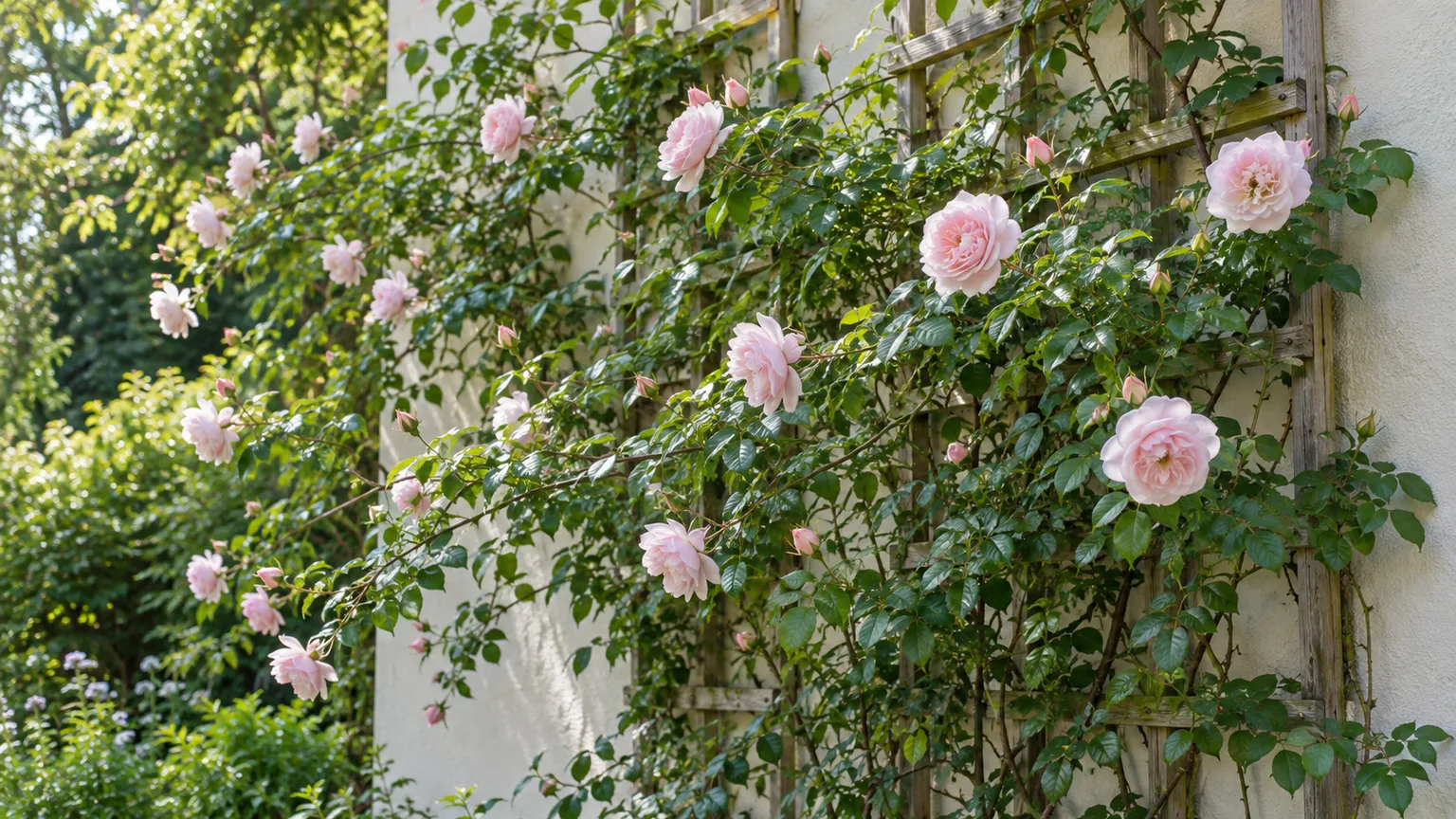
Rosa ‘Veilchenblau’ is the rambler for readers who want one spectacular flush and will wait for it. The English Garden describes it as coping “incredibly well with partial shade,” its flowers opening deep purple and crimson then fading to smoky violet and lilac-grey, on thornless stems — and it “only flowers once every summer.”The English Garden Epic Gardening rates it full sun to part shade, 10 to 20 feet, zones 4 to 10, noting it will tolerate quite a bit of shade and poor soil.Epic Gardening The trade-off: one extraordinary display over a continuous season.
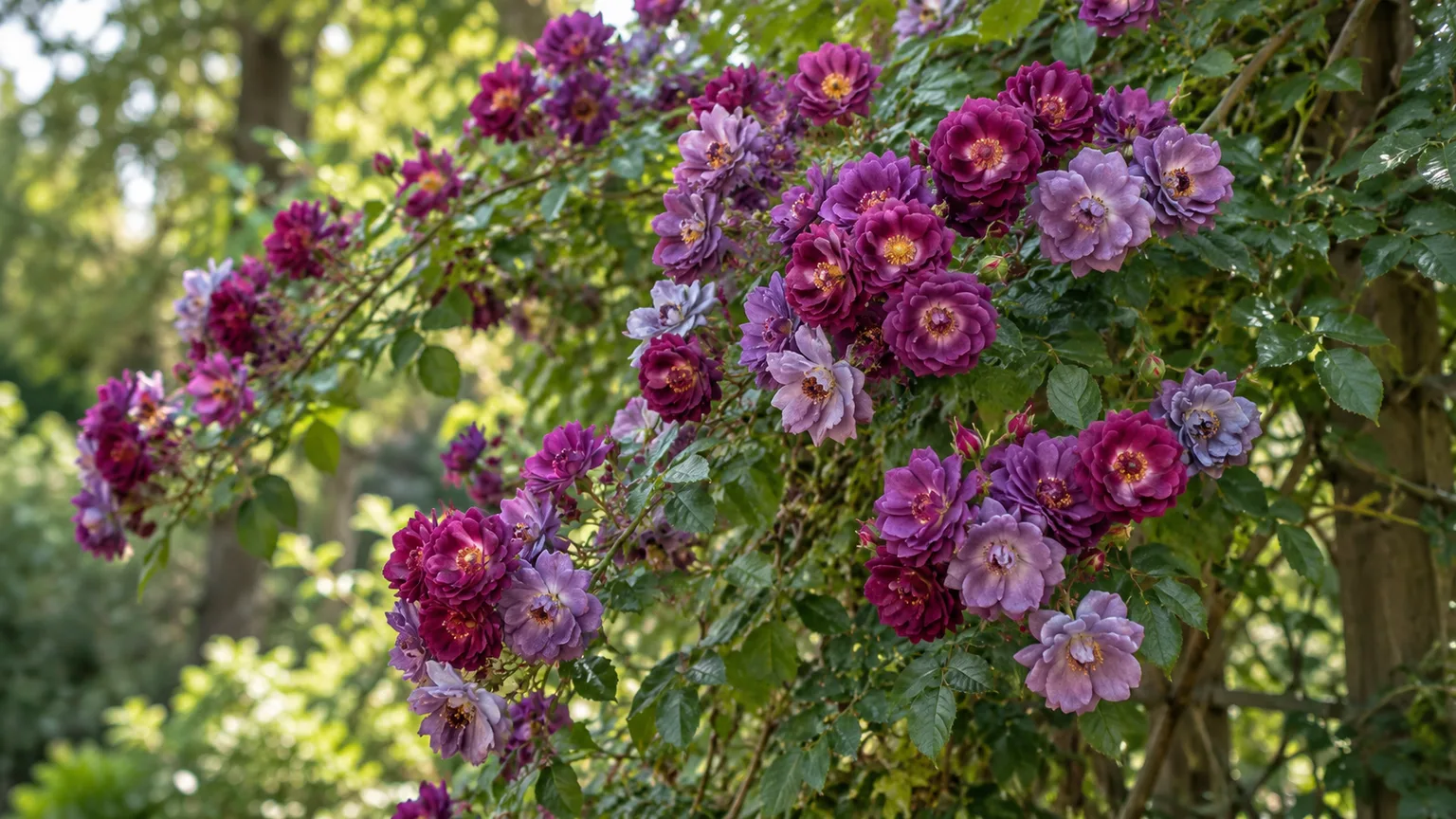
Rosa ‘Zéphirine Drouhin’ is the easiest climber to work with, and there is a practical reason it stays on lists like this: the canes are essentially thornless. The Missouri Botanical Garden describes it as an 1868 Bourbon rose with profusely scented, semi-double dark pink blooms from May to frost, on prickle-free canes, grown as a climber to about 12 feet or as a shrub pruned to around 6 feet, zones 5 to 9, and it notes the plant is “noted for its shade tolerance.”Missouri Botanical Garden NC State Extension’s record goes further on disease, describing it as “highly resistant to black spot, powdery mildew, and Japanese beetles,” continuing to bloom even when black spots appear, in zones 5a to 11b.NC State Extension Choose it for a big, soft, powerfully fragrant climber you can prune without gloves. Both sources are equally direct that best flowering occurs in full sun, so treat the shade tolerance as real but not unlimited.
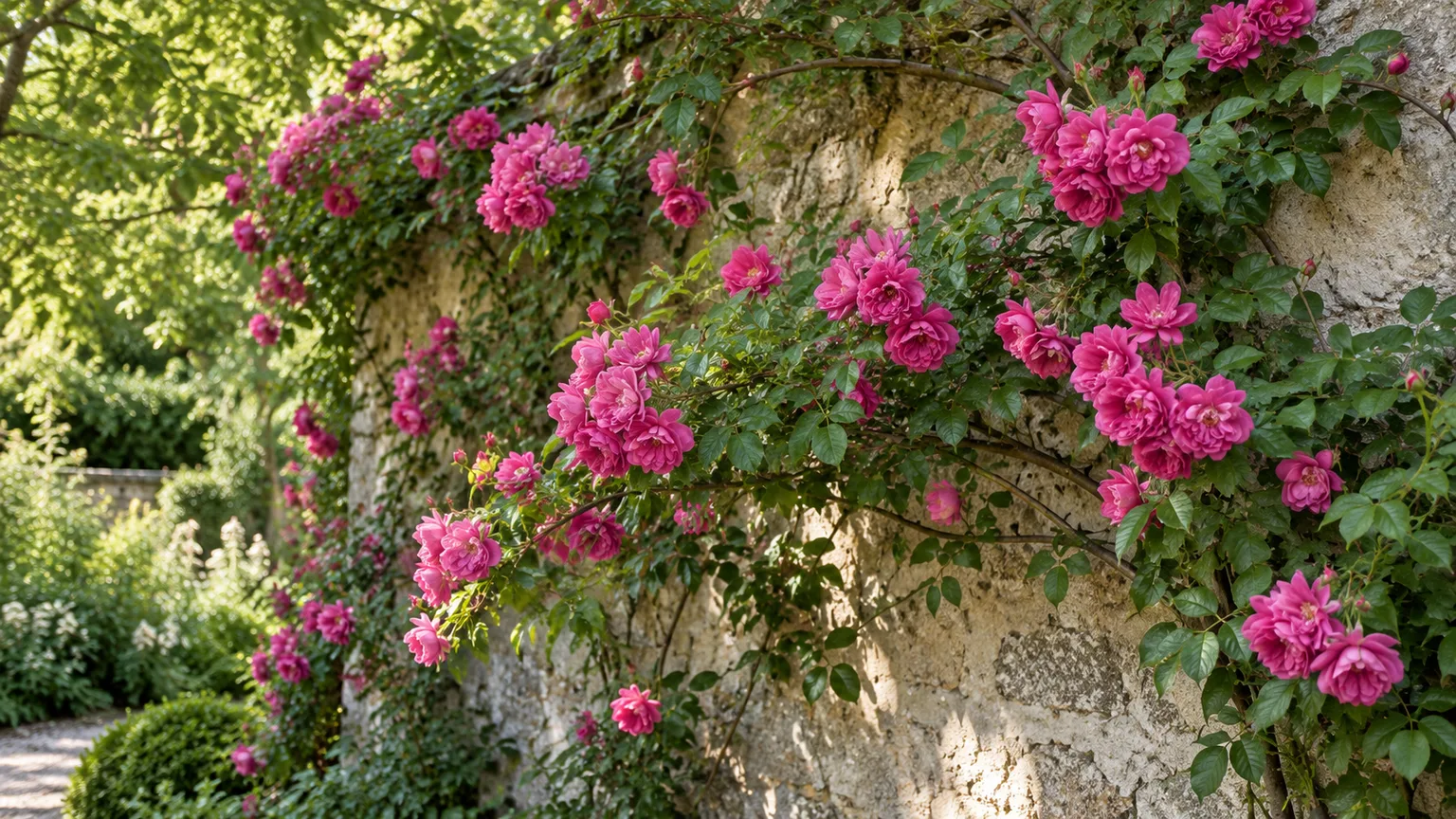
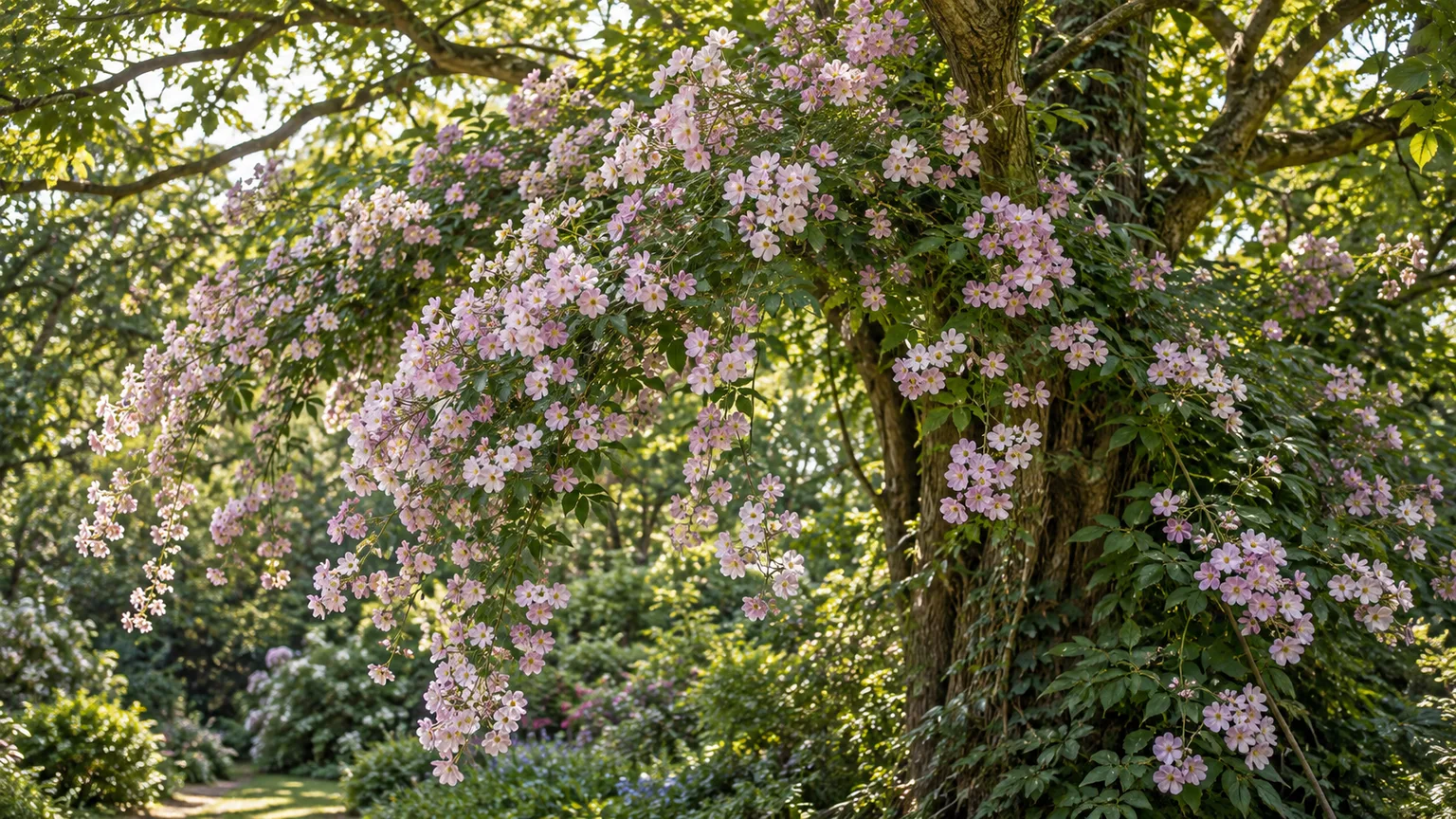
Rosa ‘Paul’s Himalayan Musk’ is the RHS’s named recommendation for climbing into trees, in its group of “very vigorous roses for climbing into trees,” listed at 6 metres with cascading open sprays of pinkish-lavender flowers in drooping clusters.RHS Published zone figures differ — Gardenia and rose-bushes.com both give 4 to 9.GardeniaRose-bushes.com Choose it only if you have a mature tree you are willing to let a rose grow through, and accept that you are sharing its root zone and light.
Ground covers and rugosas for slopes, edges, and mass planting
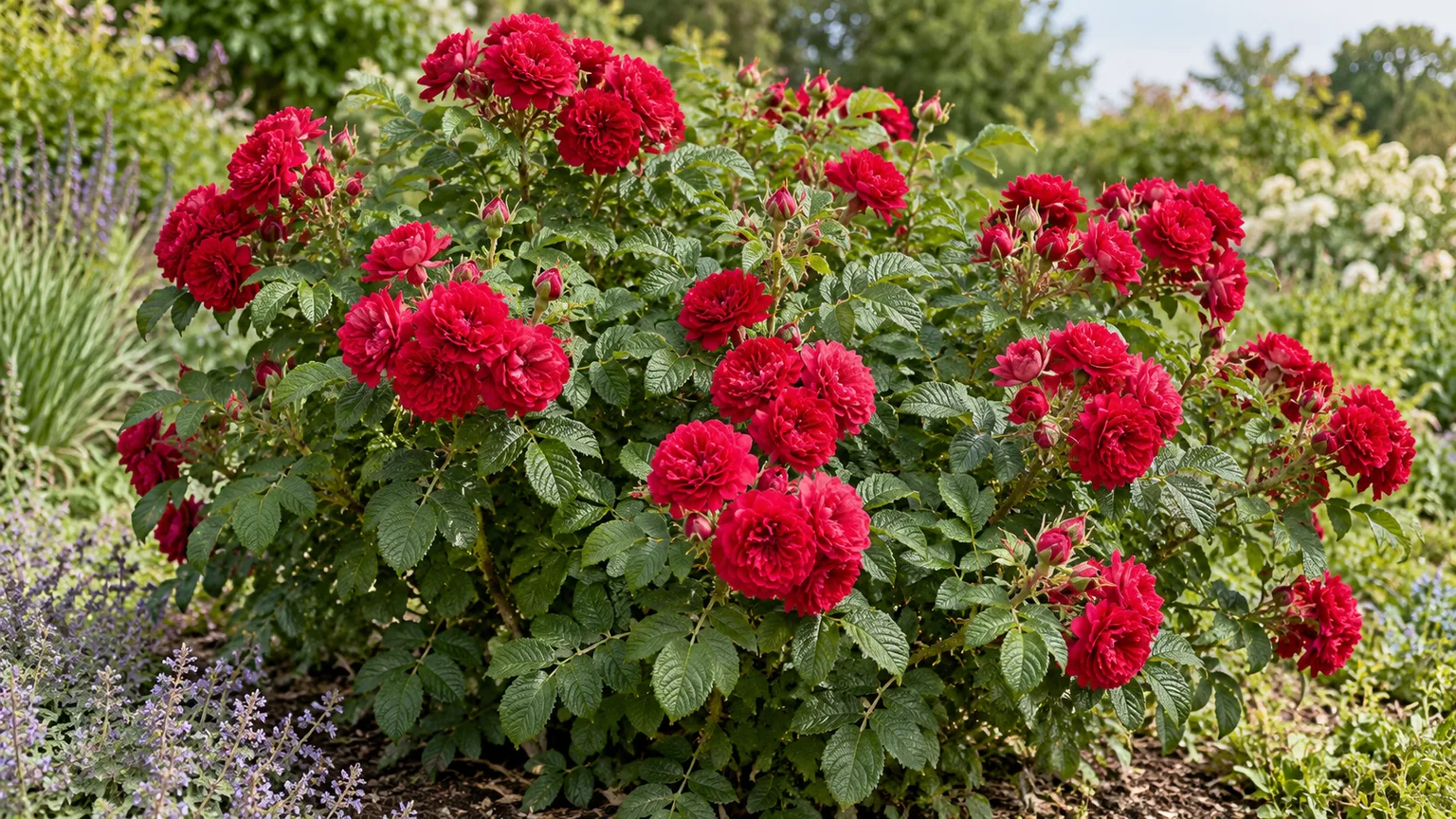
Rosa rugosa ‘F. J. Grootendorst’ is the toughness answer, and the family’s other members — ‘Pink Grootendoorst’ and ‘White Grootendoorst’ — behave the same way. NC State Extension describes it as a hybrid rugosa bred by De Goey of the Netherlands in 1918, growing 5 to 6.5 feet tall and spreading 3 to 4 feet wide, with red carnation-shaped pompom flowers in large clusters, wrinkly rugosa leaves and good disease resistance — and it “will tolerate poorer soils and light shade.”NC State Extension Small, puckered, leathery foliage offsets clusters of double, bright red frilled flowers. Rugosas are the most shade-tolerant and toughest roses in this article, and they grow where a hybrid tea would be dead by August. Choose it for dry, poor, hot, or neglected ground — a slope, a bank, a roadside strip, the corner you gave up on. The trade-off is suckering, so site it where a thicket is what you want.
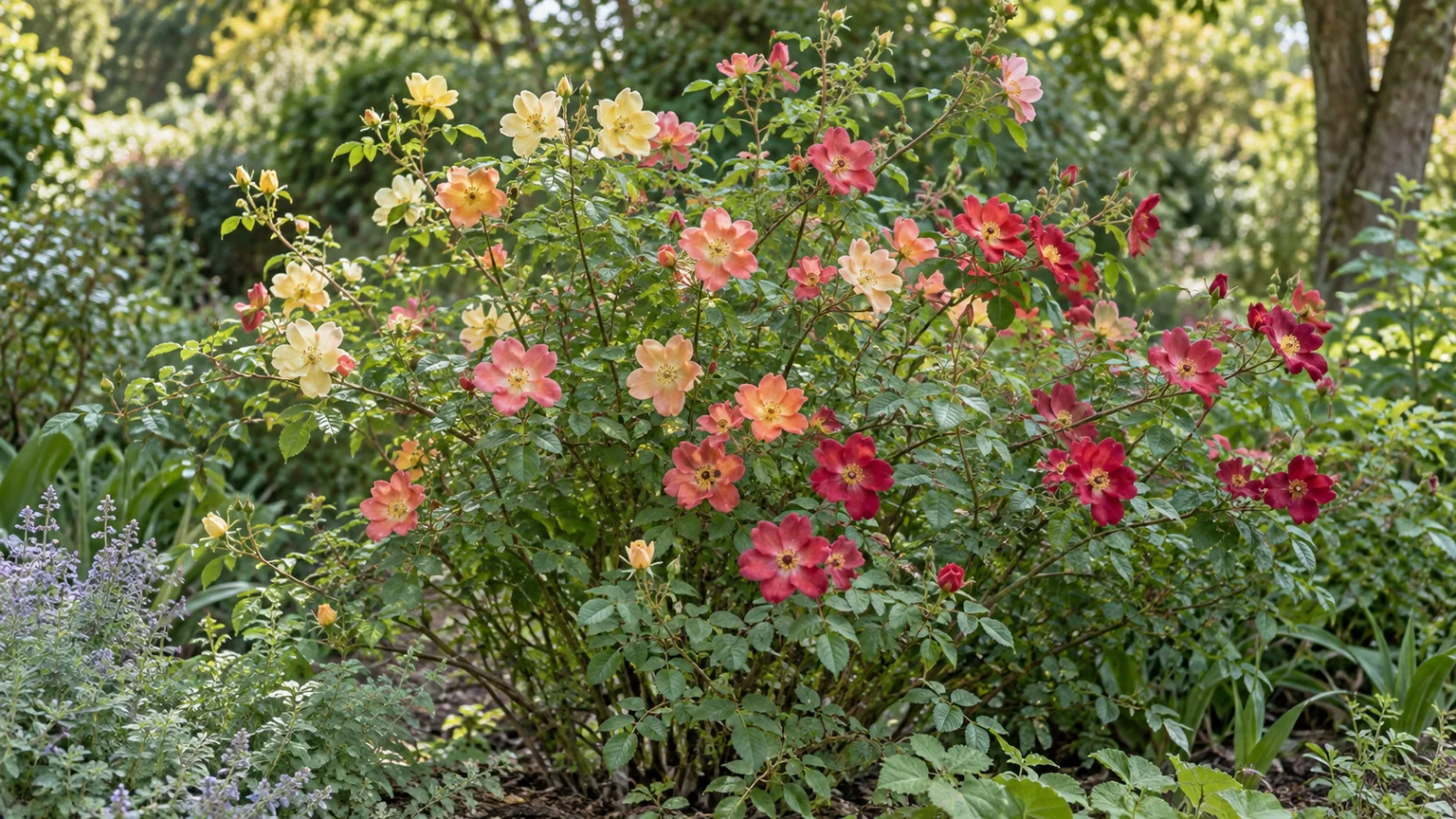
Rosa ‘Mutabilis’ is the answer for readers who want a big, loose, natural-looking shrub that thrives on neglect. Missouri Botanical Garden lists it in zones 6 to 9 at 3 to 6 feet with full sun, while Epic Gardening rates it much wider — zones 7 to 10, 6 to 10 feet tall and wide, and notes it earned the Earth Kind Rose of the Year designation in 2005 for drought and disease resistance, is “a bit leggy, so it looks best in the back of the border,” and that its flowers darken to crimson on the bush as they age.Missouri Botanical GardenEpic Gardening Fine Gardening’s plant guide likewise gives full sun to partial shade in zones 6 through 9.Fine Gardening Zone figures vary enough that a northern reader should check locally before buying. Choose it if you have room, and put it at the back of a border where its leggy lower canes are hidden.
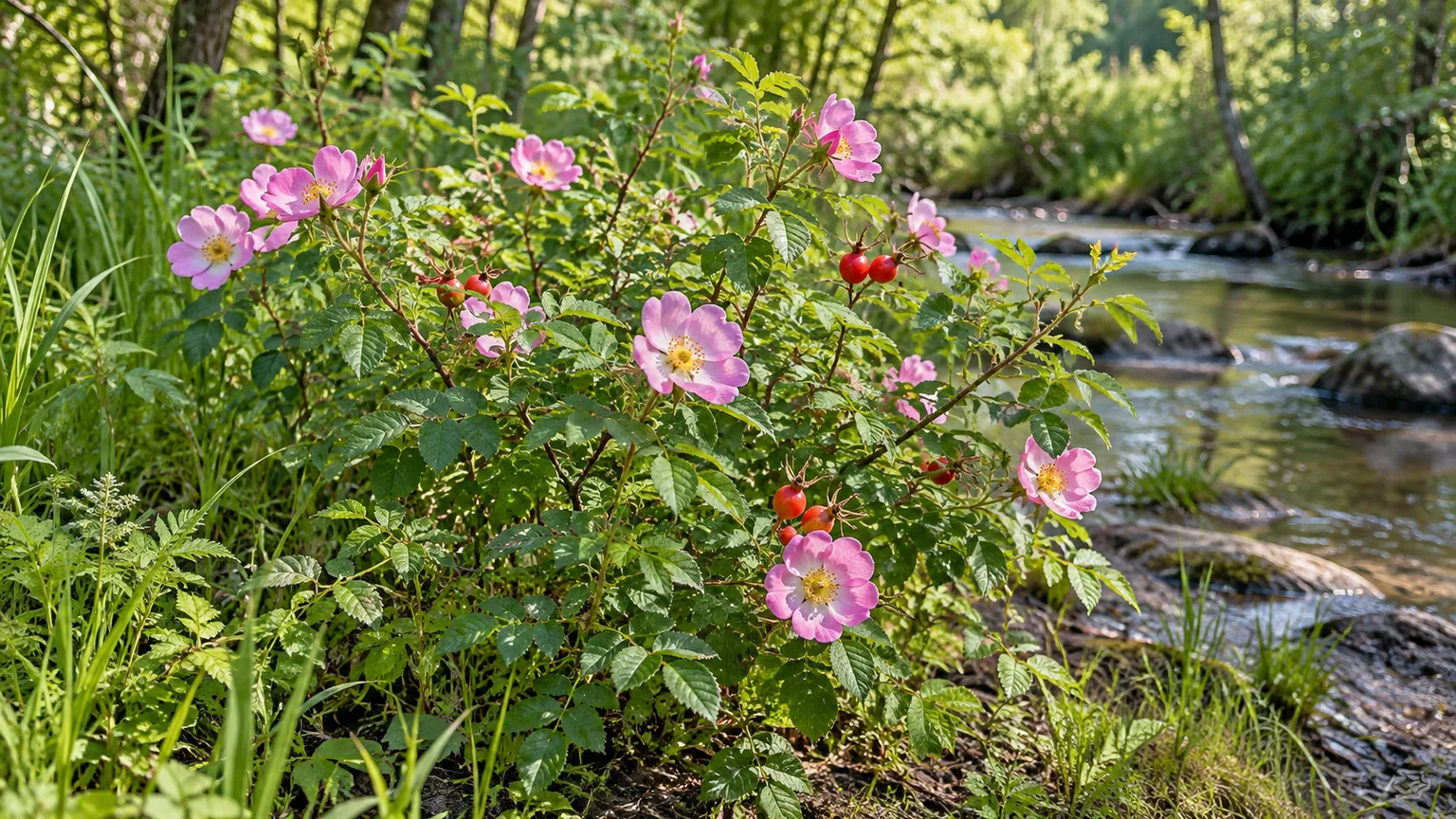
Rosa palustris, the swamp rose, is the wet-shade answer almost nobody writes about. Epic Gardening describes it as a native of moist areas of the Eastern United States, accustomed to a woodland canopy and tolerant of shade given adequate hydration, thriving in rainy, humid regions where others would succumb to black spot, 6 to 8 feet, zones 5 to 9.Epic Gardening NC State Extension’s record is blunter and more useful: it is “best grown in full sun and in acidic, boggy soils that are high in organic matter,” it “tolerates partial shade but will flower best and be more disease resistant in full sun,” it will not grow in standing water but tolerates some seasonal flooding, and it has no significant problems — zones 4a to 9b.NC State Extension Fragrant, single, pink roses bloom from late spring to early summer, red hips follow, and it spreads by suckers. Choose it for a genuinely damp, low-lying site that other roses die in.
The disease math in shade
Shade does not cause black spot. Reduced air movement and prolonged leaf wetness do, and shade delivers both. When a canopy closes over itself, the air inside moves slowly, dries slowly, and traps humidity the way a dense hedge’s interior does. NC State Extension states the genus position flatly and then qualifies it by cultivar: “Roses require full sun,” with light listed as “Full sun (6 or more hours of direct sunlight a day).”NC State Extension Missouri Botanical Garden’s guidance on roses is that good cultural practices are the first line of defence but that regular preventative fungicide applications are usually required, particularly in humid climates with regular summer rainfall.Missouri Botanical Garden Both facts should shape which rose you buy rather than surprise you afterwards.
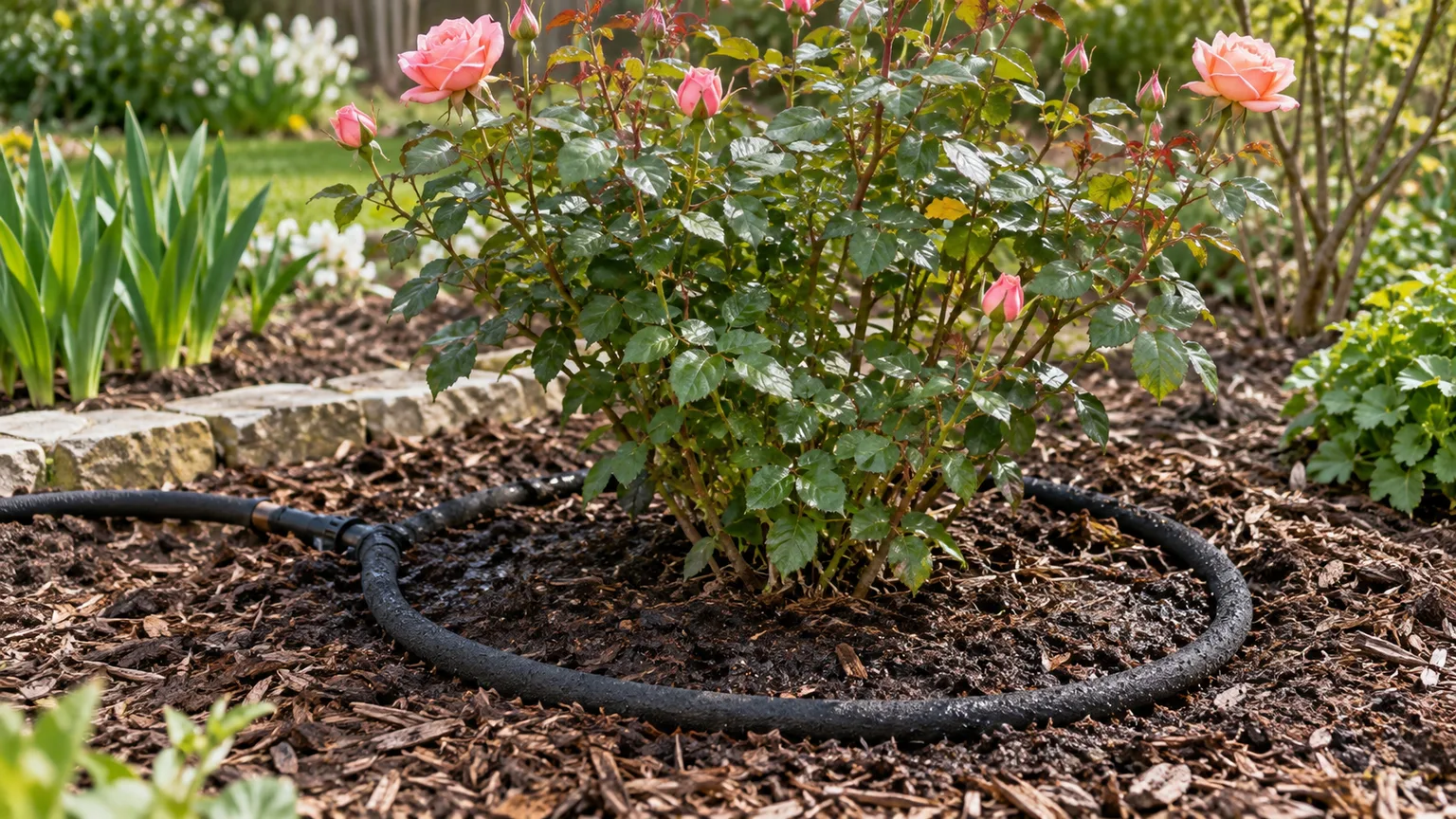
Three cultural moves do more than any spray schedule. Water at the base, never overhead — a soaker hose or drip line rather than a wand. Prune for an open vase shape in late winter, removing the centre and crossing canes so air moves through the middle. Clean up fallen leaves through the growing season, because infected leaves are the overwintering source. Missouri Botanical Garden makes all three points in its own rose culture notes.Missouri Botanical Garden
A disease-resistance rating is worth having, but not a trump card. Ratings describe the absence of a symptom under normal conditions; they do not change the physics of a wet, still, shaded canopy. Genetics buy you margin, and the site decides how much margin you need.
Color, scent, and pet-safety notes that matter in a dim corner
Colour is a real decision in shade. White, cream, palest pink, and deep saturated red hold their colour best in low light. White and cream appear to glow in shade, which is perceptual rather than horticultural — pale flowers read as brighter in a dim scene. Deep reds hold because the pigment is dense enough to survive lower light levels. Be careful with bleached pastels — clear pink, soft lavender, flat coral.
Scent is the other genuine shade advantage, and a bigger one than most articles admit. Where you cannot have visual impact, you can have olfactory impact, and a fragrant rose in a dark corner by a path is an experience a sun-requiring rose elsewhere cannot replicate. Put your most strongly scented selection where you actually spend time — Rosa ‘Souvenir du Docteur Jamain’, ‘Buff Beauty’, ‘Lyda Rose’, and ‘Zéphirine Drouhin’ all perform here.
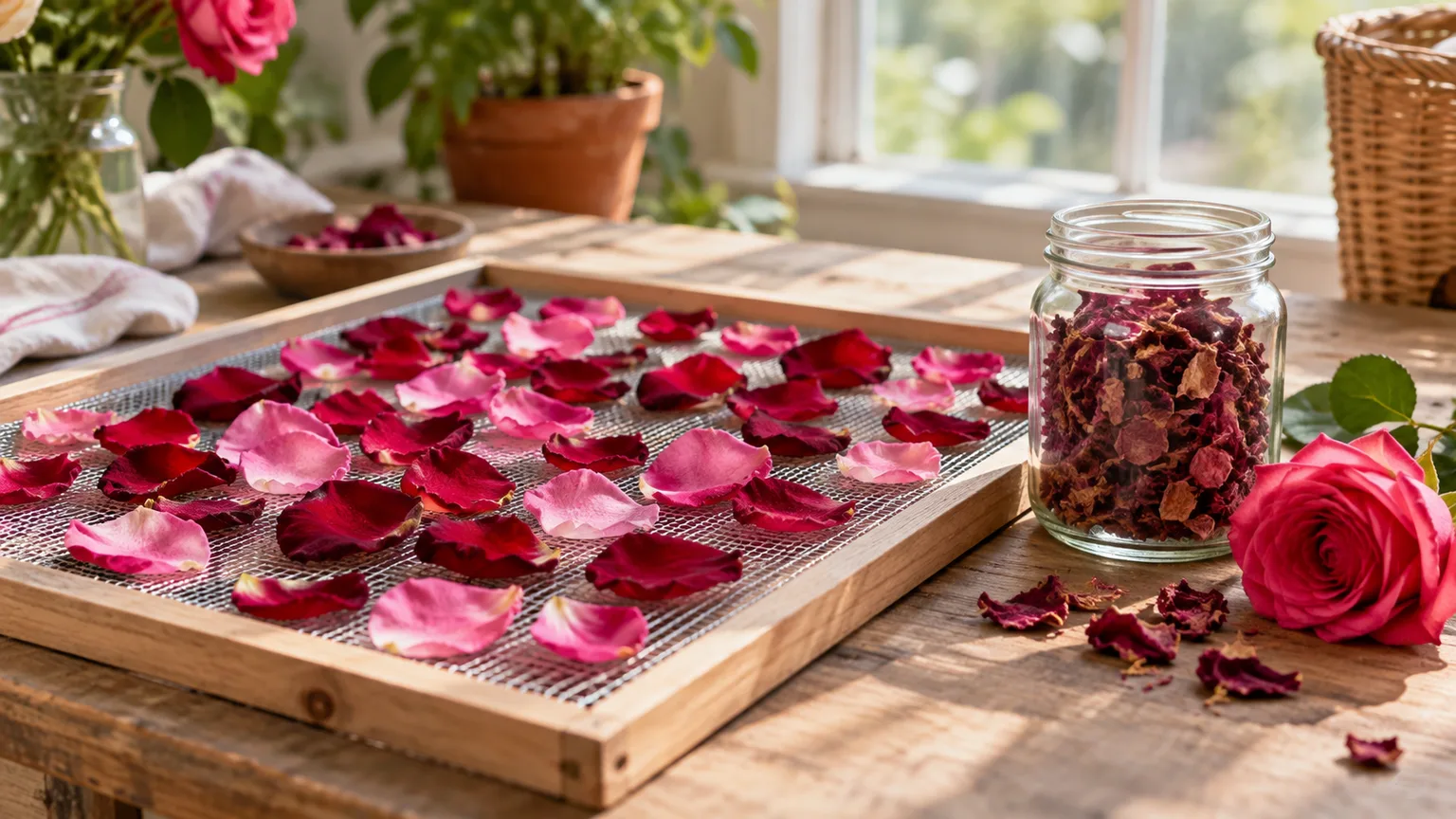
On pets, the answer is well-sourced: the ASPCA’s toxic plant database lists Rosa species as non-toxic to dogs, non-toxic to cats, and non-toxic to horses.ASPCA The standard caveat applies — consumption of any plant material may cause vomiting and gastrointestinal upset — so keep thorny prunings out of reach. If you like rose petals in the kitchen, our guide to drying rose petals covers the mechanics, and there is a separate guide on what rose hips do and how to use them.
Planting, feeding, and watering roses in low light
The care routine for a shaded rose is not a different routine. It is the same routine with two adjustments — feed less, and water more carefully — because both respond to light and moisture, not the calendar.
Feed modestly. A rose in low light is photosynthetically limited. Pushing fertiliser on it produces weak, soft, disease-prone growth and leggy extension rather than flowers, which is one of the most common reasons a shade rose looks lush and produces no flowers. Our guide to when and how to fertilize roses covers the timing.
Water deeply and only at the base. Shade changes the drying rate in two opposite directions. In wet shade, shaded soil holds moisture longer and needs less frequent watering than the same bed in sun. In dry shade, a canopy or wall can create a rain shadow the open ground never sees. Check the soil before watering rather than watering on a schedule — our guide to how often to water roses covers the by-sensor-moisture method.
Space them for airflow, not for a full-looking bed. This is the most useful change most shade gardeners can make, and almost nobody thinks of it as disease control. In a dim site the temptation is to plant closer together so the bed looks full. That is backwards — extra density in a low-airflow site accelerates every problem on this page. Space at the mature spread listed for that cultivar, and the airflow gain will visibly reduce black spot and mildew within a season. If you have planted too close, prune rather than move: a hard late-winter cut back to an open vase framework does more than any spray schedule. See how and when to prune roses.
Mulch properly. Mulch buffers soil temperature and reduces the rain splash that carries fungal spores onto lower leaves. Aim for a few inches of organic mulch over the root zone, kept clear of the crown. Our guide to mulching roses for winter has the seasonal version.
If your site is too dark anyway
If your site still has fewer than four hours, you have four honest options, and taking one beats planting a rose that will disappoint you for five years.
Improve the light. Reflective surfaces are the cheapest intervention available. A pale wall, a light-coloured fence, or a few large stones bouncing light into a north bed genuinely changes the usable light, and you can measure the difference. Lifting a tree canopy skirt by a few feet often doubles the light reaching the ground beneath it.
Prune the rose hard. A shade rose not being pushed for height should be cut back harder than one in sun. Shorter canes mean shorter internodes, more flowering points, and better air movement. This does not create light, but it makes the most of what you have.
Accept a different plant for the worst spot. If your site is dense dry shade under mature trees with fierce root competition, the correct answer is a plant that evolved for that niche. Woodland-edge perennials, ferns, and shade-native shrubs will outperform any rose there every year. Our guides to easy perennials for shade and shrubs that grow in shade are the right place to start.
Move the rose. Roses transplant well at the right season, and moving a struggling rose to a better site in its second year is likelier to give you years of good bloom than nursing it in place.
On planting under a tree specifically: usually no, and the reason is more about roots than the canopy blocking light. A mature tree’s fine absorbing roots occupy the same shallow soil layer a rose needs, in enormous quantity. The one workable version is a young, small tree, with the rose at the outer drip line rather than against the trunk, given a season to establish, and top-dressed with compost each year. If the tree eventually wins, remove the rose rather than fight it for a decade.
Conclusion: measure, match, plant
Roses for shade is a real category, but a narrow one, and the difference between success and a season of thin, spotty, mildew-covered stems comes down to three things.
Measure first. Spend half an hour counting your actual sun hours in midsummer with the canopy fully leafed out, and check whether your shade is dry or wet. Every other decision follows from those two facts, and both are free to establish. If your count lands at six or above, the standard every extension service gives you, you have no shade problem to solve at all.
Match second. Use the groups here to narrow quickly. Vigorous, small-flowered modern types — ‘Iceberg’, Knock Out, ‘Lyda Rose’, ‘The Fairy’, ‘Ballerina’, ‘Anthony Meilland’ — suit most dim sites. Woodier, larger-flowered roses, including the climbers and David Austin shrubs, are right when you can route them into better light or the site is a sheltered wall. Rugosas and species types suit dry, poor, or neglected ground, and Rosa palustris suits damp ground. Then check each entry’s reported mature size against your space, because an eight-foot climber in a four-foot bed is the most common rose-planting mistake in shaded gardens.
Plant third. Space them for airflow rather than for a full-looking bed, water at the base, mulch the root zone without burying the crown, feed moderately, and expect a smaller but entirely real display. Pale and strongly scented selections will do more for a dim corner than big saturated pastel blooms that bleach out.
And if the honest answer is that your spot cannot support a rose, take it. A woodland-edge perennial that flowers reliably every June beats a rose that sulks in a corner for a decade. The roses here are the ones that have earned the most tolerance for the least light — the whole point of including them.