How to Harvest and Use Rose Hips
Harvest rose hips at the right firmness, clean them safely, then turn them into tea, syrup, jelly, puree, and pantry-ready dried pieces.
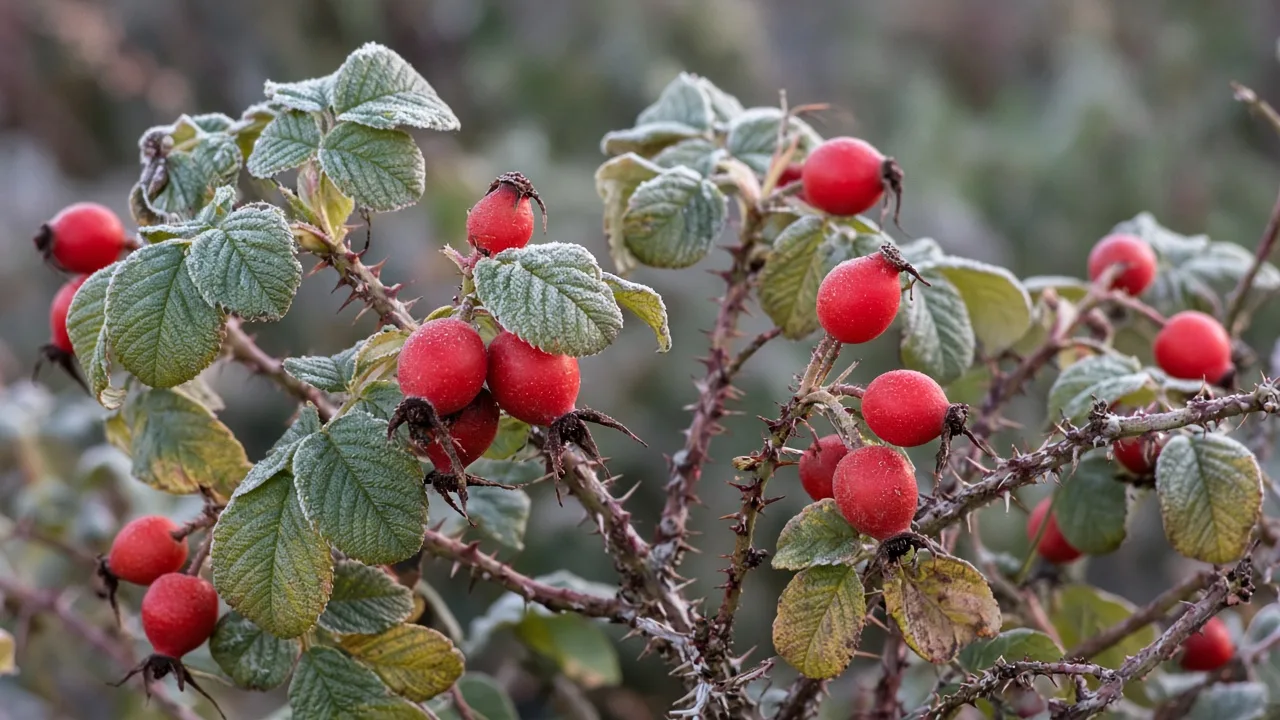
Rose hips are the colorful fruit that forms below a rose flower after pollination. To harvest and use them, wait for fully colored hips that are firm or just slightly soft, pick them from a clean, unsprayed plant, trim away the flower and stem ends, and choose whether to refrigerate, freeze, dry, steep, or cook them. For a smooth finished food, remove the seeds and the fine hairs inside, or cook the fruit and strain it very carefully.
The best harvest is not necessarily the biggest one. A small bowl of clean, sound hips from a known plant is more useful than a bucket gathered beside a road or from a shrub that has been sprayed. Rose hips vary widely in size, sweetness, acidity, and texture, so treat the guidance below as a practical decision process: identify a safe source, judge ripeness by the fruit in front of you, and match the preparation to how you plan to use it.
Rose Hips in One Sentence: Fruit After the Flower Fades
When a rose flower is pollinated, the swollen structure beneath the petals matures into a rose hip. It is botanically a fruit, although it looks more like a small berry or bright seed pod. Depending on the plant, it may be round, oval, elongated, orange, scarlet, burgundy, or nearly purple. The rose hip is often easiest to spot in late summer and fall, when the petals are gone and the fruit stands out against fading foliage.
Roses produce hips only when flowers are allowed to finish. If you deadhead every bloom as soon as it fades, you remove many of the developing fruits. To grow a harvest next season, leave a portion of the last flush of flowers on the plant. This gives the hips time to color while still allowing you to tidy or deadhead earlier blooms.
Choose a Safe, Worthwhile Source
Start with a plant you can identify confidently. A labeled garden rose, a familiar rose in your own yard, or a positively identified wild rose is a better starting point than an unknown shrub. For one example, North Carolina State Extension’s profile of Virginia rose describes the plant, its red hips, and its edible fruit. Plant identification matters because “rose-like” is not a reliable safety category. If you are unsure of the plant, do not taste the fruit.
Rugosa roses are another familiar source of large hips; Washington College’s Rosa rugosa profile notes their late-summer to early-fall fruit and the need to remove seeds and hairs. The shrub is thorny and can behave aggressively in some regions, so check local planting guidance before spreading it.
Next, establish the spray history. Harvest only from roses that have not been treated with pesticides or herbicides in a way that makes the fruit unsuitable for eating. Ask before picking from a shared garden, community planting, or property maintained by someone else. A decorative rose may have received products that are appropriate for ornamentals but not appropriate for a food crop.
The surrounding location matters too. Skip hips beside busy roads, dusty paths, parking areas, industrial sites, or places where dogs and other animals regularly relieve themselves. Washing removes ordinary surface dirt, but it is not a dependable remedy for unknown chemical exposure, exhaust residue, or contaminated soil splash. University of Alaska Fairbanks guidance similarly emphasizes gathering wild rose hips away from pesticide, herbicide, exhaust, and dust sources.
Time Harvest by Color, Firmness, and Weather
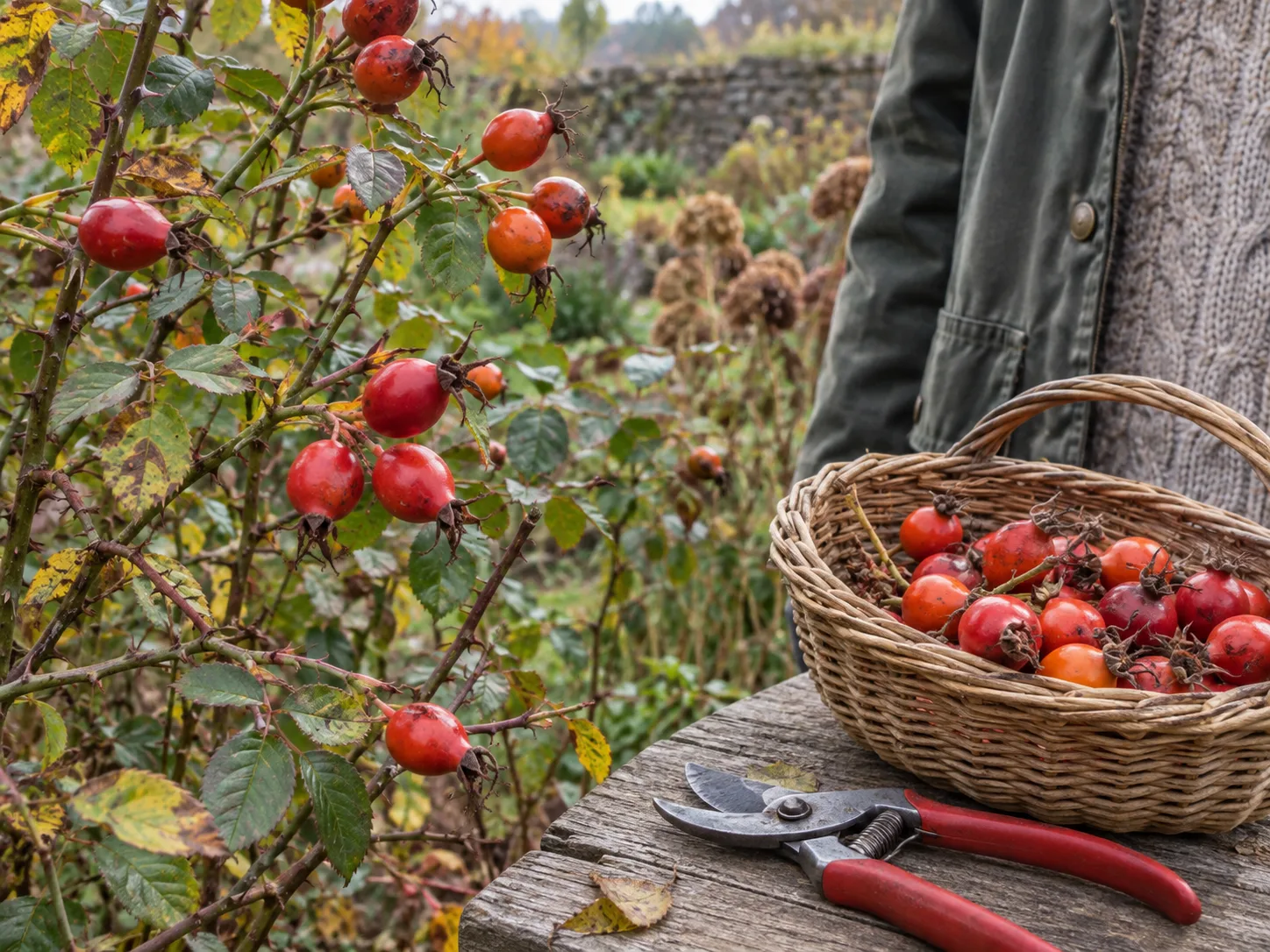
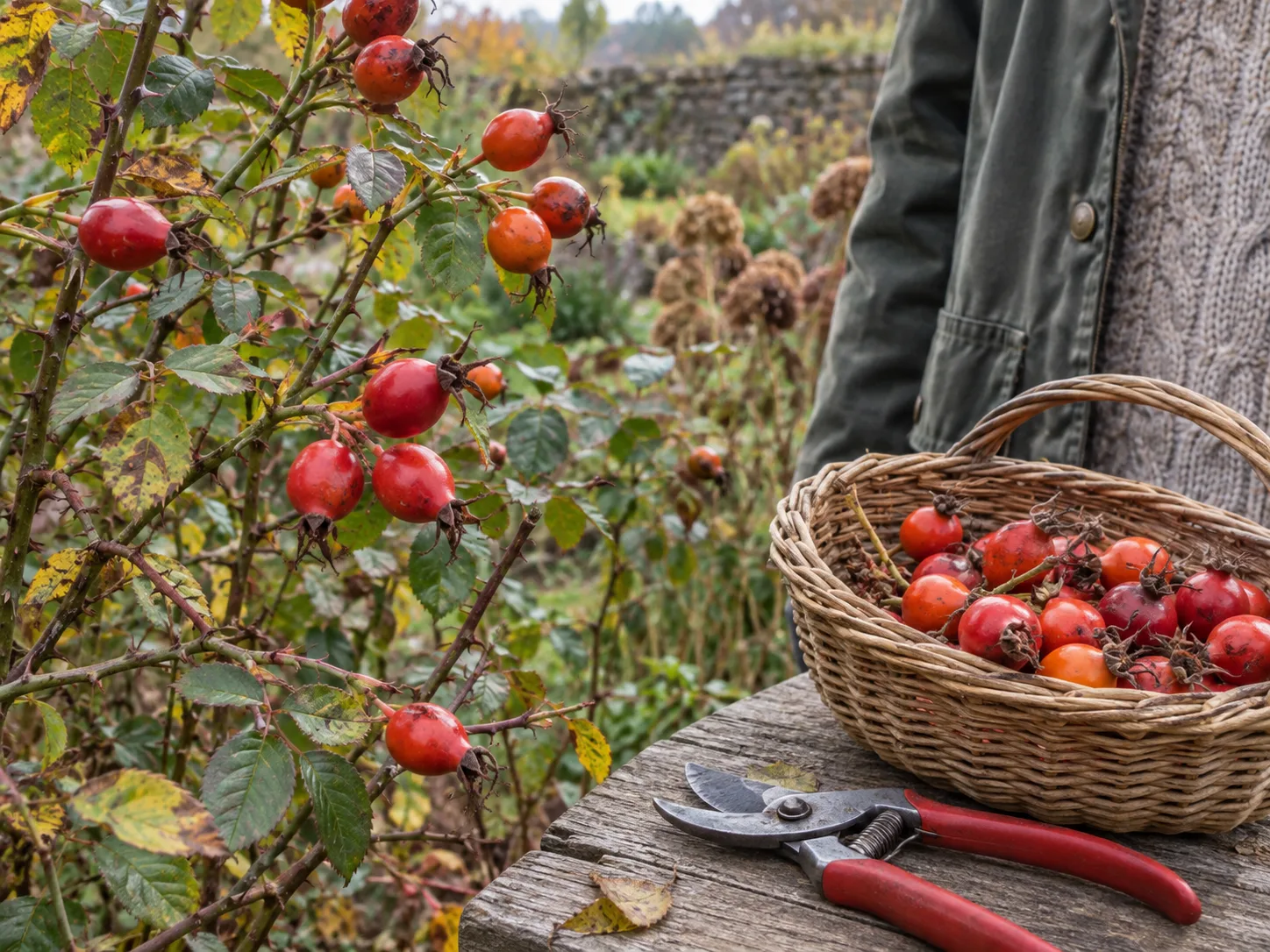
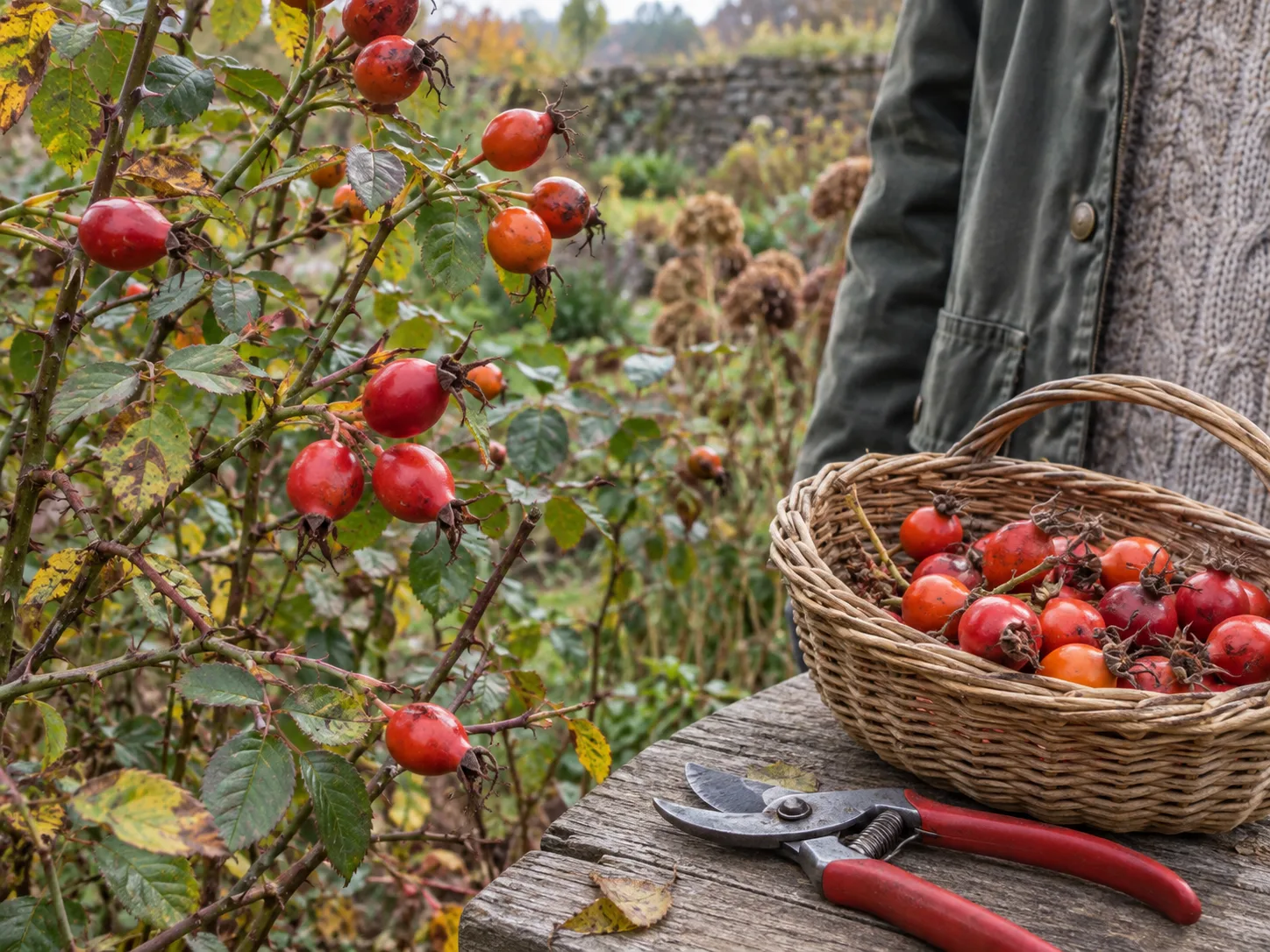
Watch the hips change from green to yellow, orange, or red as they mature. The ripe color depends on the rose, so use the color of healthy fruit on that particular plant as your reference. A ripe hip should be fully colored, plump, and firm enough to hold its shape. It may yield slightly when pressed, especially later in the season, but it should not feel watery, collapsed, or slimy.
Late summer through fall is the main harvest window for many roses. In colder climates, sound hips can remain on the shrub into winter. University of Alaska Fairbanks describes a long collection season for wild roses, from August through winter, with riper fruit becoming sweeter. That does not mean every hip should be left until the coldest weather: the fruit can shrivel, split, mold, or become difficult to process.
A light frost is optional rather than a mandatory ripeness test. Cool weather can soften a firm hip and mellow its flavor, which is why many traditional harvest instructions mention the first frost. But the fruit can be ripe before frost, and a hard freeze can bruise or damage it. Pick when the hips have reached their mature color and are still sound; if a light frost is forecast and the fruit is almost ready, you can compare a few hips before and after the weather.
Harvest in stages if the shrub has flowers and fruit at different stages. Late blooms may produce hips that ripen weeks after the first fruit. Returning every several days lets you take only the hips at the right stage and leave green ones to develop. Farmhouse & Blooms’ harvesting guide also recommends leaving shriveled fruit for birds and using gloves and snips. Staggered picking prevents a single rainy spell from turning the entire crop into overripe fruit.
Harvest Without Bruising the Hips
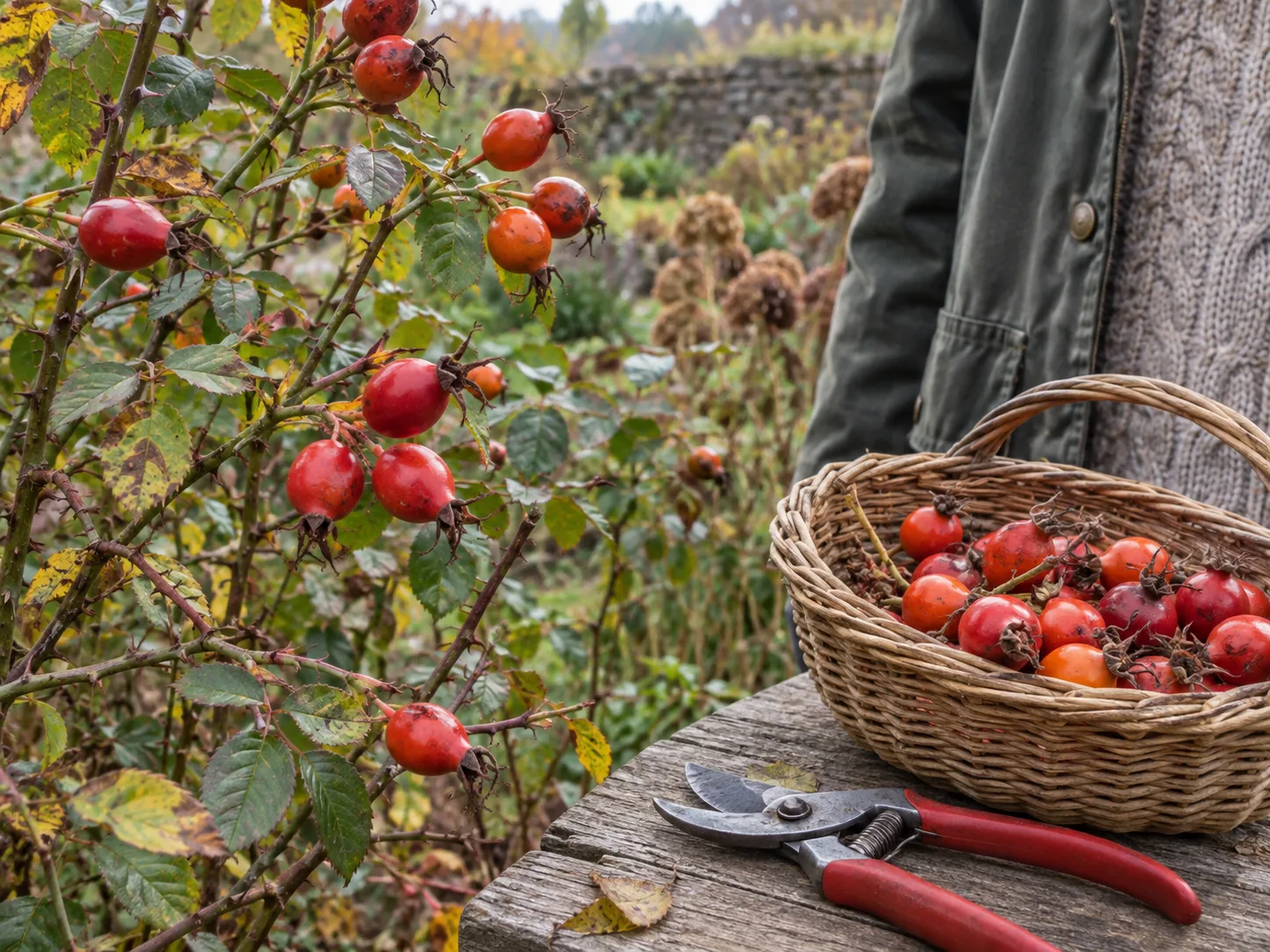
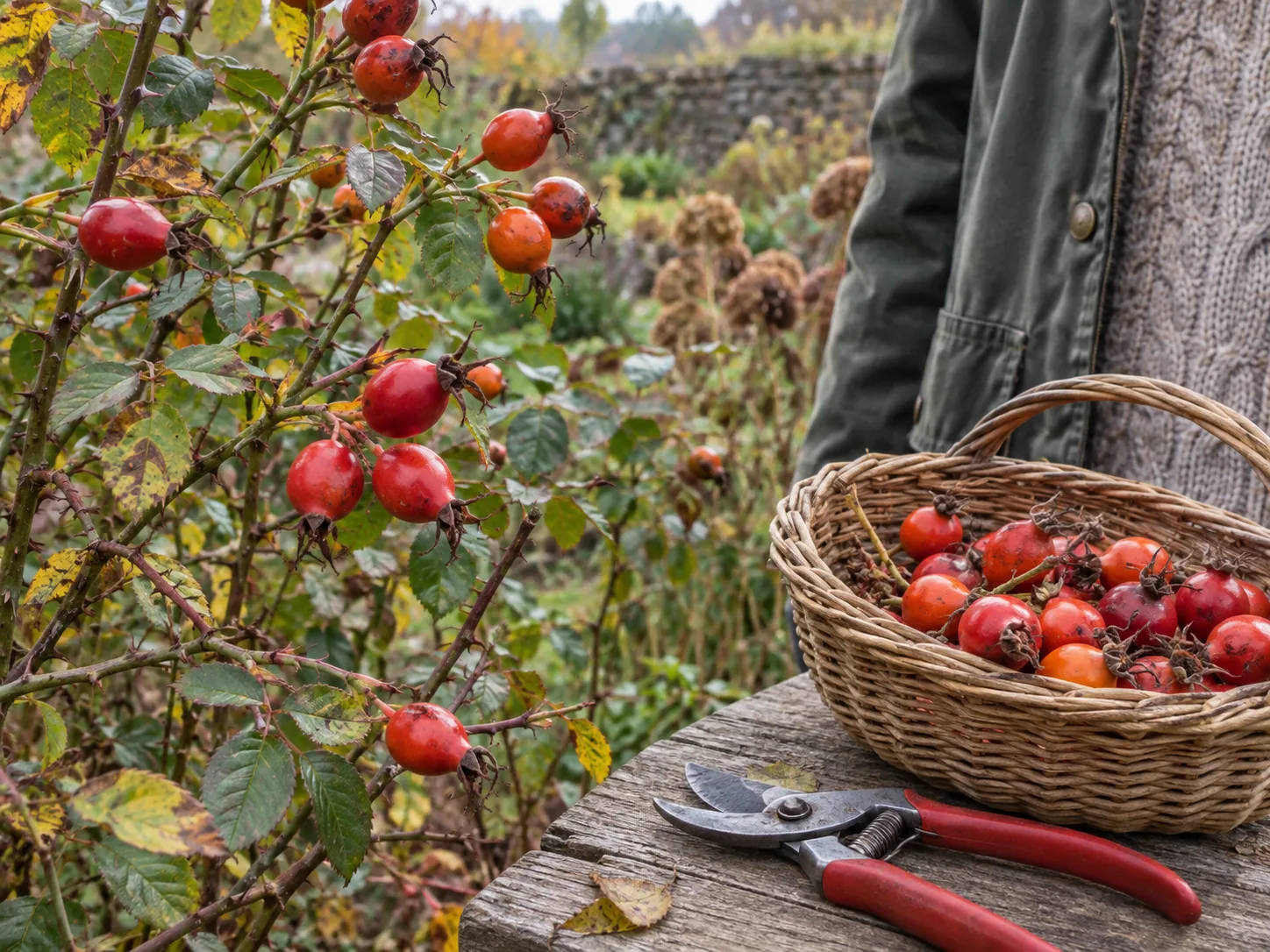
Wear sturdy gloves and long sleeves. Rose thorns can reach through thin garden gloves, and the small hooked prickles around some hips can scratch as you pull. Use clean, sharp snips or scissors to cut the fruit rather than stripping a branch. A shallow basket or bowl keeps the hips from being crushed under their own weight.
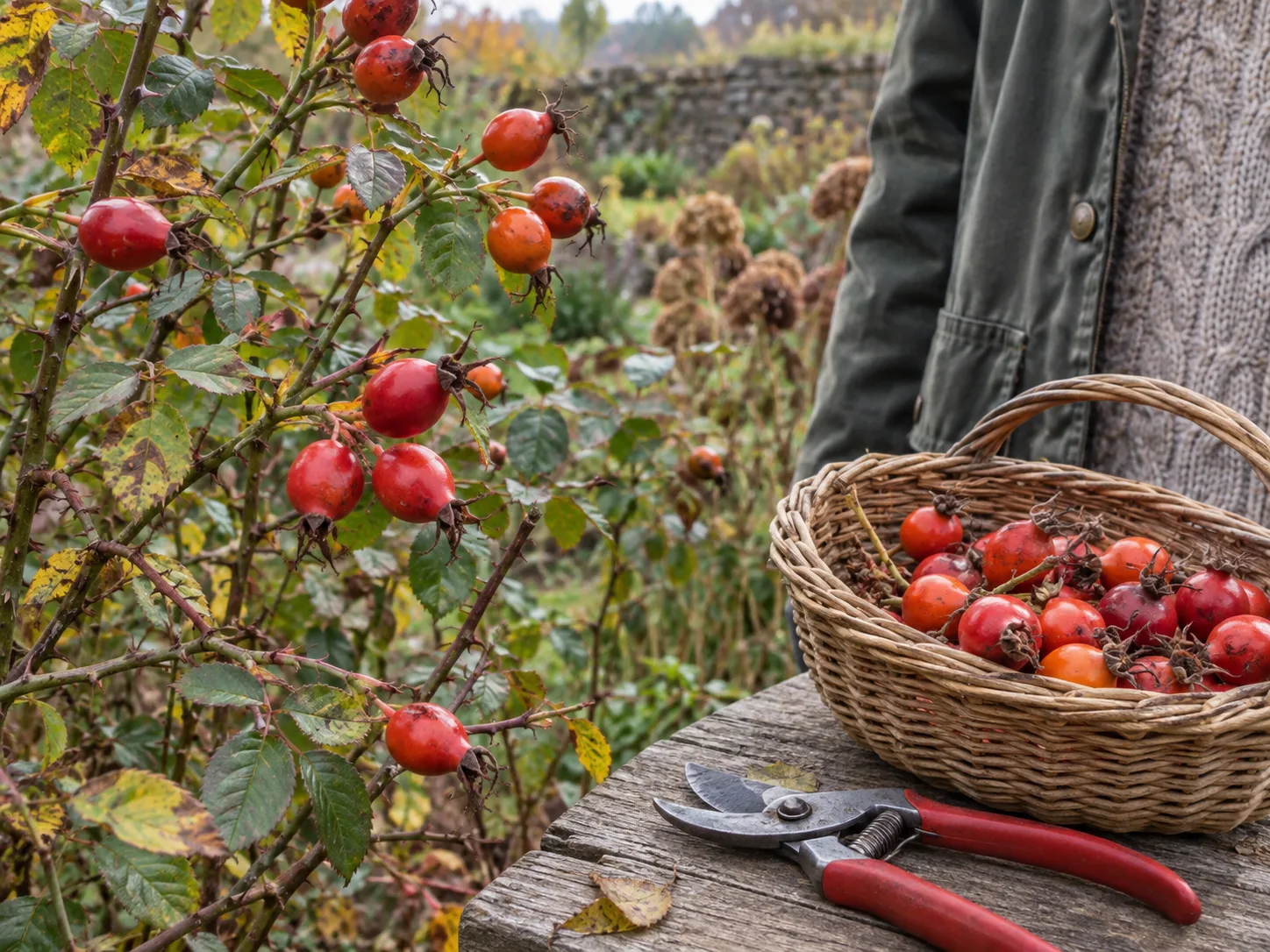
Cut the hip with a short piece of stem attached if that gives you a safer grip, then trim it at the sorting table. Handle the fruit gently and avoid squeezing it. Bruises release juice and create damp spots where mold can start, especially if you plan to hold the hips in the refrigerator before processing.
Take a container for good hips and a separate place for rejects. Leave behind fruit that is blackened, leaking, moldy, badly split, insect-riddled, or so shriveled that there is little usable flesh. Do not put questionable pieces back into the clean harvest. A few underripe green hips can also stay on the plant; they are harder, more acidic, and usually not worth the preparation time.
Clean and Trim the Fresh Fruit
Sort the harvest as soon as practical. Remove leaves, thorns, bits of stem, and any damaged fruit. Place the sound hips in a colander and rinse them under cool running water. Roll them gently with your fingers so soil and dust are loosened, but do not crush them. Drain well and pat dry with a clean towel if they will be stored or dried.
Trim off the stem end and the dried blossom end. The blossom end often looks like a tiny dark cap or tuft. A small paring knife, kitchen scissors, or snips works; choose the tool that lets you control the fruit without pressing hard. For a batch destined for juice or jelly, rough trimming is enough because the cooked fruit will be strained, but removing both ends still makes sorting easier.
If you will eat the flesh or dry the hips for tea, cut large fruit lengthwise. Small hips can be left whole for a first drying pass, but inspect them later for loose hairs and use a fine strainer for drinks. Cut fruit dries more evenly and makes the interior easier to check.
Wash your knife, board, colander, and hands before and after the job. Rose hips are not difficult to handle, but their sticky juice and tiny hairs can travel to a cutting board or towel. Keep the cleaned fruit separate from unwashed garden produce and discard the trimmings rather than adding them to a compost pile you use for food crops if they contain diseased material.
Remove Seeds and Hairs—or Plan to Strain
Inside a rose hip is a cluster of seeds surrounded by fine, stiff hairs. Those hairs are the reason a whole raw hip can feel unpleasant and irritating. They are not a garnish. Remove them before eating the flesh, or make a liquid that will pass through a fine strainer or jelly bag.
For large hips, halve the fruit lengthwise and scrape out the seeds and hairs with the tip of a teaspoon, a small knife, or the edge of a melon baller. A firm hip is easier to hold than a soft one. Drop the cleaned halves into a bowl of water so loose hairs do not cling to the work surface, then drain and dry them before dehydrating.
For small hips, hand-seeding can take longer than the cooking deserves. Simmer them in water until soft, then press the pulp through a sieve or strain the liquid through cheesecloth or a jelly bag. If the finished food will be served to children or anyone sensitive to scratchy particles, strain twice: once to remove pulp and seeds, and again through a finer layer.
There is a useful middle route for tea. You can dry whole or roughly chopped hips and place them in a roomy infuser, but do not assume an ordinary tea ball will catch every hair. A fine-mesh strainer, paper filter, or second strain through clean cloth gives a smoother drink. Never chew dried whole hips simply because they look small and harmless.
Pick a Storage Route: Refrigerator, Freezer, or Dried
Choose storage based on when you will use the fruit. Fresh hips are best for cooking soon, frozen hips are convenient for later batches, and dried hips are practical for tea and small additions to food.
| Storage route | Best for | What to do | Readiness or time cue |
|---|---|---|---|
| Refrigerator | Cooking within days | Clean, trim, dry well, cover, and chill | Use within about one week; discard if moldy or slimy |
| Freezer | Holding a larger harvest | Freeze cleaned hips in one layer, then transfer to a labeled bag or container | Properly frozen hips can keep for a long period; texture softens after thawing |
| Dried | Tea, powder, infusions, and pantry use | Halve and seed large hips, or dry whole small hips in a single layer | Cool completely; pieces should be crisp or brittle, not leathery |
For the refrigerator, moisture is the enemy. Wet hips sealed in a deep container can sweat and spoil quickly. Dry them well, line a shallow container with a towel if needed, and leave enough room that the fruit is not compressed. The short refrigerated window is a reason to process a big harvest in batches rather than trying to keep everything fresh.
For freezing, spread cleaned hips in a single layer on a tray first. Once firm, move them to a freezer bag or airtight container, label the date, and press out excess air. Single-layer freezing keeps the fruit from becoming one solid clump. Thawed hips will be softer, which is fine for sauce, syrup, puree, or strained juice, but less attractive for a fresh-looking garnish.
Dry Rose Hips for Tea and Pantry Use
Drying concentrates the fruit’s tart, floral flavor and makes small amounts available through winter. Halve and remove the seeds and hairs from large hips before drying. Small hips may be dried whole, then shaken through a sieve after drying to remove loose interior material. Cutting the fruit exposes more surface area and shortens the drying time.
Spread the prepared hips in one layer with space around each piece. Start with low, steady heat and check often near the end. The goal is a thoroughly dry piece that snaps or feels crisp when cooled, not one that is browned on the outside while the center remains damp. Let the fruit cool before judging it because warm pieces can seem softer than they will be at room temperature.
Air-Drying vs. Oven-Drying vs. Dehydrating
Air-drying can work in a warm, dry, well-ventilated room. It is a poor choice in humid weather, where the fruit may sit damp for too long. Cover the tray with breathable material to keep dust and insects away, and turn the pieces occasionally.
An oven is faster, but the lowest reliable setting is important. University of Alaska Fairbanks’ preparation notes give about 140°F as an oven-drying reference for pitted hips, with a few hours as a rough guide. Ovens vary, so use the texture cue rather than the clock. Leave the door cracked only if your oven manufacturer and kitchen setup make that safe, and never leave a low oven unattended.
A dehydrator gives the most even airflow. Arrange pieces so they do not overlap and follow the appliance’s fruit-drying instructions. If the first batch stays bendy in the center after cooling, return it to the dehydrator and check again. Once fully dry, store the hips in an airtight jar in a cool, dark cupboard. Label the jar and check it after a day or two; condensation means the fruit was not dry enough and needs another drying cycle.
You can crumble dried hips for an infusion or grind them into a coarse powder. Grind only fully dry fruit, use a clean dry grinder, and keep the powder in a tightly sealed container because it absorbs moisture quickly. If you notice an off smell, soft spots, or any mold, discard the entire affected batch.
Make Rose Hip Tea That Tastes Balanced
Rose hip tea is naturally bright and tart, with a mild fruity aroma. Use about 4–8 fresh cleaned hips or 1–2 teaspoons of dried pieces per 8 ounces of water. Pour in freshly boiled water and steep for about 5–10 minutes, adjusting the strength to taste. Dried hips can need a little longer to release their flavor.
Use a fine infuser or strain the tea through a fine mesh after steeping. If you dried whole hips, a second strain helps catch stray hairs or seed fragments. Sweeten with honey, maple syrup, or sugar if you like, and balance a very sharp cup with a slice of apple, orange peel, a few dried berries, or a little lemongrass. A small amount of ginger can make the tea taste warmer without hiding the rose flavor.
If tea tastes thin, use more prepared fruit or steep a little longer rather than adding whole uncleaned hips. Homestead and Chill’s rose hip guide suggests pairing the fruit with apple, citrus, lemongrass, berries, or honey. If tea tastes harsh, dilute it and shorten the next steep. Very old dried fruit may still be safe if it was stored properly, but its aroma will fade; replace it if it smells dusty, stale, or musty.
Cook a Batch into Juice, Syrup, Jelly, or Puree
Cooking is efficient when you have many small hips. Put trimmed fruit in a saucepan, cover it with water, and simmer until soft. University of Alaska Fairbanks’ rose hip instructions offer a useful starting method of roughly 6 cups of hips with 3 cups of water, boiling briefly and then simmering for about 15 minutes. The exact amount of water depends on the fruit and the consistency you want, so use enough to prevent scorching without turning the result into a weak broth.
For clear juice, strain the cooked mixture through a jelly bag or several layers of cheesecloth. Let gravity do the work if clarity matters; twisting or pressing the bag pushes fine solids through. The strained juice can be refrigerated for short-term use, frozen in measured portions, or used as the liquid base for syrup or jelly.
To make syrup, combine strained rose hip juice with sugar and simmer only as much as needed to dissolve and thicken it. Taste before committing the whole batch because rose hips range from pleasantly tart to sharply acidic. A spoonful of apple juice or a little citrus can complement the flavor, but do not use additions to disguise fruit that smells fermented or spoiled.
Jelly requires dependable acidity, pectin behavior, jar processing, and storage instructions. Use a current tested recipe from a recognized food-preservation source for the exact rose hip product and batch size. Do not improvise a shelf-stable water-bath formula by copying ratios from an unrelated fruit.
For puree, simmer soft ripe hips with water, then push the cooked fruit through a sieve to remove seeds and hairs. University of Alaska Fairbanks specifically cautions that canning puree is not a safe preservation method; freeze it instead. Freeze puree in small labeled portions so it can be stirred into oatmeal, yogurt, applesauce, or a sauce without thawing more than you need.
The Canning Boundary: Use Tested, Current Instructions
A boiling water bath is not a universal safety button. It works only when the product, ingredients, acidity, jar size, processing time, and method have been tested together. Rose hip juice, syrup, jelly, and puree are different foods, and a safe instruction for one does not automatically transfer to another.
If you cannot find a current tested recipe for the product you want, refrigerate or freeze it. That choice protects the harvest and removes the pressure to guess. Label every container with the ingredient, date, and whether it contains seeds or strained puree so the next cooking decision is obvious.
Add Rose Hips to Everyday Food
Start with small amounts. Rose hips have a noticeable tartness, so a spoonful of puree can wake up applesauce, oatmeal, porridge, yogurt, or a pan sauce without taking over the dish. Stir strained syrup into sparkling water, brush it over roasted fruit, or use it as a glaze for a simple cake. Fold dried pieces into a loose herbal tea blend with apple, hibiscus, or lemon balm.
Rose hip fruit leather is another good use for a soft, strained puree. Spread a thin layer on a lined dehydrator tray and dry it until the surface is no longer sticky and the sheet peels cleanly. Because thickness and humidity change the drying time, judge by texture and store the finished leather airtight after it cools.
What Rose Hips Offer Nutritionally—and What They Cannot Prove
Rose hips contain vitamin C and other naturally occurring compounds, but the amount is not fixed. A peer-reviewed review of rose hip composition and processing reports variation by rose species, growing location, maturity, environmental conditions, and the way the sample is analyzed. Processing and storage can change the final amount too. That is why it is better to describe rose hips as a tart fruit ingredient than to promise a particular nutritional result from every cup of tea.
Heat, water, drying, and storage each change the character of the harvest. A long simmer may produce a useful strained juice while changing delicate nutrients and aroma. Dried pieces are convenient and concentrated in flavor, but they are not nutritionally identical to fresh fruit. The practical takeaway is simple: prepare rose hips because you enjoy the taste and the seasonal ritual, not as a substitute for medical care or a balanced diet.
If you take medication, have a condition affected by foods or supplements, or want to use concentrated rose hip products for a health purpose, ask a qualified clinician or pharmacist. Culinary amounts in tea or food are not the same thing as a standardized supplement, and the plant material, dose, and preparation can differ.
Troubleshoot the Harvest Before You Blame the Recipe
The hips stayed green. They may simply need more time, especially if they formed after a late flush of flowers. Leave sound fruit on the shrub and check color and firmness again in several days. If the weather is turning sharply colder, pick the mature hips and leave the green ones for wildlife rather than forcing them into a recipe.
The fruit is hard and very sour. This usually signals underripe hips or a naturally sharp rose. Let a few sound hips color further, or use the batch for cooked juice where sugar and dilution can balance the acidity. Do not confuse tartness with spoilage; off odors, slime, and mold are different warning signs.
The hips collapsed after a freeze. Soft fruit can still be useful for immediate cooking if it smells clean and shows no mold. Sort it carefully, trim generously, and simmer it into a strained preparation. Do not expect frozen-thawed hips to keep a firm fresh texture.
The tea feels scratchy. Seeds or hairs got through the first straining step. Pour the tea through a finer mesh or a clean paper filter, and use a roomy infuser next time. If the dried fruit was whole and very small, consider chopping and sieving the next batch before storage.
The dried fruit is bendy the next day. It was not fully dry, or the storage container trapped residual moisture. Return it to low heat until crisp after cooling, then let it cool completely before sealing. Discard anything with condensation, a fermented smell, or visible mold.
The juice is cloudy. Fine pulp passed through the strainer, especially if the bag was squeezed. It may still be suitable for syrup or puree. For clearer jelly liquid, strain again without pressing and use a clean jelly bag.
The finished food tastes flat. Rose hips vary, and old dried fruit loses aroma. Compare a small portion with a fresh batch of tea or add a complementary flavor such as apple, citrus peel, honey, or ginger. Keep the adjustment small so the rose hip remains identifiable.
Build a Repeatable Rose-Hip Harvest Routine
At the end of the bloom season, stop deadheading a selected portion of the plant and mark it mentally as the harvest area. Check it weekly for color, firmness, weather damage, and signs of contamination. Keep clean snips, gloves, a shallow basket, a colander, and a fine sieve together so harvest day does not turn into a search for equipment.
Pick in the morning after dew has dried. Sort outdoors or over a tray, remove rejects, rinse the sound fruit, and decide on the storage route the same day. Refrigerate only what you will cook soon. Freeze the surplus in a single layer. Seed and dry the fruit you want for tea. Simmer the smallest or softest sound hips for juice or puree, then freeze those portions.
Keep the plant healthy for the next crop. Water during prolonged dry weather, prune at the season appropriate for that rose, and remove diseased material according to local guidance. Leave a reasonable share of hips for birds and other wildlife. A repeatable harvest is one that gives you good food without exhausting the shrub or making the kitchen job harder than it needs to be.
Conclusion
Harvest rose hips when they are fully colored and firm to slightly soft, from a plant and location you know are safe. Trim the stem and blossom ends, remove seeds and hairs for foods you will chew, and strain cooked or steeped preparations carefully. Then choose the simplest useful preservation route: refrigerate a small fresh batch, freeze the extra, or dry the fruit until crisp.
Rose hips reward a flexible approach. Use them for bright tea, strained juice, syrup, jelly made from tested instructions, frozen puree, fruit leather, and small additions to everyday food. Let the fruit’s color, texture, aroma, and final taste guide you, and you can turn a late-season rose display into a practical pantry ingredient.



