How to Get Rid of Drain Flies Fast
Drain flies usually breed in wet organic film. Find the source, clean the drain and overflow, trap adults, and know when a plumber or pest pro is needed.
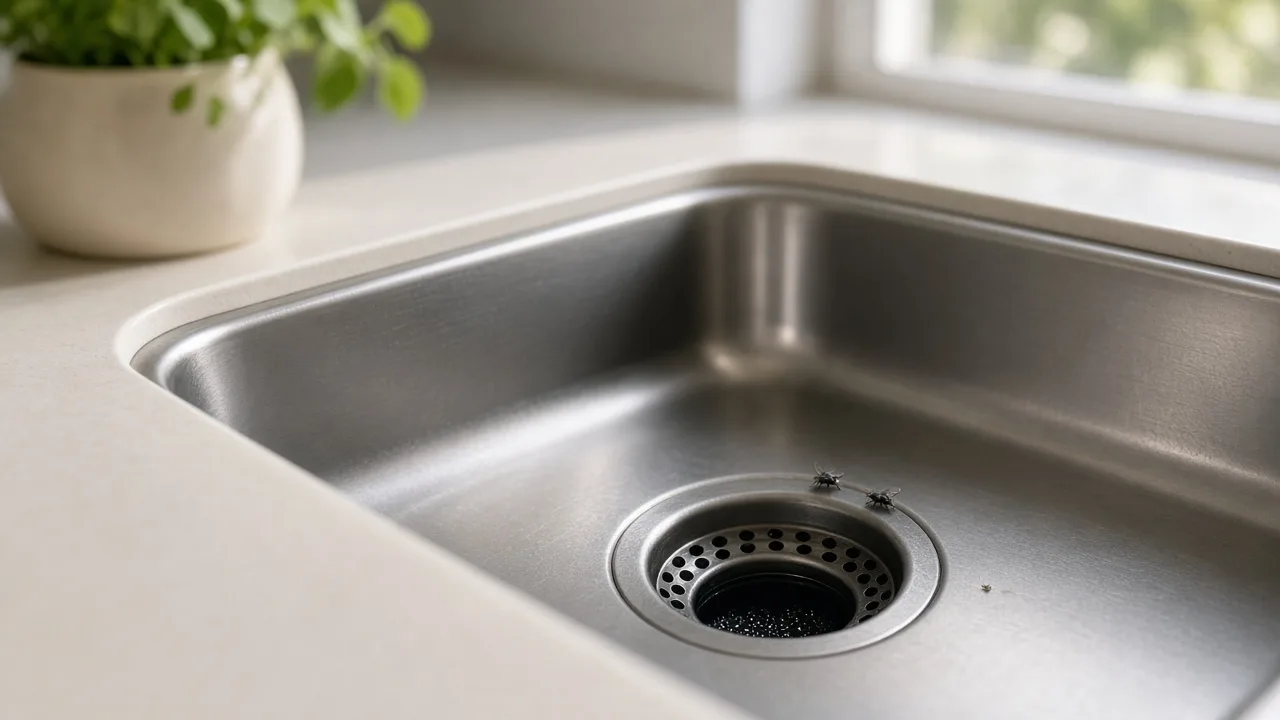
Drain flies are usually not a “spray the adults and hope” problem. They are a breeding-site problem: larvae develop in the wet organic film coating a drain, trap, overflow channel, floor drain, or another stagnant plumbing area. The fastest lasting fix is to find that film, physically remove it, and keep the area from staying wet and dirty long enough for another generation to mature.
If you need a practical starting point tonight, cover the suspected drain with clear tape or an inverted cup, clean the drain opening and stopper, then inspect nearby drains and leaks. A vinegar trap can reduce the adults you see, but it cannot replace source removal.
The fastest reliable fix is source removal
Penn State Extension describes moth flies—another name for drain flies—as insects associated with sinks, floor drains, sewage areas, and wet organic material. The adults are the visible stage; the larvae feed in the gelatinous deposits that build up inside plumbing. That distinction explains why a room can look fly-free after an evening of trapping and then seem to “reinfest” itself a few days later.
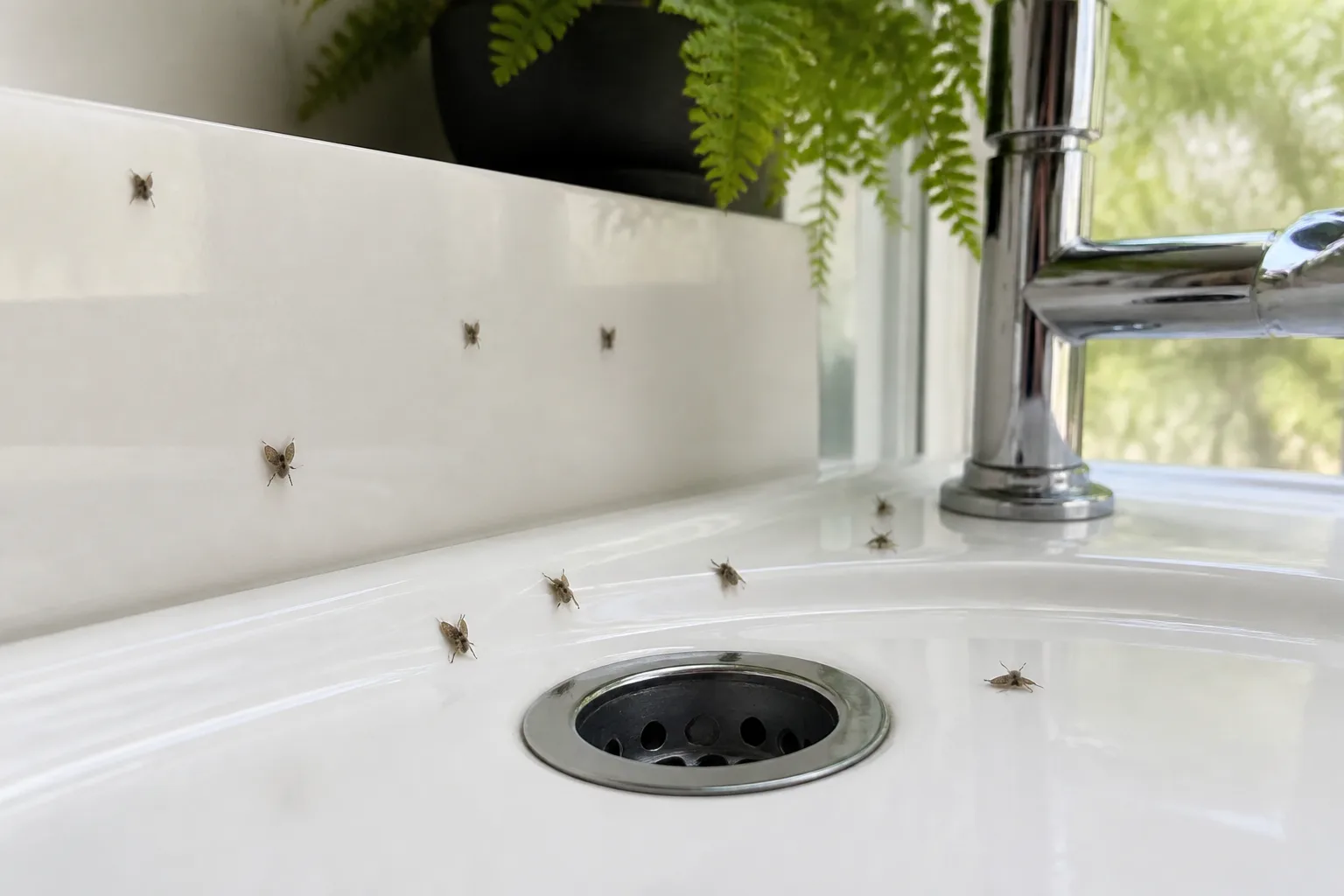
Think of the infestation as two separate jobs. First, remove or treat the nursery. Second, catch or vacuum the adults that remain. Reversing that order wastes time because adults can keep emerging from a protected film even after every visible fly has been killed.
Confirm that the insect is a drain fly
Drain flies are tiny, gray to brown, and fuzzy or moth-like because their wings and bodies are covered in fine hairs. They tend to hop or make short, weak flights, then rest on nearby walls, mirrors, or the sink backsplash. A single insect is easy to mistake for a fruit fly, fungus gnat, or even a small moth.
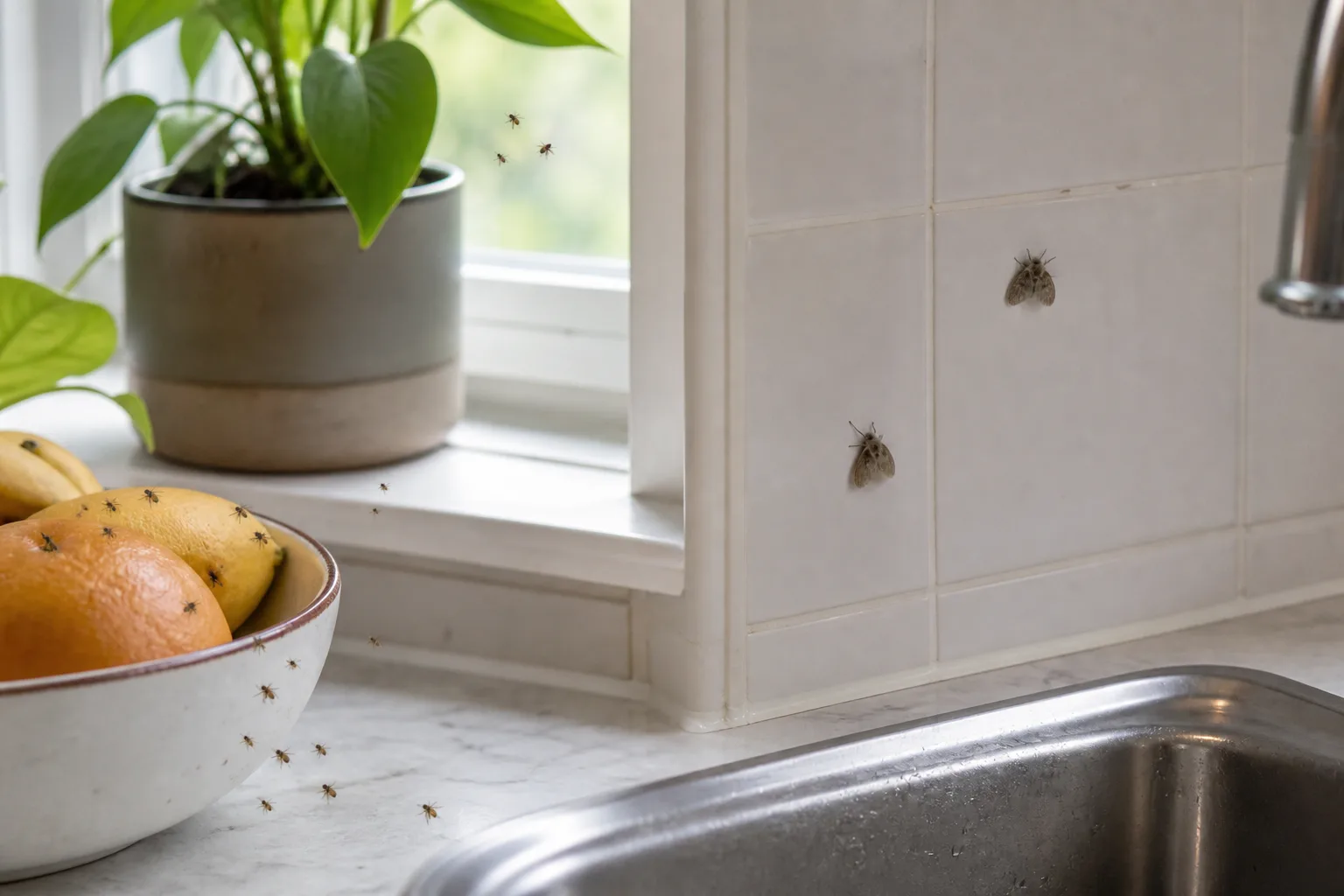
The location is a clue, not proof. A bathroom cluster points toward plumbing, but a kitchen cluster may come from recycling, a disposal, rotting produce, or a drain. Confirm the source before choosing a treatment, especially if the insects are not fuzzy.
Drain flies, fruit flies, and fungus gnats
Fruit flies are generally tan or brown and are more strongly associated with fermenting produce, drinks, recycling, and food waste. Better Homes & Gardens treats fungus gnats as a separate nuisance; they are slender and dark, with conspicuously long legs, and usually rise from damp potting mix. Drain flies are rounder, hairier, and more likely to sit close to a wet drain than to hover over a bowl of fruit.
| Clue | Drain flies | Fruit flies | Fungus gnats |
|---|---|---|---|
| Look | Fuzzy, moth-like, gray or brown | Tiny tan or brown, often with visible red eyes | Slender, dark, long-legged |
| Movement | Weak, hopping, short flights | More active hovering around food | Weak flights around plant pots |
| Nursery | Drain slime and wet organic film | Fermenting food or liquid | Damp potting mix |
| First action | Test and scrub drains | Remove fermenting food and waste | Dry the soil surface and inspect plants |
The comparison is practical rather than absolute. A kitchen drain can support both fruit flies and drain flies if food residue and plumbing biofilm are present, and a vinegar trap may catch adults from either group. If the trap works but insects continue emerging from a drain, treat the plumbing as the unresolved source.
Find the drain or wet area producing adults
The best source test is simple: cover one suspect opening overnight and inspect it in the morning. Use a strip of clear tape with the sticky side facing down over most of the opening, or invert a clear cup over the drain with a very thin film of petroleum jelly inside the rim. Do not use the sink while it is covered, and remove the cover before running water.
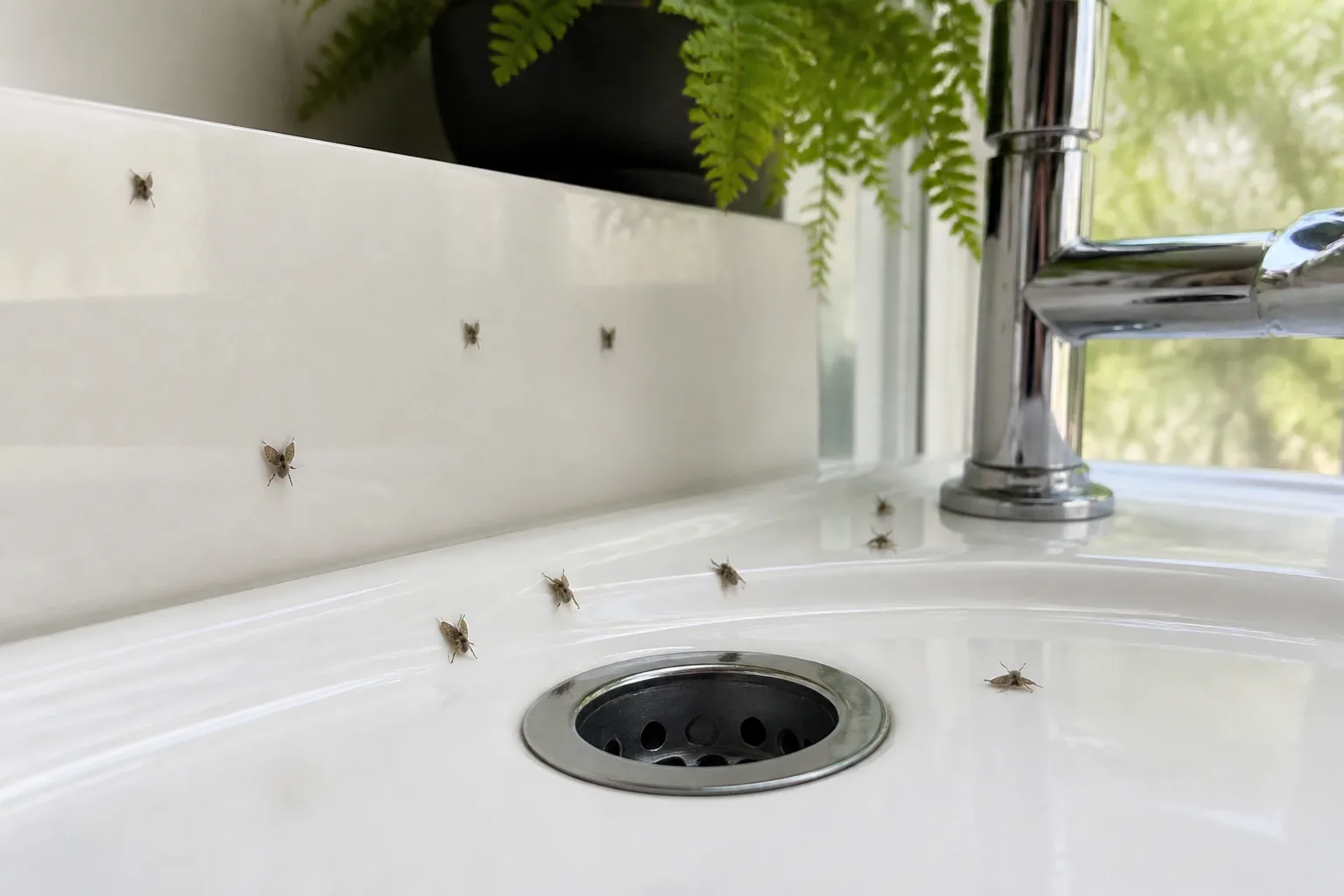
Test drains separately rather than covering every opening at once. Start with the kitchen sink, disposal opening, bathroom sink, shower, tub, laundry drain, and floor drains. If the first test is negative, test the overflow opening and another drain the next night; adults may emerge from a connected or less obvious opening.
Penn State Extension recommends covering an outlet and watching for adult moth flies to locate the source. A positive result tells you where to focus, but a negative result does not prove the drain is clean. Adults may be emerging intermittently, from deeper in the line, or from a leak under a cabinet.
Use a 24-hour cleanup plan
Do the work in this order: remove standing water, expose reachable surfaces, scrub, rinse, treat the remaining film if appropriate, and monitor. Do not pour several cleaners into the same drain. Chemical combinations can create dangerous gases or an unwanted reaction, while none will compensate for organic material that remains physically attached to the pipe.
Scrub the drain opening and trap
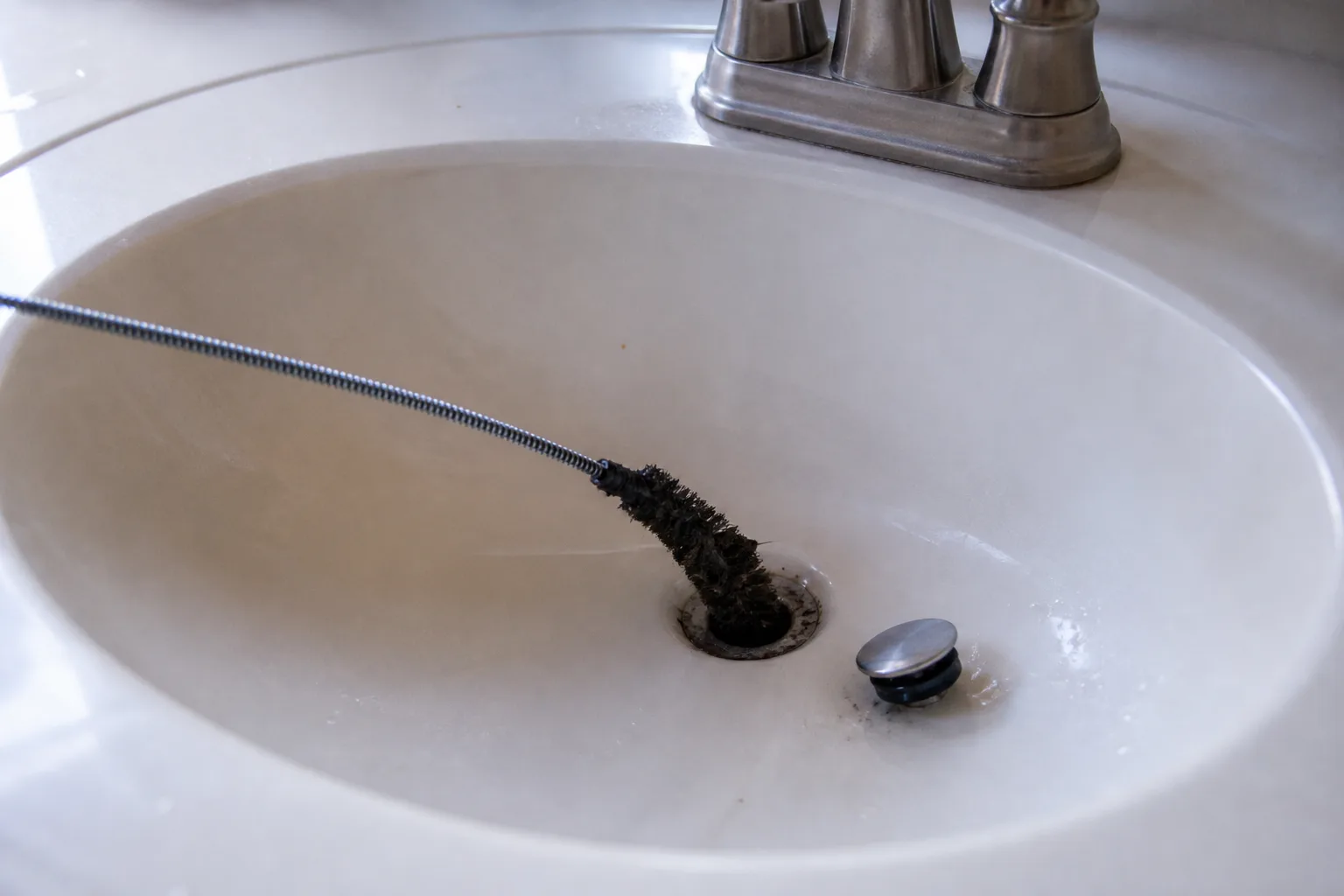
Remove the stopper or strainer according to the fixture’s design. Scrub its underside, the drain rim, the pivot hardware, and the first reachable section of the pipe with a stiff drain brush. Hair and soap scum can hold food particles and create a damp film even when the basin itself looks clean.
If the drain is slow, stop and treat that as a plumbing issue rather than forcing more cleaner through it. A plunger or correctly sized drain snake may be appropriate for a simple obstruction, but follow the fixture manufacturer’s instructions and avoid using a tool that could damage a delicate assembly.
Rinse with hot tap water after physical removal. Boiling water can be useful as a flush for some compatible pipes, but it is not a substitute for scrubbing, and very hot water can damage certain plastic components or create a burn hazard. When in doubt, use hot tap water and follow the plumbing manufacturer’s advice.
Clean the overflow and garbage disposal
The overflow channel is one of the easiest sources to miss. Water, toothpaste, soap, and organic debris can sit inside the passage while the visible sink stays bright. Use a narrow bottle brush or an appropriately sized flexible brush to clean what you can reach, then rinse carefully.
For a garbage disposal, turn it off at the switch and follow the manufacturer’s directions before lifting or removing any splash guard. Never put fingers into the opening. Clean the underside and grooves of the rubber guard with a long-handled tool or a cloth tool designed for the appliance, because residue hidden below the guard can support flies.
Fragrance is not evidence of sanitation. Citrus peels, ice, or a scented product may make the disposal smell fresher while the sticky film remains in place. The meaningful question is whether you removed the residue where larvae feed.
Add an enzyme or microbial cleaner
After scrubbing, a labeled enzyme- or microbe-based drain maintenance product may help digest residual organic film. Penn State Extension notes that products containing bacteria or enzymes are applied around the drain lip or as foam, and that professionals use them as part of source treatment. Follow the product label exactly, including contact time, dilution, ventilation, and whether the product is compatible with your plumbing or septic system.
These products work best as a follow-up to mechanical cleaning, not as a magic pour. If a label says the product is for maintenance rather than unclogging, do not expect it to clear a blocked pipe. If the drain remains slow or flies return after a complete labeled treatment, investigate the plumbing rather than escalating to harsher chemicals.
Use traps to reduce adults, not replace cleaning
A shallow dish with apple cider vinegar and a drop of dish soap can catch some adult flies. Place it near—but not inside—the suspected drain, away from children, pets, and food-preparation surfaces. The trap is useful for monitoring whether adult activity is declining and for making the room more comfortable while the source is treated.
Traps are a poor measure of success if used alone. They catch adults attracted to the liquid, while eggs, larvae, and pupae remain in the drain film. Vacuuming visible adults can also help, but it should be followed by source work and cleanup of the vacuum contents according to the appliance instructions.
Why boiling water, vinegar, and bleach disappoint
Boiling water may kill or dislodge organisms it reaches, but it does not reliably penetrate a thick biofilm along the drain walls. The useful version of the method is mechanical removal first, followed by a compatible hot-water flush—not repeated boiling water poured into an unclean pipe.
Baking soda and vinegar create visible bubbling and can help loosen some residue, but the reaction is not a dependable drain-fly control program. The foam may stop at the opening while the larval film remains farther down the pipe. If you use either ingredient for ordinary cleaning, use it alone as appropriate for the fixture and never combine it with bleach or commercial drain products.
Bleach is not a permanent solution. It may affect exposed organisms, but it does not remove the organic coating, and it can damage finishes, harm septic-system biology, or create hazardous fumes when mixed with acids or ammonia. The Illinois Department of Public Health filth-fly guidance supports sanitation and source control as the foundation of management. Treat disinfectants as products with specific labels and limits, not as a replacement for cleaning.
Check hidden sources beyond the sink
If the tested drain is clean but flies persist, widen the inspection. Look under cabinets for a slow leak, around a loose toilet seal, beneath a washing machine, near a condensate line, and at rarely used floor drains. A dry or damaged P-trap can allow odors and insects from a drain or sewer line to enter a room.
Outdoor or shared sources are possible too. A nearby storm drain, sewage area, wet compost, animal waste, or a plumbing defect can sustain adults that wander indoors. In an apartment, the source may be in a neighboring unit or a shared stack. Repeated flies in several rooms, a sewage odor, or a recurring wet spot deserves a plumbing inspection.
Prevent drain flies in every room
Once the source is gone, prevention is mostly about denying the film and moisture that made the site suitable. Run water periodically through unused fixtures so traps do not dry out, clean sink strainers and disposal guards regularly, and correct leaks instead of wiping up the water indefinitely.
Keep floor drains and utility sinks free of hair, lint, and organic sludge. Ventilate bathrooms after showers, but remember that humidity alone is not the whole explanation: moisture becomes a drain-fly risk when it supports wet organic material. A clean, dry drain is a much less useful nursery than a damp drain coated with residue.
Do not rely on monthly bleach as a preventive routine. A brush, appropriate maintenance product, and attention to drainage are more targeted. In homes with septic systems, choose only products labeled as compatible and avoid disposing of insecticides or unsuitable chemicals down drains.
Know when a plumber or pest professional is needed
Call a plumber when drainage is slow, a leak is hidden, a trap repeatedly dries, there is a sewage smell, or flies return after careful source cleaning. The problem may be inside a wall, beneath a slab, in a broken sewer line, or in a shared drain where household treatment cannot reach the breeding material.
Call a licensed pest professional when numbers are high across multiple rooms, the source may be outside the home, the insects persist after plumbing repair and cleaning, or you cannot safely access the affected area. If you rent, report recurring leaks and drain flies promptly so the building owner can inspect shared plumbing.
Clean safely around children, pets, and septic systems
Keep brushes, traps, and cleaning products away from children and animals. Wear gloves and eye protection when the product label calls for them, ventilate the room, and wash your hands after handling drain residue. Never mix bleach with vinegar, acids, ammonia, or another drain cleaner.
Do not reach into a garbage disposal, and do not pour an insecticide into a kitchen or bathroom drain unless the product label specifically permits that use. The safest household response is usually physical cleaning plus a labeled maintenance product, with professional help for inaccessible or structural sources.
How long the infestation should take to fade
You may see fewer adults within a day after a successful cleanup, but a complete disappearance can take longer because adults that already emerged can remain alive and pupae may not be exposed during the first cleaning. Keep monitoring for at least several days, and repeat the source inspection if the count does not steadily fall.
If numbers stay the same or rise after a thorough scrub, assume one of three things: the wrong insect was identified, another breeding site exists, or the original source is deeper or structurally inaccessible. That diagnosis is more useful than repeating the same vinegar, boiling-water, or bleach treatment.
Conclusion: break the life cycle at the source
To get rid of drain flies fast, first prove which drain or wet area is involved. Then remove the slime mechanically, clean overlooked surfaces such as the stopper, overflow, disposal guard, and floor drain, use a compatible enzyme or microbial product only as labeled, and trap adults while the remaining life stages fade.
The lasting fix is not the strongest-smelling cleaner. It is the combination of source confirmation, physical removal, moisture repair, and follow-up monitoring. When that sequence fails, a hidden leak, shared plumbing problem, or misidentified fly is more likely than a need for a harsher chemical.



