7 Shrubs to Think Twice About Planting Near Azaleas
Learn which seven shrubs clash with azaleas over light, soil, moisture, roots, or space—and how to separate them or choose better companions.
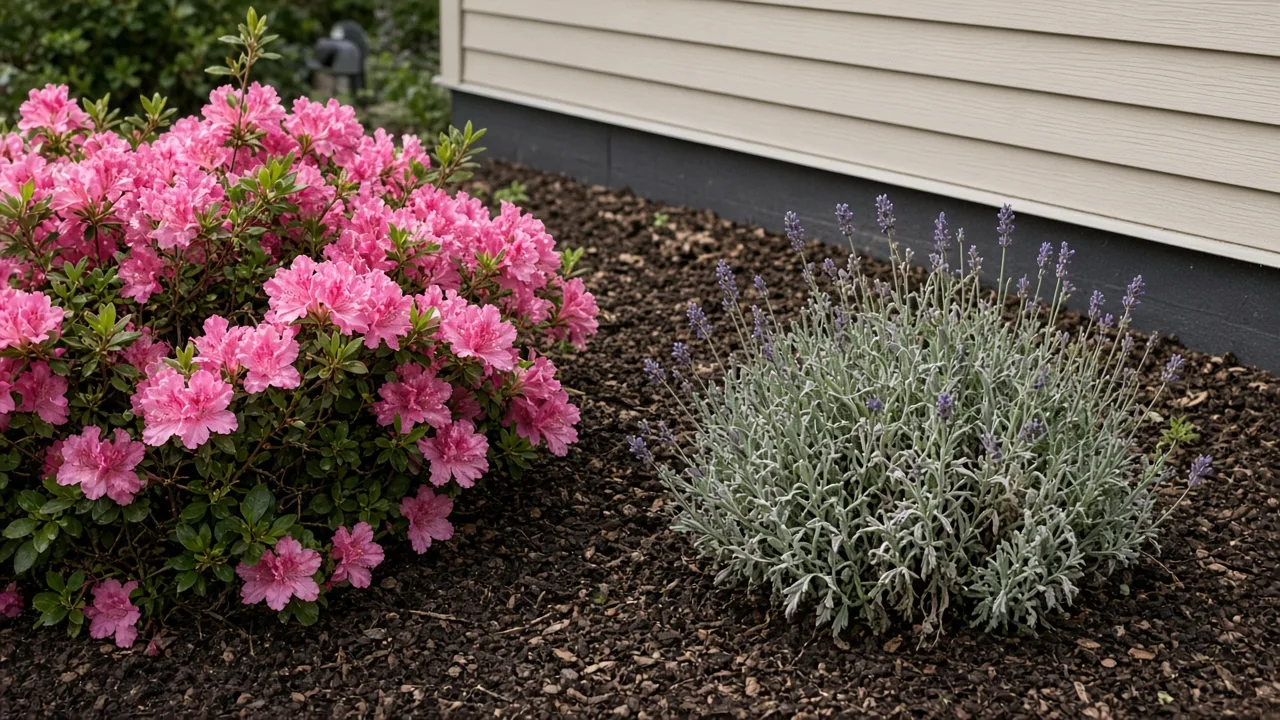
“Never” needs a useful definition here. I do not mean that a boxwood or lavender plant is forbidden anywhere on a property that contains azaleas. I mean that these seven shrubs should not share the same unamended root zone, irrigation schedule, and light pocket if you want both plants to perform well.
Azaleas are not difficult because they are delicate ornaments; they are difficult when a bed asks them to live like a different kind of shrub. Most prefer acidic, organic, well-drained soil around pH 4.5 to 6.0, filtered light or morning sun with protection from harsh afternoon exposure, and moisture that stays fairly even without becoming stagnant. University of Georgia Extension describes shallow-rooted azaleas as sensitive to both drought and excess moisture, while Gardenia’s companion guide makes the broader design rule plain: a partner must be able to thrive in the same conditions, not merely look good during bloom season.
The list below focuses on the reason each neighbor creates trouble and the practical exception that keeps the advice honest. If you already own one of these plants, you may be able to save the combination with distance, containers, a raised bed, or separate irrigation. If you are still planning, choosing from the alternative list at the end will usually be less work.
The short answer: avoid shared root zones, not entire gardens
The seven shrubs are boxwood, bluebeard, roses, lavender, Japanese barberry, lilac, and butterfly bush. They are not all equally incompatible. Lavender and bluebeard are the strongest site mismatches because they prefer a brighter, drier planting position; Japanese barberry adds an ecological and management concern; roses, boxwood, lilac, and butterfly bush are more conditional conflicts involving light, fertility, mature size, or watering.
Think of the list as a warning against forcing two different water zones into one bed. A rose can survive soil that is somewhat acidic, and a boxwood can tolerate more shade than its label might suggest. That does not mean either plant should be planted tight against a shallow-rooted azalea where the gardener must keep changing pH, fertilizer, and watering to satisfy both.
What makes a shrub a bad azalea neighbor?
I use four tests before calling a plant a poor companion: soil chemistry, water behavior, light, and physical competition. A shrub does not have to fail all four. One severe conflict—such as a dry-rooted plant in a bed that must stay moist—can be enough to make the pairing high maintenance.
The soil-pH test
Azaleas generally perform best in acidic soil with organic matter and good drainage. The University of Georgia Extension azalea guide gives a useful working range of pH 4.5 to 6.0 and warns that overly wet soil can lead to root problems. Low pH affects nutrient availability, so yellow leaves in an azalea bed are not automatically a sign that the plant needs more fertilizer; a soil test may show that the root zone is too alkaline for efficient nutrient uptake.
That creates a problem when a neighboring shrub prefers neutral or alkaline soil. Lime added for one plant can move the azalea away from its preferred range, while acidifying an entire bed to rescue the azalea may leave the other plant chronically underperforming. Do not solve this by scattering amendments around the crown of each shrub without testing: pH changes slowly and unevenly, and repeated guessing can create more problems than it fixes.
The light-and-moisture test
An azalea bed usually works best where morning light reaches the foliage but the plant has afternoon protection. It needs water during dry weather because its roots are relatively shallow, yet the soil must drain so those roots are not held in saturated conditions. A companion that wants six or more hours of strong sun and a dry root zone will turn the gardener’s watering can into a compromise neither plant likes.
RHS profiles show the contrast clearly. Lavender is described as a sun-loving, drought-tolerant shrub for free-draining soil, and caryopteris is likewise suited to a warm, sunny location that drains quickly and copes with drought. Those are excellent traits in the right water zone. They are poor reasons to put either shrub directly beside an azalea.
1. Boxwood: a nutrient and pH mismatch
Boxwood is tempting because its evergreen leaves and tidy shape look polished beside spring-blooming azaleas. The trouble is that a formal boxwood hedge is often managed as a separate landscape system: it may be planted in a neutral-to-alkaline soil, clipped regularly, fed for dense foliage, and placed where it can hold a structured edge. An azalea wants the bed kept acidic, organic, evenly moist, and open enough for air movement.
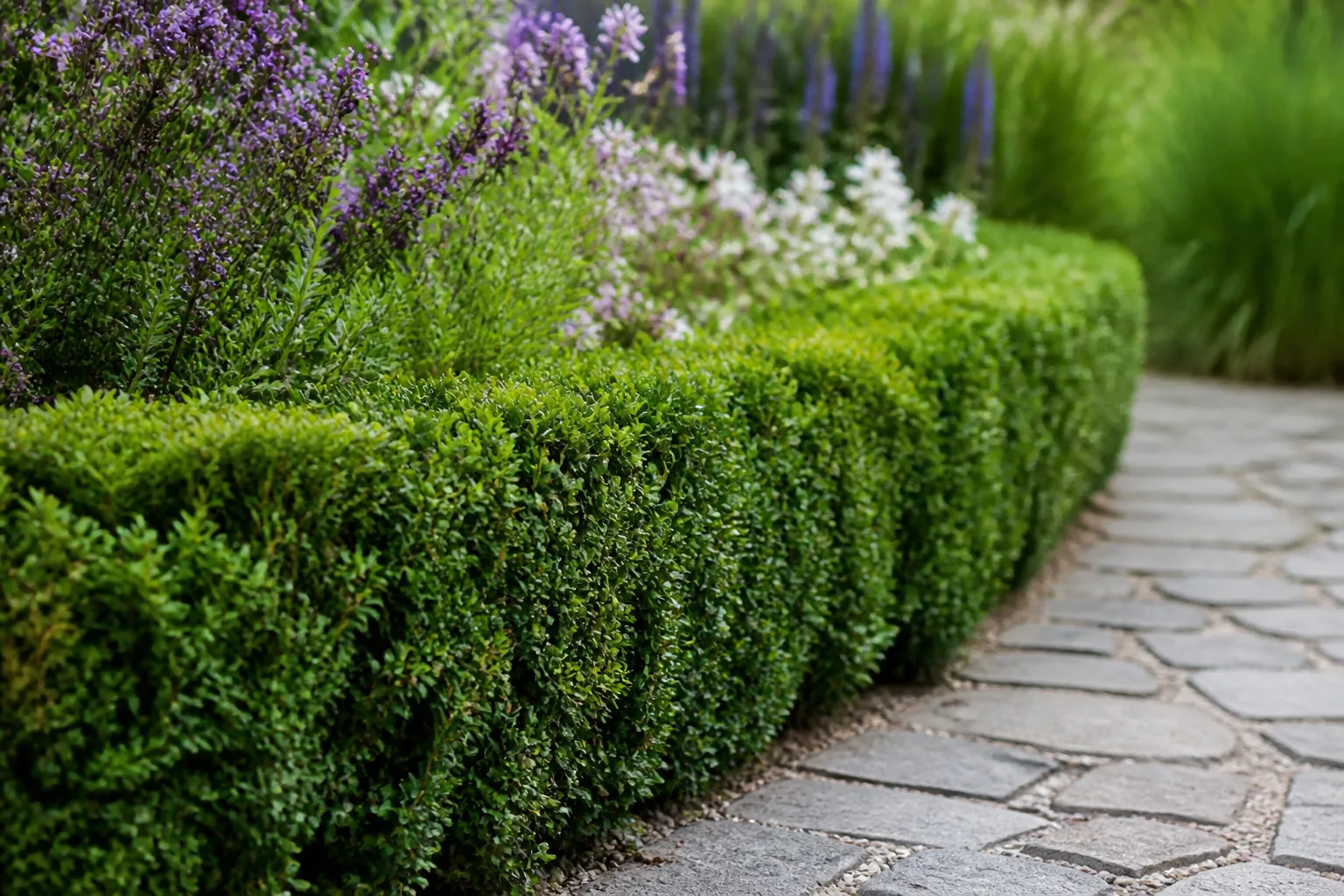
The key issue is not that boxwood and azaleas are sworn enemies. They can occupy the same broad garden when the soil and light suit both. The issue is tight spacing plus one shared amendment program. Dense boxwood roots and repeated clipping can turn the narrow strip between plants into a thirsty, crowded zone. If the boxwood is irrigated frequently to keep new hedge growth presentable, the azalea may sit in wetter soil than its drainage allows; if you reduce water for the boxwood, the shallow azalea root ball can dry first.
Use boxwood as a separate edge with a visible path, stone strip, or generous mulch gap rather than as a living collar around an azalea. Measure the mature width of the exact cultivar, leave room for air to circulate, and test the soil in both planting zones before applying lime, sulfur, or fertilizer. If you want evergreen structure in the same acidic bed, a rhododendron, pieris, mountain laurel, or an appropriately sized evergreen azalea is a more coherent starting point.
2. Bluebeard: too much sun and too little moisture
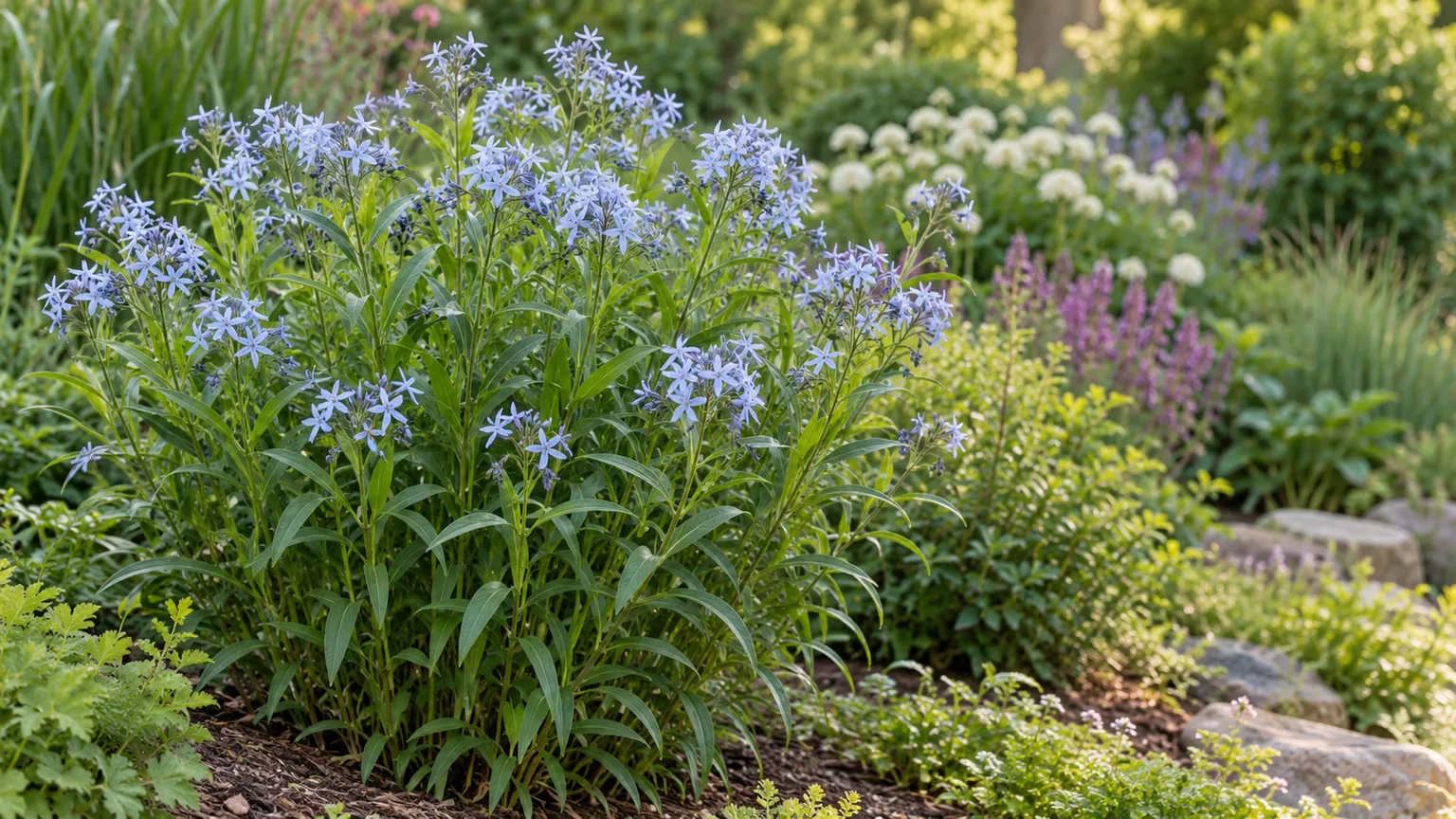
Bluebeard, usually sold as Caryopteris, is a compact deciduous shrub with blue flowers late in the season. The RHS describes caryopteris as a plant for sunny borders or gravel gardens with free-draining soil; it copes with drought and dislikes soggy ground and winter waterlogging. That is almost the reverse of the sheltered, moisture-buffered pocket many azaleas need.
Planting bluebeard directly beside an azalea often creates a choice between a stressed shrub and an inefficient irrigation schedule. Give the area enough sun and fast drainage for bluebeard, and the azalea may scorch or dry. Retain the shade and mulch needed by the azalea, and the bluebeard can become weak, floppy, or prone to winter loss in wet soil. The flowers may look complementary in a catalog, but color is not compatibility.
The exception is a large yard where the shrubs can sit in distinct water zones. Put bluebeard on the sunny side of a path, slope, or raised bed, and keep the azalea in the protected bed. If you want late-season blue in the azalea’s root zone, choose a moisture-tolerant shade companion instead of trying to make a gravel-garden shrub behave like a woodland plant.
3. Roses: different light, feeding, and pest-management demands
Roses are not automatically excluded from acidic soil. Some roses grow well in slightly acidic conditions, and both roses and azaleas can be healthy in the same general yard. The difficulty comes from putting a sun-hungry, heavily managed rose into the same small bed as an azalea.
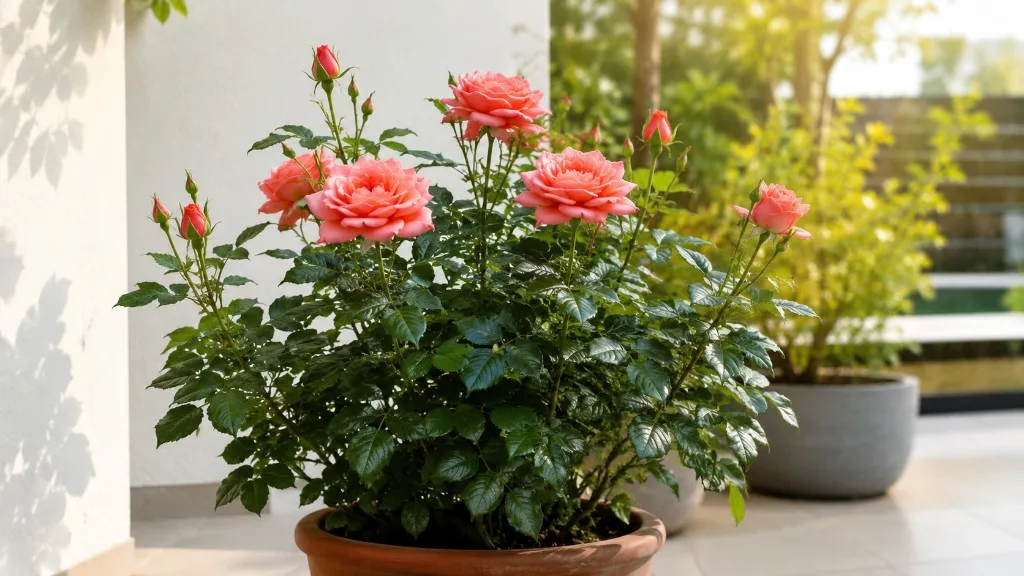
RHS rose guidance recommends a sunny rose position, free-draining soil that does not dry completely, and roughly 60 centimeters of room around the plant so it does not compete for water and light. It also describes roses as hungry plants that may benefit from feeding and mulch, while azaleas are comparatively light feeders and can suffer from overfertilization. Their pruning schedules and canopy shapes also differ: roses need opening up for airflow, while an azalea’s shallow root area is easily disturbed by repeated digging and hoeing.
There is a second management problem. Roses and azaleas can both attract sap-feeding insects or experience foliar diseases when stressed, but the responsible conclusion is not that one plant inevitably infects the other. It is that a crowded mixed canopy makes monitoring, watering at the soil line, pruning, and sanitation harder. A rose planted just inside the azalea’s drip line can also encourage the gardener to fertilize the whole bed when only the rose needs it.
If you want both, give the rose its own sunny bed or a broad, clearly separate planting pocket. Keep its fertilizer and pruning routine independent, and never use rose needs as the reason to lime an azalea bed. For a shaded acidic border, a rhododendron or hydrangea usually offers a more forgiving flowering rhythm.
4. Lavender: the clearest acidic-soil conflict
Lavender is the easiest “no” on this list. RHS lavender guidance describes it as a shrub that thrives in full sun and free-draining soil, prefers poor, dry or moderately fertile conditions including chalky and alkaline soils, and does not thrive in heavy, waterlogged ground. An azalea generally wants the opposite combination: acidic organic soil, filtered light, and moisture that is replenished before the shallow roots stay dry for long.
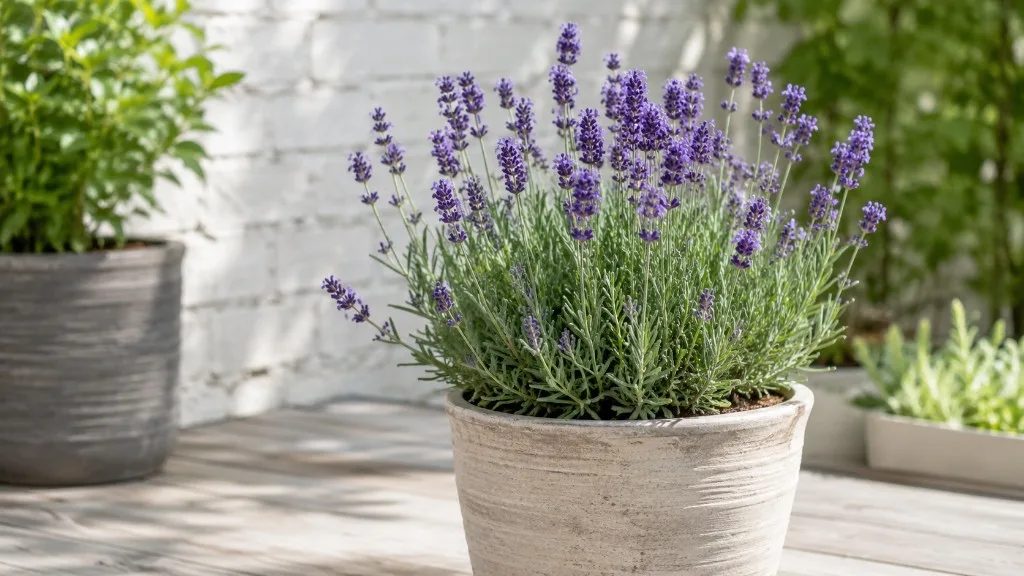
The common mistake is to believe that good drainage means the soil should dry quickly for every plant. Azalea soil should drain excess water but still hold enough moisture around organic matter to keep the root zone from cycling between saturated and bone dry. Lavender wants a faster-drying, leaner site. Put both in one amended hole and one of them is being asked to accept the wrong soil; put them in an unamended native bed and the mismatch may be even worse.
Keep lavender in a sunny gravel border, container, raised mound, or separate strip. Do not acidify its soil just to keep it next to an azalea, and do not withhold water from an azalea to protect established lavender. For a similar silver-green texture in an azalea bed, use foliage plants that naturally tolerate part shade and consistent moisture, such as ferns or hostas, rather than copying lavender’s color with the same plant.
5. Japanese barberry: invasive behavior and root-zone crowding
Japanese barberry, Berberis thunbergii, deserves a stronger warning than “it prefers a different watering schedule.” Penn State Extension identifies it as an invasive ornamental shrub that can grow across a wide range of sites. Its berries can be spread by birds and mammals, and the plant can expand vegetatively by layering where branches contact soil. Regional rules and risk vary, but the ecological concern is enough reason to choose a non-invasive alternative wherever possible.
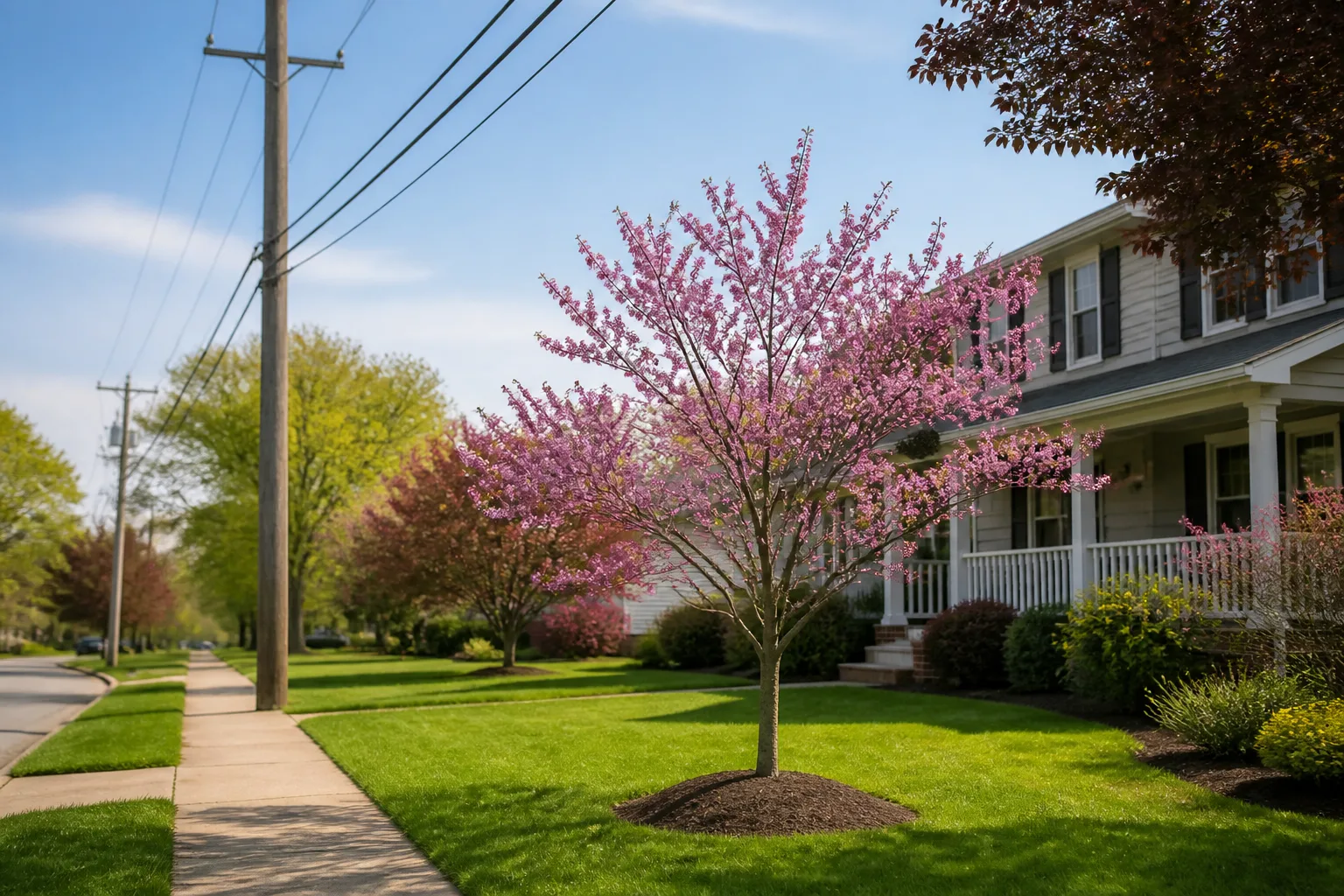
That spread habit is also a practical problem near an azalea. A dense, thorny shrub that can establish in sun, shade, wet, or dry conditions is difficult to keep from occupying the same space as a slower, shallower-rooted ornamental. Barberry’s flexibility does not make it a good companion; it means the barberry may keep growing through conditions that are already stressing the azalea. Penn State’s account also notes that established infestations can be difficult to remove and that the species can displace native plants.
Check your state, province, or county invasive-plant list before buying any barberry, and do not assume a colorful cultivar is automatically exempt. If one is already present, prevent berrying and layering only as part of a local, species-appropriate management plan; do not improvise herbicide use around an azalea. In most landscapes, replacing Japanese barberry with a locally appropriate native shrub gives you better long-term control and a safer ecological choice.
6. Lilac: a full-sun shrub that outgrows the same corner
Lilacs are classic flowering shrubs, but they are usually chosen for a bright, open position where they can develop a broad canopy and flower well. An azalea is more often used in a protected woodland-style bed. The conflict is therefore less about a single pH number and more about sun, mature size, and root-zone ownership.
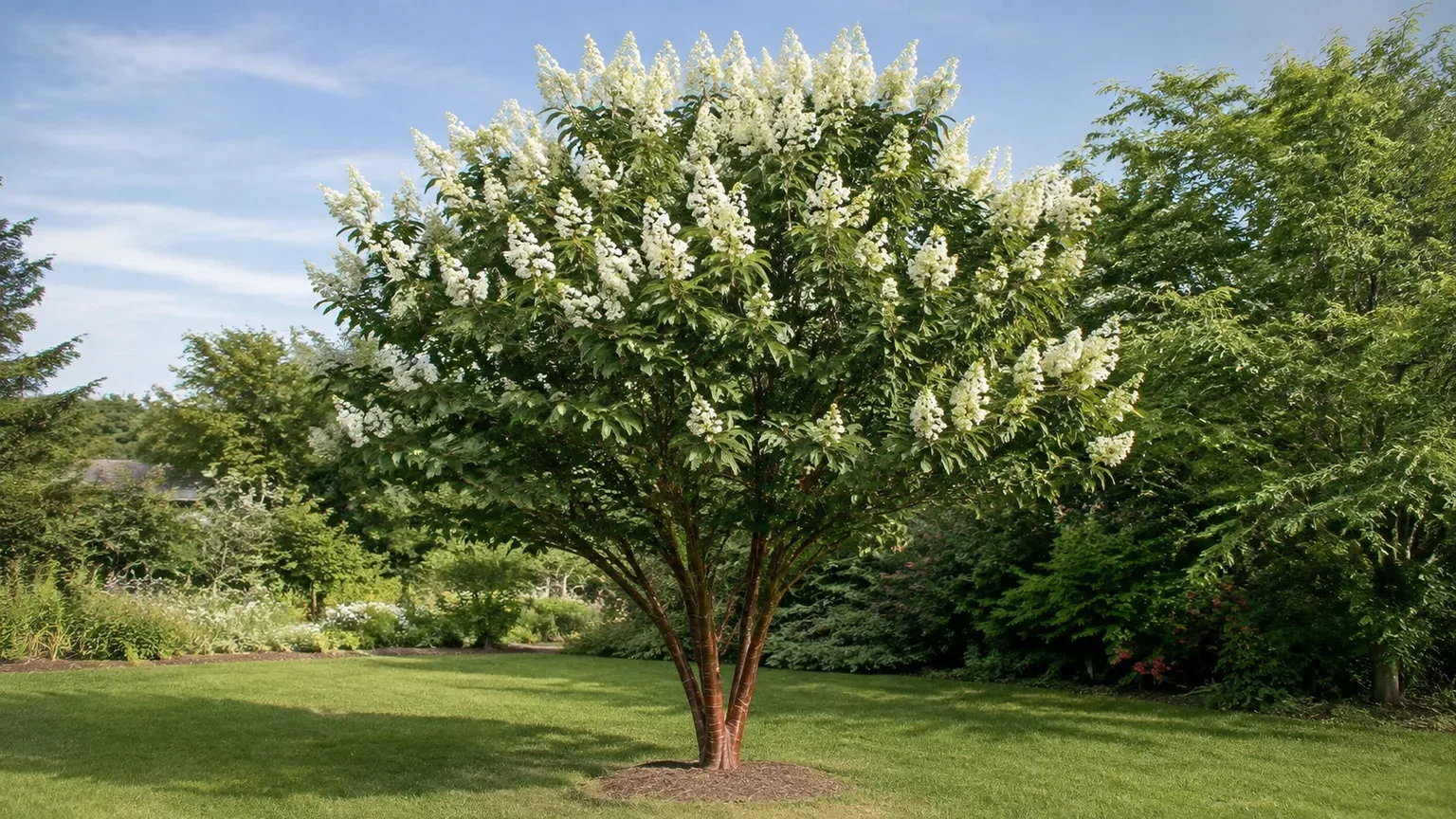
A lilac planted on the south or west side of a small azalea can eventually shade the azalea too deeply, reduce flowering, and create a dry rain-shadow beneath its canopy. A lilac planted behind an azalea may look harmless when both are young, then become a pruning and airflow problem as branches overlap. The azalea’s need for afternoon protection does not mean it can tolerate deep, stagnant shade all day.
Treat lilac as a specimen or backdrop with enough distance that its mature crown does not sit over the azalea. Read the plant tag for mature height and spread, then add working room for pruning and inspection. If your only available site is a cool, acidic bed with dappled shade, a compact rhododendron, pieris, or blueberry is usually a better fit than forcing a lilac into that corner.
7. Butterfly bush: dry-site vigor and regional caution
Butterfly bush, usually Buddleja, is often marketed as a pollinator-friendly, easy-care shrub. It can be an excellent plant in a sunny, well-drained border, but it is a poor default neighbor for an azalea because its vigorous growth and dry-site preference pull the bed in the wrong direction. Some species and cultivars can also be invasive in parts of the world, so local status matters before planting.
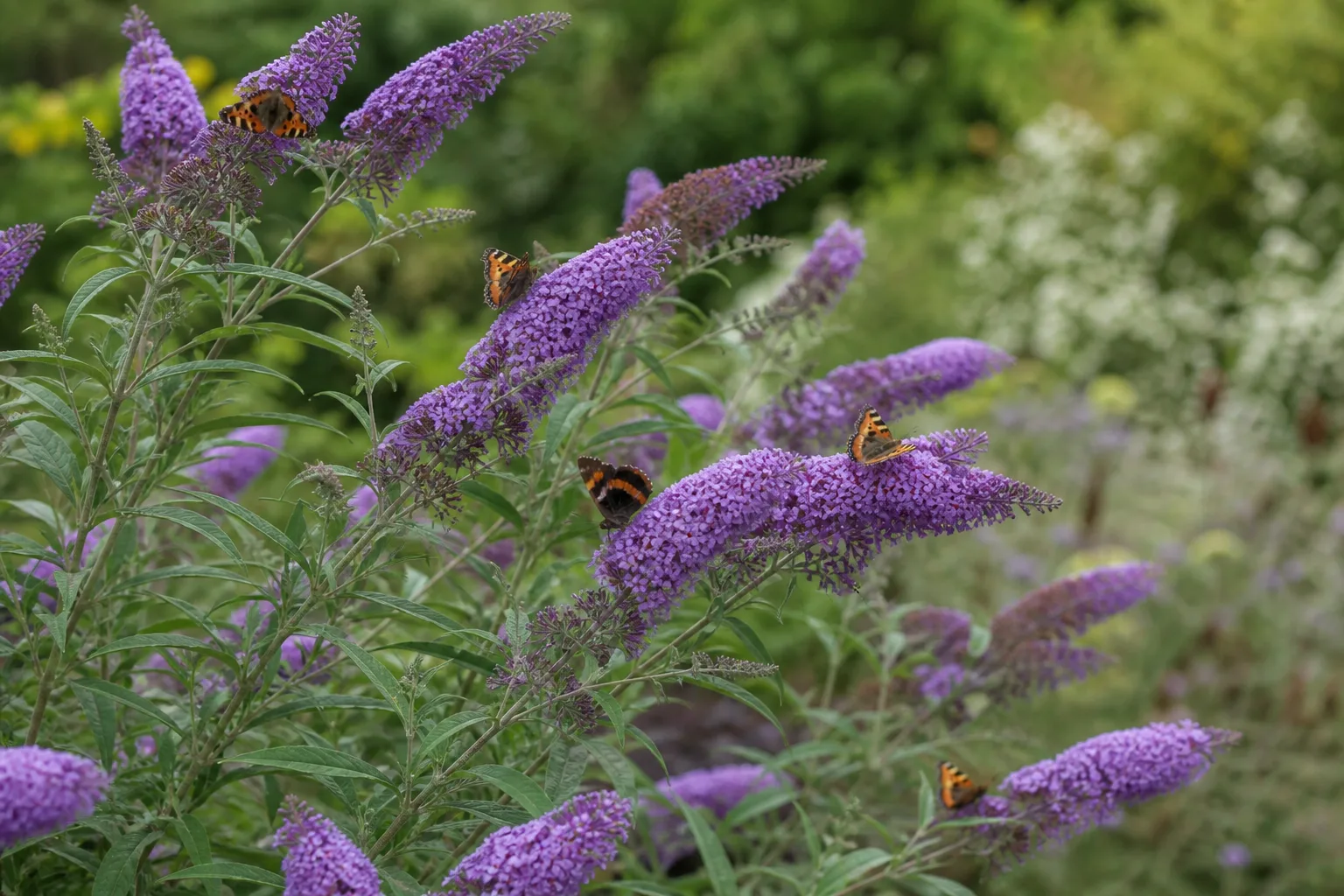
The plant’s flowers attract butterflies, but that benefit does not override site compatibility. A butterfly bush that receives strong sun and periodic deep watering can develop a large crown that competes for light and moisture. An azalea planted under or immediately beside it may receive irregular rainfall, more root competition, and a hotter, drier microclimate than the original bed provided.
Choose a sterile or locally recommended cultivar only after checking regional guidance, and place it in a separate sunny pollinator bed. Keep its irrigation independent from the azalea. If the goal is pollinator value in a partly shaded acidic bed, combine the azalea with seasonally flowering plants that already tolerate that light and moisture pattern rather than relying on a dry-border shrub.
Two popular “avoid” examples that are not shrubs
Some companion lists include peonies and goldenrod among plants to avoid near azaleas. The underlying site-conflict idea can be useful, but calling both shrubs is botanically inaccurate. Correcting the label matters because a gardener should choose by the actual plant’s root system, growth cycle, and preferred site—not by a loose category.
Why peonies may still be a poor next-door choice
Most garden peonies are herbaceous perennials, while tree peonies are woody plants. Herbaceous peonies die back to the ground each winter and generally flower best in full sun with fertile, well-drained soil. That makes a tight pairing with a shaded, shallow-rooted azalea awkward even if the plants can coexist in a broad landscape.
The practical concern is the planting hole. Peonies dislike being buried too deeply and may need their own preparation, while azaleas do best when their shallow roots are not repeatedly disturbed. Place peonies in the sunnier front or a separate bed, not under the azalea canopy. If you have a bright edge that receives several hours of sun, use the two as neighboring zones with a walkway or open gap between them.
Why goldenrod belongs in a different water zone
Goldenrod is a herbaceous perennial, not a shrub. Species and cultivars vary widely, but many are adapted to open sun and can spread into a substantial clump. If the chosen goldenrod needs a brighter, leaner, or drier position than the azalea bed offers, separate the plants rather than treating a yellow flower as proof of incompatibility—or proof of compatibility.
The best test is the plant tag and local extension advice for the exact species. A moisture-tolerant goldenrod in a sunny edge may work near an azalea’s outer drip line; a dry-site species under the shrub is a poor bet. This is the same rule that makes the seven shrubs a useful warning without turning the garden into a list of permanent bans.
How far apart should incompatible shrubs be?
There is no universal “safe” distance because azalea cultivars and shrubs mature at very different sizes. Start with the mature spread printed on both plant tags. Add the two radii together, then leave an additional working gap so branches do not form a solid wall and the root zones are not watered as if they were one plant.
For a small azalea beside a large shrub, a practical starting point is at least 3 feet from the azalea’s crown to the other plant’s crown at maturity, with more room for a lilac, butterfly bush, or vigorous barberry. That is a design rule, not a guarantee. In heavy clay, reflected heat, steep slopes, or dry climates, expand the gap or use separate beds because roots and water move differently than they do in a deep, loamy garden.
Before planting, dig a small test hole after rain. If water remains for a day or more, fix the drainage or raise the bed before adding an azalea. If the soil is dry several inches down despite recent irrigation, do not pair a moisture-dependent azalea with a drought specialist just because the surface mulch looks damp. A path, edging strip, container, or low-growing ground cover can create a real management boundary.
When one garden can hold both plants
A site conflict is often solved by separating conditions, not by abandoning a favorite shrub. Put lavender, bluebeard, roses, lilac, or butterfly bush in the sunniest area with faster drainage. Place azaleas where morning light and afternoon protection are available, then keep their acidic mulch and irrigation focused on their own root zone.
Containers are another honest solution for a plant with a radically different soil preference. A lavender container can sit near the azalea display without forcing the entire bed to become alkaline and dry. A rose in its own raised bed can receive feeding and pruning without the gardener stepping through shallow azalea roots. Containers still need correct drainage and watering, but they make the boundary visible.
Remember that even separate beds can share runoff. Lime, fertilizer, salt, or herbicide moving downhill can reach an azalea root zone, and an overwatered upper bed can keep the lower bed saturated. Orient irrigation emitters, bed edges, and downspouts so each plant receives what it needs without sending the excess to its neighbor.
Better companions for an azalea bed
The easiest companions are plants that accept the same basic conditions: acidic soil, organic matter, partial shade or filtered light, and moisture that is consistent but not stagnant. Gardenia lists mountain laurel and Japanese pieris among compatible shrubs and highlights witch hazel, summersweet, and certain barberries for seasonal interest; it also recommends ferns and hostas for shade and texture. Plant Addicts likewise points to blueberries, cranberries, hydrangeas, and other acid-loving plants while emphasizing mature size.
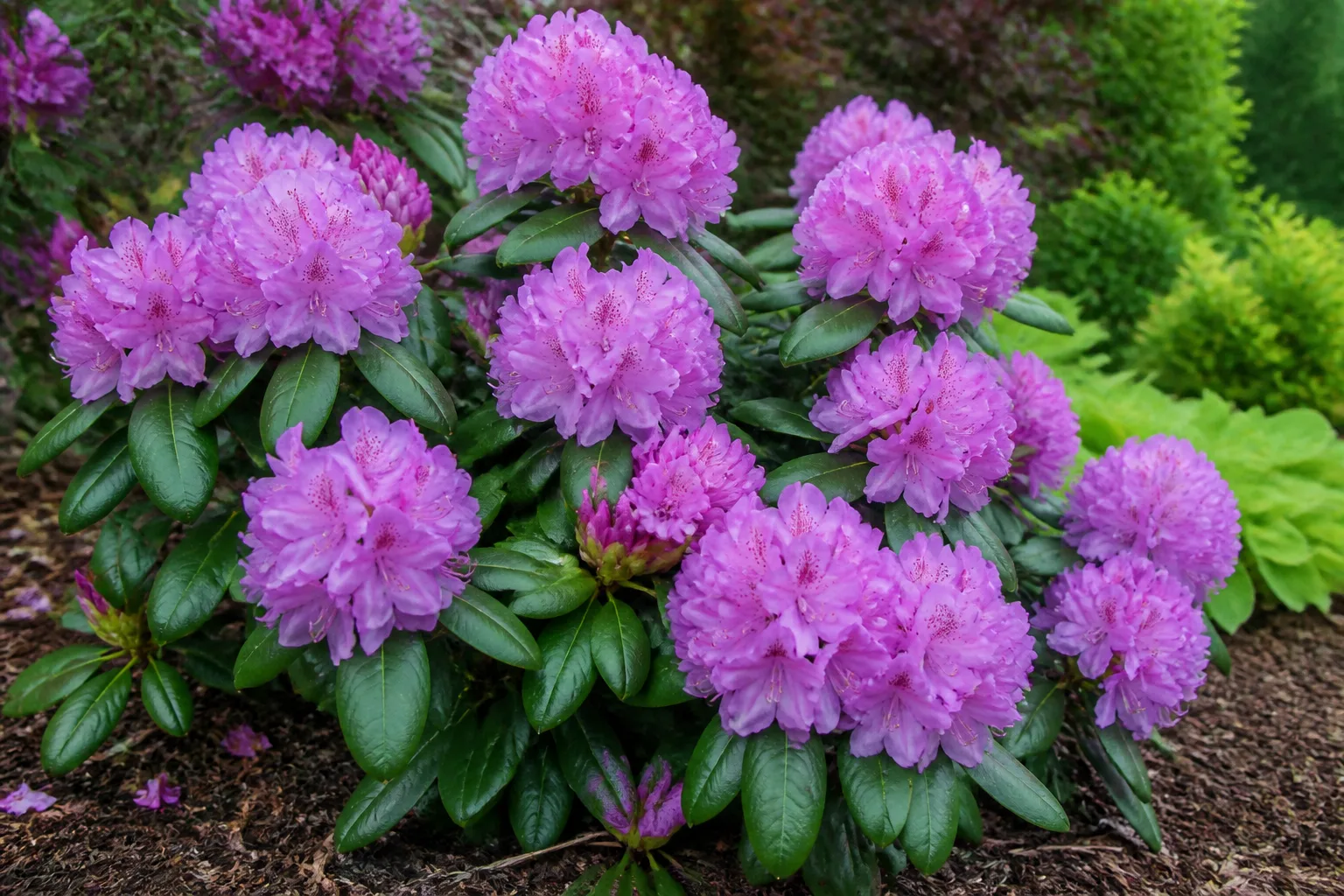
For a shrub layer, start with rhododendron, blueberry, hydrangea, mountain laurel, pieris, or summersweet after checking hardiness, mature spread, and local soil. Rhododendrons are especially coherent partners because they share the acid-loving, partial-shade pattern, though they still need enough air movement and drainage. Blueberries can be useful where full sun is available, but their fruiting needs and mature dimensions deserve their own spacing plan.
For a lower layer, ferns, hostas, heuchera cultivars suited to your soil, and other shade-tolerant perennials can add contrast without asking you to rebuild the bed around a Mediterranean shrub. Keep mulch on the soil surface rather than piling it against stems, and choose companions by the exact light at ground level—not just the light at the top of a mature canopy.
What to do if the wrong shrub is already planted
Do not start by adding fertilizer or changing pH. First identify the exact plant and measure the light, soil moisture, drainage, and distance between mature crowns. A shrub that is merely crowded may improve after relocation; a shrub in the wrong water zone may need a new home even if its leaves look fine today.
Use this sequence:
- Test the soil in the azalea root zone and the neighboring shrub’s zone separately. Record pH and drainage instead of guessing.
- Check the root zone. Feel several inches below the mulch. Dry soil calls for a watering correction; saturated soil calls for drainage or relocation, not more water.
- Prune only for access. Do not shear a lilac, rose, or butterfly bush into a permanently small shape that its genetics cannot support. Remove dead or crossing growth and preserve airflow.
- Create a boundary. Install a path, edging, container, raised bed, or separate irrigation line if the plants can remain in the same garden.
- Relocate during a suitable season. Move shrubs when local weather and the plant’s dormant or moderate-growth period reduce transplant stress. Keep the root ball intact, replant at the original depth, and water the moved plant as it establishes.
- Remove invasive barberry carefully. Confirm the species and local disposal rules, and ask your extension service about control if the plant is established or producing berries. Avoid spreading pieces through the bed.
If the azalea is yellow but the soil stays wet, treat drainage as the first diagnosis. If it wilts while the neighboring shrub looks vigorous, compare root-zone moisture before assuming a nutrient deficiency. The visible symptom is often the result of two plants being managed as one when their needs are not one.
Conclusion: design by conditions, then by color
The best azalea companion is not simply the shrub with the prettiest flower beside it. It is the plant that can share the same soil reaction, light pattern, moisture rhythm, mature space, and maintenance routine without forcing constant corrections.
Keep boxwood, bluebeard, roses, lavender, Japanese barberry, lilac, and butterfly bush out of the same tight root zone unless you have deliberately separated their conditions. Use soil tests, mature dimensions, and a short drainage check before you dig. Then build the bed with companions such as rhododendrons, blueberries, hydrangeas, pieris, mountain laurel, ferns, and hostas that make healthy azalea care easier rather than turning every watering into a compromise.