6 Beneficial Weeds to Leave in Your Garden
Not every weed deserves a fight. Identify six useful garden weeds, their benefits, edible cautions, and simple ways to manage them responsibly.
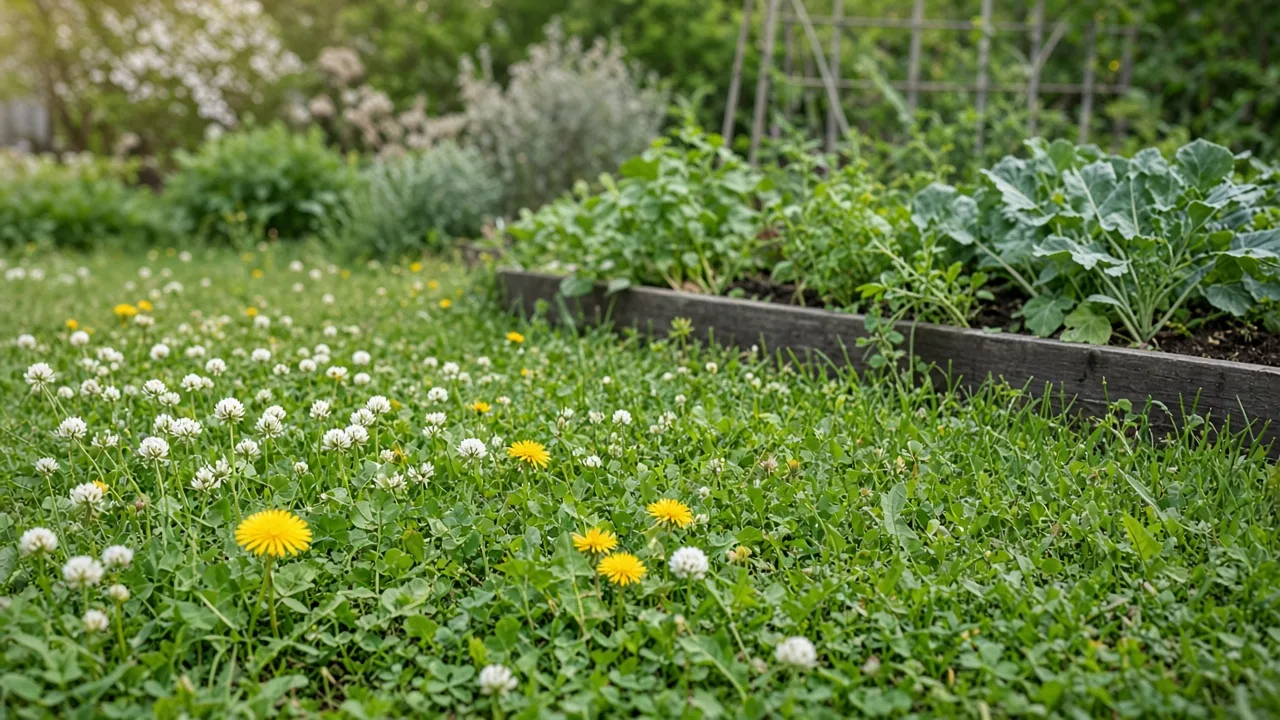
The word “weed” describes a plant growing where someone does not want it. It does not tell you whether that plant is useless, harmful, native, edible, or valuable to wildlife. A dandelion in a vegetable row is competing with seedlings; the same dandelion in a lightly managed lawn may be one of the first flowers available to a hungry spring bee.
That distinction is the useful starting point. You do not have to turn every garden into a wild patch, and you do not have to defend every plant that volunteers. Instead, judge a weed by its identity, behavior, location, and risk. The six plants below can earn a place in the right setting, provided you can identify them confidently and keep them away from paths, harvest areas, and plants they might overwhelm.
What makes a weed worth keeping?
A useful volunteer usually offers at least one concrete benefit: nectar or pollen at a difficult time of year, food for birds or insects, soil protection, a nitrogen-fixing relationship, an edible harvest, or attractive flowers and seed heads. It should also be manageable. A plant that supports wildlife but spreads aggressively through a precious bed is not automatically a good choice there.
Think in terms of “right plant, right place,” even when the plant arrived without an invitation. A low patch in a lawn has a different job from a tall plant in a border. A volunteer beside a compost pile can be tolerated more easily than one growing through a foundation crack. Benefits are site-specific, not a permanent pardon.
A two-minute keep-or-remove decision
Before pulling a plant, ask four questions:
- Can I identify it from several traits, not just its flower?
- Is it competing with a crop, young tree, or desired perennial?
- Does it spread by runners, deep roots, or abundant seed in this exact spot?
- Has the soil or foliage been exposed to herbicide, roadside pollution, animal waste, or other contamination?
If the answer to the first question is no, leave it untouched until identified. If the answer to the second or third is yes, contain or remove it. If the fourth is yes or unknown, do not eat it. This small pause prevents the two most common mistakes: protecting a plant that is actually invasive or poisonous, and harvesting a correctly identified plant from an unsafe place.
Start with location and behavior
Keep a volunteer where it fills an intentional role: a lawn patch, meadow edge, sunny fence line, or unused corner. Remove it from paths, drainage points, seedling beds, and tight containers. Watch how it behaves for one growing season. Does it remain a clump, creep outward, flower and set seed quickly, or reappear from a root fragment? Your answer is more useful than a blanket label such as “good weed.”
Check identification before touching or tasting
Use leaf arrangement, stem shape, flower structure, growth habit, and root or seed-head traits together. A phone photo is a starting point, not proof. Compare several images in the USDA PLANTS Database or a regional extension resource, and ask a local botanist or experienced horticulturist when the distinction matters. Common names overlap, and edible species often have toxic look-alikes.
Dandelion: an early-season food source
Common dandelion (Taraxacum officinale) is easy to recognize when flowering: a single yellow composite flower sits on a hollow, leafless stalk, and the leaves form a low rosette. Its long taproot helps it survive mowing and drought, which is also why a shallow pull often fails.
Where dandelions earn their place
Dandelions can provide pollen and nectar early in the season, when few lawn flowers are open. Their flowers are also a visible cue that a lawn is not serving only one species. The taproot helps create channels through compacted soil as it grows and decays, although one plant should not be oversold as a soil amendment. A dandelion cannot repair poor soil by itself.
Leave a few in a low-traffic lawn, orchard margin, or meadow edge if you like the flowers and can tolerate seed heads. Mow before seeds mature if you want flowers but fewer new plants. Remove them from raised beds and containers, where the rosette shades seedlings and the root is difficult to extract without disturbing neighboring plants.
When to pull them
Dig when the soil is moist, using a narrow weeder to lift as much of the crown and taproot as possible. Do not scatter mature seed heads in the compost if your compost pile does not reliably heat. Bag flowers with developed white parachute seeds. If you harvest leaves or flowers, choose plants well away from treated lawns, roads, pet-waste areas, and contaminated soil; wash produce and cook only when a trusted identification and local food-safety practice support it.
White clover: a low-growing lawn partner
White clover (Trifolium repens) has three-part leaves, creeping stems that root at nodes, and rounded white flower heads that often turn pinkish with age. It is frequently judged as a lawn failure, but in a mixed lawn it can stay green with less irrigation than thirsty turf and offers flowers to bees.
Clover is a legume. Bacteria living in legume root nodules can fix atmospheric nitrogen, but that does not mean a clover patch instantly fertilizes nearby grass. Nitrogen becomes available to other plants mainly through decomposition, mowing residues, and soil processes. Soil tests—not the presence of clover alone—should guide fertilizer decisions.
Keep white clover in a lawn if you want a softer, flower-rich surface and can accept uneven color or more bee activity underfoot. Mow high enough to let it flower in selected areas, and avoid walking barefoot through a flowering patch if bee stings are a concern. In a vegetable bed, pull runners before they weave through crops. Do not confuse white clover with plants that have similar leaves but different growth habits; identify the actual species before making a lawn plan.
Purslane: edible, succulent, and easy to contain
Purslane (Portulaca oleracea) is a warm-season, low-growing plant with smooth, fleshy leaves and reddish, often prostrate stems. Its small yellow flowers open in bright light. The succulent foliage helps it tolerate heat and dry soil, while broken stem pieces can root when moisture is available.
Purslane can be a useful edible green when correctly identified and harvested from a clean, unsprayed location. It has a crisp texture and lemony flavor that works raw in small amounts or cooked like a tender green. However, “edible” is not the same as “safe for every person in every quantity.” People managing kidney disease, kidney-stone risk, or mineral-sensitive diets should ask a clinician about oxalate-rich foods; pets and children also should not be encouraged to sample unknown yard plants.
Contain purslane by pulling it before seed capsules open and removing pieces from bare soil. It is often worth leaving at the edge of a hot, dry bed, but not under crops or between paving stones where it can root from fragments. Mulch helps reduce new seedlings, but a thick established mat is easiest to remove when the ground is damp.
Chickweed: a cool-season groundcover
Common chickweed (Stellaria media) forms a loose mat of small oval leaves on delicate, branching stems. Look for a single line of hairs along the stem and tiny white flowers that appear to have five deeply divided petals—visually, they can look like ten petals. It favors cool, moist conditions and often appears in fall, winter, or early spring.
The mat protects bare soil from erosion and can provide forage for birds and poultry. Some people eat young chickweed from clean sites as a mild green, but identification must be exact because unrelated small plants can grow in the same damp patches. It is also a fast seed producer. Leaving it until it flowers in an unused corner can be reasonable; allowing it to seed through a newly planted bed is poor management.
To keep chickweed, designate a patch and edge it with a hand hoe. To remove it, shallowly cultivate or hand-pull before seed capsules mature, then cover exposed soil with mulch. Because chickweed is shallow-rooted, repeated early removal is usually more effective than one dramatic clearing after it has seeded.
White campion: a useful wildflower for bouquets
White campion (Silene latifolia, also called white cockle) is an upright biennial or short-lived perennial with opposite leaves and white flowers. The blooms open most strongly in the evening and may attract night-flying moths as well as daytime insects. Its pale flowers and inflated calyxes can add a relaxed meadow character to a border or cutting garden.
This is a plant to manage by seed, not by panic. Keep a few in a sunny, informal area, stake them if they flop into paths, and cut spent stems before seed dispersal if you want a stable population. Remove seedlings from irrigated beds where richer soil may make them taller and more competitive. Regional status matters: a plant that is a harmless volunteer in one area may be listed as non-native or invasive in another, so check local guidance before deliberately spreading it.
Field pennycress: seed heads with a purpose
Field pennycress (Thlaspi arvense) is a cool-season brassica with small white flowers and distinctive flat, round seed pods held on upright stems. The pods are the main ornamental feature: they can be gathered while green or dried for arrangements. The plant often colonizes disturbed ground, field edges, and cultivated soil.
Keep pennycress only where its seed production can be watched. Cut stems for decoration before the pods shatter, and dispose of unwanted seed heads rather than shaking them over a bed. Pull rosettes from vegetable rows before they bolt. Because brassicas can share pests and diseases, a pennycress patch beside kale, cabbage, or broccoli may be less desirable than one at the far edge of the property.
Do not assume that a plant in the mustard family is automatically a kitchen crop. Identification, harvest location, and local advice all matter. Its value here is primarily structural and seasonal: pennycress offers a tall, airy form and useful dried seed heads without requiring a purchased ornamental.
Edible-weed safety is non-negotiable
Never eat a plant because an app, label, or article says that a similar common name is edible. Confirm the scientific name and the plant’s defining traits. Harvest only from soil that has not been treated with herbicide or pesticide and is not beside a busy road, dog run, compost of uncertain contents, or an area receiving contaminated runoff.
Wash harvested material under running water, discard damaged parts, and follow reliable preparation guidance. Do not feed yard weeds to livestock unless the species and any treatment history are known. Cooking does not make every toxic plant safe, and a plant that is edible in small culinary amounts may still be inappropriate for a person with a medical condition or allergy. When in doubt, keep it as habitat and skip the salad.
How to keep helpful weeds from becoming a problem
Set boundaries before the plants set seed. Hand-pull seedlings in beds, mow or deadhead selected lawn patches, and use a defined edge around a meadow strip. Learn each plant’s main escape route: dandelion relies on a persistent crown and taproot; clover creeps along the soil surface; purslane roots from fragments; chickweed and pennycress spread readily by seed.
Avoid broad-spectrum herbicide simply because a volunteer looks untidy. It can remove flowers and expose soil, creating room for a different weed. But avoid the opposite mistake too: “natural” does not mean harmless. A spreading plant can displace desired vegetation, and a mature seed bank can make future management expensive. If a plant is listed as invasive locally, remove it and dispose of it according to local guidance.
What not to leave alone
Do not use this list as permission to keep every volunteer. Remove plants you cannot identify, plants with toxic look-alikes in children’s play areas, and plants that invade neighboring habitat or threaten crops. Poison ivy, stinging plants near paths, aggressive vines, plants harboring serious crop pests, and weeds growing through masonry all deserve a different response.
If the plant is near a food garden, check its roots and runners before leaving it. If it is beside a young tree, remove competing vegetation from the tree’s immediate root zone. If it is in a lawn used for sports, choose a low, non-spiny surface. The best ecological decision is still allowed to be a practical human decision.
A simple management plan for each garden zone
In the lawn, keep a small percentage of flowers that tolerate foot traffic, mow around them when possible, and remove plants that create trip hazards. In raised beds, remove volunteers early so they do not compete with crops or mature unnoticed among edible leaves. At the meadow edge, retain a measured patch, photograph it through the season, and cut or deadhead before it crosses your boundary.
For a cutting garden, choose stems for form and timing, then prevent unwanted seed spread. For paths and walls, remove weeds while small and repair gaps so soil does not accumulate. Revisit the plan after rain and again at the end of flowering. A garden is a changing system; “keep” is a decision you can revise.
Conclusion
Dandelion, white clover, purslane, chickweed, white campion, and field pennycress can all be useful in the right place. Their value may be a spring flower, a nitrogen-fixing relationship, a harvest, a bouquet, or simply living cover for a patch of soil. None deserves an automatic pass, though. Identify first, consider competition and local status, keep edible harvests away from contamination, and set boundaries before roots or seeds make the choice for you.
The goal is not a weed-free garden. It is a garden where every plant earns its space—and where you know when that space has expired.



