What to Do With Old Light Bulbs: 7 Ideas
What to do with old light bulbs depends on the type. Learn seven safe reuse ideas, plus what to recycle, avoid opening, and do if a CFL breaks.
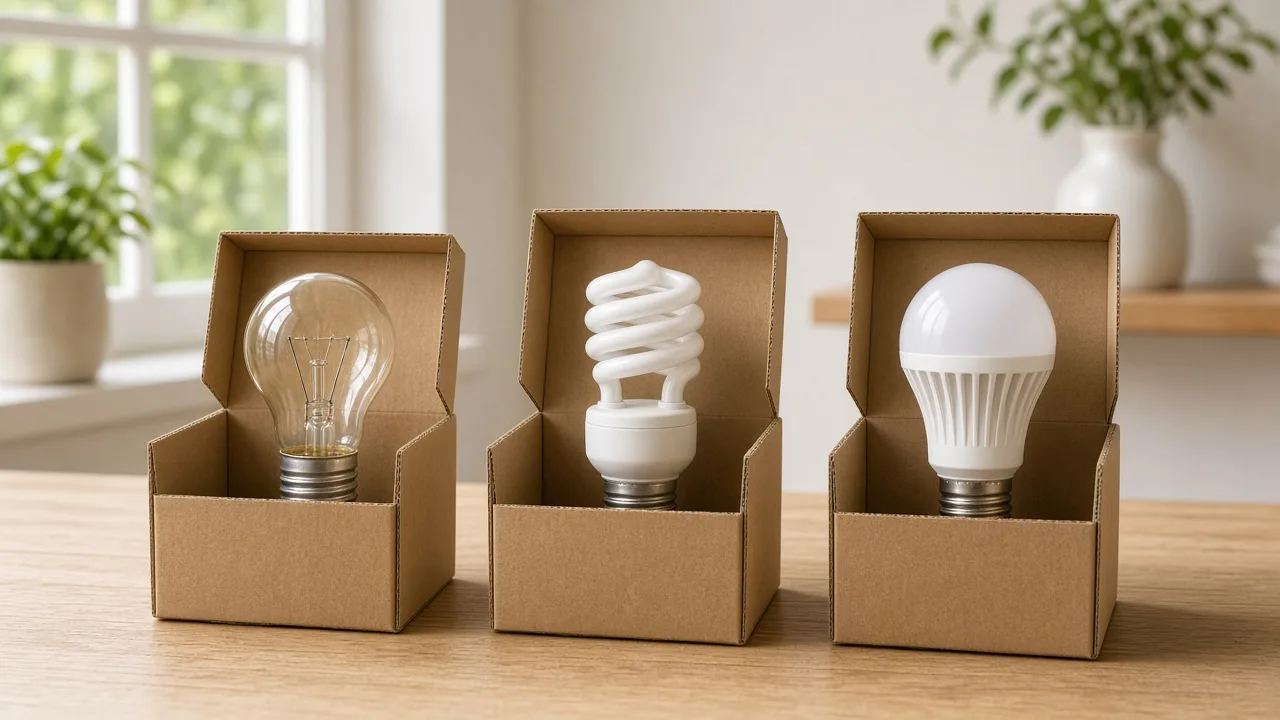
A burned-out light bulb looks like a ready-made glass blank, which makes it tempting to remove the base, empty the inside, and turn it into a vase, planter, oil lamp, or ornament. Before you reach for pliers, identify the bulb. A spiral CFL and a traditional incandescent bulb may both fit a household socket, but they do not have the same materials or safe handling rules.
The most responsible answer to “what can I do with old light bulbs?” is a mix of reuse, donation, storage, and recycling. Keep mercury-containing lamps intact for an appropriate collection program. Keep most craft ideas on the outside of the bulb, where you are not creating sharp edges or exposing the lamp’s contents. And if the project involves food, flame, water, or an animal, choose a purpose-made container instead.
Start With the Bulb Type, Not the Craft Idea
Look for the bulb’s markings before choosing a destination. The label may identify it as LED, CFL, halogen, incandescent, fluorescent, or a specialty lamp; the shape alone is not reliable. If the printing is worn away and you cannot identify the lamp, treat that uncertainty as a reason to keep it intact and ask your local waste authority what it accepts.
| Bulb type | Main handling concern | Better default | Low-risk reuse idea |
|---|---|---|---|
| CFL or linear fluorescent | Contains mercury; glass can break | Use a lamp-recycling or household-hazardous-waste route | Keep intact until drop-off |
| LED | Contains electronics and mixed materials | Use a local lamp or electronics program if available | Intact display or art prop |
| Incandescent | Fragile thin glass and metal | Follow local rules; do not assume container-glass recycling | Exterior decoration or display |
| Halogen | Fragile glass and high operating heat | Follow local rules and keep it intact | Display only, never a flame vessel |
| Unknown or damaged | Unknown materials and cut hazard | Isolate safely and ask the local authority | Do not open or craft with it |
CFLs and Fluorescent Tubes Need a Recycling Route
Compact fluorescent lamps and linear fluorescent tubes contain a small amount of mercury. The U.S. Environmental Protection Agency recommends recycling CFLs and other mercury-containing bulbs when an option is available, using local waste agencies, participating retailers, or approved mail-back programs. Requirements vary by location, so a city or county household-hazardous-waste page is more useful than a generic claim that applies everywhere. U.S. Environmental Protection Agency guidance
That one fact changes the project list. Do not cut, drill, crush, sand, or deliberately open a CFL or fluorescent tube. Do not put a loose lamp in a craft box where it can be knocked against other objects. Set it aside in its original packaging or a protective container until you have confirmed the collection route.
LEDs, Incandescent Bulbs, and Halogens Still Have Limits
LED bulbs do not use mercury in the way fluorescent lamps do, but they combine glass or plastic, metal, and electronic components. Some local programs accept LEDs with lamps; others direct them to electronics recycling or ordinary waste. Check the local instructions rather than assuming that “not mercury” means “curbside glass.”
Incandescent bulbs and halogen lamps are simpler from a mercury perspective, but they are still thin, fragile glass objects. Their glass is not necessarily compatible with container-glass recycling, and opening one creates sharp edges and fragments. A safe reuse project usually leaves the glass envelope and metal base intact.
The Seven Best Second Lives for Old Light Bulbs
1. Recycle Mercury-Containing Bulbs Through an Approved Program
Recycling is not a failure to be creative. For a CFL or fluorescent tube, it is often the best second life because the lamp can be handled by a program equipped to manage its materials. Glass and metal may be recovered, while mercury is kept out of an improvised craft project and, where required, out of the general waste stream.
Search your municipality’s site for “fluorescent bulb recycling,” “lamp recycling,” or “household hazardous waste.” Some communities use permanent depots; others hold occasional collection days. A local retailer may accept only CFLs, only household quantities, or only bulbs purchased through that chain, so call before loading a car with mixed lamps.
Keep the bulbs intact during transport. If you have several types, separate them in cardboard sleeves or their original boxes and write the type on the outside. Never tape directly over a cracked lamp, and never place loose fluorescent tubes where they can roll.
2. Return Accepted Bulbs When You Buy Replacements
A replacement-lighting trip is a natural moment to ask about take-back. Hardware stores, lighting suppliers, and home-improvement retailers sometimes collect CFLs, fluorescent lamps, or other household bulbs, but acceptance is not universal and can change by location. The collection box’s sign or the store’s current policy is the deciding information.
This option works especially well if you keep a small, protected “to return” box rather than carrying one dead bulb around for months. Put only intact bulbs inside, separate long tubes from small lamps, and do not mix broken fluorescent glass into a normal retail collection box.
3. Donate Working Surplus Bulbs
Not every old bulb is burned out. A fixture upgrade can leave you with usable bulbs that no longer match your sockets, color preference, or room. If a lamp works and is undamaged, offer it to a neighbor, community workshop, repair cafe, theatre group, school art room, or makerspace that can use its particular base and wattage.
Be specific in the listing or donation note: include the base type, wattage, voltage, shape, color temperature if printed, and quantity. A box of “old bulbs” is hard to use; a box labeled “six working A19 LED bulbs, medium base, 9 watts, 3000K” is useful.
Do not pass along cracked, flickering, blackened, overheating, or recalled lamps. Donation should transfer a working item, not disguise a disposal problem. For older halogen or unusual specialty lamps, confirm that the recipient understands the heat and fixture requirements.
4. Decorate an Intact Incandescent Bulb
An intact, cool, disconnected incandescent bulb can become a small decorative object without being opened. Paint the outside with a suitable craft paint, add a lightweight paper collar, or turn the rounded globe into a keepsake ornament. The visual idea is similar to an ornament blank, but the safety rule is different: the lamp remains a sealed object.
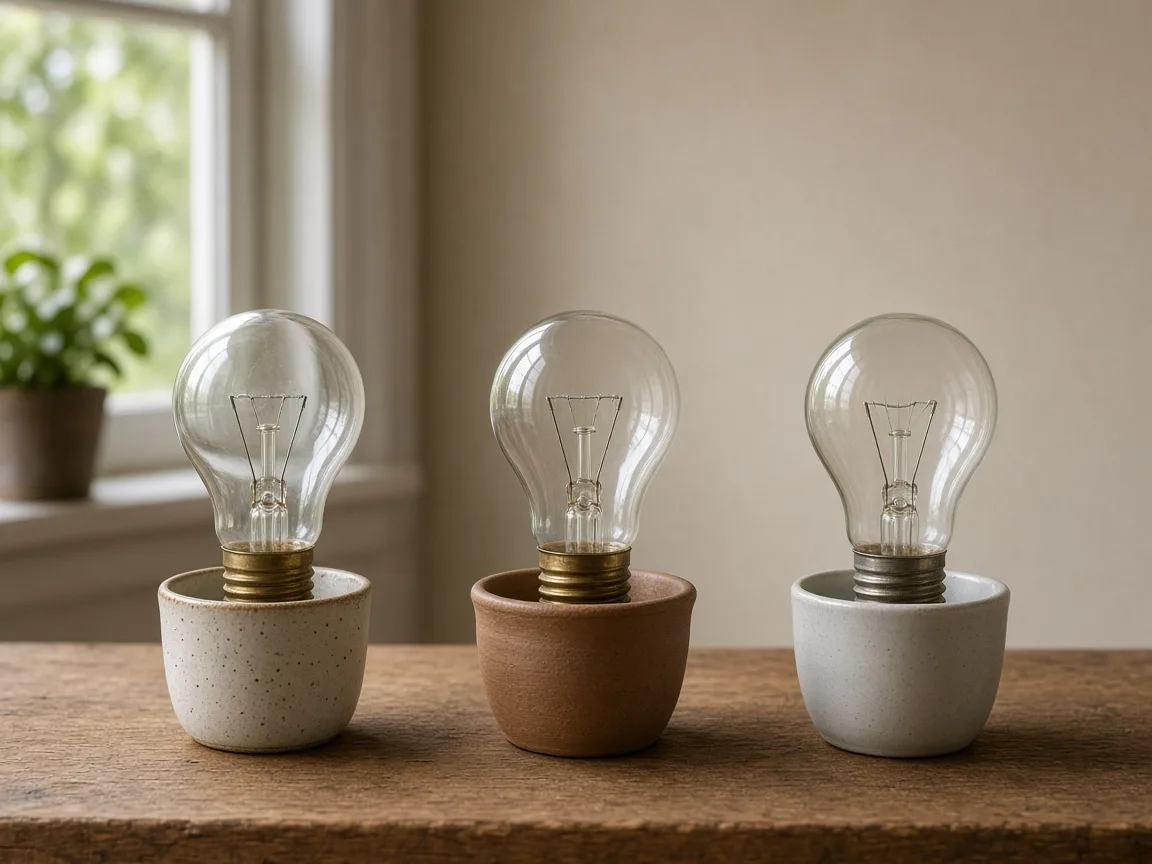
Use a stable holder rather than relying on a loop of wire squeezed around the glass. The metal base is heavier than the globe, so a suspended bulb can swing into a wall, window, or another ornament. Keep decorated bulbs away from toddlers, pets that knock objects from shelves, and any place where a fall would scatter glass.
Do not power the bulb after painting it or wrapping it. Even a dead-looking lamp can be connected to the wrong fixture, and external materials may not tolerate heat. Mark the base as decorative—do not install if the bulb will be stored with working lamps.
5. Build a Removable Lighting-History Display
Several intact bulbs can make an educational display about how household lighting has changed. Arrange an incandescent bulb, a halogen lamp, a CFL, and an LED in a shadow box or on a shelf with removable cradles. You can note the technology, base type, approximate wattage, and the kind of fixture each lamp fits.
The removable part matters. A CFL in a permanent sealed display is still a mercury-containing lamp that may eventually need recycling. Use a clip, sleeve, or shallow holder that lets you remove each bulb without forcing it through a tight opening. Keep the display where it will not be bumped and where children cannot handle a fluorescent lamp unsupervised.
This project gives an old bulb a useful purpose even when it is not attractive enough for holiday decoration. It can also help a household identify lamps before disposal because the display makes the differences in shape and construction visible.
6. Use Intact Bulbs as Photography or Art Props
A bulb’s silhouette is instantly legible in still-life photography, drawing practice, classroom demonstrations, theatre scenery, and sculpture studies. An intact bulb can represent an idea—an invention, a change in technology, a bright idea, or planned obsolescence—without becoming a container.
Store props in a divided box and label dead lamps so nobody accidentally returns one to service. For a suspended photograph or installation, use an enclosed bulb cage, a purpose-made display stand, or a shadow box. Avoid twisting wire tightly around the globe; pressure in one small spot can chip or crack thin glass.
If the prop is a CFL or fluorescent tube, keep it intact and make sure the eventual recycling plan travels with the prop. A photo shoot is not a reason to drill a hole, remove the tube, or break a lamp to create a “vintage” effect.
7. Make a Protected Bulb-Return Box
The least glamorous option may be the one that prevents the most breakage. Designate a sturdy box for spent lamps awaiting a recycling or disposal trip. Use the original sleeves when you have them; otherwise, add cardboard dividers so bulbs do not strike each other.
Label separate sections for CFL/fluorescent, LED, and other bulbs. Add a note with the name of the local drop-off program, its accepted lamp types, and its opening hours. That small amount of preparation prevents the common mistake of carrying a mixed box to a program that accepts only one category.
Store the box in a dry, stable place where it will not be crushed, tipped, or buried behind heavy tools. A high attic shelf is not ideal if retrieving it requires climbing over stored boxes. The goal is controlled waiting, not indefinite storage.
Projects to Skip: Food, Flame, Water, and Animals
Many popular bulb crafts begin by removing the metal base and internal components. That process can expose sharp glass, and it is particularly inappropriate for CFLs and fluorescent lamps. Even with an incandescent bulb, a thin lamp globe is not automatically a safe vessel simply because it can hold liquid.
Skip these uses:
- Oil lamps or candles: lamp glass and improvised wicks do not provide the tested heat management, fuel containment, or stability of a purpose-made lamp.
- Salt, pepper, spice, or drink containers: a bulb is not manufactured or certified as food-contact glass, and removing the base can leave a sharp opening or fragments.
- Fish bowls or animal habitats: the volume is far too small for appropriate animal care, and the opening, residue, and breakage risk make the object unsuitable.
- Planters or open terrariums: use a purpose-made glass globe or small container instead. It will have a safer opening, a more stable base, and room for the drainage or access the plant needs.
- Any opened CFL or fluorescent craft: do not salvage the glass or contents. Keep the lamp intact and use the appropriate recycling route.
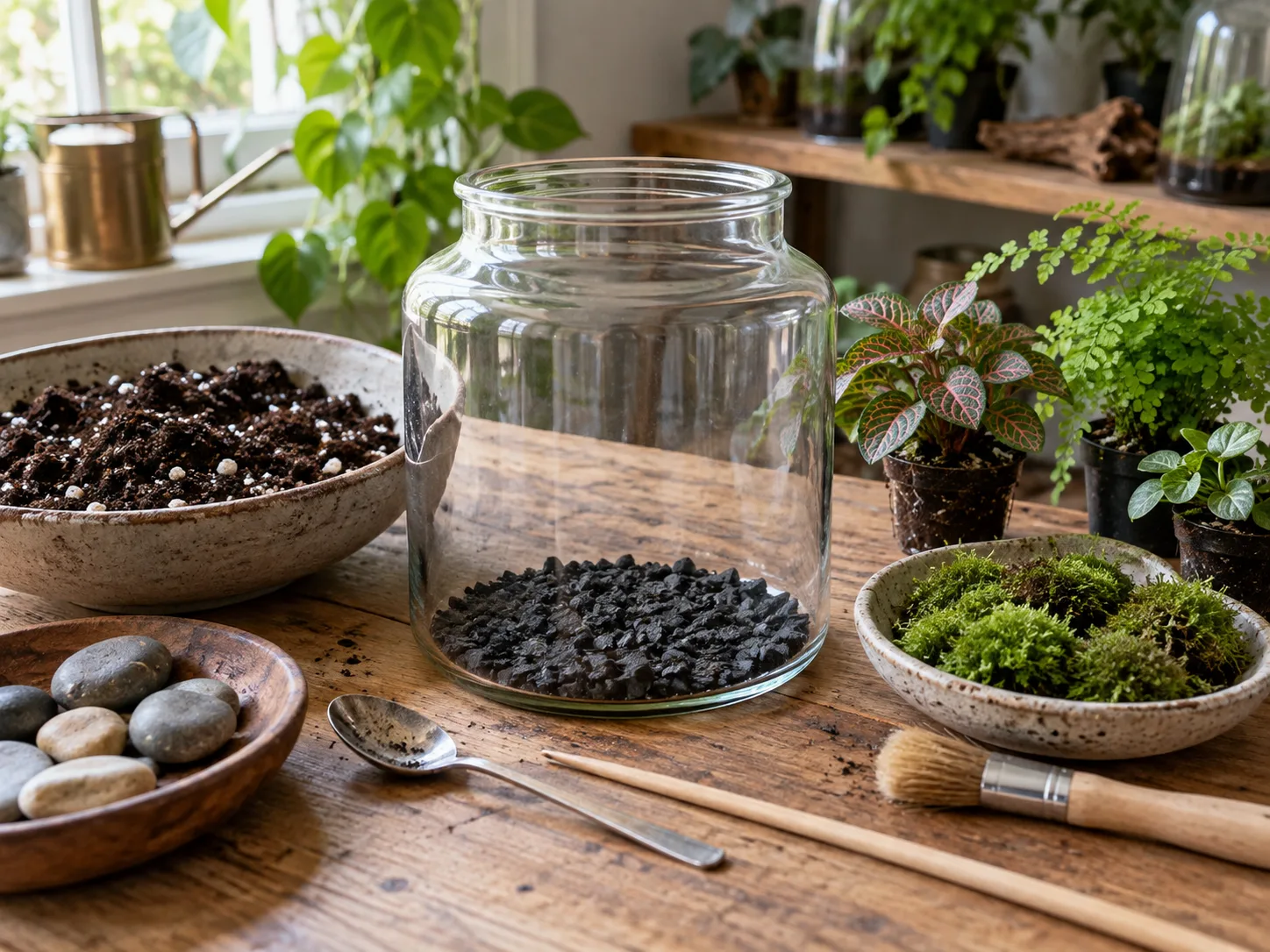
The broader rule is simple: if a project requires cutting, drilling, heating, filling, eating from, or housing something alive in the bulb, choose a purpose-made object. Reuse the bulb’s appearance, not its untested function.
If a CFL or Fluorescent Tube Breaks
A broken mercury-containing lamp calls for cleanup, not salvage. Move people and pets away from the area and ventilate the room. If the room has central forced-air heating or cooling, the EPA advises turning it off during the initial airing period so the system does not circulate air from the break.
On a hard floor, use stiff paper or cardboard to collect larger pieces, then use sticky tape for small fragments and powder. Avoid immediately vacuuming the breakage because a vacuum can spread material or put it into the vacuum itself. Place the debris and cleanup materials in a sealable container and follow local instructions for disposal.
The exact steps depend on the surface and local requirements. Read the EPA’s detailed broken-CFL instructions for carpet, hard flooring, ventilation, and disposal before cleaning a lamp that has broken. EPA broken-CFL cleanup guidance
Do not sweep the debris into a craft bin, rinse it down a drain, or keep the broken pieces for a mosaic. If a large fluorescent tube breaks or the area is difficult to clean, contact the local waste authority for specific instructions.
A Quick Decision Guide for Your Bulb Drawer
Use this sequence when you find an old bulb:
- Is it cracked, crushed, or leaking? Keep people and pets away, avoid handling loose fragments, and follow local broken-lamp guidance.
- Is it a CFL or fluorescent tube? Keep it intact and find a lamp-recycling or household-hazardous-waste route.
- Is it an LED or specialty lamp? Ask whether your local electronics or lamp program accepts it; do not assume container-glass recycling.
- Is it an intact incandescent or halogen lamp? Consider an exterior decoration, display, or art prop only if the glass is sound and the object will remain unpowered.
- Does it still work? Donate it with accurate specifications if someone can use it.
- Are you tempted to open it? Stop and substitute a purpose-made glass container, ornament blank, or display globe.
This order prevents the most common mistake: choosing a clever craft before checking what the bulb contains. It also keeps the seven ideas practical. Recycling, donation, and protected storage are valid forms of reuse because they extend the useful life of materials or move them into a safer recovery process.
How to Create Less Bulb Waste Next Time
When buying replacements, match the lamp to the fixture and its environment. ENERGY STAR explains that LED lighting generally uses less energy and lasts longer than older incandescent lighting, but the right product still depends on the fixture, dimmer compatibility, brightness, color, and whether the fixture is enclosed. ENERGY STAR lighting guidance
Avoid buying a large multipack of unusual base types unless you know which fixtures will use them. Keep the package or photograph the label before installing a specialty bulb; the information makes later donation and recycling much easier.
If an LED fails unusually soon, do not automatically replace bulb after bulb. Check whether the fixture is enclosed, whether a dimmer is compatible, and whether heat may be accumulating. Repeated failures in one fixture can indicate a fixture or electrical issue that deserves attention from a qualified professional.
Finally, identify your local recycling route before the next bulb fails. A small labeled return box, a saved waste-authority page, and one planned drop-off trip are more likely to work than a vague intention to “recycle it someday.”
Conclusion: Safe Reuse Is Still Reuse
The best thing to do with an old light bulb depends on its type and condition. Recycle CFLs and fluorescent tubes through an appropriate local program, ask about LED and specialty-lamp options, donate working surplus bulbs, and keep sound incandescent bulbs intact if you want a decoration, display, or art prop.
Avoid turning lamp glass into foodware, flame vessels, aquariums, animal habitats, or improvised planters. Those projects add sharp-glass, heat, contamination, or welfare risks that a purpose-made container avoids. A bulb does not need to become a novelty object to escape the trash: a safe display, a useful donation, or responsible material recovery is a worthwhile second life.



