How to Prune Roses for More Blooms
Learn when to prune roses by type and climate, where to cut above outward buds, and how deadheading keeps repeat bloomers flowering all season.
The Direct Answer: One Seasonal Reshape Plus Ongoing Deadheading
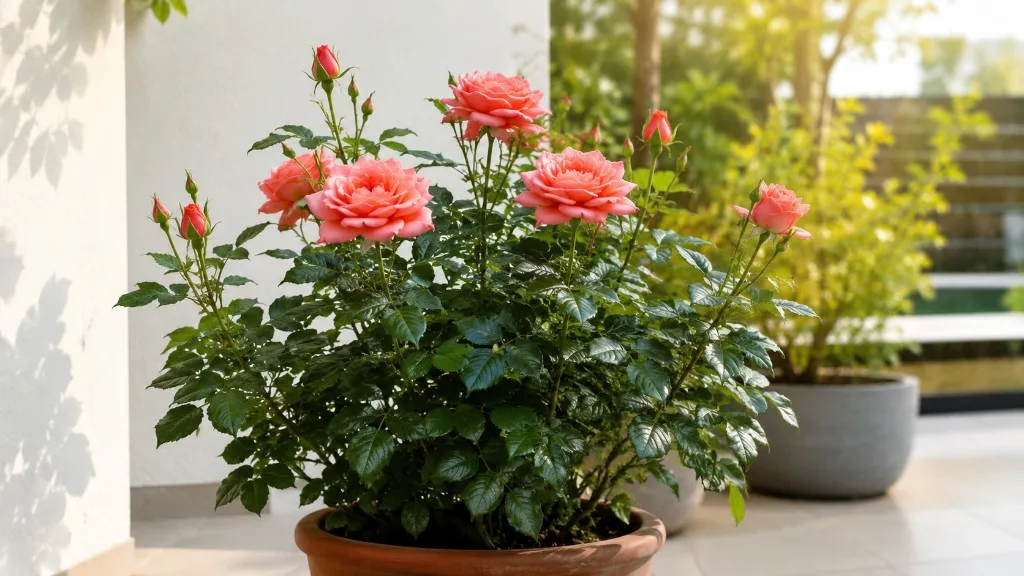
Prune roses for more blooms with two separate jobs. Once a year—late winter to early spring in temperate climates, or October before the cool-season flush in much of India—do a structural prune: remove dead and diseased wood, open the center, keep three to six strong canes, and shorten remaining stems to a height that matches your rose type. Through the bloom season, deadhead spent flowers by cutting one-quarter inch above an outward-facing bud at the first five-leaflet leaf below the fade. That combination renews flowering wood without stripping the foliage a struggling plant needs.
If you remember only one rule before any live cut, make it this: sanitation first, shape second. Dead, blackened, or crossing canes come out entirely before you shorten healthy wood. The Royal Horticultural Society notes that unpruned bush roses become a tangled mess with very few flowers—pruning is not optional decoration; it is how repeat bloomers stay productive. For species-specific depth, see our rose pruning care page and the broader rose care guide.
Why Pruning Is What Turns a Struggling Rose Into a Flowering Machine
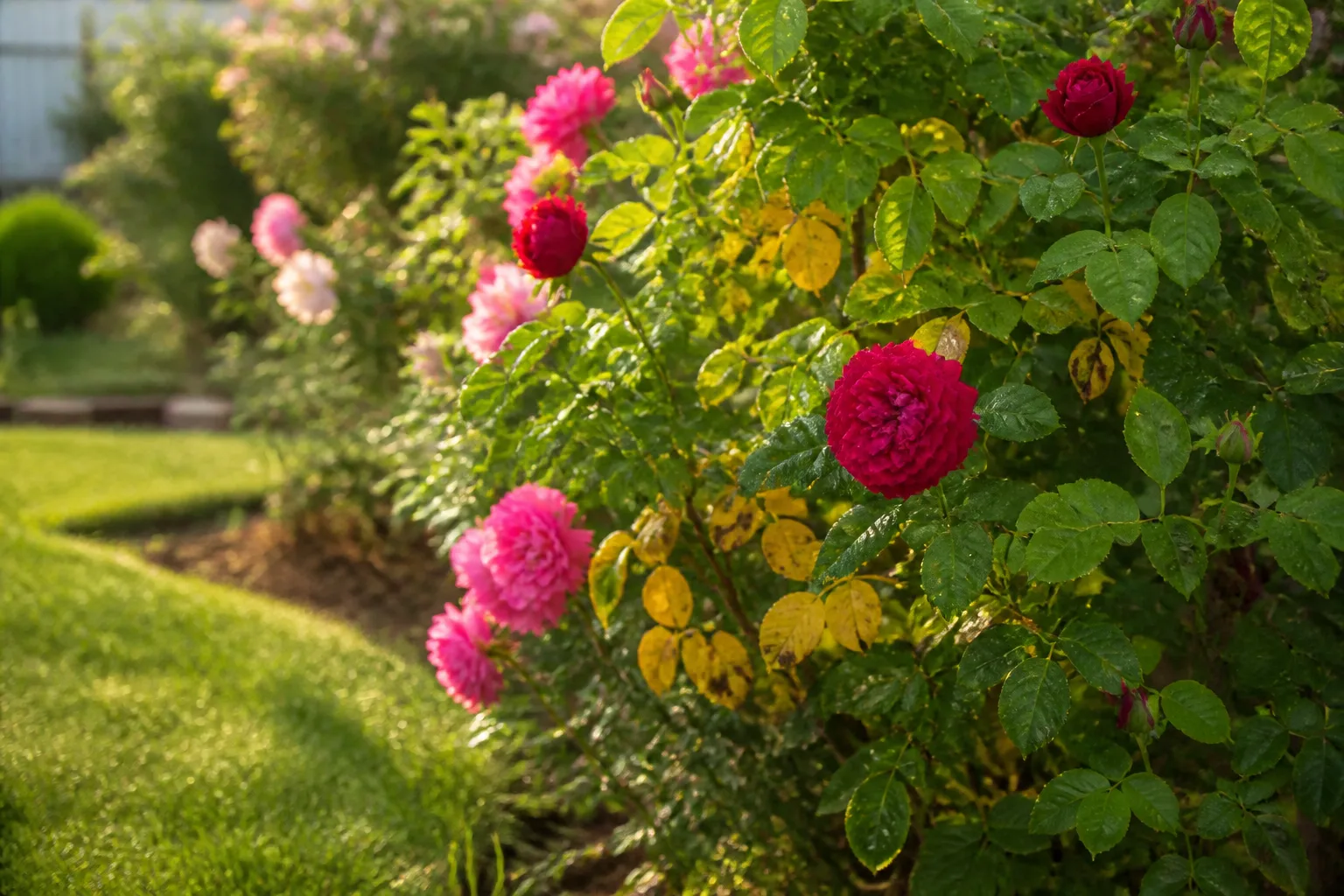
Modern repeat-flowering roses—hybrid teas, floribundas, grandifloras, and most landscape shrub roses—produce their best flowers on relatively young canes, not on woody stems older than about three years. Left alone, a bush accumulates thin twiggy growth in the center, crossing canes that rub and wound bark, and spent flowering wood that channels energy into hips instead of buds.
Annual structural pruning solves three problems at once. It renews the cane framework so new shoots carry larger blooms. It opens the plant to light and air, which lowers the humid conditions where black spot and botrytis thrive. And it redirects stored energy from maintenance of weak wood into strong outward-facing buds you select at cut time.
What pruning cannot do is rescue a rose in chronic shade, waterlogged soil, or starvation. If stems are thin and flowers small despite perfect cuts, fix placement and feeding before cutting harder. Pruning amplifies a healthy plant; it does not substitute for fundamentals covered in our rose care guide.
Structural Pruning vs Deadheading (Do Not Confuse the Two Jobs)
Structural pruning is the once-a-year reshape. You remove whole canes, shorten remaining stems by one-third to two-thirds on many bush types, and reduce the plant to a small number of vigorous leaders. The goal is architecture and cane renewal.
Deadheading is bloom-season maintenance. You snip individual spent flower stems back to a strong leaf node without restructuring the bush. Iowa State University Extension describes deadheading as optional for appearance but valuable for encouraging additional summer blooms on modern repeat-flowering roses.
The cut depth differs sharply. Spring structural pruning may take hybrid tea canes down to 12–18 inches. Deadheading usually removes only the flower stem above the first five-leaflet leaf, leaving most of the cane intact. Hard-pruning in July because you missed spring, or deadheading so aggressively that you strip half the foliage, is a common reason roses stall mid-season.
When to Prune Roses by Climate and Rose Type
Timing follows local temperature patterns and what kind of rose you grow, not a universal calendar date stuck on the fridge.
Temperate Gardens: Late Winter Before Bud Break
Across much of the United States, Canada, the United Kingdom, and continental Europe, the main structural prune happens in late winter to early spring—typically February through April by latitude. The RHS advises pruning when growth is just resuming, often mid-February in mild southern areas and March in colder northern zones. Many Midwest gardeners use forsythia bloom as a practical signal that pruning season has arrived.
The sweet spot is bud swelling—live, plump buds visible but not yet opened into tender shoots. Prune too early before hard late-winter freezes and freshly cut canes may die back. Prune too late after significant soft growth has pushed and you waste energy the plant already committed to stems you are about to remove.
Once-blooming old garden roses (Alba, Gallica, Damask, Moss, and many ramblers) are the major exception in temperate climates: they flower on old wood, so their structural tidy-up waits until after they finish blooming in early to midsummer—not in spring.
India and Cool-Season Bloom Windows
In much of India and similar tropical-to-subtropical climates where roses peak in the cool dry season, the major structural prune typically happens in October, preparing plants for the winter bloom flush from November through February. A lighter February touch-up after the winter flush removes spent flowering wood and weak stems, cutting back roughly 20 to 25 percent to encourage a spring flush in March and April. Deadheading remains continuous throughout the active bloom season regardless of hemisphere.
What to Inspect Before You Cut Anything Live
Before any live-wood removal, walk the plant and check four things.
Live vs dead pith. Scrape bark on suspect canes: healthy tissue is white or pale green inside; dead wood is brown or gray. Keep cutting lower on a cane until you reach live tissue or remove the whole cane at the base.
The three Ds plus crossing wood. Dead, diseased, and damaged canes, plus stems that rub bark off each other, all leave before shape cuts.
Cane thickness. Stems thinner than a pencil rarely support quality blooms on bush roses. Mark weak twigs for removal during thinning.
Graft union on budded plants. All desirable growth must originate above the swollen graft point. Anything vigorous from below the union is rootstock and should be removed regardless of how healthy it looks.
If the plant is heat-stressed, recently transplanted, or fighting active black spot, limit yourself to sanitation cuts and postpone hard shaping until conditions improve.
Tools, Safety, and Clean Blades That Protect Next Year’s Blooms
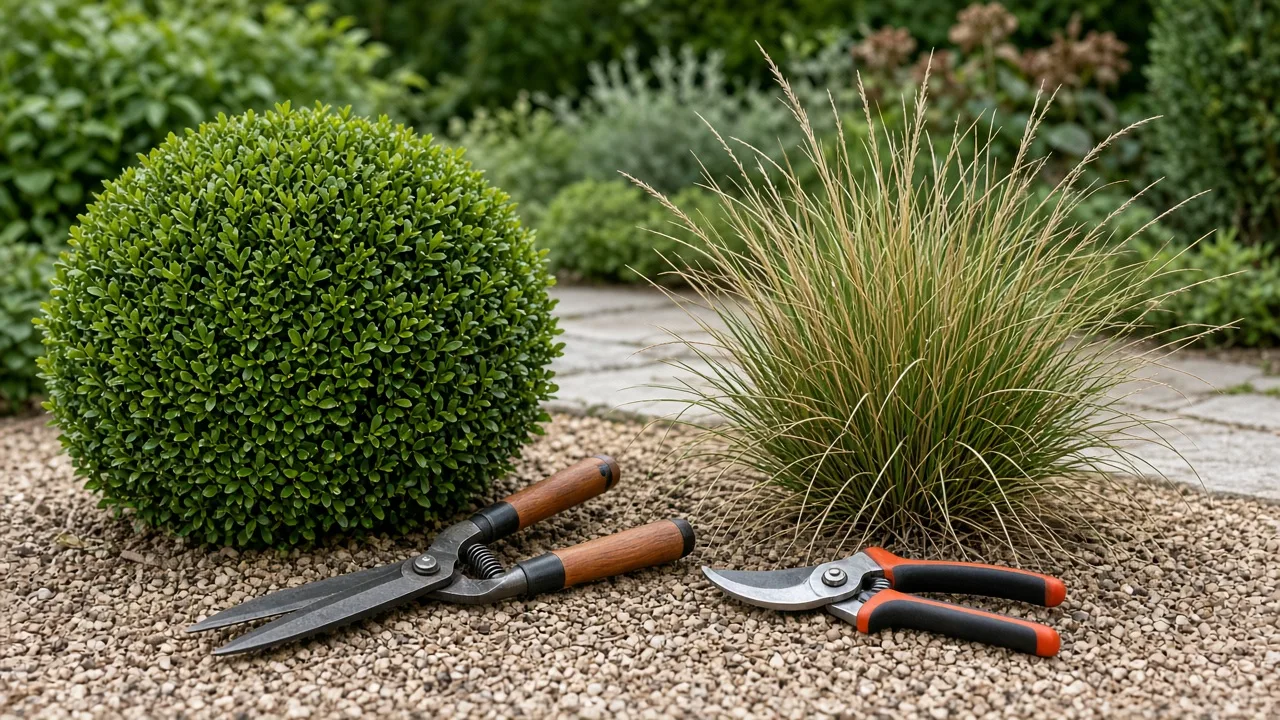
Roses punish dull tools. Crushing a cane with worn bypass pruners creates ragged tissue that heals slowly and invites infection. The minimum kit includes bypass hand pruners for canes up to about half an inch, long-handled loppers for thicker stems, and a curved pruning saw for old base wood. Bypass blades slice like scissors; anvil pruners crush live rose wood and are a poor choice.
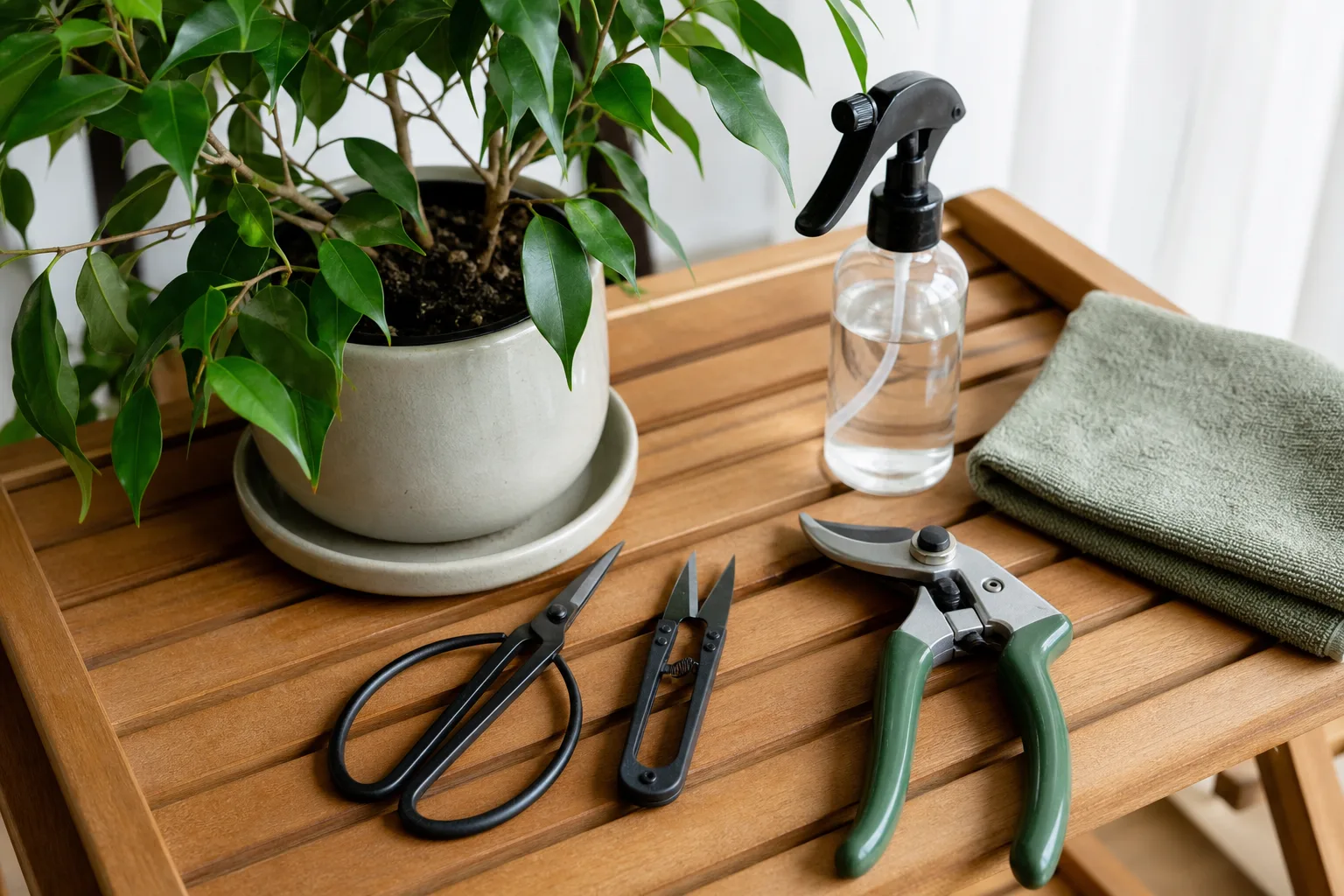
Wear thick gloves and long sleeves—thorn punctures are easy to dismiss but slow to heal and can introduce bacterial infections. Keep rubbing alcohol or a 10-percent bleach solution nearby to wipe blades between plants and after cutting diseased wood. Oregon State University Extension emphasizes clean, sharp equipment as the first rule of rose pruning because disease spreads on tools more often than beginners expect.
You do not need wound sealants on healthy wood. Clean open cuts heal best without tar-based dressings that trap moisture. White glue on large cuts is optional only where cane borers are a documented local problem—not a default step everywhere.
Where to Cut: Outward Buds, Five-Leaflet Nodes, and the 45-Degree Rule
Every rose cut—structural or deadheading—follows the same anatomy. Choose an outward-facing bud (a swelling growth point pointing away from the plant center) and cut about one-quarter inch above it at a 45-degree angle slanting away from the bud. Illinois Extension and OSU Extension specify this combination because it minimizes moisture pooling while leaving enough stem above the bud to prevent dieback into the growth point.
Outward-facing buds shape the bush as it grows. Inward-facing buds produce stems that cross through the center, reducing airflow. Consistent outward selection builds an open vase or goblet shape—the form that produces the most blooms with the least disease pressure.
On deadheading cuts, count leaflets. Leaves immediately under flowers often have three leaflets; lower leaves typically have five or seven. Oregon State University Extension recommends cutting above a five-leaflet leaf because nodes associated with three leaflets are less likely to produce strong flowering shoots. David Austin Roses advises the same five-leaflet rule for repeat-flowering English shrub roses during the active season (David Austin Roses).
How to Prune Roses Step by Step From the Ground Up
Work from the base upward and from dead wood toward live shape cuts. Step back after every few removals—the bush looks different from six inches away than from across the garden.
Remove Dead, Diseased, and Crossing Wood First
Start low. Follow suspect canes to the base or to the first visibly healthy section. Cut at a 45-degree angle into white or pale green pith. If the center of the cut is still brown, go lower or remove the entire cane. Strip and discard (do not compost) leaves showing black spot halos or heavy mildew—sanitation breaks disease cycles more reliably than spray alone.
Thin the Center and Remove Rootstock Suckers
Aim for three to six strong, evenly spaced canes around the plant. Remove weaker growth at the base or just above the graft union. Suckers—vigorous upright shoots from below the graft or from the root zone on budded plants—steal energy and may bloom in a different color or form than your named cultivar. Cut them flush at their origin, not mid-stem where they can resprout.
Open the center so light reaches inward buds. The finished silhouette should resemble a wide V or goblet, not a dense thicket.
Shorten Canes to Match Your Rose Type
Only after sanitation and thinning should you shorten live canes. Each remaining stem gets one clean cut above an outward-facing bud at the height appropriate for your rose class (detailed in the next section). Vary cane heights slightly on hybrid teas so all buds do not compete at the same level—staggered lengths produce a more natural flush sequence.
Pruning Hybrid Tea, Floribunda, and Shrub Roses for Maximum Flowers
Repeat-blooming bush roses share the same sanitation sequence but differ in how hard you cut live wood.
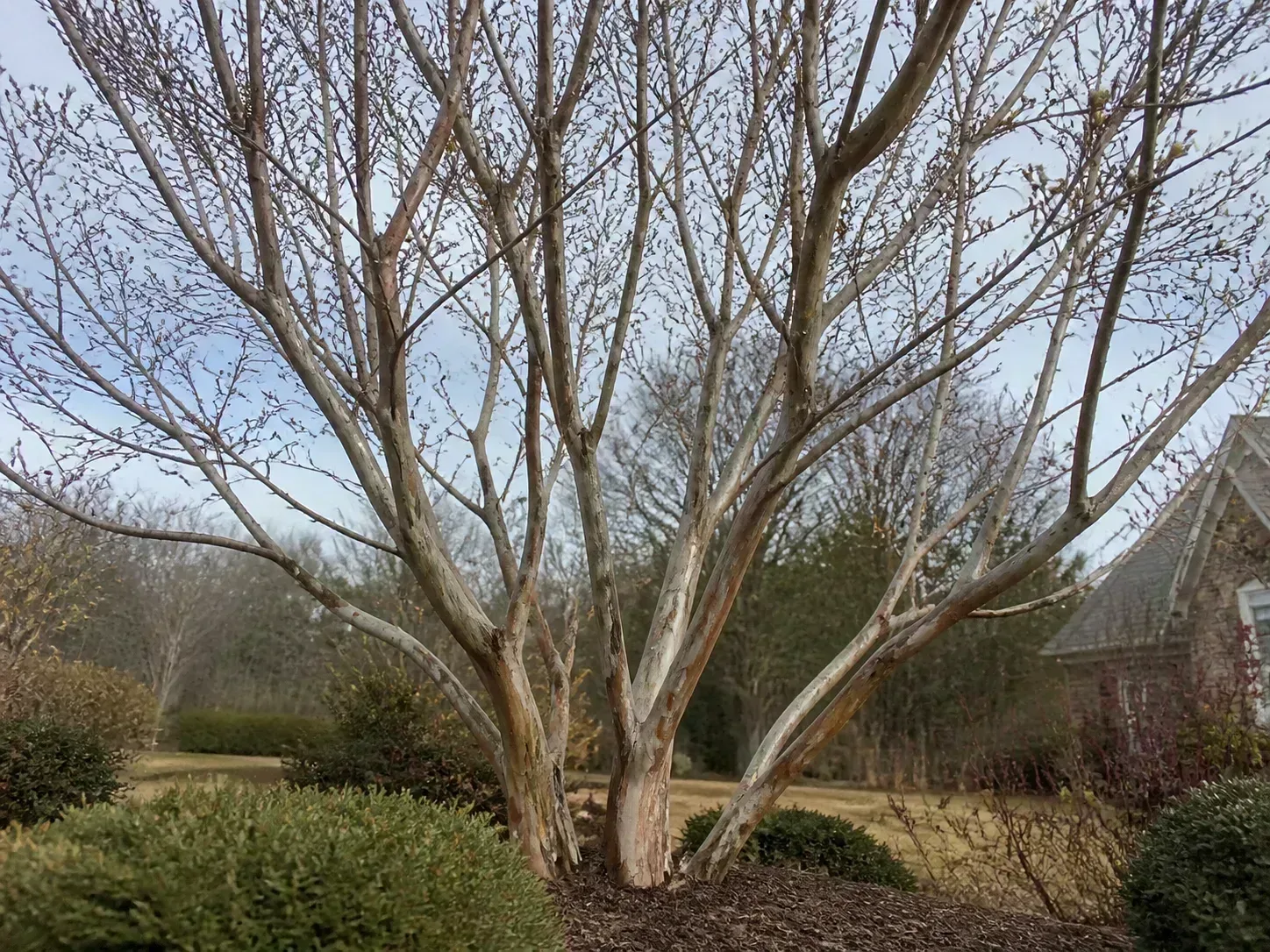
Hybrid tea and grandiflora roses produce large flowers on strong new canes and tolerate the hardest annual prune. The RHS shortens the strongest remaining shoots to four to six buds, roughly 10–15 cm (4–6 in) from where last year’s growth began, and less vigorous shoots to two to four buds slightly lower. Iowa State Extension and OSU Extension translate that to keeping three to six vigorous canes at roughly 12 to 18 inches on established plants. Remove one or two of the oldest canes entirely at the base each year so wood older than three years does not dominate.
Floribunda roses bloom in clusters and need a moderate spring prune. The RHS leaves strongest shoots within 25–30 cm (10–12 in) of soil level with more buds per cane so the plant can produce its characteristic mass of flowers. OSU Extension suggests 24 to 36 inches as a practical range. Do not strip floribundas to stubby sticks unless renovating a neglected specimen over multiple seasons.
Shrub and landscape roses—including Knock Out types—receive lighter spring cuts: remove dead and crossing wood, shorten live canes by about one-third, and deadhead clusters through summer. They tolerate neglect better than hybrid teas but still bloom heavier with an open center and periodic removal of the oldest canes.
First-year roses of any repeat-blooming class should be pruned lightly—focus on removing dead tips and establishing outward structure rather than hard renewal.
Climbing, Rambling, and Once-Blooming Roses Need Different Timing
Not every rose is a hybrid tea in a vase shape.
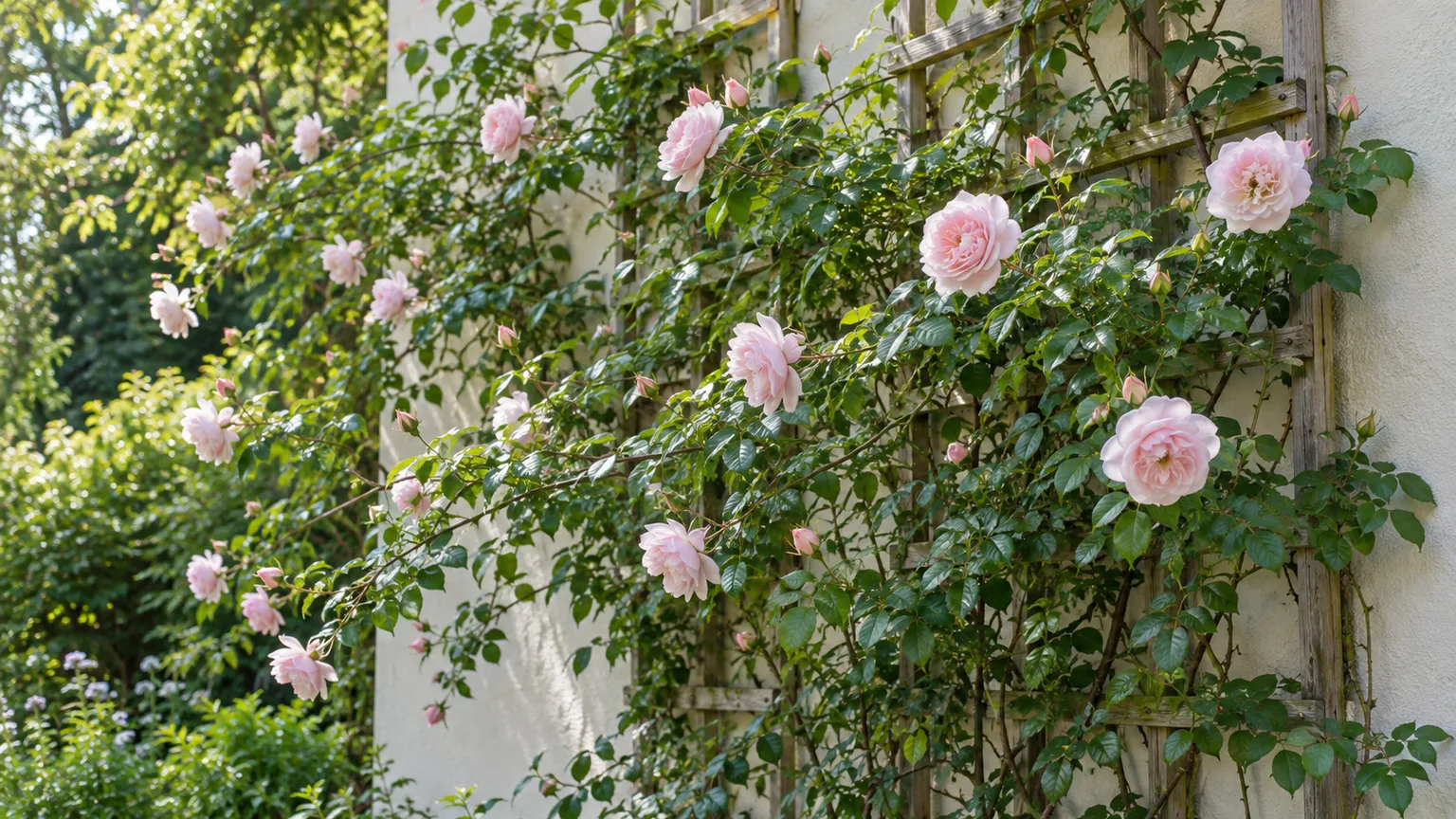
Climbing roses need horizontal or angled training so lateral shoots produce flowers along the length of the cane. After the main spring cleanup of dead wood, preserve the structural canes you trained on the support. Shorten side shoots that have bloomed, but do not hard-cut a mature climber to the ground—you destroy years of framework.
Rambling roses often bloom once on long previous-year wood. Prune after flowering by removing some of the oldest long canes at the base and tying in fresh young replacements. Spring hard cuts on a once-flowering rambler remove the wood that would have carried this year’s display.
Once-blooming old garden roses—Alba, Centifolia, Damask, Gallica, and many heritage shrubs—need only light shaping after they finish blooming, removing dead or thin wood without stripping the old stems that carry next year’s flowers. If you inherit an unknown rose, observe one bloom cycle before committing to hard spring cuts. One season of watching prevents years of wrong timing.
Deadheading for Repeat Blooms Through the Season
Deadheading is the highest-return task during the bloom season on repeat-flowering roses. Wait until petals have dropped or the flower is clearly spent. Follow the stem downward and count leaf nodes until you reach the first five-leaflet leaf. Position bypass pruners one-quarter inch above the outward-facing bud in that leaf axil and make one clean angled cut.
On strong established plants, deadhead consistently to five-leaflet nodes throughout summer. On weak or recently transplanted roses, remove only the faded flower and uppermost node while keeping maximum foliage to rebuild vigor. Each aggressive deadheading cut removes photosynthetic tissue; on a struggling plant, food production matters more than forcing another immediate flush.
When an entire floribunda cluster has finished, remove the whole flowering head above the uppermost strong five-leaflet leaf rather than snipping individual wilted blooms one at a time. For cut-flower harvesting, use the same outward-bud logic but cut lower on the cane when you want longer stems—provided enough foliage remains to sustain regrowth.
When to Stop Pruning and Deadheading
Stop removing spent blooms in late summer to early autumn—late August through September in many temperate zones, or when your local cool-season bloom cycle winds down in tropical climates—so the plant can slow growth and prepare for winter or dormancy. Iowa State Extension notes that developing rose hips slows vegetative growth and helps harden wood for winter in cold climates.
Skip deadheading on rugosa roses, species roses, and certain shrub cultivars if you want ornamental hips for winter interest or wildlife. Avoid fall hard pruning in cold climates; stimulating tender late-season growth before frost is one of the fastest ways to lose canes overwinter.
In India, deadhead actively through the November-to-February flush, then ease off as temperatures rise and the plant shifts toward summer stress management rather than continuous forcing.
Common Rose Pruning Mistakes and How to Recover
Spring pruning a once-bloomer removes the year’s flowers entirely. Recovery: wait until after it blooms next cycle, then prune lightly for shape only. You cannot undo a missed season, but you can stop repeating the error.
Deadheading to three-leaflet nodes all summer produces weak, twiggy regrowth on hybrid teas. Recovery: switch to five-leaflet cuts and feed lightly after a heavy bloom flush if soil tests support it.
Leaving rootstock suckers turns a named cultivar into a mixed bush with inferior blooms. Recovery: trace each sucker to its base and remove it; repeat monthly because rootstock is persistent.
Over-pruning a stressed plant—heat wave, transplant, or black spot outbreak—strips the foliage needed to recover. Recovery: water consistently at the base, improve airflow, remove only diseased leaves to the trash, and allow partial regrowth before the next hard cut.
Never pruning at all produces a tangled, disease-prone bush with few quality blooms. Recovery: renovate over two or three seasons, removing a third of the oldest wood each spring rather than cutting everything to the ground at once.
Roses are forgiving. Most “mistakes” grow out within a season if you return to sanitation-first cuts and correct timing for your rose class.
Conclusion
More blooms from roses come from one well-timed structural prune plus consistent deadheading on repeat-flowering types—not from random mid-summer hacking or a single angled cut rule repeated without context. Remove dead and diseased wood first, open the center, match cut height to hybrid tea vs floribunda vs shrub class, and deadhead to outward buds above five-leaflet leaves while the plant is strong.
Watch once-bloomers and climbers for different calendars, stop deadheading late in the season when hips and hardening matter, and pair every cut with sharp, disinfected tools. When fundamentals—sun, water, soil—are right, this workflow is what turns a dense, spotty bush into the open, floriferous plant you planted. For ongoing care beyond cuts, keep our rose pruning guide and rose care guide bookmarked for feeding, watering, and disease troubleshooting.