Rose Leaves Turning Yellow: 8 Causes and Fixes
Yellow rose leaves can mean drought, disease, or iron chlorosis. Learn eight common causes, how to tell them apart, and what to fix first.
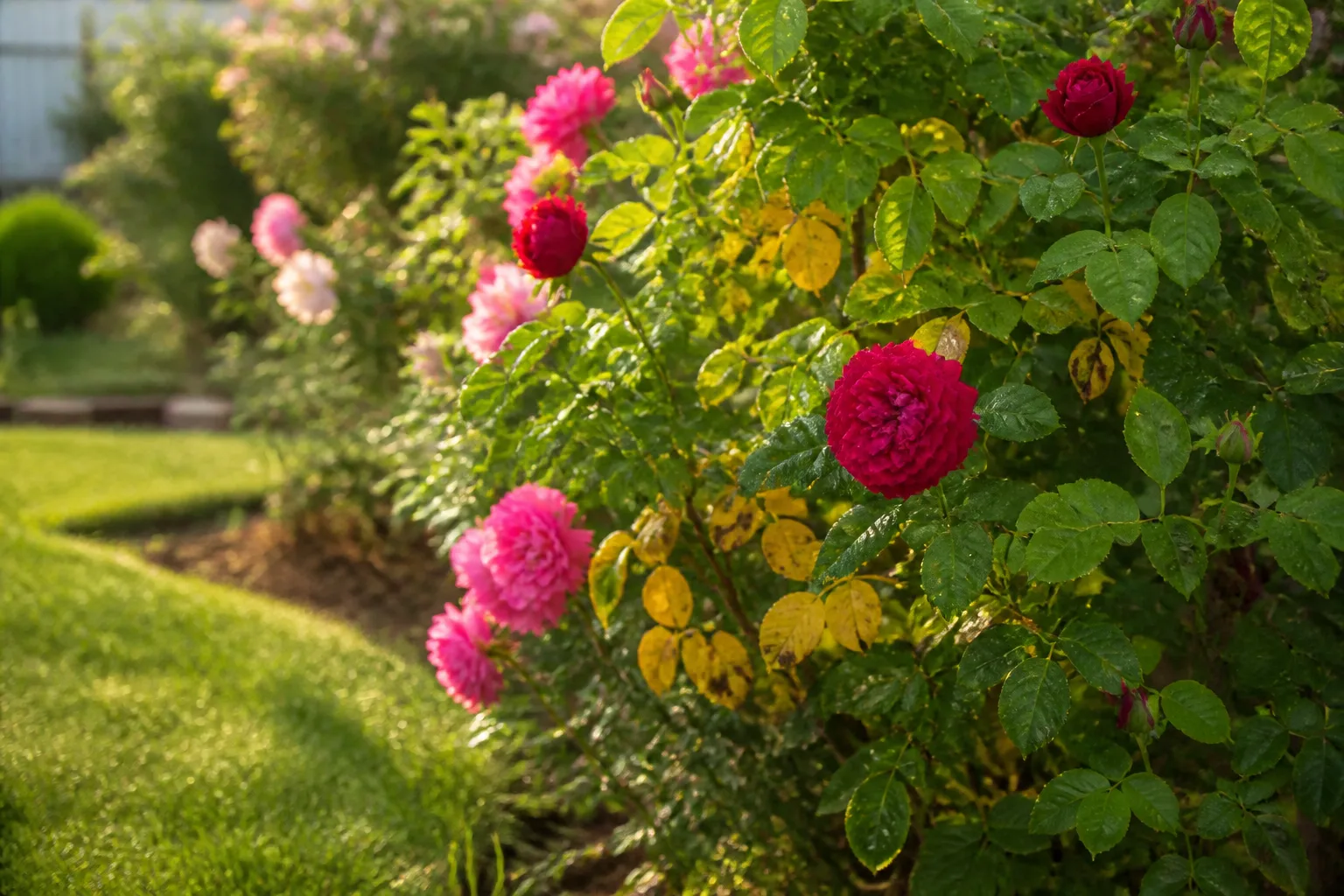
Yellow leaves on a rose bush are a stress signal, not a single diagnosis. The same faded green can mean thirsty roots, saturated soil, iron locked up by alkaline pH, or black spot racing up the cane. Treat the wrong cause and you waste a bloom cycle—or make a sick plant sicker.
The fix starts with where yellowing began, what pattern the leaf shows, and what the soil and weather were doing in the week before. Match that snapshot to one of eight common causes below, then take the first low-risk action that fits.
Start by Reading the Leaf Pattern, Not the Panic
Before you fertilize, spray, or strip every yellow leaf, read the plant the way a rosarian would at a garden walk. Photograph one affected leaf (top and bottom), the whole bush, and the soil surface.
Note whether damage started on the lowest leaves or jumped to new growth at the tips, whether yellowing is uniform or mottled, and whether spots have dark centers or crisp brown edges.
Roses are sun-loving shrubs with thin leaves that lose water fast in heat. They need steady moisture and slightly acidic soil, but they also hate waterlogged roots and leaves that stay wet overnight. That combination is why water mistakes and foliar disease both sit at the top of every yellow-leaf checklist (Gardening Know How).
Four Questions That Narrow the Cause in Minutes
Ask these in order. The first strong match usually points to your next step.
1. What does the soil feel like 2 inches down? If it is wet and the plant still wilts, suspect root stress from overwatering or poor drainage—not thirst. If it is powder-dry and edges brown before yellow spreads, suspect underwatering.
2. Where did yellowing start? Bottom-up on older leaves often tracks nitrogen shortage, black spot, or normal aging. Yellow on new growth with green veins screams iron chlorosis. Random stippling on upper leaves raises mite or aphid concern.
3. Is there a pattern on the leaf blade? Even yellowing without spots differs from purple-black spots with yellow halos (black spot), fine pale mottling (mites), or sticky residue (aphids). Flip every suspect leaf.
4. What was the weather? Cool, wet springs favor black spot. Hot, dry stretches favor spider mites and heat stress. A heat wave right after heavy rain can trigger both root stress and foliar disease on the same bush.
When Yellow Rose Leaves Are Normal
Not every yellow leaf is an emergency. Roses shed older foliage throughout the season, and some cultivars drop lower leaves when dense upper growth blocks light. Autumn color change before leaf fall is also expected on many roses in cold climates.
Seasonal Shedding and Older Leaf Drop
If yellowing is limited to a few older leaves near the base, the rest of the bush looks green, and flowers are still forming, you may be seeing natural senescence—not disease. Evergreen and semi-evergreen roses also shed old leaves gradually; the RHS notes that yellowing before leaf drop on established wood is common on many woody plants when only older foliage is affected (RHS).
Worry when young leaves yellow, when defoliation climbs quickly up the cane, or when the bush loses vigor and stops blooming. Those patterns point to water, nutrition, pest, or disease stress—not routine aging.
Underwatering and Drought Stress
Roses that dry out too long show wilt first, then yellowing that often starts at leaf edges and tips. Buds may fail to open or drop, and container roses on sunny patios are the first to crash because their root volume is small and soil dries in hours.
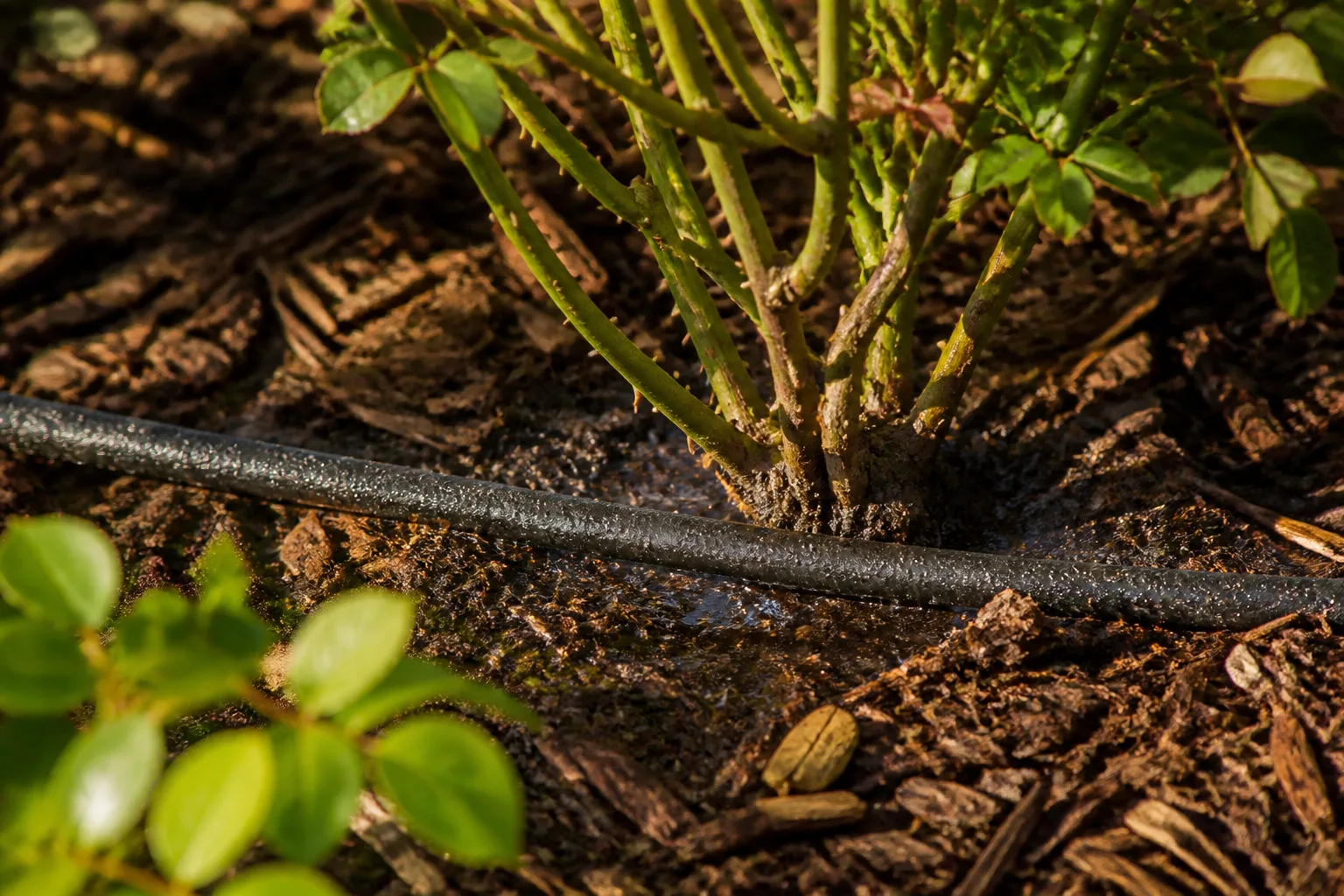
Most established in-ground roses need about 1 to 2 inches of water per week, delivered deeply rather than in daily sprinkles (Gardening Know How). Sandy soil and windy heat can require more; mulch 2–3 inches deep to slow evaporation. Check moisture with a finger or probe 2 inches down—do not rely on surface appearance alone.
Fix: Water slowly at the base until the root zone is moist to 6–8 inches. For containers, water until a little drains from the bottom, then discard standing water in saucers. Repeat on a schedule tied to soil dryness, not the calendar. Newly planted roses need more frequent attention the first season while roots spread.
Overwatering, Poor Drainage, and Root Rot
Overwatered roses mimic drought stress: leaves wilt and turn yellow even though the soil is wet. Heavy clay, compacted beds, low spots, and pots without drainage holes are common triggers. Advanced cases bring a sour smell from the root zone, soft brown roots, and sudden leaf drop.
The RHS groups waterlogged soil among cultural causes of chlorosis because saturated roots cannot take up nutrients effectively (RHS). Fungal root rots thrive in the same conditions, weakening the plant further.
Fix: Stop watering until the top 2 inches dry. Improve drainage with compost worked into clay, raise beds, or repot container roses into fresh mix with holes. Never pile mulch against the graft union. If roots are mushy and the cane is shriveled below the graft, recovery may be unlikely—focus on prevention on neighboring plants.
Heat Stress and Sun Scorch
Roses love sun, but prolonged highs above 85°F (29°C) with low humidity can slow photosynthesis and push leaves toward yellow or tan scorch at the margins. Reflective walls, dark containers, and root zones that overheat on pavement make the problem worse.
Fix: Mulch to cool soil, shift container roses to afternoon shade during heat waves, and water deeply in early morning. Avoid foliar feeds or oil sprays during midday heat. Choose heat-tolerant cultivars for your USDA zone if this repeats every summer.
Not Enough Sunlight and Self-Shading
Roses need six to eight hours of direct sun daily for strong foliage and repeat bloom. Too much shade fades leaves to yellow-green, stretches stems, and reduces flower count. Overgrown nearby shrubs, fence shadows, and dense rose canopies that shade their own lower leaves are frequent culprits.
Fix: Move or replant in winter dormancy if the site is permanently shady. Prune for an open vase shape so light reaches inner canes. Strip only heavily shaded lower leaves if they are clearly light-starved—not if they show disease spots you would spread by handling.
Nutrient Deficiencies and Iron Chlorosis
Yellow leaves with green veins on young leaves point to iron deficiency (interveinal chlorosis). Nitrogen shortage more often yellows older leaves first, sometimes with reduced growth and smaller new leaves. Magnesium and manganese deficiencies also cause interveinal patterns but tend to appear on older foliage (RHS).
Roses prefer slightly acidic soil around pH 6.0–6.5. When pH climbs alkaline, iron stays in the soil but roots cannot absorb it—adding more iron without fixing pH fails repeatedly.
Soil pH That Blocks Iron and Magnesium
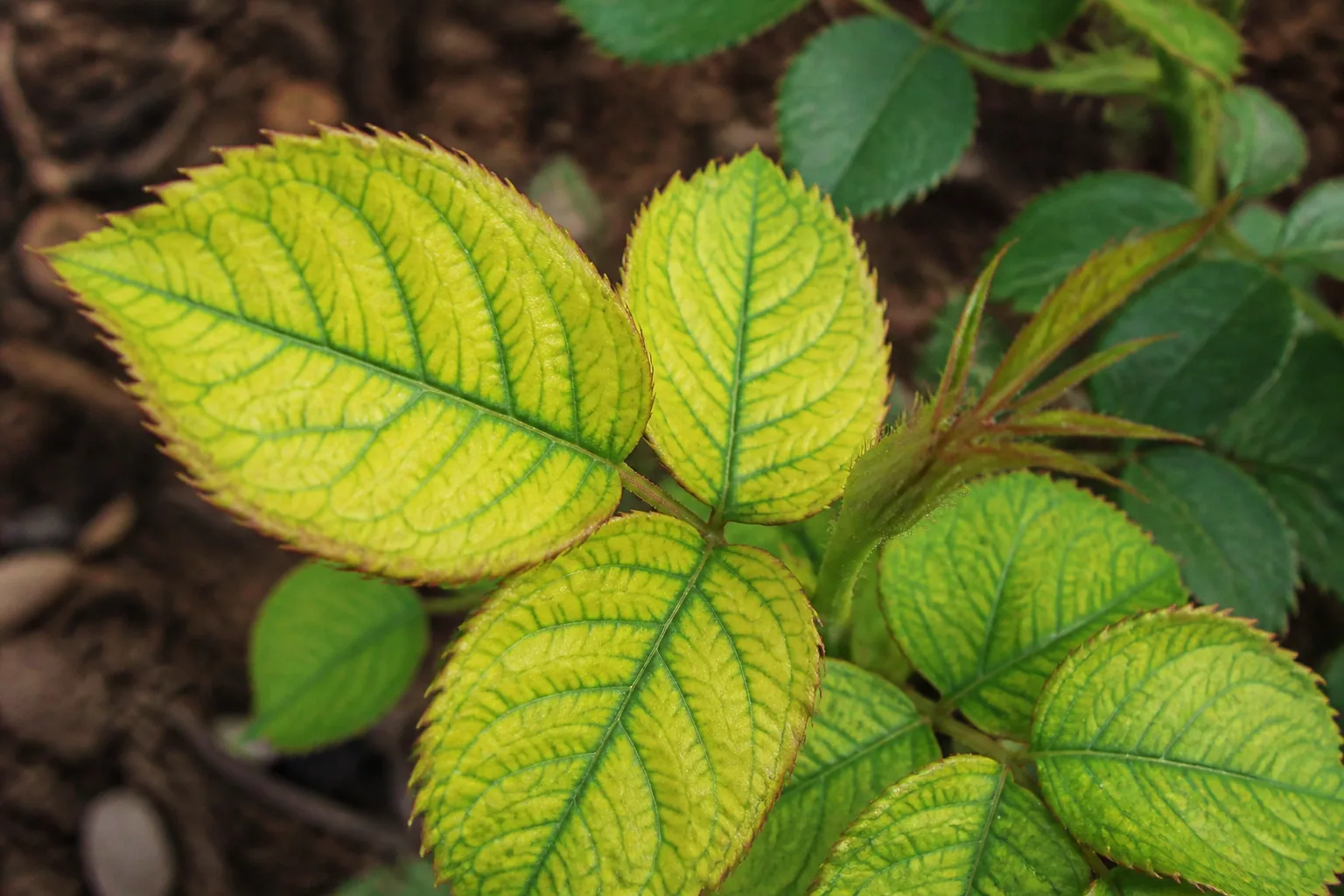
Run a soil test before guessing. If pH is high, lower it gradually with sulfur or acidifying organic matter according to label or extension rates for your soil type. For confirmed iron chlorosis on an otherwise healthy bush, chelated iron foliar sprays or soil drenches can green leaves within weeks, but they are a bridge—not a substitute for correcting pH.
Feed mature roses with a balanced rose fertilizer or compost in early spring, after the first flush, and lightly in late summer where your climate allows. Skip heavy nitrogen late in the season in cold zones—it can push soft growth that winter-kills.
Black Spot and Other Fungal Diseases
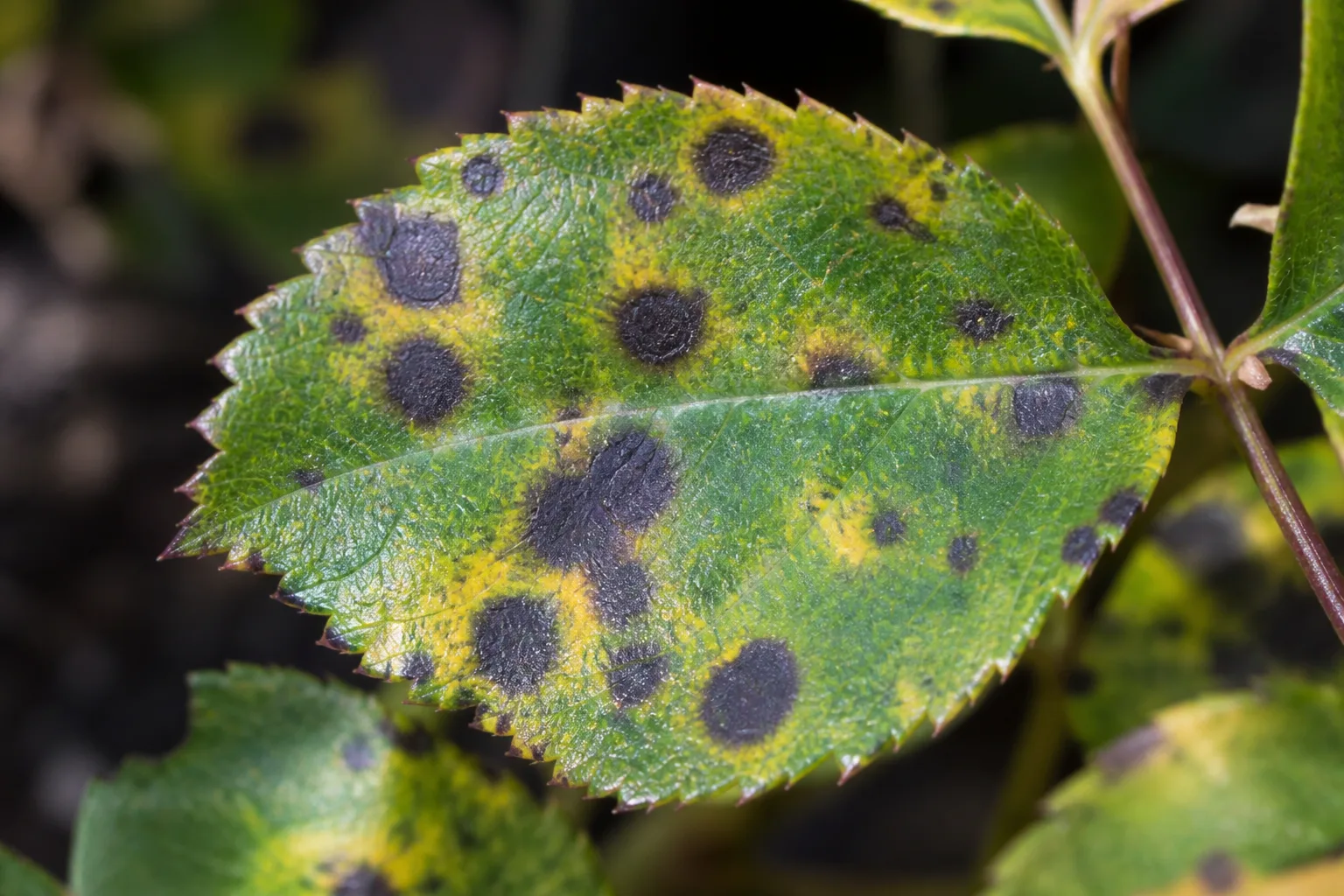
Black spot (Diplocarpon rosae) is the signature rose foliar disease: purple or black spots on upper leaf surfaces, yellow tissue around spots, and premature leaf drop starting low on the plant (RHS). The Missouri Botanical Garden notes spots range from one-tenth to one-half inch, and defoliation weakens plants over time even though black spot rarely kills outright (Missouri Botanical Garden).
Spores need leaf wetness for about seven hours to infect. Overhead watering, crowded beds, and cool, rainy springs accelerate spread. Many yellow and copper-toned cultivars are more susceptible; resistance bred into new varieties can fail as fungal strains evolve (RHS).
Fix: Pick off and bag infected leaves—do not compost them. Rake fallen debris in autumn and mulch after cleanup. Water at the base early in the day. Improve airflow with pruning. Protectant fungicides (sulfur, copper, chlorothalonil where legal—always read labels) applied before infection season help on high-value bushes; they will not cure spots already on leaves (Missouri Botanical Garden). Consider replacing chronically defoliated cultivars with proven resistant types such as ‘Knock Out’, ‘Carefree Beauty’, or ‘Bonica’ in problem climates.
Spider Mites, Aphids, and Sap-Sucking Pests
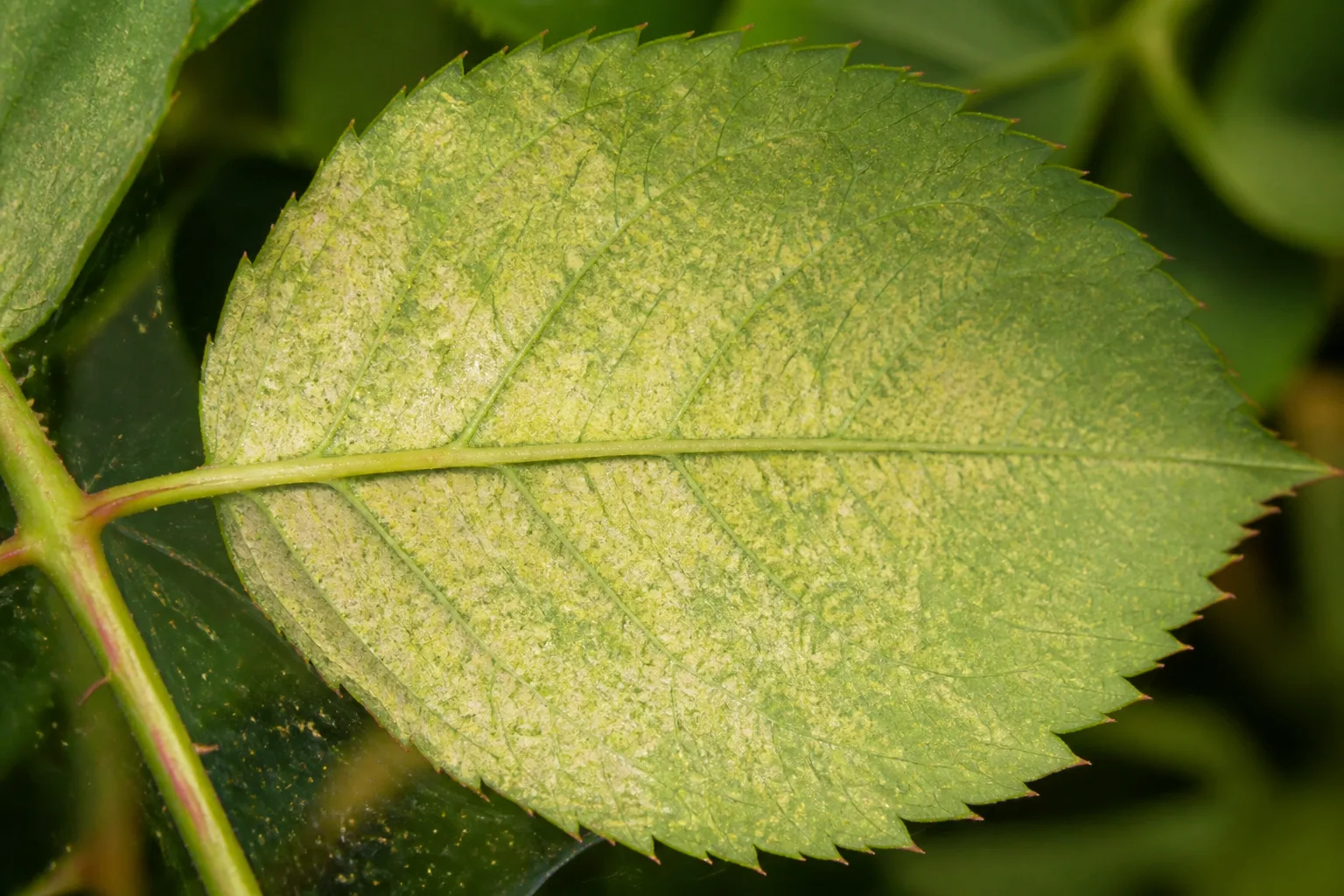
Two-spotted spider mites (Tetranychus urticae) thrive in hot, dry weather. Fine pale mottling appears on upper leaf surfaces; undersides may show tiny yellow-green mites, cast skins, and silk webbing in heavy infestations (RHS). Leaves bronze, yellow, and drop as feeding continues.
Aphids cluster on tender shoots and leave sticky honeydew; thrips scar petals and stipple foliage. All three drain sap and can yellow leaves indirectly by stressing the plant.
Fix: Blast mites and aphids off with a strong morning hose spray, targeting undersides. Repeat every few days until populations crash. Horticultural oil or insecticidal soap helps on persistent cases—avoid broad-spectrum pesticides that kill predatory mites and lady beetles. Increase humidity around container roses during heat waves; mites explode when air is dry.
Fertilizer Burn and Salt Buildup
Synthetic quick-release feeds applied too often or too close to dry roots can scorch leaf edges to yellow-brown and damage fine root hairs. Container roses with accumulated salts from tap water and repeated granular feeds show tip burn and general yellowing despite wet soil.
Fix: Flush container soil with clean water until drainage runs clear. Switch to slow-release organic rose food at label rates. Never fertilize drought-stressed or heat-stressed plants—water first, feed when recovered. More fertilizer is not the answer to yellow leaves unless a soil test confirms a deficiency.
A Step-by-Step Fix Plan When Symptoms Overlap
Real gardens rarely serve one problem at a time. Use this sequence when you see yellow leaves and feel stuck.
Step 1 — Check soil moisture at 2 inches. Fix watering for one week before any other intervention. Both too wet and too dry yellow leaves; fertilizer on waterlogged roots makes things worse.
Step 2 — Inspect leaf undersides and lower canopy. Spots with halos → black spot hygiene. Stippling and webbing → mites. Sticky shoots → aphids.
Step 3 — Read the yellow pattern. Green veins on new leaves → test pH and iron. Uniform lower-leaf fade on an otherwise blooming bush → often nitrogen or normal aging.
Step 4 — Act on the strongest match. Remove diseased leaves to the trash, adjust irrigation, or apply chelated iron only when tests support it. Photograph progress every three to five days.
Step 5 — Escalate if defoliation continues. Submit a leaf sample to your county extension office, consider a resistant replacement, and review whether the planting site meets rose basics: sun, drainage, and air flow.
Prevention Checklist for Healthier Rose Foliage
Prevention beats rescue once black spot or mites get ahead of you. Site roses in full sun with good air circulation. Amend heavy soil with compost at planting and mulch annually without burying the graft. Water at the base, early in the day, aiming for deep, infrequent sessions rather than nightly sprinkles on leaves.
Test soil pH every few years in alkaline regions. Choose disease-resistant cultivars suited to your humidity and heat. Clean pruners between cuts on infected plants, and strip fallen leaves in autumn so overwintering spores have fewer places to hide.
Scout weekly in spring and during hot dry spells—mites and aphids are easiest to stop when you catch the first pale mottling or sticky new growth. Healthy foliage supports the photosynthesis that fuels the blooms you planted the bush for in the first place.
Conclusion
Yellow rose leaves always mean the plant is under stress, but the stressor is identifiable if you read the pattern before you react. Normal aging and seasonal drop differ from black spot halos, iron chlorosis on new growth, and the wilt-you-see-on-wet-soil signature of overwatering.
Start with soil moisture and leaf undersides, match what you find to the cause sections above, and fix one problem at a time. When you give roses sun, drainage, consistent deep water, and timely hygiene, yellow leaves become an early warning you can answer—not a mystery that costs you the whole bush.