Cover Raised Garden Beds for Winter: When and How
Learn when to cover raised garden beds for winter, which materials work for empty beds vs. growing crops, and the timing mistakes that cause rot and frost damage.

Most raised beds benefit from some kind of winter cover, but the right cover depends entirely on what is—or is not—growing inside the frame. An empty bed after tomato season wants a different blanket than a bed still holding kale, and both differ from a bed you just sowed with winter rye. Covering is not one chore with one material; it is a short decision tree you run once per bed after cleanup.
The Short Answer: Cover Most Beds, But Match the Cover to What’s Inside
Yes—cover most raised garden beds for winter after you finish fall cleanup, with one important caveat: the cover must match the bed’s job. Empty beds need soil protection through mulch, cardboard, or a anchored tarp. Beds with winter vegetables need floating row cover or a hoop tunnel before hard freezes. Beds you are resting biologically may carry a living cover crop instead of a tarp. A few beds should stay open—garlic, stratifying perennial seed, and some frost-free climates are the main exceptions.
If you do nothing else, never leave bare, amended soil exposed all winter in a permanent raised bed. Rain and snow leach nutrients from the loose top layer, wind erodes fine compost, and weed seeds colonize the surface long before you are ready to plant. A cover is cheaper than replacing soil and fighting spring chickweed.
Three Bed Scenarios That Change Your Cover Plan
Empty beds (no live crops): After removing spent plants and old mulch, top-dress with compost, then cover with 2–3 inches of straw, leaves, or compost mulch, sheet cardboard held down with bricks, or a breathable tarp if weed suppression matters more than soil biology. Pull tarps in early spring so soil can warm.
Beds with winter crops: Kale, spinach, mache, carrots, and hardy brassicas keep producing with row cover on hoops. Install supports before the ground freezes so stakes drive in easily. Heavyweight frost fabric buys a few degrees on cold nights; vent on sunny days above freezing so plants do not cook.
Beds sown to cover crops: Oats, winter rye, crimson clover, or a legume-grass mix become the cover itself. Sow four to six weeks before your first frost so roots establish. Terminate in spring by cutting—not tilling wet clay—before seed set in warm zones.
Why Raised Beds Need Winter Protection More Than In-Ground Plots
Raised beds are not just in-ground gardens on stilts. Their elevated soil volume, exposed sidewalls, and engineered drainage change how winter hits them—and that is why blanket advice from flat-bed guides often fails.
Faster Drainage, Faster Freeze-Thaw, and Exposed Frame Materials
Because raised beds drain aggressively, the root zone can dry out and cool faster than surrounding soil during dry, windy winters. That is good for avoiding soggy crowns but bad if you wanted residual warmth for late crops. The exposed walls of wood, metal, or composite also cycle temperature more sharply than soil buried in the ground; repeated freeze-thaw can heave small plants and stress corner joints on older frames.
University of Minnesota Extension notes that raised beds succeed when soil quality, drainage, and site match the crop—winter covering is part of that match, especially on pavement or patio sites where heat radiates into the bed from below in summer but cold penetrates from all sides in winter. If you are still choosing a frame, our best raised garden beds guide explains depth and material trade-offs that affect how aggressively you need to insulate roots.
Empty raised beds lose structure when precipitation pounds bare soil. Compost and fine topsoil wash toward lower edges; nutrients tied to organic matter migrate with water. A winter cover keeps the investment you made in soil where you need it in spring. For broader bed-prep context—soil tests, vole control, drainage—see ways to start prepping garden beds in winter.
When to Cover Raised Beds (Timing That Prevents Costly Mistakes)
Timing separates protective covering from accidentally waking plants early or sealing in rot. Run this sequence bed by bed after your last harvest.
Step 1 — Clean up after frost kills tender crops. Remove diseased foliage, pull finished annuals, and rake out old, matted mulch that harbored slugs or spores. Epic Gardening’s winter garden prep guidance recommends balancing neat beds with keeping useful organic matter—apply that same balance in raised beds by composting healthy debris instead of leaving it smothering crowns.
Step 2 — Amend while soil is still workable. Top-dress with ½–1 inch of compost to replace what summer crops removed. If you have not tested in three to five years, submit a sample now; Penn State Extension emphasizes testing to set fertilizer and lime needs rather than guessing from yellow leaves.
Step 3 — Match cover timing to cover type. For empty-bed mulch, wait until after a hard frost when soil is cold and plants are dormant—applying thick mulch too early keeps soil warm and can break dormancy before a brutal freeze. For row covers on active crops, install before the ground freezes so hoops and stakes seat properly. For tarps and cardboard on empty beds, lay them after cleanup anytime the soil is not muddy; anchor before winter winds.
Step 4 — Check the forecast for winter crops. When nights dip toward 28–32°F (–2 to 0°C), drape frost cloth; when a hard freeze is forecast, double up or switch to heavyweight fabric. Remove or vent covers on warm sunny days above 45°F (7°C) to prevent heat buildup and fungal issues.
After Cleanup, After Hard Frost for Mulch, Before Ground Freezes for Crops
Think of mulch as a second blanket on already-frozen ground, not a heater you turn on in October. Push a finger into soil an inch deep: if it yields easily and feels cool but not frozen, wait on winter mulch around dormant perennials at the bed edge. If the surface is hard and frozen, mulch 2–3 inches of straw, shredded leaves, or compost—pulled back from stems in a donut, not a volcano.
How to Cover Empty Raised Beds Step by Step
Empty beds are the scenario most gardeners picture when they ask about tarps and blankets. This is the sequence that protects soil without creating spring surprises.
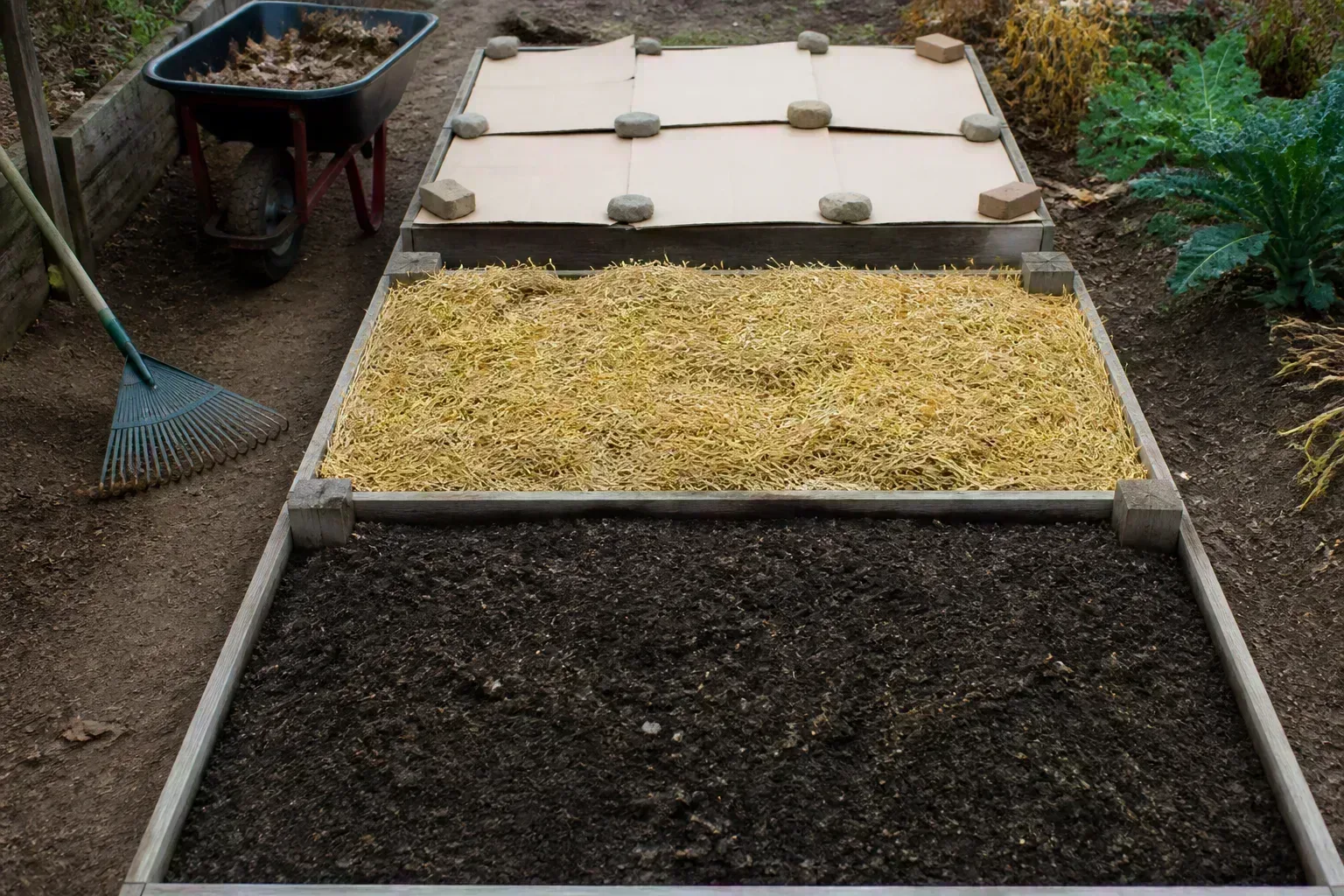
1. Strip old mulch and debris. Rake out straw, grass clippings, and leaf pack from the growing season. Insects and disease spores overwinter in damp, matted layers—especially near where tomatoes or squash grew.
2. Add a thin green layer if you have it. Shredded leaves, grass clippings, or chopped vegetable trimmings break down slowly under your winter cover and feed microbes. Spread evenly; do not pile against frame walls where rodents tunnel.
3. Top-dress compost. Raised bed soil level drops each season from watering, harvest, and organic matter breakdown. Compost refills volume and replaces nitrogen without digging—which damages winter soil structure.
4. Choose and anchor your cover. Mulch needs no anchor beyond depth. Cardboard sheets want bricks, stones, or soil pins on edges so wind cannot peel corners. Tarps must be tied down with grommets or weighted every few feet; leave a slight sag so water runs off, not pools. Black plastic warms soil early in spring but should be UV-stabilized greenhouse film if you keep it more than one season—thin painter’s plastic shreds by February.
5. Note what you did on a bed map. Spring-you will forget which bed had tarp vs. leaf mulch. Mark termination dates for cover crops and reminder to pull tarps two weeks before planting.
Remove Old Mulch, Feed the Soil, Then Anchor Your Cover
Skipping the old-mulch removal is how slug populations and fungal spores inherit next year’s lettuce bed. Removing does not mean sterilizing—leave healthy worm castings and fine crumb structure. You are evicting pest hotels, not stripping living soil.
Best Materials for Covering Empty Raised Beds
Material choice is a trade-off between weed control, soil life, warmth, and spring workload. None is perfect; each wins on a different priority.
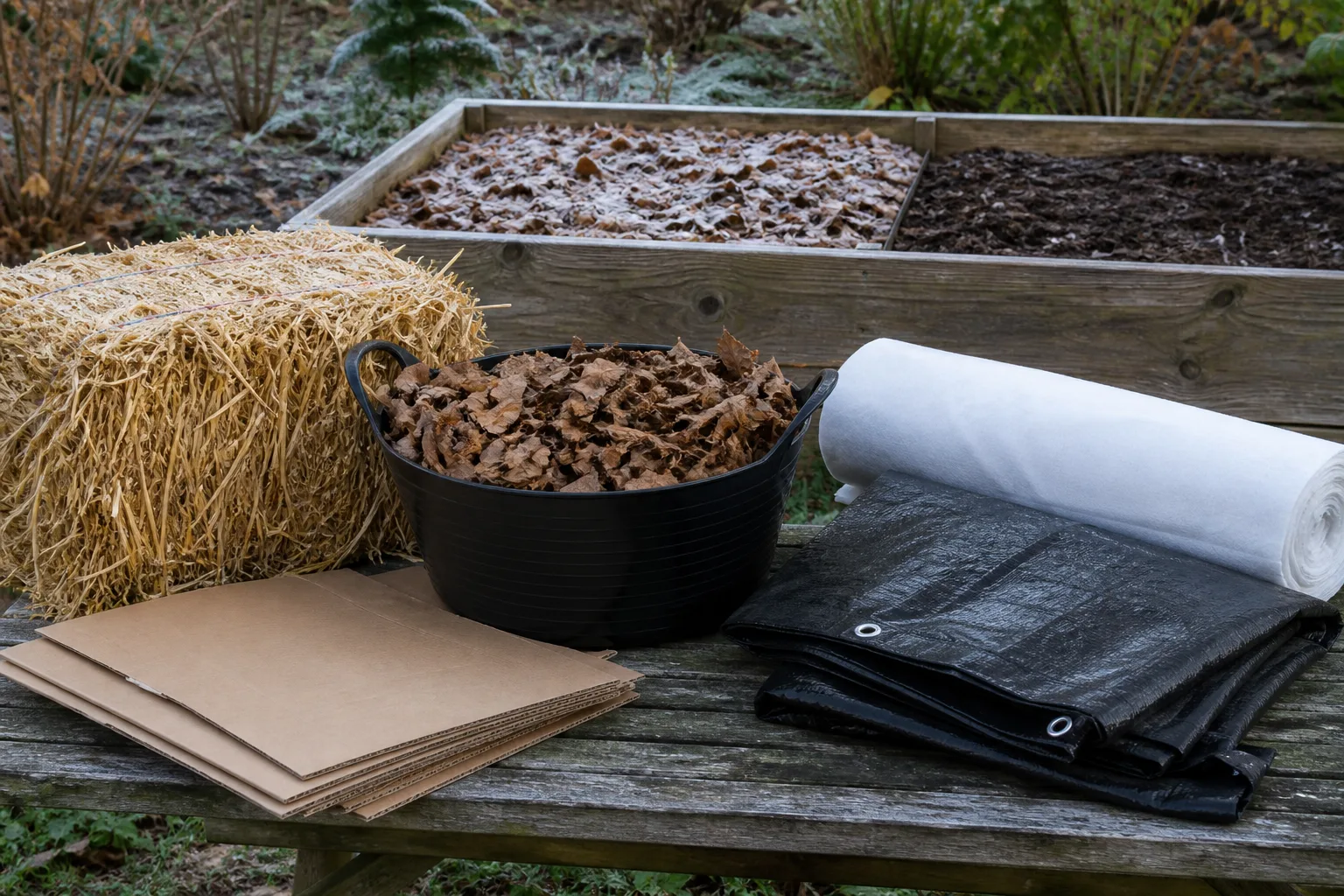
Straw, leaves, and compost mulch insulate frozen soil, feed microbes as they break down, and suppress many weed seeds without sealing the surface. Use 2–3 inches, keep mulch off crowns, and favor seed-free straw over hay, which carries grass seeds. Fallen leaves are free and excellent if shredded or mixed so they do not mat; our mulching vs. bagging vs. leaving leaves guide explains when whole-leaf layers help vs. harm.
Cardboard stops erosion and smothers winter weeds on empty beds. Lay two layers over moist soil, overlap seams six inches, and wet cardboard so wind does not lift it. Remove or punch planting holes in spring; do not leave glossy printed cardboard if you avoid inks in food beds.
Tarps give a weed-free spring surface where you pull the tarp, rake lightly, and plant. They block rain—so beds under tarps stay drier and cooler, which slows early spring warming. Do not seal edges so tightly that anaerobic smells develop; a few soil gaps at corners help gas exchange.
Black or clear plastic on hoops turns a bed into a cold frame. Clear plastic on sunny days above freezing can heat quickly—vent daily. Never drape plastic directly on plant foliage on frost nights; plastic conducts cold to leaves and causes burn where fabric would breathe.
Old blankets and burlap work in a pinch for one or two nights on empty beds or cloched plants, but they absorb water, rot, and harbor rodents if left all winter. Treat them as emergency frost tools, not season-long covers.
Mulch, Cardboard, Tarps, and Plastic Compared
| Material | Best for | Spring payoff | Main risk |
|---|---|---|---|
| Straw/leaves/compost | Soil life, insulation | Richer surface, fewer weeds | Early timing breaks dormancy; voles in thick layers |
| Cardboard | Weed wipeout, erosion control | Clean surface after removal | Can dry slowly; remove before planting small seeds |
| Tarp | Weed-free empty bed | Fast planting into flat soil | Blocks rain; slow spring warm-up if left late |
| Plastic on hoops | Hardy greens, early spring warm | Extended harvest, earlier soil heat | Overheating; must vent; plastic-on-leaf frost burn |
Covering Raised Beds With Winter Crops Still Growing
If your raised bed still holds food, cover the plants, not just the soil. Winter salads and roots reward protection that empty-bed tarps cannot provide.
Floating row cover (frost cloth) draped over hoops traps a few degrees of heat while letting rain and light through. Anchor edges to the frame or soil—heat escapes through gaps. Lightweight fabric can stay on for weeks; heavyweight fabric is for cold snaps only and should come off between events so plants get light.
Hoop tunnels with UV-resistant greenhouse plastic turn a raised bed into a mini greenhouse. Open ends or roll-up sides on sunny days above freezing; close before sunset on cold nights. Metal hoops handle snow load better than thin PVC in northern climates. For larger ambitions, compare frame options in our best greenhouses guide—but a low hoop on an existing bed covers most winter-greens goals.
Cloches and milk-jug hot caps suit single precious plants—a late pepper or parsley patch—without covering the whole bed. Remove caps when sun returns so condensation does not cook seedlings.
Water the bed the afternoon before a frost night. Moist soil holds more daytime heat than dry soil, radiating warmth under cover through the night. Epic Gardening’s raised bed winter prep article stresses that moisture-plus-cover combo for extending harvest into cold months.
Row Covers, Hoop Tunnels, and When Fabric Beats Plastic
Fabric wins when plants need weeks of protection with light and rain penetration—spinach under lightweight row cover often harvests all winter in zone 7 with mild management. Plastic wins when you need maximum heat retention for hard freezes and you can vent daily—think kale and mache in zone 5 with disciplined morning roll-ups. Never choose plastic for a quick one-night frost if it will touch leaves; use fabric or buckets with an air gap.
Living Covers: Cover Crops in Raised Beds
Cover crops are the cover you grow instead of spread. They hold soil with living roots, add organic matter, and suppress weeds—ideal for beds you will not plant until late spring.
Sow oats in late summer for a winter-killed mat in cold zones—dead tops mulch the surface and roots decay in place. Winter rye survives northern winters and resumes growth early; plan to cut or crimp before spring planting unless you want a thick stand to mow. Crimson clover and hairy vetch fix nitrogen for the following vegetable crop but need enough fall growth before frost to pay for their seed cost in a small bed.
The Old Farmer’s Almanac cover crop overview recommends matching species to your goal—erosion control, nitrogen, or biomass—and terminating before they set seed in mild climates. In a 4×8 raised bed, broadcast evenly and rake lightly; do not let one corner go bare where weeds invade.
Cut cover crops two to three weeks before planting tomatoes or peppers so decomposition does not tie up nitrogen. In warm zones, mow clover in late winter before flowers feed the seed bank you did not want.
What to Sow, When to Cut, and Warm-Climate Exceptions
Small beds punish late sowing. If you are past your window for rye, oats or a pea-oat mix still beats bare soil for a few weeks of root hold. In zone 8 and warmer, many cover crops grow actively all winter—monitor height and cut before seed set, or you inherit a lawn in a box.
When You Should Skip a Winter Cover
Covering everything is as risky as covering nothing. Leave these beds open or lightly mulched only.
Garlic and other cold-requiring bulbs need exposed, cooling soil for proper clove development. Oregon State University’s garlic guidance notes that mature cloves require cold off-season temperatures—smothering with tarps or early heavy mulch interferes with that cycle. A light straw mulch after the ground freezes is enough in most climates.
Perennial and wildflower seed awaiting cold stratification should not sit under opaque tarps that warm soil. Sow, label, and let winter weather do the work; use a light erosion mulch if wind blows seed away.
Frost-free climates may need only light weed mulch, not thermal covers. Over-insulating empty beds in zone 10 can keep soil too warm for dormant fruit trees nearby and encourage winter weed growth.
Brand-new hugelkultur or lasagna beds filling with logs and layers sometimes get a breathable cover to keep stacks moist for decomposition—but avoid sealed plastic that anaerobically ferments the pile. For infrastructure projects in cold months, winter garden ideas covers bed building when planting is paused.
Garlic, Cold Stratification, and Frost-Free Gardens
When in doubt, ask: Does this bed need cold, heat, or rest? Garlic and stratifying seed need cold. Winter greens need heat retention. Resting soil needs erosion control—not a sauna.
Common Winter Cover Mistakes in Raised Beds
Mulching too early keeps soil warm into late fall, breaking dormancy on borderline perennials at the bed edge. When the hard freeze arrives, soft tissue ruptures. Wait for consistent cold before deep mulch on dormant plants.
Plastic touching leaves on frost nights conducts cold and burns foliage. Fabric can rest on plants briefly; plastic needs hoops and air space.
Tarps sealed airtight over wet soil smell sour by March and slow spring warming. Weight edges, not every inch—let gas exchange at corners.
Mulch volcanoes piled against stems invite rot and voles. Utah State University Extension describes voles feeding on bark and roots under deep mulch and snow—keep mulch in a donut, trap along bed edges if runways appear, and coordinate with perimeter weed control from our lawn weed guide so chickweed does not seed into beds.
Leaving row cover on warm weeks stretches plants, invites mildew, and blocks pollinators on any lingering flowers. Open tunnels when the forecast clears.
Forgetting to remove black plastic early enough delays spring planting two weeks in sunny sites because soil stays cold under opaque cover. Pull plastic when daytime temps regularly exceed 50°F (10°C) unless you are deliberately solarizing for weed kill. Most winter cover failures are timing and contact errors, not wrong materials—fix the calendar and the air gap before buying another roll of fabric.
Portable and Elevated Raised Beds
Portable ground-level beds on skids can move to a south-facing wall or unheated garage if empty and you garden in zone 4 or colder with thin soil volume. Drain holes must stay open; a tarp roof without sidewalls reduces wind desiccation.
Elevated beds on legs expose roots to 360-degree cold and dry faster than in-ground frames. Insulate sides with bubble wrap or burlap on the windward face, group pots together, and use ** deeper soil** than ground beds—shallow elevated planters freeze solid in one cold night. Winter crops in elevated beds almost always need row cover, not just mulch.
Replacing soil each spring in tiny portable boxes is sometimes cheaper than heroic winter protection—budget the fill cost against cover materials if the bed is under 12 inches deep. If you cannot move the bed, cluster containers and wrap the group with frost cloth rather than fighting each pot separately—the same logic as overwintering container plants indoors, but outdoors with fabric.
Conclusion
Cover most raised garden beds for winter, but treat “cover” as a category—not a single tarp thrown from habit. Empty beds want compost plus mulch, cardboard, or anchored tarps that stop erosion and weeds. Active winter crops want hoops and row cover before the ground freezes. Resting beds may wear a living cover crop instead. Skip heavy covers on garlic, stratifying seed, and frost-free sites that need cooling, not insulation.
Run the decision bed by bed after cleanup: note what is planted, check your forecast, mulch after hard frost for dormant soil, and vent plastic tunnels on sunny days. Get that sequence right and spring planting starts on protected soil—not on a weedy, leached, or heaved mess you have to rebuild from scratch.



