Winter Garden Ideas That Set You Up for Spring
From soil testing to microgreens and winter sowing, use this winter garden checklist to stay productive when the ground freezes and spring feels far away.
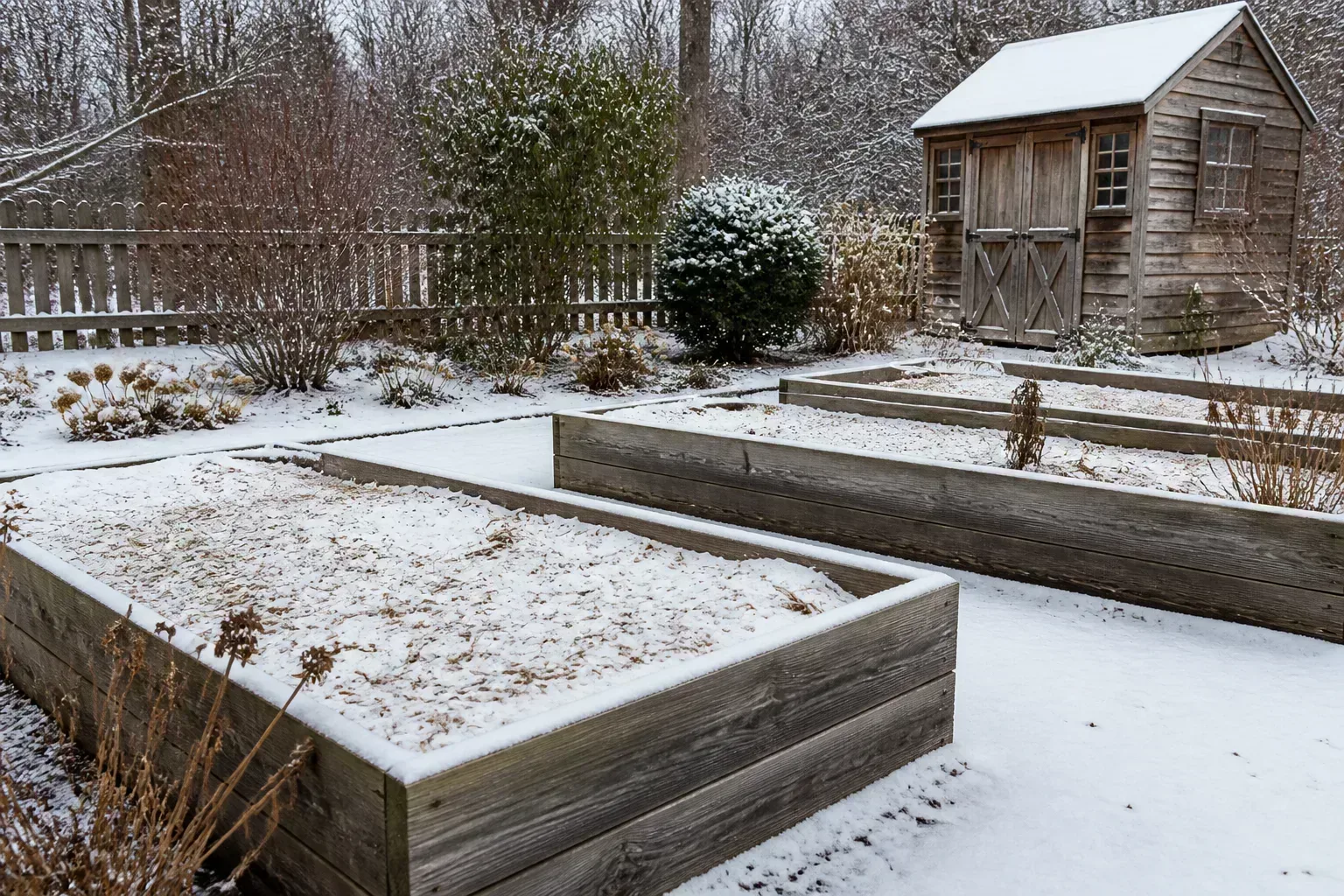
Snow on the beds does not mean your gardening year is on pause. It means the work shifts: less hoeing, more planning; fewer harvests, more infrastructure. The best winter garden ideas share one trait — they remove friction from spring, when every gardener wants the same tomato transplants and the same bare-root peonies that already sold out in February.
This guide collects 22 productive cold-weather projects, but it does not treat them as a random checklist. Use the phase rules below first, then pick three tasks you can finish this week. That is how you turn a dormant season into a head start instead of a guilt list.
Match Your Winter Garden Plan to Ground Conditions
Before you copy any winter garden idea from social media, answer one question: Can you sink a trowel into your soil right now? Frozen, saturated, or snow-covered ground changes what is smart outdoors. Indoor-only climates (apartments, deep zone 3 freezes) lean on windowsills, lights, and planning. Mild zones keep harvesting kale under row cover while everyone else is ordering seeds.
Frozen-Ground Tasks You Can Do Anytime
These jobs never require workable soil: draw a garden map, inventory last year’s seed packets, sharpen pruners, build a worm bin, start microgreens, order bare-root fruit, research winter-interest shrubs, and set up grow lights for slow indoor crops. They also include desk work that pays compound interest — noting which bed drowned in July, which variety bolted, and where you need another path.
Outdoor Jobs That Need a Thaw Window
Soil testing, spreading compost, building raised beds, mixing amendments into the top 6 inches, and winter sowing in milk jugs all need unfrozen, not-muddy ground. If your region cycles freeze and thaw, catch a 48-hour thaw and work quickly. Never dig or walk on waterlogged clay; you will compact structure it took years to build. When in doubt, layer amendments on the surface and let freeze-thaw and soil life incorporate them in spring — the same lasagna-gardening logic extension educators recommend for no-till beds.
For a deeper January-through-March outdoor prep timeline, pair this list with our guide on ways to start prepping garden beds in winter.
Order Seeds and Bare-Root Plants Before Lists Sell Out
Winter catalog season is not nostalgia; it is supply chain reality. Popular tomato lines, specialty peppers, and bare-root strawberries disappear by late February. Order while you still have choice, not while you still have panic.
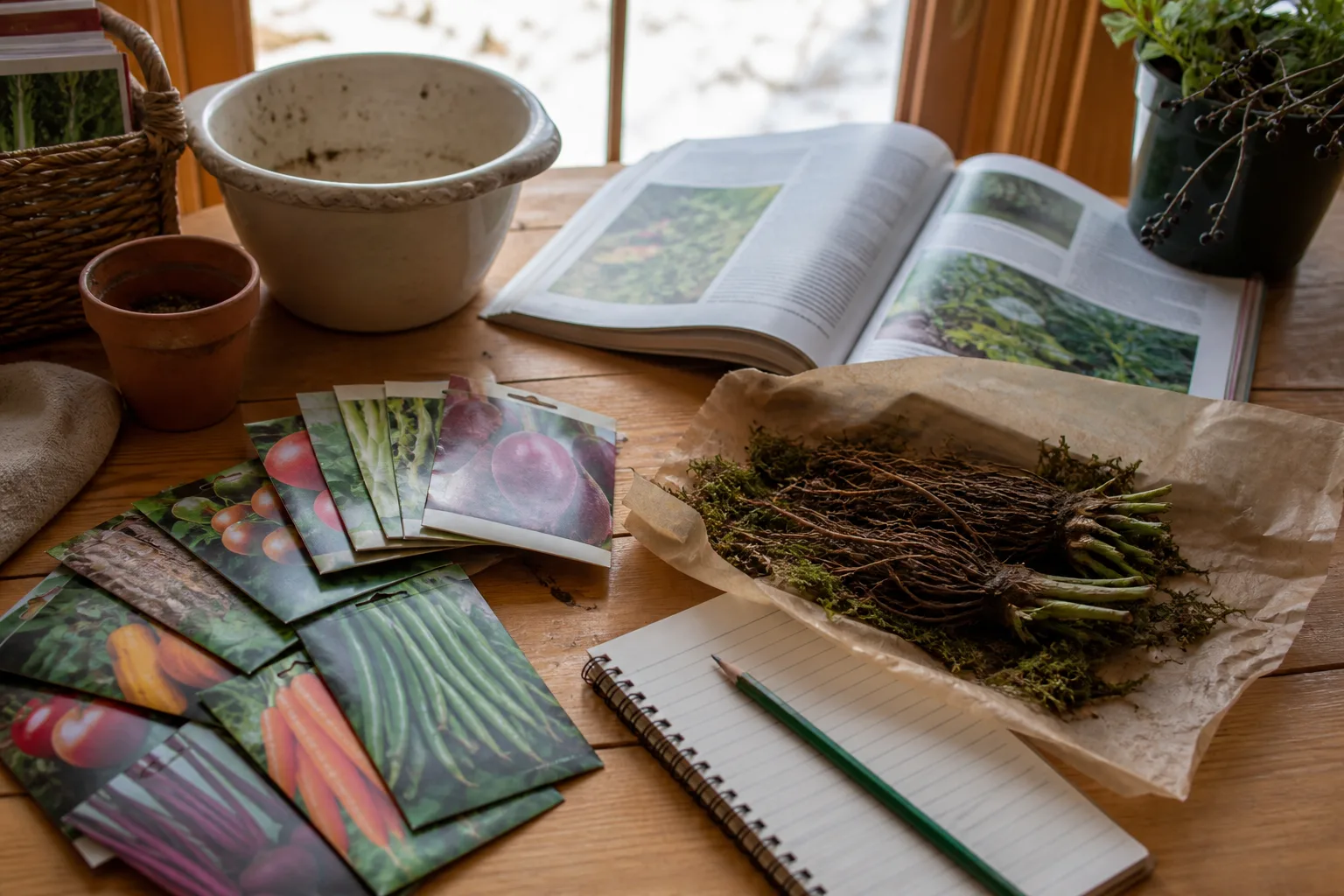
Seeds: Build your list from last year’s journal notes, then add one experimental row — a new pollinator mix, a storage squash, a cut-flower variety. Reorder staples early; experiment in small quantities. When the box arrives, move packets to a cool, dark, dry spot (many gardeners use a sealed bin in a basement or fridge for long-term viability). Write the purchase year on each packet; viability drops faster on onions, parsnips, and old lettuce than on beans or tomatoes.
Bare-root plants: Strawberries, asparagus crowns, raspberries, and dormant fruit trees ship on spring schedules. Ordering in winter reserves your cultivar and rootstock combination — especially important for disease-resistant apples or everbearing strawberries. Soak bare roots according to the supplier label just before planting; do not let them dry on the counter.
If you are unsure which slow crops deserve indoor head starts, read seeds not to start in winter before you fill every cell pack in January.
How to Store Seed Orders Until Planting Day
Heat and humidity are the enemies. A kitchen drawer above the stove will age seed faster than a labeled box in a 40°F garage that never freezes. Group packets by sowing month so March does not become a frantic shuffle. If you save your own seed, dry it thoroughly and store separately — home-saved squash crosses are a surprise you may not want.
Test Soil and Fix Nutrient Gaps While Beds Are Quiet
Nutrients leach, pH drifts, and organic matter breaks down every season. Cooperative extension services recommend testing every two to three years — more often if you are troubleshooting a problem bed. Winter is ideal because you are not racing between harvests, and you can amend before spring planting crowds the calendar.
Collect samples from several spots in each bed, mix in a clean bucket, and submit according to your lab’s instructions. Many labs slow in December; January mailings still beat discovering a phosphorus deficiency when peppers are already stunted.
Reading Results and Choosing Amendments
Your report is a recipe, not a grade. Low organic matter? Plan compost or shredded leaves. High pH on blueberries? Elemental sulfur or a dedicated acid bed — not “more fertilizer.” Excess phosphorus? Skip the bloom booster; focus on nitrogen and potassium per lab rates.
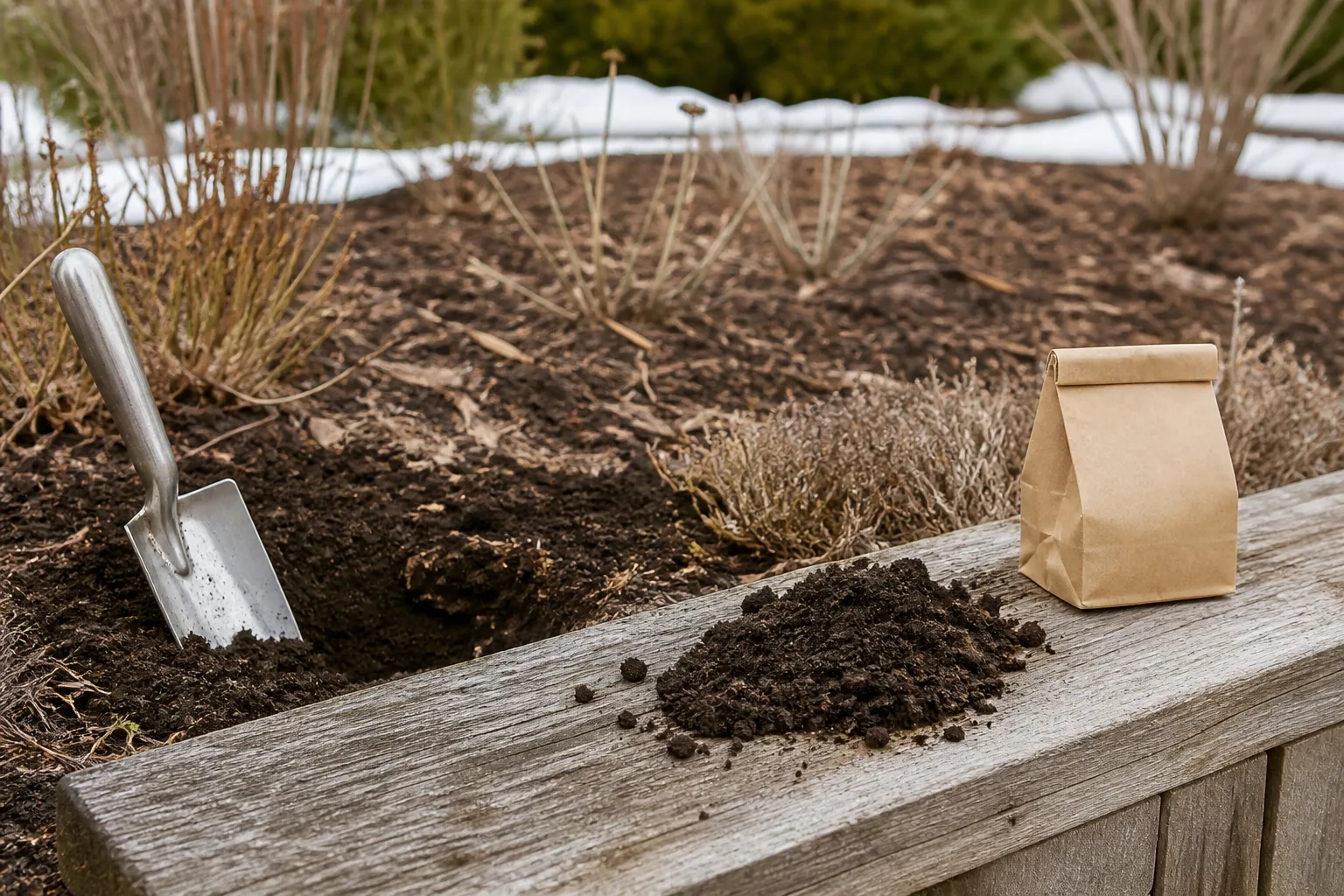
Apply slow-release amendments in winter when ground allows: compost, aged manure, lime or sulfur (only per test), and rock minerals that need time to react. Work into the top 6 inches if soil is workable; otherwise top-dress and mulch. Avoid heavy nitrogen on dormant perennials late in winter — the RHS notes that nitrogen-rich feeds can push soft growth vulnerable to frost.
Build Beds, Mulch Smart, and Protect Soil Through Winter
Winter is the season for infrastructure: raised beds from rot-resistant lumber, hügelkultur mounds from fallen logs and leaves, or lasagna layers of cardboard, compost, and straw that cook down by May. None of these require planting — they require stacking materials when you have time.
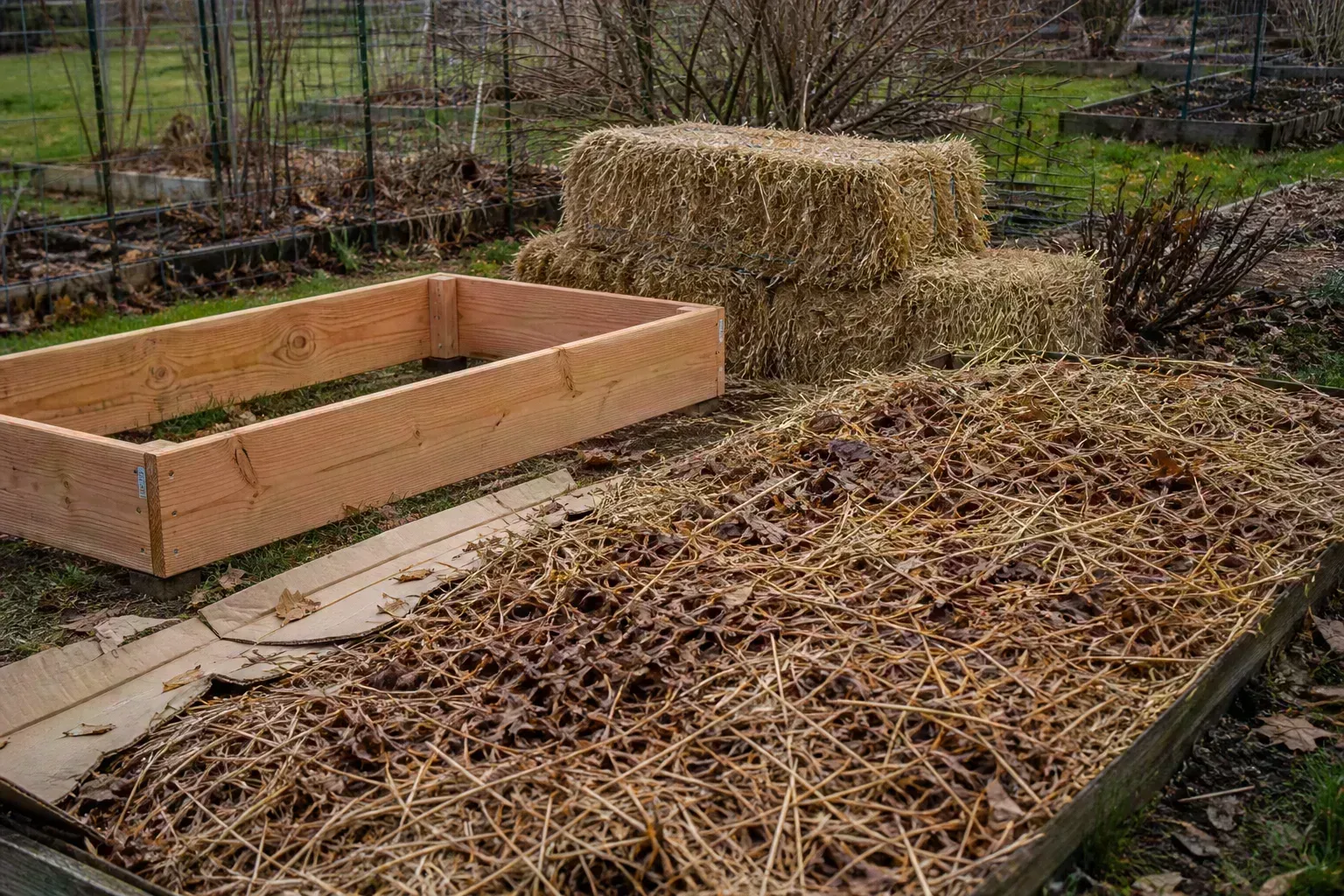
Mulch belongs in the winter toolkit too, but timing matters. For empty vegetable beds, a 2–4 inch layer of straw, shredded leaves, or compost protects bare soil from winter wind and erosion. Keep mulch pulled back from crowns and trunks to prevent rot and rodent nesting. On living perennials, follow the post-freeze rule in our winter mulch guide: mulch after hard freeze to lock in dormancy, not while soil is still warm.
In warm zones (roughly USDA 9+), active winter beds may need less insulation and more sun on the soil surface — Epic Gardening’s winter task roundup notes that thick mulch on year-round vegetable beds can slow root warming where frost is rare. Match mulch depth to your actual frost risk, not to a generic Pinterest graphic.
Start Seeds Indoors on a Real Calendar
Indoor seed starting is the highest-leverage winter garden idea for cold climates — and the easiest way to waste money on leggy seedlings if you ignore dates. Count backward from your last frost date for each crop. Tomatoes and peppers belong weeks after slow crops like celery, onions, and leeks.
Slow Crops vs Fast Crops
Start early (10–12+ weeks before transplant): onions, leeks, celery, parsley, some perennial herbs. Mid-window (6–8 weeks): tomatoes, peppers, eggplant, brassicas headed for early spring transplant. Late winter / early spring (3–4 weeks): cucumbers, squash, melons — only if you have grow lights and space to hold them without root-bound stress.
Our full walkthrough — trays, domes, hardening off — lives in how to start seeds indoors. For flowering bulbs on the windowsill, see spring-blooming bulbs to start indoors in January.
Lights, Heat, and the Mistakes That Waste a Tray
A south window alone rarely delivers enough light for stocky seedlings north of zone 8. Suspend full-spectrum LED or fluorescent tubes 2–3 inches above leaves and raise them as plants grow. Overwatering kills more trays than underwatering — aim for evenly moist mix, not swamp. Run a fan briefly daily to strengthen stems.
Keep Fresh Flavor With Indoor Herbs and Microgreens
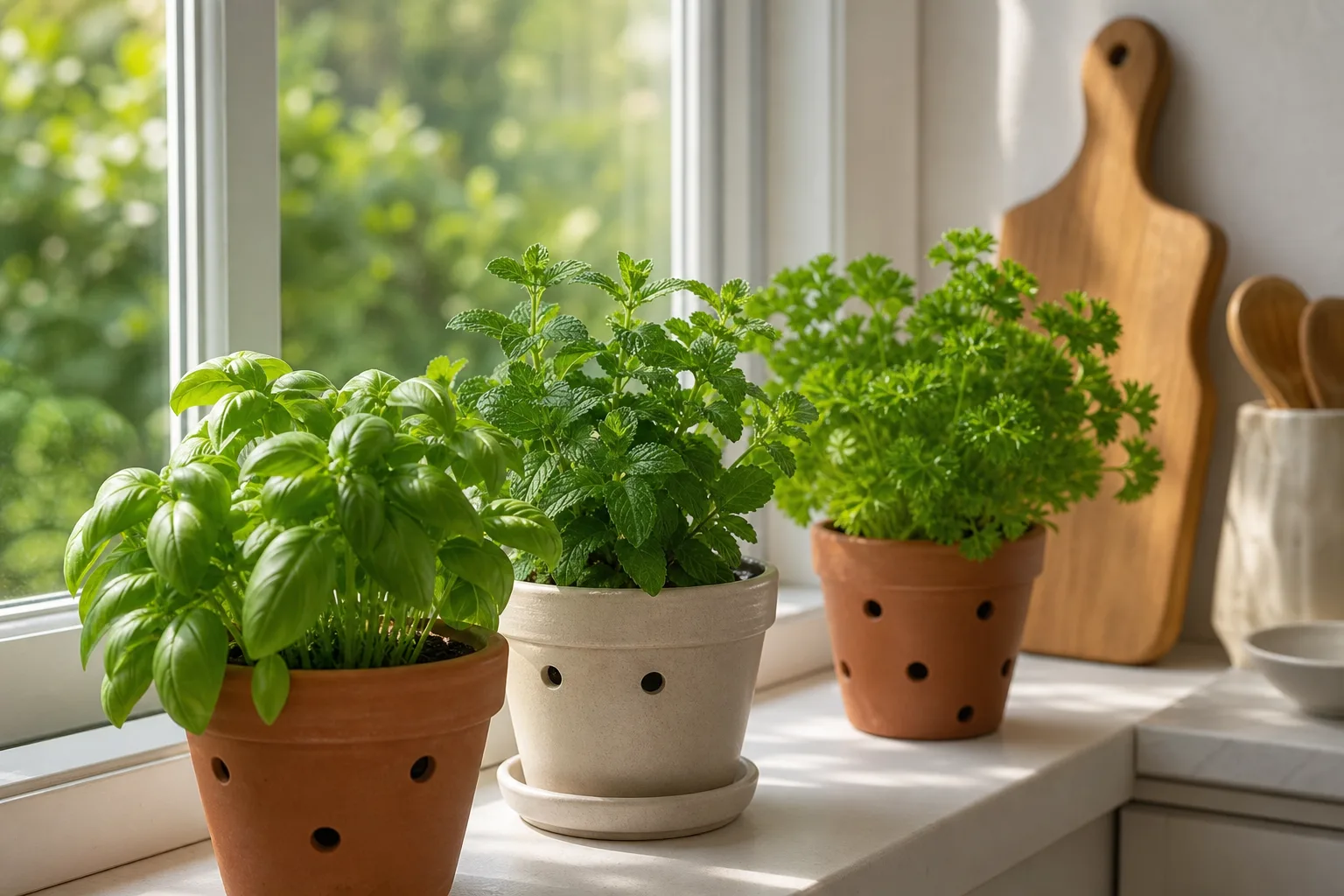
When outdoor basil is a memory, indoor herbs keep cooking interesting. Chives, mint, parsley, and thyme tolerate indoor conditions better than sun-hungry basil, though basil under a grow light still beats grocery-store clamshells. Use pots with drainage, bright light, and cooler night temperatures when possible — overheated dry air produces weak, aphid-prone growth.
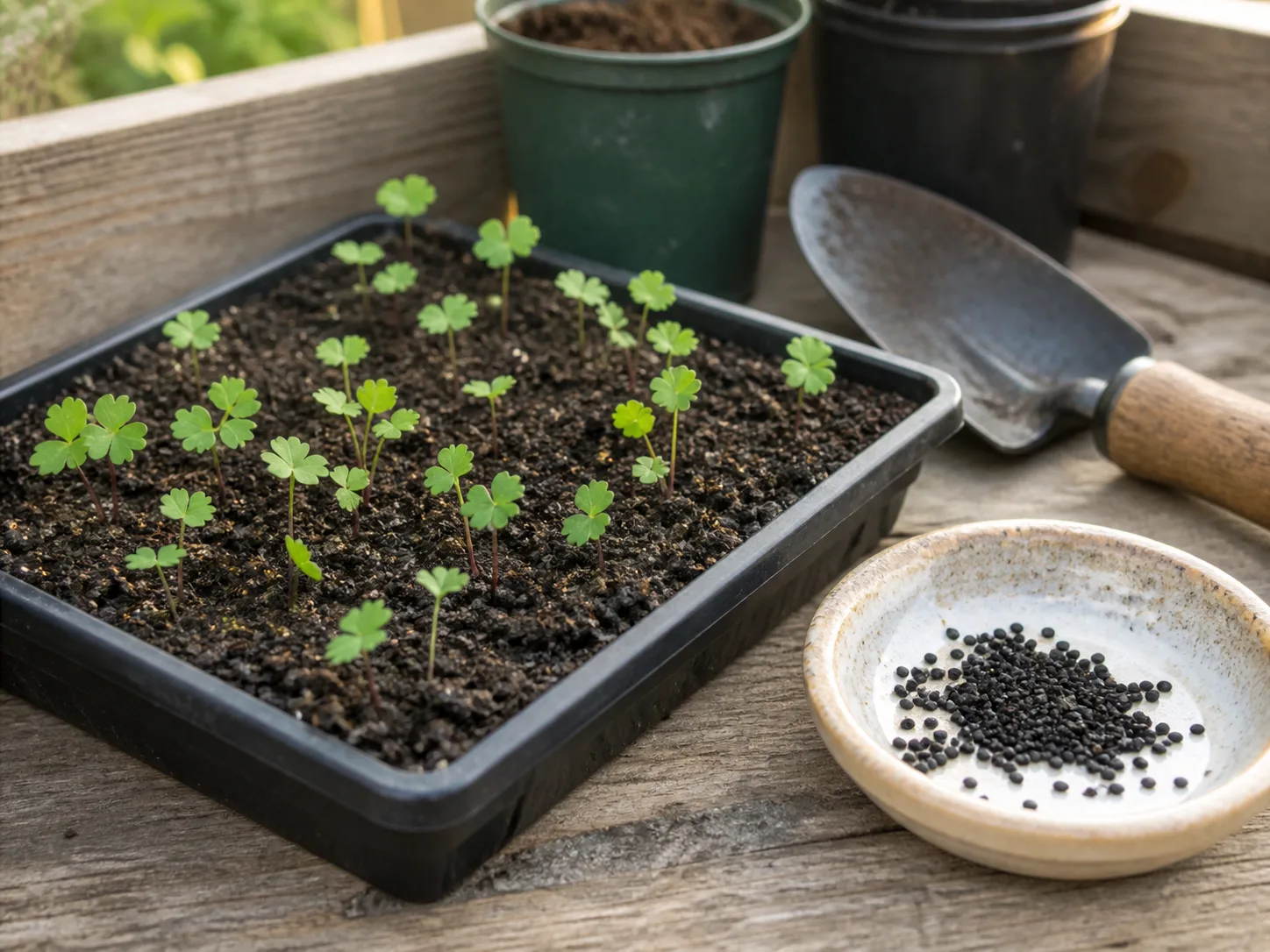
Microgreens are the fastest winter crop: radish, broccoli, kale, mustard, and arugula ready in 7–14 days on a counter or windowsill. Sow thickly in shallow trays with a fine seed-starting mix, cover until germination, then give strong light. Harvest with scissors above the soil line; most mixes do not regrow for a second cut. They are not a replacement for head lettuce, but they scratch the fresh-green itch in February.
Stretch the Season With Cold Frames and Hardy Crops
In mild regions, cold-hardy crops — kale, spinach, mâche, carrots, radishes, claytonia — survive outdoors with mulch or a simple low tunnel. In colder zones, a cold frame or hoop house buys 10–20°F of protection and harvest windows into December or March, depending on latitude.
Build cold frames from reclaimed windows on a south-facing slope, or bend PVC hoops over a bed and cover with greenhouse plastic or heavyweight row cover. Vent on sunny days above 40°F — trapped heat cooks greens faster than frost does. Snow load matters: brush heavy snow off plastic before panels collapse.
Do not expect summer tomatoes outdoors in zone 5 without serious heat supplementation; that is a different project. For indoor tomatoes, pots and lights beat fantasy.
Prune Dormant Trees and Shrubs the Right Way
Dormant pruning — after leaves drop and before spring bud swell — is the standard window for many deciduous trees, summer-flowering shrubs, and fruit forms. The RHS tree pruning guide emphasizes working with the tree’s natural habit, removing dead/diseased/damaged wood first, and never removing more than one-fifth of the canopy in a single year.
Use sharp bypass pruners for small wood, loppers for medium branches, and a pruning saw with undercut/overcut technique for large limbs. Cut just outside the branch collar; flush cuts invite decay. Disinfect tools between cuts when removing diseased wood.
What Not to Cut in Winter
Spring bloomers on old wood — lilac, forsythia, bigleaf hydrangea, some magnolias — set flower buds the previous summer. Hard winter pruning removes this year’s show. Prune those right after flowering instead. Evergreens need species-specific timing; our guides on pruning evergreens in winter and Japanese maple winter pruning cover the exceptions.

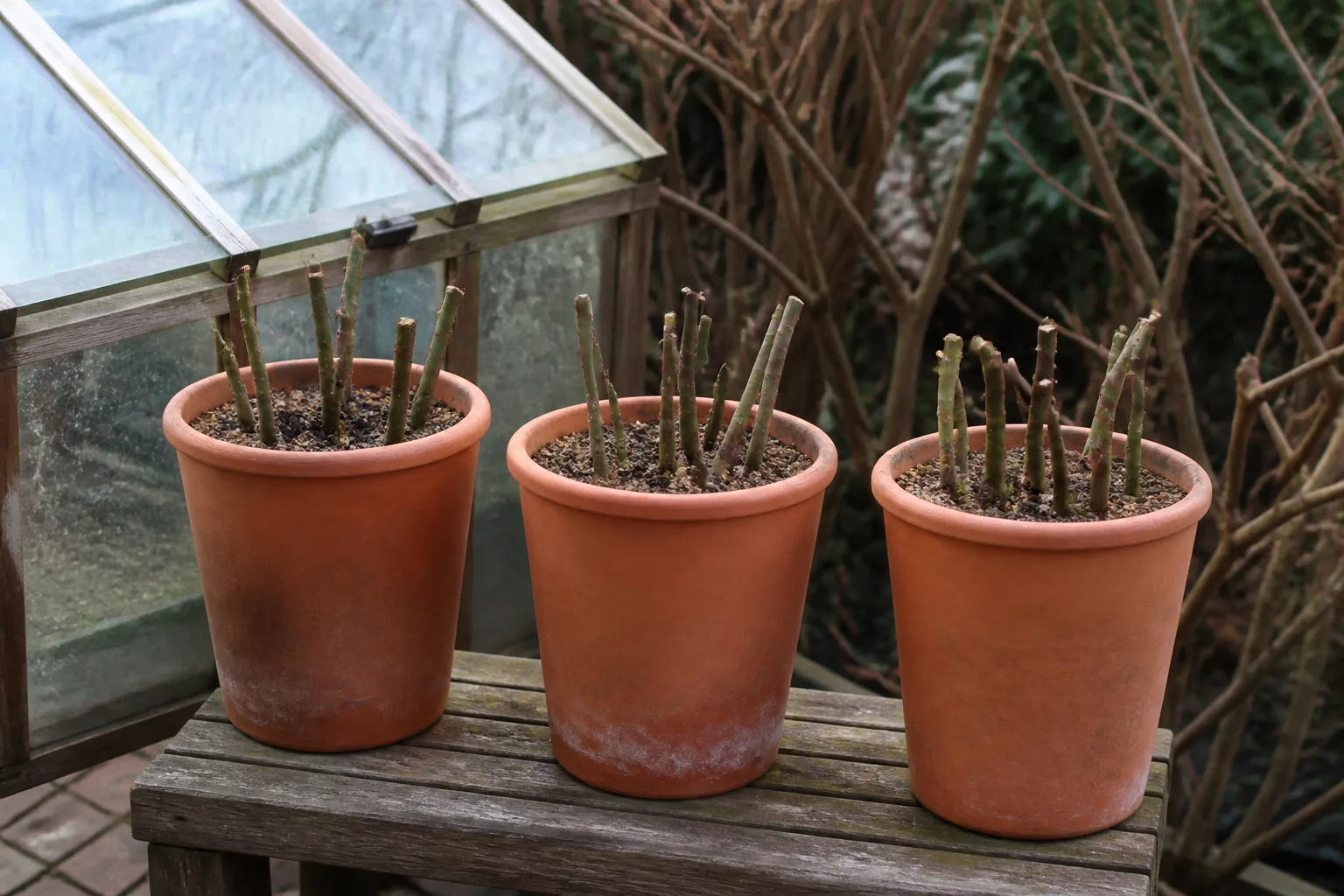
Fruit trees benefit from winter structural pruning — open centers for peaches, central leader maintenance for apples — but study your species first. Renewal pruning on roses pairs with the same dormant window; see propagating roses in winter if you want hardwood cuttings while you have pruners in hand.
Support Birds, Pollinators, and Winter-Interest Plants
Winter wildlife support is not decoration — it is habitat banking. Bird feeders with black oil sunflower seed, suet for woodpeckers, and a heated birdbath draw species that also eat caterpillars in summer. Keep feeders clean to reduce disease spread; bring feeders in if bears are active in your area. Pinecone feeders rolled in peanut butter and seed are a fine kid project; skip if squirrels dominate your yard.
Pollinators need leave litter and hollow stems more than bee hotels alone. Delay aggressive bed cleanup until temperatures consistently hit the 50s°F so overwintering native bees emerge. If you build a bee hotel, use untreated wood with varied hole diameters and mount it east-facing, sheltered from rain — replace tubes every few years to prevent parasite buildup.
Winter-interest plants reward patience: red osier dogwood stems, winterberry holly (plant a male pollinator), witch hazel blooms, ornamental grasses, and conifers with blue or gold foliage. Walk your yard in January with a notebook — note bare spots visible only when leaves are gone. Our flowers that should be blooming in January guide highlights early bloomers worth planning around.

Winter Sow Native Wildflowers and Make Seed Balls
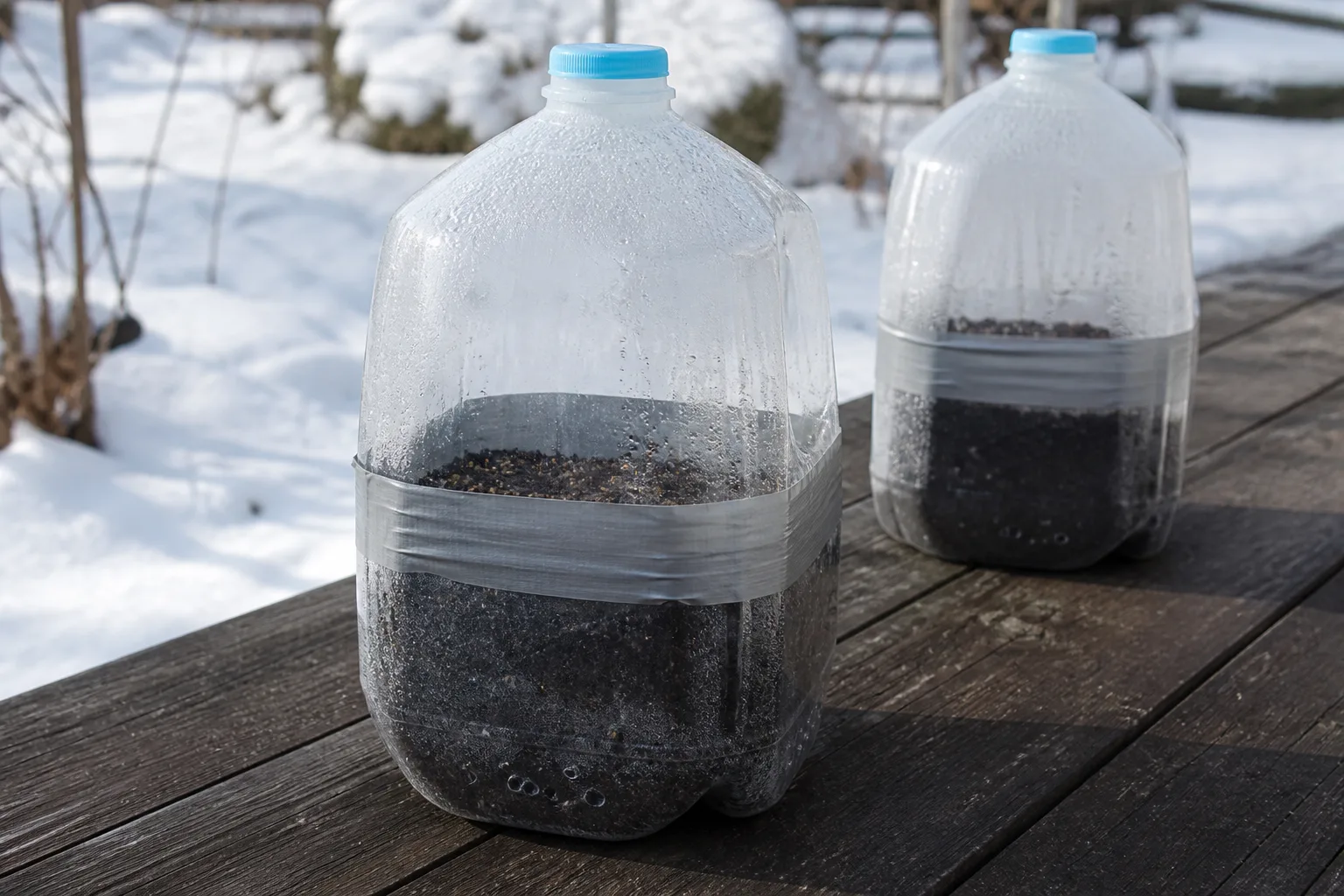
Winter sowing uses natural freeze-thaw cycles to stratify seeds that require cold moisture — many native perennials and hardy annuals. Cut a milk jug in half, drill drainage holes, fill with moist potting mix, sow seeds, tape the jug closed, and set outdoors in January or February in a sunny spot. Seeds germinate when weather cooperates; no grow-light bench required.
For refrigerator stratification, damp paper towel in a labeled bag for 4–8 weeks works on stubborn species — check weekly for mold.
Seed balls (clay, compost, seed) are a fun dispersal craft for empty lots and school gardens, not precision planting. Mix two parts compost, one part powdered clay, seeds, and just enough water to form marble-sized balls. Dry completely before storage. Expect lower germination than drilled rows — treat them as habitat sprinkling, not crop establishment.
Compost, Worm Bins, and Small-Space Soil Building
Microbial activity slows in cold compost piles but rarely stops entirely unless the heap freezes solid. Insulate with straw bales or a leaf ring, add kitchen scraps in the center where heat lingers, and avoid turning in deep cold — you lose the warm core. Shred autumn leaves before adding; whole leaves mat and stall decomposition.
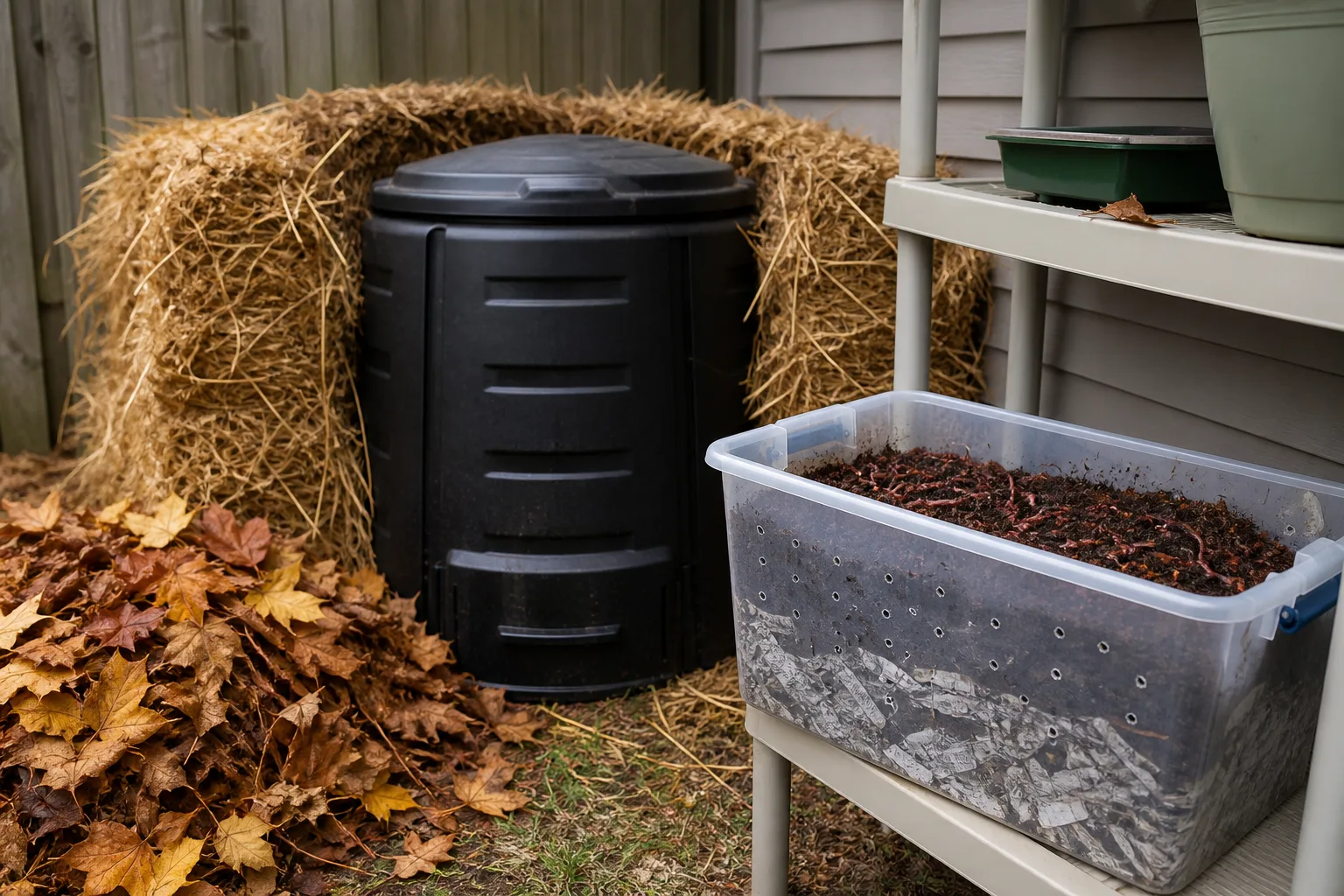
Vermicomposting runs year-round indoors: opaque tote, drilled ventilation, moist bedding (shredded newspaper, coconut coir), red wiggler worms, and buried food scraps. No meat, dairy, or oily waste. Harvest castings in spring to top-dress seedlings.
Bokashi ferments kitchen waste anaerobically in a sealed bucket with inoculated bran — useful for apartment gardeners without outdoor piles. Bury finished pre-compost in spring beds; do not apply raw to plant roots.
Maintain Tools, Craft Trellises, and Make Labels
Rusty secateurs spread disease and crush stems. Winter tool care: knock off dried soil, soak rusted metal in white vinegar, scrub with steel wool, dry, and oil hinges. Disinfect blades with rubbing alcohol before the first spring cut if you fought fire blight or rose black spot last year.
DIY trellises from storm-downed branches cost nothing but twine time. Build teepees for peas, fan trellises for cucumbers, or obelisks for climbing annuals while Netflix plays. Store finished supports under eaves so they dry evenly.
Plant labels made from cut aluminum blinds, painted rocks, or polymer clay survive longer than popsicle sticks. Label seed flats with variety and sow date — future you will not remember which “red pepper” is which.
Conclusion
The best winter garden is not the busiest one; it is the best sequenced one. Match tasks to your ground conditions, order supplies before scarcity hits, fix soil while beds are empty, and use indoor light for the slow crops that actually need a head start. Prune with bloom timing in mind, protect soil and wildlife instead of sterilizing the yard, and arrive in spring with tools sharp, plans drawn, and seeds ready — not with another year of catching up.
Pick three ideas from this list for the next seven days. Finish them. Then choose three more. That rhythm beats a heroic March weekend every time.



