5 Flowers That Should Bloom in January (Not a Warning)
Camellia, mahonia, snowdrops, witch hazel, and winter aconite bloom in January on purpose. Learn which is which, zone timing, and when to worry.
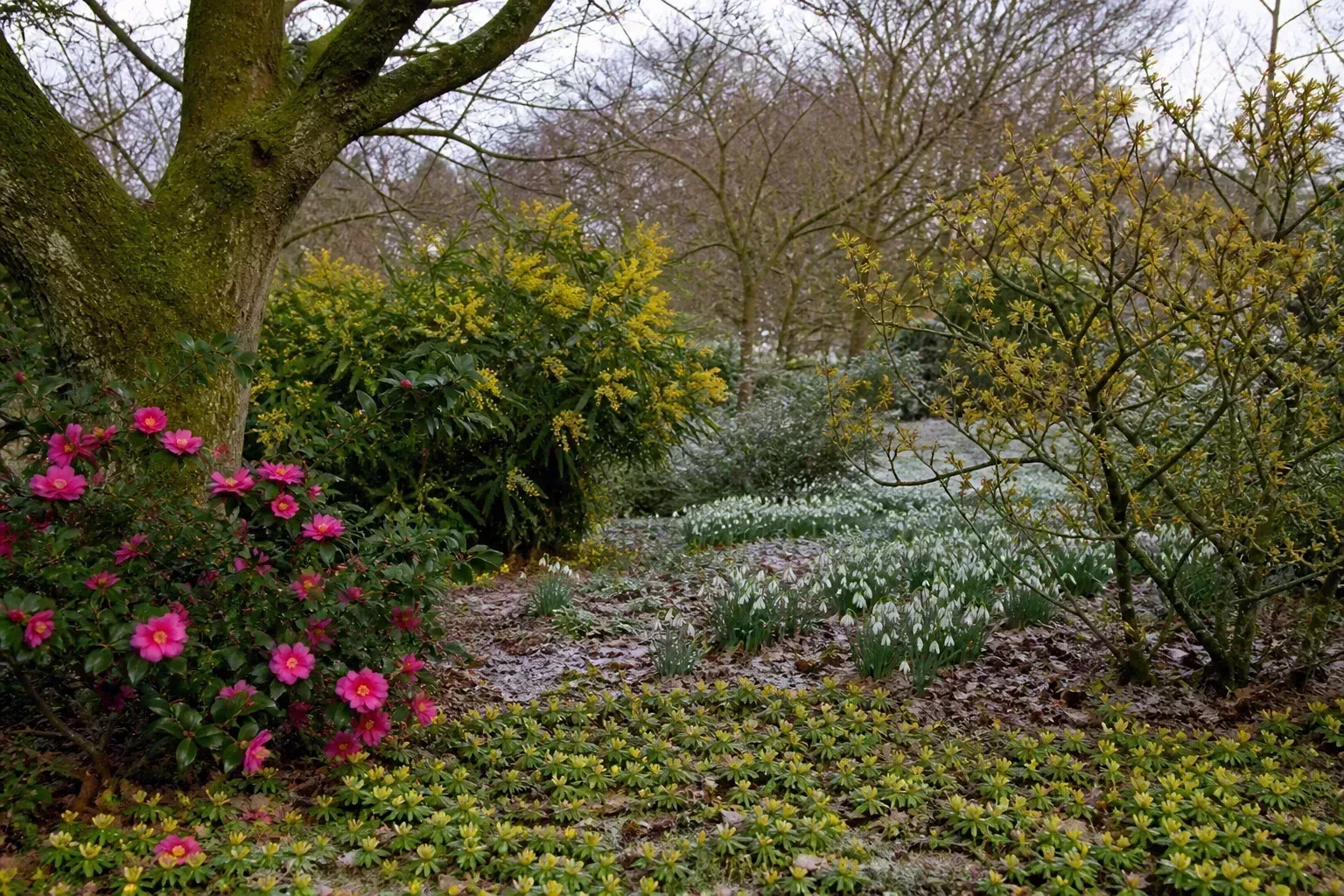
A camellia opening beside a frosted fence in mid-January is not the same story as a confused cherry tree flowering six weeks early. One plant is doing what it evolved to do. The other may be reacting to a warm spell, drought stress, or a damaged chill cycle. The difference matters because the care plan is completely different—and because January color, when it comes from the right species, is one of the best reasons to keep a winter garden at all.
Five plants show up again and again on January bloom lists for good reason: sasanqua camellias (including cultivars like October Magic Rose), ‘Soft Caress’ mahonia, snowdrops, witch hazel, and winter aconite. They are not emergency signals. They are the backbone of intentional winter interest from the Mid-Atlantic through much of the South and, for the bulbs and witch hazel, well into the Midwest and Pacific Northwest.
When January Blooms Are Normal vs a Warning Sign
January flowers fall into two buckets. Designed winter bloomers set buds on schedule the previous summer or fall, then open when days are short and nights are cold. Stress bloomers are plants whose normal season is spring or summer, but something pushed them to flower out of sequence—often inconsistent chill, root stress, late pruning, or an unusually warm December.
The quick ID test before you worry
Run this before you grab the pruners or assume climate catastrophe:
Know the species. If the plant is a sasanqua camellia, mahonia, snowdrop, witch hazel, or winter aconite, January color is expected in the right zone. If it is a forsythia, magnolia, apple, or spring tulip, January flowers deserve a closer look.
Check bud history. Camellias and mahonias set visible flower buds months ahead. Snowdrops and winter aconite send shoots from dormant tubers after soil cools. A spring shrub with no prior bud set suddenly blooming usually points to stress, not a happy accident.
Read the weather context. A single 70°F January weekend rarely ruins a true winter bloomer. Repeated warm-cold swings can brown open camellia petals or shorten witch hazel displays. That is cosmetic damage, not proof the plant is on the wrong calendar.
Look at the whole garden. Lewis Ginter Botanical Garden’s January bloom calendar routinely lists witch hazel, mahonia, and snowdrops together in Virginia—exactly the combination you want in a winter-interest bed. One early magnolia in the same yard is a different conversation.
If you are still unsure, photograph the plant, note the cultivar if known, and compare against the five profiles below. The goal is action, not anxiety: protect open flowers before a hard freeze, hold off on fertilizer, and do not prune winter bloomers until after they finish.
Camellia sasanqua and October Magic Rose
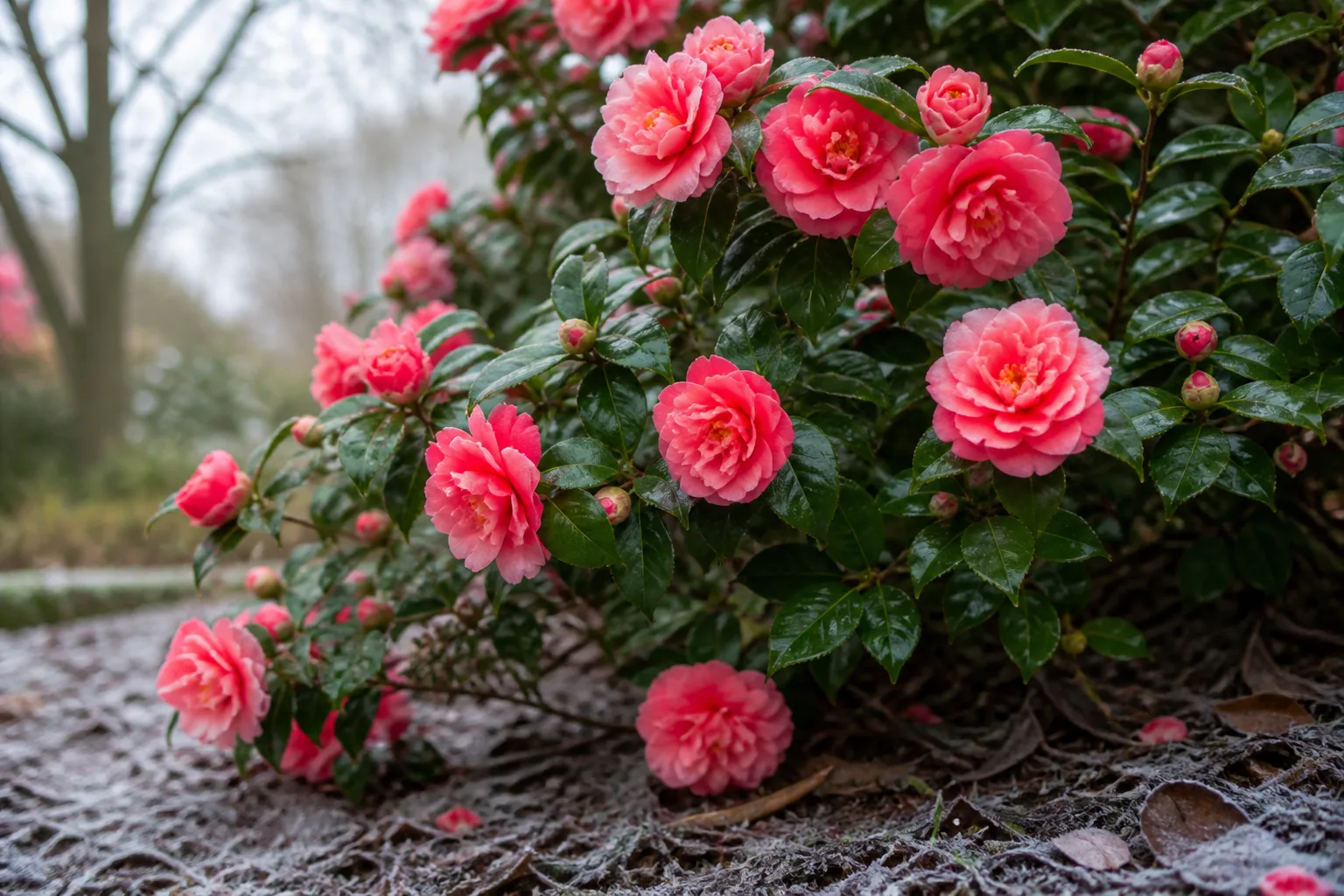
Sasanqua camellias (Camellia sasanqua and hybrids) are broadleaf evergreens bred to flower from late fall through winter, often peaking between November and January in USDA zones 7–9. Cultivars like October Magic Rose carry large, double salmon-pink blooms on glossy foliage—the kind of color that reads as impossible until you stand next to a hedge in full flower on a gray afternoon.
Unlike spring-blooming Camellia japonica, sasanquas set buds in summer and open them as temperatures cool. Cold does not send them fully dormant the way it does many deciduous shrubs; cooler weather is part of the bloom trigger. NC State Extension notes that sasanquas prefer consistently moist, well-drained, acidic soil high in organic matter, with shelter from harsh winter wind and harsh direct sun.
Bloom timing, bud set, and cold-hardiness zones
Expect October Magic Rose and similar sasanquas to start in late fall and carry color into January in mild winters. Ackerman Winter Series hybrids such as ‘Winter’s Snowman’ push the hardiness envelope further—some flower from November into December even where winters are sharper, thanks to Camellia oleifera parentage for cold tolerance (NC State).
Zones 8–9: Full winter display; January is mid-season, not a fluke.
Zone 7: Reliable with wind protection and mulch over shallow roots.
Zone 6: Stick to named cold-hardy hybrids and accept that open flowers may freeze in arctic snaps—buds often still give later color.
If your camellia is a spring japonica type blooming in January, treat that as stress, not success.
January care checklist for camellias
Mulch 2–3 inches over the root zone—roots are shallow and hate repeated freeze-thaw heaving.
Water during dry winter stretches; desiccating wind on evergreen leaves drains moisture when soil is frozen on the surface.
Do not fertilize in winter; you want roots quiet, not forced soft growth.
Cover open blooms with frost cloth if a hard freeze follows a mild spell; petals brown faster than buds.
Prune after flowering in late winter or early spring if shaping is needed—never before the winter show finishes.
Deer pressure is moderate on many camellias; NC State lists several cultivars as mildly deer resistant. Scale, aphids, and flower blight still show up on stressed plants, so keep air moving and avoid overhead irrigation on open flowers.
‘Soft Caress’ Mahonia (Berberis eurybracteata)
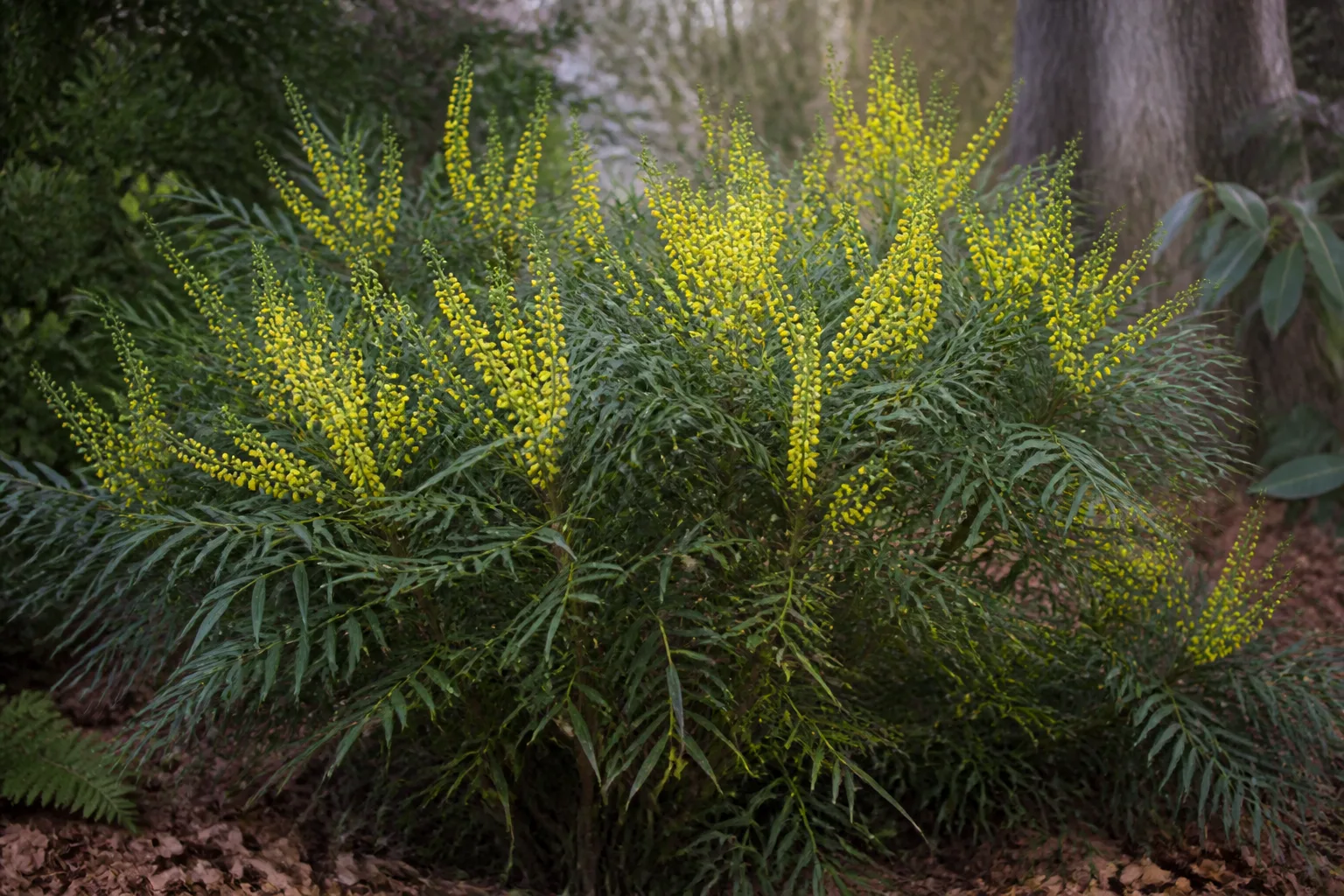
Mahonias earned the nickname “super shrub” for shade tolerance, deer resistance, and yellow winter flower spikes when little else offers nectar. ‘Soft Caress’—a selection of Berberis eurybracteata, formerly classified as Mahonia eurybracteata—trades the stiff holly-like spines of older mahonias for fine, bamboo-textured evergreen leaves. Clusters of bright yellow flowers open in early winter, often visible from December into January in zones 7–9.
NC State Extension describes ‘Soft Caress’ as a compact 3–4 foot shrub for part shade to shade, with fall-to-early-winter flower clusters followed by blue-purple berries. At Lewis Ginter Botanical Garden, mahonia cultivars appear on January bloom walks alongside witch hazel—exactly the layered winter palette these shrubs anchor.
Why winter flowers matter for pollinators
Mahonias evolved to flower when insect activity is scarce. On any afternoon above about 50°F, you may see bees on mahonia spikes while most of the garden is still bare. That makes them ecologically valuable, not just pretty. They are also tougher in cold snaps than they look—sudden temperature drops rarely abort the whole bloom cycle.
Shade, mulch, and pruning rules
Plant in filtered shade or morning sun with well-drained, slightly acidic to neutral soil. ‘Soft Caress’ is not a full-sun desert shrub; harsh afternoon sun scorches the fine foliage.
Keep mulch in place and soil evenly moist—not waterlogged. Mahonias hate both bone-dry shade under eaves and soggy clay.
Do not prune until after flowering finishes in spring; winter pruning removes the buds you are enjoying now.
Skip winter fertilizer. A light organic feed in spring after bloom is enough for established plants.
Older spiny mahonias like leatherleaf types behave similarly in bloom timing but hurt to handle; ‘Soft Caress’ is the gardener-friendly gateway cultivar if you want January color without bandages.
Snowdrops (Galanthus nivalis)
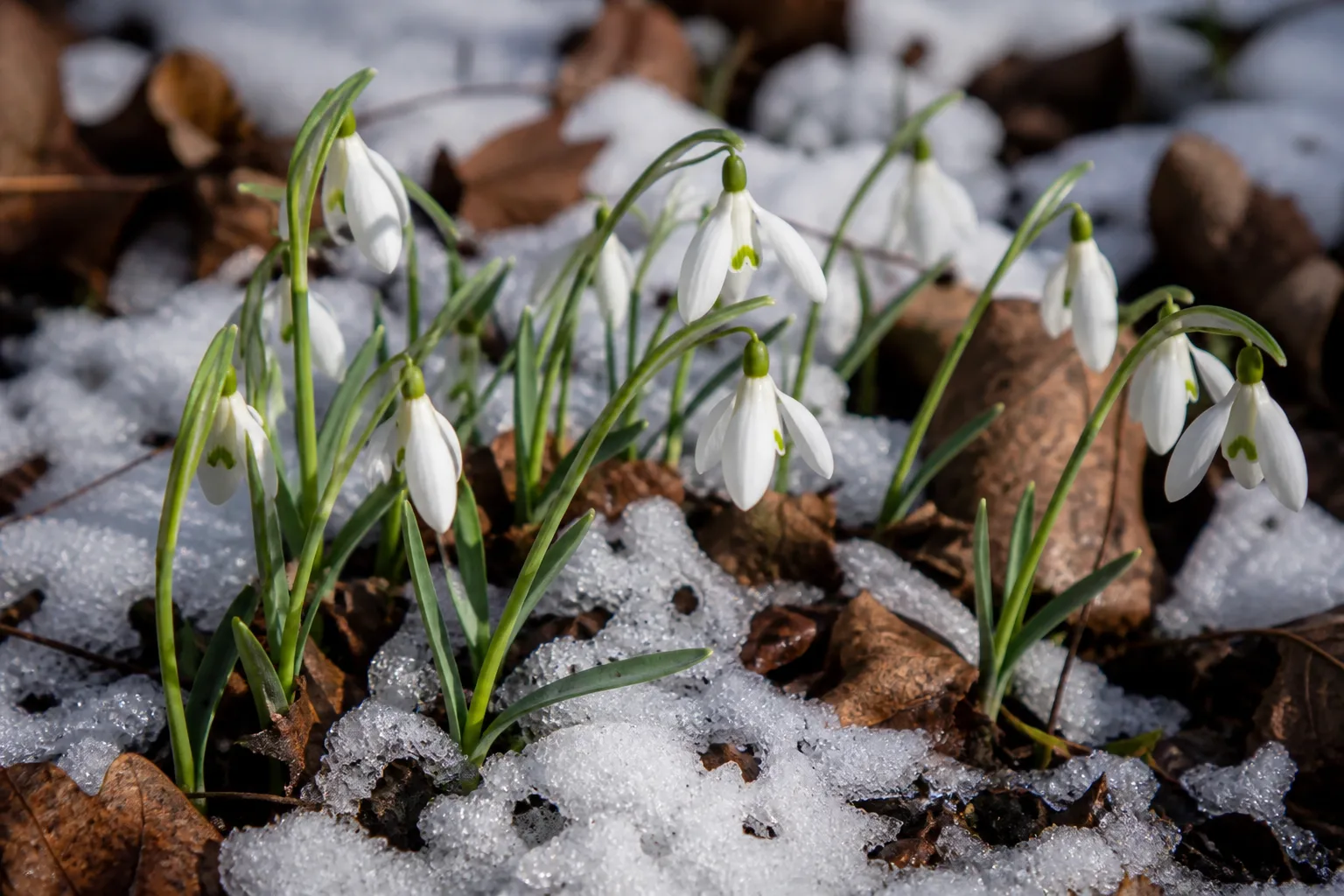
Snowdrops are the white, nodding bells with green markings that push through frozen ground when the calendar still says winter. They are among the earliest bulbs to bloom—often in January or February, sometimes while snow remains on the lawn. Gardeners in cold climates treat them as spring heralds; phenologically they are late-winter flowers that do not wait for the equinox.
RHS groups snowdrops among essential winter-garden bulbs to pair under witch hazel and early crocus. Their value is timing: they appear when pollinators first stir and when human morale needs proof that the season is turning.
Thermogenesis and blooming through snow
Snowdrops are famous for thermogenesis—the ability to raise tissue temperature slightly above ambient air. That heat can melt a small ring of snow around the shoot, letting flowers open in otherwise white beds. They also carry antifreeze proteins that protect petals during brief hard freezes—reason enough to call them resilience plants, not delicate ornaments.
Keep expectations honest: thermogenesis helps individual clumps; it will not clear a foot of packed snow. Plant where sun hits first—south-facing slopes and tree skirts—to see January blooms instead of February ones.
Planting, dividing, and naturalizing
Snowdrops prefer full sun to light shade and well-drained soil. They multiply offsets quickly and suit beds, rock gardens, and lawns that you mow late—after foliage ripens in spring.
Plant bulbs in fall while soil is workable; if you buy pots in flower, sink them at the same depth they grew in the pot.
Divide “in the green”—just after flowering while leaves are still up—every few years to refresh crowded clumps.
Deer resistance is good on many sites, though not absolute in heavy pressure years.
For a fuller bulb-planting calendar—including when soil must cool before you dig—see our August bulb planting guide.
Witch Hazel (Hamamelis)
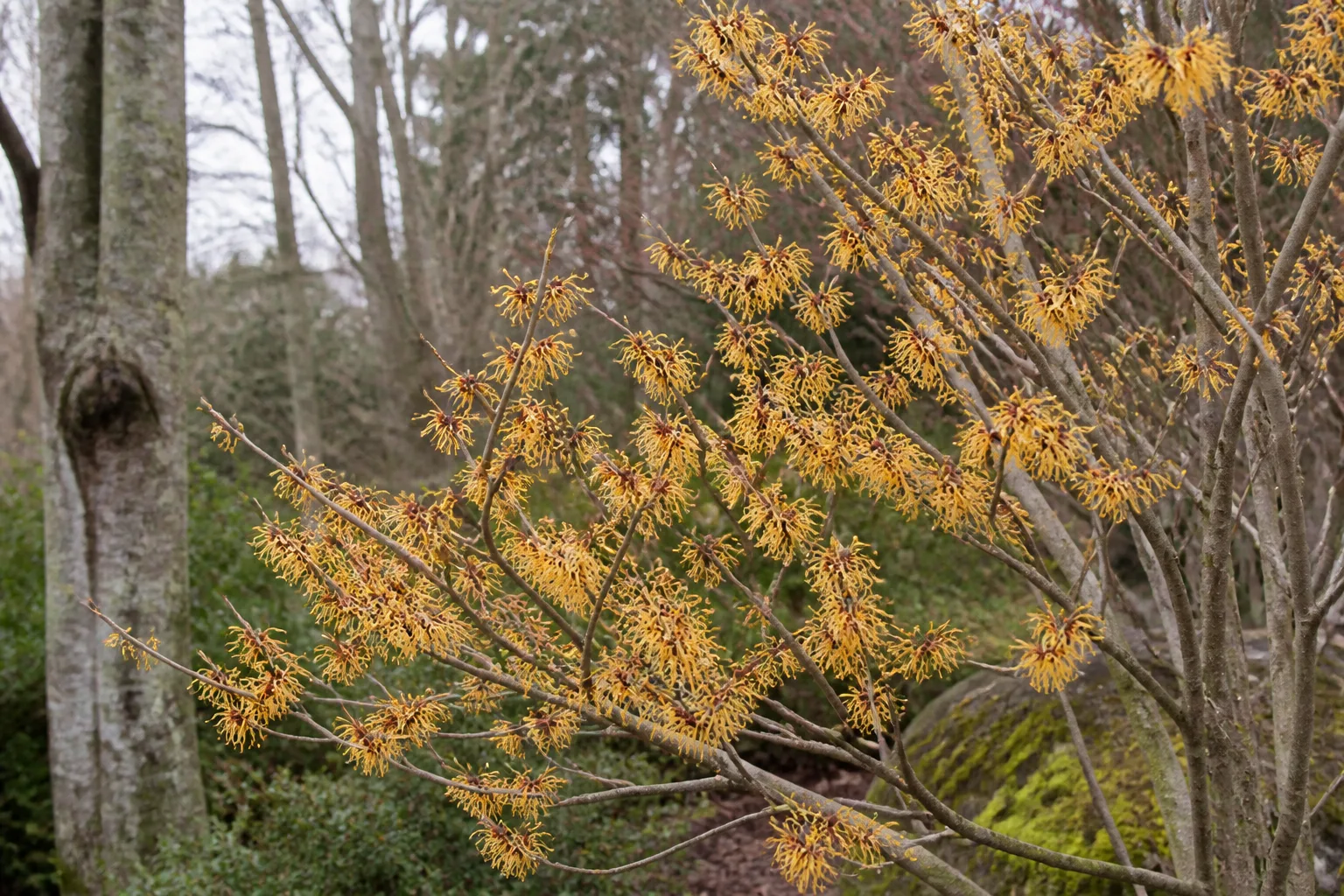
Witch hazels are large deciduous shrubs or small trees with spidery, fragrant flowers on bare branches in late winter—often January into February in zones 5–8, depending on species and cultivar. Hamamelis × intermedia hybrids like ‘Jelena’, ‘Arnold Promise’, and ‘Diane’ are landscape standards: 8–16 feet tall and wide, with yellow, orange, or red ribbons of bloom and excellent fall foliage before leaf drop.
RHS recommends neutral to acid, well-drained soil in sun or light shade, and warns that alkaline chalk and deep shade both reduce flowering. Winter wind exposure can blast flower buds on exposed ridges—plant witch hazel where a hedge or building cuts the worst gusts.
Chill hours, fragrance, and bloom window
Witch hazel needs a true winter chill to flower fully. That is why January blooms are healthy, not hurried: the plant is finishing its cold requirement and opening on bare wood before leaves steal the show. Fragrance is subtle but real—worth placing near a path you walk on mild days.
Bloom order in many yards runs winter aconite → snowdrops → witch hazel, with overlap in warm microclimates. MSU bee researcher Zachary Huang notes witch hazel can bloom around the same window as winter aconite, though honey bee visits vary year to year (MSU Bee Lab).
Site selection, soil pH, and wind protection
Plant in early spring or late fall when the tree is dormant. Water the first year during drought; established plants tolerate dry shade better than wet feet.
Test soil pH if flowering is weak on otherwise healthy wood—chlorosis on alkaline sites is common.
Avoid pruning in winter; shape after bloom if needed.
Underplant with snowdrops and winter aconite for a tiered carpet under the witch hazel vase—exactly the combination RHS highlights for winter gardens.
Medicinal witch hazel extracts come from unrelated distillation of bark and twigs; the winter garden value is ornamental and ecological, not a home pharmacy project.
Winter Aconite (Eranthis hyemalis)
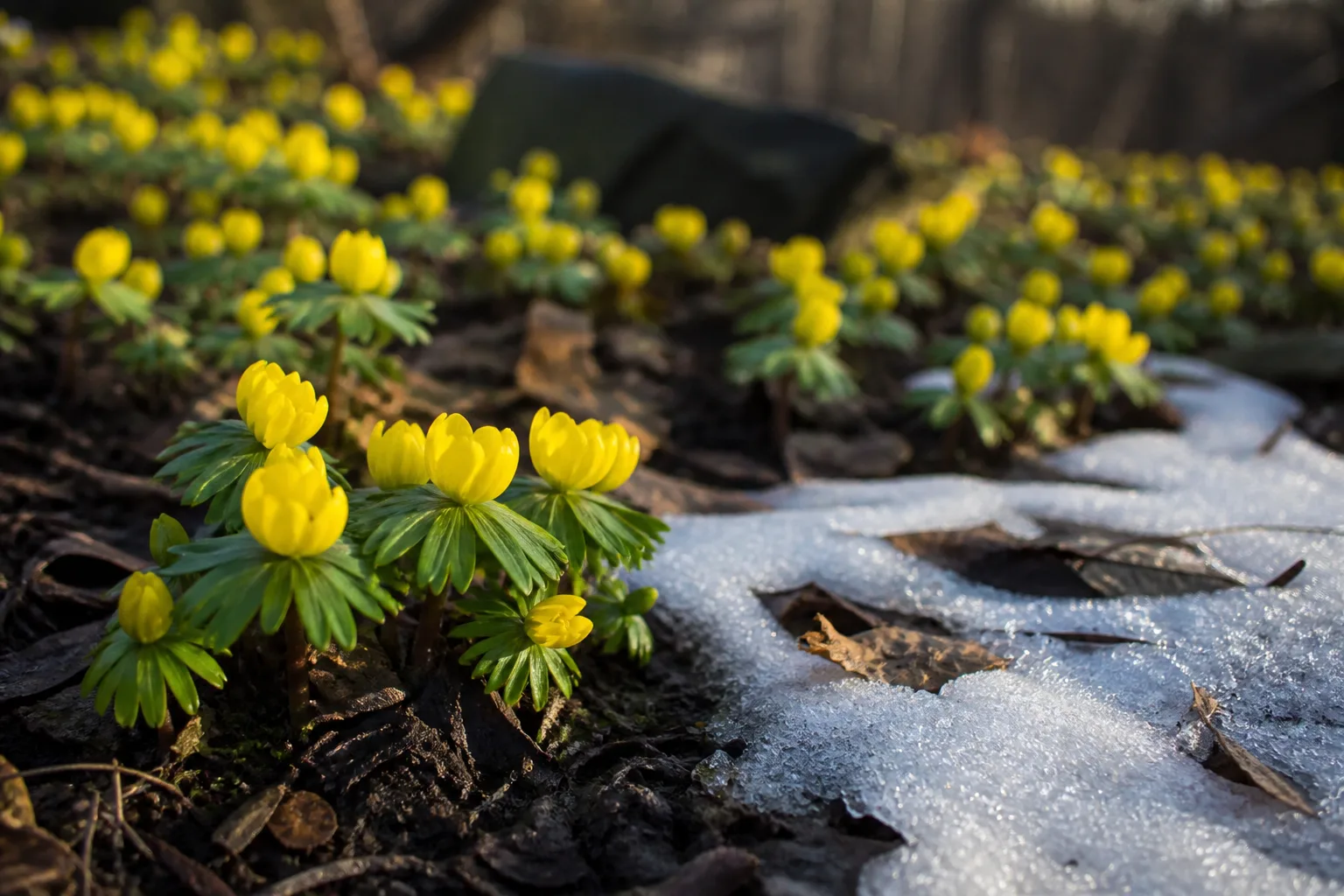
Winter aconite is a buttercup-family tuber with bright yellow, cup-shaped flowers surrounded by a green collar of bracts. Plants stand only 3–6 inches tall but read like spotlights against mulch and snow. Bloom often starts in late winter, sometimes late January, and frequently appears just before or alongside the first snowdrops.
University of Wisconsin Horticulture calls it one of the earliest bulbs, hardy in zones 4–7, happy in rock gardens, woodland edges, and under deciduous trees where summer shade and winter sun coexist.
Toxicity and pet safety
All parts of winter aconite are poisonous, especially tubers. UW-Extension warns of nausea, vomiting, and visual disturbances if tubers are dug or eaten—relevant for curious dogs, toddlers, and bulb-stealing squirrels. Pollen and nectar appear safe for foraging bees (MSU Bee Lab), but humans and pets should not treat the plant as edible.
If ingestion is possible, call your veterinarian or poison control immediately. Site colonies away from chew zones and label beds if children garden with you.
Fall planting depth and spread control
Plant tubers in fall 2–3 inches deep and 1–3 inches apart in humus-rich, well-drained soil. Rehydrate shriveled tubers in damp peat for a few days before planting.
Expect slow establishment the first year, then steady spread by seed and offsets where conditions suit.
Lift and divide clumps while still green after flowering if they overcrowd or jump into lawn areas you want clean.
Where happy, winter aconite can naturalize aggressively—beautiful until it is everywhere. Control is easier early than after a decade of seed drop.
Building a January Bloom Palette by USDA Zone
Use the USDA Plant Hardiness Zone Map as a starting point, then adjust for urban heat islands, south walls, and wind exposure.
Zones 6–7: bulbs and witch hazel first
Lead with witch hazel, snowdrops, and winter aconite under deciduous trees. Add sasanqua camellias only in protected courtyards or with cold-hardy hybrids against a south-facing wall. Mahonia blooms reliably in the warmer end of zone 7; in zone 6, try ‘Soft Caress’ in shade with wind protection and accept occasional tip burn.
Zones 8–9: camellia and mahonia backbone
Build the winter hedge from October Magic Rose or other sasanquas, flank paths with ‘Soft Caress’ mahonia, and carpet the ground layer with snowdrops, winter aconite, and a fragrant Hamamelis specimen where you have space for 10-year size. January is peak season, not a preview—plan irrigation for dry spells and mulch every fall.
| Plant | Typical January role | Primary zones | Key need |
|---|---|---|---|
| Sasanqua camellia | Shrub color on evergreen frame | 7–9 (6 with hybrids) | Acid soil, wind shelter |
| ’Soft Caress’ mahonia | Yellow spikes in shade | 7–9 | Even moisture, no early prune |
| Snowdrops | Ground-layer white bells | 3–8 | Early sun, late mowing |
| Witch hazel | Fragrant vase on bare stems | 5–8 | Chill, neutral–acid soil |
| Winter aconite | Yellow carpet under trees | 4–7 | Fall planting, spread control |
Common January Bloom Mistakes
Pruning winter bloomers in January removes the flowers you planted for. Wait until mahonia and camellia finish, and until witch hazel’s spring leaf-out if shaping is needed.
Feeding in winter pushes soft growth that freezes. Hold fertilizer until after the bloom cycle for these species.
Assuming every flower is “happy.” Document out-of-season bloom on spring shrubs; adjust mulch, irrigation, and pruning timing next year.
Planting snowdrops or aconite too shallow on heavy clay—bulbs heave in freeze-thaw cycles. Go to recommended depth and mulch lightly after planting.
Ignoring dry spells because it is cold. Evergreen camellias and mahonias still lose water on windy days; a slow soak before a hard freeze helps.
Skipping frost cloth on open camellia blooms when a 15°F night follows a week of 60°F days. Buds often survive; open petals may not.
Conclusion
January blooms are not automatically a climate alarm. When they come from sasanqua camellias, ‘Soft Caress’ mahonia, snowdrops, witch hazel, or winter aconite, they are the payoff for choices you—or the previous gardener—made seasons ago. Protect those flowers through dry spells and sharp freezes, hold off on pruning and fertilizer, and let them feed the first bees of the year.
Keep a sharper eye on spring shrubs and summer bulbs that open out of turn; those are the plants telling you something about chill, roots, or weather swings. Build the five-plant palette for your zone, underplant witch hazel with bulbs, and you will stop asking whether January color is allowed—and start planning where next year’s winter show should be bigger.