8 Fast-Growing Groundcovers for Every Garden
Find 8 fast-growing groundcovers that add flowers, texture, erosion control, or edible berries. Match each plant to light, moisture, and garden size.
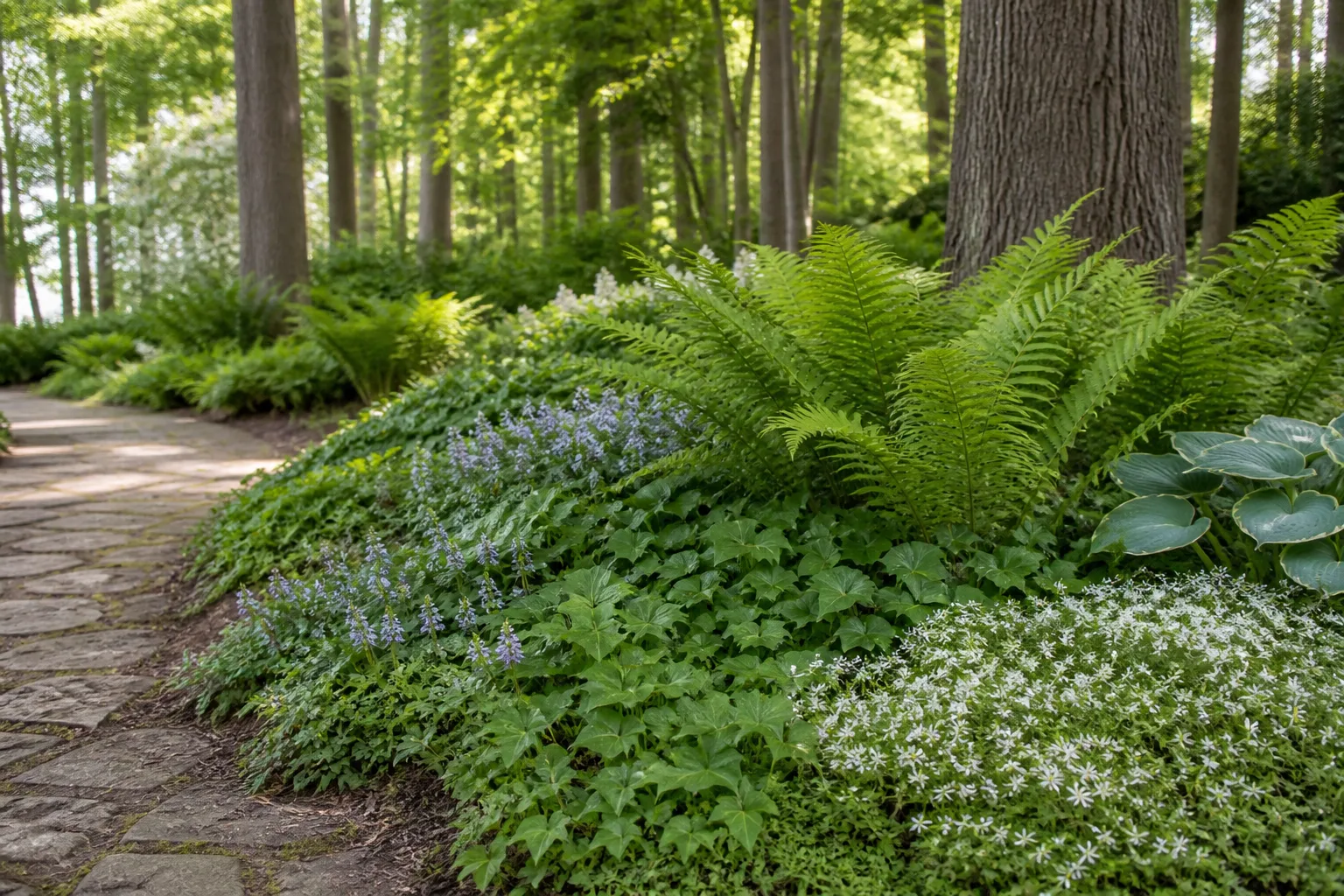
Groundcovers earn their keep by covering soil that would otherwise bake, erode, or grow weeds. The best choice is not necessarily the plant that spreads fastest; it is the one that can spread at a useful rate in the light, moisture, and soil you already have. Colorado State University Extension describes groundcovers as low-growing plants that spread through runners, rhizomes, offsets, or rooting stems, while also warning that vigorous spread can become invasive.
The eight plants below are mostly North American natives, but they do not share the same job. Some are woodland plants for cool shade, some want a sunny rock garden, one provides edible berries, and a couple are tall enough to read as a low meadow rather than a flat carpet. Use the site guide first, then choose the flower, foliage, or wildlife benefit you want.
Choose a Groundcover by Site, Not Speed
Start with the conditions that are hardest to change. A plant that needs well-drained sun will not become a good wet-shade groundcover because it grows quickly, and a moisture-loving woodland plant will struggle on a hot, exposed slope even if it is native to your region.
Match sun and moisture first
Watch the planting area for a full day if you can. “Shade” beneath a deciduous tree may be bright in spring and dark in summer, while a north-facing foundation bed may stay cool but dry because of tree roots or a roof overhang. Also notice whether water sits after rain, drains rapidly, or disappears because the soil is compacted.
Use this quick filter:
- Dry, sunny, and rocky: start with moss phlox or woodland stonecrop.
- Moist shade or woodland soil: consider heartleaf foamflower, a moisture-matched native fern, common blue violet, or golden ragwort.
- Moist sun or part shade: blue mistflower can make a fast, late-season colony.
- Sun to part shade with well-drained soil: wild strawberry can cover a slope or informal border while producing small fruit.
The Colorado State University Extension groundcover guide recommends considering sun, shade, winter exposure, soil, slope, and foot traffic before choosing a species. That checklist matters more than a generic “full sun” or “part shade” label because the same bed can be sunny in May and droughty by August.
Check how the plant spreads before you buy. The word “spreading” hides several different behaviors. A clumping fern expands from a crown, wild strawberry sends runners across the soil, foamflower can form colonies, and mistflower or golden ragwort can combine underground spread with reseeding. Each can fill a gap, but each needs a different boundary plan.
For a small ornamental bed, favor a plant that stays in a recognizable clump or spreads slowly enough to watch. For a slope or a large naturalized area, a colony-forming plant may be exactly what you need. Leave room for mature spread instead of planting a dense grid that creates wet, crowded foliage and then forces you to dig plants apart.
Eight Groundcovers Worth Planting
1. Heartleaf Foamflower for Cool Shade
Heartleaf foamflower (Tiarella cordifolia) is a strong choice for the dappled shade of a woodland edge. Its heart-shaped leaves form a low, spreading mound, and airy spikes of white to pinkish flowers appear in spring. It looks especially natural when threaded around ferns, coral bells, woodland bulbs, or the edge of a shrub border.
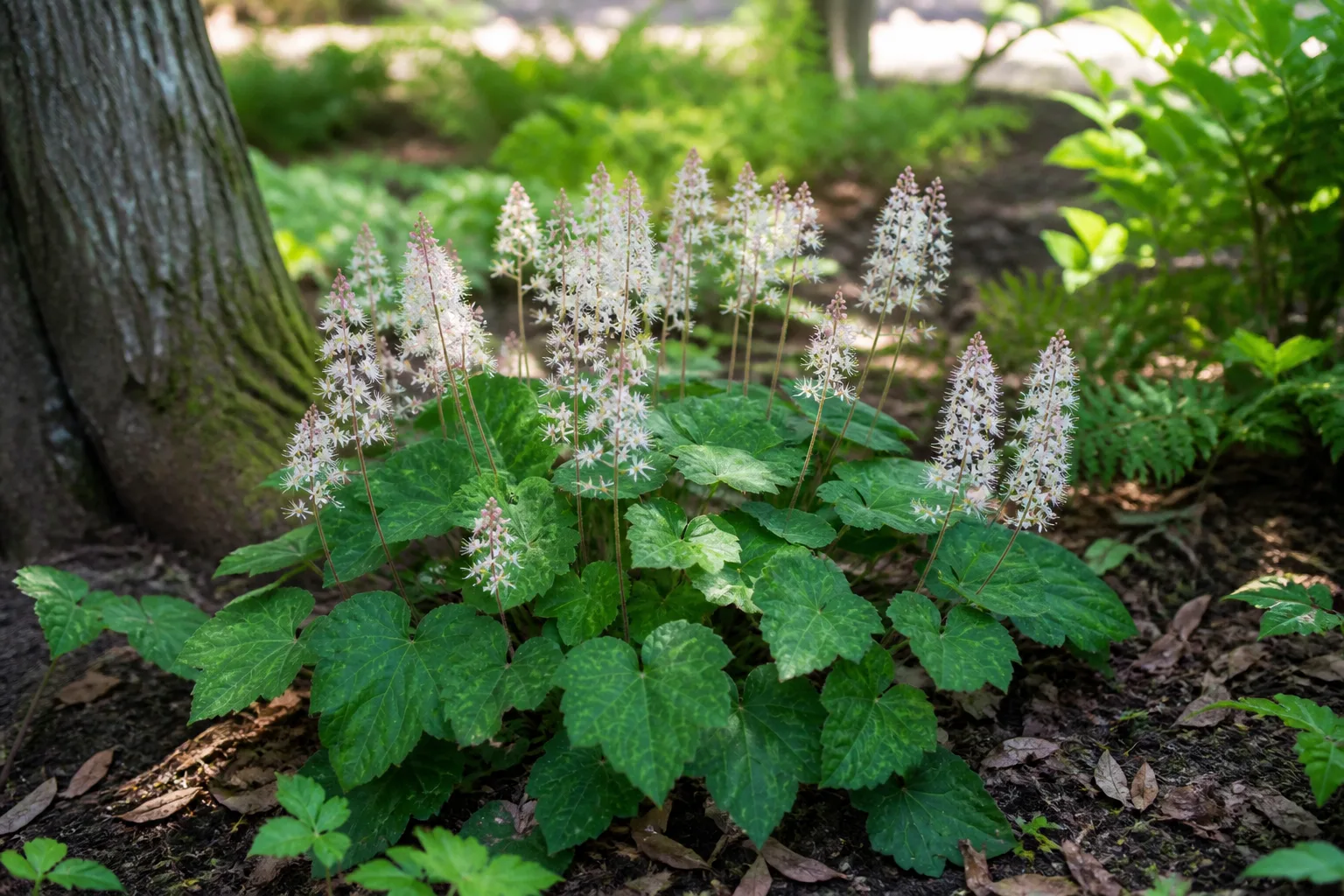
Give foamflower humus-rich, evenly moist soil with good drainage. It can handle shade beneath trees, but “shade tolerant” does not mean “never water it”: shallow tree roots can make a bed unexpectedly dry during summer. Add organic matter before planting if the soil is thin, then keep new plants consistently watered while they establish.
Foamflower is fast enough to knit a small woodland bed together without being the right tool for a hot, dry bank. Use it where you want a living carpet and seasonal flowers, and plan to divide or redirect colonies if they begin moving into paths or neighboring perennials.
2. Native Ferns for Textured Woodland Coverage
Native ferns are a category rather than one uniform groundcover. Sensitive fern (Onoclea sensibilis) and New York fern (Thelypteris noveboracensis) are useful for moist woodland conditions, while cinnamon fern (Osmundastrum cinnamomeum) makes a larger statement in damp soil. Netted chain fern can add a finer texture where it is locally suited.
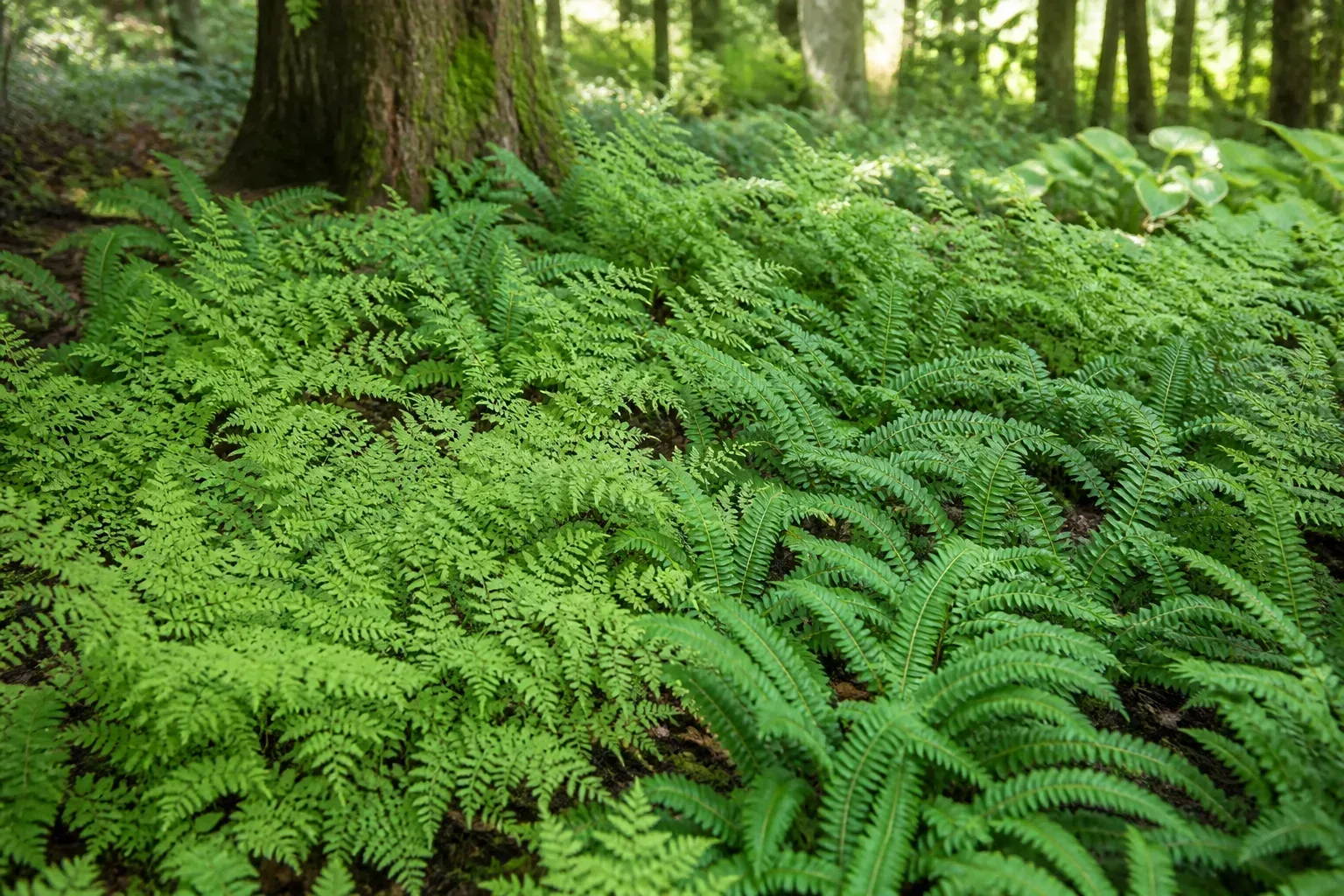
Choose the fern by moisture before choosing it by frond shape. A fern in the wrong place may survive for a season but fail to make the dense, reliable cover you wanted. Most fern groundcovers prefer soil that stays cool and does not bake, although exact tolerance varies by species; do not assume a fern belongs in every dry shade bed.
Ferns are valuable for foliage texture and are often less appealing to deer than many broadleaf perennials, but no plant is deer-proof. The Penn State Extension native-groundcover guide also recommends mixing drifts or groups instead of creating one giant monoculture, which limits the damage if a pest, disease, drought, or browsing event hits the bed.
3. Moss Phlox for Sunny, Dry Edges
Moss phlox (Phlox subulata) creates a low evergreen-to-semi-evergreen mat that spills over rocks, retaining edges, and sunny slopes. In spring, the foliage can disappear beneath masses of pink, white, lavender, or purple flowers. It is one of the best choices on this list when you want a clearly low, flower-filled carpet rather than a taller colony.
Plant it in full sun and sharply drained soil. Moss phlox dislikes a wet crown and can thin in heavy shade, so improve compacted soil and place it where rain does not collect. It is also different from creeping phlox (Phlox stolonifera), a taller, more shade-tolerant species; check the botanical name before buying if the site is dry and sunny.
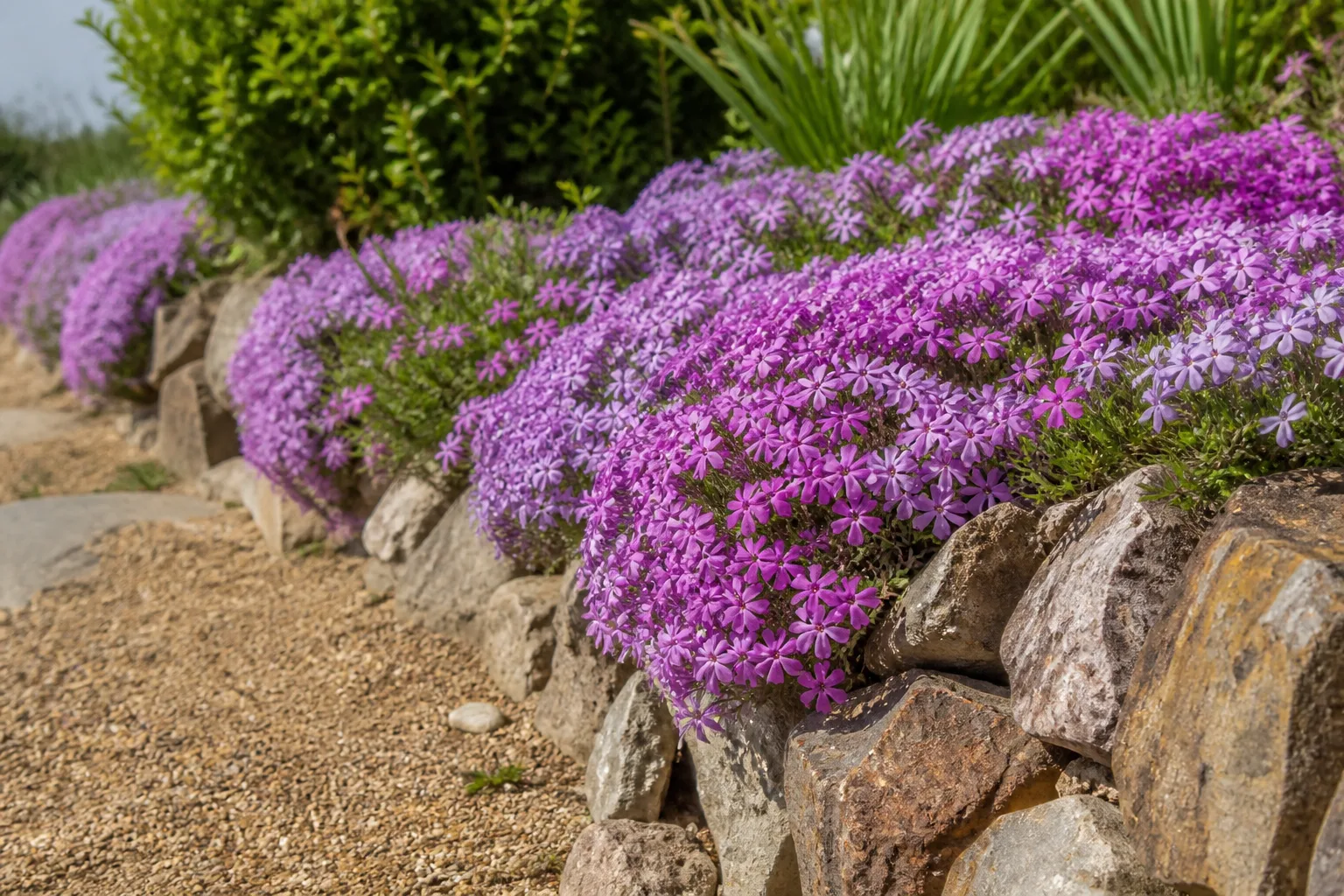
Moss phlox is a good visual edging plant, but it is not a living walkway. Use stepping stones through the bed if people need to cross it, and trim only when the mat has outgrown its boundary or looks untidy after flowering.
4. Common Blue Violet for Easy Naturalizing
Common blue violet (Viola sororia) is an excellent choice for gardeners who prefer a soft, informal look over a perfectly controlled carpet. Its purple or white flowers arrive early, and the heart-shaped leaves stay useful after bloom. It tolerates average soil and can handle more shade than many flowering groundcovers.
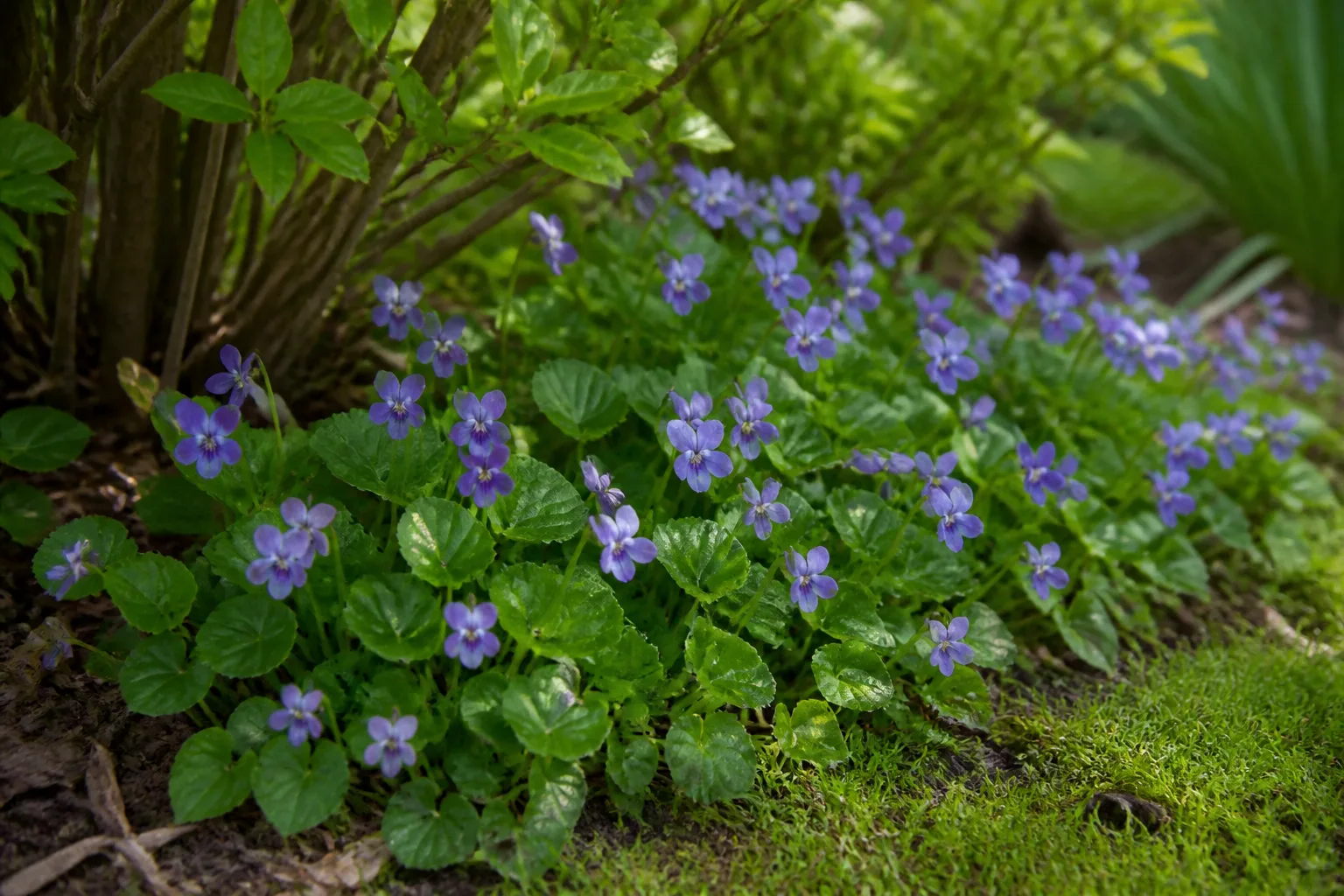
Violet spreads in clumps and by underground rhizomes, so it can occupy open ground beneath shrubs or along a lawn edge. That makes it useful for naturalizing and less suitable for a tiny bed where every plant must stay inside a drawn line. Mow or remove unwanted seedlings at the boundary before they become an established colony.
The flowers and leaves are often described as edible, but only eat a plant that has been correctly identified and grown without lawn herbicides, pesticides, contaminated mulch, or roadside pollution. Leave it alone if you are uncertain about its identity or growing history. Early flowers also make it valuable to insects emerging in spring, so a few volunteer violets may be worth keeping.
5. Blue Mistflower for Moist Summer Color
Blue mistflower (Conoclinium coelestinum, also called Eupatorium coelestinum) is the most assertive-looking option here. It can reach roughly 2 to 3 feet in flower and forms a spreading mass of green foliage topped with fuzzy blue-violet flower clusters from late summer into fall. In a moist sunny border, it fills a bare area quickly and gives pollinators color after many spring groundcovers have finished.
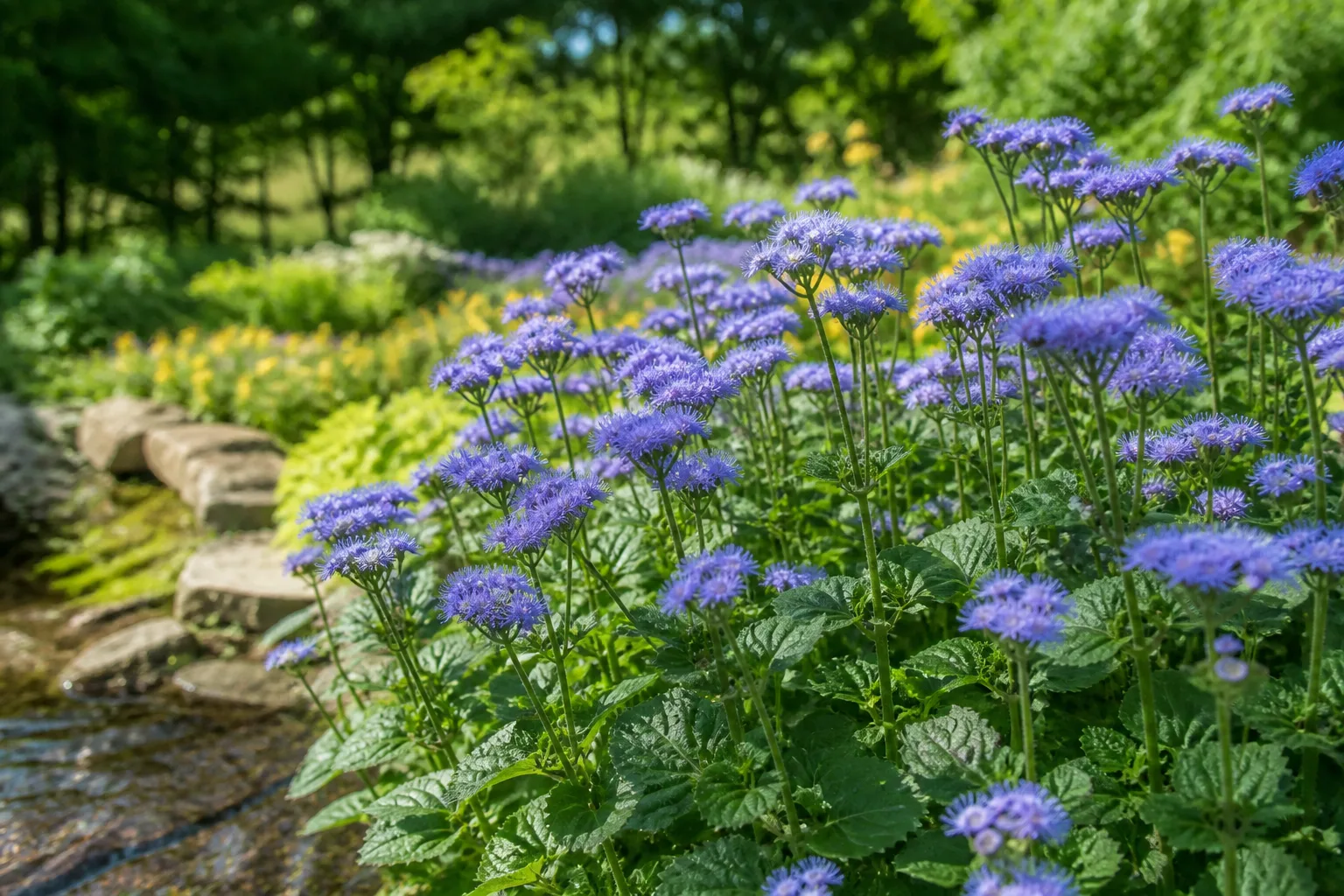
This is not the plant for a dry rock garden or a narrow strip beside a walkway. Give it sun to part shade and soil that stays reasonably moist, especially while it establishes. Once settled, it can spread by underground rhizomes and seed; leave the flowers for wildlife if you want a naturalized patch, or cut the seedheads and remove unwanted shoots when you need firmer control.
Use mistflower as a back-of-bed groundcover, rain-garden companion, or broad transition between taller plants and open soil. If you want a short lawn-like mat, choose another plant; its height is part of its value and part of its maintenance cost.
6. Wild Strawberry for Edible, Runner-Building Cover
Wild strawberry (Fragaria virginiana) combines three jobs: low foliage, spring flowers, and small edible fruit. NC State Extension describes it as a North American native that grows only about 5 inches tall but can spread roughly 2 feet wide by runners. Those runners root as they travel, making the plant useful for slopes, naturalized borders, and pollinator gardens.
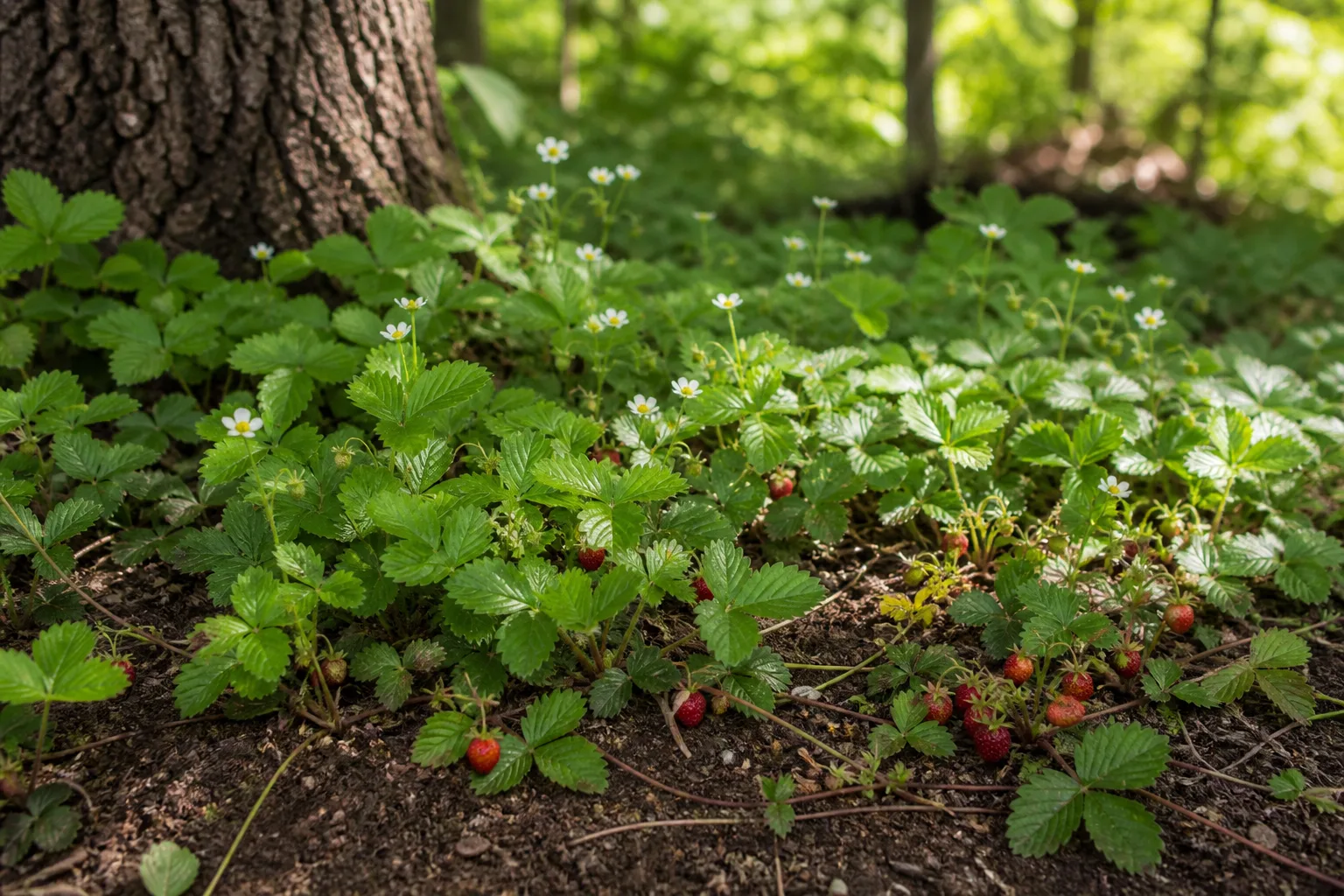
Give it full sun to part shade and fertile, well-drained soil that can range from moist to occasionally dry. It prefers cooler spring and fall conditions and may slow down or go semi-dormant in hot, humid summer weather, so a summer pause is not automatically a sign that the plant has failed. More sun generally means more fruit, while part shade makes a useful foliage groundcover with lighter production.
Look for the botanical name when buying. “Wild,” “woodland,” and “alpine” strawberry are sometimes used loosely for different Fragaria species; NC State’s plant profile for Fragaria virginiana is the useful reference for the North American native described here, while Epic Gardening’s alpine-strawberry guide covers Fragaria vesca, a related but distinct plant.
Harvest only fully ripe berries from a clean, unsprayed planting, and expect handfuls rather than grocery-store quantities. Remove or redirect runners if they are entering a lawn, vegetable row, or path; otherwise, let a few daughter plants root to thicken the cover at no extra cost.
7. Golden Ragwort for Moist Shade and Pollinators
Golden ragwort, also called golden groundsel (Packera aurea), is a bright answer for damp shade or part shade. Its low basal foliage can form a dense colony, and yellow, daisy-like flowers rise above it in spring. It gives a rain-fed low spot more color than a mulch layer while providing an early-season resource for native bees and small butterflies.
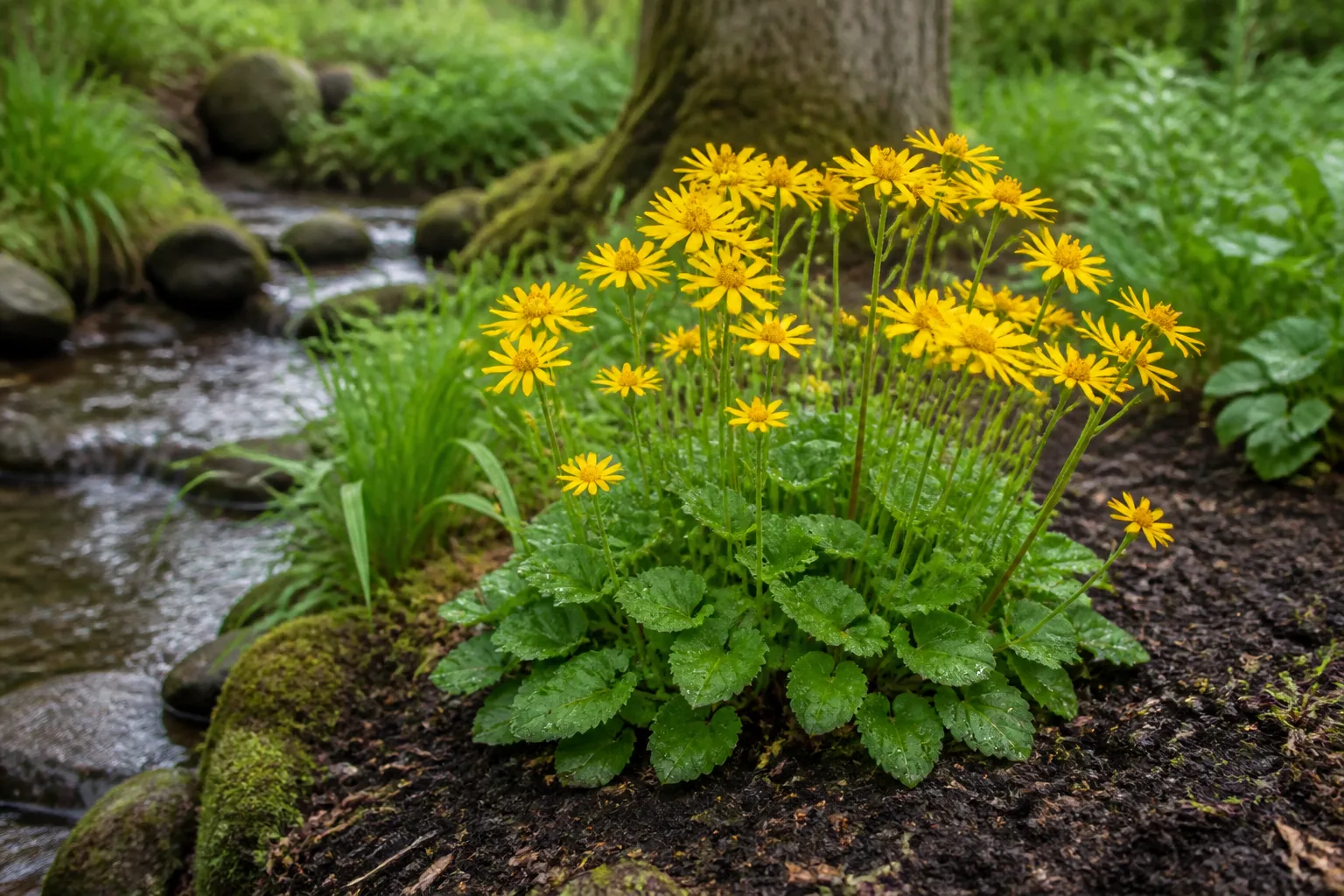
The plant is happiest in moist soil, but that does not mean the roots should sit in stagnant water. Use it beside a drainage swale, at the low side of a woodland bed, or in a moist border where soil drains slowly but does not stay flooded. In a dry, exposed site, it will need more irrigation and will not show the same vigor.
Golden ragwort spreads quickly by rhizomes and reseeding. That is an advantage on a broad bank and a warning in a small mixed border. Keep the colony inside a defined area, remove seedlings from paths, and cut off seedheads when you want to reduce volunteers rather than asking the plant to behave like a compact clump.
8. Woodland Stonecrop for Rocky, Partly Shaded Spots
Woodland stonecrop, or three-leaved stonecrop (Sedum ternatum), is a small native sedum for the places where a typical sun-loving stonecrop is not quite right. The Missouri Botanical Garden lists it as a 3- to 6-inch plant for full sun to part shade, with white spring flowers, creeping stems that root at the nodes, and a tolerance for shallow, rocky soil, drought, deer, and rabbits.
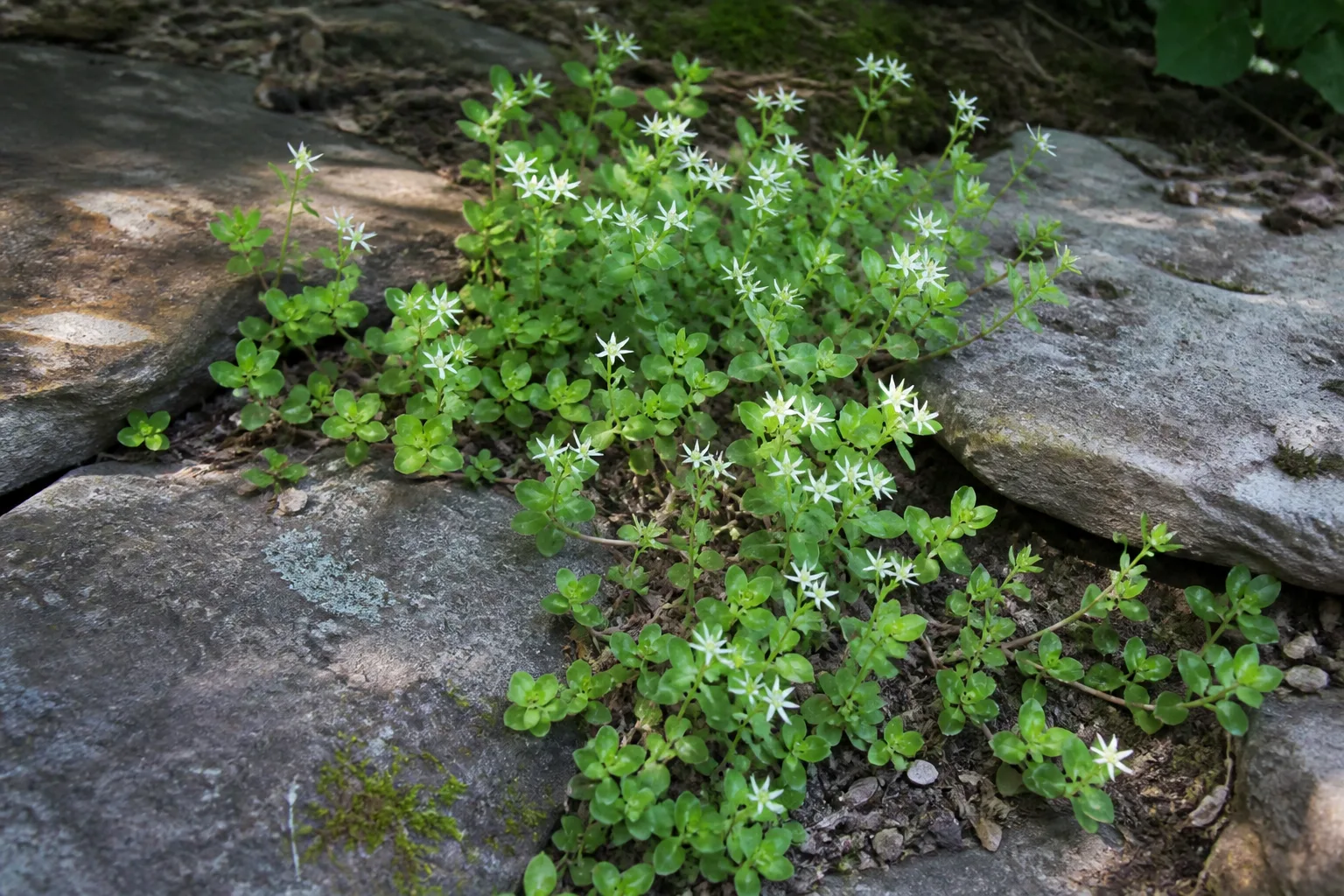
Unlike many dry-garden sedums, woodland stonecrop tolerates part shade and medium moisture better than most of its relatives. Give it drainage and avoid treating “drought tolerant” as permission to plant it in a permanently soggy pocket. It is a good bridge between a rock garden and a woodland edge, especially where the soil dries periodically but receives some spring moisture.
The Missouri Botanical Garden plant profile for Sedum ternatum notes that unwanted plants are easy to remove even though the stems creep and root. That combination—quick local fill-in with manageable removal—makes it a more forgiving choice for a small rocky bed than an aggressive runner that can travel several feet before you notice.
Compare the Eight Groundcovers at a Glance
| Groundcover | Best light | Moisture preference | How it fills in | Main watch-out |
|---|---|---|---|---|
| Heartleaf foamflower | Part shade to shade | Evenly moist, well drained | Spreading mounds and colonies | Can struggle in hot, dry shade |
| Native ferns | Shade to part shade, by species | Cool soil; often moist | Clumps or species-specific spread | Ferns are not interchangeable |
| Moss phlox | Full sun | Dry to average, sharply drained | Low mat | Wet soil and heavy shade thin it |
| Common blue violet | Part shade to sun | Average to moist | Clumps, rhizomes, and volunteers | Can naturalize into lawns and beds |
| Blue mistflower | Sun to part shade | Moist | Rhizomes and seed | Taller and more assertive than a mat |
| Wild strawberry | Sun to part shade | Moist to occasionally dry, well drained | Above-ground runners | Small fruit, heat pause, runner spread |
| Golden ragwort | Part shade to shade | Moist | Rhizomes and seed | Needs boundaries in small beds |
| Woodland stonecrop | Sun to part shade | Average to occasionally dry, well drained | Creeping stems rooting at nodes | Not a permanent wet-soil plant |
Plant Them So They Fill In Faster
Even the right plant will look slow if it begins in a weedy, compacted, poorly watered bed. A few hours of preparation usually save many seasons of hand weeding and replacement planting.
Prepare the bed before planting
Remove perennial weeds before the groundcover goes in. Pulling a few visible leaves is not enough for plants that return from rhizomes, crowns, or stubborn roots. The NC State Extension site-preparation guidance emphasizes that the best time to deal with difficult perennial weeds is before planting and that no single weed-management tactic controls everything.
Test the soil if the site is large, unusually poor, or meant to support an edible crop such as wild strawberry. Add compost or other organic matter only when the soil and plant actually need it; changing drainage for a plant that wants dry, rocky soil can create a new problem. Finish paths, stepping stones, edging, and any irrigation before you plant so you are not walking across a new mat later.
Avoid relying on plastic or synthetic landscape fabric as a universal solution. Penn State Extension cautions that synthetic cloth can create future problems on slopes by increasing runoff, becoming exposed, or allowing weeds to grow through it. A prepared bed, suitable plants, organic mulch, and periodic hand removal are more adaptable for a living groundcover planting.
Set spacing by mature spread
Read the nursery tag for mature width and use it as a planning number, not as an invitation to plant every pot shoulder to shoulder. Faster spreaders such as wild strawberry, golden ragwort, and blue mistflower need more room than a slow clumper, while a closer starting spacing may make sense on a steep slope if you can supply enough water and accept the extra planting cost.
Plant in small drifts rather than a rigid checkerboard when the garden is informal. Repeating three to five plants of one kind creates visual continuity, while mixing every species together forces plants with different moisture needs to compete. On a slope, put erosion-control plants where their roots can anchor soil, but keep a path or maintenance access so you can inspect the planting.
Mulch and water during establishment
After planting, apply a thin, even layer of organic mulch that leaves the crowns and stems clear. Penn State Extension recommends at least 2 inches of suitable mulch for weed suppression, moisture retention, and cooler roots; do not bury low foliage or pack mulch against a plant’s crown.
Water new plants deeply enough to settle the soil around their roots, then adjust the interval to the site and weather. A moist-shade plant may need regular attention under thirsty tree roots, while moss phlox should be allowed to drain between waterings. Continue through the first growing season, then water established plants mainly during unusually dry periods unless the species has a higher moisture requirement.
Prevent a Fast Groundcover from Becoming a Problem
Fast cover and controlled cover are not opposites, but they require boundaries. Before planting, decide whether a runner may cross a path, whether seed may move into a lawn, and whether you are comfortable sharing space with a plant that returns from a rhizome.
Use edging, stepping stones, mowing, division, or seasonal trimming according to the plant. Redirect wild-strawberry runners while they are easy to lift, remove golden-ragwort volunteers from the wrong side of a border, and cut blue-mistflower seedheads if you want less reseeding. Never rototill a colony you are trying to remove without first learning how its roots behave; chopping rhizomes can distribute the problem.
Check regional invasive-plant lists before buying any fast spreader, even when a plant is recommended as a groundcover elsewhere. A plant native to one part of North America may not be native to your county, and a regional native can still be too vigorous for a small courtyard bed. The most responsible choice is a plant that is both ecologically appropriate and physically manageable in your garden.
Remember that groundcovers do not eliminate maintenance. Colorado State University Extension notes that flowering or fruiting groundcovers can require more attention than evergreen types, and weeds can still become a serious problem if the planting is thin. Inspect the bed while plants are small, keep mulch replenished, and pull unwanted seedlings before their roots or runners become woven through the planting.
Are Native Groundcovers Better?
Often, yes—when the species is native to your region and fits the site. Native groundcovers can provide flowers, fruit, cover, and structure for local wildlife while reducing the temptation to rely on aggressive non-native carpets. Penn State Extension notes that many native plants develop deeper roots and may need less water and maintenance after establishment, but it also stresses that new plantings still need water while they settle in.
Native does not mean automatic success. A native dry-slope plant can fail in wet clay, a native moisture lover can scorch in reflected heat, and a native runner can still cross a border. Choose from the list by habitat first, then by wildlife value, and use mixed drifts rather than one species across the entire property when space allows.
If you are replacing English ivy, periwinkle, wintercreeper, or another aggressive carpet, remove the existing planting thoroughly and do not assume that a new groundcover will suppress it immediately. Give the replacement a clean start, monitor the old planting for regrowth, and select a locally appropriate native from a nursery that can provide the botanical name and provenance when that information matters.
Conclusion
For cool shade, start with heartleaf foamflower, a moisture-matched native fern, common blue violet, or golden ragwort. For sun, moss phlox handles a dry rocky edge, while woodland stonecrop bridges rocky soil and part shade. Wild strawberry adds edible fruit and runner-built cover, and blue mistflower is the high-impact choice for a moist, sunny area where a taller colony is welcome.
Prepare the site before planting, space for mature spread, mulch without burying crowns, and water through establishment. The groundcover that looks fastest on paper is not always the fastest to a healthy, durable planting; a plant that fits the site will cover soil more reliably and create far fewer problems to solve later.



