How to Plant and Grow a Foxtail Palm
Learn how to plant and grow a foxtail palm, choose a warm frost-light site, set the rootball correctly, and water it through establishment.
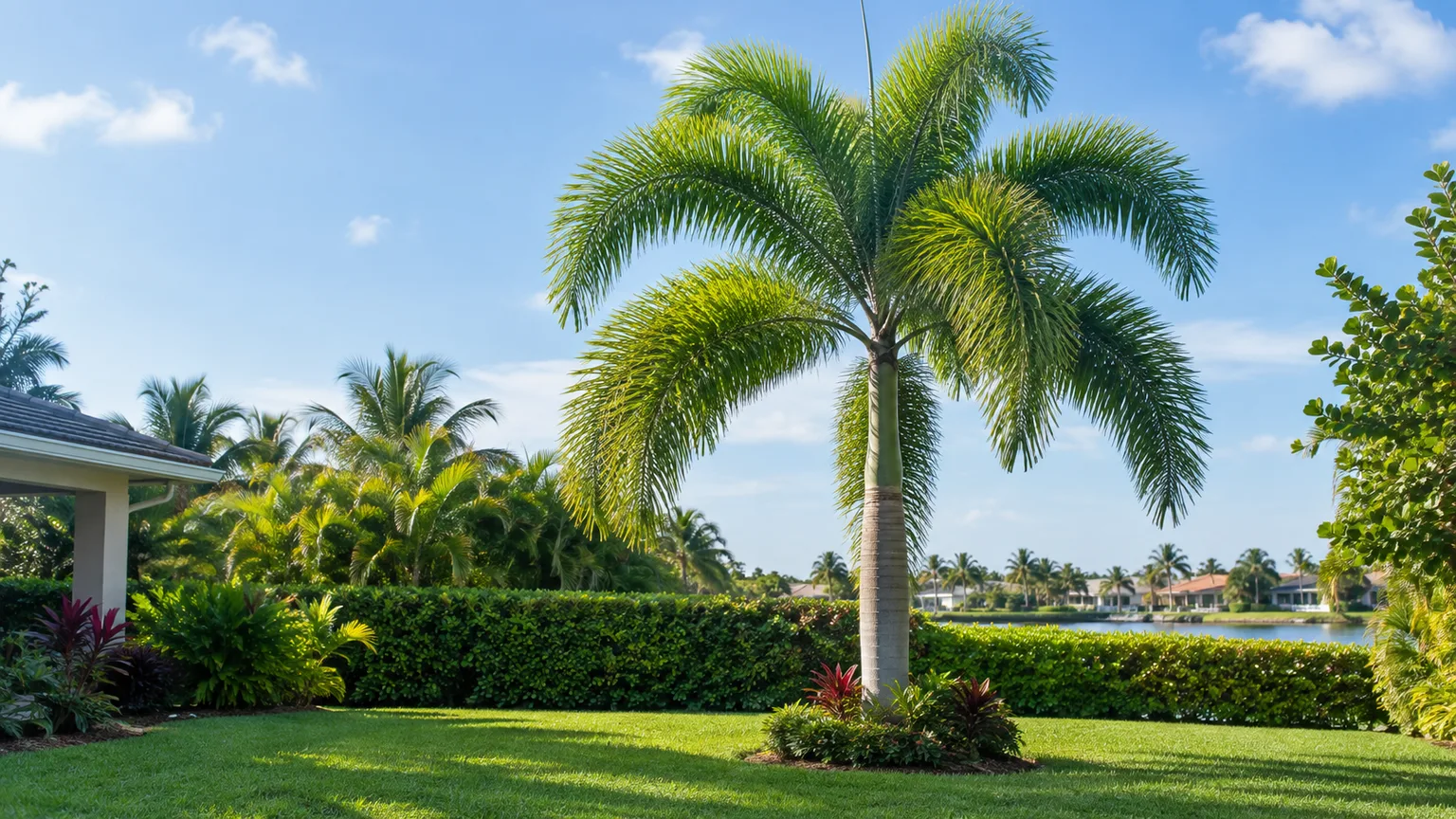
A foxtail palm (Wodyetia bifurcata) earns its place through a distinctive crown: long, feather-like fronds radiate around the stem so densely that the canopy looks like a green plume. It is a striking landscape palm, but it is not a small accent tree. A healthy specimen can reach roughly 20 to 30 feet tall, with a crown that needs substantial room and fronds that may extend 8 to 12 feet. Before buying one, check the winter lows where you live, the drainage after heavy rain, and the space below the future canopy.
The short version: grow this palm outdoors where winters are reliably warm, plant it in sun and well-drained soil, set the root system at the right depth, and keep the original nursery rootball evenly moist while it establishes. Once mature, it can tolerate dry spells, but drought tolerance does not mean it will look its best without water. If your yard gets hard freezes or stays waterlogged, choose a different palm rather than asking a tropical species to overcome a mismatched site.
Is a Foxtail Palm a Fit for Your Yard?
Foxtail palm is native to northeastern Queensland, Australia, and is prized in tropical and subtropical landscapes for its fast, upright growth and rounded crown. The University of Florida IFAS species profile describes it as growing quickly in full sun and reaching about 30 feet; it also notes that the species is best suited to places where temperatures do not fall below about 30°F. That is a practical caution, not a promise that a palm will sail through repeated or prolonged freezes. University of Florida IFAS describes the species and its cold limit.
USDA zones 10 and 11 are useful first filters, but a zone number cannot tell you exactly how a particular palm will handle a cold snap, wind exposure, wet soil, or a warm wall that radiates heat overnight. If your location regularly has frost or temperatures near freezing, treat the palm as a risky landscape choice. A brief cold dip can damage foliage even when the trunk survives, and a young or recently planted palm has less reserve than an established one. In cooler areas, a pot offers a way to move a small plant under cover, but a mature foxtail palm becomes a large, top-heavy specimen and is difficult to maintain as a normal houseplant.
Check cold limits before buying
Look at the actual winter minimums in your yard, not only the regional average. A south-facing wall, sheltered courtyard, or coastal neighborhood can be warmer than an exposed low spot, but those microclimates do not erase the risk of a rare freeze. Ask a local palm nursery or county extension office whether Wodyetia bifurcata has a track record in nearby landscapes, and use that local experience to refine a zone-map estimate.
Do not plant one just because the summer is hot. The limiting season is winter, and a palm that suffers a cold injury every year may spend its energy replacing damaged leaves rather than building a balanced crown. Where the species is borderline, plant it in the warmest well-drained microclimate you have and accept that an exceptional cold event may still require recovery time or replacement.
Plan for a full-size crown and falling fronds
A foxtail palm is usually described as about 20 to 30 feet tall with a 10- to 15-foot landscape spread, while its individual fronds can be longer than many small garden trees are wide. Exact dimensions vary with climate, age, and growing conditions. Better Homes & Gardens lists the mature height and width and cautions about falling fronds.
Set the palm where its crown will not press against the roof, block a window, brush a power line, or hang over a pool, parked car, play area, or narrow path. BHG gives at least 8 feet from a structure as a planting minimum; that may still leave fronds overhanging a building once the crown matures, so use the mature canopy—not the nursery pot—as your layout reference. Keep enough access around the trunk for irrigation, inspection, and future removal of dead fronds. The large leaves also need a place to fall and be carried away safely.
Foxtail palm works as a specimen or as part of a tropical grouping, but spacing trees close together trades individual crown room for a denser look. If you want a layered planting, mark each trunk position and sketch the eventual canopy circles before digging. That simple step is cheaper than cutting back neighboring plants or moving a palm after its root system has spread.
Choose a Sunny Site With Fast Drainage
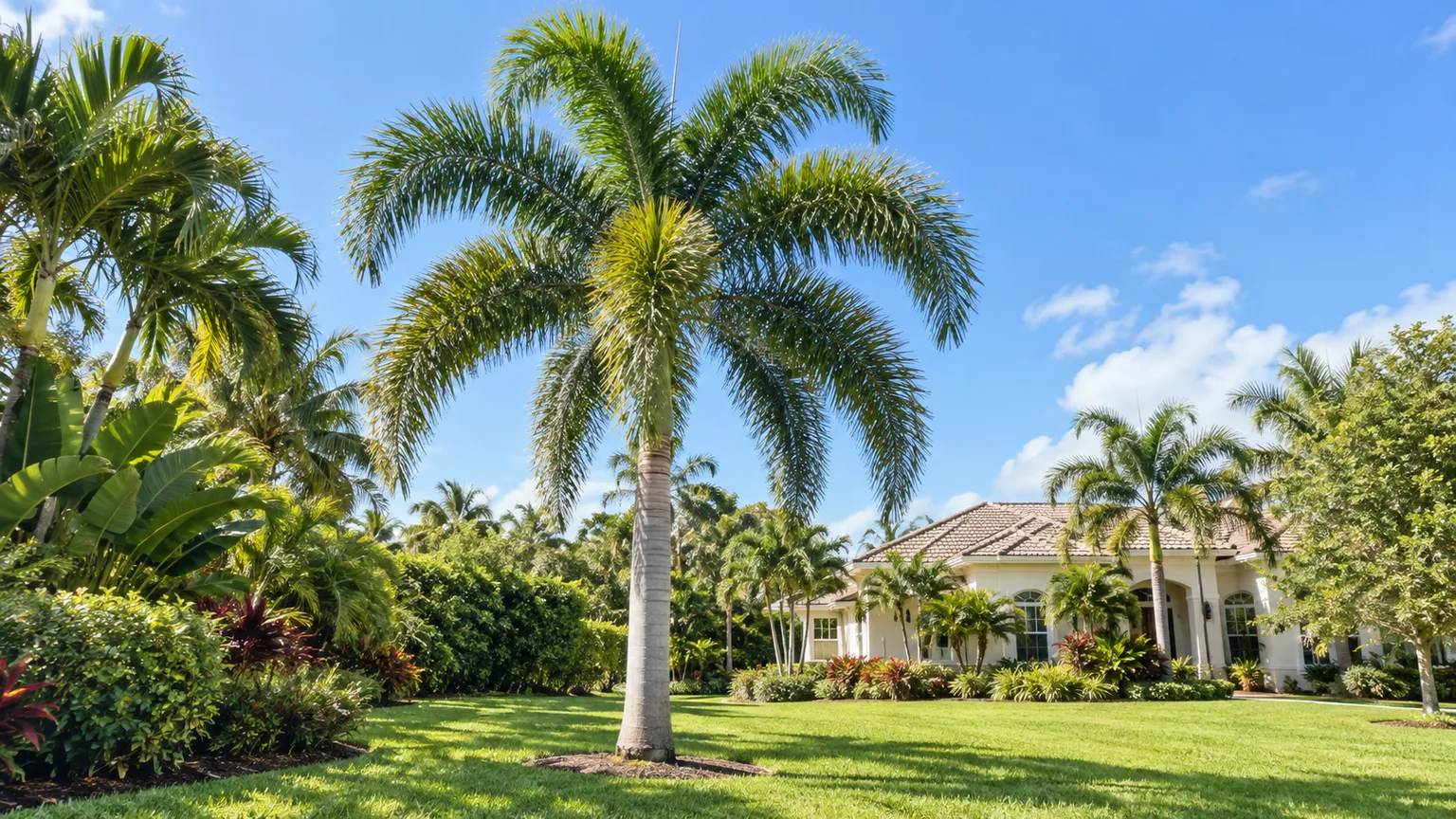
Aim for full sun if you want the quickest, fullest growth. The palm can tolerate some shade, but a shaded site may produce slower growth and a thinner-looking canopy. Better Homes & Gardens recommends at least six hours of direct sun for strong growth and notes that shade can make fungal problems more likely. In a very hot inland yard, a little afternoon protection can reduce leaf stress, but do not trade away all usable light to solve a watering or soil problem.
Match light, soil, and exposure
Foxtail palm prefers soil that drains freely and is slightly acidic. Sandy ground is a natural fit, but the more important test is what happens after rain: water should soak in rather than sit around the root zone. A low area, compacted construction fill, or clay layer can leave roots short of oxygen even when the surface looks dry. If a test hole repeatedly holds water, choose another spot or have a qualified landscape professional assess whether a broad raised mound can solve the drainage problem. A narrow pocket of amended soil surrounded by heavy clay can act like a bathtub, so do not assume that adding sand to the planting hole will fix it.
The species is moderately salt tolerant, which makes it more adaptable to coastal landscapes than many sensitive ornamentals, but salt tolerance is not immunity. Salt spray, saline irrigation, and wind-driven exposure can still mark foliage or stress a newly planted tree. Rinse foliage only when salt deposition is a concern and the soil drains well; routine overhead watering is not a substitute for good soil moisture, and UF/IFAS notes that wetting palm crowns can encourage leaf-spot fungus.
When to Plant and What to Buy
Plant during the warm part of the year, when soil temperatures are rising and the palm has a long stretch of growing weather ahead. Spring or early summer is a common choice in warm U.S. landscapes; in Florida, the rainy season can also help with establishment if the site drains promptly. BHG recommends spring or early-summer planting, while Planet Natural also favors the warm season. Do not use “rainy season” as a reason to plant into a persistently soggy yard. Warmth helps roots grow, but saturated soil can undo that advantage.
For most homeowners, a healthy container-grown palm is a more manageable purchase than a large field-dug specimen. Look for a firm, undamaged trunk, an upright crown, and a central spear leaf that is not loose, mushy, or blackened at the base. Check that the container drains and that the rootball does not smell sour or feel waterlogged. A slight lean in the pot can often be corrected during planting; a damaged growing point cannot be replaced by trimming another frond.
Foxtail palms are normally single-trunk palms. A nursery may sell several seedlings together to create a multi-palm look, so inspect whether the label describes one plant or a group of plants in one container. Do not buy on the assumption that a solitary tree will produce dependable suckers later. If you want a cluster effect, decide that at planting time and give the individual palms room for their own trunks and crowns.
How to Plant a Nursery-Grown Foxtail Palm
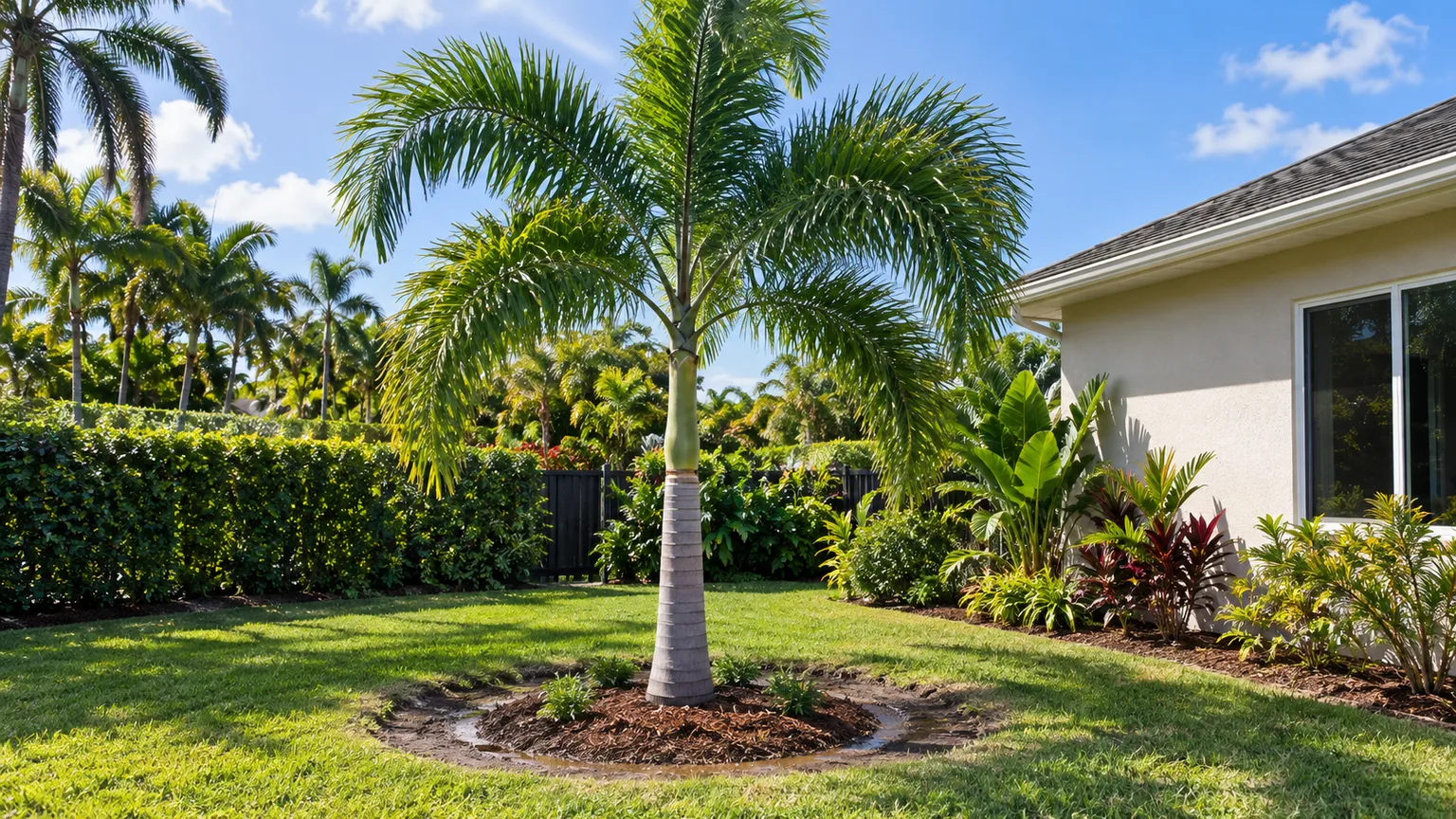
Planting depth deserves more care than the hole’s appearance. Palms make new roots from a root-initiation zone at the base of the trunk; they do not build a woody root flare in the same way a broadleaf tree does. The soil or bark mix in a container may have settled, so the top of the potting medium is not always a reliable marker for where the trunk meets the roots. University of Florida IFAS advises setting a container-grown palm by its root-shoot interface and planting that interface about an inch below the soil surface. Its palm-transplanting guide explains the root zone and planting-depth risks.
Find the root-shoot interface
Slide the palm from its pot before you dig, if possible, and inspect the base. Identify the transition from trunk tissue to roots, then compare that point with the current surface of the potting mix. If the nursery medium has sunk well below the actual interface, planting the top of the potting mix level with the yard can leave the palm too shallow and poorly anchored. If you are uncertain, ask the nursery to show you the correct reference point before disturbing the rootball.
Dig a hole about twice as wide as the rootball and no deeper than needed to place the palm at the correct level on firm ground. A hole that is too deep can settle after watering, pulling the root-initiation zone below grade; a loose, overexcavated base can do the same. Keep the rootball intact. Palm roots are different from woody tree roots, and routine root pruning is not a useful shortcut for a homeowner planting a nursery palm.
Backfill, water, and mulch without burying the trunk
Set the palm upright and backfill with the excavated soil, breaking up large clods as you go. Do not pile soil against the trunk or bury the crownshaft, the smooth green area where leaves emerge. Unless a soil test or local specialist gives a specific reason, avoid creating a highly amended pocket in the planting hole; palms need a stable transition from the original rootball into surrounding ground, not a rich, water-holding bowl.
Water slowly while backfilling so soil settles around the roots without leaving large air gaps. If you can, create a low temporary berm just outside the rootball to direct irrigation over the area that needs to stay moist. Apply a 2- to 3-inch layer of mulch over the root zone to moderate evaporation and weeds, but keep it several inches away from the trunk. Mulch piled against the stem traps moisture at the wrong place and makes it harder to inspect the base.
Skip a deep planting stake unless the palm actually moves in the wind. A small nursery tree with a stable rootball usually does not need to be rigidly strapped; if a stake is necessary, use broad ties and allow slight trunk movement. Remove the support once the rootball is stable rather than leaving constricting ties in place. Larger specimens should be planted and supported by professionals who understand palm handling and overhead work.
Water Through Establishment, Then Adjust
A newly planted palm needs more frequent checks than a mature one because the nursery rootball can dry faster than the surrounding landscape soil. UF/IFAS describes regular irrigation for container-grown palms through roughly six to eight months of establishment, with the interval adjusted to weather and soil; its guide notes that alternate-day irrigation is often adequate in Florida conditions. BHG advises regular watering for one to two years. These are not competing timers: the practical endpoint is a root system that has moved beyond the original container mix and a palm that stays firm between normal rain or irrigation events.
For the first several weeks, feel the rootball itself before watering. Push a finger or narrow trowel into the original mix and check the surrounding soil separately; if the rootball is dry while the ground nearby is damp, apply water slowly to the rootball instead of soaking the entire planting bed. In hot, windy weather or fast-draining sand, check more often. After a heavy rain or in clay soil, wait and recheck rather than following a fixed daily schedule.
As new roots and leaves develop, widen the watered area gradually so moisture reaches both the rootball and nearby soil. Apply water at ground level and let it soak in; repeated shallow sprinkling encourages surface wetness without reliably moistening the root zone. Once established, a foxtail palm can withstand some drought, but supplemental deep irrigation during a prolonged dry spell supports a better canopy. The right rhythm is “deep enough to wet the active root zone, then allow drainage,” not “keep the soil constantly wet.”
If the palm is in a container, use a heavy pot with open drainage holes and a free-draining mix. Water until the whole rootball is moist and excess exits the base, then empty any cachepot or saucer. A large pot that stays wet for days can be harder to manage than a smaller one that dries predictably; container size should support the current rootball and the palm’s stability, not simply be oversized to avoid repotting.
Maintain a Healthy Palm Without Overdoing It
Once the palm is established, routine care is modest when the site is right. Keep lawn equipment away from the trunk, maintain an open mulch ring, and inspect the center spear and lower fronds when you water. The fronds tell you about the palm’s overall condition, but one discolored leaf is not enough evidence to justify fertilizer, fungicide, or pruning. Look for a pattern across age groups of leaves and compare it with drainage and recent weather.
Fertilize for palms, not just lawn
Use a slow-release palm fertilizer with potassium, magnesium, and micronutrients when local guidance recommends routine feeding. Florida’s sandy, high-rainfall landscapes are especially prone to nutrient leaching; UF/IFAS discusses a controlled-release 8-2-12-4Mg formulation with micronutrients for landscape palms and emphasizes that the formulation and release pattern matter. Its rates and schedule are regional recommendations, not a universal label for every soil or jurisdiction. Review the UF/IFAS landscape-palm fertilizer guidance, then follow your county extension advice and the product label where you live.
Do not push growth with a high-nitrogen lawn fertilizer near the palm. Palms need balanced potassium and magnesium as well as nitrogen, and frequent high-nitrogen feeding can make an imbalance worse. Broadcast an appropriate palm product over the label-recommended area rather than concentrating it in a hole or against the trunk. If a palm develops pale or distorted new growth, test conditions and ask a local extension service to identify the deficiency before adding individual micronutrients; overdosing some elements can create a second problem.
Prune only what is dead or hazardous
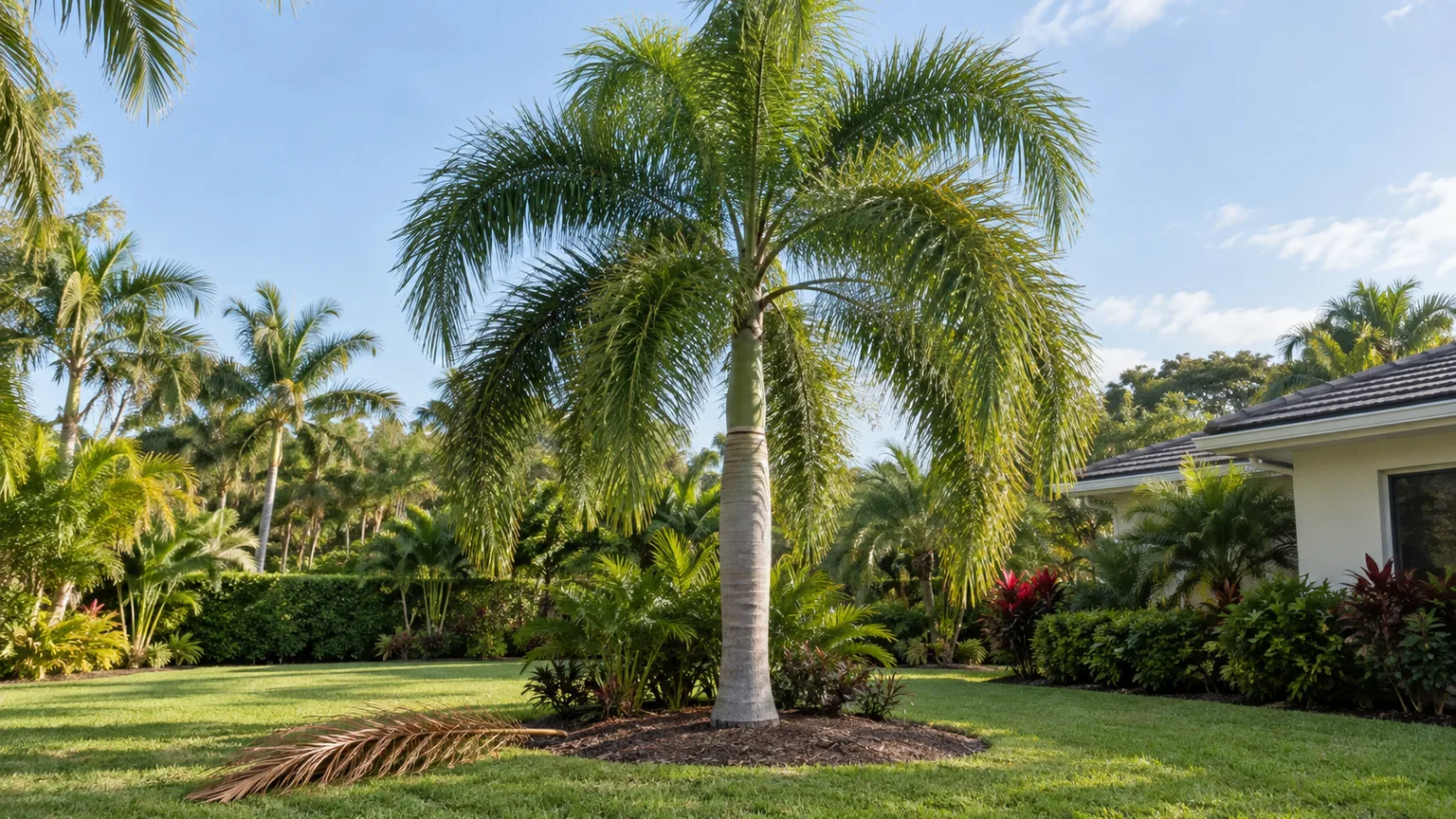
Foxtail palms are self-cleaning: fully dead fronds and fruit stalks eventually fall, which is convenient but means you should not plant the tree where a falling leaf can hit people or property. Remove only a completely dead or broken frond that is reachable safely, cutting near its base without cutting into the trunk or crownshaft. Do not trim healthy green fronds to make the palm look smaller, create a “pineapple” trunk, or prepare it for storm season.
The University of Florida IFAS pruning guidance explains that crownshaft palms generally should not need routine pruning when healthy, and overpruning removes photosynthetic leaves and can weaken a palm. It also warns that climbing spikes create permanent trunk wounds. Read the UF/IFAS palm-pruning guidance. If dead leaves are high overhead, a large fruit cluster is above a walkway, or the work requires climbing, hire a qualified palm-care arborist rather than using a ladder, machete, or improvised pole saw.
Diagnose Yellowing, Browning, and Slow Growth
Several different problems can produce yellow or brown fronds, so diagnose the pattern before treating it. Check the youngest spear first: a spear that is soft, black, or pulls out easily is more concerning than one old lower leaf turning brown. Then check root-zone moisture, drainage, planting depth, and recent cold exposure. If only the oldest leaves are naturally fading while the new growth is healthy, the palm may simply be shedding older foliage.
Brown tips can follow drought, wind, salt exposure, or fertilizer salts, while broad yellowing can follow cold stress, waterlogged roots, poor light, or a nutrient shortage. Do not assume that every yellow frond needs a fungicide or that every brown edge calls for fertilizer. A palm planted too deeply can decline slowly with poor vigor and recurring nutrient symptoms; adding more fertilizer will not correct a buried root-initiation zone or oxygen-starved roots.
When the newest leaves emerge small, distorted, or withered, photograph the whole crown and one close-up, note whether the symptoms affect new or old fronds, and consult a county extension office or an experienced palm specialist. Nutrient deficiency, cold injury, pest activity, and disease can overlap visually. A soil test and a clear description of watering history are more useful than applying multiple products at once.
Grow a Foxtail Palm in a Container or From Seed?
A foxtail palm can grow in a container while it is small, but it is not an easy long-term houseplant. It needs very bright light, warmth, drainage, and enough floor space for a broad crown; an ordinary dim room usually provides too little usable light. In cooler regions, a greenhouse or bright conservatory is more realistic than a living-room corner. Move a potted palm outside only after cold nights pass, acclimate it to stronger sun over several days, and bring it under cover before temperatures approach the plant’s cold limit.
Growing from seed is possible if you have access to fresh, ripe fruit and patience. The ripe fruit is orange to red; remove the pulp, rinse the seed, and sow it in a warm, airy medium that stays lightly moist rather than saturated. Keep the pot warm and protected from harsh direct sun while you wait. Germination is slow and uneven—often measured in months, with reports ranging from about two to twelve months—so do not discard a firm seed after a few weeks.
Once a seedling has emerged, keep the medium evenly moist and give it bright light without abruptly placing tender foliage in hot, exposed sun. Pot it on only when roots fill the current container, and protect it from cold while it is young. Seed-grown palms take time to become landscape specimens, so buying a healthy nursery plant is the sensible route if you want a mature-looking yard tree soon.
Conclusion
A foxtail palm can make a backyard feel tropical, but the decision begins with winter, drainage, and space—not fertilizer or pruning. Choose it only where cold is limited, the soil drains after rain, and a 20- to 30-foot tree with a broad crown will not interfere with the house, utilities, or everyday activity.
When planting, set the root-shoot interface at the proper depth, keep the original rootball moist while it establishes, and allow the soil to drain between waterings. Use a palm-specific slow-release fertilizer only when local guidance supports it, leave healthy green fronds in place, and treat symptoms as clues rather than diagnoses. Match those fundamentals to your actual yard and the foxtail palm becomes a durable landscape feature; ignore them and the trouble is usually built into the site before the first frond opens.