How to Grow and Care for Jackman’s Clematis Outdoors
Learn when to prune Jackman’s clematis, how to plant and train its fragile stems, and how to tell clematis wilt from drought or physical damage early.

Jackman’s clematis (Clematis ‘Jackmanii’) is a deciduous climbing perennial known for large, deep purple flowers in summer. It is a strong choice for a fence or trellis if you can give it sun on its upper growth, cool and evenly moist roots, a narrow support its leaf stalks can wrap around, and an annual dormant-season prune. The most important detail is its pruning group: Jackmanii is a Group 3 clematis, so it flowers on shoots made during the current growing season.
That group assignment makes pruning less mysterious. Cut the old stems back in late winter or early spring, before new growth starts, and the vine can build a fresh framework that flowers later in summer. The challenge is not keeping every old stem; it is choosing the right site and support, then avoiding the common mistake of treating all clematis planting and pruning advice as interchangeable.
Is Jackmanii the right clematis for your space?
Jackmanii is a classic large-flowered hybrid with an upright, twining habit and a mature size that needs more than a small decorative obelisk. Nebraska Extension lists ‘Jackmanii’ at roughly 12 feet tall by 3 feet wide, but growth varies with climate, soil, pruning, and the plant sold under the name. Plan for a substantial vertical display and check the nursery label for the exact cultivar, mature dimensions, and local hardiness rating before you buy. (Nebraska Extension)
The vine climbs by curling its leaf stalks, or petioles, around narrow objects. It does not cling to a broad wall like ivy, and it will not reliably wrap a thick post by itself. This makes Jackmanii useful for covering a fence or trellis with fine mesh, but less suitable for a bare masonry wall unless you install a grid and leave room behind it for stems to thread through.
The RHS classifies ‘Jackmanii’ among Group 3 clematis, which flower on current-season growth in summer. The name refers to a particular cultivar, not every purple clematis: verify the plant tag because pruning schedules are based on flowering habit, and a different cultivar can belong to a different group. For broader clematis selection and care, see our general clematis growing guide. (RHS Group 3 pruning guide)
Clematis is also a plant to place thoughtfully if pets roam the garden. The ASPCA lists clematis as toxic to dogs, cats, and horses, with salivation, vomiting, and diarrhea among possible signs after ingestion; keep pruned stems out of reach and contact a veterinarian or animal poison service if a pet chews the plant. (ASPCA Animal Poison Control)
Balance flower light with cool roots
Give the leafy upper vine a bright position. Around six hours of direct sun is a practical starting point for many garden clematis; Jackmanii can tolerate some partial shade, but deep shade usually means fewer flowers and slower drying after rain. In hot-summer climates, morning sun with light afternoon protection can reduce heat stress without shading the whole vine. General clematis guidance varies by species and cultivar, so use the plant tag rather than treating every clematis as equally shade-tolerant; Epic Gardening also describes the genus as sun-loving while noting that individual varieties differ.
The common “sunny top, cool feet” advice is about different parts of the plant having different needs. The shoots need light to flower, while roots benefit from soil that stays cooler and does not swing between saturated and bone-dry. Mulch the root zone or use a low, shallow-rooted companion plant for shade; avoid planting a thirsty shrub close enough to compete with the young vine.
Prepare soil that stays moist without holding water
Jackmanii grows best in fertile soil that drains freely. If the ground stays puddled after rain, correct the drainage or choose a raised planting spot before you add the vine; extra watering advice cannot fix waterlogged roots. On very sandy ground, incorporate organic matter across a broad area to help moisture last longer, while heavy soil benefits from organic matter that improves structure rather than a small pocket of loose compost in the planting hole.
A spring layer of compost or well-rotted organic mulch helps conserve moisture and moderates the root zone. Keep it a few inches away from the stems so the crown is not buried under a wet collar. Fine Gardening’s clematis guidance likewise emphasizes fertile, well-drained soil and organic matter, while the RHS distinguishes moisture-retentive soil from soil that remains waterlogged. (Fine Gardening, RHS growing guide)
Plant the rootball at a cultivar-appropriate depth
Spring and early fall are usually the easiest planting windows because soil is workable and temperatures are less stressful than midsummer. Avoid frozen or waterlogged ground, and water a container-grown plant before setting it out so its rootball is already evenly moist. Dig a broad hole, loosen circling roots gently if needed, and water slowly after backfilling to settle soil around them without tamping it into a hard layer.
Planting depth guidance differs among general clematis references, so do not assume one number applies to every species. The RHS recommends placing the top of the rootball of large-flowered hybrid cultivars 2 to 3 inches below the soil surface; it advises shallower placement for many species and other types. Nebraska Extension’s broad clematis guidance uses about 1 inch deeper than the container. For Jackmanii, which is a large-flowered hybrid, the RHS depth is a defensible starting point in well-drained soil; follow a more specific local nursery instruction if it differs, and do not bury a plant deeply in a wet site. (RHS growing guide, Nebraska Extension)
Set the vine away from dry walls and competing roots
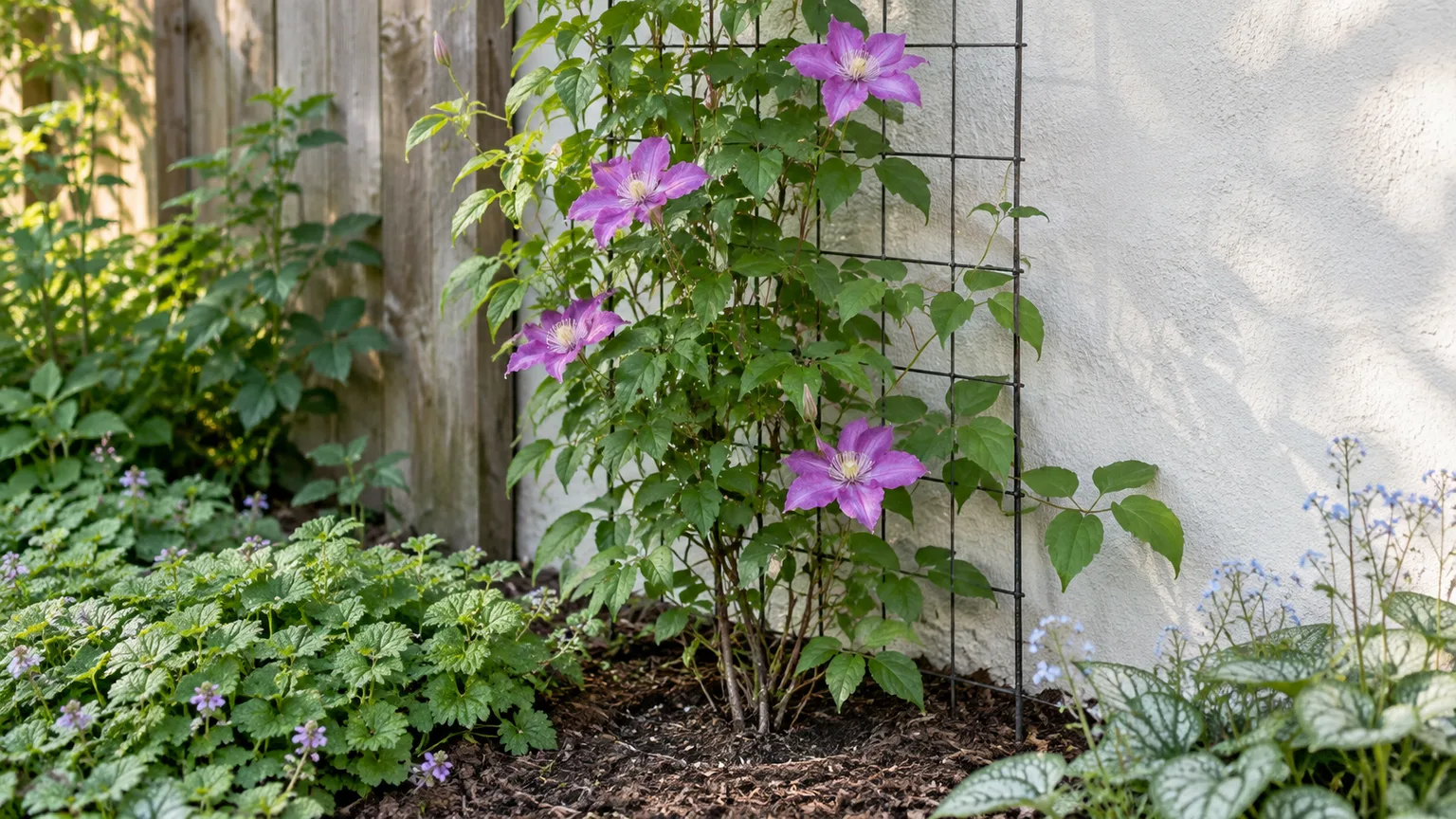
A wall or fence can create a dry rain shadow, especially below an overhanging roof or gutter. The RHS suggests setting clematis roughly 12 to 18 inches away from a wall or fence, then guiding it toward the trellis with a cane; the gap also makes watering and maintenance easier. If the vine will climb a tree or large shrub, allow several feet between the clematis and the trunk so its young roots are not immediately competing with an established root system. (RHS growing guide)
Install the permanent support before digging if possible. Driving stakes near an established clematis later can damage roots, and repairing a support after the vine has climbed through it is awkward. If you are planting a bare-root or small nursery plant, check that its stems can reach the support without being bent sharply or pulled tight.
Choose a trellis its leaf stalks can grip
Choose a sturdy support with narrow rails, wire, or mesh openings that young petioles can reach. Nebraska Extension notes that clematis petioles cannot grasp thick supports; when a support is thicker than about three-quarters of an inch, finer twine, wire, or mesh can give the stems something to wrap around. A trellis attached to a wall should sit slightly away from the surface so stems can pass behind it rather than being pressed flat. (Nebraska Extension, RHS growing guide)
The trellis should carry the weight of the mature vine and withstand wind, not merely hold a nursery pot’s first few stems. Guide young shoots loosely with soft ties until their leaf stalks catch; a loose figure-eight tie limits rubbing and leaves room for the stem to thicken. Check the vine every week or two in active growth, because two minutes of redirection can prevent a dense knot at the base and spread flowers across the support.
Water and feed for steady growth, not leafy excess
During the first growing seasons, check moisture below the surface rather than watering by calendar. When the top few inches are drying and the soil underneath is only slightly moist, water slowly around the root zone until moisture reaches deeper roots; then allow drainage. Newly planted vines, sandy sites, and containers need checks more often during heat, wind, or drought, while established in-ground plants may need supplemental water mainly through prolonged dry spells.
Do not respond to every drooping leaf with another watering. Dry soil points toward drought stress, but limp growth in persistently wet soil suggests drainage or root trouble; adding more water can make the second situation worse. Watering at soil level also keeps foliage from staying wet and helps limit splash that can move fungal spores.
In-ground Jackmanii growing in fertile soil generally does not need a monthly fertilizer schedule. The RHS recommends annual organic mulch and says clematis in fertile ground need no routine feed; the University of Nebraska’s guidance likewise says established plants usually need no extra fertilizer unless the site needs correction. If growth is weak after you have checked light, moisture, support, and pruning, use a soil test or a label-directed balanced feed rather than guessing. Excess nitrogen can push long, soft foliage that is harder to train and does not necessarily produce more blooms. (RHS growing guide, Nebraska Extension)
Use a simple seasonal care rhythm
In late winter or early spring, prune Group 3 stems while the vine is dormant or just before new growth begins. Top-dress the root zone with compost, check that the trellis is secure, and remove dead or damaged material. In spring and early summer, direct new shoots across the support and water deeply when the root zone begins to dry.
During summer flowering, keep the base evenly moist through dry spells and watch for tender shoots being clipped or chewed near the ground. After flowering, remove faded blooms or seedheads only if you want a tidier look; deadheading is not required to make Jackmanii repeat bloom. In fall, leave the healthy stems until the next pruning window, unless disease or damage makes earlier removal necessary.
Timing shifts with climate. A calendar date that works in a mild UK garden may be too early or late in a cold continental climate, so use the season as a cue and watch your own vine: prune after the plant has entered dormancy and before the new shoots elongate. In the Southern Hemisphere, shift the seasonal references by six months.
Prune Group 3 Jackmanii before spring growth
Jackmanii flowers on new wood, meaning shoots that grow in the current season. The RHS says Group 3 clematis are best pruned hard in late winter to the lowest pair of buds; its general clematis guide places Group 3 pruning in February. Arkansas Extension describes Jackmanii among late-season Group 3 cultivars and recommends cutting to short stems in spring. In colder places, wait until the worst frost has passed if that is your local advice, but finish before active shoots stretch. (RHS pruning guide, RHS Group 3 pruning guide, University of Arkansas Extension)
Find the lowest pair of plump, healthy buds on each stem and cut just above them with clean, sharp pruners. If no obvious buds are visible, leave several inches of stem rather than cutting flush with the soil; many gardeners use roughly 6 to 12 inches as a working range. The point is to reset the old framework while preserving viable buds, not to hit a precise height that ignores the plant’s actual structure.
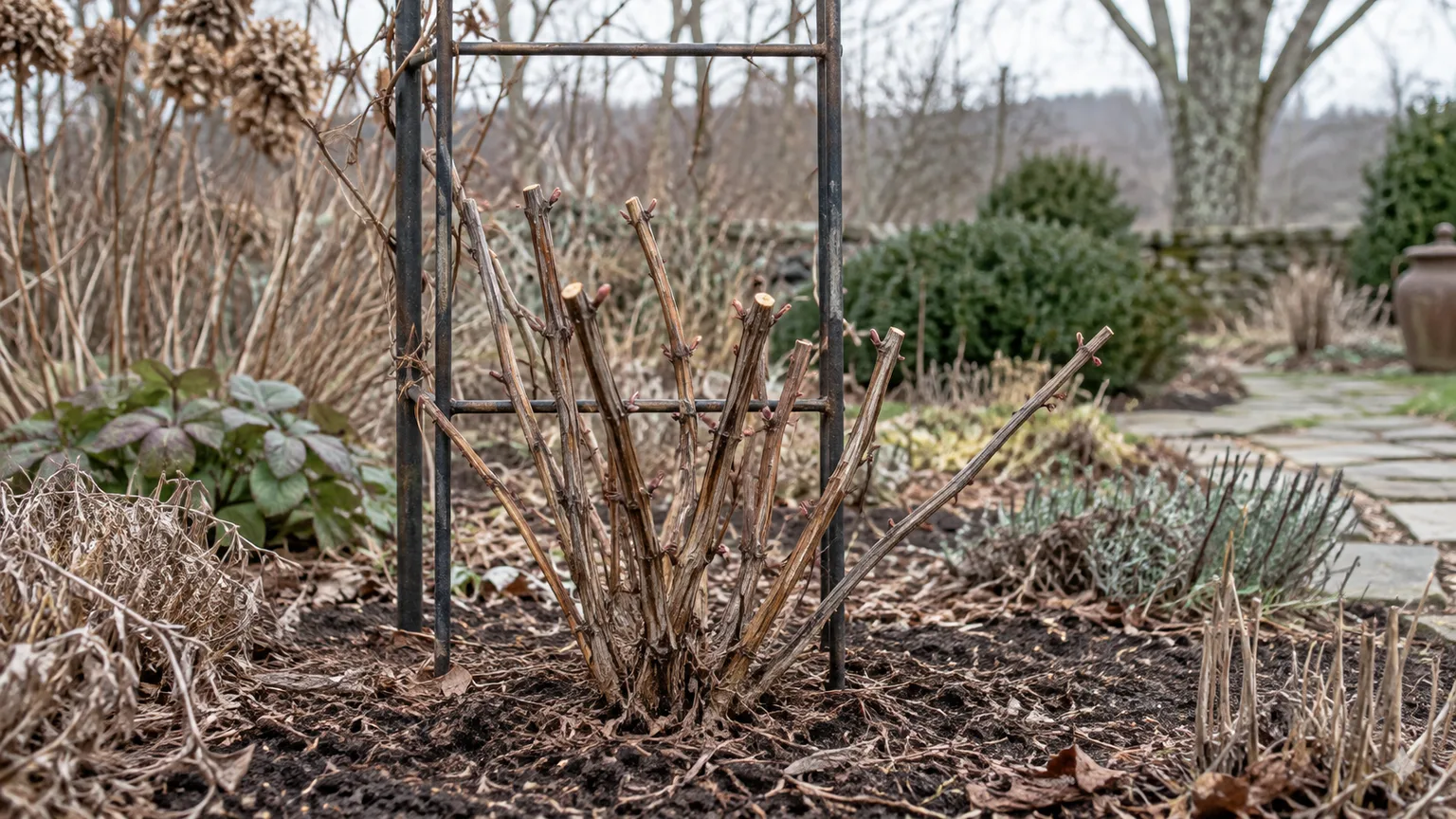
This hard annual cut keeps the vine from accumulating a tangled mass of bare stems and pushes flowers lower, where they are easier to see. You can leave healthy stems longer if you deliberately want a larger, less controlled vine, but expect the flowering zone to move upward over time. Do not prune Jackmanii back after it finishes flowering in summer as your regular annual cut; that is when the vine needs to make the stems that support the next bloom.
Give a new vine a low first cut
A new clematis often arrives with only a few stems. The RHS recommends cutting newly planted climbing clematis back to about 6 to 12 inches to encourage branching, pruning a spring-planted plant soon after planting and an autumn-planted one in the following late winter. Arkansas Extension also advises pinching or cutting a young plant to encourage basal branching. This first formative cut may delay some flowers, but it helps create several stems instead of one long, thin leader. (RHS growing guide, University of Arkansas Extension)
Use clean blades and make a clean cut above a pair of buds. If the plant is already established and has a sound, branching base, the first-year rule does not apply; follow the normal Group 3 pruning routine. If you are unsure whether a plant labeled only “clematis” is Group 3, wait through one season and observe its flowering time before making a major cut.
Train young stems and keep the base covered
New clematis growth can be brittle, particularly when young stems are moving in the wind or crossing one another. Spread shoots over the lower and middle parts of the trellis rather than letting them climb in one crowded bundle, and use soft ties only until petioles catch. Untangle stems by supporting them near the base and easing them apart; do not yank a vine free from a wire, because a snapped stem can look like sudden wilt later.
Keep a thin layer of mulch over the root zone and weed by hand near the crown. A shallow-rooted companion can shade the soil, but vigorous groundcovers and nearby shrubs can steal moisture or make it hard to see slugs and stem damage. Lift mulch and look beneath it now and then instead of piling stones or thick organic matter directly around the plant.
Troubleshoot weak or missing flowers
Start with the simplest checks before changing fertilizer. A young Jackmanii may take time to establish; a plant that is healthy but not yet large enough to cover the support can produce fewer flowers than an established vine. Make sure the upper stems receive enough direct light, then check whether the annual pruning happened at the right time and whether last season’s growth was removed before current shoots began.
If foliage is lush but flowers are scarce, excessive nitrogen, deep shade, or a heavy late prune after spring growth started may be involved. If stems are short and the soil dries quickly, improve moisture retention with broad organic mulch and water deeply in dry periods. Correct one likely cause at a time and give the plant a full growing season to respond; repeated fertilizer changes or extra hard pruning can add stress without identifying the underlying problem.
A simple observation log can make the next decision clearer. Note when shoots emerge, when buds appear, how long the vine flowers, and whether the soil dried during hot spells; then adjust support, water, or pruning based on what actually happened rather than on a generic monthly schedule. If bloom timing differs greatly from summer Group 3 expectations, recheck the plant label because the cultivar may have been mislabeled or may not be Jackmanii.
Tell clematis wilt from drought or stem damage
A clematis stem can collapse suddenly, but that symptom does not prove fungal clematis wilt. First check moisture several inches into the root zone and inspect the collapsed stem at ground level for a break, chewing, or a darkened lesion; dry soil, waterlogged roots, and physical injury can all interrupt water flow. The RHS notes that true clematis wilt mainly affects susceptible large-flowered hybrids, including ‘Jackmanii’, but that many cases of clematis wilting have other causes. (RHS clematis wilt guidance)
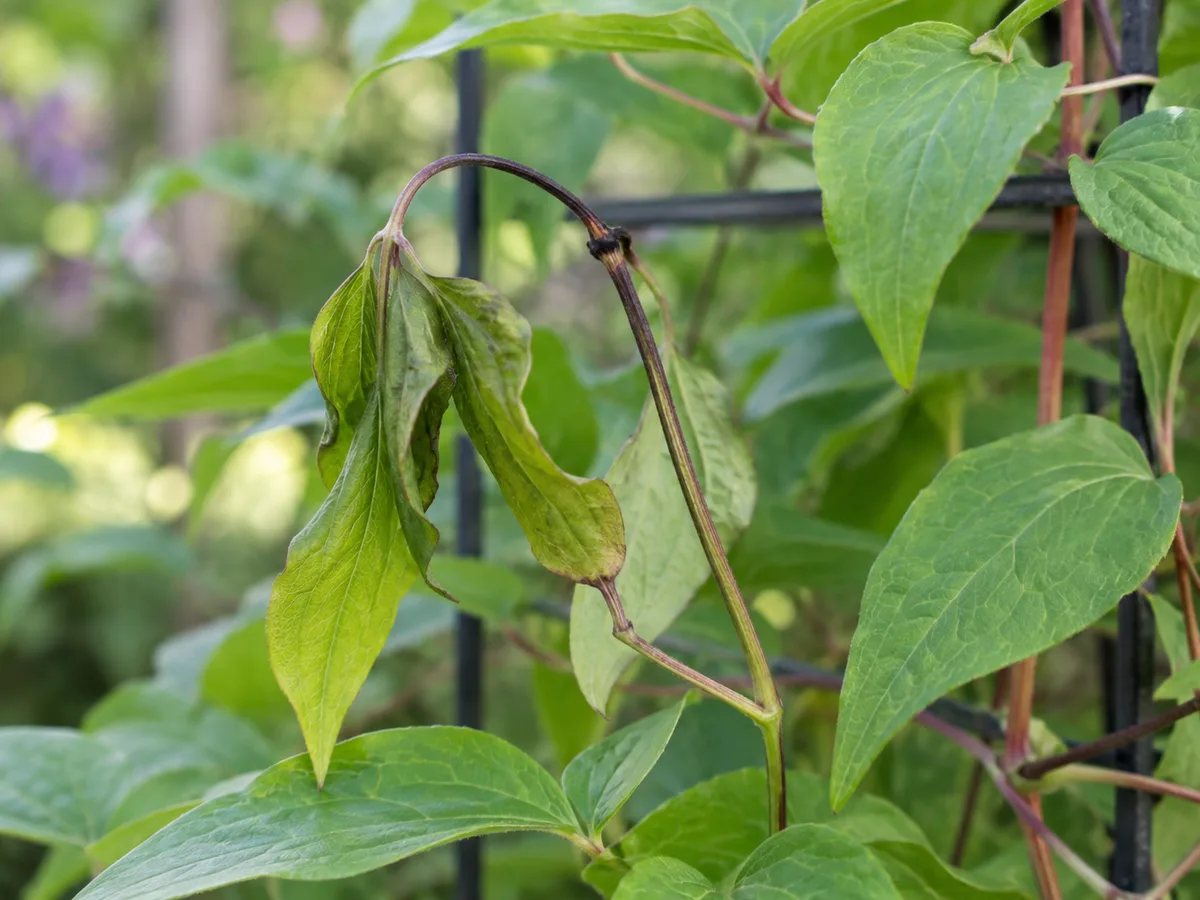
If a stem has blackened tissue, cut it back to clean, healthy tissue with disinfected pruners and discard the affected material rather than composting it. Clean the blades between cuts, remove fallen diseased leaves, and keep watering at the soil line. There is no chemical cure listed for clematis wilt; the roots often survive, so leave the crown in place and watch for new shoots instead of digging up the whole plant at the first collapse. (RHS clematis wilt guidance, Nebraska Extension)
Check for slugs, aphids, and leaf spotting
Slugs and snails often target tender growth close to the ground. Look after rain or near dusk, inspect beneath mulch, and remove the pests or use a locally appropriate control according to its label. Aphids cluster on soft shoot tips and leaf undersides; a strong water rinse or manual removal is often enough for a small colony, while repeated infestations call for checking nearby plants and avoiding excess nitrogen.
Leaf spots, powdery mildew, or a single damaged stem need a different response from whole-vine collapse. Remove only affected tissue, improve airflow by spreading stems, and keep foliage from staying wet overnight. If symptoms continue spreading despite correcting moisture and removing damaged growth, consult a local extension service with clear photos; a diagnosis matters before using any pesticide or fungicide.
Propagate by cuttings or layering
A named cultivar is best propagated vegetatively if you want the new vine to resemble the parent. Softwood or semi-ripe cuttings are a practical home method; seed-grown offspring can vary, especially from hybrids and named cultivars. The RHS describes clematis cuttings from healthy nonflowering growth between spring and late summer, with rooting often taking several weeks in warm, humid conditions. (RHS growing guide, Nebraska Extension)
Choose a healthy, nonflowering shoot and cut a section that includes at least one leaf node. Remove the lower leaves, set the cutting in a clean, free-draining propagation mix, and keep it evenly moist in bright indirect light under a clear cover that does not let the foliage rot in stagnant, soggy air. Check for roots after several weeks rather than tugging every day; once rooted, pot it separately and let it grow on until it can handle outdoor conditions.
Layering is slower but can be less demanding because the stem remains attached while it roots. Bend a flexible stem to the soil, pin a section at a node beneath a light covering of soil, and keep that area moist; once it has formed roots, sever it from the parent and transplant it. Avoid making several cuts or wounds in a valuable plant when one healthy layer or cutting is enough.
Grow Jackmanii in a container with realistic expectations
A large-flowered, vigorous clematis can be grown in a pot, but it is more work than planting it in the ground. Choose the largest stable container you can manage, with drainage holes and a strong trellis anchored to the pot or nearby structure. The RHS recommends containers at least about 18 inches deep and wide for clematis; a smaller pot dries quickly and leaves less room for roots and support. (RHS growing guide)
Use a free-draining, soil-based container mix and keep it evenly moist without leaving the pot in standing water. Check moisture frequently during warm weather because the rootball can dry faster than garden soil; water thoroughly when needed, then let excess drain. Top-dress with fresh compost in spring and use a general-purpose liquid feed only at the label rate if container growth needs it.
The pot needs winter protection too. Roots in a container are more exposed to cold and temperature swings than roots in the ground, so move it to a sheltered position or insulate the pot when the plant’s hardiness rating calls for it. If you want a low-maintenance patio vine, compare Jackmanii with a compact clematis cultivar before choosing; its eventual size and support needs may be awkward on a small balcony.
Protect roots through winter without over-mulching
An established in-ground Jackmanii usually needs little winter preparation beyond a clean support and a modest, broad mulch layer over the root zone. Do not wrap the whole vine in plastic or bury the stem base under a mound that stays wet. In cold climates, use the plant’s hardiness rating and local winter conditions to decide whether additional protection is needed; the tag is more useful than applying one zone range to every plant sold under a similar name.
For container plants, protect the rootball rather than trying to keep the top growth warm. A sheltered wall, unheated garage, or insulated pot can reduce exposure while allowing the vine to follow its normal dormant cycle. Keep the mix just barely moist during dormancy and make sure the drainage holes remain open.
Conclusion
Jackmanii is easiest to manage when you design for the vine it becomes: give its top growth sun, its roots a cool and well-drained bed, and its leaf stalks a fine, sturdy support. Water deeply while it establishes, avoid routine heavy feeding in fertile soil, and prune it as a Group 3 clematis in late winter or early spring before new shoots start. If a stem collapses, inspect soil, stem tissue, and pest damage before deciding the plant has wilt; even a badly affected top can leave a living crown capable of regrowth.