Jade Plant Flowers: How to Encourage a Winter Bloom
Jade plant flowers are possible indoors, but they need maturity, strong light, and a safe seasonal rest. Learn what to adjust—and what not to risk.
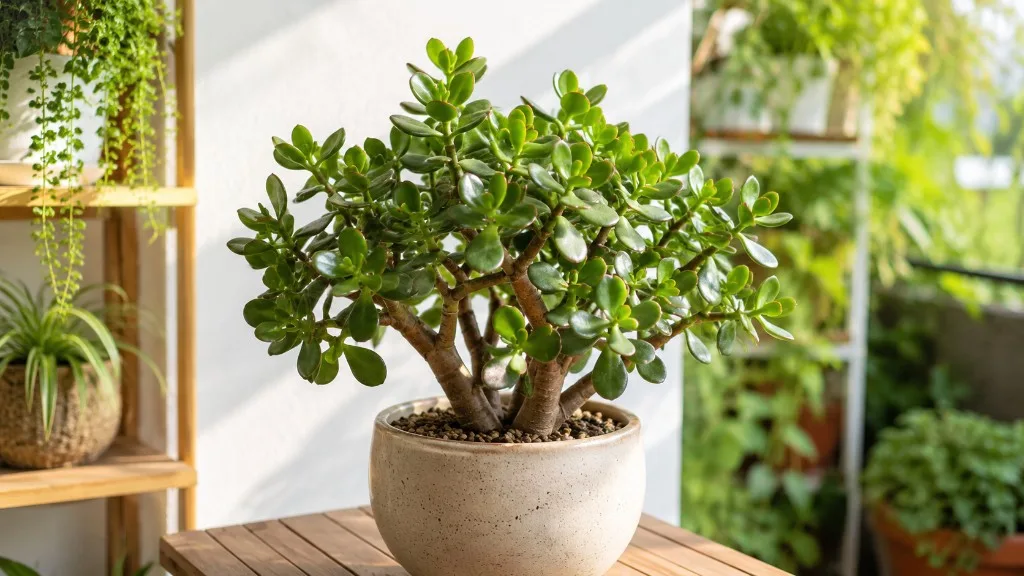
Yes, a jade plant can flower indoors, but it is not a dependable houseplant bloom. The most useful approach is not to “neglect” it into flowering. Build a healthy, mature plant first, give it the strongest safe light you can, and let the cooler, drier season arrive without exposing it to drought, soggy soil, or cold damage.
Jade plants (Crassula ovata) often spend years growing leaves and woody stems without a flower cluster. That does not automatically mean something is wrong. Indoor light and seasonal temperature changes are usually less pronounced than the conditions the plant experiences outdoors, and references describe indoor blooming as uncommon. The goal is to make the conditions more favorable while keeping the plant healthy enough to benefit from them.
Do Jade Plants Flower Indoors?
They do, but flowering indoors is unusual enough that it should be treated as a bonus, not as a yearly promise. A jade plant grown outdoors in a warm climate may flower more readily than one kept in a typical living room, where winter nights are warm and daylight is filtered through glass. Even a well-cared-for indoor specimen may never bloom.
That distinction matters because it changes the right response. If your plant is sturdy, has firm leaves, and is making healthy growth, the absence of flowers is not a care emergency. It may simply be too young, receive too little intense light, or lack the seasonal shift that encourages flowering. North Carolina State Extension and the Missouri Botanical Garden both note that jade rarely blooms in home environments, while the New York Botanical Garden says a mature indoor plant needs unusually strong winter light to flower. (NC State Extension, Missouri Botanical Garden, New York Botanical Garden)
The realistic target is a healthy plant that has a chance to bloom when its age, light, and seasonal conditions line up. Do not sacrifice its leaves or roots to force a flower. A jade that remains leafy and compact is still succeeding as a succulent houseplant.
What Jade Plant Flowers Look Like and When They Appear
Jade flowers are small, not large showy blooms. They form in clusters near the tips of stems, with individual flowers shaped like little stars and colored white, cream, or pale pink. North Carolina State Extension describes white and pink flowers with a spring bloom time; the RHS profile describes flat clusters of small white or light-pink flowers in late summer. Garden Design gives a winter-to-early-spring window for indoor or garden specimens. That spread is a useful reminder that local climate, hemisphere, and growing conditions affect the calendar; no single month guarantees flowers in every home. (NC State Extension, RHS, Garden Design)
Look for compact clusters of rounded buds at branch tips rather than a single large bud tucked among the leaves. Buds may take time to open, and a room’s temperature or light can shift the timing. Once clusters appear, avoid moving the plant repeatedly to chase a better display. Keep it in stable, bright conditions and protect it from cold windows, heaters, and sudden temperature swings.
If you see an unusual pale bump, first check whether it is attached at a stem tip and developing as a cluster. A single cottony patch or sticky residue is more likely a pest than a flower bud. Mealybugs often collect in leaf axils; isolate the plant and inspect closely before celebrating or treating it.
Why Indoor Jade Plants Often Do Not Bloom
Flowering requires more than “good care” in the general sense. A plant can look healthy in moderate indoor light and still receive too little energy for flowering. It can also be kept so warm and evenly watered through winter that it never gets a clear seasonal change. In that case, its care may be perfectly adequate for foliage while remaining unhelpful for bloom.
Light is the common limiting factor. A bright room is not necessarily a bright growing site: several feet back from a window, a jade may get much less usable light than it appears to. The New York Botanical Garden says jade houseplants rarely bloom and calls for at least six hours of strong, unobstructed sunlight for flowering. This is a more demanding target than the level that may keep a plant alive, so do not interpret “it looks fine” as proof that light is sufficient for blooms. (NYBG)
The other factors work together: maturity, seasonal night temperatures, day length, and water use. You cannot fix one of these by turning the others to extremes. For example, cutting off water cannot compensate for a plant that is too young or sits in a dim room. Likewise, leaving a healthy jade in a chilly, wet pot is not a safe substitute for a winter rest.
Maturity Matters, but Age Is Not a Switch
An established plant with woody branches is a better bloom candidate than a recently rooted cutting, but there is no reliable universal age at which every jade begins to flower. The RHS lists a five-to-ten-year time to maturity for its jade plant profile; that is a general growth estimate, not a promise that flowers will appear after a specific birthday. Growth rate, light, variety, pot conditions, and climate all affect how quickly a specimen matures. (RHS)
Use the plant’s structure as a better guide than the calendar. A fuller crown, thicker woody stems, and steady growth over several seasons suggest an established plant. A small cutting with just a few leaves should be allowed to build roots and branches rather than put through a cool, dry bloom routine. If you are unsure, favor steady health over experimentation; there is no downside to waiting another season.
What Actually Encourages Jade Plant Flowers?
Think of flowering as the result of several favorable conditions overlapping, not as a trick with one secret switch. The best-supported approach combines maturity, strong light, a cooler season, and reduced winter watering. The Royal Horticultural Society advises very sparing watering while jade is dormant in winter, and the Missouri Botanical Garden describes a fall-to-late-winter rest with reduced watering. Neither calls for abandoning the plant or keeping the soil wet and cold. (RHS, Missouri Botanical Garden)
The often repeated instruction to “stress” the plant is too vague to be safe. A controlled seasonal rest means the plant uses less water because its growth slows; it does not mean withholding water until leaves collapse, exposing the pot to frost, or depriving it of light. A good rule is to adjust care in small, observable steps and reverse course if the plant develops signs of stress.
Humidity is not a bloom lever worth manipulating. Jade is adapted to dry conditions and average household humidity is generally acceptable. Repotting into a smaller pot, withholding fertilizer all year, or changing the soil repeatedly will not make flowers inevitable. The practical sequence below focuses on environmental conditions you can change safely.
A Safe Fall-to-Winter Plan for Encouraging Bloom
Start several months before the likely cool season rather than changing every condition at once. This gives the plant time to acclimate and gives you a baseline for judging its response. If a plant is already unstable—soft stems, widespread leaf drop, pests, or persistently wet soil—postpone bloom experiments and correct that problem first.
1. Start With a Healthy, Established Plant
Choose a jade with firm, plump leaves, a stable trunk, and no expanding soft or black areas at the stem base. Check that the pot has a drainage hole and that the growing mix drains freely. If water remains in the saucer, empty it; if the soil stays damp for many days, solve the drainage or watering problem before adding a cooler rest. A flowering attempt should begin with a plant whose roots can tolerate seasonal changes.
Do not repot solely to encourage flowers. Jade grows slowly and often tolerates a long stay in the same container; repotting can interrupt growth while roots re-establish. If repotting is actually needed because the mix has degraded, roots are failing, or the pot has no drainage, do it during active growth and wait until the plant resumes healthy growth before trying to induce bloom.
Also inspect for mealybugs and scale, which can hide where leaves meet stems. Pest treatment and bloom induction are competing priorities: stabilize the plant first, then revisit the seasonal plan when the foliage is growing normally.
2. Increase Usable Light Before Autumn
Place the plant as close as practical to a bright window, often a south- or east-facing one in the Northern Hemisphere. A few hours of direct sun can help, but a jade accustomed to a dim shelf may scorch if moved into abrupt midday sun. Begin with morning sun or filtered exposure, then increase direct exposure over roughly one to two weeks while watching for bleached, tan, or sharply crispy patches.
For a home without a sufficiently bright window, a grow light can support sturdy growth. Follow the fixture’s distance and timing guidance, and keep a consistent day-night cycle rather than shining light continuously. A grow light may improve plant health, but it cannot guarantee flowering; natural seasonal cues and plant maturity still matter.
Outdoor summering can help a jade build stronger growth, but only after gradual acclimation. Move it outside when nights are reliably warm, beginning in bright shade and increasing sun slowly. Bring it back indoors before cold nights; Garden Design advises moving jade inside when autumn night temperatures drop toward 50°F. Outdoor sun is much stronger than window light, so a sudden full-sun move can burn leaves even when the air feels mild. (Garden Design)
3. Let Nights Become Cool, Not Cold
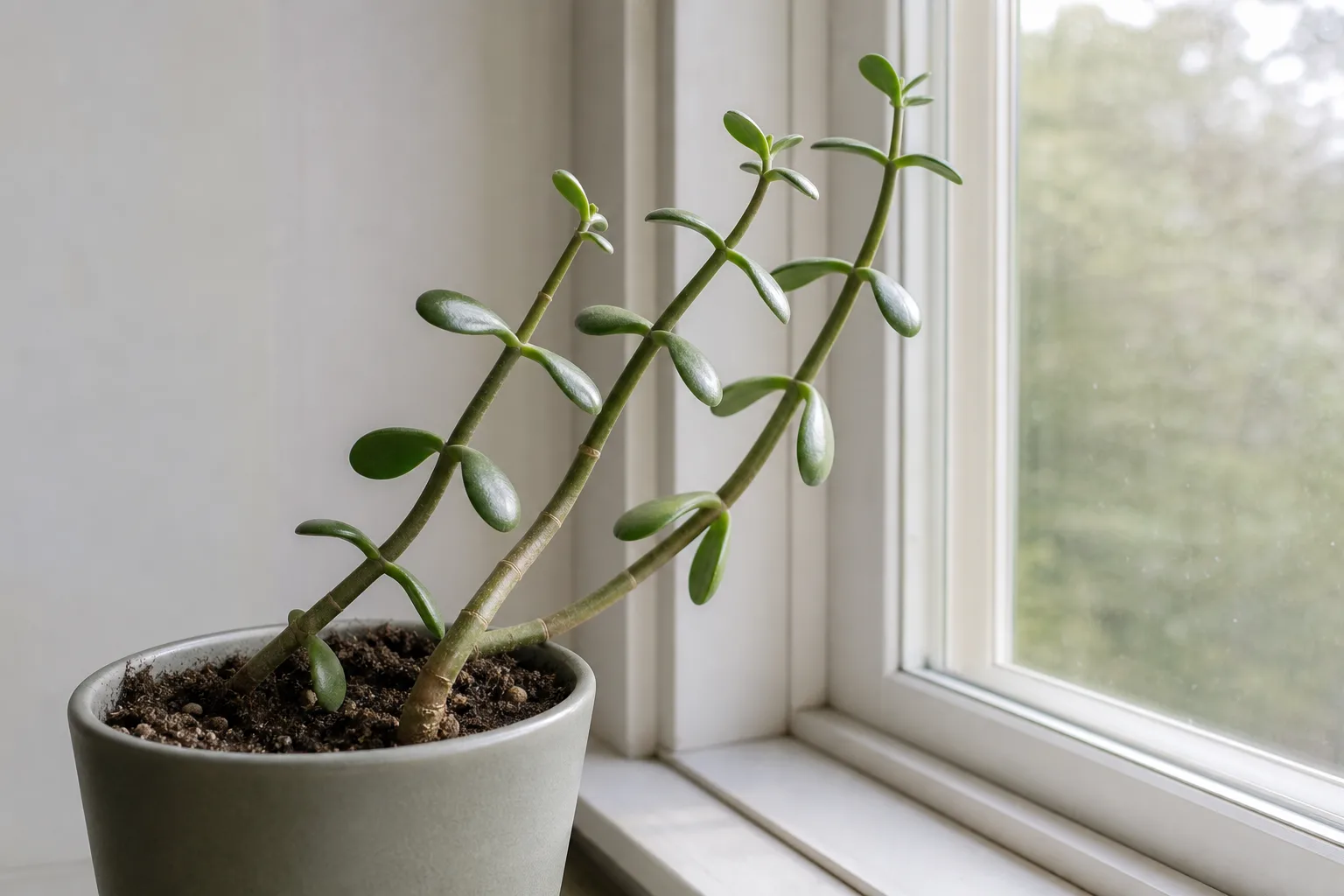
Jade may respond to a seasonal temperature shift, but cold tolerance is not a contest. A naturally cooler room with bright light can provide a gentler night rest than a warm living room, provided the plant stays away from drafty glass, exterior doors, and heating vents. Garden Design gives 55°F as a possible low nighttime temperature in its indoor-care guidance, while Better Homes & Gardens cautions against exposing jade to temperatures below 50°F. Together, these are reasons to use a conservative buffer instead of aiming for the coldest number you can find. (Garden Design, Better Homes & Gardens)
If your home stays warm at night, do not put the plant outdoors or in an unheated garage just to force a temperature drop. A bloom is not worth risking chilled roots, frost, or a cold, wet pot. Keep the plant above 50°F as a practical safety margin, and choose stable conditions over abrupt changes. If the leaves become translucent, limp, or suddenly drop after a cold exposure, return the plant to a warmer bright location and stop trying to induce flowering.
4. Reduce Watering by Reading the Soil
As days shorten and growth slows, jade generally needs less frequent watering. Do not switch to a fixed “once a month” schedule or stop watering completely. Check the mix below the surface and water thoroughly only after it has dried; then let excess water drain away. In a cool, low-light room, the dry-down will take longer than it did in summer, so the interval naturally expands.
Healthy leaves should stay firm. Mild puckering can signal that the plant is using stored water and needs a drink; soft, translucent leaves or a sour-smelling mix point in the opposite direction—too much moisture or root trouble. New York Botanical Garden advises giving only enough winter water to prevent puckering, while NC State Extension recommends reducing watering from fall through late winter. These approaches support a controlled rest without asking you to let the root ball remain bone-dry for an arbitrary number of weeks. (NYBG, NC State Extension)
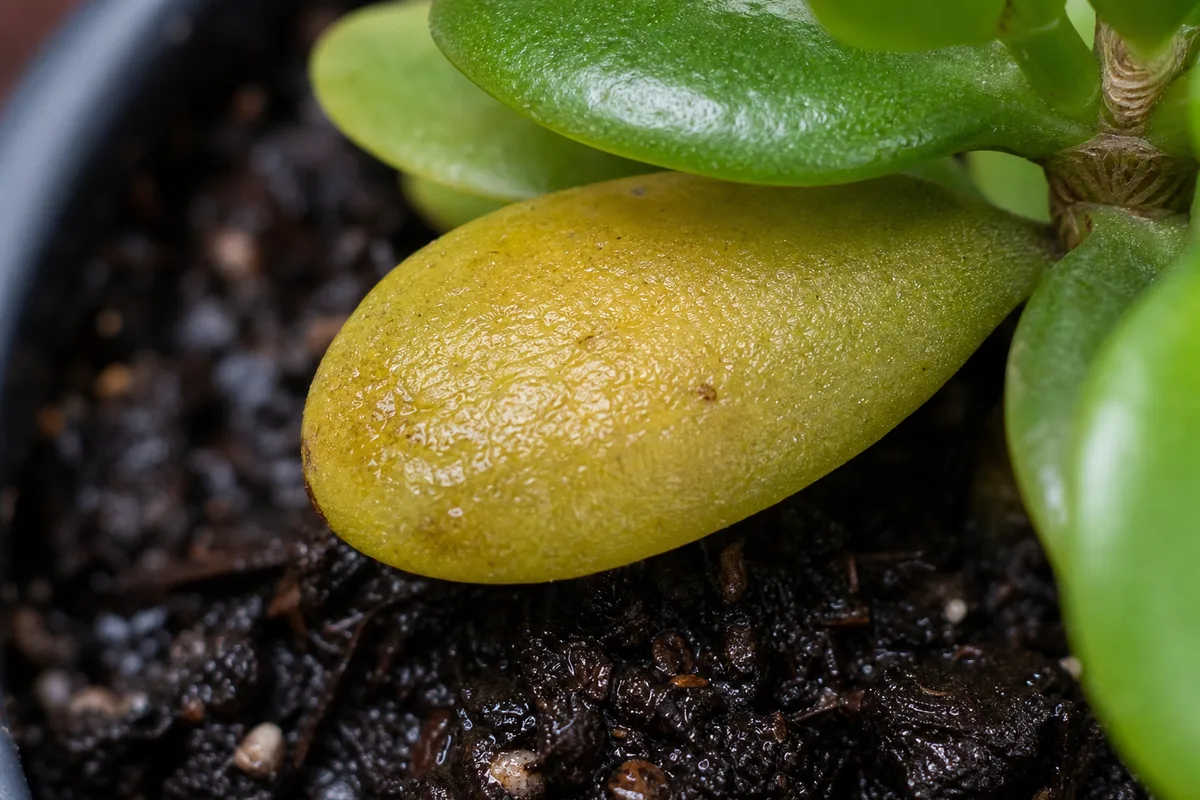
If the pot is terracotta, the room is warm, or the plant receives strong sun, it may dry faster than a jade in plastic or ceramic. Use the soil and leaf condition together. This is safer than trying to copy someone else’s exact watering interval.
5. Hold Fertilizer and Major Pruning
During active growth, jade needs only light feeding. Once the plant enters its cooler, slower season, skip routine fertilizer until growth resumes in spring. Fertilizer does not create flowers by itself, and feeding a resting plant can encourage soft growth at a time when light is weaker. The RHS recommends monthly liquid fertilizer during spring and summer; the winter rest is not the time to add extra nitrogen in hopes of a bloom. (RHS)
Avoid major pruning from late summer through the bud-forming season. Jade flowers form in terminal clusters, so trimming branch tips can remove the sites where buds might have appeared. If a branch is broken, diseased, or dangerously top-heavy, plant health comes first—but routine shaping can wait until after flowering or the next active growth period. Do not repot, prune, fertilize, relocate, and change watering all in the same week; if the plant reacts poorly, you will not know which change caused it.
Protect Buds When They Form
Once buds are visible, keep the conditions stable. Do not rotate the pot every day or move it between a cold windowsill and a warm room. Maintain bright light, keep the pot above cold drafts, and continue to water according to soil dryness and leaf firmness. The flower clusters are delicate, but you do not need to mist them or raise humidity; wet foliage and stagnant air add no useful benefit to this succulent.
Some buds may dry or drop if light changes sharply, the plant is moved, or roots are stressed. If that happens, avoid trying to rescue them with extra water or fertilizer. Check the root-zone moisture, return the jade to consistent conditions, and allow the next natural growth cycle to develop. A plant can lose a small flower cluster and remain perfectly healthy.
Flowers may attract pollinators when jade grows outdoors in a suitable climate, but indoor flowering is mainly ornamental. You do not need to hand-pollinate or collect seed to keep the parent plant thriving. If a flower stalk dries after bloom, you can remove it cleanly; leave healthy stems and leaves intact.
Troubleshoot a Jade Plant That Will Not Flower
Change one factor at a time and give the plant a full growing season to respond. Start by asking whether it is mature and stable, then assess actual light at leaf level. Next, look at whether fall and winter conditions are meaningfully different from summer. Finally, check roots, drainage, pests, and watering. This sequence prevents a common mistake: increasing stress before you know whether the plant has a basic health problem.
If the plant is healthy but has no buds, the first low-risk adjustment is usually brighter light before the next fall. Do not expose it to a cold snap, stop watering, or apply a bloom fertilizer. There is no reliable fertilizer that can compensate for age, weak light, or a missing seasonal cue. If the jade is small, recently propagated, or recovering from a pest infestation, wait until it has built several seasons of healthy growth.
Wrinkled, Dropping, or Soft Leaves
Wrinkled leaves can mean the plant has used much of its stored water. Check that the soil is fully dry and the pot drains; if so, water the root ball thoroughly and let it drain. Do not keep the plant thirsty because you think visible stress will make it bloom. Repeated severe dehydration can cause leaf drop and slow recovery without providing a dependable flowering signal.
Soft, yellowing, or translucent leaves point toward excessive moisture, poor drainage, or cold stress more often than a need for less water. Remove standing water, check for a blocked drainage hole, and keep the plant in a warm, bright place while the mix dries. If stems are soft at the base or the soil smells sour, inspect roots for rot and address that before considering flowers. NC State Extension identifies leaf drop and root rot as risks of overwatering. (NC State Extension)
Pale or Stretched Growth
Long gaps between leaves, leaning stems, and a thin crown usually indicate inadequate light. Move the jade closer to the window gradually or add a grow light on a consistent schedule. Do not compensate by giving more fertilizer; extra feeding can produce weak growth without fixing the shortage of light.
If one side of the plant is stretching, turn the pot a quarter turn every week or two during active growth so its shape develops more evenly. Pause frequent rotation once flower buds are visible. Better light may improve the chance of flowering in a future season, but the immediate goal is a compact, strong plant that can support its branches.
After the Flowers Fade
Return gradually to the normal active-season routine as days lengthen and the plant resumes growth. Increase watering only as the mix dries faster, and resume a modest fertilizer schedule during active growth if the plant needs it. Continue to provide bright light; a jade that has flowered once may bloom again if it stays mature and experiences suitable conditions, but repeat flowering is not guaranteed.
Remove dried flower clusters with clean scissors if they look untidy. Do not cut healthy branch tips just to make the plant look symmetrical, especially if you want it to develop a more tree-like form. If the plant is top-heavy or needs shaping, wait until active growth and prune selectively. The cut branches can be allowed to callus and propagated, but those new plants will need time to establish before they become plausible bloom candidates.
Keep the useful part of the routine: bright light, free-draining soil, watering that responds to dry-down, and a mild seasonal rest. If the jade does not flower the next year, that does not mean the care failed. It means flowering remains conditional, while a healthy, well-formed plant is the outcome you can actually control.
Conclusion
Jade plant flowers are possible indoors, but they are uncommon and cannot be forced on a schedule. An established plant, strong light, a safe cooler season, and less frequent winter watering can improve the odds; deliberate drought, cold exposure, and heavy pruning can damage the very plant you want to flower.
Start with plant health, improve light gradually, let the room cool only within a safe range, and let the soil—not a calendar—tell you when to water. If the plant stays leafy instead of blooming, keep caring for it well and try again after another season of mature growth.