6 Low-Maintenance Lawn Alternatives for 2026
Compare native beds, groundcovers, clover, wildflowers, hardscape, and raised beds by traffic, light, upkeep, and climate before shrinking your lawn.
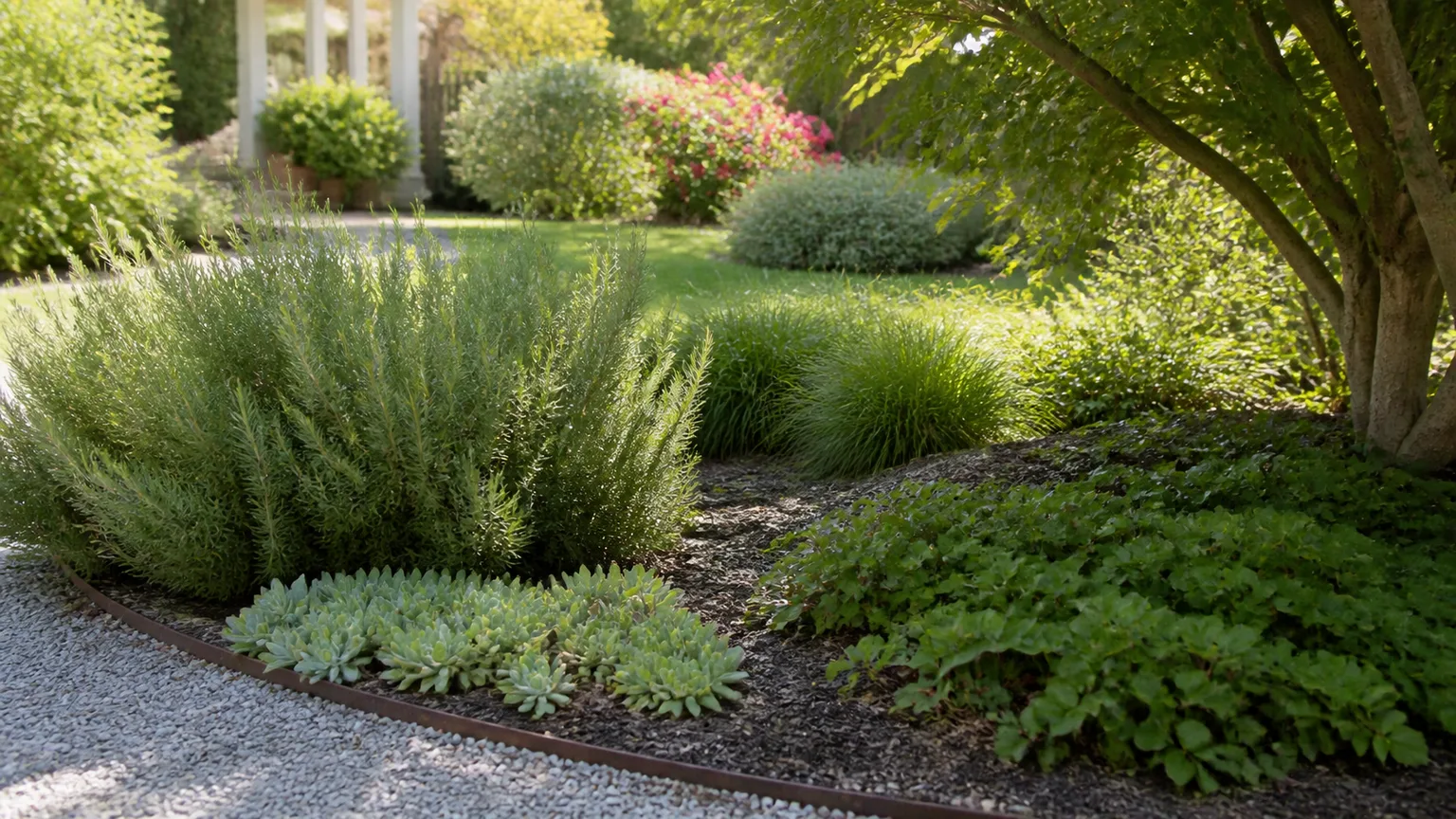
The most useful lawn trend for 2026 is not a single replacement plant. It is using grass only where grass earns its keep and turning the rest of the yard into beds, groundcover, habitat, paths, or food-growing space.
That distinction matters because a clover lawn, a native meadow, a stone patio, and a raised vegetable bed solve completely different problems. One may tolerate a child’s soccer game; another may support insects but collapse under daily traffic. One may reduce mowing after it settles in; another may demand weeding, edging, and watering during its first two seasons.
The six ideas below are worth considering, but the right choice starts with the job your lawn is doing now—not with a trend label.
Start with what the space needs to do
Before removing a square foot of turf, decide whether that square foot is a play surface, dog run, route to the door, view from a window, stormwater buffer, food garden, or simply unused green carpet. Penn State Extension makes the same practical point in its turfgrass-alternatives guidance: keep the grass you genuinely need for children, pets, walking, or gathering, and convert the rest.
The four-minute site audit
Walk the area at different times of day and write down four answers:
- Traffic: Will people or pets cross it every day, or only look at it?
- Light: Does it receive full sun, bright shade, or dry shade under trees?
- Water and slope: Does it puddle, dry quickly, or sit on a slope that needs roots to hold soil?
- Maintenance tolerance: Are you willing to weed while plants establish, edge aggressive spreaders, or cut a meadow once a year?
Then measure the area and mark utilities, drainage routes, mature tree roots, and the path from the sidewalk to the door. A “low-maintenance” replacement that forces you to carry a mower around a new patio or hand-weed a 1,000-square-foot meadow is not low maintenance for your household.
Expand native and pollinator beds
The simplest lawn replacement is often an expanded bed rather than a total conversion. Curve a border around a tree, widen an existing foundation bed, or turn a hard-to-mow slope into a layered planting of native grasses, shrubs, and flowers. You keep a usable patch of turf while gaining seasonal texture, habitat, and a more legible landscape.
Native plants are not automatically maintenance-free, but they are usually a better starting point than importing a generic seed mix. A plant adapted to your region still needs the correct light, moisture, soil, and mature space. It also has a better chance of supporting local insects than a plant chosen only because it grows quickly.
The University of Maryland Extension lawn-alternatives guidance describes native plant gardens as one of the strongest turf substitutes because they can include flowers, shrubs, trees, ornamental grasses, vines, and groundcovers that reflect local conditions. Use that as a design direction, not as permission to plant a random “native” collection from a different climate.
Design for mature size, not the empty bed
New beds fail when plants are spaced for their nursery-pot size. Fill the foreground with low growers, place taller flowers and grasses behind them, and reserve enough width for shrubs to reach their mature spread without swallowing paths or windows. A bed that is too narrow becomes a row of crowded plants that needs constant cutting; a bed with a clear edge can look intentional even when it is full of wildlife.
For a front yard, repeat a limited palette rather than scattering one of everything. Repetition creates order, while different bloom times and foliage heights create interest. Add a defined path or mown strip so the bed reads as a designed garden instead of grass that was simply abandoned.
Build a native lawn or meadow patch
A native lawn is a lower, more walkable planting of regionally appropriate grasses and small flowering plants. A meadow is usually taller, more seasonal, and less suited to daily crossing. Both can replace turf, but they should not be sold as interchangeable.
Penn State Extension says perennial meadows can take up to three years to fully establish and need mowing once or twice a year to prevent woody plants from taking over. The first year can involve weed control, watering, and learning which seedlings are desirable. That is an establishment project, not an instant no-mow makeover.
The National Wildlife Federation’s account of the Cornell Botanic Gardens native-lawn demonstration offers a useful reality check: after establishment, the native plot can require very little annual care, but it is maintained at a taller height than ordinary turf and its plant community changes over time. A survey there found three times as many insect families in the native lawn as in an adjoining traditional lawn. That is compelling habitat evidence, but it does not mean every seed mix will recreate the same result.
Establish it in phases
Start with a small, sunny, visible patch where a taller planting will not block sightlines. Remove or smother existing turf, prepare the soil according to the selected seed mix, and use locally appropriate seed rather than a packet whose “wildflower” list contains plants unsuitable for your state or region. Penn State recommends checking the contents for invasive plants before sowing.
Keep a mown edge around the patch during its first seasons. It makes the boundary clear, lets you reach the plants for inspection, and prevents the conversion from looking like neglect while you learn the site. If the location is a slope or a difficult-to-mow corner, a meadow may be a better use of the space than forcing turf to grow there.
Do not stop mowing a large lawn and assume nature will assemble a meadow. You may get tall turf, annual weeds, woody seedlings, and ticks without the diverse plant community you wanted. If you want a naturalistic look with less risk, convert one section, observe it for a full growing season, and expand only after you know its weed pressure and water needs.
Choose groundcovers for low-traffic areas
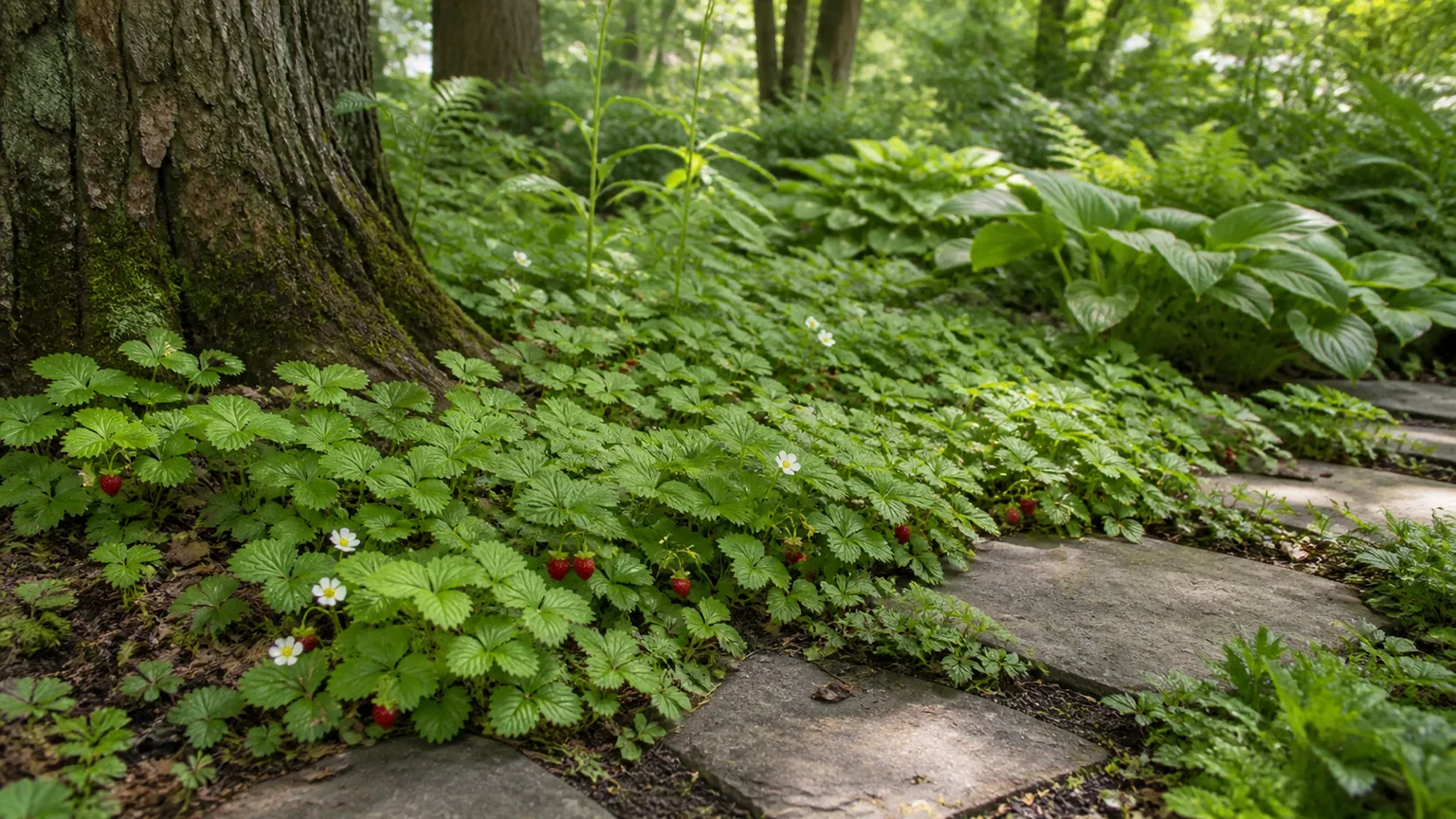
Groundcovers are the closest visual substitute for a green carpet, but most are light-traffic plants, not athletic fields. They work well under trees, along a path, on a bank, around stepping stones, or in a front-yard section that is seen more often than it is crossed.
Fine Gardening’s practical lawn-replacement experiments make the trade-off clear. Creeping thyme can be fragrant and drought-tolerant after establishment, but it spreads slowly and may take several seasons to reach full coverage. Lilyturf can handle difficult banks and many light conditions, yet its lumpy growth is uncomfortable to walk across and its spreading habit can be hard to contain.
Match sun, shade, soil, and slope
Use the site audit to narrow the plant list:
| Site condition | Better direction | Do not assume |
|---|---|---|
| Hot, sunny, sharply drained, low traffic | Creeping thyme, sedum, or a regional dry-site groundcover | A drought-tolerant plant is walkable or evergreen in your winter |
| Dry shade under established trees | Native woodland groundcovers, sedges, or a layered bed | Shade means moist soil; tree roots can make it very dry |
| Moist shade with occasional footsteps | A shade-tolerant groundcover or stepping-stone path | A groundcover can replace the path itself |
| Slope that is hard to mow | Deep-rooted native planting, sedges, shrubs, or a meadow | A shallow-rooted carpet will stop every erosion problem |
| Warm, humid region with short shade periods | Regional options such as frogfruit where it is locally appropriate | A Florida plant is suitable for every warm climate |
UF/IFAS describes frogfruit (Phyla nodiflora) as a Florida-native groundcover that can work as a turf companion or alternative in USDA Zones 8a–11. It tolerates full sun and partial shade, dry and moist conditions, and frequent traffic there; it also goes dormant in drought or winter and benefits from occasional mowing at 4 inches or higher. That makes it a strong regional example—not a nationwide default. Check your state’s native-plant resources and local nursery stock before planting it.
Whatever groundcover you choose, buy enough plants to make a realistic coverage plan. Cheap sparse spacing often becomes an expensive weeding project. Prepare the soil, suppress existing grass, water deeply while roots establish, and edge the planting before runners reach the driveway or a neighbor’s bed.
Use clover with eyes open
Clover is appealing because it stays low, fixes nitrogen, flowers for generalist pollinators, and can be mixed with turf for a softer, less uniform lawn. It is also inexpensive to establish compared with many planted groundcovers. A clover-turf mix can be a sensible compromise when you want to keep the visual and functional identity of a lawn.
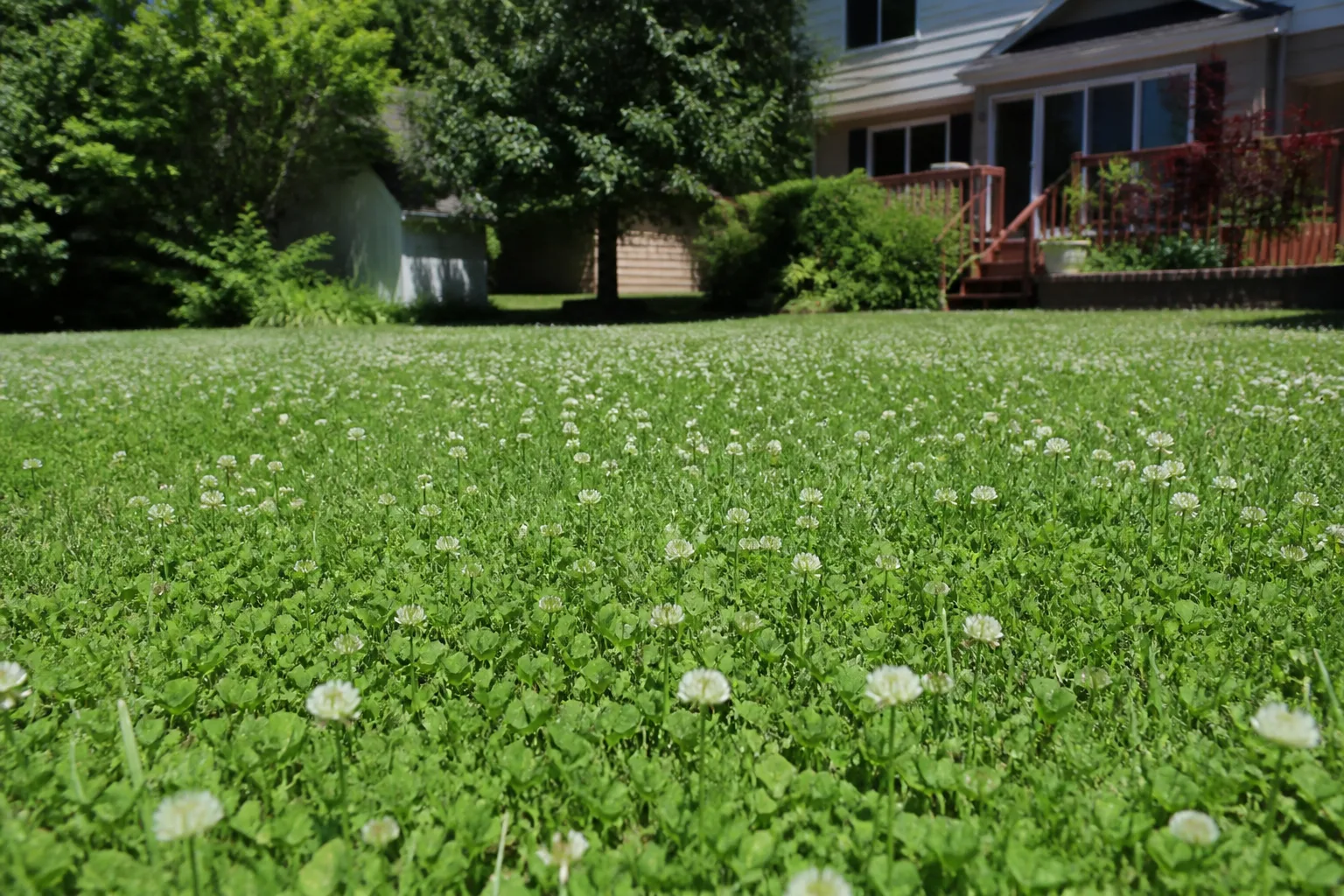
The important caveat is native status. In a 2024 Ask Extension response, University of Maryland Extension explains that white clover and microclover commonly used in lawns are not native options for Maryland, although they can provide floral resources for some generalist bees. The same answer recommends reducing lawn and adding a dedicated native planting area when the goal is stronger support for local fauna.
That is the right way to think about clover: an improvement over a chemically managed monoculture in some situations, not a substitute for a native habitat garden. Clover also flowers, browns in stress, and may need mowing or reseeding to keep a tidy appearance. It is not the best choice for a sports lawn, a heavily worn dog run, or a household that expects an exact uniform green surface.
Before sowing, check whether your existing turf, mowing height, soil fertility, and seasonal rainfall match the clover species you are considering. Avoid herbicides that kill broadleaf plants if clover is meant to remain. If you want both a neat lawn and high native-plant value, keep the clover in the lawn and use a separate bed for regionally native host and nectar plants.
Treat wildflowers as a managed system
“Wildflower lawn” can mean anything from a short native lawn dotted with violets to a tall meadow with grasses, annuals, and perennial flowers. Decide which one you want before buying seed. A short planting near a sidewalk must be selected and cut differently from a meadow at the back of a large lot.
Choose a mix for your region, light, soil moisture, and mowing plan. Read every species on the label. A packet that produces a bright first-year display may rely on annuals that fade, while perennials take longer to establish. A regionally native mix may look quieter at first but become more stable and useful over time.
Wildflowers also need a boundary and a calendar. Mow or trim at the height recommended for the mix, leave seed heads when they provide food, and remove woody seedlings before they turn the planting into scrub. Keep a narrow mown margin near sidewalks, driveways, and property lines to communicate care and reduce conflict with neighbors or local height rules.
Penn State Extension warns that naturalized landscaping can be affected by local ordinances governing plant height or appearance. Check municipal rules and any homeowners-association standards before converting a visible front lawn. If the rules are strict, start with a contained pollinator bed, a side-yard strip, or a meadow inside a clearly edged border.
Add hardscape that still lets rain soak in
Hardscape is a useful lawn alternative when the real goal is a place to sit, walk, dine, store bins, or connect the driveway to the door. The mistake is replacing a living rectangle with a larger sealed rectangle. That may lower mowing but increase heat, glare, runoff, and surface maintenance.
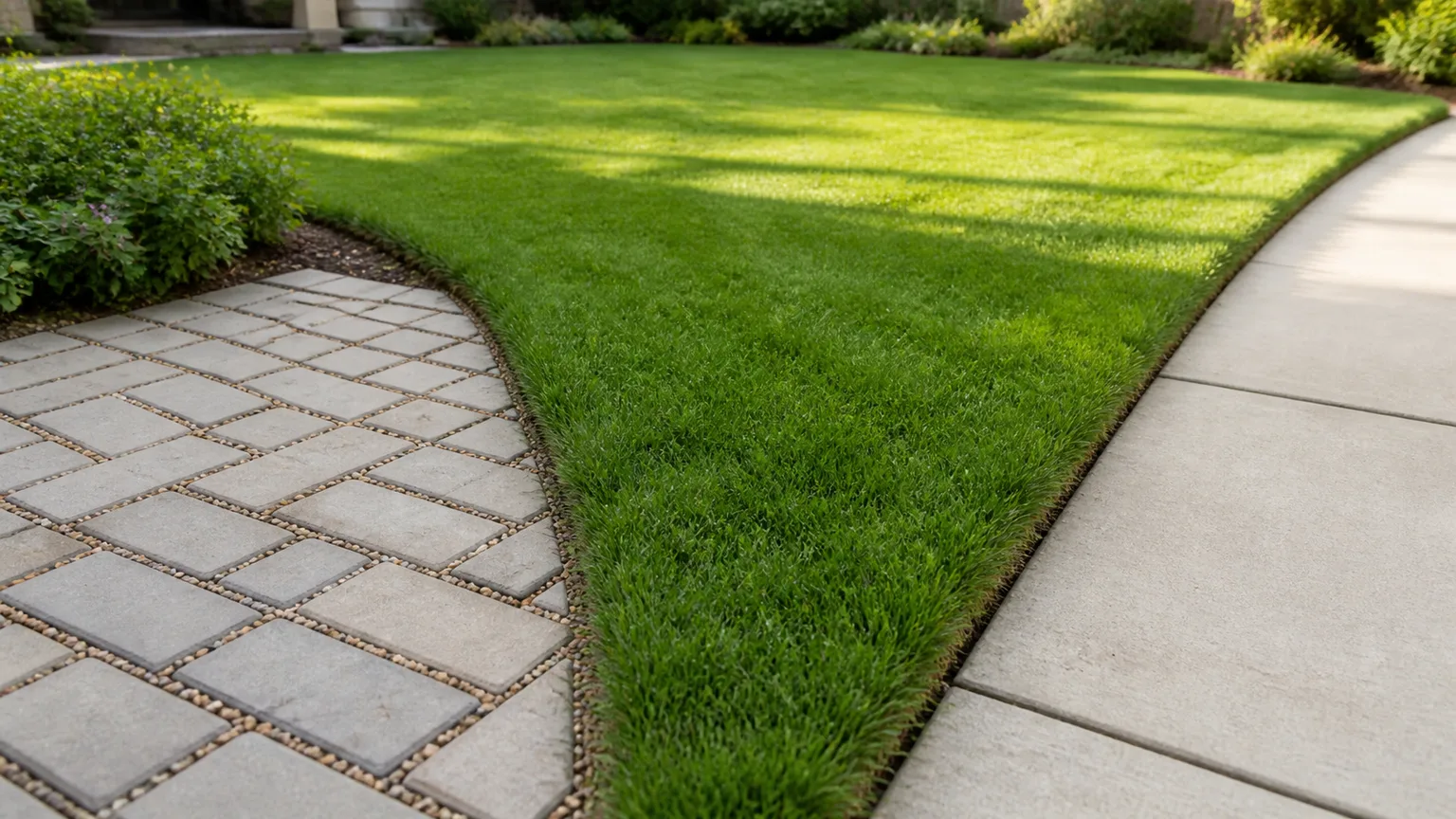
Garden Design’s lawn-alternative guidance pairs paths with permeable pavers or gravel and uses plants to soften the edges. Follow that design logic, but do not treat the word “permeable” as a guarantee. The subgrade, slope, soil, local rainfall, freeze-thaw conditions, and maintenance of the joints determine whether water actually infiltrates instead of ponding or moving toward the foundation.
Make pathways and edges do the work
Use hardscape where feet need a reliable surface and plants where the eye needs softness. A gravel or paver path can divide a native bed from a remaining patch of turf, create access for pruning, and make a smaller lawn feel deliberate. Stepping stones through a groundcover are attractive, but the stones need to be wide, stable, and close enough together for the people who will use them.
Plan drainage before choosing the surface. Keep water moving away from walls, doors, and neighboring lots. If the area is on a slope or receives roof runoff, a landscape professional may be worth the cost; a pretty patio that concentrates water at the bottom of the yard is not a successful lawn replacement.
Gravel is not maintenance-free either. It can migrate, collect leaves, heat up in full sun, and become uncomfortable for bare feet or pets. Pavers can settle, weeds can root in joints, and both surfaces need sweeping and occasional repair. Choose hardscape for a defined function, not simply because plants seem slower.
Grow food in raised beds
Raised beds turn unused lawn into a productive destination. They make sense when the household genuinely wants herbs, salad greens, berries, or vegetables close to the kitchen. They are less convincing when the beds are too small to support a useful crop rotation or are placed where a front path, tree roots, or road salt will make gardening frustrating.
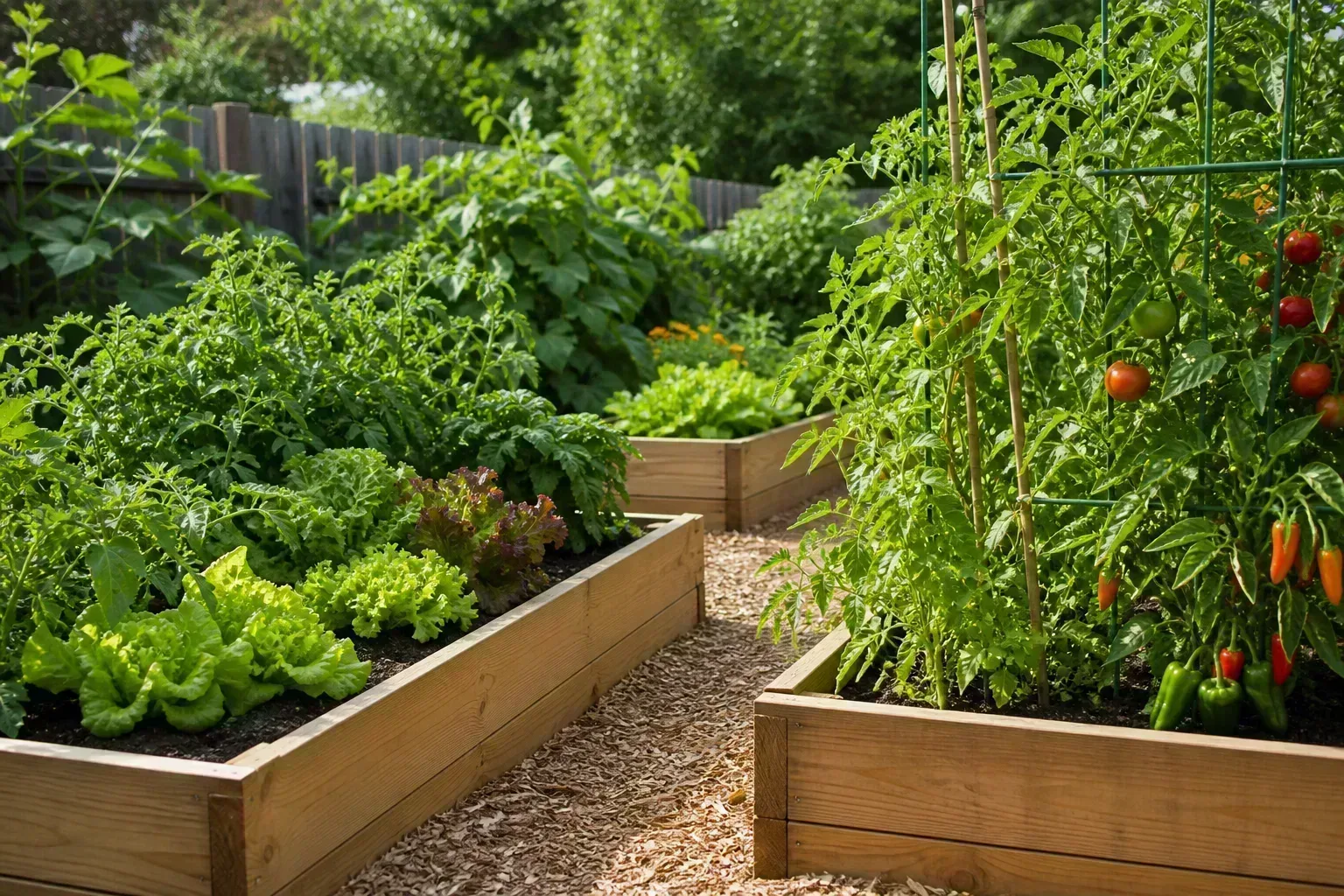
Keep front-yard beds polished and productive
Scale is the design tool. Use two or three substantial beds with clear paths rather than a scattering of tiny boxes. Repeat the bed material, keep the edges straight or intentionally curved, and leave enough room to wheel a hose or harvest basket through the garden. Mix edible plants with flowers that attract beneficial insects, but reserve tall trellises for places where they will not block windows or sightlines.
Raised beds also add work: they need soil, irrigation, weed control, seasonal cleanup, and repairs. The soil in a raised bed drains differently from native ground, and a bed built over compacted soil still needs an outlet for excess water. Use untreated, durable materials appropriate for food growing, and avoid placing the beds where runoff from a driveway or roof can carry contaminants into the soil.
If you are not ready for a full food garden, start with one bed and a nearby water source. A well-used 4-by-8-foot bed is a better lawn replacement than six neglected planters.
Keep or shrink some turf
You do not have to choose between a perfect grass carpet and a completely grassless yard. A smaller, healthier lawn can be the most functional design: keep a central play patch, narrow the mowing perimeter, and replace awkward corners with beds or paths.
This compromise is especially useful for families, dog owners, and people who host outdoors. Penn State Extension recommends retaining lawn where it is needed for play, pets, and walking while adding alternatives around it. The goal is not to maximize the area converted; it is to eliminate the grass that provides the least value.
Convert grass in the right order
The most reliable conversion is a sequence, not a weekend demolition. Start with the section that has the clearest job and the lowest risk if the experiment fails.
- Map the yard. Mark sun, water, slope, traffic, utilities, trees, and views from indoors.
- Choose one test zone. A side strip, slope, or overgrown corner is often safer than the front-center lawn.
- Pick the planting system. Native bed, meadow, clover, groundcover, hardscape, raised bed, or a smaller turf mix each needs a different preparation plan.
- Remove or suppress turf completely. Dig, sheet-mulch, or use another method appropriate for the site; do not plant through a dense layer of living grass and expect the new plants to win.
- Install the durable structure first. Put in paths, edging, drainage, or bed frames before filling the space with plants.
- Plant densely enough to close gaps. Use correct mature spacing and mulch the bare soil while plants establish.
- Observe for a full season. Track weeds, puddles, foot traffic, irrigation time, winter appearance, and spread beyond the intended edge.
Plan for the first-season maintenance spike
Most lawn alternatives trade repetitive mowing for front-loaded establishment work. New beds need watering and weeding. Meadows need identification and selective cutting. Groundcovers need edge control. Raised beds need irrigation and harvest. Hardscape needs correct base preparation and drainage.
Fine Gardening’s account of sheet-mulching a lawn notes that the process can take six months to a year. That waiting period may be exactly right for a patient homeowner, but it is not right if you need a finished surface for a party next month. Match the method to your deadline and capacity.
Mistakes that make alternatives harder
Replacing every inch at once. A large conversion magnifies every mistake in plant choice, drainage, and maintenance. Test first.
Calling any flowering plant native. Native status is regional. Check a state extension service, local native-plant society, or a reputable regional plant database.
Using a meadow mix in a daily path. Flowers and tall grasses are not a substitute for a stable walking surface. Add stepping stones or keep that route as turf or hardscape.
Ignoring the first two years. “Low maintenance once established” still means maintenance while roots and plant communities develop.
Planting aggressive spreaders without an edge. A groundcover that fills quickly can also cross a sidewalk, enter a bed, or become difficult to remove. Research the plant’s spread and contain it from the start.
Paving the drainage problem. A larger impervious surface can send water where it does not belong. Build drainage into the plan, not as a repair after the first storm.
Making raised beds decorative but unusable. Tiny boxes, blocked paths, and no nearby water turn a food garden into lawn-shaped furniture.
Assuming less mowing means less cost. Plants, soil, irrigation, edging, pavers, and labor can cost more up front than keeping turf. Choose the alternative for the value it adds, not for a promise of free maintenance.
Conclusion: Design for use, not uniformity
The best lawn alternative is the one that fits the space’s real job. Expand a native bed where habitat and seasonal interest matter. Use a meadow where height and change are acceptable. Try clover when you want a low, flowering lawn and understand its regional limits. Use groundcover for low-traffic spaces, hardscape for movement and gathering, and raised beds where you will actually grow and harvest food.
Start smaller than your ambition, prepare the site thoroughly, and keep the turf that earns its place. A yard with several purposeful surfaces is easier to live with—and usually more resilient—than one uniform surface forced to do everything.



