Start Spring Bulbs Indoors in January: 8 Forcing Guide
Eight spring-blooming bulbs you can still force indoors in January—with chilling times, a backward bloom calendar, and fixes for floppy stems and blind shoots.
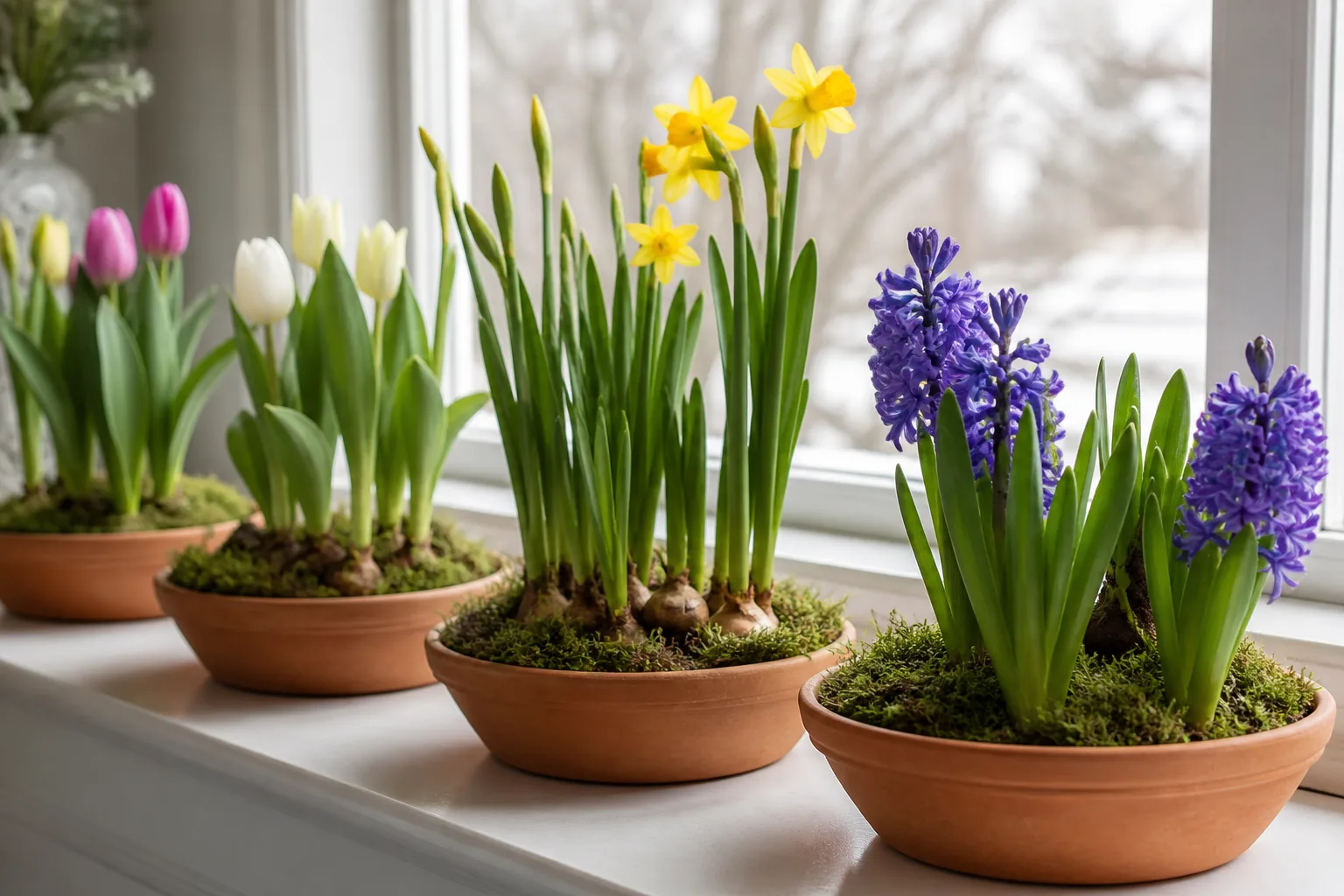
If your bulb order arrived after the ground froze—or you simply ran out of autumn weekends—you are not locked out of spring color. Forcing is the practice of giving spring bulbs an artificial winter chill indoors (or in a garage or refrigerator), then moving them into warmth and light so they bloom weeks before anything outside wakes up. January is the last practical month to start most chilled spring bulbs if you want flowers before late spring. Miss it, and long-chill types like tulips may not finish vernalization in time for indoor display at all.
The eight bulbs below are the same high-value spring performers gardeners reach for in fall beds—tulips, daffodils, hyacinths, grape hyacinth, crocus, dwarf iris, anemone, and snowdrops—chosen because they respond predictably to forcing when you respect their chill clocks. This page covers the full workflow: backward bloom math, potting, cold storage, species-specific weeks, troubleshooting, and what to do when petals drop.
Why January Still Works for Bulb Forcing
Spring bulbs are not seeds. Each bulb already holds a miniature flower bud inside its scales, waiting for a long cold period followed by warming soil. Outdoors, that cycle runs from fall planting through winter chill to spring emergence. Indoors, you compress the calendar by storing potted bulbs at 35–45°F in darkness for a set number of weeks, then waking them gradually into cool, bright light.
What happens when you miss fall planting
Gardeners who miss the October–November outdoor window often assume spring is lost. Forcing recovers the season—but on a tighter schedule. Iowa State University Extension notes that daffodils, tulips, hyacinths, crocuses, and other spring bulbs can be started indoors for forcing from December through March, with bloom timing driven by species and chill length rather than planting month alone.
Starting in mid-January still works for crocus, snowdrops, muscari, and shorter-chill anemones if you accept blooms in March. Tulips and daffodils started now are more likely to flower in late March through April indoors—not on Valentine’s Day—because their chill windows run 14 to 20 weeks. That is not failure; it is math. If you need color sooner next year, mark your calendar for September potting, or buy pre-chilled bulbs that skip part of the wait.
For the outdoor planting calendar you missed, our August bulb planting guide explains when soil must cool before fall bulbs go in the ground. Forcing and fall planting solve different problems; many gardeners do both.
How Bulb Forcing Works (Cold, Then Warm)
Think in three phases: pot, chill, wake. Skipping a phase—or rushing the wake step—is how you get tall floppy stems, blind shoots with leaves but no flowers, or rotted bulbs sitting in soggy mix.
During chilling, roots grow in darkness while tops stay dormant. Cold temperatures between 35 and 45°F trigger the biochemical shift that tells the embryonic flower to develop. Longfield Gardens emphasizes that without adequate chill, flowers are poorly formed or absent entirely. Warmth alone cannot substitute for weeks of cold.
Count backward from your bloom date
Pick the week you want flowers on a windowsill or dining table. Add the species minimum chill weeks, then add 2 to 4 weeks for stem growth and bloom after chill ends. That total is how far back you should have potted the bulbs.
| Bulb | Minimum chill (weeks) | Realistic indoor bloom after chill |
|---|---|---|
| Crocus | 10–12 | 2–3 weeks |
| Snowdrops | 12–15 | 2–3 weeks |
| Muscari | 12–15 | 2–3 weeks |
| Anemone blanda / coronaria | 8–10 | 2–3 weeks |
| Dwarf iris | 13–15 | 2–3 weeks |
| Hyacinth | 13–16 | 2–4 weeks |
| Daffodil | 14–16 | 2–4 weeks |
| Tulip | 14–20 | 2–4 weeks |
If you are reading this on January 15 and want tulips indoors, earliest credible bloom is roughly mid-May (16+ weeks chill plus grow-out)—unless you buy pre-chilled stock. Crocus potted the same day can still reach bloom by late March. Use the table to choose species that match your patience.
The root-check rule before you move pots inside
Calendar dates are a starting point, not a guarantee. Before you shift pots from cold storage to the house, tip a pot gently and look for white roots at drainage holes and a firm green shoot nosing up no more than an inch or two. No roots means the bulb is not ready—return it to chill even if the week count says otherwise.
RHS guidance on forcing bulbs aligns with this practical gate: roots must be active before warmth and light kick growth into high gear. Bringing bare, unrooted bulbs into a heated room produces weak, top-heavy stems that lean toward the window.
Pot, Chill, and Wake: Setup That Actually Blooms
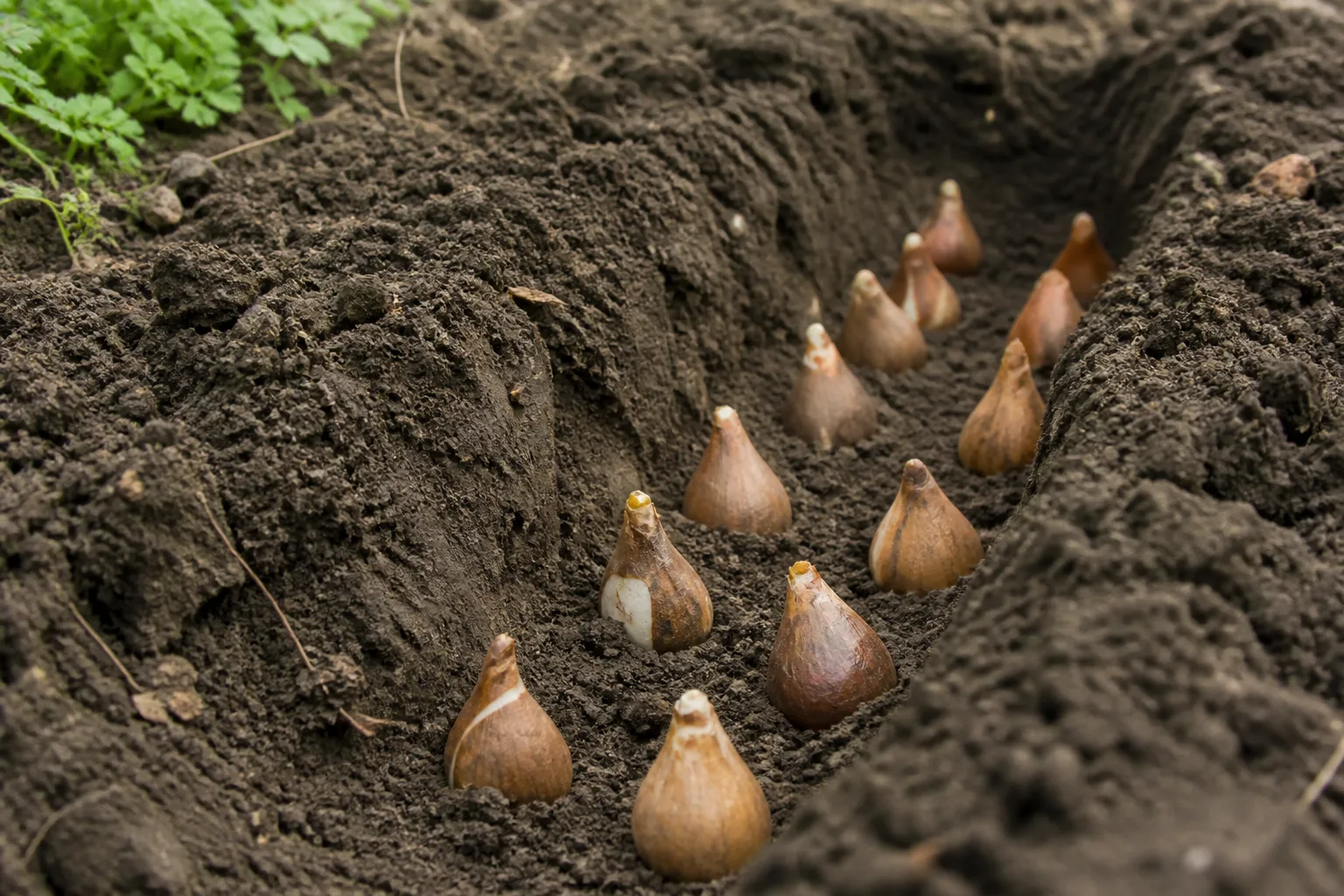
The mechanics are simple; the details separate a florist-quality pot from a moldy disappointment.
Containers, soil, and spacing
Use shallow pots 4 to 6 inches deep with drainage holes. Fill the bottom with free-draining potting mix—not heavy garden soil. Set bulbs pointy side up, close together but not touching each other or the pot walls. Crowded pots look better than sparse ones; a single lonely tulip in a wide bowl never reads as intentional.
Cover bulbs until tips sit just below the soil surface (about an inch of mix over the nose). Water thoroughly once, let pots drain, then label each container. Mixed-species pots are possible but harder to time; one genus per pot is the beginner-friendly route.
Hyacinths also grow in forcing vases with water just below the bulb base—roots reach down, the bulb stays dry. Tulips and daffodils perform far better in soil.
Where to store pots at 35–45°F
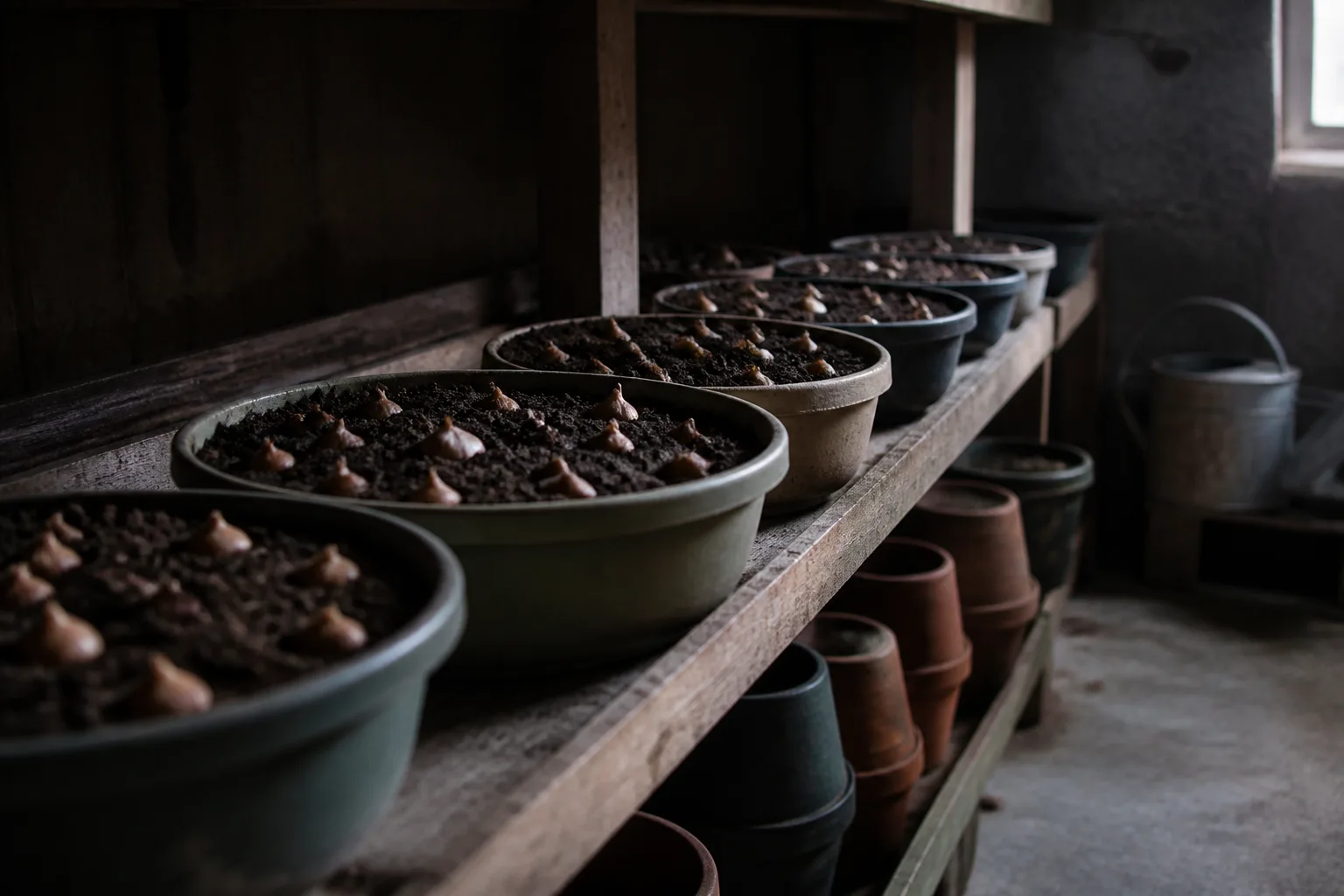
Good chill locations include an unheated attached garage, ventilated crawlspace, cold frame, or a dedicated refrigerator shelf. The space must stay dark, frost-free, and consistently cool. In zone 7 and warmer, protected outdoor placement may work if soil does not freeze or saturate.
Never store forcing pots in a fridge crisper with ripening fruit. Apples, pears, and peaches release ethylene gas that damages flower buds inside bulbs—a detail extension educators repeat because it ruins otherwise perfect chill runs. If you must share a refrigerator, keep bulbs in a sealed paper bag with ventilation holes, away from produce drawers.
Check pots every few weeks. Soil should stay barely moist, like a wrung-out sponge—not wet. Open plastic bags occasionally for air exchange if you use them to slow drying. Tipnut’s forcing walkthrough suggests light watering during long chill periods, especially for indoor garage storage where mix dries faster than buried outdoor pots.
Wake sequence: Move chilled pots to a 50–60°F bright room with indirect light for several days. Water once at move-in. When shoots green up, shift to a cool sunny windowsill (55–65°F if you can manage it). Expect flowers 2 to 4 weeks after chill ends. Stagger pots by a week for a longer show.
Tulips (Tulipa)
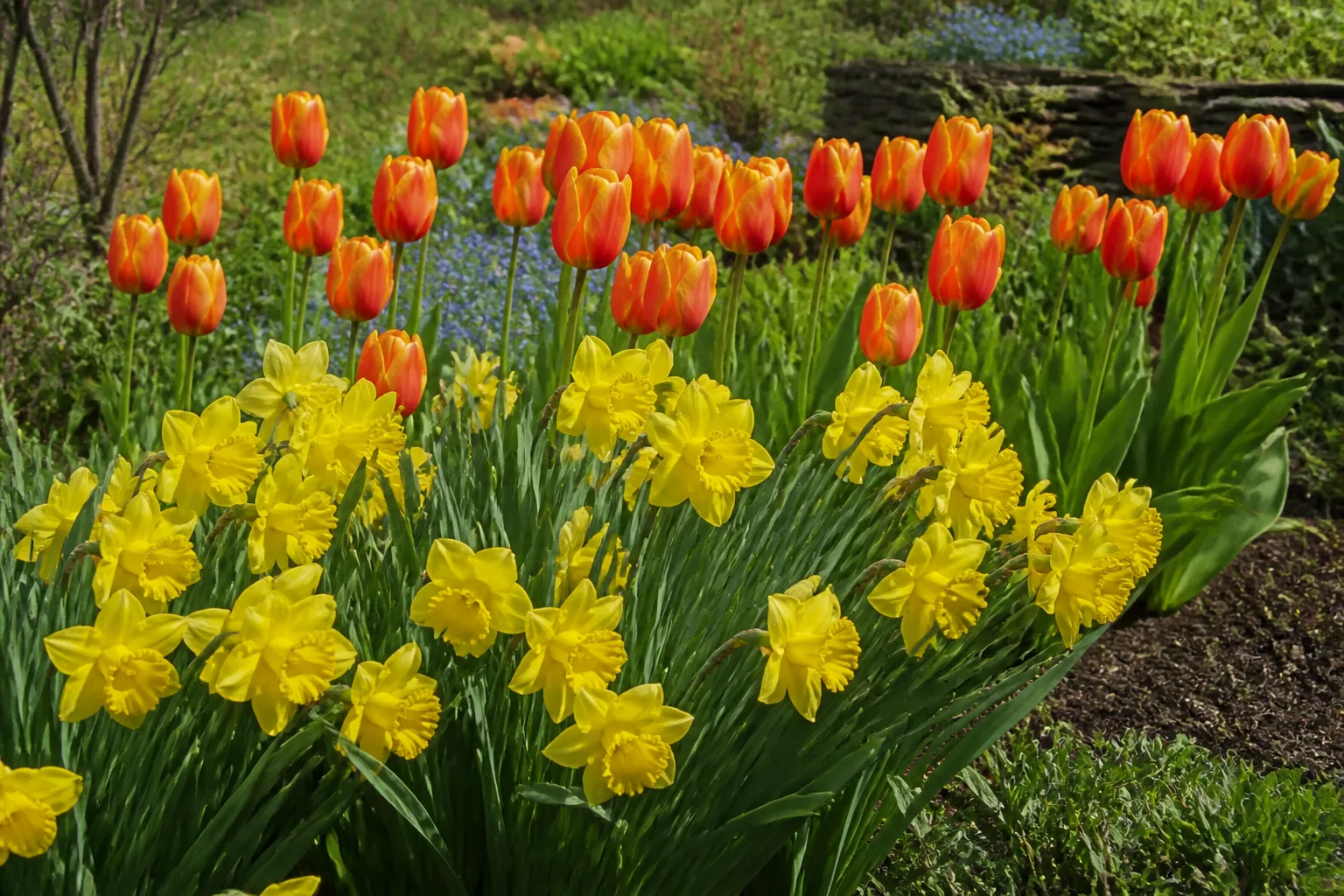
Tulips are the showiest forced bulb—and the most demanding on chill time. Plan 14 to 20 weeks at 35–45°F. Starting in January, treat tulips as a late-spring indoor project, not an early-February centerpiece.
Choose early forcing varieties when you can: ‘Apricot Beauty’, ‘Princess Irene’, ‘Monsella’, and ‘Attila’ are widely recommended for pots. Buy the largest firm bulbs you can find; small bargain bulbs force poorly. USDA hardiness zones 3–8 in the garden; forcing ignores zone once chill is supplied artificially.
After bloom, compost or plant out without expecting repeat indoor performance. Longfield Gardens notes that forced tulips rarely bloom well a second time even in garden soil. If you plant them outdoors after foliage ripens, consider them a one-season gift.
Daffodils (Narcissus)
Daffodils are among the most forgiving forced bulbs—reliable stems, clear colors, and a wide cultivar range from miniatures to doubles. Chill 14 to 16 weeks. Container stars include ‘Tête-à-Tête’, ‘Ice Follies’, ‘Carlton’, and ‘Cheerfulness’.
Petite varieties suit shallow bowls on a kitchen table; taller Dutch types need deeper pots and staking if your windowsill runs warm. After chilling, daffodils appreciate direct sun during the wake phase more than tulips do. Garden hardiness typically spans zones 3–8.
Unlike tulips, forced daffodils sometimes recover in the garden. Let leaves photosynthesize after flowers fade, then plant bulbs outdoors in spring once soil is workable. Bloom may take a year or two to return—forcing spends stored energy.
Pet note: All Narcissus parts are toxic to dogs and cats if chewed. The ASPCA lists daffodil as toxic; keep pots off low tables if pets investigate plants.
Hyacinths (Hyacinthus)
No forced bulb matches hyacinth for fragrance—one pot perfumes a room. Chill 13 to 16 weeks. Try ‘Delft Blue’, ‘Pink Pearl’, or ‘Carnegie’ for classic forcing forms.
Hyacinth bulbs contain oxalate crystals that irritate skin; wear gloves if you are sensitive when handling dry bulbs. In forcing vases, set water just below the bulb base and change cloudy water promptly.
Move hyacinths into light when shoots are about 2 to 3 inches tall—not earlier—or stems elongate weakly. USDA zones 4–8 outdoors. After bloom, plant out in a border and let foliage die back naturally; garden rebloom is possible but not guaranteed the following spring.
Grape Hyacinth (Muscari)
Muscari’s tight blue (or white) spikes look like miniature hyacinth clusters on 6-inch stems—ideal for small pots and layered bulb bowls. Chill 12 to 15 weeks, among the more manageable windows for a January start.
Their size makes them perfect for under-planting in mixed forcing containers: place tulips or daffodils deeper, muscari higher in the same pot only if you accept that species will wake at slightly different speeds. Solo pots are simpler. Hardy in zones 4–8 in garden plantings.
Crocus
Crocus is the fastest common spring bulb on this list—often 10 to 12 weeks chill—so a mid-January pot can still yield late-winter color indoors while snow lingers outside. Flowers may be smaller than garden cohorts but arrive with outsized cheer.
Species crocus and Dutch large-flowering types both force; choose firm corms without mold. Because crocus wakes early, watch chill storage temperature does not spike above 45°F for long periods, which can trigger premature top growth in darkness.
Outdoors, crocus naturalizes in zones 3–8. After forcing, plant corms in a sunny rock garden or lawn edge and allow foliage to ripen.
Dwarf Iris (Iris reticulata)
Netted or reticulated iris brings jewel-tone mini blooms—purple, blue, and gold—on stems barely taller than the bulb itself. Chill 13 to 15 weeks. ‘Harmony’ and ‘George’ are reliable forcing cultivars.
Shallow bowls showcase the flowers at eye level on a desk. Unlike tall bearded iris, these are true bulb irises sized for windowsills. Garden hardiness roughly zones 4–9 depending on species and cultivar.
Keep pots cool during the wake phase; dwarf iris stems flop quickly in overheated rooms. Pair with muscari in separate pots for a two-tone early display.
Anemone (Windflowers)
Anemone forcing demands label reading. Grecian windflower (Anemone blanda) and poppy anemone (Anemone coronaria) are spring favorites with relatively short chill—8 to 10 weeks—making them excellent January starters. Tubers look like dried oak leaves; soak overnight in lukewarm water before planting if packets recommend it.
Hardiness varies: A. blanda spans zones 4–8; A. coronaria is often treated as zone 7+ outdoors and forces well in colder regions for indoor bloom. Do not confuse these with fall-blooming Japanese anemones (Anemone hupehensis)—completely different plant, wrong season.
Plant tubers horizontally about 2 inches deep in moist mix. Cool wake temperatures produce the sturdiest stems for cut-flower bowls.
Snowdrops (Galanthus)
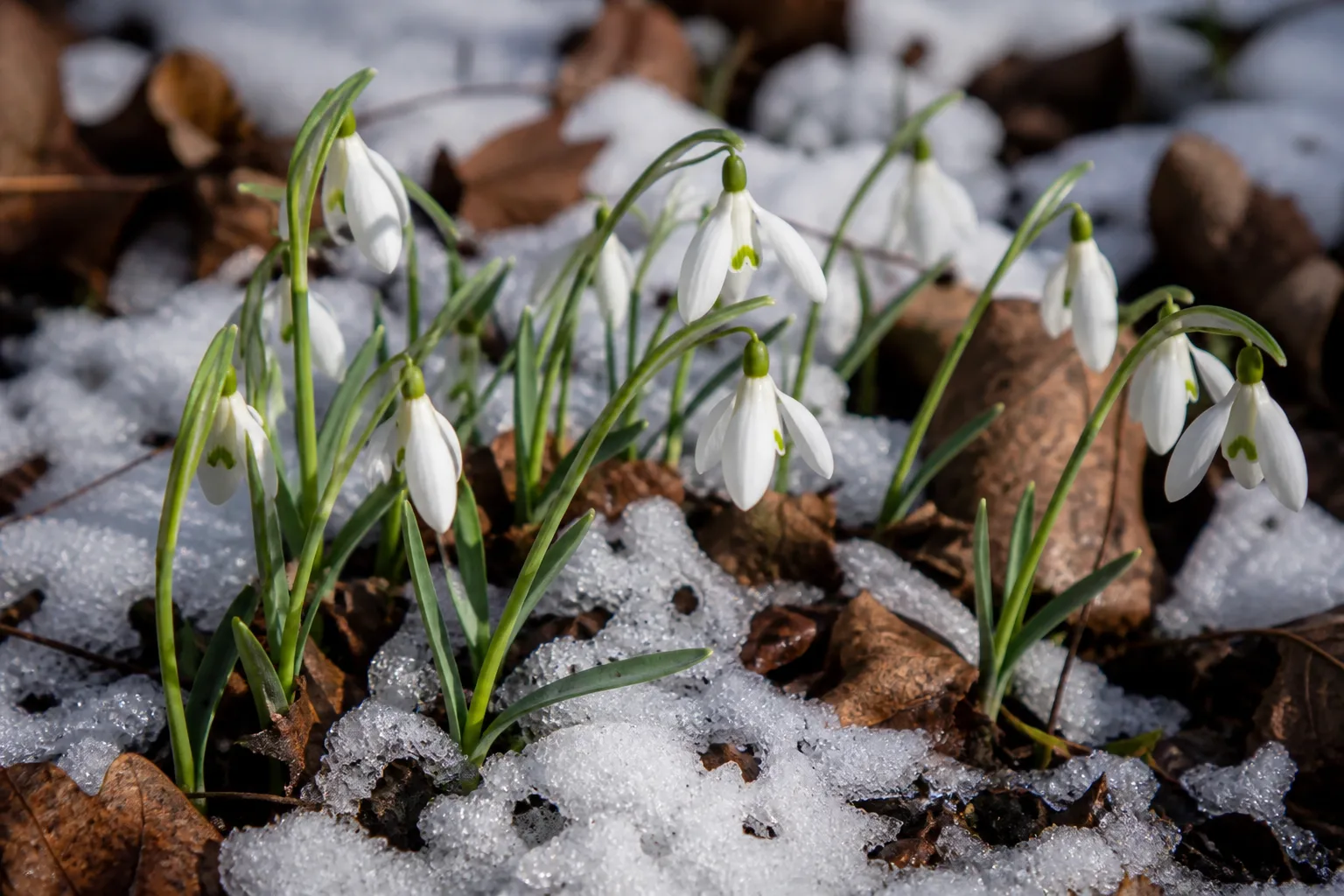
Snowdrops are the quiet first note of spring—nodding white bells on arching stems. They chill 12 to 15 weeks and pair beautifully with winter aconite outdoors; see our January outdoor bloom guide for species that flower in garden beds without forcing.
Forced snowdrops work best in shallow pans where you can appreciate detail up close. RHS snowdrop guidance notes they prefer humus-rich, well-drained conditions—use quality potting mix, not heavy clay. Hardy zones 3–9 in landscape plantings.
Because snowdrops naturally emerge through snow, they tolerate cool rooms better than hot radiators. A north-facing windowsill often outperforms a baking south window for stem length.
Troubleshooting Forced Bulbs
Leaves but no flower stem (blind growth): Almost always incomplete chilling, undersized bulbs, or bulbs forced once already. There is no mid-season fix—note chill length and buy larger stock next round.
Tall floppy pale stems: Brought into heat and bright light too abruptly, or room too warm. Move to 55–65°F with strong light; stake existing stems. Gradual wake prevents most flop.
Mold or soft bulbs: Overwatering during chill, or standing water in forcing vases. Discard affected bulbs; reduce moisture and improve airflow for neighbors.
Buds formed then browned: Ethylene exposure, dry soil during wake, or hot drafts from radiators. Steady moisture and stable temperatures while buds swell.
Everything bloomed at once: Normal for a single pot. Next year, pot batches 7 to 10 days apart for sequential color.
After Bloom: Plant Out, Store, or Compost
Remove spent flower stems so energy does not go to seed. Keep leaves in bright light and water lightly until foliage yellows—this rebuilds the bulb, however modestly.
| Bulb | After forcing |
|---|---|
| Tulip | Compost or experiment in garden; do not expect repeat forcing |
| Daffodil | Plant out after foliage ripens; garden bloom may return in 1–2 years |
| Hyacinth | Plant out; occasional garden rebloom |
| Muscari, crocus, iris, snowdrop | Plant out in sunny drainage; often recover |
| Anemone | Plant tubers out; treat as perennial in suitable zone |
Do not braid or rubber-band leaves while they are green. If you lack garden space, compost spent bulbs guilt-free—forcing is partly a seasonal display, not a permanent houseplant collection.
Tulip and narcissus toxicity matters indoors: the ASPCA lists tulip bulbs as toxic to pets, with highest risk from bulb chewing. Keep bags, pots, and spent plant material away from dogs and cats.
Conclusion
January is not too late for spring bulbs—it is the deadline where choices narrow. Start crocus, snowdrops, muscari, and anemones now for the best odds of March color indoors. Start tulips and daffodils now if you will celebrate blooms whenever they arrive, not on a fixed holiday. Respect the 35–45°F chill, keep fruit out of the fridge, confirm roots before warmth, and wake pots gradually into cool light.
Buy firm bulbs from a reputable source—our guide to buying flower bulbs online covers what to look for in late-season stock. Pair forced pots with seedlings from starting seeds indoors and you can run a full early-spring production line on one windowsill. The garden outside still sleeps; yours does not have to.



