9 Signs of a Rat or Mouse Infestation at Home
Dark droppings, gnaw marks, or ammonia smell? Learn nine reliable signs of rats or mice indoors, how to tell active from old evidence, and what to do next.
You set traps, sealed a gap under the sink, and thought the problem was handled—then last night you heard scratching again. Nine reliable signs that rats or mice are still active indoors are fresh droppings, new gnaw marks, greasy wall runways, shredded nesting material, nighttime movement sounds, ammonia or urine odor, unusual pet focus on walls or cabinets, worsening allergy or asthma symptoms, and daytime sightings. One sign alone is not a diagnosis. Two or more in the same zone—pantry, attic, or utility wall—usually mean rodents are still using that route.
Rodents are mostly nocturnal, reproduce fast, and need very little space to enter. The CDC notes that droppings and gnaw marks often appear before you ever see an animal, and that it is easier to control rodents before they become established. That makes a deliberate inspection more useful than waiting for a dramatic encounter.
The Quick Answer: Nine Signs and Your First Move
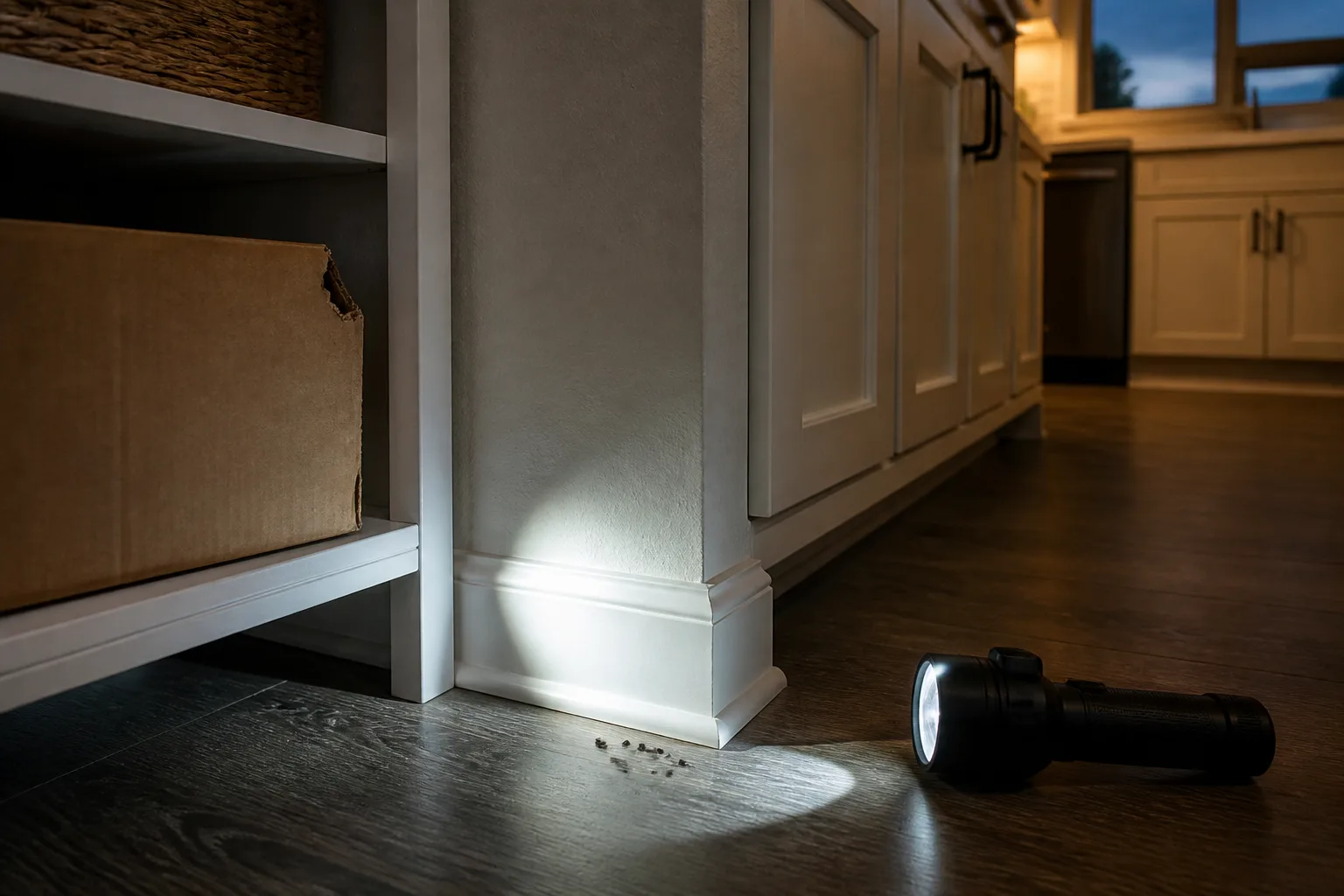
If you want a fast checklist, work room by room at dusk or after dark with a flashlight. Look under sinks, along baseboards, behind appliances, inside seldom-opened drawers, and in attic or crawl-space access points. Your first move is not poison scattered in the open. It is photograph fresh evidence, remove food and clutter, set protected snap traps on confirmed runways, and plan wet cleanup—never dry sweeping or vacuuming droppings, which can aerosolize pathogens (CDC).
The nine signs below are the ones most homeowners can verify without tearing open walls. Use them together. Old gnaw marks from a prior tenant and a single stale dropping do not equal an active infestation—but a new pile beside a chewed cereal box probably does.
Why You May Still See Signs After Treatment
Traps catch individuals; they do not automatically end an infestation. Mice can squeeze through gaps about the size of a dime; rats need roughly a quarter-sized opening (EPA). If entry points stay open and food remains accessible, new animals replace trapped ones within days.
You may also be looking at stale evidence. Droppings left in a wall void, grease marks from last winter, or a nest abandoned after renovation can all linger. The critical question is whether new sign appears after you clean and monitor. That distinction separates a finished job from a problem that is still breeding behind the drywall.
Active vs Stale Evidence
Active signs are fresh, repeated, or increasing: moist dark droppings, pale new gnawing, trap catches, noises on multiple nights, or pet fixation that returns after you cleared an area. Stale signs are dry gray pellets that crumble to dust, old grease without new tracks, silent walls for two or more weeks after sealing and trapping, and zero trap activity in baited locations.
The CDC recommends a practical test: safely clean an area with disinfectant, wait several days, and inspect again. If droppings or gnaw marks return, rodents are still present (CDC). Pair that with flour or talc dusted lightly along a suspected runway—new footprints confirm recent traffic.
Sign 1: Fresh Droppings in Kitchens, Closets, and Utility Rooms

Droppings are the most common indoor clue and often the fastest to spot. Mice leave large numbers of small pellets; rats leave fewer but bigger pieces. You will usually find them along walls, in drawers, under sinks, behind stored appliances, on pantry shelves, and inside chewed cardboard—not randomly in the center of a room.
Fresh droppings look dark and moist. As they age, they dry, fade to gray, and crumble when touched. Quantity matters: mice can produce dozens of pellets per day, so a sudden accumulation near a single cabinet strongly suggests active feeding nearby. Always assume droppings may carry salmonella, leptospirosis, or—in some regions—Hantavirus until they are disinfected and removed (Fairfax County Health).
Wear gloves, spray droppings with household disinfectant until soaked, wait the label contact time, wipe up with paper towels, and double-bag the waste. LA County Public Health advises wet cleaning only—never dry broom or vacuum on rodent waste without professional-grade containment (LA County Public Health).
Mouse vs Rat Droppings
Size and shape help you choose trap size and placement. House mouse droppings are about 1/8 to 1/4 inch (3–6 mm) long, narrow, and pointed at one or both ends. Rat droppings are roughly 1/2 to 3/4 inch (12–19 mm) with blunt or slightly pointed ends depending on species. If you thought you had mice but suddenly see larger pellets or bigger gnaw marks, you may have rats now—or both.
| Feature | House mouse | Norway / roof rat |
|---|---|---|
| Pellet length | ~1/8–1/4 in (3–6 mm) | ~1/2–3/4 in (12–19 mm) |
| Typical quantity | Many pellets daily | Fewer, larger pieces |
| Common zones | Kitchen drawers, pantry, closets | Basements, crawl spaces, attics, garages |
| Climbing | Moderate | Roof rats climb well; Norway rats burrow |
Store dry goods in glass or thick plastic, and see our pantry pest prevention habits for the same sealed-storage mindset that keeps rodents from treating your shelves as a buffet.
Sign 2: Gnaw Marks on Packaging, Wood, and Wires
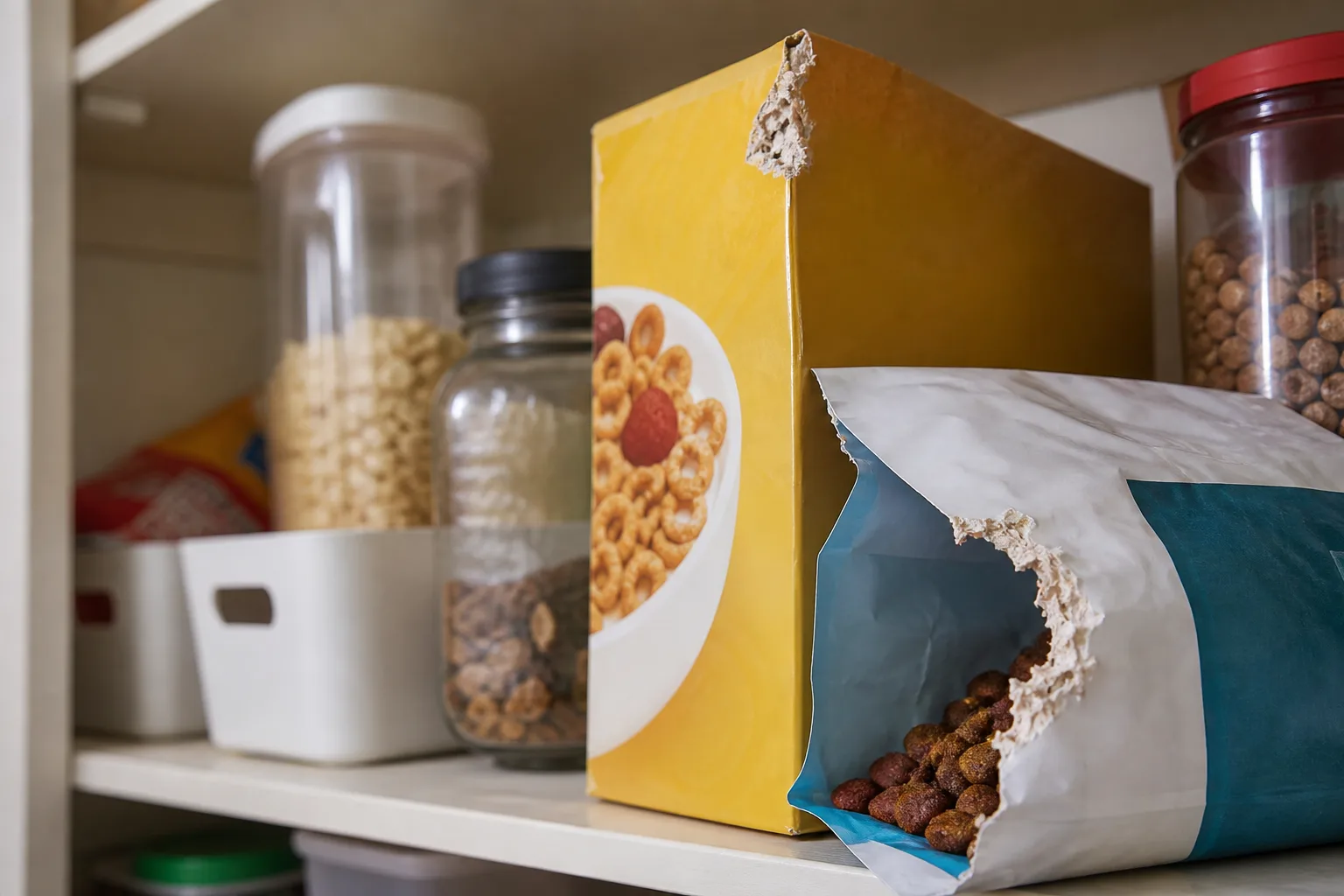
Rodents gnaw constantly to wear down teeth that never stop growing. Fresh marks are pale, rough-edged, and show clean wood or plastic color. Older marks look darker and smooth from dust and handling. Check cereal boxes, pet-food bags, stored holiday decor, door corners, cabinet toe-kicks, and cable runs behind entertainment centers.
This is not cosmetic damage. Rats and mice chew electrical insulation, which raises fire risk (Fairfax County Health). They will also gnaw plastic plumbing and stored bulbs or seeds in utility rooms. Photograph new damage with a date stamp so you can tell whether chewing continues after trapping begins.
If gnawing concentrates at floor level along baseboards, suspect Norway rats or mice traveling wall edges. Gnawing higher on doors, rafters, or stored furniture in attics fits roof rats or mice using vertical routes. Match the pattern to trap placement rather than scattering devices randomly.
Sign 3: Greasy Runways, Smudge Marks, and Footprints
Rodents memorize routes between nest and food. Rats especially leave dark greasy rub marks along walls and floorboards where their oily fur contacts the same path nightly. Mice can leave lighter smudges and more scattered droppings along the same runways.
Inspect with a flashlight held at a low angle across baseboards, behind the stove, and along garage walls adjoining the house. A blacklight can reveal urine stains that are invisible in normal light—useful in pantries, laundry rooms, and basement perimeters. For a low-tech test, dust a thin layer of flour or baby powder across a suspected path; intact footprints the next morning confirm recent movement.
Outdoor runways can pull rodents inside; if you also see burrows or fence-line traffic, read signs of rats in the garden and block exterior routes before they become kitchen evidence.
Sign 4: Hidden Nests and Shredded Nesting Material
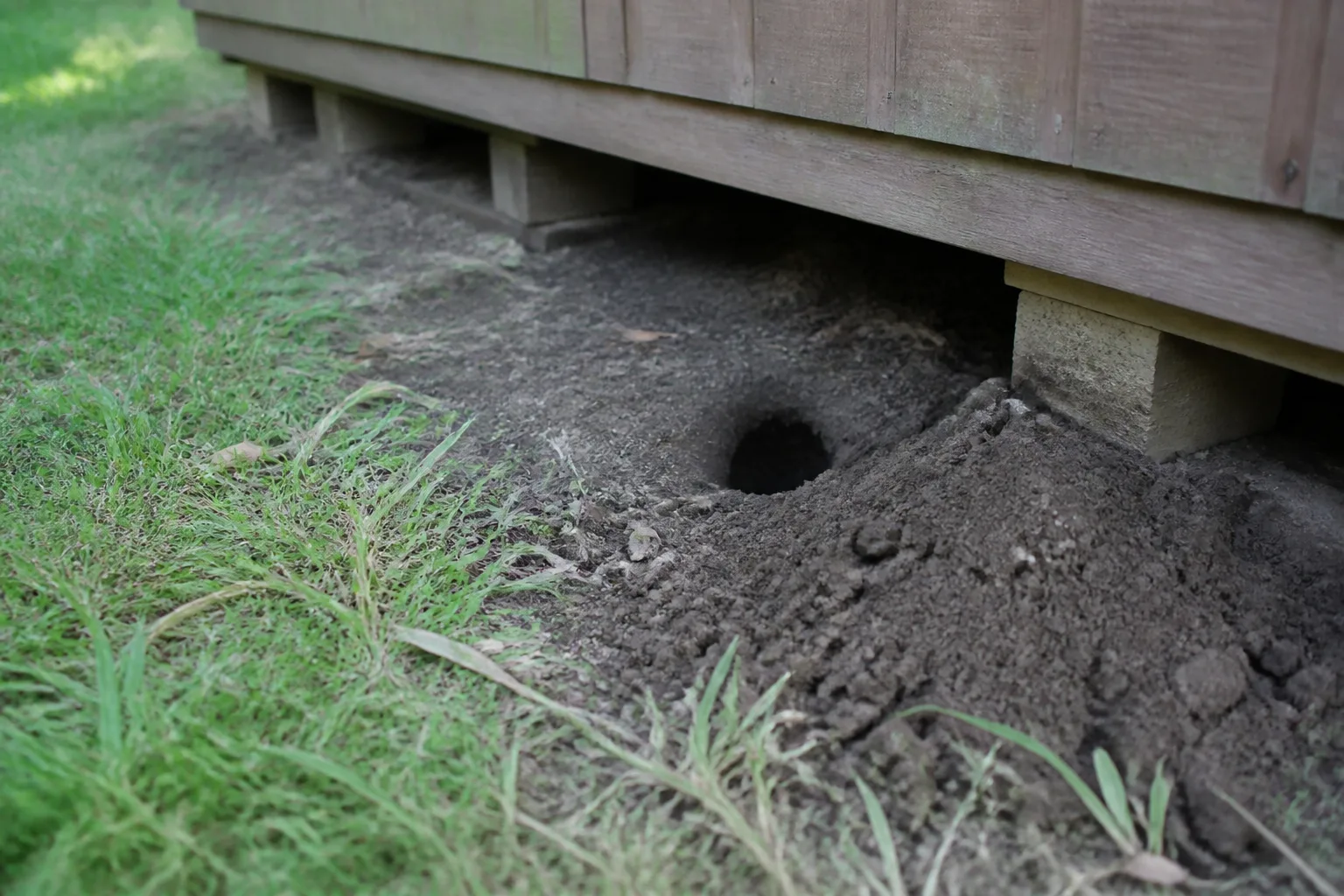
Rodents build nests in quiet, insulated spots: wall voids, unused drawers, stored upholstery, attic insulation, behind refrigerators, and inside boxed clutter. House mice favor shredded paper, cardboard, fabric, and dried plant material packed into a loose ball. Rats may drag larger fibers, insulation, and debris into hidden cavities or burrow systems in crawl spaces.
Finding a nest is definitive—but you may only see the scatter: chewed paper under a shelf, insulation pulled from a soffit, or fabric fibers in a garage cabinet. If nesting material sits beside fresh droppings, treat the entire zone as active and remove both food and shelter. Do not reach blindly into voids; use a flashlight and long tool to probe, and wear a dust mask when disturbing dried material.
Decluttering matters here. Cardboard storage in attics and garages is rodent-friendly; switch heirlooms and seasonal textiles to sealed plastic bins, as recommended in garage exclusion guides like how to keep bugs and rodents out of the garage.
Sign 5: Nighttime Scratching, Scurrying, or Squeaking
Sound is often what sends homeowners searching at 2 a.m. Light scurrying, scratching, or occasional squeaks in walls, ceilings, or under floors usually peak after dark when rodents travel to food and water. Attics amplify movement; kitchens amplify chewing on plastic or wood.
Occasional noise alone is weak evidence—pipes, branches, and settling wood mimic rodents. Repeated patterns on multiple nights, especially aligned with droppings or gnaw marks in the room below, are much stronger. Mark the date and time you hear activity; if sounds continue after two weeks of trapping and sealing, assume hidden routes remain.
Mice in wall voids need a different response than mice in open basements. When scratching localizes to a stud bay, see how to get rid of mice in walls for trap-tube placement and exclusion sequencing.
Sign 6: Ammonia Odor or Urine Stains Under Blacklight
A persistent stale ammonia smell—sometimes compared to old urine or a neglected litter box—often means an established population marking territory. Mice frequently urinate in the same spots, and chronic buildup can create urine pillars: small mounds of grease, dirt, and crystallized waste near heavy traffic zones.
Do not confuse this with a dead rodent odor trapped in a wall. Decomposition smells sharp, sour, and localized; it usually spikes then fades over days unless the carcass remains inaccessible. Ammonia-like territory odor tends to linger broadly in closed cabinets or poorly ventilated crawl spaces while animals are still active.
Ventilate before investigating, and avoid breathing dust from dried urine deposits. Clean affected surfaces with disinfectant using the same wet method as for droppings. Scent alone is not enough to size an infestation, but combined with visual sign it confirms the area is in regular use.
Sign 7: Pets Staring, Pawing, or Refusing a Room
Cats and dogs sometimes detect rodents before you do. Sudden fixation on a baseboard, refrigerator gap, or cabinet toe-kick—especially if the pet ignored that spot before—deserves a flashlight inspection. Pawing, excited sniffing, or refusing to enter a room can track with activity behind walls.
Pets are helpful, not infallible. Some ignore rodents entirely; others alert to insects or drafts. Use pet behavior as a pointer, then verify with droppings, marks, or traps. Avoid letting pets investigate poison bait stations or snap traps; both create injury risk.
Sign 8: Worsening Allergy or Asthma Symptoms Indoors
Rodent allergens come from urine, droppings, and dander that become airborne when disturbed. Fairfax County Health notes that proteins in rodent urine can trigger allergic reactions in sensitive people (Fairfax County Health). If household members develop sneezing, wheezing, or chest tightness that improves when away from home—especially after cleaning a storage area or opening an attic hatch—consider rodents among the causes.
This sign rarely appears in isolation. Pair respiratory flare-ups with visual evidence before blaming pests alone. Mold, dust mites, and pollen share similar patterns. Still, in a home with known droppings or attic nesting, allergen reduction requires removing rodents and wet-cleaning contaminated materials, not air fresheners.
Sign 9: Daytime Sightings or a Live Rodent
Seeing a mouse dash across the kitchen floor is unsettling—and informative. Daytime activity often indicates pressure from a larger population competing for food and territory (Fairfax County Health). A single fleeting sighting at dusk may be a young explorer; repeated daytime appearances are more serious.
If you see one, assume more are present until monitoring proves otherwise. House mice breed quickly; populations can grow from a pair to dozens in months under ideal conditions. Photograph or note size, tail proportion, and behavior to separate mice from young rats, then adjust trap size immediately. Killing a single animal without sealing entry and removing food rarely ends the problem.
How to Gauge Infestation Size
Sign density helps you choose DIY control versus professional help. Use time of activity, droppings volume, and sighting frequency together—not any single clue.
| Observation | Likely population pressure | Typical response |
|---|---|---|
| Noises only at night, few droppings | Low to moderate | Seal gaps, sanitation, multiple snap traps |
| Fresh droppings nightly in several rooms | Moderate to high | Aggressive trapping + exclusion; inspect attic/crawl |
| Daytime sightings, many fresh marks | High | Professional inspection strongly advised |
| Odor + pets + sounds in same zone | Established nest nearby | Locate nest zone; traps on runways leading to it |
When DIY Trapping Is Enough
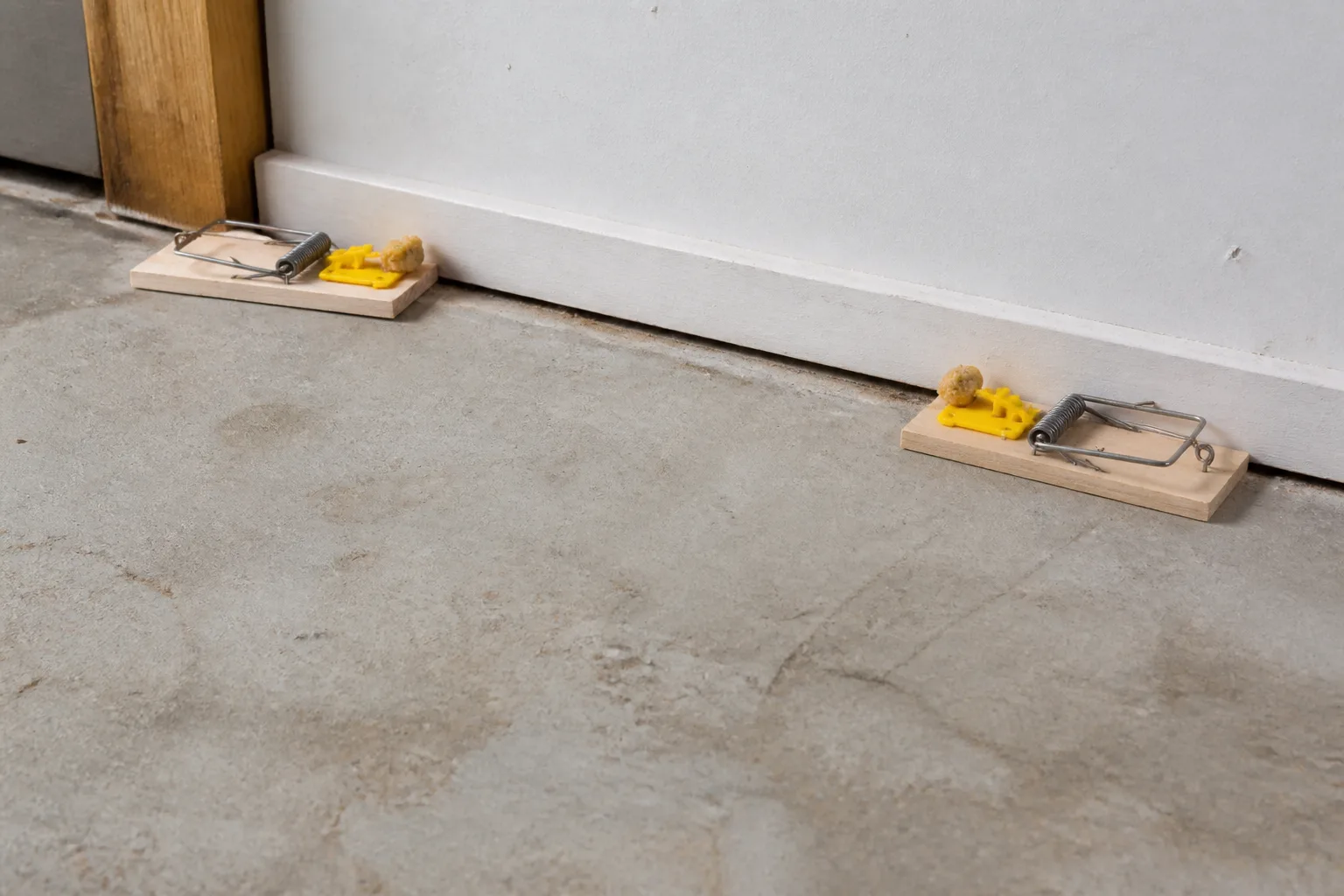
DIY control can work when signs are localized, entry points are identifiable, and you can check traps daily. Place snap traps perpendicular to walls where droppings or rub marks concentrate, use enough traps—several in a kitchen alone is normal—and pair trapping with poison-free rodent-proofing so survivors cannot simply re-enter.
Unset traps for several days along rat runways before arming them if you suspect rats; they are neophobic and may avoid new objects until accustomed. Mice are more curious and often investigate traps sooner. For trap selection, compare options in best mouse traps and best rat traps before buying the wrong size.
When to Call a Professional
Call a licensed pest professional when you see daytime rodents repeatedly, widespread fresh sign across multiple floors, chewed wiring near panels, or unable to access nest voids safely. Also seek help if anyone in the home has severe respiratory disease and heavy attic or crawl-space contamination is likely.
Professionals bring inspection tools, bait-station expertise where legally appropriate, and experience locating roof-rat routes in soffits and tree lines. DIY first is reasonable for a single pantry mouse; DIY alone is a poor bet when populations are established.
Mouse vs Rat: Why Identification Changes Your Plan
Trapping, trap size, and exclusion all shift by species. House mice are small, curious, and often nest within 10–30 feet of food (Fairfax County Health). Norway rats burrow and travel along foundations and lower floors. Roof rats climb, use attics and trees, and may enter from overhead gaps.
Behavior matters as much as appearance. Mice investigate new objects quickly; rats avoid them until familiar. That is why pre-baiting unset traps on rat runways works. Mice often need less patience but more trap density. Misidentifying species wastes weeks—oversized traps for mice miss kills; undersized traps for rats are ineffective and inhumane.
If outdoor rats are part of the picture, coordinate indoor trapping with yard cleanup. Garden attractants often precede kitchen sign; our signs of rats in the garden guide helps you cut outdoor food sources that keep indoor populations supplied.
How to Confirm Rodents Are Gone
Confirmation is a process, not a feeling. Follow this sequence:
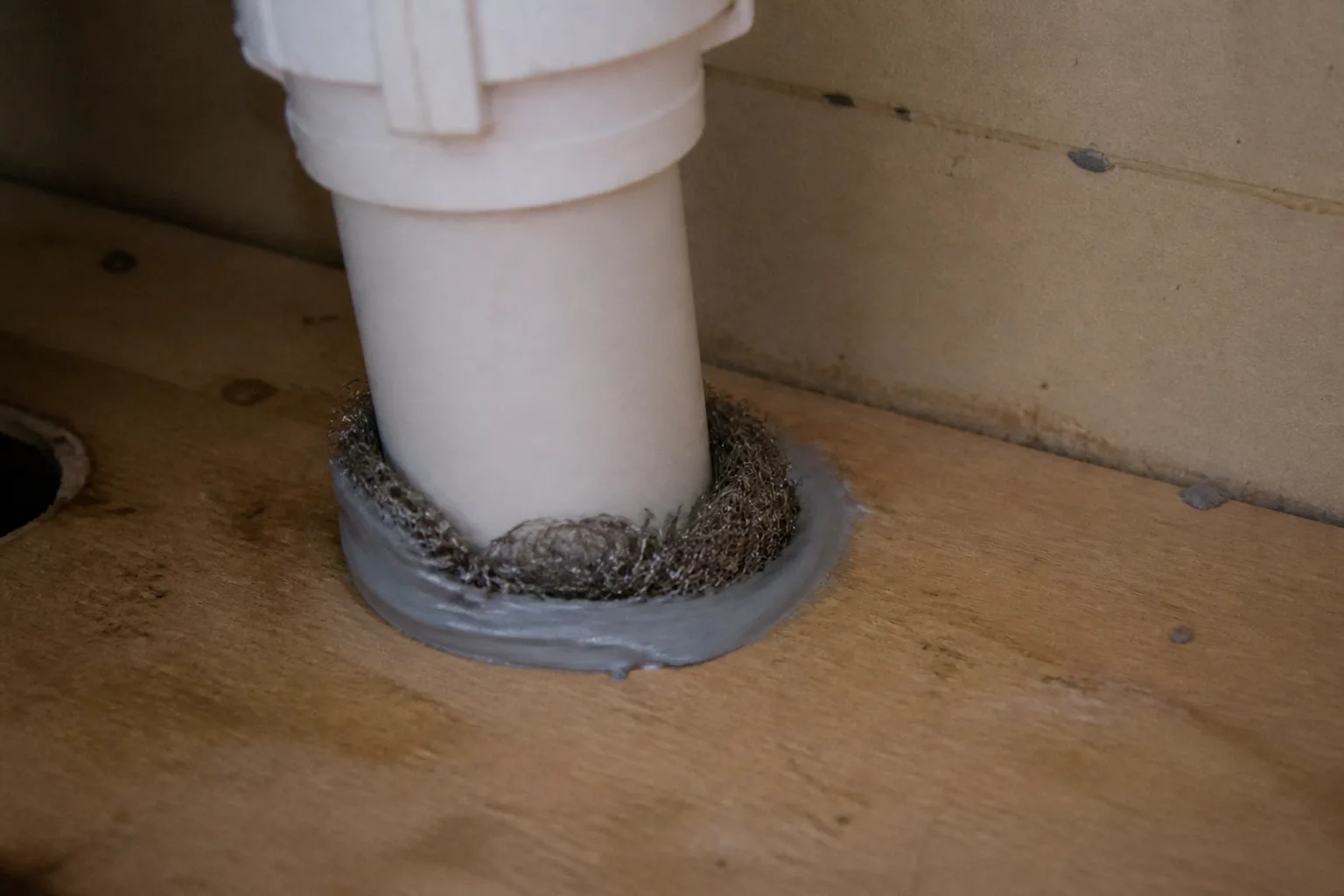
- Seal known entry gaps with rodent-resistant materials (steel wool plus sealant for small holes; hardware cloth for larger openings).
- Sanitize active zones with wet disinfectant cleanup.
- Trap on runways for at least seven to fourteen days, checking daily.
- Re-inspect cleaned areas; new droppings or marks mean failure, not success.
- Monitor monthly in fall and winter when cold weather drives entry.
Zero trap catches for two weeks, silent walls, and no fresh sign after cleaning strongly suggest control—but maintain sanitation and annual perimeter checks. Scent repellents alone, including peppermint or mothball myths, do not replace exclusion; see balanced options in natural ways to get rid of mice that pros love while you still seal and trap.
Conclusion
Nine signs that rats or mice are still in your home are fresh droppings, new gnaw damage, greasy runways, nesting debris, nighttime movement sounds, ammonia or urine odor, unusual pet behavior, worsening allergy symptoms, and daytime sightings. Treat them as a pattern, not a single scare. Clean safely, trap on confirmed routes, seal entries, and use the clean-and-recheck method to verify rodents are truly gone.
The earlier you read the evidence, the cheaper the fix—before chewed wires, contaminated pantry goods, or attic insulation destruction force a larger remediation. Start tonight with a flashlight and gloves, document what you find, and act on the zone that shows the freshest sign.