How to Keep Bugs and Pests Out of Your Garage
Keep bugs, spiders, ants, and rodents out of your garage with a pest audit, door-seal fixes, safe storage, cleanup, and monitoring plan.
The most effective way to keep pests out of a garage is to make the building harder to enter and less rewarding to stay in. That means checking the garage door and wall penetrations, storing food in sealed containers, drying leaks, reducing hiding places, and using traps or pesticides only after you know what you are dealing with.
Start with exclusion, not a fogger. The Centers for Disease Control and Prevention says rodents are easier to control before they become established, and its prevention advice centers on removing food, water, and shelter while sealing holes. The same order works for many garage insects: inspect, identify, remove attractants, close access, then monitor.
Start with a 30-minute garage pest audit
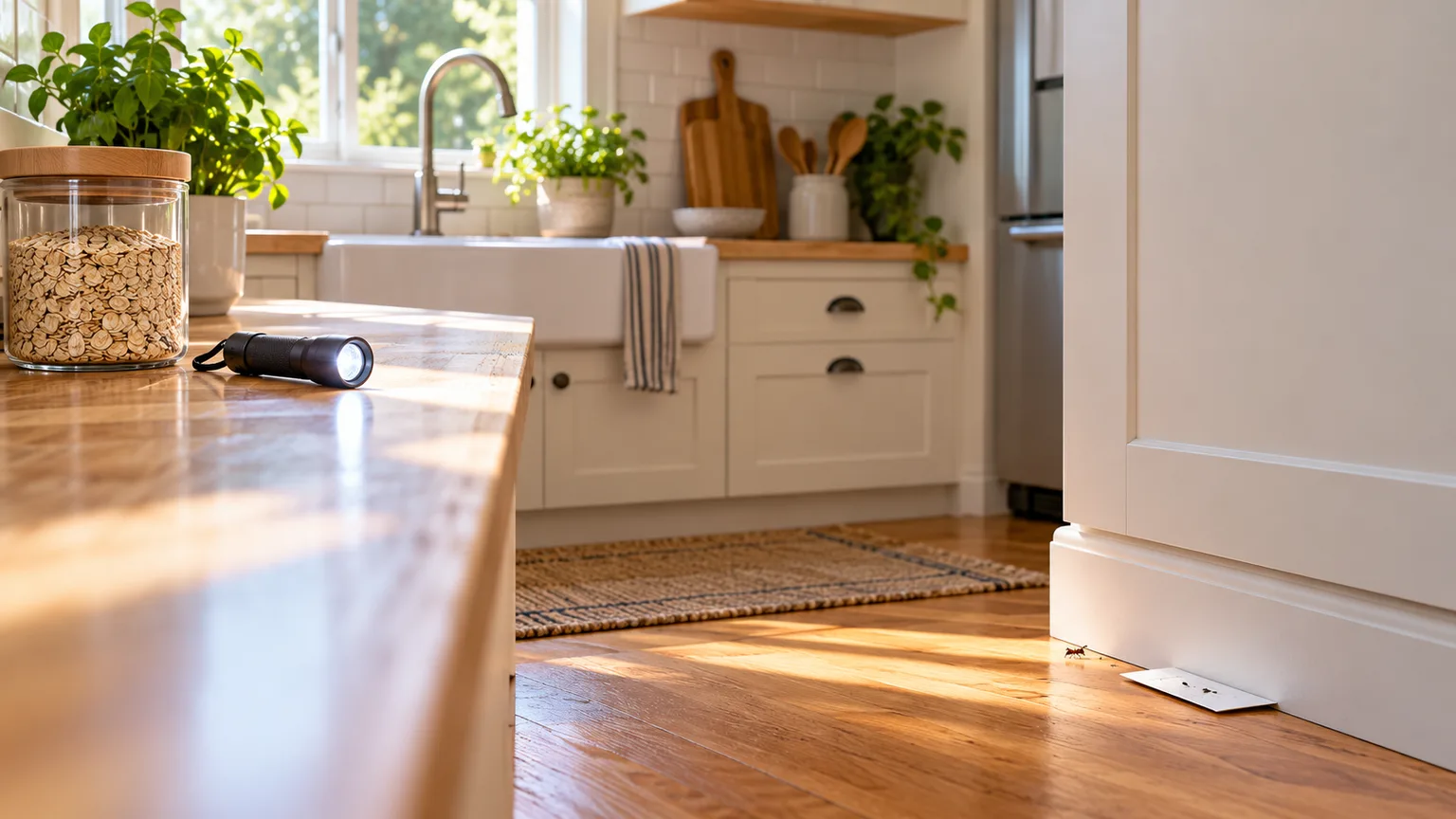
Choose a dry part of the day and open the garage door fully. Take a flashlight, a pencil, a small mirror, disposable gloves, and a phone for photos; you are looking for routes and evidence, not trying to find every individual bug.
Walk the space in this order:
- Start outside. Check the bottom corners of the overhead door, the side jambs, the threshold, foundation joints, vents, windows, roofline, and the wall shared with the house.
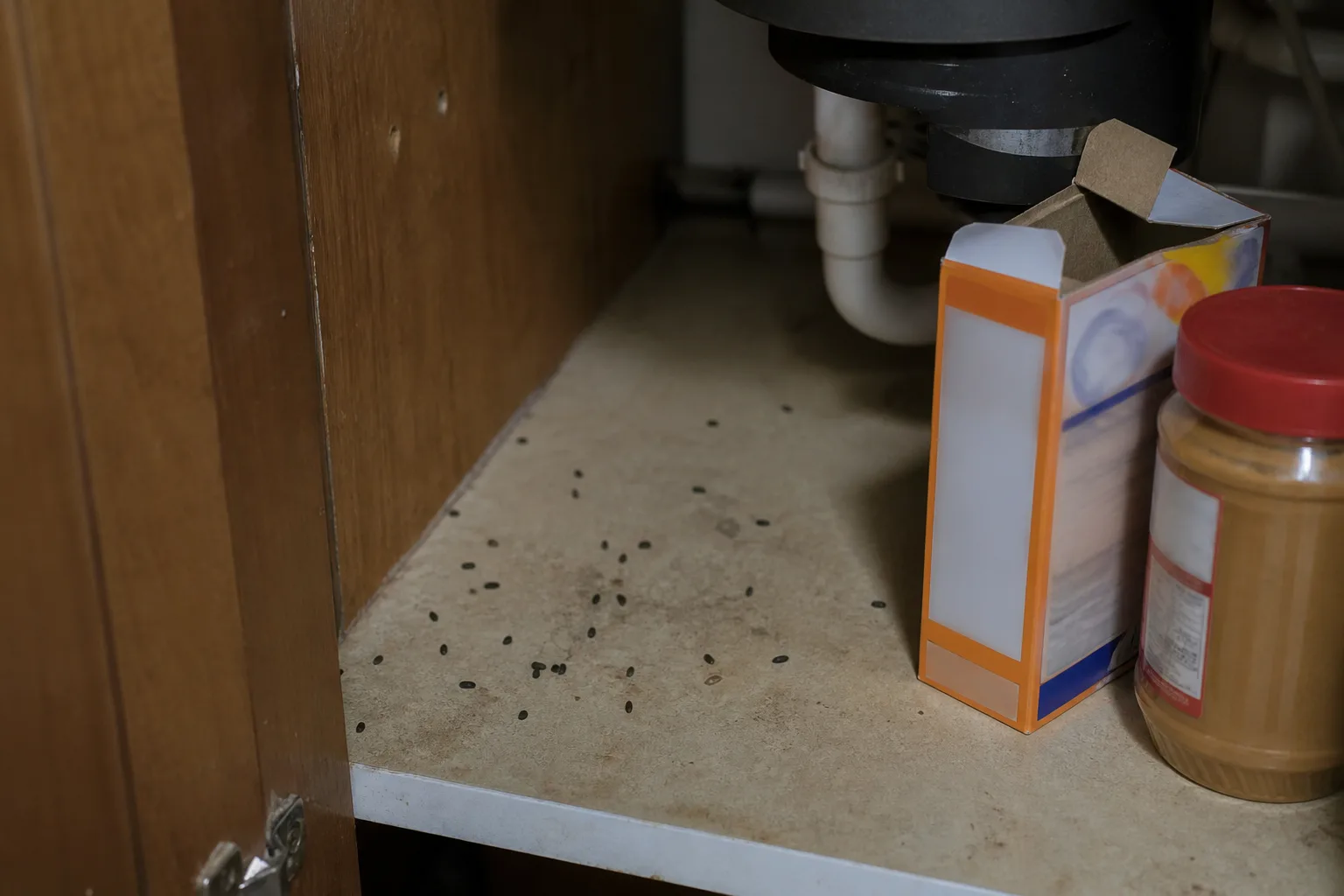
- Follow the perimeter indoors. Look for daylight, damp staining, rub marks, droppings, gnaw marks, shed insect skins, webs, mud tubes, and dead insects.
- Inspect the floor and ceiling. Check floor drains, cracks, expansion joints, stored tires, rafters, attic access, and the back of shelving.
- Open quiet storage. Look inside cardboard boxes, seldom-used appliances, bags of seed, pet-food containers, and fabric or paper piles.
- Record patterns. A line of ants, webs concentrated near a light, droppings along one wall, or insects around a damp corner points to a different fix.
Do not start by spraying every corner. A broad treatment can kill visible insects without fixing the gap, leak, food source, or nesting site that keeps bringing them back. The goal of the audit is to make the next action specific.
Read the evidence before you seal an opening
A hole is not automatically an abandoned hole. If you find fresh droppings, a nest, a live animal, a strong odor, or new gnawing around an opening, identify the pest and make an exit-and-control plan before closing it. The University of Nebraska–Lincoln Extension rodent-proofing guide warns that sealing a hole used by an animal without a proper plan can cause additional damage or create a safety problem.
The size and location of a gap help, but they do not identify the pest by themselves. The CDC says mice can fit through a hole about the width of a pencil, or roughly one-quarter inch. Rats need a larger opening, while ants, spiders, beetles, and small flies can use cracks that are too small to explain a rodent trail. Treat measurements as a reason to inspect further, not as a diagnosis.
Why garages attract bugs and rodents
A garage is a useful shelter because it is often dark, quiet, and less frequently disturbed than the living areas of a home. It also combines several attractants in one place: pet food, birdseed, trash, cardboard, damp concrete, leaking vehicles, open windows, and a large door that may not meet the floor evenly.
Different pests are responding to different conditions. Ants and cockroaches follow food and moisture; silverfish and earwigs favor damp, protected spaces; spiders follow the insects that gather around lights and openings; and mice look for food, nesting material, and a protected route. A garage can therefore have more than one pest problem at once, which is why a single repellent rarely solves it.
This is the practical meaning of integrated pest management (IPM). The National Pesticide Information Center recommends identifying the pest, finding how it enters, removing food and water, reducing clutter, and closing entrances before relying on chemical control. You do not need a commercial program to use that logic; you need a sequence that addresses the cause before the symptom.
Seal the actual entry points
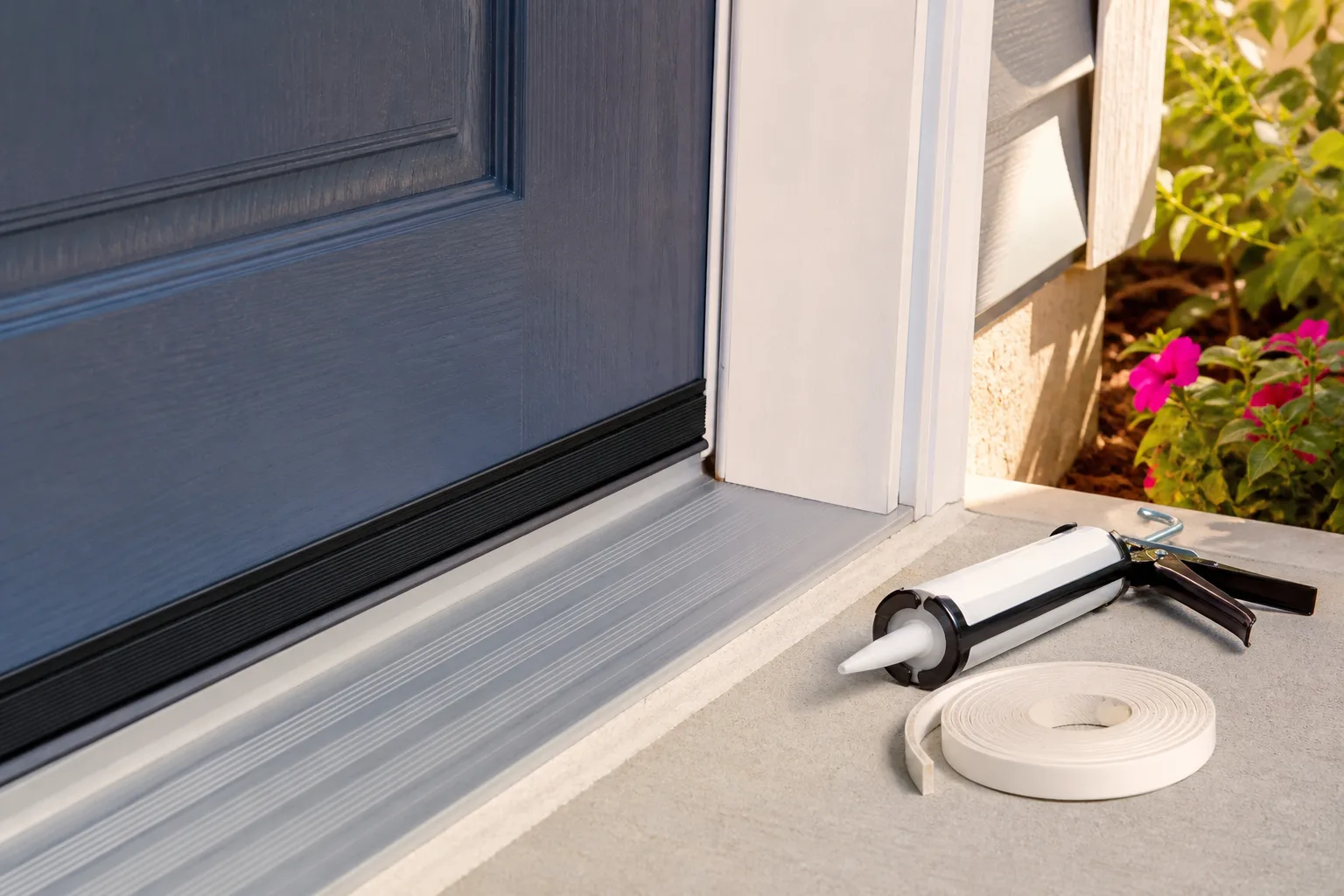
Seal work is the highest-value garage repair because it reduces several pest groups at once. Use the material that matches the opening: flexible caulk for a narrow stationary crack, weatherstripping for a moving door, metal mesh or flashing where rodents can gnaw, and a proper vent screen where airflow must continue.
Do not fill every gap with expanding foam. Foam can close an airflow leak, but it is not a durable rodent barrier when exposed or accessible to gnawing. The Nebraska Extension guide recommends a gnaw-resistant surface such as metal, hardware cloth, or sheet metal for openings that rodents can reach, with caulk or another sealant used to hold or finish the repair.
Fix the garage door bottom and side seals
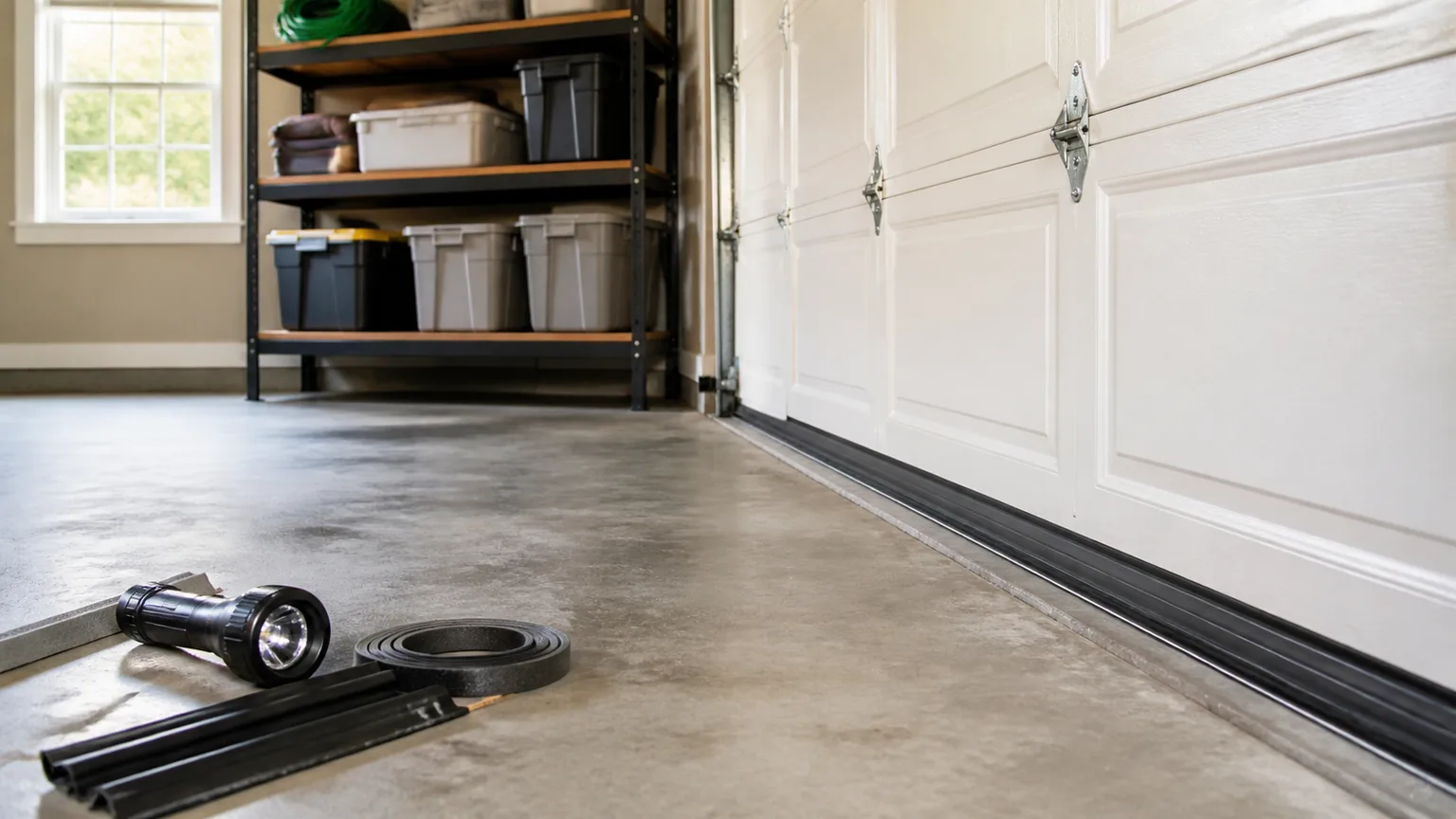
Close the overhead door and stand inside with the garage lights off during daylight. Look for slivers of light along the bottom edge, both side edges, and the top corners. A worn bottom seal can also leave water marks, dirt lines, or a visible gap where the slab has settled.
Replace a split, flattened, or missing bottom seal with a profile that fits the door’s retainer and the threshold beneath it. A flexible seal can accommodate an uneven slab better than a rigid strip, but a severely uneven threshold may need repair before a new seal can make continuous contact. The Family Handyman guide to garage-door bottom seals explains why the retainer and the pavement profile both matter.
Check the side and top weatherstripping too. If the rubber is brittle, pulled away, or compressed unevenly, replace it rather than layering random tape over the gap. Keep the seal clear of oil, leaves, and gravel so the door can close fully; a door that reverses or sits crooked needs garage-door service, not more caulk.
Close utility penetrations, vents, windows, and floor gaps
Inspect where electrical cables, pipes, gas lines, conduit, and wall-mounted equipment enter the garage. Small gaps around penetrations are easy to overlook because they sit behind shelving or near the ceiling, but they are protected travel routes for insects and rodents.
For a small, inactive gap, pack a rodent-resistant material into the void and finish the edge with an appropriate sealant. The CDC recommends steel wool with caulk around it for small holes and metal, hardware cloth, lath screen, or cement for larger repairs; its seal-up guidance also specifically says to seal outbuildings and garages.
Use metal screening on vents and windows where ventilation must remain open. Do not block a dryer vent, furnace exhaust, combustion-air opening, or other safety-critical outlet with improvised mesh. If you are unsure whether an opening is part of a combustion or exhaust system, ask a qualified technician before modifying it.
Check the joint where the garage wall meets the slab and foundation. Repair masonry cracks with a suitable masonry product, and inspect the corners where siding, trim, and foundation materials meet. Outside, trim vegetation that touches the wall and remove soil or mulch that stays wet against the structure; a clear, dry perimeter makes both inspection and exclusion easier.
Store food and nesting materials correctly
Anything edible in a garage should be treated as a pest attractant, even if it is not human food. Move pet food, birdseed, livestock feed, grass seed, fertilizer with organic ingredients, and treats into thick plastic, metal, or glass containers with tight-fitting lids. Keep bags off the floor and inspect them for chewing before stacking them near a wall.
Cardboard is convenient but fragile. Rodents can chew it, cockroaches can hide in its seams, and damp cardboard can support mold and insect activity. Use lidded bins for long-term storage and leave a narrow inspection space between bins and walls so you can see droppings, gnaw marks, and leaks.
The Bob Vila guide to mouse prevention makes a useful garage-specific point: garages become more attractive when they offer shelter plus food or water, and attached garages can become an easy path into the house. Do not store open feed, trash, or pet bowls beside the interior door, and keep the door between the garage and the living space closed.
Reduce water, clutter, and outdoor access
Find and fix the source of dampness rather than only drying the puddle. Look for roof leaks, failed door seals, condensation on pipes, wet cardboard, a dripping water heater, a refrigerator or vehicle leak, and downspouts that discharge beside the foundation. Drying the floor helps today; correcting the leak removes the reason moisture keeps returning.
Reduce hiding places in stages. Get rid of empty boxes and damaged paper, move seldom-used items into labeled bins, hang tools and bicycles where practical, and keep the floor visible enough to inspect. The goal is not a showroom garage; it is a space where a new web, dropping, or trail cannot remain hidden for months.
Outside, cut back shrubs and vines that touch the siding, remove leaf piles and loose debris near the foundation, and keep firewood or lumber raised and away from the garage wall. Do not create a bare, pesticide-treated strip just to make the property look clean; a maintained, inspectable buffer plus repaired gaps is more durable and safer around people, pets, and beneficial wildlife.
Keep the garage door closed when you are not actively moving equipment. Leaving it open for air does not reliably drive pests away, and the light spilling onto the driveway can attract night-flying insects. If ventilation is a problem, use a safe, screened option designed for the door or building rather than treating an open doorway as a pest-control method.
Match the response to the pest
The right fix depends on what the evidence says. Do not treat every arthropod as an infestation: a few harmless outdoor insects may be visitors, while a line of ants, repeated roaches, a nest, or a growing rodent trail indicates a source that deserves action.
Ants and cockroaches
For ants, follow the trail in both directions. Wipe up food residue, correct moisture, trim vegetation that touches the wall, and seal the crack where the trail enters. If you use bait, do not spray over the trail at the same time; repellent spray can prevent workers from carrying bait back to the colony. Use only a product labeled for the site and target pest, and keep it away from children, pets, and stored food.
Cockroaches need a stricter response because one sighting can be difficult to interpret. Inspect cardboard, floor drains, cracks behind appliances, and bags or boxes brought in from outside. Remove food and water, reduce clutter, and use monitoring traps to learn where activity is concentrated before deciding whether a labeled bait or a professional inspection is warranted.
Spiders and occasional invaders
Spiders are often a secondary signal: they stay where prey is available. Knock down webs with a vacuum or long-handled duster, remove dead insects, reduce bright light spilling through openings at night, and seal the door and window gaps that let prey inside. A large number of webs, egg sacs, or spiders after sealing suggests that the underlying insect population still needs attention.
Do not mistake an outdoor spider for proof that the garage requires perimeter spraying. Removing webs and closing access may be enough when sightings are occasional. If you find a species that can bite, a dense population, or webs around a frequently used doorway, photograph it safely and ask a qualified pest professional for identification.
Mice and rats
Rodent evidence deserves priority because droppings, urine, saliva, nests, and gnawing can contaminate stored materials and damage wiring. Start with food removal and exclusion, then use traps as a way to reduce an active population and confirm where rodents travel. A trap alone does not repair the opening that allowed the animal in.
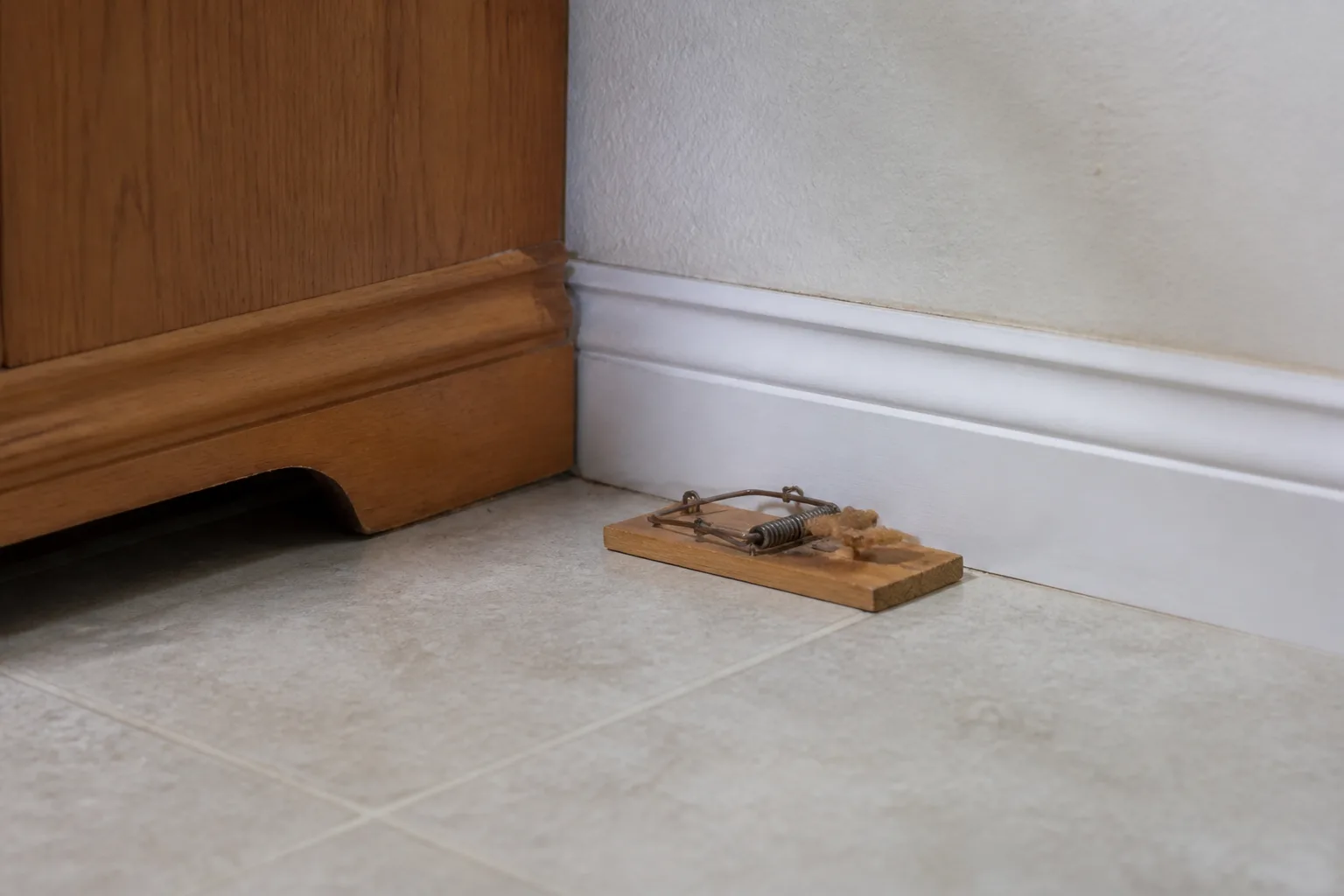
Place snap traps or enclosed traps along walls and near fresh evidence, with the trigger facing the travel route. Keep them inaccessible to children and pets, check them frequently, and follow local rules for wildlife. Avoid putting loose poison where a child, pet, or non-target animal could reach it; rodenticides can also leave a poisoned animal in an inaccessible wall or create secondary exposure for scavengers.
Stinging insects, termites, and wildlife
Do not seal a wasp, hornet, bee, bat, bird, raccoon, or other wildlife opening until you know whether the nest, young, or animal is still inside. A sealed animal can die in the void, force a new exit, or create a dangerous encounter. Termite shelter tubes, repeated winged insects emerging from wood, structural damage, or a nest in a wall should be assessed by a qualified professional rather than treated as a routine spider problem.
If a stinging insect nest is near a door or work area, keep people away and avoid blocking the entrance while insects are active. Identification matters: honey bees, native bees, wasps, and hornets may require different handling, and local wildlife or pesticide rules may apply.
Use traps and pesticides carefully
Monitoring traps are useful because they answer a question: Is activity still present, and where? They are not a substitute for exclusion or sanitation. Place a few monitors along likely travel paths, date them, and record what they catch; a single catch after a door repair is different from fresh catches every night beside the same wall.
For active mice, a correctly placed snap trap is often more informative than scattered bait. Use the pest’s travel route rather than the middle of an open floor, and keep traps protected from children and pets. If the garage is attached to the home, treat every trap or bait placement as part of the household’s safety plan, not as a garage-only decision.
Use pesticides only when identification, placement, and the label all match. The EPA’s rodenticide guidance and NPIC’s household IPM guidance support a targeted approach: read the label, use the smallest effective amount, keep products in original containers, and do not improvise mixtures. Never use mothballs as an open-air garage repellent; they are pesticide products intended for specific labeled uses, not general odor barriers.
Clean droppings, webs, and contaminated materials safely
Webs and dead insects can usually be removed during ordinary cleaning, but rodent waste needs a different protocol. The CDC cleanup guidance says not to sweep or vacuum dry droppings, urine, or nesting material because contaminated particles can become airborne.
For a small amount of rodent waste, ventilate the area first, put on rubber or plastic gloves, soak the waste with an appropriate disinfectant according to the product label, wait the label’s contact time, and wipe it up with paper towels. Bag the waste, wash the hard surface again, remove gloves carefully, and wash your hands. Do not mix bleach with other cleaners.
If a cardboard box, fabric item, or porous insulation is soaked with urine or nesting material, discard it rather than trying to save it indoors. Move potentially contaminated containers outside only if you can do so without spreading dust. Heavy accumulation, dead rodents, contaminated insulation, strong odors, or waste in an inaccessible void is a reason to stop and call a qualified cleanup or pest professional.
Track the result and know when to call a pro
Pest prevention is working when the evidence stops renewing. After you repair a gap and remove attractants, check the same perimeter weekly for a month: look for fresh droppings, new gnawing, new webs, ant trails, moisture, and monitor catches. If evidence continues in one location, assume the route or source is still active instead of adding more product.
Call a professional when you find rats, a growing mouse population, repeated activity after exclusion, damage to electrical wiring, pests inside walls or ceilings, a stinging nest in a hard-to-reach area, termites, wildlife, heavy droppings, or a situation that puts children, pets, or respiratory health at risk. Professional help is also sensible when you cannot safely identify the animal or reach the void without opening the building.
Before hiring, ask what the inspection will cover, whether the plan includes exclusion and follow-up monitoring, which products will be used, and what preparation is required. A treatment that only sprays visible surfaces may reduce activity briefly; a durable plan explains how it will address access, food, water, shelter, and the evidence that will show the problem is resolved.
Conclusion
The dependable way to keep bugs and other pests out of a garage is a maintenance loop: inspect the perimeter, identify the pest, remove food and water, seal accessible gaps with materials it cannot defeat, reduce clutter, monitor the result, and escalate when the evidence exceeds a safe DIY job.
Start with the garage door bottom seal and the wall penetrations, then move the pet food, birdseed, trash, and cardboard into secure storage. Those small repairs do more lasting work than a blind spray, and they give you a clear signal when the garage is becoming pest-resistant again.