How to Winterize Blueberry Plants for Spring
Learn how to winterize blueberry plants in the ground or containers with the right mulch, water, shelter, and late-winter pruning for spring.
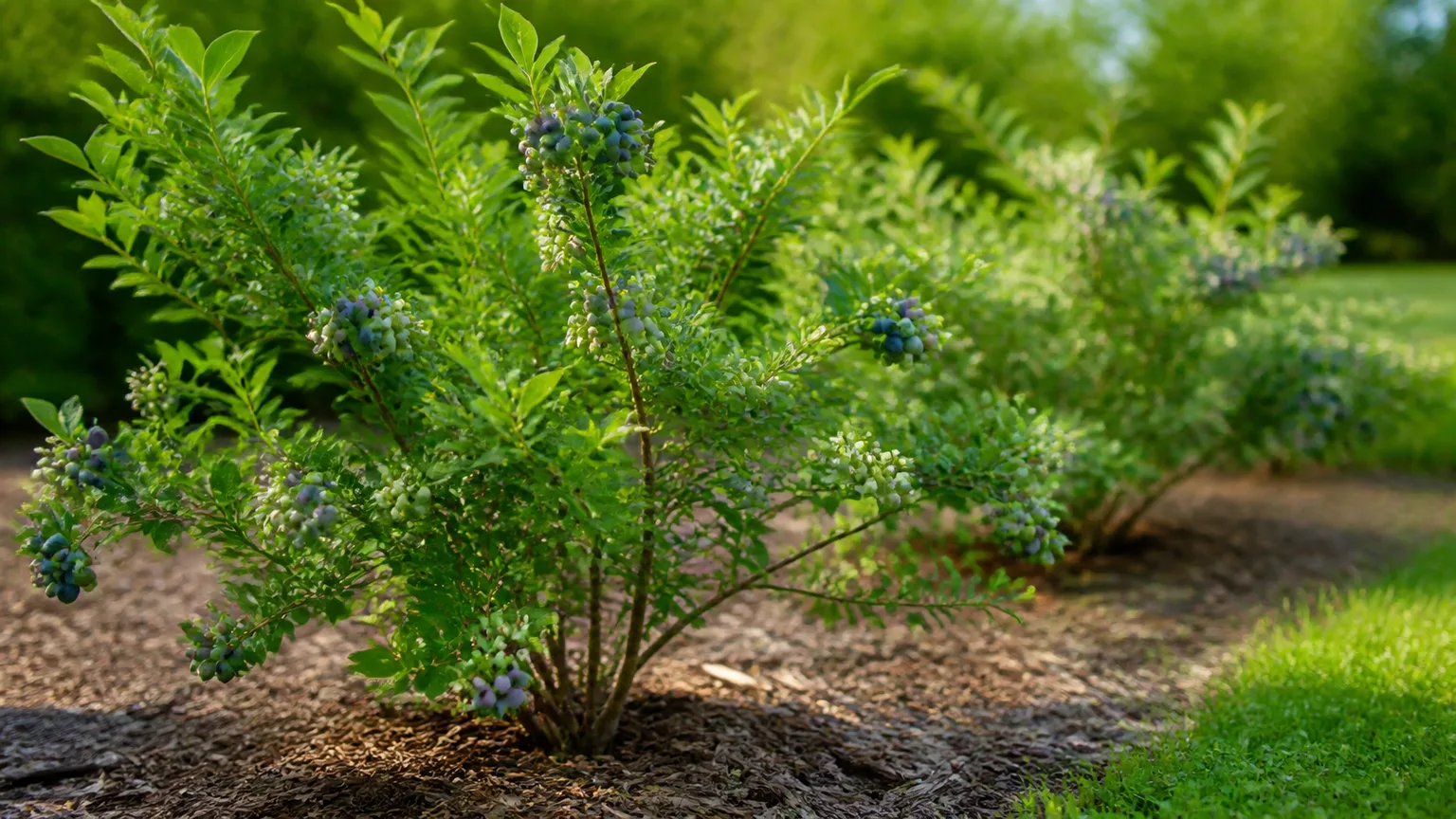
Winterizing blueberry plants is mostly about keeping their shallow roots insulated, their soil evenly moist but not waterlogged, and their fruit buds attached until spring. Many established bushes are naturally cold-hardy, so the best winter plan is often a careful layer of mulch and a late-winter inspection—not a wrapped, sealed shrub.
The right amount of protection depends on four things: the blueberry type, the plant’s age, whether it grows in the ground or a container, and how exposed the site is to wind, temperature swings, browsing animals, and heavy snow. Use this guide as a decision system, then make the final call from your cultivar label and local extension advice.
What winterizing blueberries actually protects
Blueberry winter care protects two vulnerable systems that need different treatment. The roots are shallow and can experience sharper temperature changes in a pot or a raised, exposed bed; the stems and fruit buds can be damaged by wind, animals, breakage, or a premature warm spell followed by a hard freeze.
Winter protection does not mean keeping a blueberry bush warm or actively growing. Dormancy and exposure to the normal cold of the plant’s climate are part of its seasonal cycle. Some varieties need substantial chill to open their flower buds, while a cultivar chosen for a warmer region may be injured by conditions a northern highbush handles easily. Rutgers NJAES describes cold hardiness and growth-zone fit as important variety-selection factors, and Savvy Gardening explains that chill requirements differ among blueberry types. (Rutgers NJAES) (Savvy Gardening)
That is why a mature in-ground bush in a sheltered site may need nothing more than a maintained root-zone mulch, while a young shrub, a southern cultivar in an unusually cold location, or a pot sitting above frozen ground may need extra insulation. Think of winterizing as reducing avoidable stress, not trying to defeat winter.
Check variety, age, and exposure before you act
Before spreading mulch or pulling out frost cloth, identify what kind of blueberry you have if possible. Northern highbush, southern highbush, rabbiteye, lowbush, and half-high types do not share the same climate range, and a plant’s printed hardiness information is more useful than a generic internet temperature cutoff.
Also note whether the bush is in an open field, beside a wall, on a windy slope, or in a low spot where cold air settles. Wind can dry dormant stems and strip snow from the root zone; a protected wall can reduce wind but may also create an early warm pocket that wakes buds sooner. The exposed side of a yard and the sheltered side of the same yard can call for different actions.
Match winter protection to blueberry type and climate
Highbush blueberries are broadly adapted to cold climates, but the exact cultivar matters. Lowbush types are associated with colder regions, while rabbiteye and southern highbush selections are better suited to warmer areas; Hunker’s growing guide summarizes those broad distinctions, and Rutgers provides a more detailed example of how zone and low winter temperatures shape cultivar choice. (Hunker) (Rutgers NJAES)
Use the following rule of thumb:
- Established, well-matched bush in the ground: maintain mulch, water during dry thaws, protect from animals, and inspect after severe weather.
- Young or recently transplanted bush: give the root zone extra attention and consider a temporary breathable cover only if the plant is exposed or the forecast is unusually severe.
- Container bush: treat the pot as the priority because its root ball is surrounded by air on all sides; move or insulate it even when an in-ground bush nearby needs no canopy cover.
- Cultivar at the edge of its recommended climate: use the label or local extension recommendations to decide whether wind protection, extra root insulation, or a temporary cover is warranted.
Young, established, and newly planted shrubs
Plants under roughly three years old have less woody structure and a smaller root system than mature bushes. They can also be more easily rocked by freeze-thaw cycles, especially if the planting hole was loose or the site drains poorly. A young plant does not automatically need to be wrapped, but it deserves a stable mulch layer, a protected root zone, and an inspection after wind or wet snow.
Newly planted fall blueberries are a special case. Late-fall planting can work in suitable climates, but the plant has had less time to establish roots before the ground freezes. Keep the soil settled and moist while it is workable, check that the crown has not heaved above grade, and avoid stimulating tender new growth with late fertilizer. If the plant is tiny and exposed, a simple stake or temporary windbreak may be more useful than a tight cover.
Your pre-freeze blueberry checklist
Complete the following work while the soil is still workable and before a sustained freeze. The order matters: clear the root zone, verify moisture and drainage, then mulch. Save structural pruning and routine fertilization for the dormant-season or spring window.
1. Test the soil, but save fertilizer for spring
Fall is a sensible time to take a soil sample because the results can guide your spring plan. Blueberries need acidic soil, often around pH 4.5 to 5.5 depending on the type and local recommendation, but do not add sulfur, fertilizer, or another amendment just because a leaf looks pale or because winter is coming. Use the test result and the product label; changing pH is a chemical process that does not become safer or faster when done impulsively in late autumn.
Late-season nitrogen is especially risky because it can encourage soft new growth that has not hardened before freezing weather. For established shrubs, the most useful winter action is to document the soil result and make a spring feeding plan. For a struggling plant, also investigate drainage, root damage, light, and pH rather than assuming more fertilizer is the answer.
The goal is to carry healthy roots into spring, not to force a final flush of leaves. A soil test from a local cooperative extension service can tell you whether the issue is acidity, nutrient availability, or something else; the LeafyPixels blueberry growing guide can help with the broader site and planting decisions.
2. Clean the root zone and inspect stems
Remove fallen fruit, mummified berries, weeds, and loose diseased debris from beneath the bush. This reduces hiding places for pests and prevents a thick layer of contaminated plant material from being sealed under new mulch. Do not strip away every leaf or disturb the roots while cleaning; rake lightly over the surface and remove what is clearly unwanted.
Walk around the plant and look for dead, broken, rubbing, or ground-hugging stems. You can remove an obviously broken branch if it is catching wind or creating a hazard, but postpone the main shaping job until the bush is fully dormant in late winter. Penn State Extension specifically warns that fall pruning can stimulate shoots that are then injured by winter cold. (Penn State Extension)
Check the crown and soil line after heavy rain or a freeze-thaw event. The crown should sit at the intended planting level, not in a bowl that holds water and not lifted above the soil by frost heaving. If the plant has shifted, correct the drainage or soil problem when conditions allow rather than piling wet material against the stem.
3. Water deeply while ground is workable
Blueberries should enter winter hydrated, but “water deeply” does not mean keeping the bed saturated. Give the root zone a slow, thorough watering if the soil is dry and still drains freely, then allow excess water to move away. A dry autumn, windy site, or container exposed to rain shadow needs more attention than a cool season with regular soaking rain.
Use a finger, narrow trowel, or soil probe to check beneath the surface mulch. If the soil is cool and slightly moist several inches down, wait. If it is dry, water around the full root zone rather than pouring against the crown. The Tennessee Department of Environment and Conservation notes that mulch can conserve moisture and moderate temperature, but that timing and material choice matter; mulch is not a substitute for a well-drained root zone. (Tennessee Department of Environment and Conservation)
Continue to check during long autumn or winter thaws when the ground is not frozen. Do not follow a weekly summer schedule through winter: evaporation, plant demand, rainfall, snow cover, and soil temperature all change. Skip irrigation when the soil is frozen, when rain has kept it saturated, or when water would collect around a container’s drainage holes.
4. Apply mulch without burying the crown
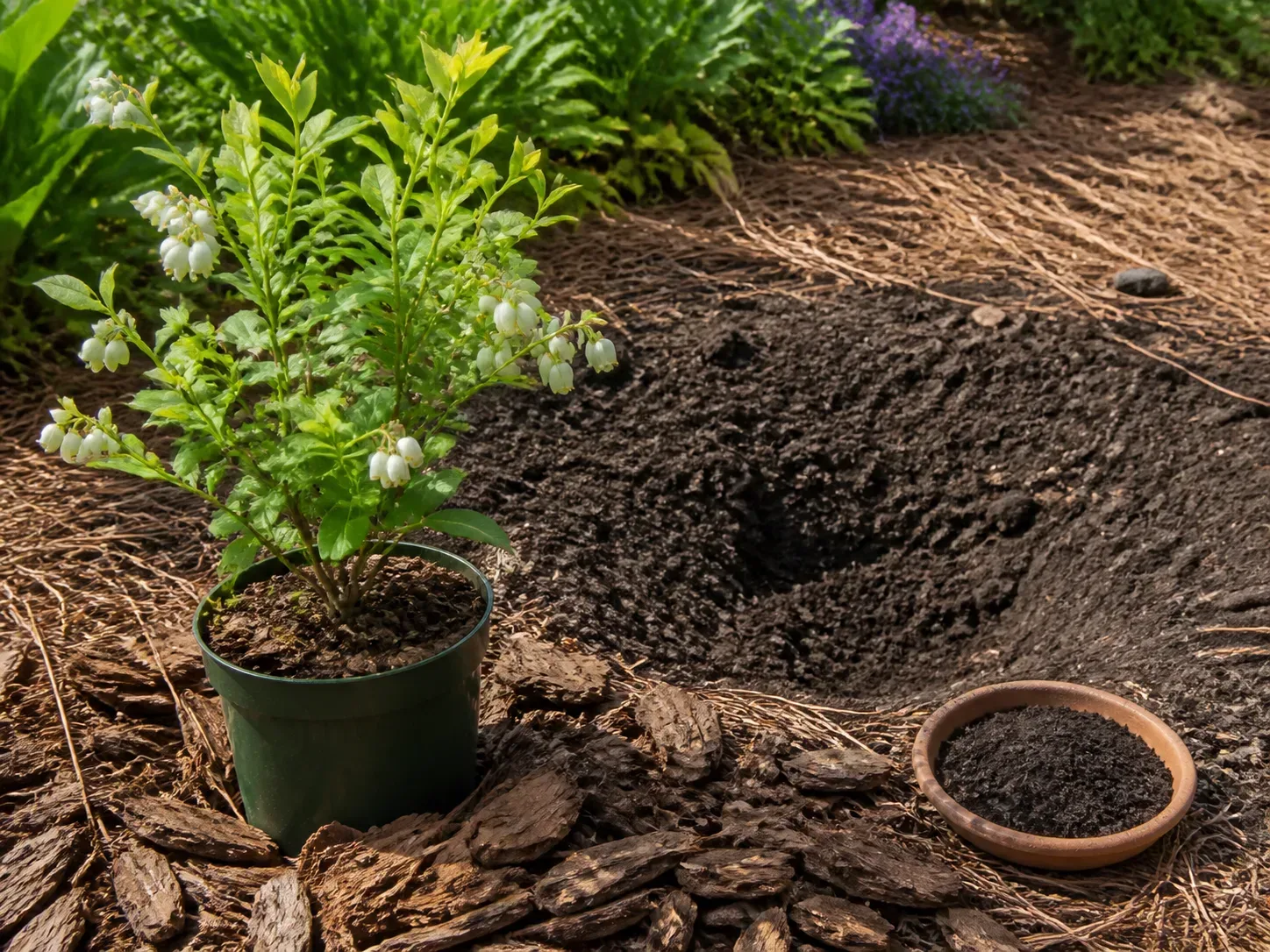
Maintain a 2- to 3-inch layer of organic mulch over the blueberry root zone. Pine bark, pine straw, and shredded leaves are useful options because they insulate the soil, slow moisture loss, and reduce temperature swings. Hunker describes a 2- to 4-inch mulch layer as useful for the shallow roots of blueberries, while USDA NRCS and state guidance explain the broader soil-protection and moisture benefits of mulch. (Hunker) (USDA NRCS)
Spread the mulch in a broad, shallow donut. Keep it a few inches away from the main stems and crown so the bark can breathe and rodents do not receive a sheltered tunnel directly against the plant. A deep mound touching the trunk can hold moisture against bark, hide chewing damage, and create the kind of wet, airless pocket that weakens roots instead of insulating them.
In a rodent-prone garden, timing matters. Tennessee guidance notes that applying mulch before the ground has frozen can attract animals seeking a warm winter shelter. If your site has that problem, maintain the normal layer through the season and add or refresh the winter layer after the ground has cooled or partially frozen, while still following local recommendations for your climate.
Do not use fresh, hot manure or a late nitrogen-rich amendment as winter mulch. Choose clean, stable organic material, and keep the mulch loose enough that water can pass through without forming a dense mat. In spring, pull back only what has compacted against the crown; there is no need to scrape all mulch away if the layer remains airy and at the correct depth.
Protect in-ground blueberries from wind, snow, and animals
Most established in-ground bushes do not need a full winter enclosure. The highest-value protection is often a physical barrier against browsing animals and a sensible windbreak that does not block light or trap damp air. Rabbits may chew low stems, while deer can browse twigs and remove buds that would otherwise flower in spring.
Use hardware cloth or sturdy mesh to make a cage around the plant, leaving enough space that the mesh does not rub against canes. Anchor it well enough to resist snow and wind, and extend the barrier close to the soil so rabbits cannot slip underneath. Avoid tying plastic or netting tightly around the branches; that can cause breakage and create a place for wet debris to collect.
Heavy, wet snow can bend or split canes even when the temperature itself is not dangerous. A nearby windbreak, correctly placed stakes for a young plant, and a cage that keeps animals from weakening stems are usually better long-term solutions than repeatedly binding the whole bush. After a storm, remove only loose snow that is weighing down branches, using a gentle upward motion; do not knock ice from frozen wood.
When a cover helps—and when it traps trouble
A breathable frost cloth, burlap screen, or similar cover can help a young, newly planted, or unusually exposed bush during a short hard-freeze event. It is most useful when the forecast is outside the plant’s normal range or when wind is likely to dry or break tender growth. A cover should be supported so it does not press on fruiting wood and should reach the ground only when you are intentionally holding some warmth around the plant.
Do not seal a blueberry bush in plastic. Plastic touching the canes can conduct cold, collect condensation, and overheat the plant when sun returns. Remove or vent temporary covers during milder daylight, and take them off once the event passes so the bush can follow its normal dormancy cycle. Little Sprouts Learning recommends temporary row covers or burlap for unusually cold conditions but also emphasizes removing them during warmer days; treat that as event protection, not a season-long wrapping plan. (Little Sprouts Learning)
The same logic applies to a snow blanket. Natural snow can insulate soil when it stays in place, but you cannot rely on snow cover in a windy or fluctuating climate. Protect the root zone with mulch first, then use a temporary cover only for a specific forecast risk.
Winterize blueberry plants in containers
Containers change the winter equation because cold air surrounds the root ball on all sides. A plant that is hardy in the ground can still suffer root injury in a small pot sitting on a deck, where wind strips away snow and the container freezes and thaws quickly. The canopy may look fine while the roots have experienced the greatest stress.
Container blueberries also dry out in a different pattern. The pot may be sheltered from rain by a roof, or the mix may remain wet because drainage holes are blocked. Winter care is therefore a balance: protect the pot from extreme temperature swings while preserving drainage and checking moisture during thaws.
Move the pot to the right sheltered location
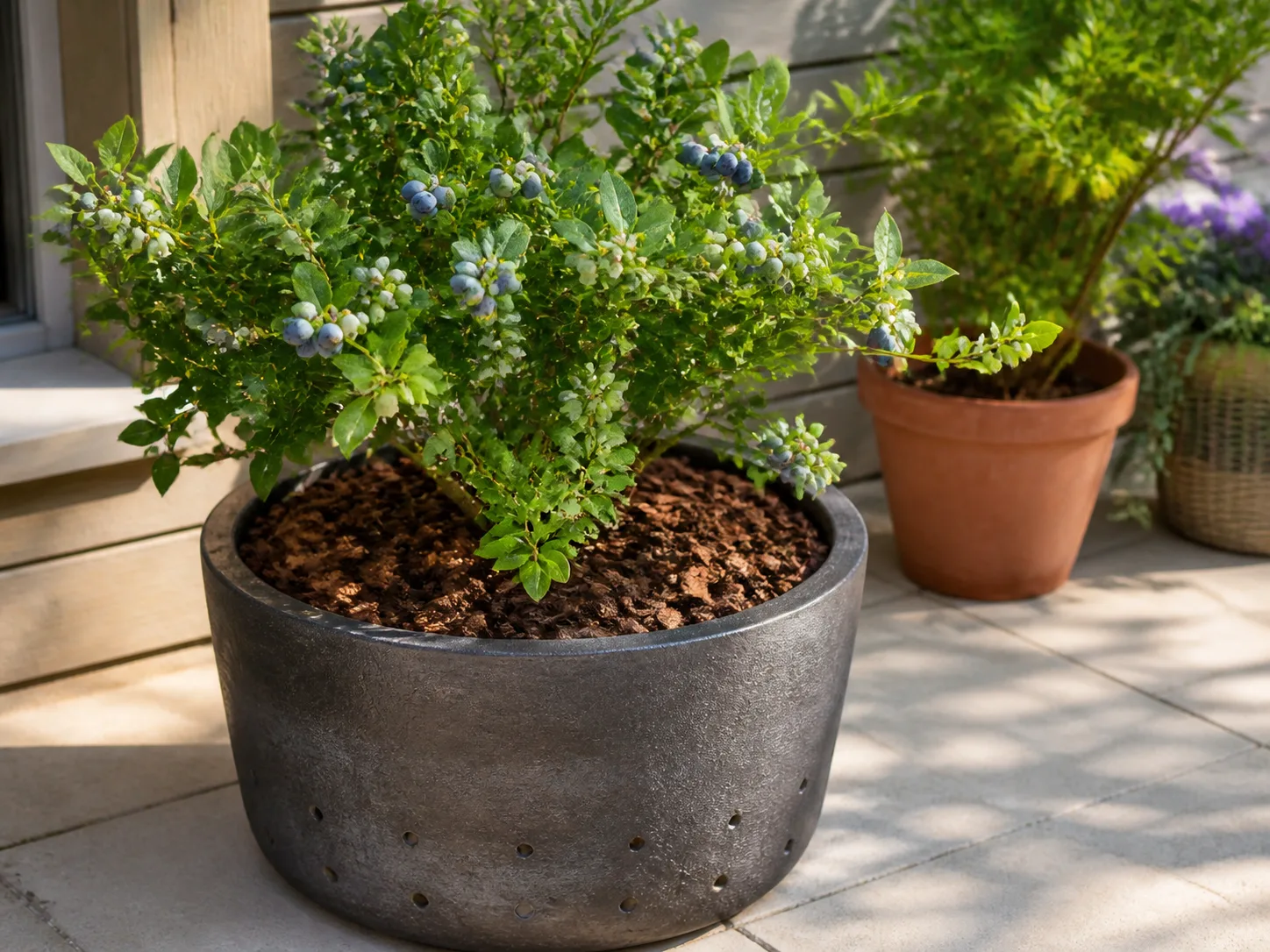
Move the container close to an unheated building, garage, shed, or windbreak when the forecast calls for severe exposure, but do not move a dormant blueberry into a warm living room. The goal is to reduce wind and rapid temperature swings while keeping the plant cold enough to remain dormant. A sheltered location with some winter light and good air movement is preferable to a heated, dark interior.
Set the pot on the ground if practical, rather than on an exposed stand or concrete ledge. Soil temperature changes more slowly than air temperature, and placing the container near the house can reduce wind. Keep it away from a roof edge where falling ice or a concentrated stream of meltwater can damage the plant or saturate the pot.
If you have several containers, grouping them together in a protected spot can reduce exposed surface area, but leave drainage holes open and do not pack the plants so tightly that rodents or wet leaves remain hidden. Little Sprouts Learning notes that moving a bucket to a protected porch or garage and insulating it with burlap can help; adapt the exact shelter to your winter climate and the cultivar’s dormancy needs. (Little Sprouts Learning)
Insulate the container, not the foliage
Wrap the outside of the pot with burlap, a frost blanket, or another breathable insulating material, or place the pot inside a larger container and fill the gap with loose leaves or straw. Keep the top of the soil open enough for watering and airflow, and keep the plant’s branches free unless a short, severe freeze justifies a separate supported cover.
Do not bury a container in a sealed plastic bag and do not place it inside a heated room simply because the leaves have dropped. Plastic can trap moisture and create a false warm-cold cycle, while indoor warmth can interrupt dormancy. A potting mix that freezes solid for a short period is not automatically a failure; the risk rises when a small root ball repeatedly freezes, thaws, dries, and freezes again.
Inspect the pot before winter. Make sure drainage holes are open, the container has no cracks that could split during freezing, and the mix is not pulled away from the sides. If the plant is root-bound, winter is not the time to repot unless the container is failing; protect the existing root ball and schedule corrective work for the appropriate growing season.
Water by the root ball, not by calendar
Water a container blueberry when the mix is beginning to dry and the pot can drain freely. During a mild winter, check every week or two; during a long freeze, wait until a thaw allows you to assess the mix. A small pot in sun or wind may dry sooner, while a large pot in a sheltered, cool location may remain moist for a long time.
Apply water slowly until the root ball is evenly damp and excess can escape. Empty any saucer so the pot does not sit in water that later freezes around the drainage holes. If the mix is frozen, do not pour water over it hoping to “insulate” the roots; wait for a suitable thaw and check whether the plant actually needs moisture.
The warning signs point in opposite directions. A light pot, dry mix several inches down, and limp stems during a thaw suggest the plant needs water. A heavy pot, sour-smelling mix, algae, or water that stays in the saucer suggests excess moisture or poor drainage. More water is not a remedy for roots that lack oxygen.
Prune blueberries in late winter, not fall
Save the main pruning session for late winter or early spring, when the bush is fully dormant and the worst winter weather has usually passed. This timing lets you see the structure clearly and remove canes broken by snow or cold without provoking a flush of tender growth before winter. Penn State, UConn, and University of Maine Extension all place routine blueberry pruning in the dormant-season window, with local timing adjusted to climate and access. (Penn State Extension) (UConn Extension) (University of Maine Cooperative Extension)
There is one useful distinction: removing a clearly dead, broken, or hazardous branch during fall cleanup is not the same as structurally thinning the bush. Avoid shearing, topping, or shaping the plant into a ball. Blueberries form flower buds on the previous season’s growth, and those buds can sit near the outer ends of stems; careless heading cuts can remove the crop you were trying to protect. Savvy Gardening specifically cautions against shearing blueberry shrubs for this reason. (Savvy Gardening)
The cuts that improve next season’s fruiting wood
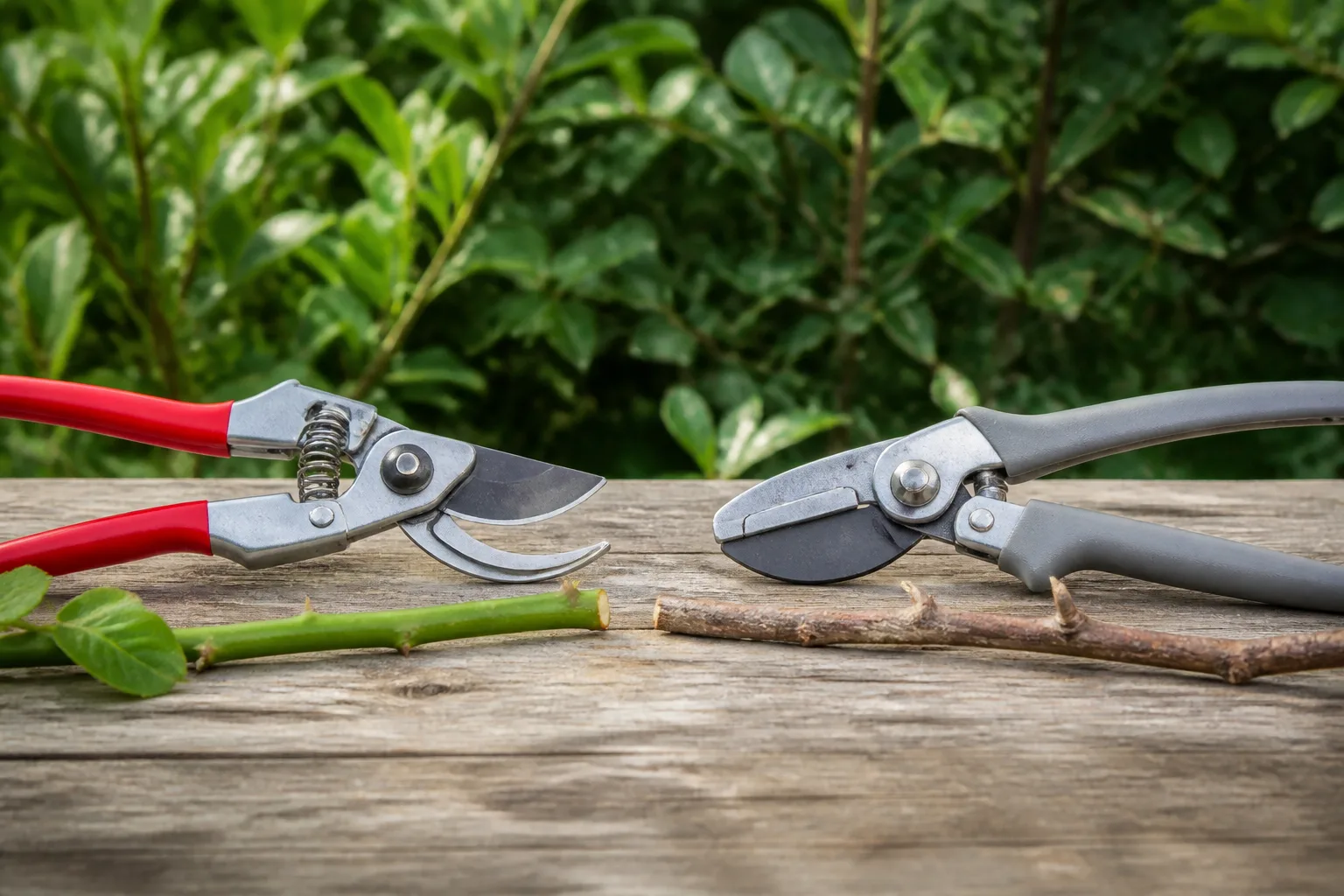
Start at the base and work upward. Use clean, sharp tools, and make thinning cuts that remove a weak or old cane completely rather than leaving a stub. A good dormant-season sequence is:
- Remove dead, broken, diseased, very weak, low-growing, or ground-touching canes.
- Remove crossing wood and crowded branches that rub or shade the center of the bush.
- On an established bush, remove the oldest, least productive canes—often those with thick, gray, peeling bark—back to the ground.
- Keep a balanced set of vigorous canes of different ages rather than leaving only the newest shoots or only the thickest old wood.
- Shorten a lateral only when it is weak, crossing, or carrying more fruit buds than the plant can support; do not clip every branch to the same height.
The exact ideal cane count varies with variety, age, vigor, and the gardener’s goal. University of Maine recommends a mature bush with healthy canes ranging from one to six years old and removing canes older than six; UConn’s newer guide describes a renewal pattern that keeps a spread of cane ages. The shared principle is more useful than a rigid number: maintain an open bush, renew old wood gradually, and leave enough productive one- and two-year growth for the coming crop. (University of Maine Cooperative Extension) (UConn Extension)
Young bushes need restraint. For plants younger than about three years, remove dead and damaged wood and weak, spindly growth, but do not perform an aggressive renewal cut just to make the shrub look tidy. If an established bush has been neglected for years, rejuvenate it over time by removing a portion of the oldest canes each dormant season; cutting everything at once may restore structure but can also sacrifice more than one year’s crop.
What to check after a hard freeze
Do not judge a blueberry bush by its appearance immediately after a freeze. Wait until the weather moderates and the plant reaches the late-winter inspection window. Bark that looks dark or limp can be injured, but a single cold night does not tell you how much of the cane will recover.
Check the soil first: is the mulch still in place, is the crown exposed, and is the root zone dry, frozen, or waterlogged? Then inspect for animal browse, split canes, snow breakage, and covers that have shifted onto the branches. Restore the barrier or mulch before making cosmetic cuts.
When pruning time arrives, cut damaged wood back to healthy tissue or to the base, depending on where the injury ends. Look for live, flexible tissue and new growth rather than relying on one scratch test or the color of a single twig. If a mature bush has widespread damage, remove only what is clearly dead and reassess as buds swell; a cautious sequence preserves more options than a dramatic early cut.
Finally, keep the spring handoff simple. Pull back compacted mulch from the crown, check that the soil drains, review the soil-test plan, and watch for swollen flower buds. The aim of winterizing is not a perfectly tidy winter garden—it is a living root system and a well-balanced set of fruiting wood ready to resume growth.
Conclusion
The best way to winterize blueberry plants is to protect the root zone first and add canopy protection only when the plant’s age, cultivar, exposure, or forecast justifies it. Before the ground freezes, clear debris, check soil moisture and drainage, maintain a 2- to 3-inch mulch layer away from the crown, block deer and rabbits, and skip late fertilizer and structural fall pruning.
For container blueberries, shelter and insulate the pot while keeping its drainage holes open and its root ball evenly moist during thaws. In late winter, prune while the bush is fully dormant: remove damaged and crossing wood, renew old canes, and preserve a balanced age range. That measured sequence gives blueberries the protection they need without trapping moisture, forcing tender growth, or cutting away next spring’s fruiting potential.



