How to Grow and Harvest Blueberries
Grow productive blueberry bushes by matching type to climate, preparing acidic soil, watering shallow roots, pruning at the right age, and picking ripe fruit.
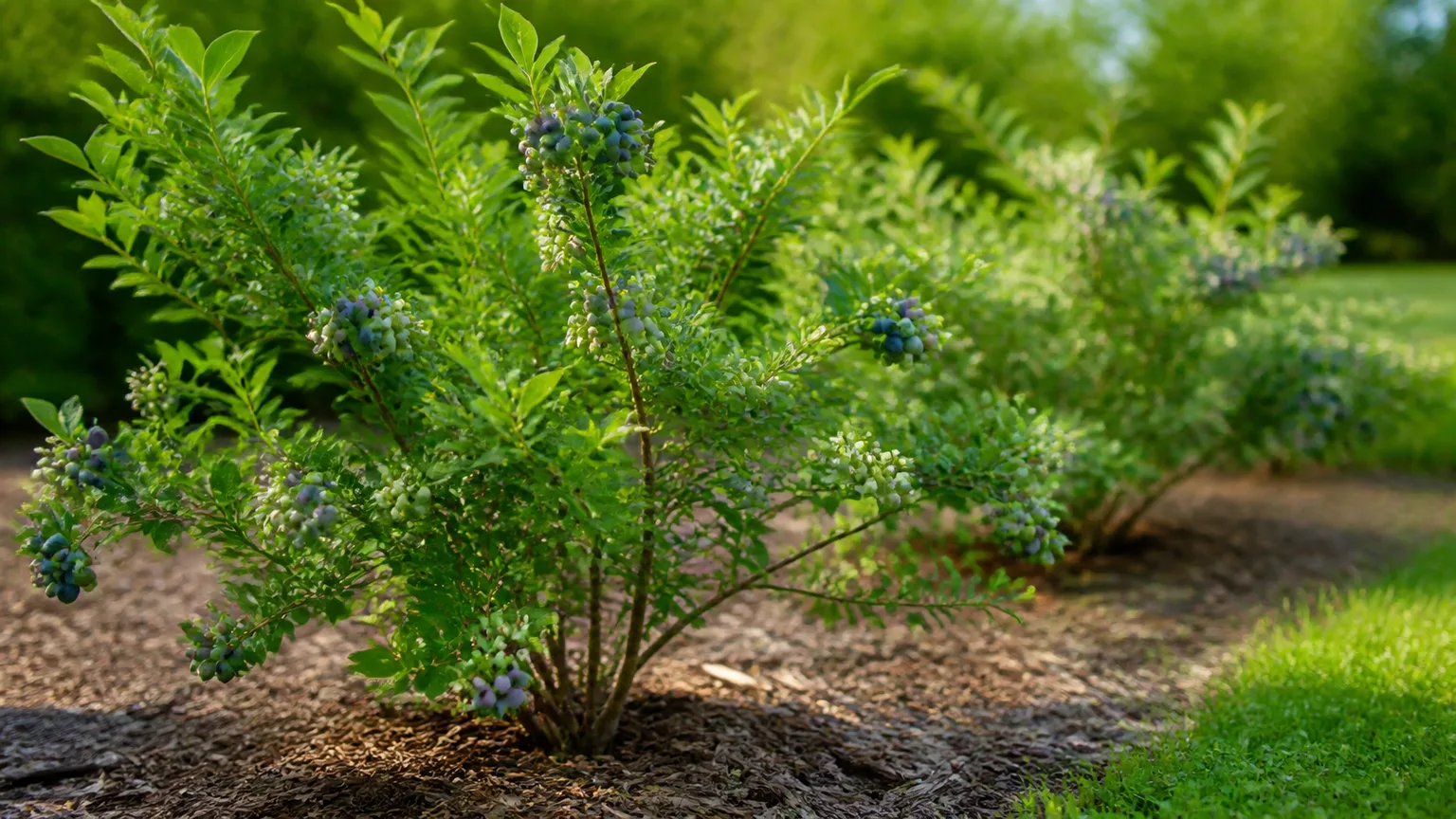
Blueberries are easy to grow only after you give them the conditions they actually use. The shrubs need full sun, sharply acidic soil, reliable moisture, and enough room for their shallow roots and mature canopy; if any one of those basics is wrong, fertilizer and pruning will not rescue the crop.
The payoff is a perennial shrub that earns its space twice. In spring, it carries bell-shaped white flowers; in summer, the fruit moves from green to purple-blue; and in fall, many types finish with bright red foliage. Use the guide below to choose a suitable type, prepare the site before planting, and wait for berries to become sweet rather than picking them as soon as they turn blue.
The blueberry growing formula: sun, acid, and moisture
Think of a blueberry bush as a specialist shrub rather than a general-purpose fruit plant. Most cultivated blueberries grow best with at least six to eight hours of direct sun, a well-drained root zone, and soil pH around 4.0 to 5.2. They also need steady moisture because their fine, shallow roots dry faster than a deep-rooted tree’s.
That combination is more important than a particular fertilizer brand or pruning trick. A sunny bed with neutral or alkaline soil may look ideal but still produce yellow foliage and weak growth, while a smaller container with the correct acidic mix can be more productive because its root environment is easier to control.
Choose a type that fits your climate and space
“Blueberry” covers several kinds of Vaccinium, and their size and climate range differ substantially. Read the plant label for the cultivar’s mature height, chilling or winter needs, pollination requirements, and fit for your region before buying; the common name alone is not enough.
Match highbush, lowbush, half-high, southern highbush, or rabbiteye to the site
Use this as a first-pass comparison, then follow the cultivar label for the final choice:
| Type | General habit and fit | What to consider |
|---|---|---|
| Highbush | A productive shrub often around 6 feet tall; common cultivars include ‘Bluecrop,’ ‘Blueray,’ ‘Jersey,’ and ‘Meader’ | Suits many colder garden regions, but the cultivar’s hardiness still matters |
| Southern highbush | Hybrids generally about 3–6 feet tall with a 4–5-foot spread | Useful for warmer gardens, but can be harder to grow and may not tolerate freezing conditions |
| Lowbush | A low, spreading plant about 1 foot tall | Suited to very cold climates; fruit is often treated as wild blueberry |
| Half-high | A compact highbush–lowbush hybrid, commonly 18–48 inches tall | A practical size for smaller spaces; fruit may be less sweet than highbush types |
| Rabbiteye | A vigorous southeastern shrub that can reach about 15 feet | Choose at least two compatible varieties for reliable pollination |
Wild and cultivated blueberries are not interchangeable in a garden plan. Cultivated bushes are generally selected for more dependable yield and broader heat or cold tolerance, while wild berries are usually smaller and can be sweeter. Huckleberries may look similar, but they are typically tarter and have more noticeable hard seeds, so confirm what you are buying before you design around its mature size.
One bush can fruit, but compatible partners improve the crop
Blueberries can self-pollinate, which means one suitable bush may produce fruit. Planting two or more varieties that bloom at the same time is a better plan when space allows because cross-pollination can increase both fruit size and yield.
Do not assume that any two blueberry plants are useful partners. Check that their bloom periods overlap and that both types suit the same winter and summer conditions. Rabbiteye blueberries have the strongest need for multiple compatible varieties; for other types, a second bush is still an improvement rather than an absolute requirement.
Prepare the planting site before you dig
Blueberries reward preparation more than improvisation. If the soil pH is wrong, trying to correct it after a shrub has filled the bed is slower and harder on the roots, so test the site before you order plants.
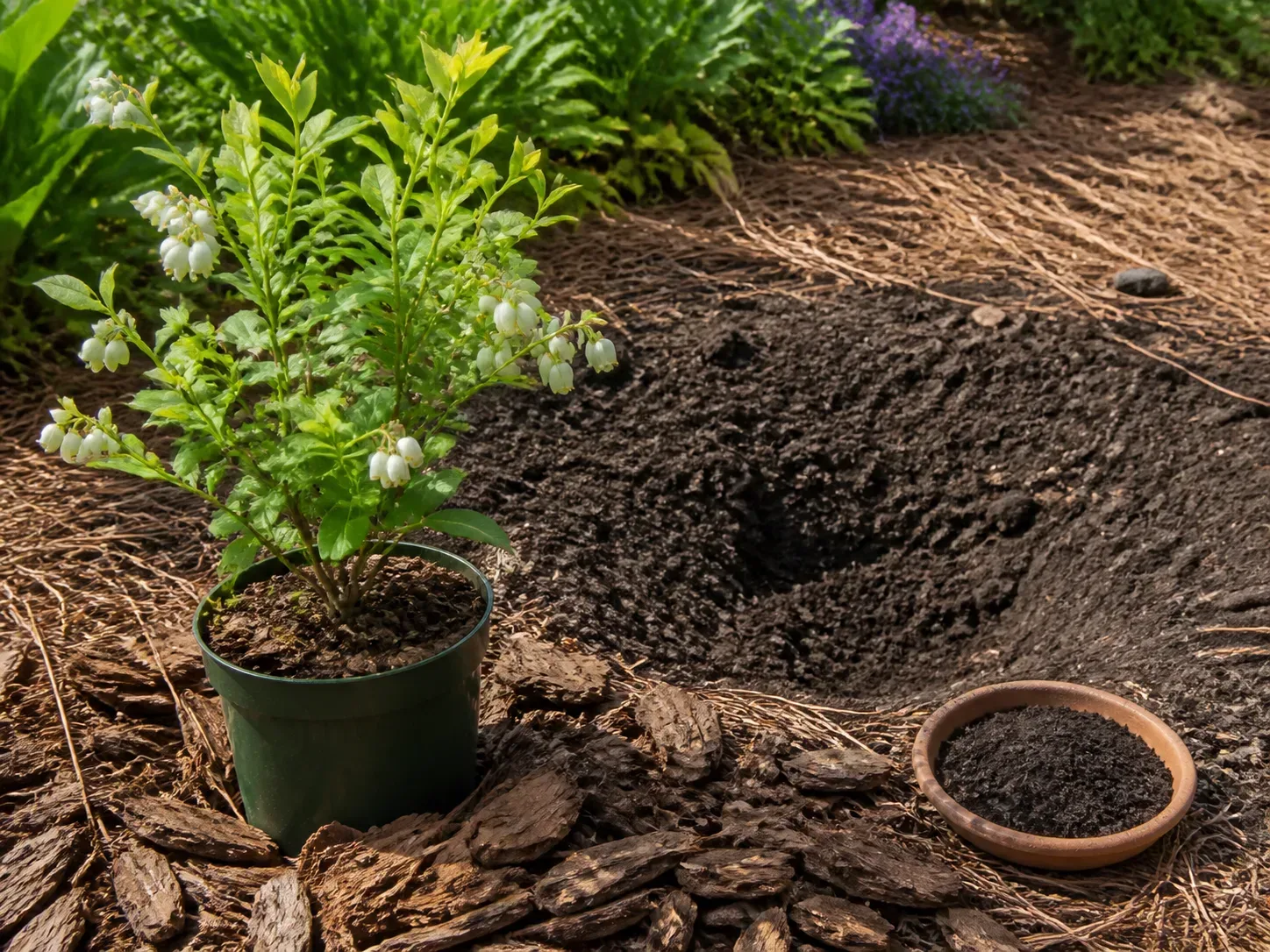
Check soil pH, drainage, and root competition
Choose a sunny site protected from strong drying winds and away from tall trees or shrubs. Nearby trees can steal light, moisture, and nutrients, while a low spot that stays wet can damage the fine roots even if the surface looks fertile.
Get a soil test rather than guessing from leaf color or the appearance of nearby plants. The planting guidance from Penn State Extension places blueberries in a very acidic range and is a useful reminder that pH is a design constraint, not a minor adjustment. If your soil is heavy clay or difficult to acidify evenly, a raised bed filled with a suitable acidic growing medium may be more predictable than a single amended hole.
Plan the amendment work in advance. The supplied growing guidance recommends preparing the soil a season before planting when possible; that gives amendments time to change the root zone and gives you a chance to retest before a perennial shrub is committed to the site. Do not pile a different soil only inside a narrow hole and leave an abrupt boundary around it, because water movement and future root growth will still be governed by the surrounding ground.
Plant blueberry bushes at the right depth and spacing
Early to mid spring is the general planting window. In warmer regions, late-fall planting can also work, but the plant should have time to settle before severe cold; if your local winter is unpredictable, spring is the more forgiving choice.
Two- to three-year-old bare-root bushes are a practical starting size. Older plants can suffer more transplant shock and still need time to make a large crop, so a bigger purchase does not automatically buy you a faster harvest.
Space bushes about 4 to 5 feet apart in a row, with 9 to 10 feet between adjacent rows. Use the label’s mature spread to refine those numbers, especially for vigorous rabbiteye types or when you need a picking path through the planting.
Set a bare-root bush so the roots spread naturally and the root ball sits no more than about one-half inch below the soil surface. Set a container-grown plant at the same depth it occupied in its nursery pot; burying the crown deeper is not a shortcut to stability. Water the planting area thoroughly, then add mulch without pressing it against the stems.
Blueberry bushes usually do not need staking or another support structure. If a young plant leans, correct the planting depth and firm the soil around the root zone before building a permanent support that the shrub does not need.
Keep shallow roots evenly moist
Aim for consistent moisture rather than a cycle of drought followed by flooding. Blueberries have shallow roots and need at least a couple of inches of water each week, with more during hot or dry spells; the exact amount depends on rain, soil, container size, wind, and plant age.
Water deeply enough to moisten the root zone, then check the soil before watering again. A thick mulch layer slows evaporation, but it does not replace irrigation. If the surface is damp while the soil below is dry, increase the depth or duration of watering; if water remains pooled, solve the drainage problem instead of watering more often.
Newly planted bushes need closer monitoring than established shrubs. Check them during the hottest part of the season and after windy weather, especially in containers or raised beds. A simple drip line or another consistent irrigation method can help if you have several plants, but inspect emitters so one blocked line does not quietly dry out a single bush.
Mulch and fertilize without overdoing it
Use organic mulch to moderate soil temperature, slow moisture loss, and reduce weeds around the shallow root system. Evergreen wood chips, sawdust, and pine needles are suitable mulch choices mentioned in the supplied guidance, but keep the material around—not packed against—the base of the shrub.
Weeds compete for the same limited moisture and nutrients, so remove them before they become established in the blueberry row. Avoid deep cultivation near the bushes; shallow roots can be damaged by tools even when the weeds look small.
Do not fertilize during the first year unless a soil or local growing recommendation gives you a specific reason. After the bushes have been established for a year, an acid-loving fertilizer can be applied around the opening of flower buds and again as berries begin to form. Products sold for blueberries or azaleas are examples of the right category; use the label rate rather than adding more in hopes of accelerating growth.
Organic options such as fish emulsion, compost, or manure tea are not automatically safer or better for a blueberry. Too much nitrogen can produce leafy growth at the expense of a balanced crop, and a compost or manure product may not suit a very acidic root zone. Fertilize the soil rather than treating foliage by default, and let a soil test and plant response guide the next decision.
Prune for renewal instead of neatness
Pruning is about keeping a rotation of productive wood, not making every branch the same length. Young bushes need their energy directed toward roots and framework, while established bushes need older, weaker canes removed so light can reach the middle and new fruiting wood can develop.
During the first two years, remove flowers if your priority is a stronger plant rather than an early handful of berries. You can leave flowers in the third year, although the crop may still be light. Routine pruning generally begins around the fourth year, while the bush is dormant in late winter or early spring.
Use a simple pruning sequence for established bushes
Work through the bush in this order:
- Remove dead, broken, diseased-looking, or badly damaged wood with clean, sharp pruners or a small saw.
- Cut out branches that cross, rub, or crowd the center so light and air can move through the canopy.
- Remove weak, thin shoots and any branch that is growing awkwardly into a path or neighboring plant.
- Identify the oldest gray canes and renew the shrub by cutting some back close to the ground, leaving younger reddish canes to carry the next crop.
- Step back before making more cuts; removing about one-third of an established bush is a useful upper guide, not a quota to reach blindly.
The safest time to make major cuts is while the plant is still dormant. If a bush is already stressed by drought, transplanting, or a serious disease, improve the growing conditions and identify the problem before removing large amounts of healthy wood.
Grow blueberries in containers when the ground is wrong
Containers can be the best solution when the garden soil is too alkaline, heavy, compacted, or poorly drained. They let you supply an acidic potting mix and move a small bush to a brighter or more sheltered position, but they also create a smaller and faster-changing root environment.
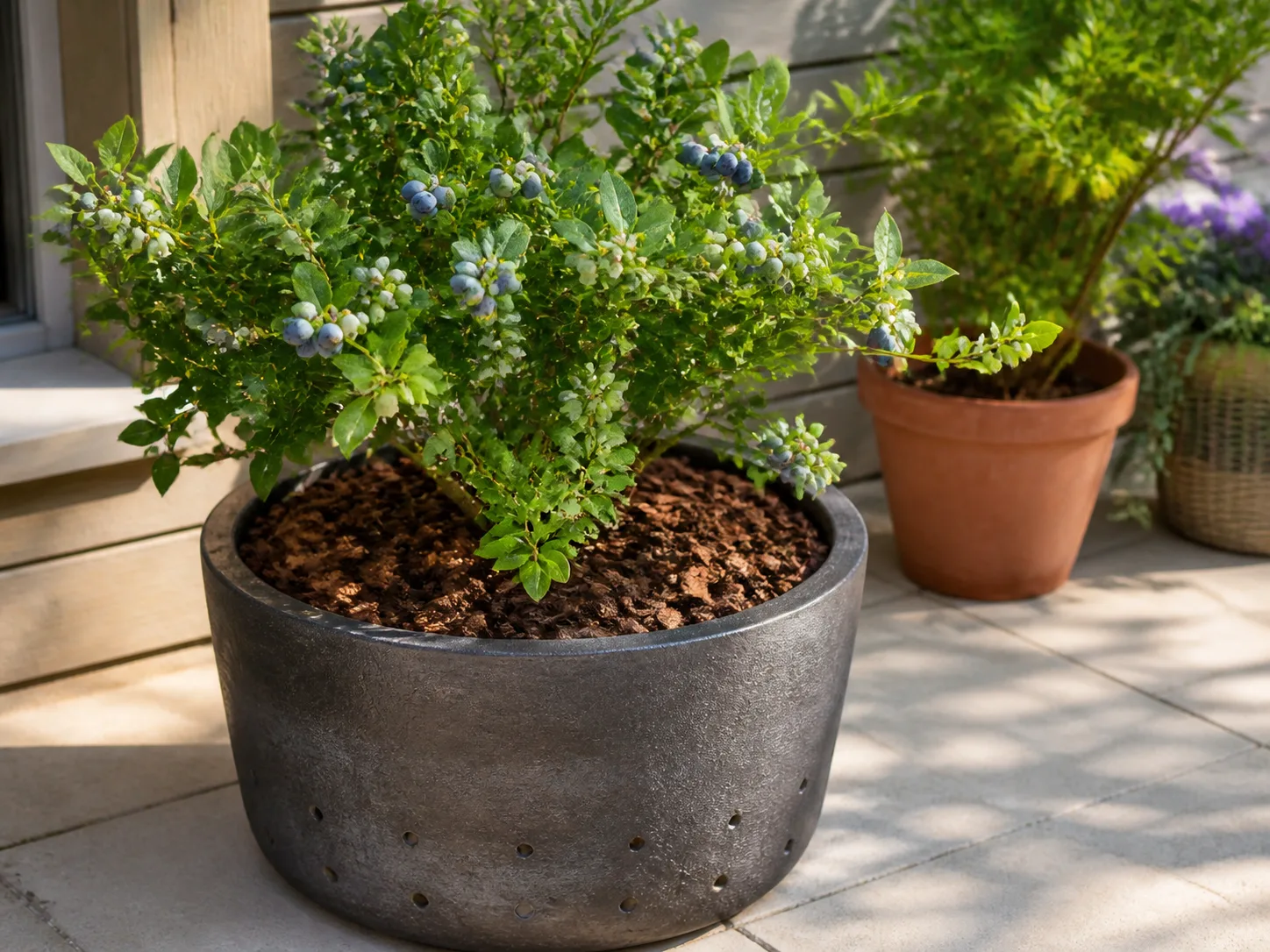
Choose a relatively compact variety and give it one container with ample drainage holes. A pot at least 18 inches deep provides a more useful root volume than a shallow decorative container, and an unglazed clay pot can release excess moisture through its sides. The container still must not be allowed to dry out simply because it drains well.
Use a mix made for acid-loving plants, then set the shrub at the same depth it had in the nursery pot. Keep the mix lightly moist but never soggy, and fertilize in spring with a product intended for acid-loving plants. Place the container where it receives the full sun the cultivar needs, while remembering that dark pots and exposed patios heat and dry more quickly than in-ground beds.
Repot and overwinter potted bushes carefully
Repot when roots emerge from the drainage holes or appear at the top of the container. Move up only enough to accommodate the root ball comfortably, refresh the potting mix, and keep the planting depth unchanged. A much larger pot filled with wet mix can hold more water than the roots can use, so bigger is helpful only when drainage and watering remain balanced.
Blueberries go dormant in winter and are generally hardy within the limits of their type and hardiness zone. Containers are more exposed to freezing air, wind, and rapid temperature changes, so cover a potted bush with a frost blanket during severe weather and place it where the pot is less exposed when practical. For plants in the ground, mulch before cold weather to make soil temperatures more consistent.
Follow the plant’s slow path to a full crop
Set expectations before the first summer. A blueberry bush may produce a modest harvest after roughly three growing seasons, but a meaningful full crop commonly takes about six years. Those years are not wasted: the bush is building a permanent root system and a framework of canes that will determine later harvests.
| Plant stage | Main job |
|---|---|
| Planting year | Establish roots; keep soil evenly moist; avoid routine fertilizer |
| Second year | Maintain sun, moisture, mulch, and weed control; remove flowers if stronger growth is the priority |
| Third year | Allow some flowering, while expecting a modest crop and continued framework growth |
| Fourth year onward | Begin dormant renewal pruning and refine feeding around flowering and fruit formation |
| Mature bush | Maintain a mix of younger and older productive wood, protect fruit, and harvest in several passes |
Harvest varies by type, weather, pollination, bird pressure, and care. A mature bush is sometimes described as producing around eight quarts, but treat that as a rough benchmark rather than a guarantee for every cultivar or garden.
Harvest by taste, not color alone
Blueberries are usually harvested between June and August, but the calendar shifts with climate and cultivar. Start checking when berries have turned fully purple-blue, then use release and flavor as the final tests.
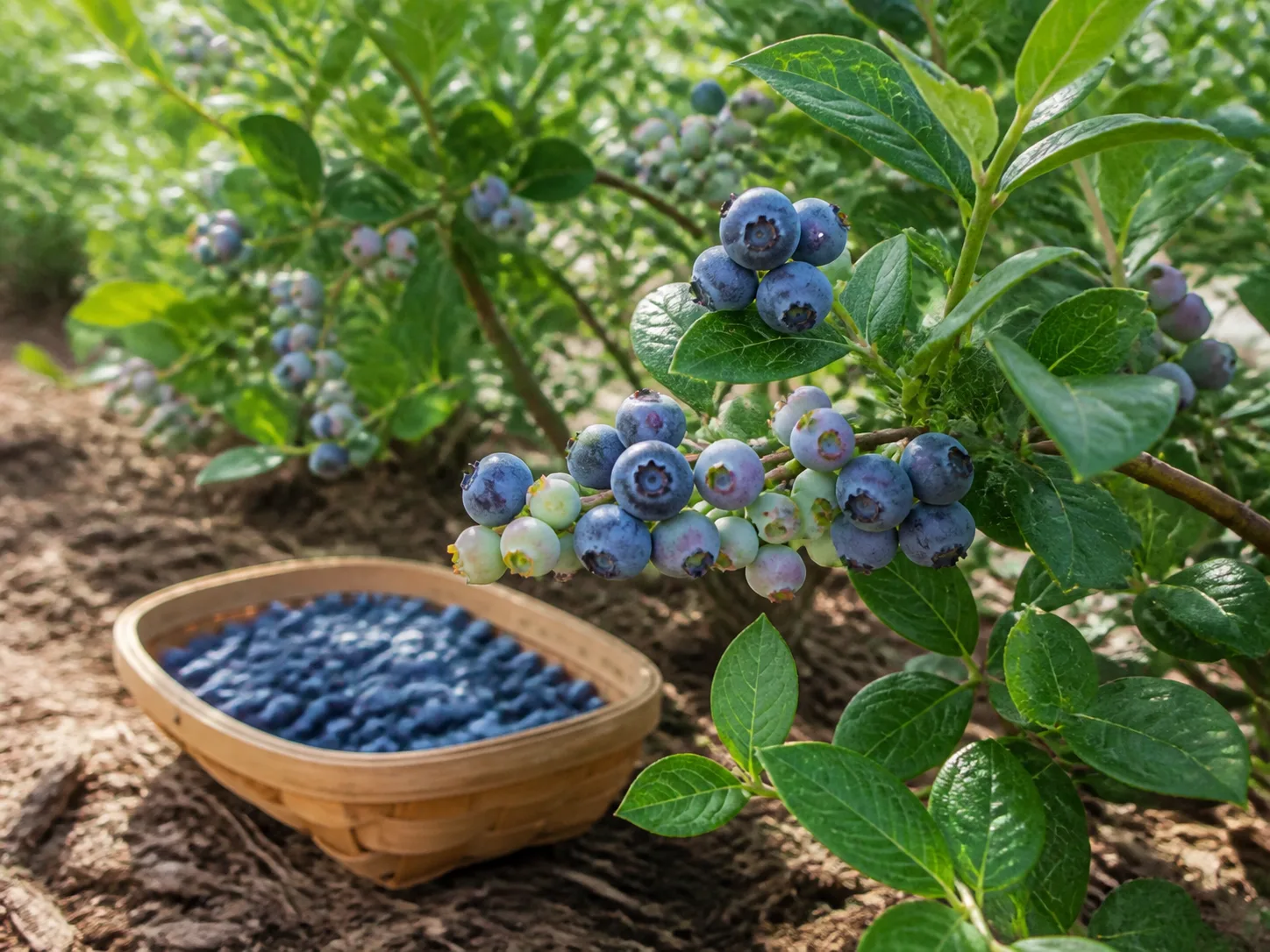
Ripe berries come off the stem readily with a gentle touch. Fruit can look blue before it reaches its sweetest flavor, so leave fully colored berries on the bush for about a week when weather and bird protection allow. Taste one from the cluster; if it is still sharp or bland, wait and check again rather than stripping the entire bush at the first color change.
Harvest with one hand supporting a cluster or container and the other hand rolling ripe fruit free. Do not tug hard on green or partly colored berries because you can damage the stems that will hold the next pick. Plan on several passes through the bush as different clusters reach their peak.
Refrigerate, wash, and freeze the berries
Refrigerate freshly picked blueberries as soon as possible and keep them unwashed until you are ready to use them. They generally keep for up to a week in the refrigerator when handled gently; wash only the portion you plan to eat so extra moisture does not speed spoilage.
For longer storage, freeze clean, dry berries in a single layer first if you want them to remain loose, then transfer them to a freezer container. The supplied guidance gives a freezer life of about six to twelve months. Label the container with the harvest date and use older berries first.
Troubleshoot yellow leaves, poor crops, birds, and disease
Start with the root zone before reaching for a spray. Yellowing leaves can indicate that the soil pH is too high and the plant cannot access iron, but drought, root damage, poor drainage, or general stress can also affect color. Test the soil pH, check moisture below the mulch, and inspect the roots and stems before adding fertilizer.
If flowers appear but fruit is sparse, check whether there is a second compatible bush nearby and whether the varieties bloom at the same time. Then check sun exposure, drought during flowering or fruit formation, and bird feeding. A healthy shrub in shade may grow leaves but still fruit poorly.
Birds are often the largest practical threat once berries begin coloring. Cover a small planting with bird netting installed so birds cannot become trapped, or use a suitable deterrent; a scarecrow alone is not a reliable long-term solution for every garden. Inspect the netting frequently and keep it tensioned away from the fruiting branches.
Scale, blueberry tip borer, cherry fruit worm, cranberry fruit worm, and plum curculio are among the insects that can affect blueberries. Fungal problems can include powdery mildew, rust, leaf spot, anthracnose, botrytis, canker, mummy berry, and twig blight. The visible symptom is not enough to choose a treatment, so identify the pest or disease and check with your local extension service for a product or control method appropriate to your crop and region.
Good prevention does more work than a late rescue. Give plants room for air circulation, provide full sun, remove fallen debris, keep weeds down, select resistant cultivars when available, and refresh mulch rather than allowing old diseased material to build up. Use only products labeled for edible plants and follow the label; an organic label does not make an application automatically harmless to pollinators or fruit.
Propagate from cuttings or seed and protect bushes over winter
Blueberries can be propagated from softwood or hardwood cuttings. Softwood is taken in early spring, while hardwood is taken in late winter before new growth begins. Choose a healthy branch, cut about five inches from its tip, remove all but the top two or three leaves, and apply rooting hormone to the cut end.
Set the cutting in a moistened soilless mix in a small container. Keep it in bright, indirect light in a warm, stable room, and maintain moisture without making the mix soggy. Rooting can take several months; new leaves and resistance when the cutting is gently tugged suggest roots have formed. For hardwood cuttings, wait until spring to transplant outdoors.
Growing from seed is possible but slower and more involved. Freeze the seeds for about 90 days to imitate a winter cooling period, separate them from mashed fruit, and sow them on moist sphagnum moss in a tray. Keep the tray around 60–70°F and consistently moist; seedlings may emerge in about a month, but they are not ready for the garden until the following spring after frost has passed and they are large enough to handle the move.
The most important protection is still the root zone. Mulch in-ground plants before cold weather, protect container plants from severe wind and freezing air, and avoid stimulating tender new growth with late feeding. When spring returns, wait until the plant is out of dormancy before making major pruning cuts, then resume the cycle of moisture, light, renewal wood, and careful harvest.
Conclusion
The most reliable way to grow and harvest blueberries is to solve the site before you solve the shrub. Choose a type that matches your climate and available space, test and prepare acidic soil, plant shallowly with room for the mature canopy, and keep moisture steady while the roots establish.
After that, patience becomes part of the care plan. Multiple compatible bushes can improve the crop, dormant pruning keeps old wood from taking over, and berries are sweetest when they release easily and pass a taste test—not merely when they first turn blue.



