How to Grow and Care for Boston Fern
Boston fern care made practical: placement, soil, watering, humidity, repotting, division, pests, and a first-action fix when tips turn brown.
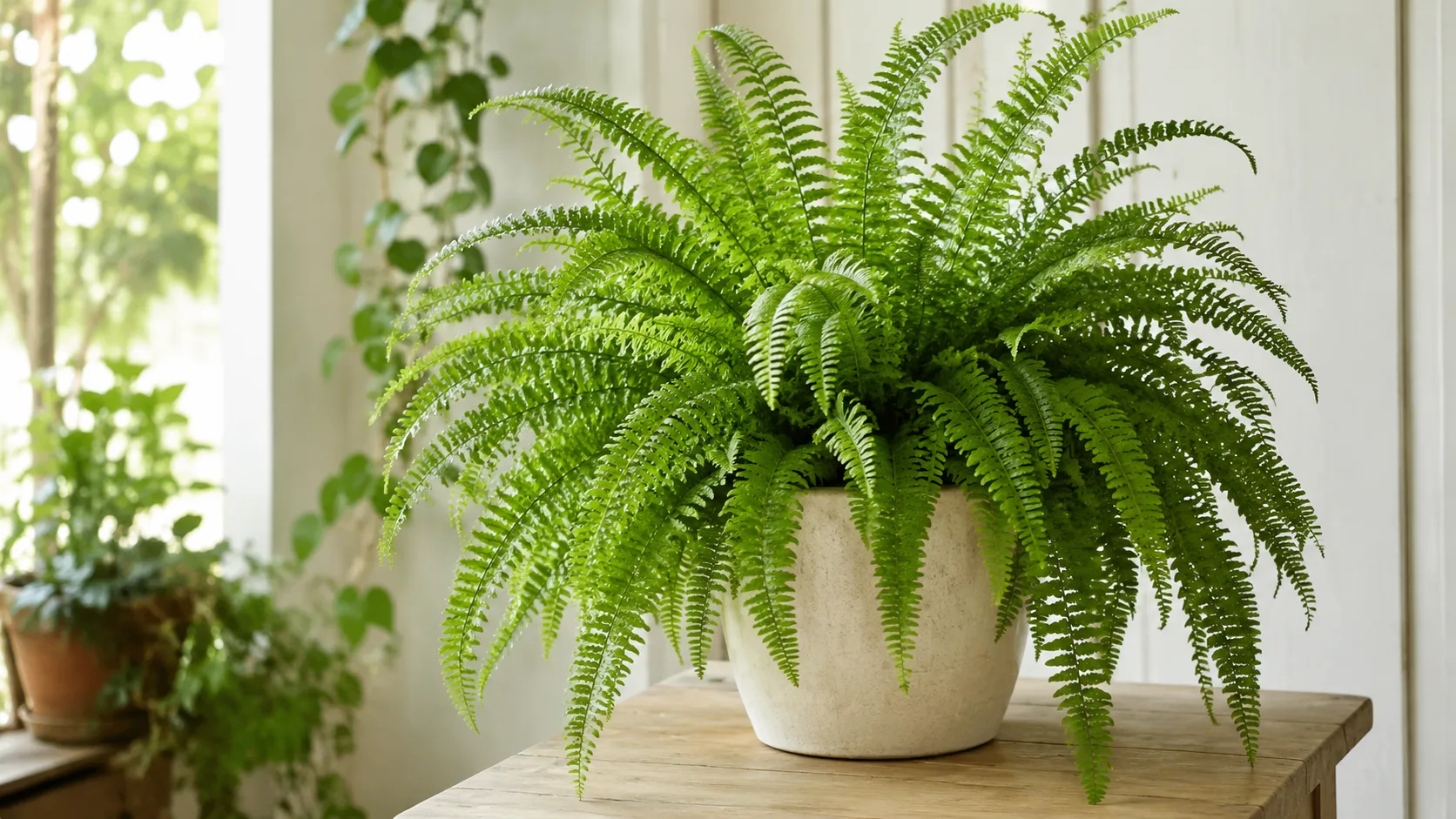
Boston fern (Nephrolepis exaltata) is the classic porch-and-parlor fern: arching blue-green fronds that soften a room without demanding floral color. It is also one of the houseplants most likely to arrive lush from a humid greenhouse and look miserable six weeks later in a dry living room. That crash is rarely mysterious. Boston fern wants bright indirect light, evenly moist but aerated soil, and humidity well above typical heated indoor air — and it punishes the gap between those needs and your home with brown pinnae tips, shedding fronds, and a basket that feels simultaneously too wet and too dry.
This guide covers what you are growing, whether your space can support it, and the placement, watering, humidity, soil, feeding, repotting, outdoor use, overwintering, and propagation steps that keep Nephrolepis exaltata full. When something goes wrong, you get a troubleshooting order — not a vague loop of “water more” and “mist daily.”
For species-specific schedules after you stabilize the basics, the Boston fern plant hub breaks care into light, watering, soil, fertilizer, repotting, propagation, and problem fixes.
Boston Fern Quick Reference
Use this table as a checkpoint before you change three variables at once. Ferns do not forgive stacked mistakes.
| Factor | Indoor target | First sign you missed it |
|---|---|---|
| Light | Bright indirect; gentle morning sun OK on porch | Bleached or scorched fronds = too much sun; sparse pale fronds = too dim |
| Water | Evenly moist mix; never bone dry, never soggy | Light dry pot + crisp tips = underwatering; heavy wet pot + limp yellow fronds = overwatering |
| Humidity | 50–70% near foliage; higher is better | Crispy pinnae edges with “correct” watering = dry air |
| Soil | Peaty, well-drained, moisture-retentive | Sour smell, black crown = rot from poor drainage |
| Temperature | Roughly 60–75°F; avoid cold drafts | Below ~50°F damages fronds; hot dry vents crisp tips |
| Fertilizer | Dilute feed spring–summer if growth is active; skip in winter | Tip burn after heavy nitrogen |
| Pets | True Nephrolepis listed non-toxic by ASPCA | Do not confuse with toxic asparagus “fern” |
| Outdoor zones | USDA 9–11 for year-round planting | Invasive risk in parts of Florida — check local guidance |
What You Are Actually Growing
Boston Fern vs. Sword Fern and Lookalikes
Boston fern and sword fern are common names for the same species: Nephrolepis exaltata. The “Boston” label stuck after a fuller, droopier cultivar — ‘Bostoniensis’ — dominated nursery trade in the late 1800s. What you buy today is almost always a Nephrolepis exaltata cultivar, not a separate species.
Do not assume every plant labeled “fern” behaves the same. Asparagus fern (Asparagus setaceus and relatives) is not a true fern, needs sharper drainage, and is toxic to pets — unlike Boston fern. Lemon button fern is Nephrolepis cordifolia ‘Duffii’, a smaller cousin that tolerates slightly drier air. Kimberly queen fern (Nephrolepis obliterata) is a different species with more upright fronds and somewhat easier outdoor performance in warm zones. If you are comparing ferns for a humid bathroom, see the broader indoor fern care guide and types of fern roundup for lookalikes.
The ‘Bostoniensis’ Story and Why Cultivars Matter
The classic parlor fern form — broad, arching fronds up to about 3 feet — is ‘Bostoniensis’. Missouri Botanical Garden notes that this cultivar earned Boston fern its reputation as an easy indoor fern decades ago. Modern shelves carry dozens of selections, and the choice matters for dry homes:
- ‘Dallas’ / ‘Dallas Jewel’ — smaller, faster-growing, more tolerant of lower light and less humidity than standard Boston types (NC State Extension).
- ‘Compacta’ — shorter, upright habit; good when ceiling height is tight.
- ‘Fluffy Duffy’ and ‘Fluffy Ruffles’ — dense, fine texture; excellent in hanging baskets but still humidity-hungry.
- ‘Golden Boston’ and ‘Rita’s Gold’ — chartreuse foliage; same care, slightly more sun-sensitive.
- ‘Tiger Stripe’ — gold-variegated; needs bright indirect light to keep color without scorch.
If your first Boston fern failed in a heated apartment, try ‘Dallas’ before you conclude you cannot grow ferns.
Is a Boston Fern Right for Your Home?
Indoor Suitability Checklist
Boston fern is moderately easy — not beginner-proof like a pothos, but absolutely learnable if you can supply humidity and check soil moisture regularly. You are a good match if you have:
- An east-facing window, bright north exposure, or a spot a few feet back from south/west glass
- Room for a small humidifier or a steamy bathroom with good light
- Willingness to lift the pot or probe the top inch of soil instead of watering on autopilot
You will struggle if the only available spot is a dark corner above a heat register with 25% winter humidity and a glazed pot with no drainage. That is not a moral failure — it is a climate mismatch.
Outdoor and Porch Use by Climate
Outdoors, Boston fern is winter-hardy in USDA Zones 9–11 (some references say 10–12) in moist, humusy, part-shade soil (Missouri Botanical Garden). In cooler zones, treat it as a summer shade annual on covered porches, under trees, or in shaded patio beds. Bring pots indoors before frost.
Important caution: NC State Extension flags invasive tendencies in warm climates, especially Florida. Do not plant wildings where they can escape into natural areas. Check local extension guidance before landscape mass plantings.
Light: Bright Indirect, Never Hot Direct Sun
Best Indoor Placement
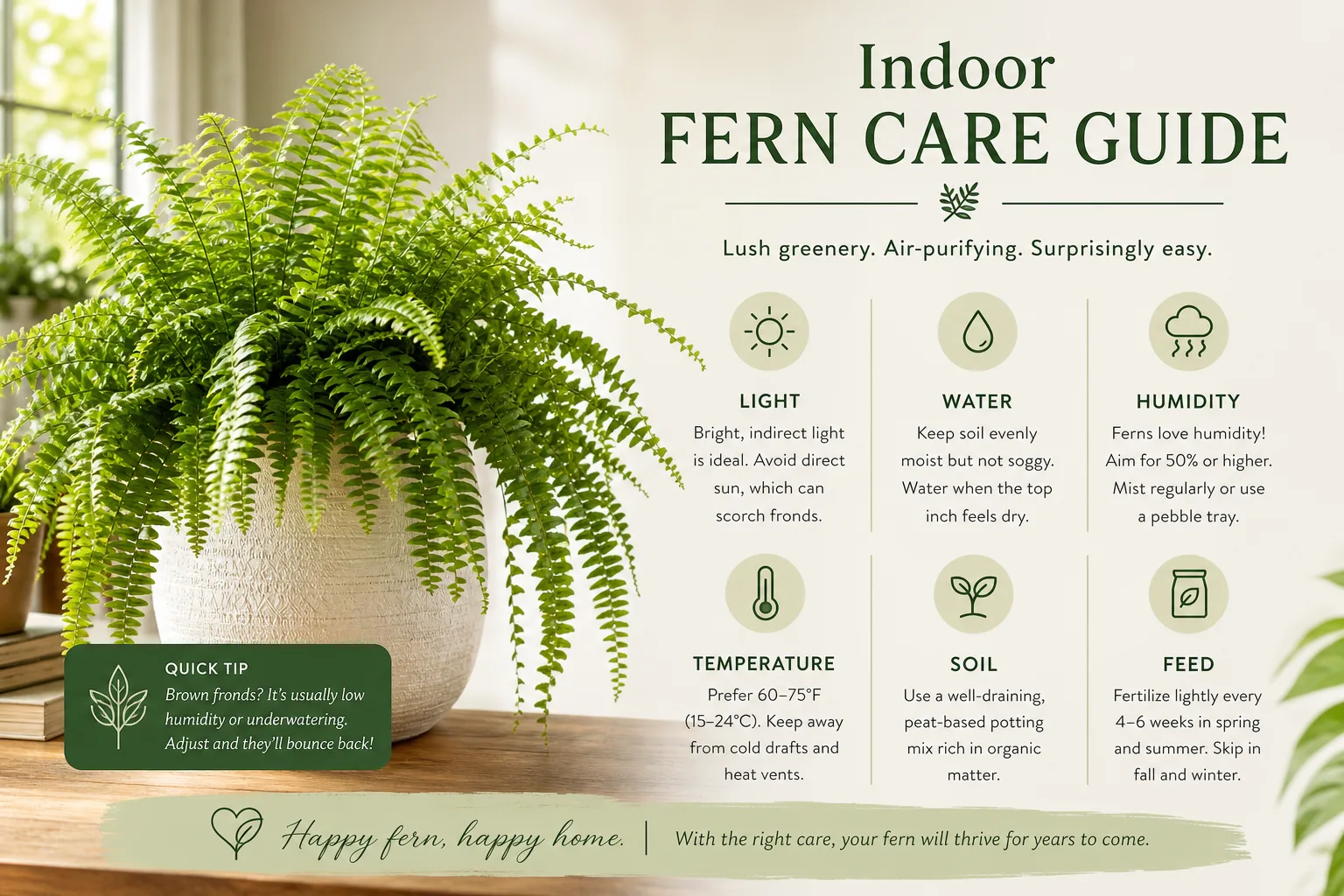
Boston fern grows best in bright, indirect light with no direct hot sun on the fronds (NC State Extension). University of Minnesota Extension places tropical ferns in medium light — typically an east window or several feet from a brighter south- or west-facing window.
Too little light produces pale, sparse fronds with long weak rachises. Too much direct sun scorches pinnae, especially through south- or west-facing glass in afternoon. If fronds bleach on the window side only, move the plant back or add a sheer curtain.
Outdoor and Covered-Porch Light
On porches, filtered morning sun with afternoon shade is ideal. Hanging baskets under open pergolas often perform beautifully in summer because humidity is higher outdoors. When you move a porch fern indoors in fall, expect transition shedding unless you simultaneously raise humidity — the plant is reacting to dry furnace air, not necessarily root failure.
Watering: Even Moisture Without Soggy Roots
How to Know When to Water
Boston fern needs soil that stays consistently moist during active growth but still drains freely. Missouri Botanical Garden is explicit: soils should stay moist, with only a slight reduction from fall to late winter. The species will shed fronds if soil dries out — and may need fronds cut back to about 2 inches to regenerate.
Do not water on a fixed weekly schedule. Instead:
- Probe the top inch of mix with your finger. Water when it begins to feel barely dry, not when a calendar says so.
- Lift hanging baskets. A light pot means the root ball has dried more than surface peat suggests.
- Water thoroughly until a little drains from the holes, then empty the saucer or cachepot within 30 minutes.
Fronds drooping in dry soil recover after a soak. Fronds drooping in heavy wet soil signal trouble — often root stress from overwatering, especially in winter when growth slows.
Use room-temperature water. Very cold tap water can shock fine roots in a small pot.
Winter Watering Reduction
In late fall through winter, when light is weaker and growth slows, stretch the interval between waterings while still preventing the root ball from going bone dry. The classic winter mistake is keeping summer frequency in a cool, dim room — that invites root rot. If the pot stays heavy for two weeks and outer fronds yellow while the crown feels firm, cut back water and verify drainage holes are open.
Humidity: The Factor Most Homes Get Wrong
Boston fern evolved in humid tropical forests. NC State Extension recommends high humidity — place plants near kitchens and bathrooms or set pots on trays of wet pebbles. Winter heating often drops indoor relative humidity to 25–35%, far below what keeps pinnae supple.
Humidifier vs. Pebble Tray vs. Misting
Use this priority order:
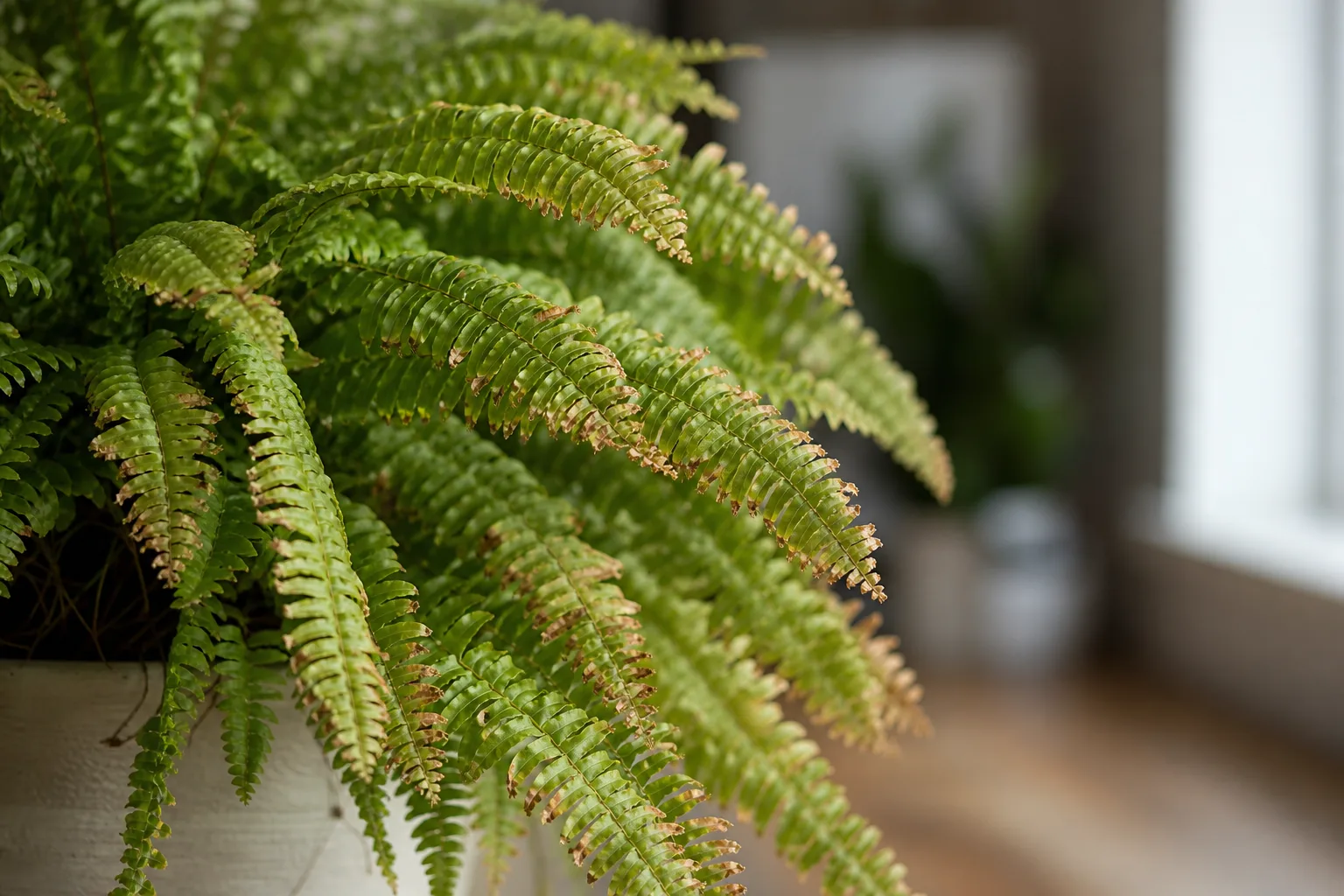
- Cool-mist humidifier near the plant (target 50–70% RH at foliage height). This is the most reliable fix for chronic brown tips in heated rooms.
- Pebble tray under the pot — stones keep the pot above standing water; evaporation raises local humidity modestly. Helpful as a supplement, not a full solution in dry winters.
- Grouping plants to create a slightly more humid microclimate.
- Misting — raises humidity for minutes, not hours. Light misting is fine if fronds dry within a few hours; do not soak foliage nightly in a cold room.
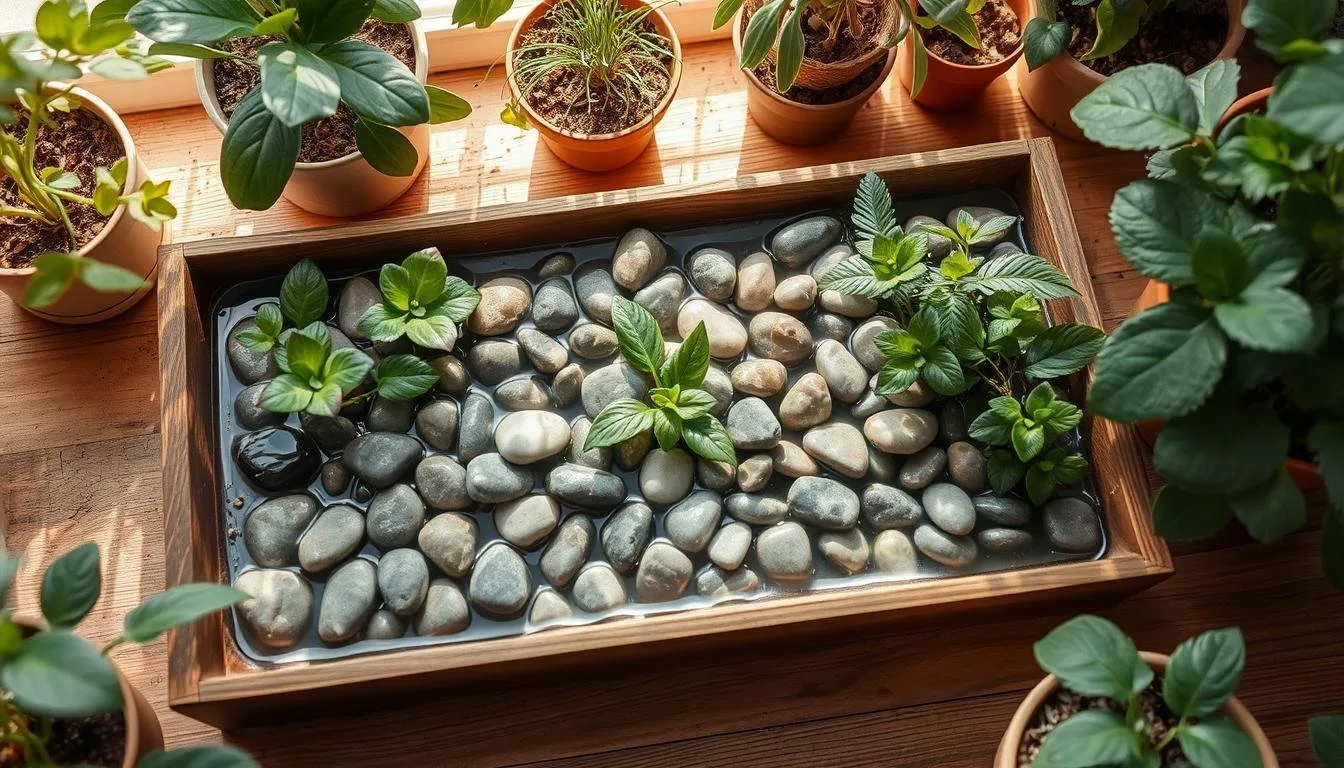
Bathrooms with bright enough light can be excellent Boston fern homes because shower steam supplies real humidity. A dark bathroom with a tiny frosted window is not — humidity without light still produces weak, etiolated growth.
For deeper humidity troubleshooting, see brown tips on houseplants and the Boston fern low humidity problem page.
Soil, Pots, and Drainage
Best Potting Mix Recipe
Use a peat- or coco-based potting mix with perlite or coarse bark for drainage — the same moisture-retentive but aerated blend most tropical ferns prefer. Missouri Botanical Garden recommends a peaty, soil-based mix for indoor culture. Outdoors, work compost and leaf mold into shaded beds with good drainage.
Avoid heavy garden soil in pots. It compacts, suffocates fine fern roots, and stays wet too long in the center of the root ball.
Hanging Baskets, Cachepots, and Drainage Traps
Boston fern shows off beautifully in hanging baskets and wide shallow pots because arching fronds need room to cascade. Plastic and glazed pots lose moisture more slowly than unglazed terra-cotta — helpful in dry air, risky if you overwater.
Never let a pot sit in drained water. Cachepots and foil-wrapped gift ferns are the fastest route to root rot. If you use a decorative outer pot, lift the inner nursery pot to water, drain fully, then replace.
For soil specifics, the Boston fern soil guide covers mix ratios and repot timing.
Temperature and Airflow
Boston fern prefers warm, stable temperatures, roughly 60–75°F (NC State Extension). Prolonged exposure below about 50°F slows growth and damages fronds. Heat above 95°F combined with dry air causes rapid desiccation outdoors.
Keep plants away from cold drafts, air-conditioning vents, and heating registers. Forced hot air in winter is often what crisps pinnae tips while the soil still feels moist — the plant loses water through thousands of thin leaflets faster than roots can replace it.
Fertilizer: Light Feed in Active Growth Only
Boston fern is not a heavy feeder. Missouri Botanical Garden suggests weak monthly applications from spring to early fall. Indoors, use a balanced liquid houseplant fertilizer diluted to half strength once a month during active growth — only if the plant is healthy, humid, and putting out new croziers.
Skip fertilizer in late fall and winter, and never feed a fern struggling with root rot, severe dryness, or recent repot shock. Salt buildup on pot rims can brown pinnae tips; flush the soil with plain water occasionally if you see white crust.
Outdoor plantings benefit from a thin layer of compost and mulch annually instead of frequent synthetic feeding.
Popular Boston Fern Cultivars Worth Knowing
| Cultivar | Habit | Best for | Notes |
|---|---|---|---|
| ’Bostoniensis’ | Classic arching, to ~3 ft | Hanging baskets, porches | Standard humidity expectations |
| ’Dallas’ / ‘Dallas Jewel’ | Compact, fast | Dry apartments, desks | More forgiving of lower humidity |
| ’Compacta’ | Short, upright | Shelves, tight spaces | Less cascade, easier to groom |
| ’Fluffy Duffy’ | Dense, fine texture | Small hanging baskets | Still needs steady moisture |
| ’Florida Ruffle’ | Medium, ruffled pinnae | Humid bathrooms | Loves steam |
| ’Golden Boston’ / ‘Rita’s Gold’ | Chartreuse fronds | Bright shaded patios | Protect from hot afternoon sun |
When shopping, confirm the tag says Nephrolepis exaltata — not asparagus fern, not N. cordifolia, unless you intended a different plant.
Pruning, Grooming, and the Spring Haircut
Remove brown or dead fronds at the base with clean scissors anytime — they will not re-green. Boston fern tolerates hard pruning when leggy or after drought stress: cut all fronds back to about 2 inches above the soil in spring and keep humidity high while new croziers emerge (Missouri Botanical Garden).
For indoor specimens, the best grooming window is often during repotting in spring: trim ratty runners, divide overcrowded crowns, and reset the shape before active growth.
Repotting and Dividing an Overgrown Fern
Repot in spring when roots circle the pot surface or poke through drainage holes — typically every 2–3 years for a fast-growing basket. Move up only one pot size (about 2 inches wider). Bury roots at the same depth as before; do not plant the crown too deep.
Division is the practical way to manage a monster fern:
- Water the day before so the root ball holds together.
- Tip the plant out and tease apart sections with healthy roots and several frond crowns.
- Pot each division in fresh mix; water thoroughly.
- Keep humidity high and light bright but indirect for several weeks.
Large outdoor clumps can be split with a sharp spade in spring. See the Boston fern repotting guide for step-by-step timing.
Growing Boston Fern Outdoors
Landscape Use and Invasive Caution
In frost-free regions, Boston fern works as shade groundcover, poolside softness, or accent under shrubs where soil stays moist and shade is reliable (NC State Extension). It tolerates heavy shade in the landscape and is deer-resistant in many areas.
Amend planting beds with organic matter, mulch to conserve moisture, and water during dry spells — outdoor baskets and beds dry faster than you expect in summer heat. In marginal zones, grow in pots and move indoors before first frost.
Again: in Florida and similar warm, wet climates, wild Boston fern can spread beyond intended beds. Treat it as a contained container plant if local extension lists it as invasive.
Overwintering Potted and Garden Ferns
Potted ferns in cold zones: Before frost, cut back browned fronds, move pots to a cool bright room (50–60°F if possible), reduce watering to keep soil barely moist, and resume normal care as days lengthen. Some growers store semi-dormant plants in a cool garage with monthly light watering — survival depends on staying above freezing and avoiding desiccation.
In-ground ferns in zones 9–11: Late-fall cleanup, a thin compost mulch, and occasional winter irrigation during dry spells are usually enough. Withhold fertilizer until spring growth returns.
The porch-to-indoor move is the highest-risk moment for shedding. Raise humidity before the plant comes inside, not after half the fronds drop.
Propagating Boston Fern
Division (The Practical Method)
Division in spring is the method that works for almost every home grower. Follow the repotting division steps above. After a few weeks, gentle tug on fronds should meet resistance — that means new roots anchored.
Growing from Spores (Patience Project)
True ferns reproduce from spores, not seeds. Mature Boston fern fronds develop round brown sori on the undersides — aligned dots along pinnae veins (NC State Extension). These are not insects or disease.
To grow from spores:
- Place paper under a frond and shake gently to collect spores.
- Sow on sterile, moist peat in a warm, bright tray; cover loosely to retain humidity.
- Mist often. A green film (prothallia) appears in weeks; seedlings follow over months.
- Transplant tiny ferns when large enough to handle.
Most gardeners buy a pot and divide it long before spore propagation pays off — but knowing sori are normal saves panic and pointless pesticide sprays.
Pests, Diseases, and Spore Dots You Should Not Panic About
Indoor pests: Scale, mealybugs, and spider mites appear when air is too dry (NC State Extension; Missouri Botanical Garden). Mites cause stippling and fine webbing; scale looks like brown bumps on rachises. Treat with repeated shower rinses, horticultural soap, and humidity correction before reaching for stronger chemicals.
Outdoor pests: Slugs, snails, and caterpillars — including Florida fern caterpillar in warm regions — chew fronds. Handpick when possible.
Diseases: Crown rot and root rot follow overwatering and poor drainage. Fungal blight can spread in crowded, wet foliage. Remove affected fronds, improve airflow, repot into sterile mix if collapse is advanced.
Not a pest: Uniform rows of dark spore cases under fronds. Photograph them once, learn the pattern, and ignore them thereafter.
Troubleshooting: Brown Tips, Drooping, and Shedding
First-Action Decision Tree
Before you repot, fertilize, or move the plant again, run this sequence:
- Feel the top inch of soil and lift the pot. Light and dry → underwatering. Heavy and wet → overwatering / root stress.
- Measure humidity at foliage height (hygrometer apps are rough but useful). Below 40% with moist soil → humidity is the brown-tip driver.
- Check light exposure. Scorched window-side pinnae → too much direct sun. Pale sparse fronds → too little light.
- Inspect frond undersides for mites, scale, or mealybugs before assuming cultural failure.
- Look at the crown. Soft black mush at the center means advanced rot — division of healthy side crowns or restart may be the only save.
| Symptom | Most likely cause | First fix |
|---|---|---|
| Crispy brown tips, moist soil | Low humidity, heat vents | Humidifier; move off register |
| Whole fronds limp, dry pot | Underwatering | Soak thoroughly; adjust schedule |
| Yellow limp fronds, wet pot | Overwatering / root rot | Stop watering; check roots; repot if mushy |
| Shedding after porch move | Dry indoor air shock | Humidifier; accept some drop; do not overwater |
| Brown bumps on stems | Scale | Manual removal + soap sprays |
| Fine webbing, stippling | Spider mites | Rinse; raise humidity; isolate |
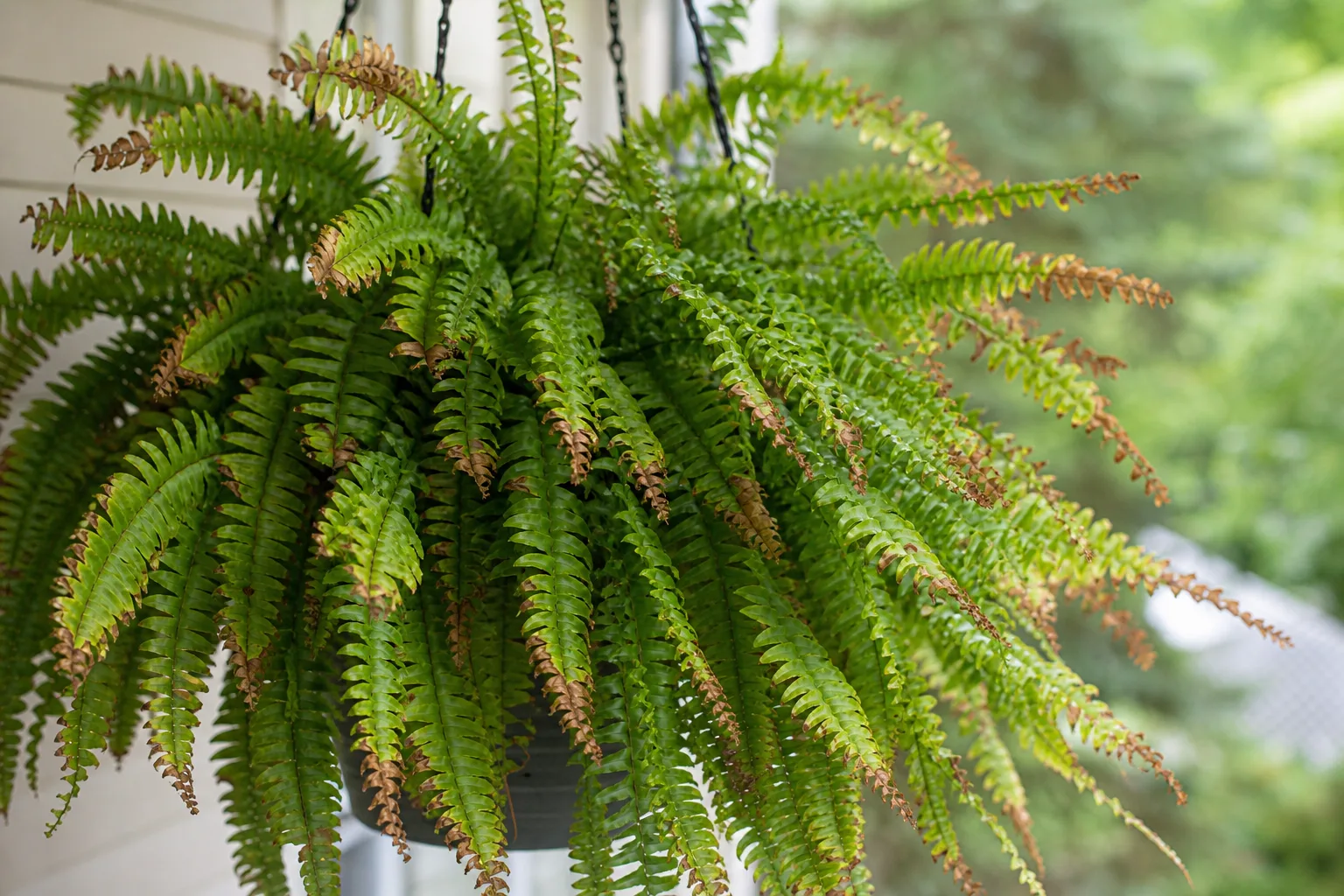
Deeper fixes live in the Boston fern problems hub — including dedicated pages for brown tips, overwatering, and drooping leaves.
Pet Safety and the Air-Purifier Question
Cats and dogs: The ASPCA lists Boston fern (Nephrolepis exaltata) as non-toxic to cats and dogs (ASPCA Boston fern listing). That makes it a strong choice for pet-friendly homes — with two caveats. Eating any plant can cause mild stomach upset, and chewed fronds look terrible. More importantly, asparagus fern is not Boston fern and is not pet-safe. Verify botanical names on nursery tags.
Air purification: Boston fern appears in indoor air-quality discussions because leaf surface area can remove some volatile compounds in controlled studies. A 2022 Applied Sciences study on potted plants and substrates found measurable air-cleaning performance among indoor species including ferns. That is interesting context — not a reason to buy one fern instead of ventilation, filtration, or fixing pollution sources. Grow Boston fern because you like how it looks and can meet its humidity needs; treat any air-quality benefit as a small bonus.
Conclusion
Boston fern rewards growers who treat it as a humidity-and-moisture plant, not a drought-tolerant decoration. Give it bright indirect light, evenly moist aerated soil, and real humidity from a humidifier or steamy bright bathroom — then groom, divide, and repot on a spring rhythm. When fronds fail, diagnose water, humidity, and light in that order before you fertilize or repot into a bigger pot.
Start with a cultivar matched to your room (‘Dallas’ for drier apartments, ‘Bostoniensis’ for humid porches), wire a hygrometer near the foliage, and keep the Boston fern hub bookmarked for species-specific depth. Get those pieces right and Nephrolepis exaltata becomes one of the most graceful long-term houseplants you can grow — no miracle sprays required.



