How to Grow Mango Trees: From Seed to Fruit
Learn how to grow mango trees from seed or grafted plants, with practical advice on sun, soil, watering, pots, pruning, frost, pests, and harvest.
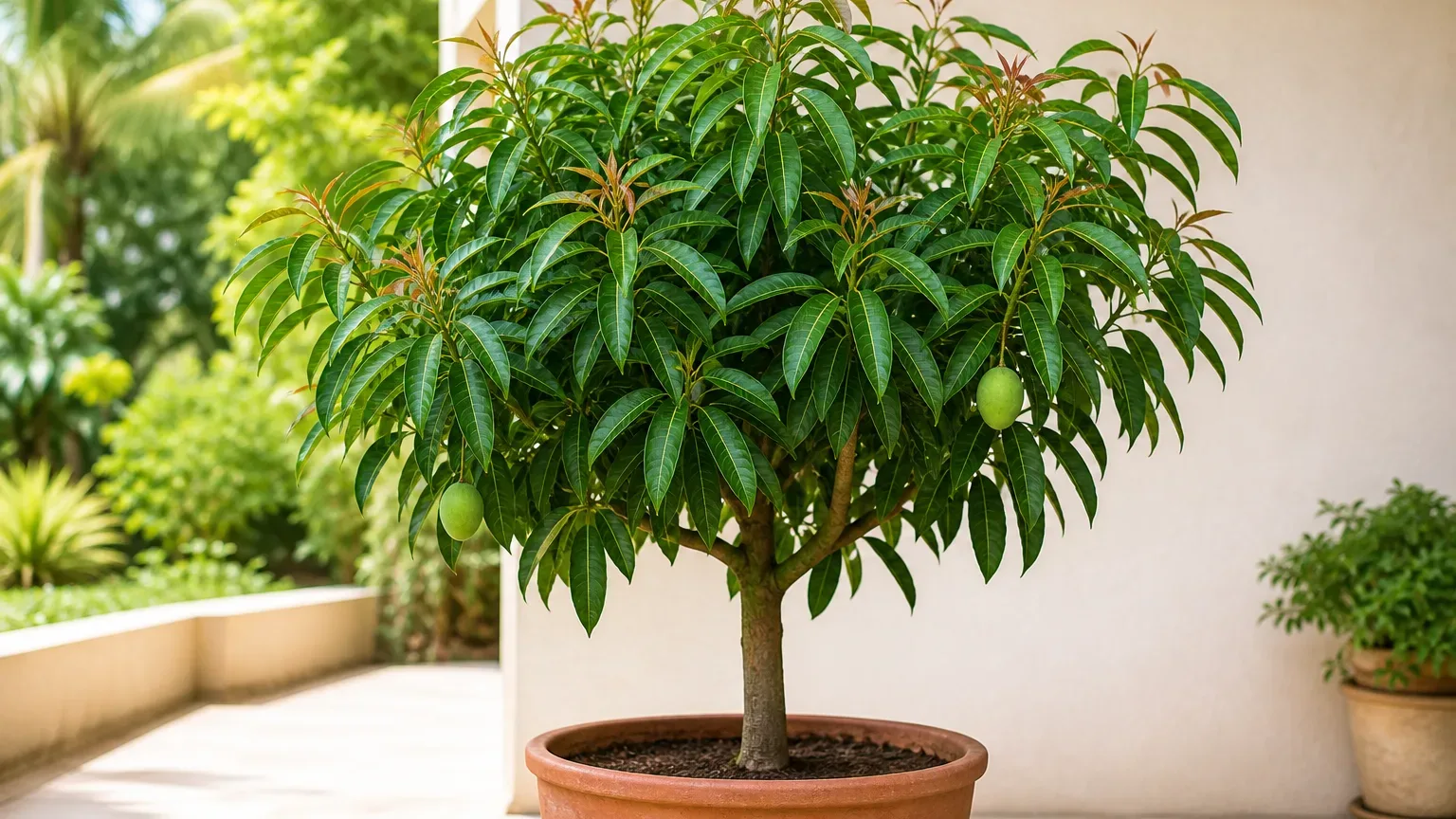
Growing a mango tree is easy if your climate already feels like mango country. In a warm, frost-free yard, Mangifera indica can become a fast-growing evergreen with glossy leaves, fragrant flower clusters, and heavy fruit. In a cool climate, the same plant may make a handsome patio tree but never receive the heat, light, or uninterrupted season it needs to crop well.
The first decision is therefore not which fertilizer to buy. It is whether you want the fun of raising a seedling or the much more predictable result of planting a grafted tree. This guide covers both, then shows how to manage sun, roots, water, feeding, pruning, cold, pests, and harvest so a young mango has a real chance of becoming productive.
Start With the Right Mango: Seed or Grafted Tree?
A mango seed is a wonderful experiment and an inexpensive way to grow a tree from fruit you have eaten. It is not a reliable way to reproduce the exact mango you enjoyed. A seedling may differ in flavor, fruit size, disease tolerance, mature size, and time to fruiting; some seedlings take many years, and a seedling’s performance can be unpredictable even when the parent fruit was excellent.
Choose a seed if your priority is learning, a vigorous foliage plant, or the satisfaction of watching a root and shoot emerge. Choose a grafted tree if your priority is fruit, a named cultivar, a known harvest window, or a tree that has already been selected for your region. Epic Gardening puts the practical difference clearly: grafted trees may fruit in roughly two to three years, while seed-grown trees commonly take about five to eight years, with site and cultivar affecting both ranges.
| Starting method | Best for | Main trade-off | Realistic expectation |
|---|---|---|---|
| Fresh seed | A low-cost growing project | Fruit and tree traits are uncertain | Several years of vegetative growth before fruit is possible |
| Grafted nursery tree | Earlier, more predictable fruit | Higher purchase cost and less seed-starting fun | A named cultivar suited to your climate, often fruiting sooner |
| Dwarf grafted tree in a pot | Patio or small-yard growing | Container roots, heat, and light limit crop size | A manageable tree, but not a miniature orchard |
One more distinction matters: a seed-grown mango is not automatically a dwarf mango. It may eventually become a large tree. If you are growing a seedling in a pot, plan to prune and repot it for several years, but do not assume a container can keep a vigorous standard tree small forever.
Check Your Climate Before You Plant
Mango is a tropical-to-subtropical fruit tree, not a cold-hardy citrus substitute. UF/IFAS Extension lists mango for USDA hardiness zones 10B through 11 and describes mature trees around 30 to 60 feet tall and 30 to 50 feet wide. That mature scale, along with sensitivity to cold during flowering and fruit development, makes climate the make-or-break factor.
If your garden has regular frost, grow a dwarf or naturally compact cultivar in a container only if you have a genuinely bright, warm place to protect it. A sunny window may keep a young tree alive through winter, but indoor light is often much weaker than full outdoor sun and may not support flowering or fruiting. A grow light can help maintain health, but it does not recreate a long, warm outdoor season by itself.
In a frost-free region, plant after the coolest part of the season has passed and when the tree can establish roots while actively growing. In a marginal region, watch overnight lows rather than relying only on the daytime forecast. A short cold event can damage tender new growth, flowers, or fruit even when the broader winter average seems mild.
Choose a Site With Sun, Drainage, and Room
Give an in-ground mango the brightest open location available, ideally with eight or more hours of direct sun. Six hours is a workable lower limit for growth, but flowering and fruit quality are less likely to be strong when the canopy is shaded for much of the day. Avoid a spot where a house, wall, hedge, or fast-growing tree will block the morning or afternoon sun as the seasons change.
Drainage is just as important as fertility. Mango roots need water, but saturated soil removes the air roots need and can turn a short watering mistake into chronic decline. Test the site after rain: if water remains pooled around the planting area, choose a raised position or improve the drainage before planting rather than trying to solve the problem with more fertilizer.
Leave room for the adult tree, falling fruit, leaf litter, and wind movement. UF/IFAS notes that mango branches can break in severe wind and that fruit and leaf litter can become a constant nuisance. Keep the trunk and canopy away from structures, narrow paths, overhead obstructions, and areas where soft fruit dropping from height would create a hazard.
Prepare a broad planting area, but do not bury the trunk deeper than it grew in its nursery container. For a grafted tree, keep the graft union above the soil line. Backfill with the soil you removed, amended only when a soil test or local extension recommendation supports it; a rich layer in an otherwise poorly drained hole can create a wet bowl around the root ball.
Pick a Variety for Your Space
Variety choice should follow climate, available room, and the kind of fruit you actually like. In warm regions, locally recommended cultivars such as ‘Glenn’, ‘Haden’, or ‘Keitt’ may be better bets than an exciting name that was selected for a different growing season. Your nursery or local extension service can tell you which cultivars handle your region’s disease pressure and flowering conditions.
For containers, look for a true dwarf or compact cultivar rather than simply buying a young standard tree. ‘Cogshall’, ‘Ice Cream’, ‘Little Gem’, ‘Carrie’, and ‘Pickering’ are commonly discussed as compact choices, but availability and performance vary. Compact does not mean maintenance-free: the tree still needs full sun, root space, pruning, and enough warmth to flower.
Ask the nursery three questions before buying: Is the tree grafted, what rootstock and cultivar are involved, and what size should it reach in this climate? A tag that says only “mango” is not enough if you have a small yard or a short warm season. Also inspect the trunk for damage, the leaves for webbing or cottony pests, and the root ball for a sour smell or roots circling a waterlogged pot.
Grow a Mango Tree From Seed
Use a seed from a fully mature, healthy mango and start it soon after eating the fruit. University of Florida EDIS describes mango as a long-lived, large landscape tree, which is useful context before you commit a seedling to a permanent site. Mango seeds lose viability as they dry, so a pit that has sat for weeks is a poor candidate. Rinse away the flesh, then work carefully: the outer husk can be fibrous and the inner seed is easy to nick.
Open the Husk and Inspect the Seed
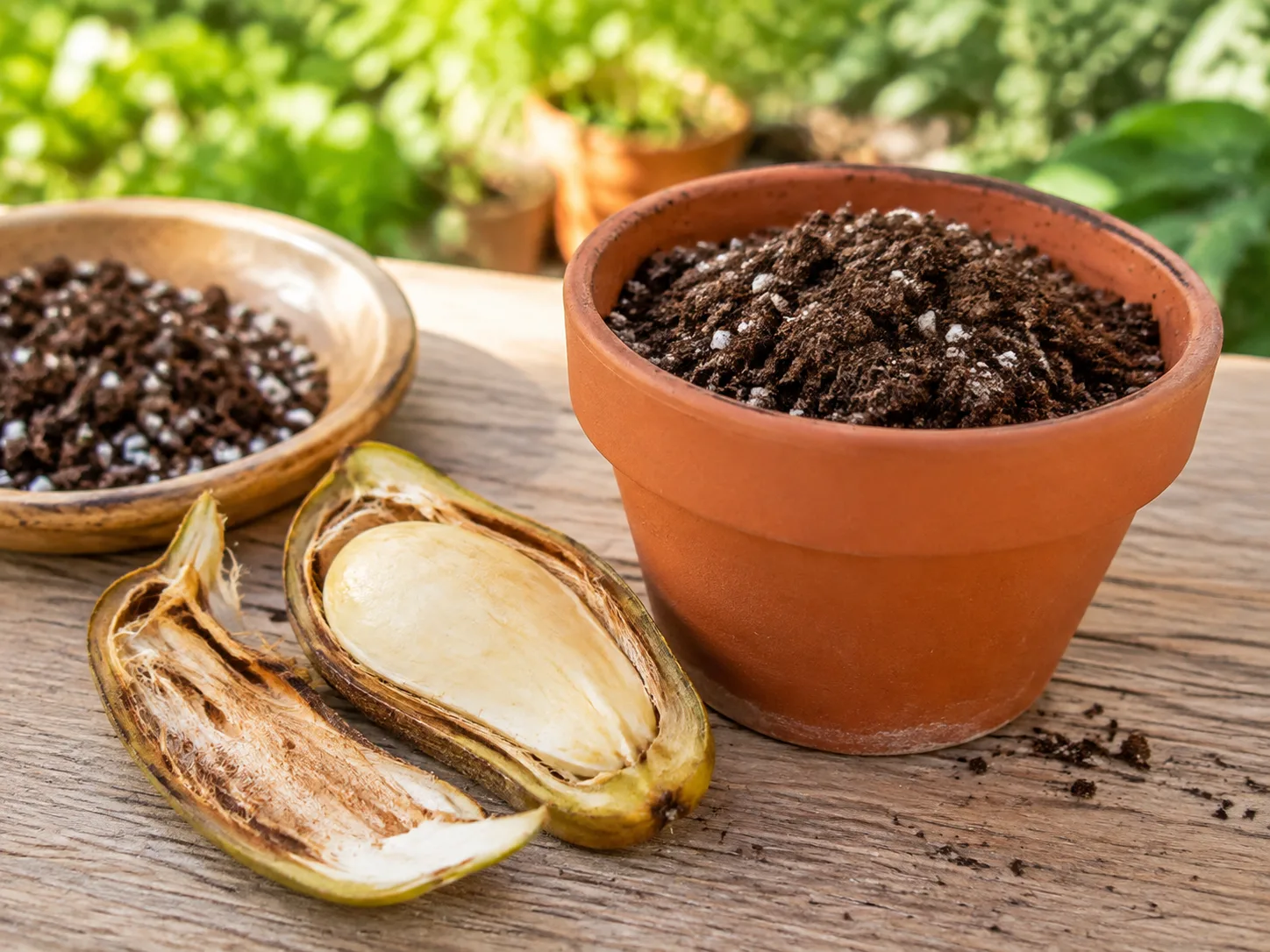
The hard, flattened husk protects the actual seed. Use a blunt-edged knife or pruners to open the seam cautiously, keeping the tool pointed away from your hand. If the inner seed is plump and cream-colored, it is worth planting; discard it if it is shriveled, black, sour-smelling, or visibly moldy.
Some mango seeds produce more than one embryo, while others produce a single seedling. That difference can affect how many shoots emerge, but it does not guarantee that a seedling will match the parent fruit. If two shoots appear, let them develop briefly, then keep the strongest, best-positioned one rather than allowing a crowded clump to compete in a small pot.
Plant the Seed in an Airy Mix
Fill a clean pot with drainage holes using a light seed-starting or houseplant mix that drains freely. Set the seed on its side or with the more rounded, bulging side oriented upward according to its shape, cover it with about 1/2 to 1 inch of mix, and leave the soil loose rather than pressing it into a dense cap.
Water once so the mix is evenly moist, then place the pot somewhere warm with bright light. Aim for temperatures above 70°F; warmer conditions within a safe household range speed germination. Keep the mix lightly moist, not constantly saturated. If the surface is still damp and the pot feels heavy, wait; repeatedly adding small drinks is the easiest way to rot a seed before it can root.
Germination may happen in about two weeks, but do not pull the seed up to check. A root can emerge before the shoot, and disturbing it breaks the very tissue you are trying to grow. Instead, look for a split in the seed, a root at the drainage hole, or a new reddish-green shoot. The first flush of mango leaves can look coppery before it matures to green, which is normal.
Pot Up Only After the Seedling Establishes
Give a new seedling time to form a small root system and several leaves before moving it. An early transplant can be more damaging than a slightly cramped first pot because mango seedlings are sensitive to root disturbance while they are still using the seed’s stored energy.
When roots hold the mix together, shift the seedling into a pot only a little larger. Keep the stem at the same depth, water thoroughly once, and return it to bright light. If the plant is growing strongly, increase direct sun gradually over a week or two; a seedling raised in filtered light can scorch when moved straight into intense afternoon sun.
The first year is about building a healthy trunk and root system, not forcing fruit. Keep a simple record of when the seed germinated, when each pot was used, and how quickly the mix dries. That record becomes more useful than a fixed watering calendar as the plant grows.
Plant a Nursery Tree Without Setting It Back
Plant a grafted mango during active growth when the soil is warm and the tree can recover quickly. Water the nursery container first if the root ball is very dry, then slide it out without pulling on the trunk. If roots circle tightly around the outside, tease only the outermost layer loose; aggressive root tearing creates unnecessary shock.
Dig a hole no deeper than the root ball and several times wider. Set the tree so the top of the root ball sits level with or slightly above the surrounding soil, especially in heavy ground. Backfill, water slowly to settle the soil, and add a shallow mulch ring over the root zone while keeping mulch several inches away from the trunk.
Stake only if wind or a weak stem makes it necessary. A rigidly tied tree cannot develop normal trunk movement, so use a loose tie and remove it once the tree stands securely. For the first few weeks, water often enough to prevent the original root ball from drying completely, then lengthen the interval as new roots move into the surrounding soil.
Use a Container for Dwarf Mangoes
Container growing makes mango possible in places where winter protection is essential, but it does not make the tree an indoor houseplant. Choose a dwarf or compact grafted cultivar, a heavy container with multiple drainage holes, and a potting mix that stays open after repeated watering. A large final container may be around 20 gallons or more, but a young tree should not be placed in an oversized tub full of wet unused mix.
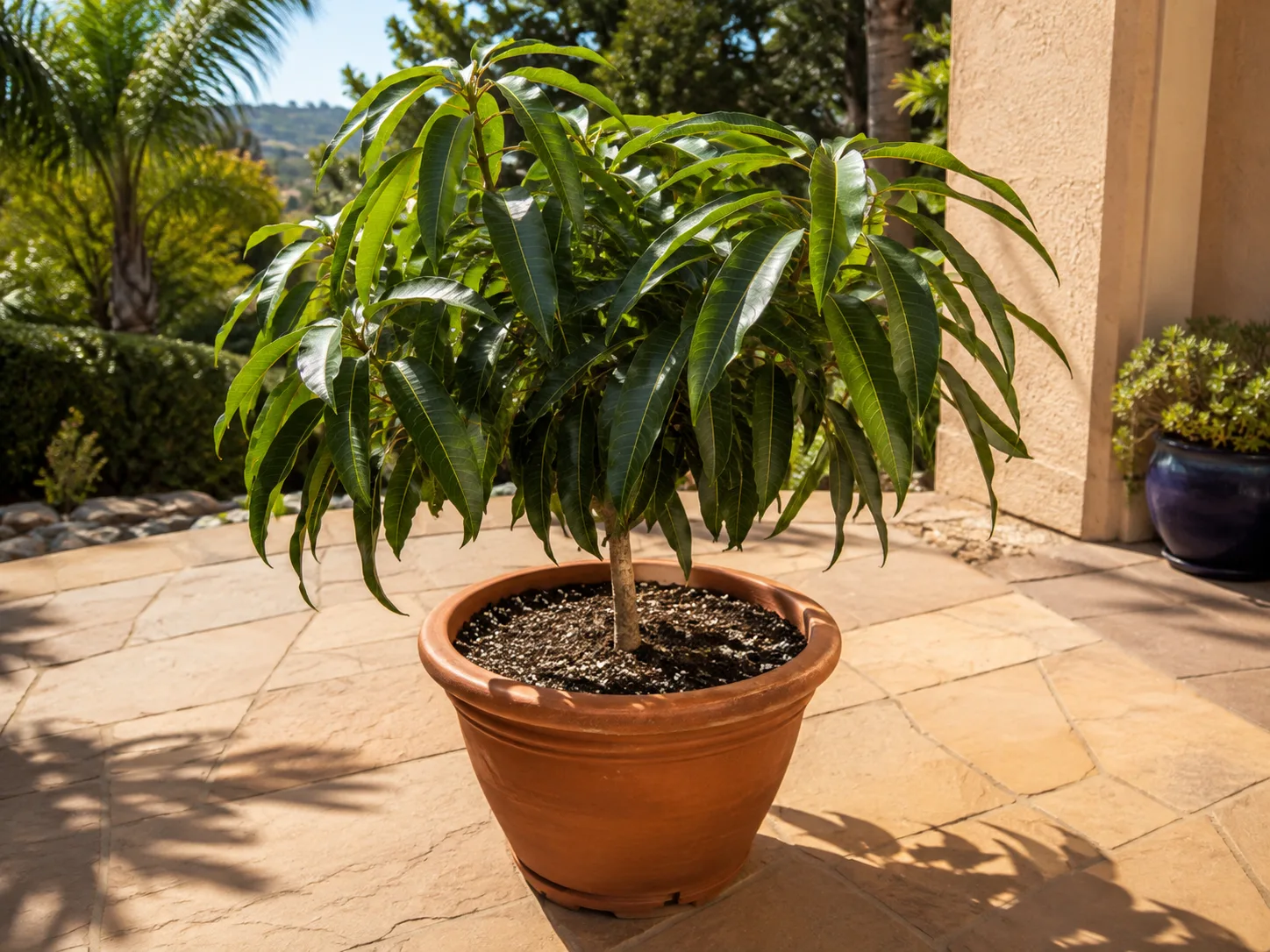
Set the pot where it will receive direct sun and where you can move or protect it before cold weather. Put the container on a stable surface or low-duty plant dolly before it becomes heavy. A pot that is impossible to move encourages last-minute cold exposure and makes it harder to inspect drainage.
Repot when roots circle densely, escape through the holes, the tree becomes unstable, or the mix has collapsed and stays wet. Move up one pot size at a time and preserve the planting depth. Do not add a gravel layer to “improve drainage”; a proper drainage hole and a cohesive, airy mix do more than a coarse layer that steals root volume.
Water for Growth Without Suffocating Roots
Mango watering is a cycle, not a weekly appointment. Water deeply enough to wet the full root ball, allow excess to drain, and wait until the upper few inches of soil have dried before watering again. The exact interval changes with pot size, sun, temperature, wind, humidity, and the amount of root filling the container.
Young in-ground trees need more frequent attention while roots establish. Mature trees are moderately drought tolerant, but drought during active growth, flowering, or fruit development can reduce vigor and crop quality. The best response to dry weather is a thorough soak over the root zone, followed by a check of the soil—not a series of shallow sprinkles that wet only the surface.
Container trees can move from dry to stressed quickly in hot weather, yet they can also stay wet for days after a cool spell. Push a finger or wooden skewer a couple of inches into the mix, lift the pot when possible, and look at the drainage. If the leaves droop while the mix is wet, suspect damaged roots, poor drainage, or cold stress before adding more water.
Reduce watering in cool, low-light weather when the mix dries more slowly. Never leave a container sitting in a saucer of runoff. The combination of a warm, bright canopy and an airless root ball is a common reason a mango looks thirsty even though it has been watered repeatedly.
Feed Young Trees Lightly
Fertilizer supports growth only when roots, light, and temperature are already adequate. A young mango can use modest nutrition while it builds shoots, but its roots are vulnerable to concentrated salts and fertilizer burn. Start with a slow-release or balanced fruit-tree fertilizer and follow the label for the container size; “more” is not a shortcut to faster fruiting.
Avoid pushing a mature tree with heavy nitrogen. Excess nitrogen can create a flush of soft leaves and long shoots at the expense of flowering, while a stressed tree may burn at the roots. If the newest leaves have brown margins soon after feeding, a crust is forming on the soil, or the plant declines after fertilizer, pause feeding and flush the mix with plain water only if the pot drains freely.
Feed during active growth and stop when the tree is cold, recently repotted, severely wilted, or otherwise under stress. A soil test is worthwhile for an in-ground tree that repeatedly shows deficiency symptoms. Do not diagnose every yellow leaf as a nutrient shortage; wet roots, low light, cold, and old foliage are often more plausible first causes.
Prune for a Low, Open Canopy
Mango trees are easier to care for when they are trained early instead of cut back severely after they become too large. Make pruning decisions around three goals: remove damaged or diseased wood, keep a manageable height, and create a canopy that lets light and air reach interior branches. UF/IFAS identifies pruning as important for strong structure, and Epic Gardening’s mango guide recommends a broad, open framework rather than a tall, crowded center.
For a young tree, select three or four well-spaced scaffold branches with strong attachment angles. Remove competing vertical shoots in the center, branches that cross, and low growth that will touch the soil or obstruct mowing. Favor outward and slightly horizontal growth: a wide tree is easier to cover during a cold snap, inspect for pests, and harvest than a narrow tree that keeps reaching upward.
The safest general timing is after harvest for size and shape work, with light corrective pruning whenever dead or diseased wood appears. Avoid a major cut immediately before expected flowering unless the tree truly needs structural correction; heavy pruning can remove the wood that would have carried flowers and may delay a crop.
Use clean, sharp tools and make cuts just outside the branch collar. Wear gloves and eye protection because mango sap can irritate sensitive skin. Bag or remove diseased leaves, fruit, and branches rather than leaving them beneath the canopy where fungal inoculum and pests can persist.
Protect Mango Trees Through Cool Weather
Cold protection starts before the forecast becomes urgent. Move a container tree indoors or into a sheltered, bright space before temperatures approach damaging levels, and acclimate it back outdoors gradually once warm weather returns. Indoors, keep it away from heating vents and cold glass; the plant needs steady warmth as well as light.
For a young in-ground tree, frost fabric, a temporary frame, and a thick mulch layer over the root zone can buy protection during a brief cold event. Do not wrap plastic directly around foliage or leave a covering in hot sun. A cover helps with short, predictable cold, but it cannot turn a frost-prone site into a suitable permanent mango climate.
Cold weather can also explain flower drop and a sudden pause in growth. If the tree is otherwise firm and the roots drain well, wait for warm conditions and new growth before pruning or feeding. Removing healthy branches after one cold night creates more damage than it repairs.
Improve Flowering and Fruit Set
One mango tree can produce fruit because mango flowers include male and hermaphroditic flowers and the species is generally self-fertile. A second tree may increase the chance of pollen transfer in some gardens, but buying a second tree will not fix a site that lacks heat, sun, healthy roots, or a suitable flowering season.
The strongest fruiting plan is a sequence: let the tree mature, keep the canopy in full sun, avoid excess nitrogen, protect flowers from cold, and maintain a dry enough canopy for good air circulation. Rain and high humidity during flowering can raise disease pressure and reduce the number of flowers that become fruit. That is a weather limitation, not proof that the tree needs more fertilizer.
Expect many flowers to fall naturally. A tree cannot carry every flower and young fruit to maturity, and early thinning or drop can be part of normal crop adjustment. Investigate when the pattern is paired with black lesions, widespread dieback, repeated cold nights, or a tree that produces vigorous leaves but never forms flower panicles.
Harvest and Ripen Mangoes
Harvest timing depends on cultivar, climate, and the crop’s maturity rather than on skin color alone. A mango can remain green while mature, and some ripe cultivars keep green tones. Use several cues together: fruit has reached the expected size for its variety, shoulders fill out near the stem, the aroma becomes noticeably sweet, and the fruit yields slightly when handled gently.
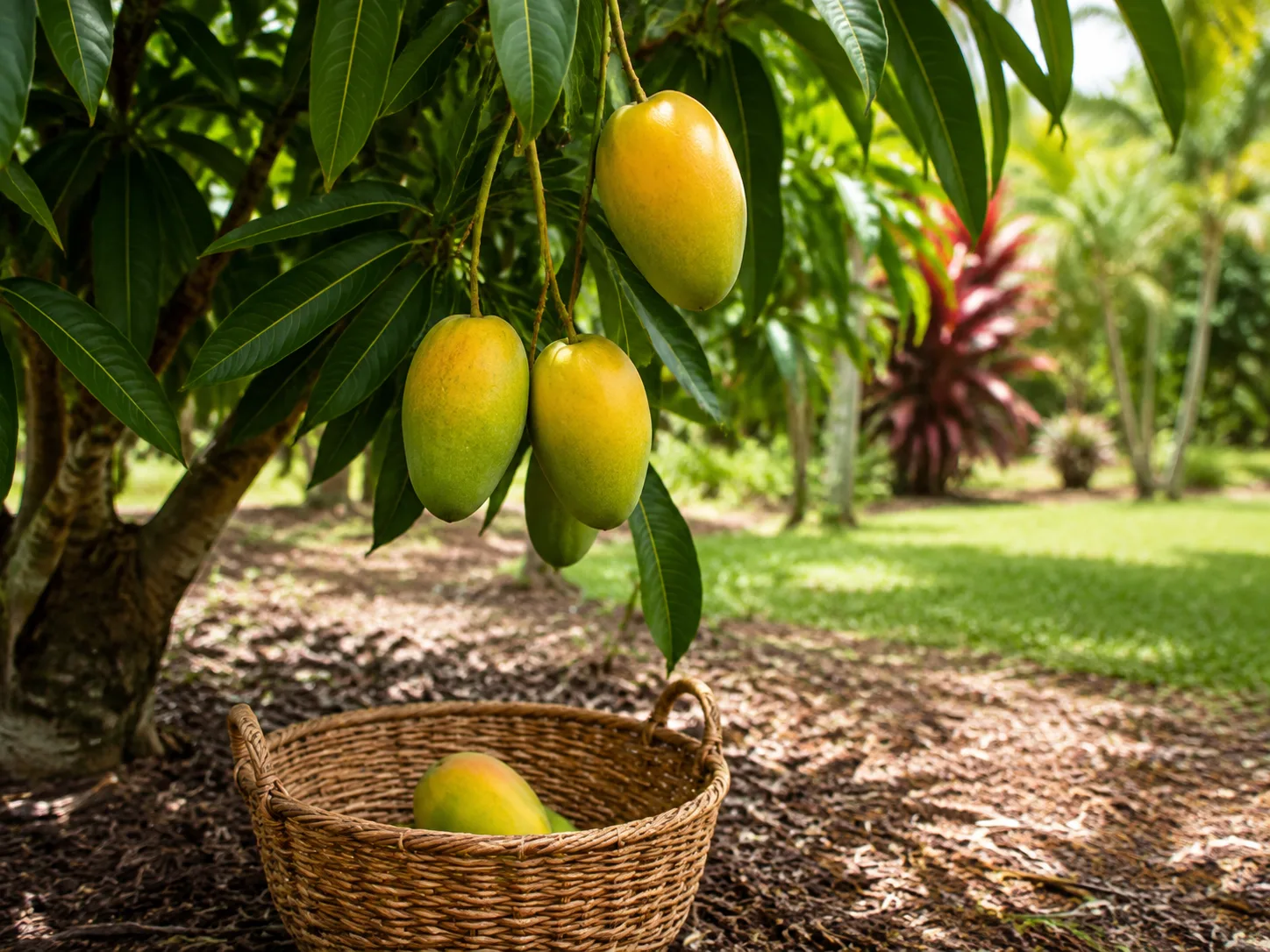
Cut fruit with a short stem instead of yanking it from a high branch. Handle it gently because bruising can spoil fruit that looks fine from the outside. If birds, squirrels, intense heat, or a storm threaten the crop, pick mature-green fruit and let it finish ripening indoors.
Keep unripe fruit at room temperature. A paper bag can concentrate natural ripening gases and speed the process, but inspect it daily and remove any fruit that develops a soft, leaking, or fermented spot. Once ripe, refrigerate the fruit for short-term storage and use or preserve it promptly. California Gardening’s grower account describes harvesting before severe sun exposure and ripening fruit indoors, a useful option in hot patios and exposed yards.
Seed-grown trees may take five to eight years or longer to fruit, while grafted trees can crop sooner under good conditions. Treat those timelines as ranges, not promises. A mango tree that spends winter in a dim room, loses roots to wet soil, or grows in a cool summer will not follow the schedule printed on a plant tag.
Solve Common Mango Problems
Mango symptoms make more sense when you examine the whole pattern: new or old leaves, wet or dry soil, the sun-facing side, the weather, and what changed recently. Correct one likely cause at a time so you can tell whether the plant improves.
- Brown or black spots on leaves, flowers, or fruit: Anthracnose is more likely when spots spread during warm, wet, humid weather and flowers or young fruit abort. Prune infected tissue, remove fallen debris, improve airflow, and avoid wetting foliage. UF/IFAS calls anthracnose a serious mango disease; a local extension service can identify the disease and advise on any legally labeled treatment for your crop.
- White powder on flowers or new growth: Powdery mildew can reduce fruit set. Thin crowded growth, keep foliage dry when possible, and avoid excess nitrogen. Do not spray a product just because it is labeled for another plant; fruit-crop labels and local regulations matter.
- Sticky leaves or black sooty coating: Honeydew-producing pests such as aphids, scale, or mealybugs may be present. Inspect leaf undersides, new shoots, and branch joints, then wash small infestations away and use a labeled horticultural oil or insecticidal soap only as directed. Treating the visible black coating without addressing the pest misses the cause.
- Fine stippling, bronzing, or webbing: Mites are more likely, especially on a water-stressed or overfertilized container tree. Isolate a potted tree from other plants, rinse the foliage, and improve watering and air movement before escalating treatment.
- Yellow leaves and slow growth: Check the root zone first. Persistent wetness, a blocked drainage hole, a pot that is too large, or cold roots can mimic a nutrient shortage. If the mix is dry and the pot is light, water deeply; if it is wet, do not add fertilizer or more water until drainage is corrected.
- Flowers drop with no fruit: Review cold nights during flowering, prolonged rain, low sun, excess nitrogen, and the tree’s age. A single season of poor set is not a diagnosis, but repeated failure deserves a site and root-health review.
Mango sap, bark, and fruit skin can trigger reactions in sensitive people. UF/IFAS notes that some people are allergic to the pollen, sap, and fruit. Wear gloves for pruning and husk removal, avoid touching your eyes, and keep sap away from children or pets who may chew plant material. If someone has a known mango or cashew-family sensitivity, ask a medical professional about safe exposure before handling the tree.
Conclusion
To grow a mango tree successfully, match the tree to the climate before you worry about technique. Give it full sun, fast drainage, steady warmth, enough root space, restrained fertilizer, and early structural pruning. Grow a seedling for the experience, but buy a grafted dwarf or regionally adapted cultivar when dependable fruit and manageable size matter.
The most useful habit is to respond to evidence: feel the soil before watering, inspect roots when leaves wilt in wet mix, check the forecast before flowering, and judge fruit by maturity cues instead of color alone. With that rhythm, even a long-lived tropical tree becomes a series of manageable decisions rather than a gamble with a mango pit.



