How to Kill Weeds in Sidewalks and Driveways
Grass and weeds in sidewalk, driveway, and patio cracks need more than a quick pull. Compare hand removal, boiling water, vinegar, flame, and spot herbicide—then seal the gap.
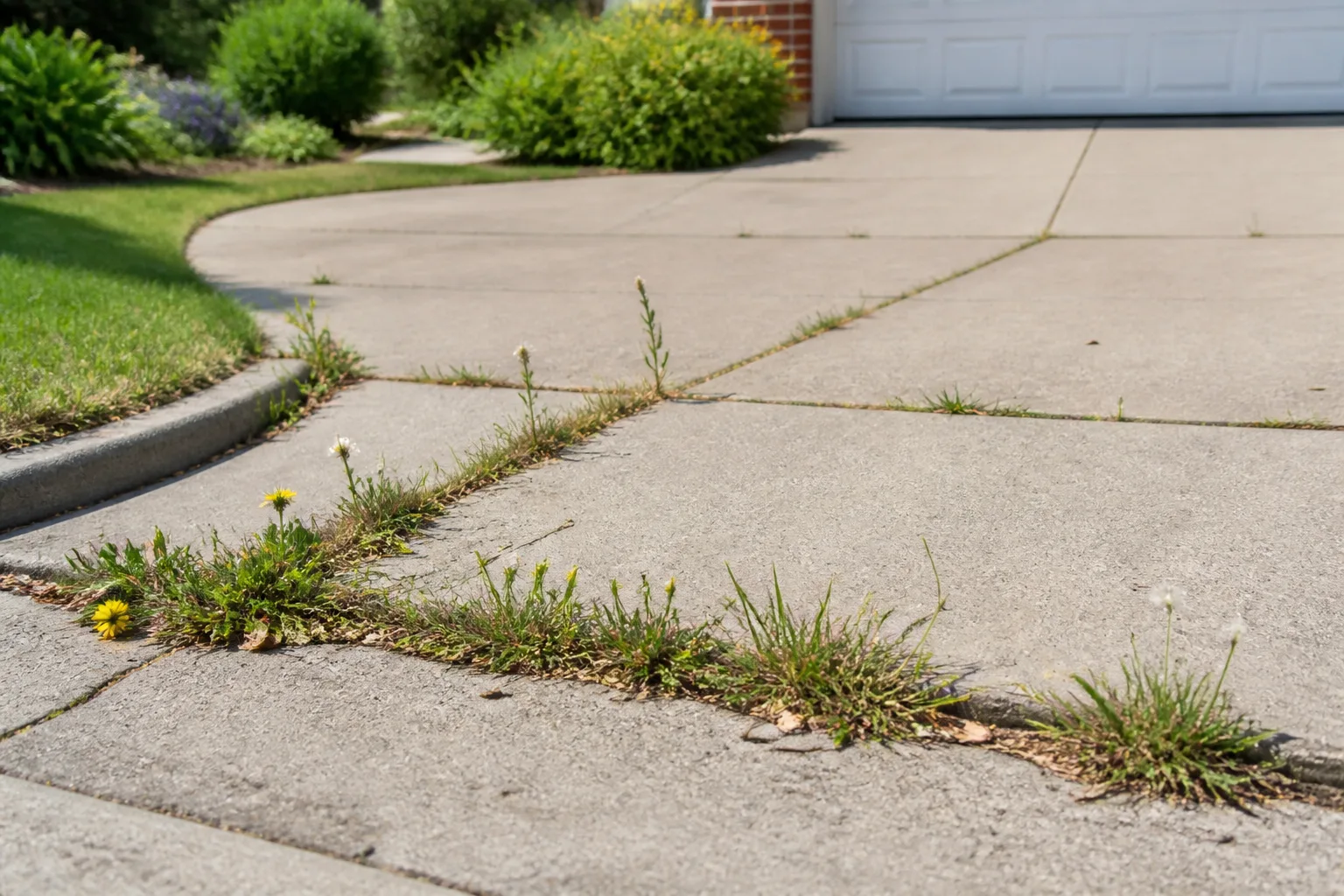
A tuft of grass in a driveway seam looks harmless until you realize the crack is holding soil, moisture, and sometimes a rhizome network you cannot see from above. Killing pavement weeds is only half the job. The durable fix is removing as much plant material as possible, choosing a treatment matched to your surface, and sealing the gap so the next seed has nowhere to root.
The Short Answer: Remove the Plant, Then Seal the Gap
For most homeowners, the fastest reliable sequence is pull or loosen the weed, treat only if needed, vacuum the crack, and fill it. Hand removal after rain works well for young weeds. Boiling water suits a few isolated plants on concrete or brick. Vinegar helps only as a targeted contact treatment on small annual weeds. A propane torch can work on dry hardscape when you accept surface risk. Glyphosate is a last-resort spot treatment for stubborn perennial grasses.
| Situation | Best first move | Repeat if needed | Finish with |
|---|---|---|---|
| One young weed in a sidewalk crack | Hand-pull after moistening the joint | Boiling water on regrowth | Masonry or concrete crack filler |
| Grass line in asphalt driveway seam | Pull, then flame or spot herbicide | Second pass in two weeks for grasses | Asphalt crack sealant |
| Weeds between patio pavers | Narrow weeding knife + root lift | Vinegar on tiny seedlings only | Joint sand or polymeric sand |
| Same weed returns three times | Identify the species (rhizome grass?) | Systemic spot treatment or repeated flaming | Full joint clean-out and seal |
No single spray makes weeds “permanent gone” if the crack still collects organic debris. That is why sealing belongs in the same conversation as killing.
A Three-Step Workflow That Outlasts Any Single Spray
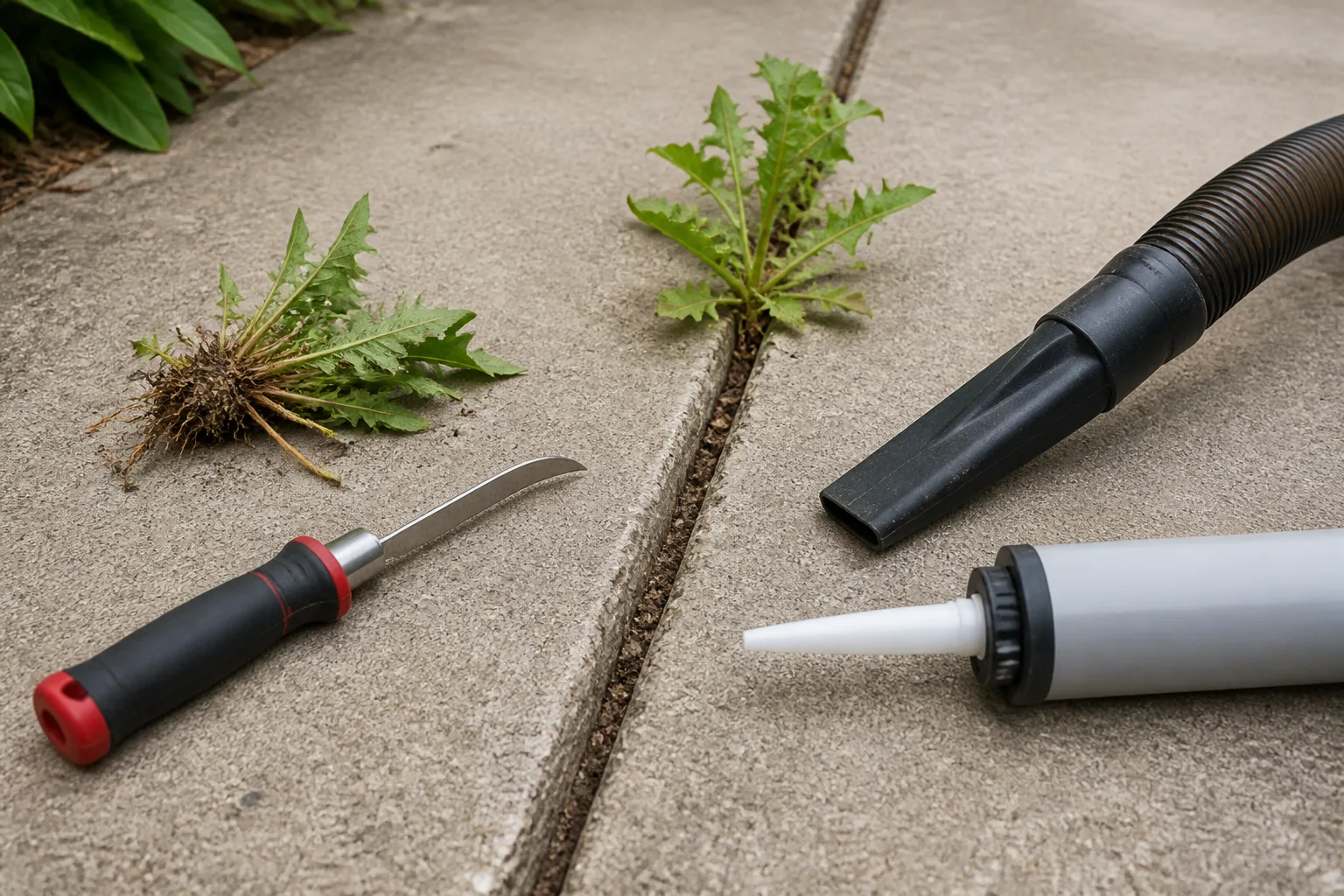
Step 1 — Remove: Loosen the joint with a screwdriver, weeding knife, or narrow putty knife, then lift foliage and as much root or rhizome as the crack allows. Step 2 — Treat (optional): Use heat, vinegar, flame, or herbicide only when pulling left living tissue or when the species regrows from underground stems. Step 3 — Seal: Shop-vac loose soil and grit, let the joint dry, then fill with masonry caulk, concrete filler, or asphalt sealant rated for your surface.
Skipping Step 3 is the main reason pavement weeds feel impossible. You are not fighting one plant; you are fighting a tiny planting pocket that resets after every rain.
Why Weeds Keep Coming Back in Pavement Cracks
Pavement cracks are mini garden beds. Windblown seeds, soil tracked from the lawn, leaf litter, and eroded joint sand all collect in seams as narrow as a pencil line. Once organic matter builds up, moisture lingers below the surface long enough for germination even when the surrounding slab looks bone dry.
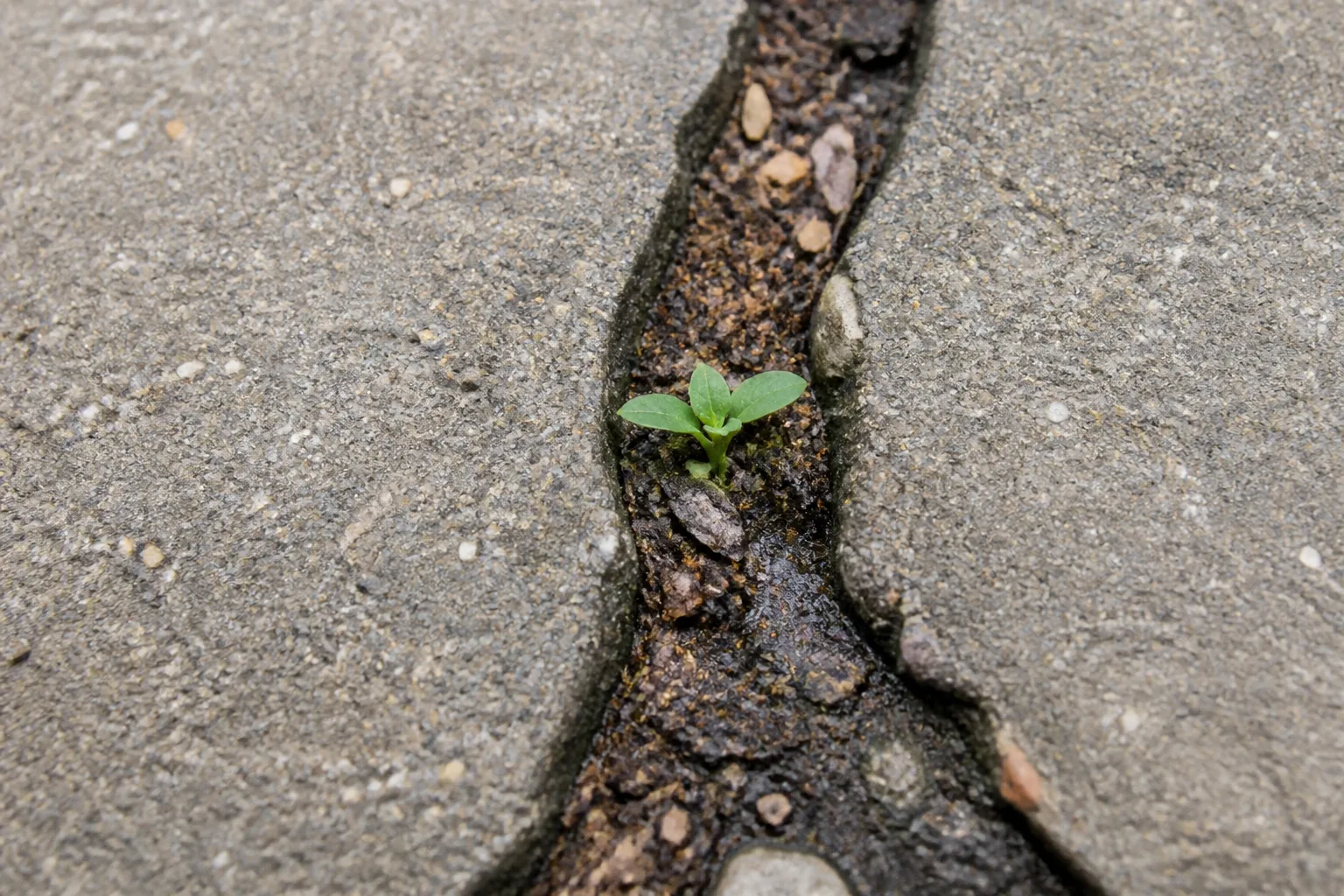
How Soil, Seeds, and Moisture Hide in Narrow Joints
Driveways and sidewalks also create microclimates. Dark asphalt absorbs heat and can keep a crack warmer than nearby soil in cool weather. De-icing salts and sand tracked in winter add minerals some grasses tolerate better than lawn turf. Foot traffic and vehicle weight fracture edges, opening new gaps where dust settles after every storm.
That is why string trimming alone fails. Cutting foliage at the surface does not remove the crown, taproot, or rhizome fragment below the pavement line. Within a week, new blades appear from the same crack.
Annual Seedlings vs. Perennial Roots and Rhizomes
Annual weeds—crabgrass, chickweed, many spur-of-the-moment seedlings—die if you kill the young plant before it sets seed. Contact methods like boiling water or household vinegar can be enough when the weed is small and the crack gets sealed afterward.
Perennial grasses and broadleaf weeds store energy in crowns, taproots, or rhizomes. Quackgrass, for example, spreads with aggressive underground stems that can send up new shoots from fragments left behind after pulling. University of Vermont Extension notes that rhizomes may extend many feet from the parent plant and that separated buds can resprout profusely after disturbance. For those weeds, one pull or one scald is a setback, not a cure.
Match Your Method to the Surface
The right tool depends on what the pavement is made of, what sits beside it, and whether runoff will reach lawn, beds, or a well.
Concrete Sidewalks and Patios
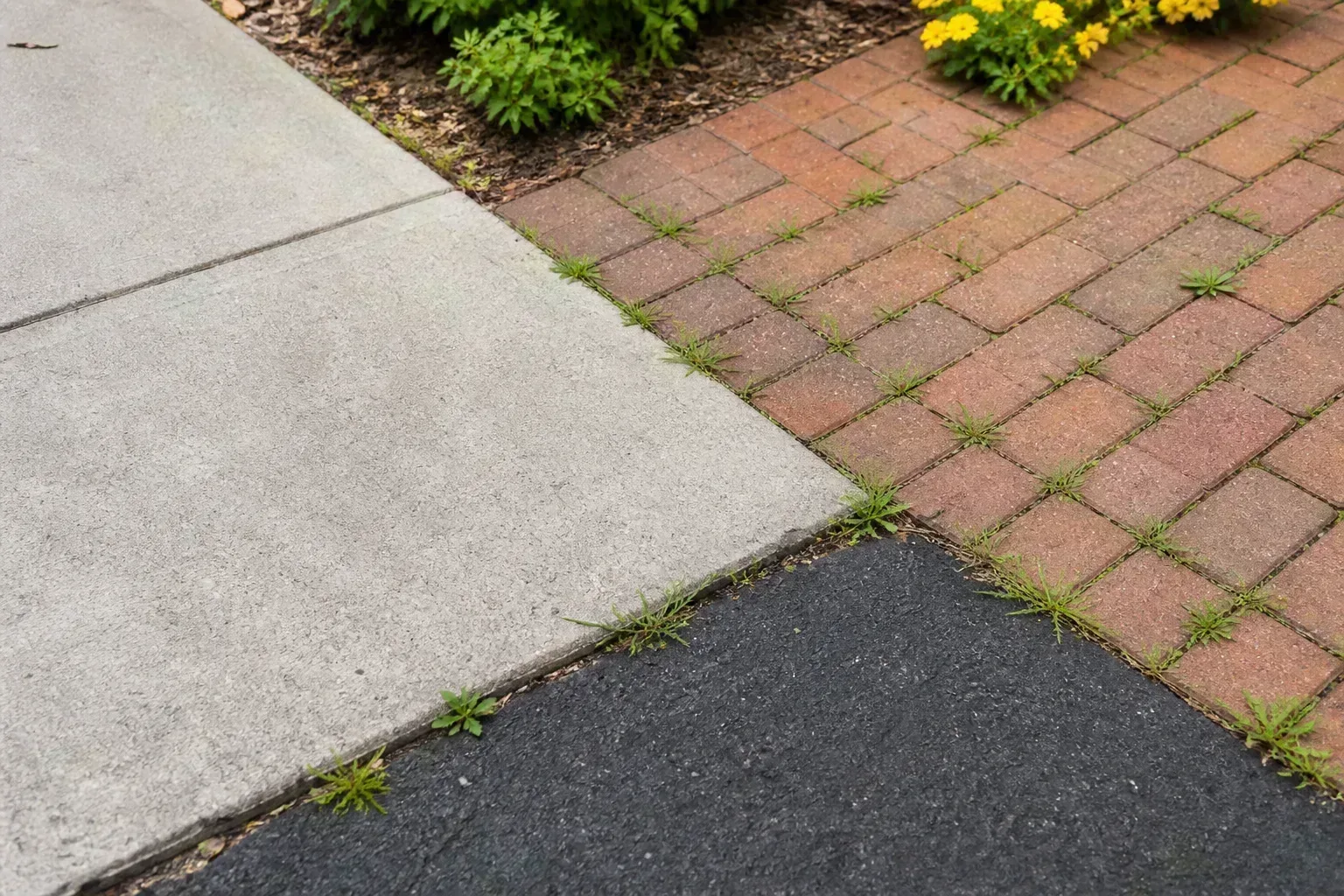
Concrete tolerates boiling water and careful hand work well. Horticultural vinegar is corrosive at high concentrations and can etch older or already-cracked concrete with repeated use, as Washington State University Extension warns when discussing driveway applications. Flame weeding is possible on bare concrete when the slab is dry and you keep the torch moving, but avoid prolonged heating on decorative or stamped finishes.
Glyphosate spot sprays are often used on concrete seams beside gravel or stone, but shield desirable plants and follow label directions. Rinse overspray risk matters when the sidewalk borders planting beds.
Asphalt Driveways
Asphalt is softer than concrete and more vulnerable to heat. A propane torch can soften or scar asphalt if the flame lingers, so keep passes brief and test an inconspicuous spot first. Boiling water is generally safer on asphalt than sustained flame, though very old or sun-baked asphalt may still stress from repeated scalding.
Asphalt crack sealants flex more than rigid masonry caulk. After weed removal, use a product labeled for asphalt joints rather than standard silicone caulk, which will fail under tire flex.
Brick, Pavers, and Mortar Joints
Weeds here grow in joint sand, not through the brick itself. Pull roots with a hooked weeding knife, then refill with the joint material your patio was designed for—polymeric sand, kiln-dried sand, or mortar repair depending on width and drainage. For a deeper paver-focused workflow, see our guide on keeping weeds from growing between pavers.
Pressure washing can clean neglected joints before refilling, but like mowing, it often removes top growth while leaving roots and sand pockets intact. Plan to vacuum and refill after washing.
Manual Removal: The Most Reliable First Step
Hand removal remains the best default because it works on every surface, avoids chemical runoff, and lets you feel whether a taproot or rhizome snapped off. Moisten the crack first with a hose or wait until after rain so roots slide out instead of breaking.
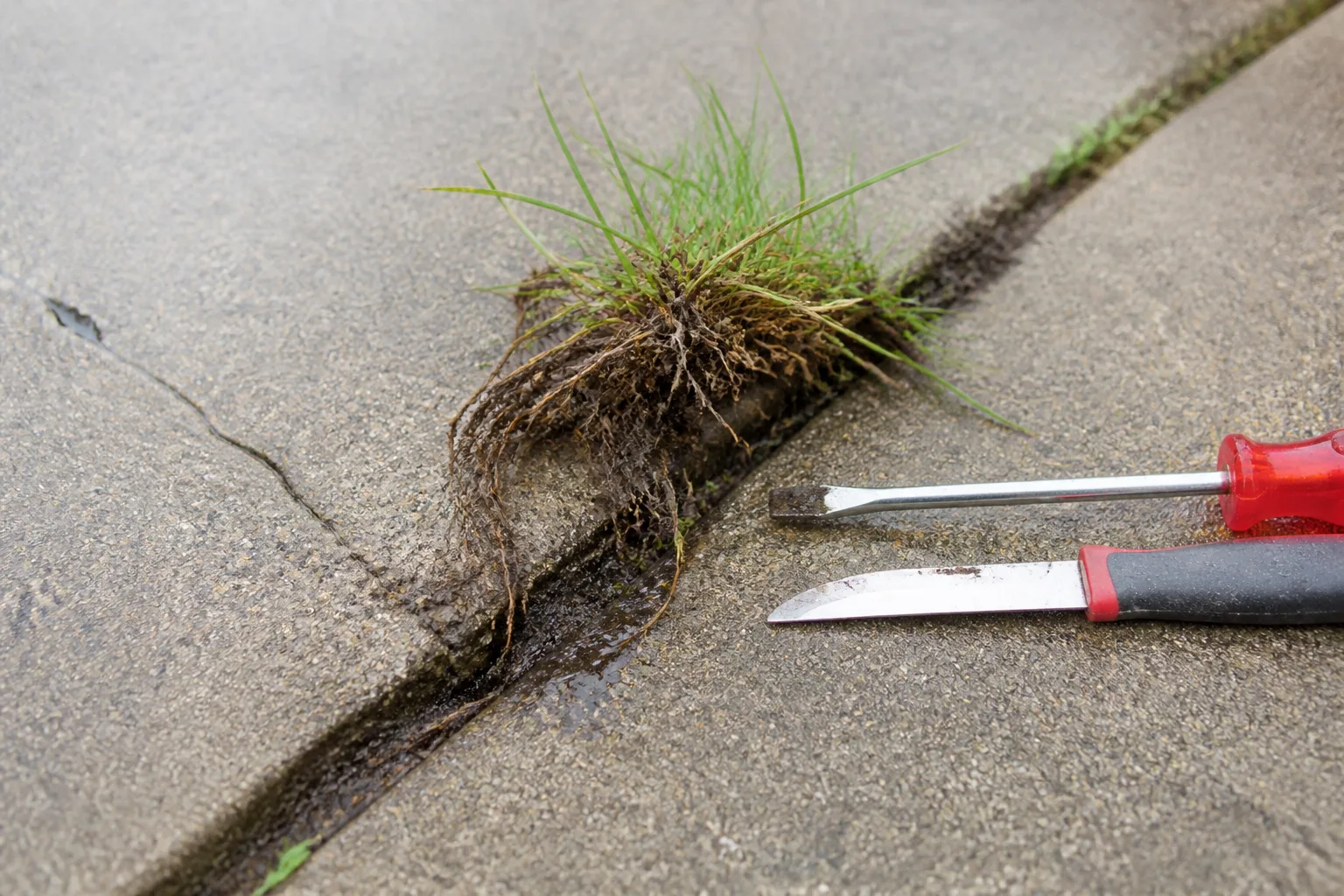
Work slowly with a gentle side-to-side wiggle. A flat screwdriver, old kitchen knife, or narrow weeding tool loosens soil packed in the seam. Pull the entire crown when possible. If the stem breaks, dig deeper rather than yanking harder.
After removal, shop-vac the crack. Loose soil is future weed habitat. Even if you plan to boil or spray, clearing debris first puts the treatment on plant tissue instead of dirt.
Boiling Water for Small, Isolated Patches
Boiling water kills foliage by heat shock. It is non-selective, so keep the pour targeted. Use a kettle with a narrow spout, oven mitts, and closed-toe shoes. Pour slowly from low height so the water hits the weed and penetrates the crack without splashing toward lawn or beds.
Plain water only—no cooking oil or meat residue. Oils can stain pavers and create slip risk. Some taproot weeds may need two or three applications a few days apart before foliage stops returning.
Boiling water is a contact method. It does not move through the plant the way systemic herbicides do. Colorado State University Extension classifies vinegar and similar treatments as contact herbicides effective mainly on annual weeds. Expect the same limitation here: established perennials may regrow from below.
Keep children and pets away until the pavement cools. Avoid pouring on frozen concrete, which can worsen thermal stress on cracked slabs.
Vinegar on Hardscape: Household vs. Horticultural
Household white vinegar is typically 5% acetic acid. It can brown young, shallow weeds on a hot, sunny day, but it often fails on mature dandelions, plantains, and grasses with protected growing points. Washington State University Extension reports that concentrations around 10–20% are usually needed for meaningful weed control, which is the range of horticultural vinegar sold for garden use.
Horticultural vinegar at 20% is four times stronger than pantry vinegar and can cause serious eye and skin burns. University of Maine Cooperative Extension stresses that “natural” does not mean harmless—it is still a pesticide by legal definition and demands gloves, eye protection, and strict label compliance. On graveled drives, extension guidance suggests targeted use on young annual weeds is reasonable when applied carefully; broad spraying is not.
Apply on calm, dry days. Coat foliage thoroughly without flooding the crack. Wait several days, remove dead material, vacuum, and seal. Vinegar does not sterilize soil; new seeds can germinate in the same joint.
Why Salt-and-Vinegar Mixes Are a Poor Default
Social recipes combining salt, vinegar, and dish soap are popular but risky on pavement beside lawn or garden soil. Salt persists and can injure desirable plants through runoff. WSU Extension testing found household vinegar alone showed limited effect on dandelion and plantain, while repeated salt exposure damages soil biology.
If you use any vinegar formula, skip the salt unless the crack is fully isolated hardscape with no drainage path to planted areas. Dish soap helps spray stick to leaves but does not make a contact treatment systemic.
Flame Weeding for Dry, Nonflammable Hardscape
Propane weed torches heat foliage to roughly 1,000–2,000°F, rupturing plant cells without necessarily setting weeds on fire. University of Vermont Extension explains that the goal is brief intense heat, not combustion. Broadleaf seedlings wilt within hours; grasses often need repeat passes because growing points may sit below the flame line.
Safety rules are non-negotiable: work on calm days, flame with the breeze so fumes blow away from you, keep a hose nearby, and never torch dry leaf litter, mulch edges, or wooden structures. Asphalt and some paver sealers can melt or discolor—short passes only.
After flaming, let the area cool, remove charred debris, vacuum the crack, and seal. Flaming pairs well with driveway seams when boiling water is too slow and herbicides are off the table.
Spot Glyphosate When Mechanical Methods Fail
Glyphosate is a non-selective systemic herbicide that moves within the plant to kill roots when applied to actively growing foliage. The National Pesticide Information Center notes it prevents plants from making specific proteins and kills most broadleaf and grass species. It is widely used but controversial; regulatory agencies disagree on long-term cancer risk, so treat it as a tool of last resort for pavement-only spots.
Use glyphosate when repeated pulling, heat, or vinegar failed and the weed is clearly a perennial grass in an isolated crack. Mix in a hand sprayer exactly per label, wear gloves and eye protection, and apply on a still day. Shield nearby lawn and beds with cardboard. Spray to wet foliage, not to runoff.
Allow several days for dieback, then pull dead material and seal the crack. Glyphosate binds tightly to soil and breaks down through microbial action; it is still not a license to spray pavement broadly. Pets should stay off treated areas until sprays dry.
Common Crack Weeds and What Actually Kills Them
Identification changes your repeat plan. A seedling chickweed and a quackgrass rhizome do not deserve the same treatment intensity.
| Weed type | What you see | Why it survives one pull | Better strategy |
|---|---|---|---|
| Crabgrass | Low, spreading summer grass | Seeds reinfest open joints | Pull young plants; seal before midsummer seed set |
| Chickweed | Mat-forming green with tiny white flowers | Cool-season annual; seeds heavily | Pull in spring; boiling water on small patches |
| Dandelion | Rosette with taproot | Deep taproot snaps | Dig taproot; vinegar only on young plants |
| Plantain | Broad leaves, fibrous roots | Crown regrows | Remove crown; spot glyphosate if isolated |
| Quackgrass | Coarse grass with running roots | Rhizomes under slab | Repeat pull + flame or systemic spot treat |
| Sedge | Grass-like, triangular stems | Nutlets and rhizomes | Pull and seal; avoid confusing with turf grass |
Crabgrass and Other Annual Grasses
Crabgrass thrives in thin, hot, compacted seams—exactly what a driveway edge provides. Its seeds are tiny enough to wash into the smallest gaps. Control is about timing: remove plants before they flower and set seed, then seal the crack. A pre-emergent mindset helps in spring, but on hardscape the physical seal matters more than lawn-style products.
Quackgrass and Other Rhizome Perennials
Quackgrass is the weed that makes pavement seams feel haunted. Pulling disturbs rhizomes and can stimulate new shoots from fragments, which UVM Extension documents as a common challenge in field settings. In a crack, your realistic options are repeated removal while the shoots are small, several flame passes, or a careful glyphosate spot treatment followed by aggressive sealing.
Do not expect one boiling-water pour to end quackgrass. Plan on a month of follow-up while you close the gap with filler.
Seal and Maintain Cracks So Weeds Stop Returning
Sealing is the step most quick-fix articles skip. After any kill method:
- Vacuum soil, roots, and organic debris from the crack.
- Dry the joint when products require it.
- Fill with compatible sealant—self-leveling concrete filler for slabs, flexible asphalt sealant for driveways, polymeric or kiln-dried sand for pavers.
- Tool the surface smooth and wipe excess from faces before it cures.
- Sweep regularly so new debris does not rebuild a soil layer.
Deep voids may need backer rod before caulk. Wide driveway cracks sometimes need routing or a two-stage repair. The objective is eliminating the planting pocket, not just hiding it.
Weekly Maintenance and Seasonal Timing
Five minutes after mowing beats an afternoon fighting mature weeds. Walk the driveway and sidewalk weekly during growing season. Pull seedlings when you see them—spring damp cracks make this easiest.
Spring: Focus on cool-season weeds like chickweed and young quackgrass shoots. Seal cracks after the last hard freeze cycle if your filler allows.
Summer: Crabgrass and warm-season grasses peak. Heat methods work well on isolated plants; avoid torching during fire-ban periods.
Fall: Remove weeds before they drop seed. Many perennials move sugars into roots in late season, so systemic herbicide spot treatments applied to actively growing foliage can be more effective than in drought stress—always follow label timing.
Winter: Ice melt and plow blades open new fractures. Inspect seams in late winter and plan spring sealing.
If the same species returns in the same crack after sealing, the filler failed, drainage is undermining the base, or the weed is rhizome-fed from outside the pavement. Fix the joint again or trace rhizomes back to the lawn edge.
Conclusion
Weeds in sidewalks, driveways, and patios are not a mystery—they are plants exploiting seams that collect soil and water. Pull first, treat with the lightest method that matches your surface and weed type, then seal the crack. Save vinegar, flame, and glyphosate for cases where manual work alone cannot keep up, and treat perennial grasses like quackgrass as repeat jobs until the gap is gone.
The win is not a single dead leaf. It is a hardscape surface that no longer holds a garden in every fracture. Keep a weeding knife, shop vac, and the right caulk or sand on hand, and pavement weeds stop feeling like a permanent battle.