How to Keep Weeds From Growing Between Pavers
Learn how to keep weeds from growing between pavers with six natural methods, plus the joint-cleaning and maintenance steps that make results last.
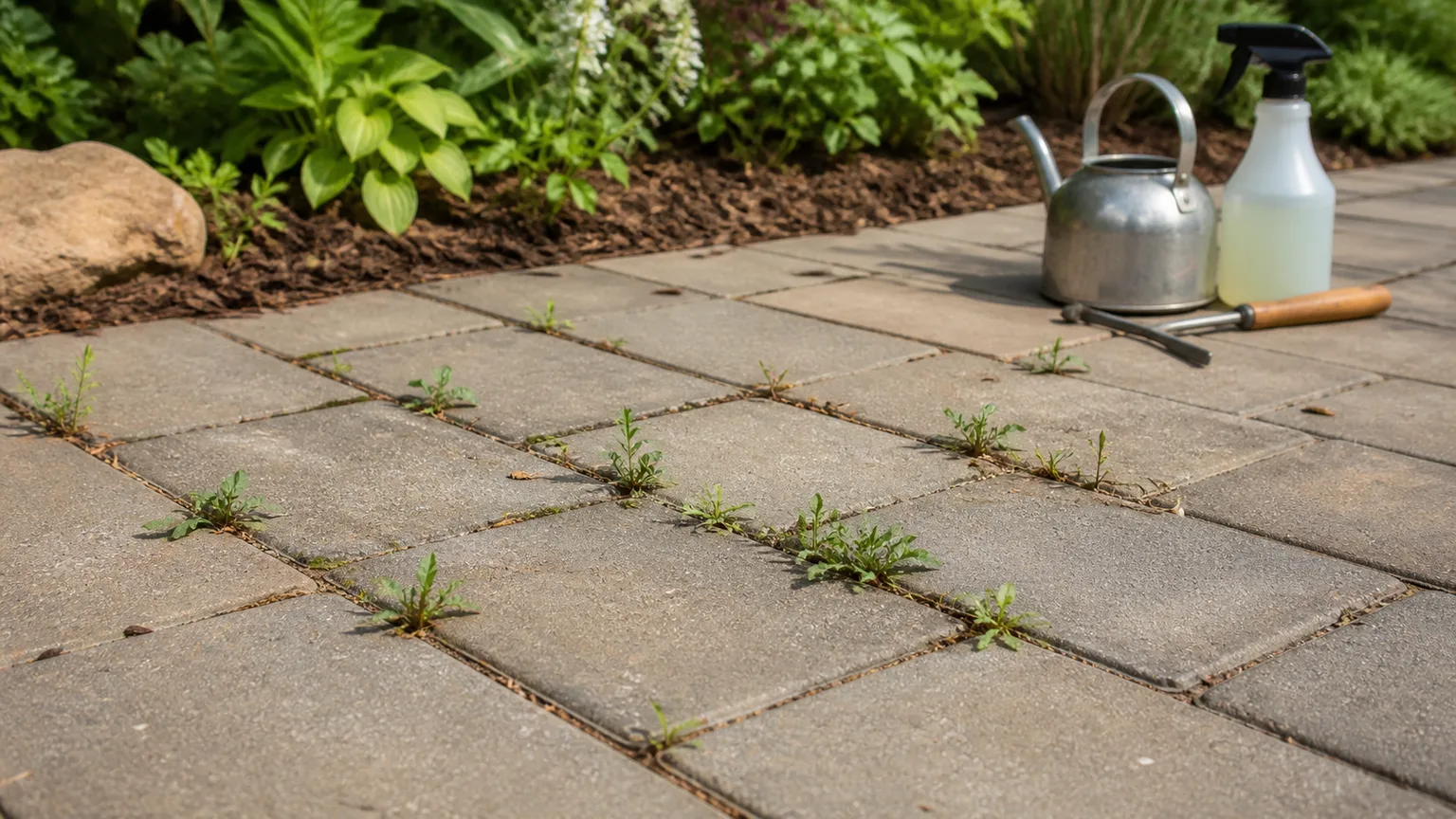
Weeds between pavers are usually growing in the joint material, not through the paver itself. Windblown seeds, leaf fragments, dust, and a little retained moisture can turn a narrow seam into a tiny planting bed.
The most dependable natural strategy is a sequence: remove the weed, clear the loose organic matter, and restore the joint. The six methods below give you different ways to handle the first step, but none can compensate for joints that are empty, eroded, or repeatedly filled with debris.
The short answer: remove roots, then close the joints
For a few young weeds, use a weeding knife or narrow hand fork to loosen the joint and lift the plant with as much root as possible. This is the best starting point when the pavers sit beside a lawn, flower bed, vegetable garden, or any place where spray, heat, and runoff could reach desirable plants. The Royal Horticultural Society recommends a hooked weeding knife for weeds between paving slabs, which is a useful distinction from using a broad shovel that can pry the pavers apart.
Use boiling water when you have a small, isolated patch on hardscape and can direct the stream precisely. Use vinegar only as a carefully targeted contact treatment for small weeds when you accept that it may burn the leaves without killing the root. A pressure washer is better for a neglected patio whose joints need to be cleaned before they are refilled; flame-weeding is a specialist option for dry, nonflammable hardscape; and corn gluten is a limited prevention experiment, not a cure for established plants.
If weeds return within weeks, do not simply repeat the same killing method. Look at the joint. Missing sand, deep organic buildup, shifted pavers, standing water, or a nearby seed source is usually the reason the next generation has somewhere to grow.
Why weeds grow between pavers
Seeds arrive from above
Most paver weeds are not pushing up through an intact base. They are colonizing the surface seam after seeds arrive by wind, birds, mowing, foot traffic, or soil carried onto the patio. Once a seed lodges in loose joint sand mixed with dust and decomposed leaves, it has the essentials for germination even though the surrounding surface is stone.
Wide or eroded joints make this easier because they hold more material and moisture. Repeated sweeping, runoff, freeze-thaw movement, and pressure washing can gradually remove joint material; a surface that looked tight last year can become a row of open seed pockets this year.
Identify annual weeds versus perennials
The plant’s life cycle changes the best method. Annual weeds such as many crabgrass seedlings and small broadleaf seedlings can often be removed early, before flowering and seed production, because their roots are shallow and their stored reserves are limited. Perennial weeds such as dandelion, bindweed, or creeping grasses can regrow from a root, crown, or underground stem even after the top looks dead.
You do not need a perfect species identification for every patio weed, but you should notice whether the plant returns from the same point. The RHS explains that annual weeds are generally easier to remove while persistent perennials may require repeated cutting or more complete root removal. That distinction is why a quick spray or heat treatment can look successful for a few days and still fail to solve the problem.
Gardening Know How’s weed reference makes the same practical point: control depends on the weed type. A tactic that works on a seedling may fail on a mature perennial with a protected crown or underground runner.
Pick the method that fits your pavers
Use this quick decision rule before you reach for a tool:
| Situation | Best first choice | Main limitation |
|---|---|---|
| A few young weeds beside plants | Hand-pull and lift the roots | Slow across a large patio |
| Small patch on isolated hardscape | Boiling water | Scald risk; may miss deep roots |
| Tiny broadleaf weeds in a precise seam | Spot-spray vinegar | Non-selective; foliage burn is not root removal |
| Patio or walkway with filled, neglected joints | Low-pressure cleaning | Removes joint sand along with weeds |
| Dry, open, nonflammable hardscape | Flame-weeding | Fire and heat can damage people, plants, or structures |
| Bare joints where new seedlings are the issue | Corn gluten, cautiously | Timing and product directions matter; it will not kill established weeds |
The word “natural” does not mean harmless. Vinegar, boiling water, and flame all kill desirable plants as readily as weeds when they touch or heat them. Treat the hardscape as a boundary: the closer a joint is to living plants, dry mulch, painted surfaces, or a drain, the more attractive hand removal becomes.
1. Pull young weeds and lift the roots
Hand removal is the most precise method and often the most permanent for isolated weeds. It removes the plant rather than merely browning the leaves, and it does not leave a spray residue or add heat to the paver surface.
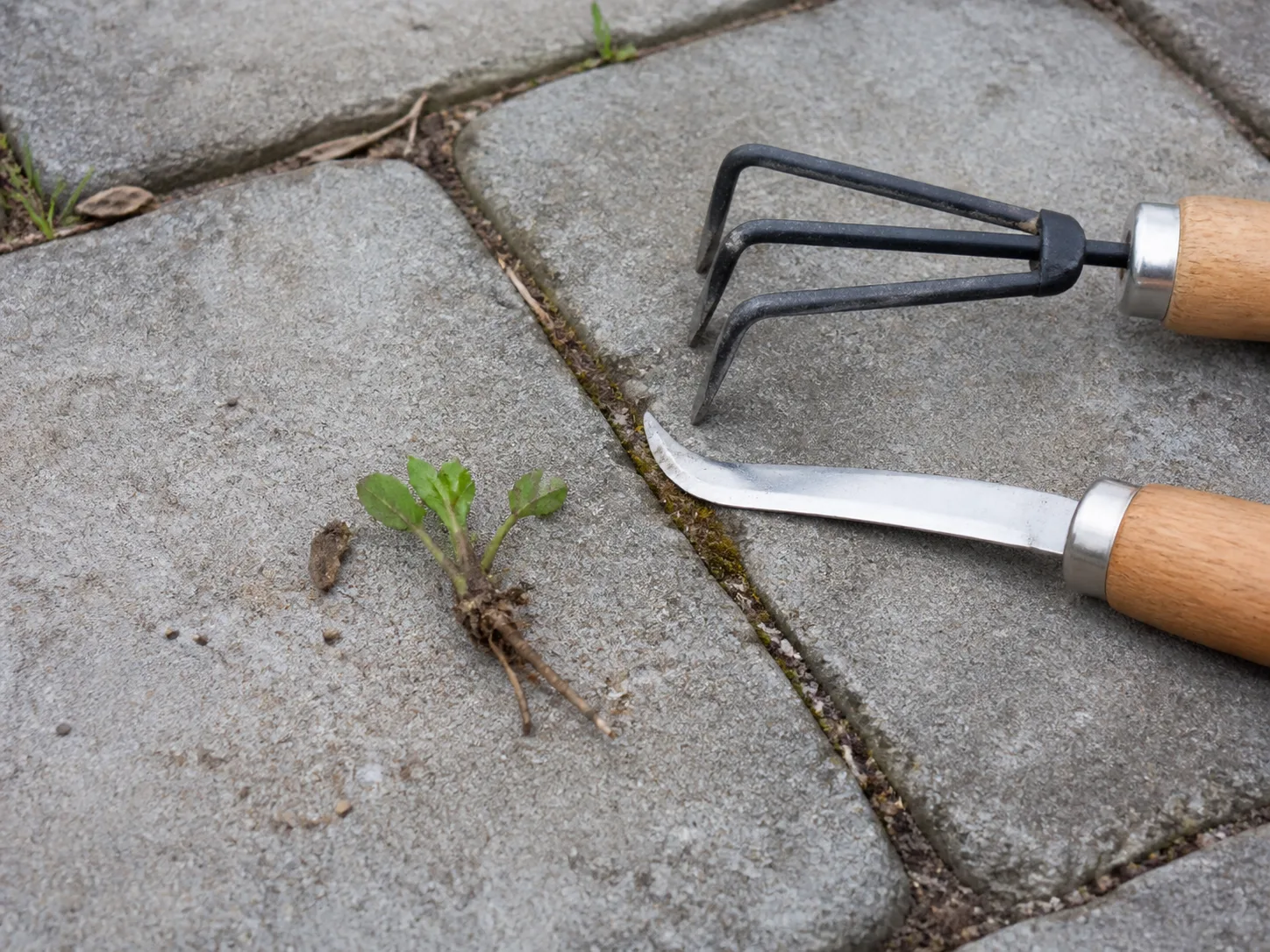
Work after light rain or wet the joint lightly so the surrounding material releases more easily. Do not flood the area; the goal is to soften the compacted seam, not wash more sand out of it. Slide a weeding knife, old butter knife reserved for garden work, or narrow hand fork down beside the crown, loosen from two sides, and lift steadily.
For a dandelion-like taproot, loosen deeper than the visible crown and pull vertically. For a grass or creeping perennial, follow any white runners or connected crowns you can see. If the root breaks, remove the pieces you can reach and watch that spot for regrowth instead of assuming the job is finished.
How to do it without widening the joint
Avoid levering hard against the paver edge. Insert the tool into the joint, not under the paver, and make several small movements rather than one large twist. If the seam is already empty, lift the weed and loose debris with a narrow tool, then stop; digging deeper can disturb the bedding layer and make the joint wider.
Collect the pulled weeds, especially if they have flowers or seedheads. Do not toss mature seed-bearing weeds into a cool home compost pile if the pile will not reliably heat enough to destroy them. Put them in the appropriate yard-waste stream for your area, or bag them according to local rules.
2. Pour boiling water on small patches
Boiling water is a useful contact treatment for a few young weeds on hardscape. Pour slowly and close to the target so the heat reaches the foliage, crown, and the upper part of the joint instead of splashing across the patio. A narrow-spout kettle gives you more control than a large pot.
The Colorado State University Extension guidance on natural weed control also stresses applying boiling water only to the weed, not nearby plants. That warning matters even between pavers: heat can run along a damp seam toward a lawn edge or ornamental planting, and steam or splashes can burn you.
Use this method on a calm day when you can keep people and pets away until the surface cools. Do not pour boiling water onto a frozen or very cold paver surface, and do not assume every stone handles sudden heat equally well. Test a discreet area first if the pavers are old, cracked, thin, sealed, or made from a material you cannot identify.
Expect to repeat the treatment when the weed is mature or has a substantial root system. Once the top has collapsed, sweep out the dead material and inspect the joint; leaving the organic remains in place gives the next seed a ready-made pocket.
3. Spot-spray vinegar with realistic expectations
Vinegar works as a contact desiccant: the acetic acid damages the plant tissue it wets. It is most useful on small, exposed weeds in a seam where you can keep the spray off everything else. It is not a soil sterilizer, and it is not a reliable permanent treatment for an established perennial.
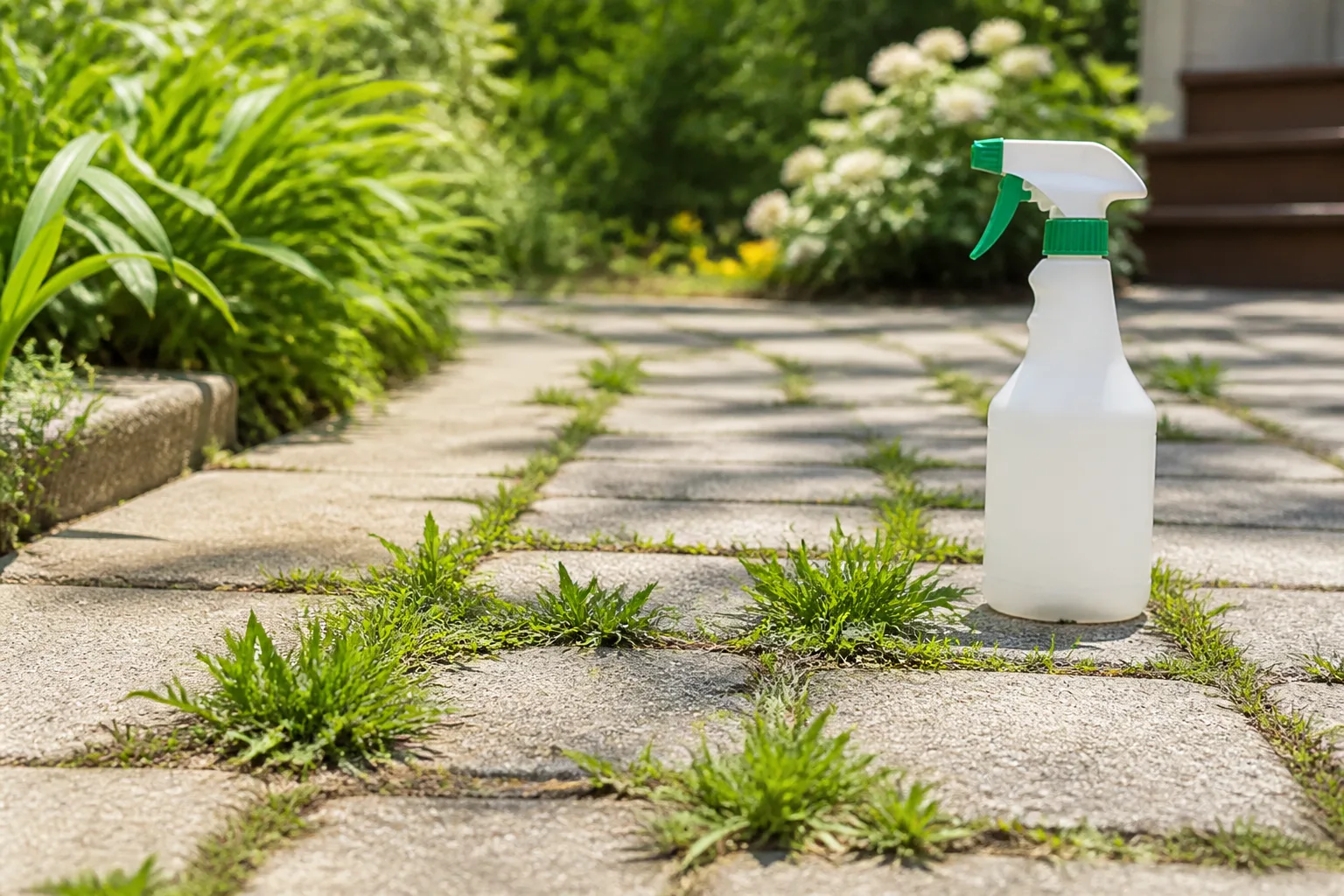
The USDA Agricultural Research Service reports that 5% and 10% vinegar solutions killed weeds in the first two weeks of growth, while older plants needed stronger concentrations; the study also observed regrowth from perennial roots. That is a more useful expectation than “vinegar kills weeds”: young foliage may die quickly, but the root system and future seed are separate problems.
Do not mix a homemade vinegar spray with salt just because the combination is popular online. Salt can move with water into surrounding soil, damage nearby plants, and leave a longer-lasting problem than the original weed. The Colorado State Extension list specifically notes that salt makes soil uninhabitable for months and is better avoided except in places such as isolated cracks where no plants are meant to grow.
When vinegar helps—and when it disappoints
Vinegar is a reasonable choice when the weed is small, the seam is isolated, the weather is dry enough to keep the spray from washing away, and you can shield nearby foliage. It is a poor choice for a large infestation, a grass-like perennial, a joint beside edible plants, or a surface draining directly into a pond or storm inlet.
Household vinegar is usually around 5% acetic acid. Horticultural products can be much stronger, but “stronger” also means more corrosive. Wear the protective equipment and follow the product label for any concentrated product; protect your eyes and skin, do not spray in wind, and never use a food container or an unlabeled bottle for garden chemicals. The safest way to make vinegar more useful is often to apply it more precisely, not to keep increasing the concentration.
4. Power-wash neglected joints before refilling them
Pressure washing is a reclamation tool, not routine weed maintenance. It makes sense when weeds, moss, soil, and old joint sand have filled a broad area and you are prepared to clean the seams and restore them afterward.
Start with a small hidden section. Use the lowest pressure and widest fan pattern that loosens the growth, keep the wand moving, and direct the spray across the joint rather than straight down into the bedding. A close, concentrated blast can scar some surfaces, push sand out from under the pavers, or turn a minor weed problem into a loose, uneven patio.
Work in manageable sections so you can see what is actually being removed. Pick up the loosened weeds and sludge instead of letting it settle into a lower drain or wash into a garden bed. After the surface dries, check whether pavers have shifted, whether joints are empty, and whether water now pools in a low spot.
The critical follow-up is joint repair. Pressure washing does not create weed prevention; it removes the old material that was holding the weeds. Refill the clean, dry joints with a suitable jointing material for your installation, then follow that product’s instructions for compaction and water activation. If you skip that step, the open seams will collect new debris almost immediately.
5. Flame-weeding for dry hardscape only
A propane torch can knock back small weeds in an open paver or concrete area by heating the foliage and crown. You are not trying to create a bonfire or char the surface; a controlled pass that wilts the plant is the goal. This is a specialized option for hardscape, not a general-purpose garden shortcut.
The Epic Gardening guide to natural weed control notes that flame-weeding can suit concrete, asphalt, paths, and pavers, while also emphasizing the danger around dry vegetation. That limitation is decisive. Do not torch a joint beside dry leaves, ornamental grasses, wood mulch, fences, siding, vehicles, stored lumber, or a structure with combustible debris underneath it.
Check local fire restrictions and the weather before using a torch. Skip windy, drought-stressed, or exceptionally dry conditions. Keep a charged hose or suitable water source nearby, wear closed shoes and eye protection, and keep children and pets away. Never use a flame tool around a leaking fuel connection or in a location where you cannot see what is behind and below the joint.
Flame is a top-growth treatment. Perennial weeds may resprout, and repeated passes can be less efficient than pulling the root or repairing the joint. If a weed has a thick crown, a long runner, or a protected stem tucked beside a raised paver, hand removal is usually the better decision.
6. Use corn gluten as a prevention experiment
Corn gluten meal is often described as a natural pre-emergent. The important distinction is that a pre-emergent is meant to interfere with newly germinating seedlings; it does not kill the weed already standing in the joint, and it does not remove a perennial root.
If you try it, start with a clean, empty joint and follow the exact label directions for the product you bought. Timing must line up with the germination window, and moisture after application can change the result. Do not treat it as a permanent barrier or scatter it into adjacent beds where you are trying to start seeds; the Colorado State Extension guidance warns that corn gluten can interfere with seeds and should not be used casually around plants you want to establish.
Corn gluten is a better fit for a controlled trial on a small, isolated hardscape edge than for a heavily eroded patio. A paver joint is exposed to rain, sweeping, foot traffic, and fresh seed arriving from above, so the more durable prevention usually comes from keeping the joint full and removing organic debris. Think of corn gluten as one possible layer, not the layer that makes an unstable installation weed-proof.
What to do after the weeds are gone
Killing or pulling the visible plant is only the first half of paver weed control. Use a stiff, narrow brush or joint tool to remove dead stems, leaf mold, and loose soil, then sweep the area clean. If the joint is still deep and empty after that, the next seed has already been given an invitation.
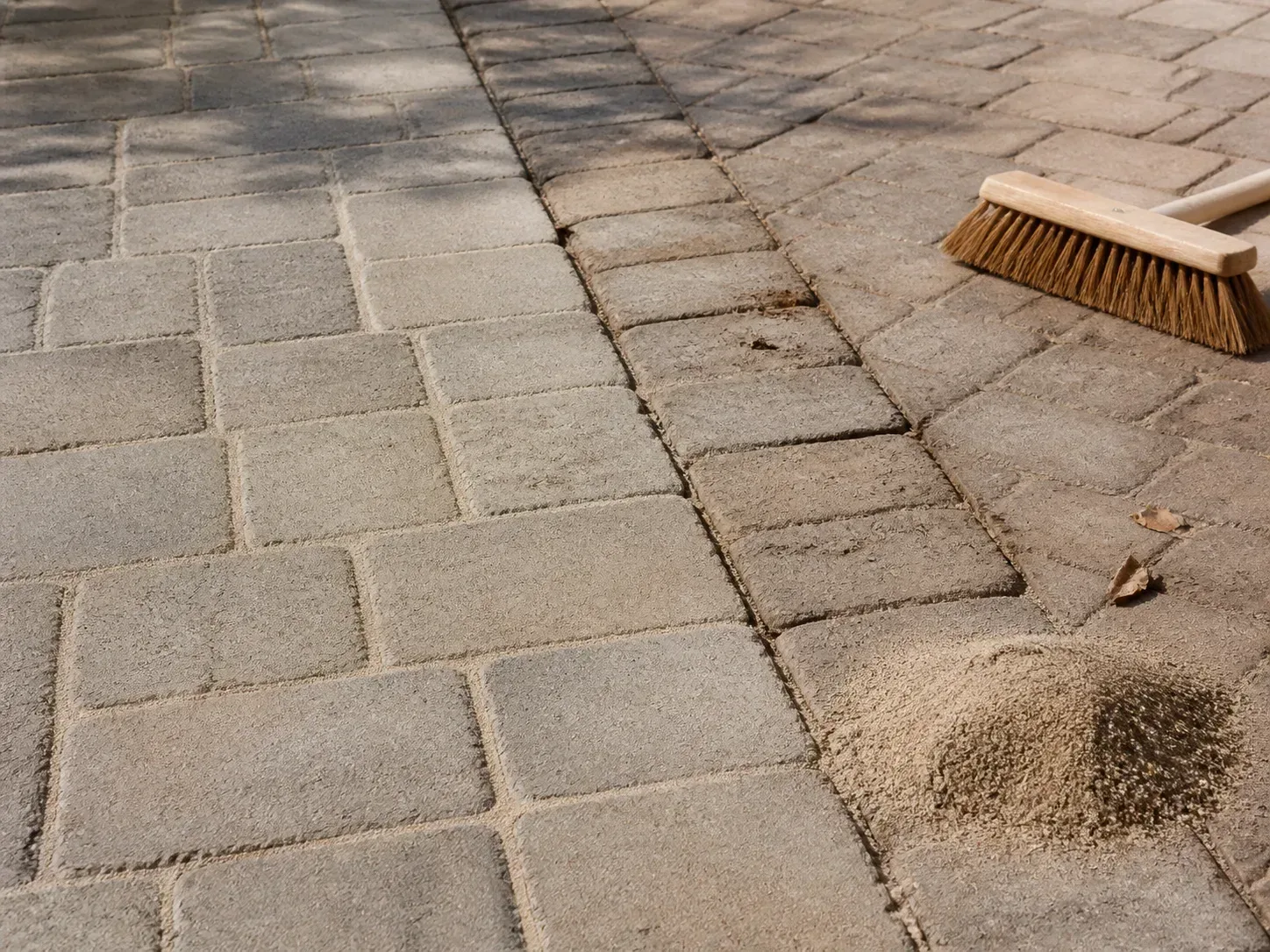
Refill eroded joints
The correct joint material depends on the paver system, joint width, drainage design, and manufacturer instructions. For a small repair, use a compatible jointing sand or other material intended for your pavers; do not blindly pack ordinary garden soil, compost, or fine mulch into the seam. Those materials add organic matter and can support more seedlings.
For a larger reset, the basic sequence is: remove the weeds and failed material, let the surface dry, check the pavers and base, sweep in the recommended joint material, compact as directed, and clean residue from the paver faces before any wetting step. Polymeric sand can provide more stable joints in suitable installations, but it is not a magic weed killer and must be applied exactly as its instructions require. A haze left on pavers or sand washed out of the joint is a preventable application failure.
If the patio has sinking sections, wide recurring gaps, or water pooling after rain, address that physical problem before relying on a natural spray. Surface treatment cannot correct a base that is moving or a joint that is continuously being washed out.
Sweep and inspect on a schedule
Sweep leaves, flower petals, soil, and grass clippings off the pavers before they break down into joint material. A quick inspection after heavy rain, snowmelt, or freeze-thaw movement catches missing sand while the repair is still small. Keep lawn edges trimmed so creeping grass does not get a head start at the boundary.
The best time to remove a weed is before it flowers. One small plant is a hand-removal job; a mature plant with seedheads is also a seed-distribution event. If you see the same weed returning from one location, mark that joint mentally and choose a root-focused method rather than repeating a foliage-only treatment.
Common mistakes that bring weeds back
Using salt as a routine fix. Salt can kill plants in a crack, but it can also move into soil with rain and harm nearby roots. It is a poor choice wherever runoff reaches a lawn, bed, tree root zone, or water feature.
Spraying a windy day. Vinegar is non-selective. A small drift onto grass, a groundcover, or a plant leaning over the patio can cause the same leaf damage you wanted on the weed.
Pouring heat beside desirable plants. Boiling water and flame do not know which plant you meant to save. Use a board or shield only if it can be positioned safely, and choose hand removal when the gap is crowded.
Pressure-washing without a refill plan. A clean-looking patio with empty joints is not a finished job. Photograph or note the sections that need joint material before you start so cleaning and restoration happen as one project.
Treating every weed like a seedling. If a plant returns from a crown or root, a contact treatment may only reset the clock. Lift the root where possible, or cut the top repeatedly while you plan a more complete joint repair.
Leaving the debris in the seam. Dead foliage, dust, and decomposed organic matter become the next seedbed. Sweep it away after every removal pass, especially before a rainy period.
A simple seasonal routine for paver weed control
In early spring, inspect every joint after the ground has thawed and remove the first seedlings before they flower. If sand has been lost, repair the affected sections while the patio is clean and dry. This is also the moment to decide whether a recurring problem is really a joint-maintenance problem rather than a need for a stronger weed killer.
During the growing season, walk the edges once a week or after a stretch of warm, wet weather. Pull isolated weeds immediately. Use boiling water or a precise vinegar treatment only where the hardscape is safely separated from plants, and reserve a pressure washer for a planned cleaning-and-refill job.
In late summer and fall, clear leaves and grass clippings before they settle into the seams. Remove flowering weeds before they release seed, then check low areas where runoff deposits soil. Before winter, look for shifted pavers and empty joints; repairing those openings now reduces the number of seed pockets waiting for spring.
No natural method makes an outdoor surface permanently immune to seeds. The durable goal is simpler: keep the joints tight enough and clean enough that a windblown seed cannot easily become an established plant. When a weed does appear, handle it while it is still a one-tool problem.
Conclusion
The best natural way to keep weeds from growing between pavers is not one miracle ingredient. It is a matched response: lift a few weeds by the roots, pour boiling water on a small isolated patch, spot-treat young foliage with vinegar only when you can control the spray, pressure-wash a neglected surface only if you will refill the joints, flame-weed only on genuinely safe hardscape, and treat corn gluten as limited seed prevention rather than a cure.
After removal, clean the seams, restore missing joint material, sweep away organic debris, and inspect the surface through the seasons. That combination removes today’s weeds and takes away the loose, dirty, moisture-holding joint that lets tomorrow’s weeds start.