How to Grow and Care for Common Milkweed
Grow common milkweed for monarch butterflies: planting depth, fall sowing, cutting propagation, spread management, coastal cautions, and how it compares to swamp milkweed.
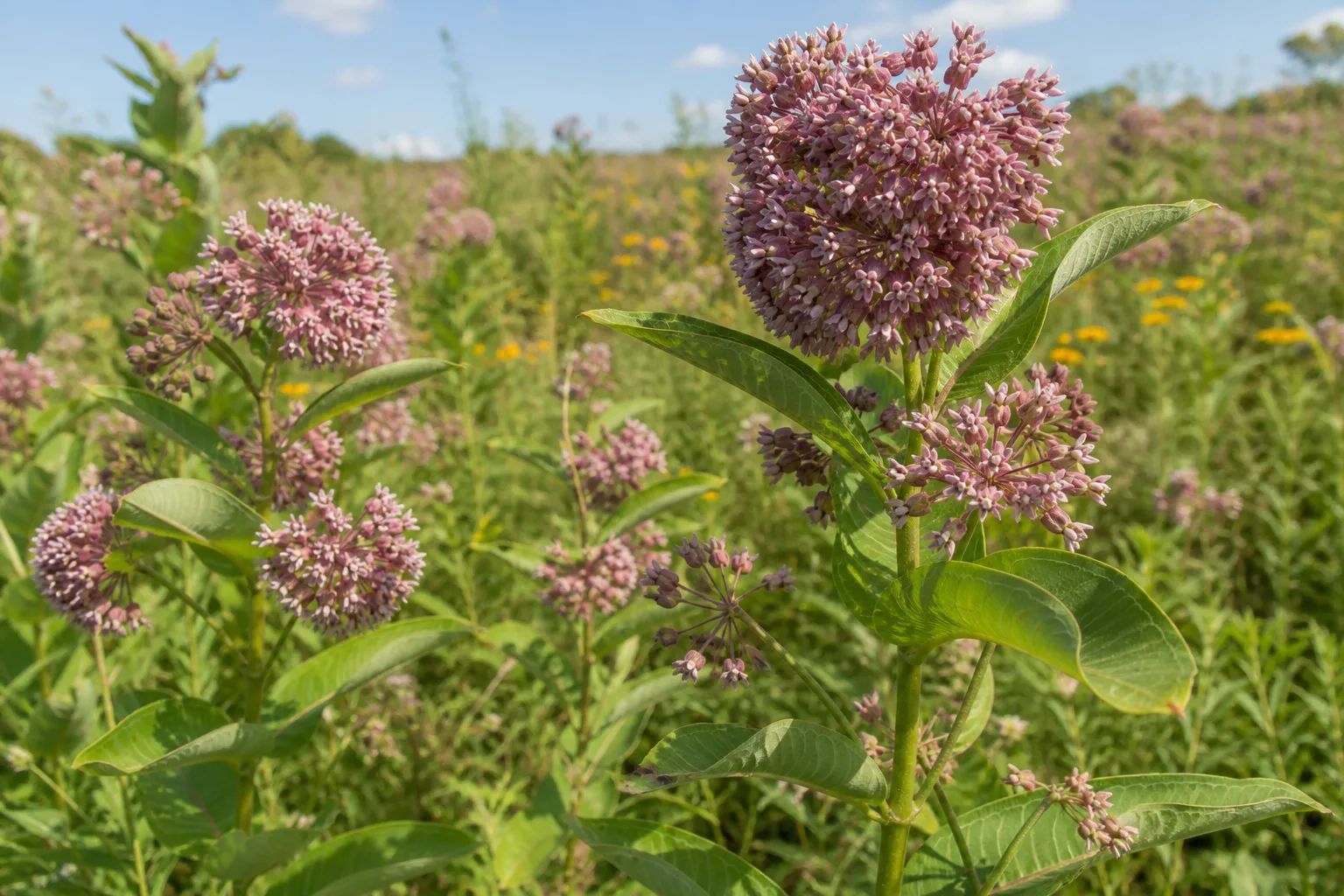
Common milkweed (Asclepias syriaca) is the rough-textured native perennial that built the monarch butterfly’s reputation in eastern North America. Thick stems rise 3 to 5 feet (sometimes taller in rich soil), topped with fragrant pink-to-lavender flower balls that hum with bees, then give way to warty seed pods that split in fall and sail on silky comas. Caterpillars chew the broad opposite leaves; the milky sap they ingest stores cardiac glycosides that make adult monarchs unpalatable to many predators.
That ecological partnership is why gardeners plant it — and why the same rhizomatous roots that restore meadows can overrun a tidy perennial border. This guide covers where common milkweed belongs, how to start it from seed or cuttings, how to contain spread without abandoning monarchs, and the coastal and tropical-milkweed cautions conservation groups emphasize today.
Why Common Milkweed Anchors Monarch Habitat
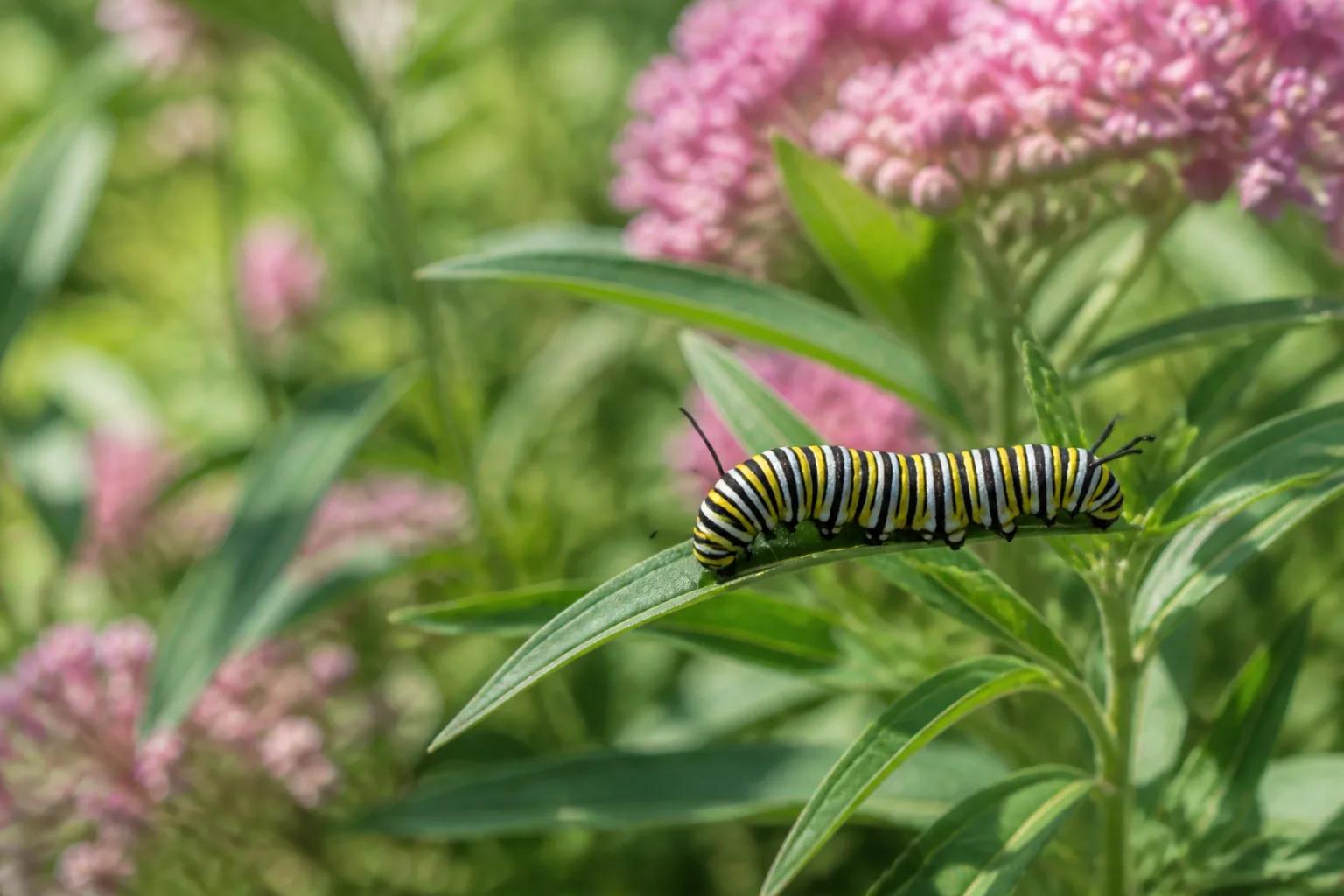
Monarch populations have declined enough to land on the IUCN Red List as endangered in 2022, with ongoing habitat loss along migration routes. Backyard patches cannot replace prairie restoration, but they supply host plants where females search for egg-laying sites. The National Park Service notes that monarch caterpillars feed exclusively on milkweed leaves and that the plant’s cardiac glycosides help protect larvae and adults from predation.
Common milkweed is one of the most widespread native Asclepias species in the eastern United States and Canada. NC State Extension describes it as a rapid-growing larval host and nectar source for butterflies, bees, and other pollinators from June through August. In early summer generations — before heat pushes monarchs toward later-blooming species — common milkweed often carries the heaviest caterpillar loads in its native range.
The trade-off is temperament. This is not a behaved border perennial. It naturalizes by rhizomes and wind-blown seed, looks weedy when not in bloom, and resents shade. Treat it as a meadow and butterfly-garden workhorse, not a foundation planting beside the front walk — unless you enjoy editing runners every spring.
Common Milkweed at a Glance
| Feature | Details |
|---|---|
| Common names | Common milkweed, butterfly flower, silkweed, Virginia silk |
| Botanical name | Asclepias syriaca (Apocynaceae) |
| Plant type | Herbaceous perennial, native wildflower |
| Mature size | 3–5 ft. tall, 2–2.5 ft. wide per crown; colonies spread wider |
| Sun | Full sun (6+ hours); intolerant of shade |
| Soil | Average to poor, well-drained; tolerates dry, rocky, and clay soils |
| Soil pH | Acidic to neutral (roughly 4.8–7.2) |
| Bloom time | Late spring through midsummer (June–August in most regions) |
| Flower color | Pink, lavender, greenish white; strongly fragrant |
| Hardiness | USDA zones 3–9 (NC State Extension) |
| Native range | Central and eastern North America |
| Spread | Rhizomes + wind-dispersed seed |
| Toxicity | Toxic to humans, dogs, cats, and horses (ASPCA) |
| Wildlife value | Monarch larval host; nectar for pollinators; supports milkweed tussock moth, milkweed bugs, and specialist beetles |
Stems and leaves exude white latex when broken — a quick ID clue alongside the opposite, oblong leaves with pinkish midveins. Seed pods are warty, 2–4 inches long, and split along one seam when ripe.
Common Milkweed Versus Swamp Milkweed and Butterflyweed
All three species feed monarch caterpillars, but they fit different sites. Picking the wrong milkweed is how gardeners end up fighting invasiveness or watching plants wilt in the wrong moisture regime.
Common milkweed (A. syriaca) spreads aggressively by rhizomes and seed. It tolerates dry, infertile soils better than swamp milkweed and produces the largest, most fragrant flower clusters. Best for meadows, fence lines, and dedicated butterfly patches where spread is acceptable or actively managed.
Swamp milkweed (A. incarnata) forms upright clumps and prefers consistent moisture. It spreads mainly by seed, not running roots — easier in mixed perennial borders. See our swamp milkweed growing guide for rain-garden placement and cultivar notes.
Butterflyweed (A. tuberosa) demands sharp drainage and bright orange blooms on drought-tolerant taproots. It is harder to transplant and suits berms and sandy edges rather than heavy clay lows.
When Common Milkweed Is the Right Choice
Choose common milkweed when you have room for a colony: a sunny meadow strip, a back fence wildlife zone, a school or community plot, or a corner of the yard you are willing to mow around. Skip it for formal foundation beds, narrow side yards between neighbors, and containers you cannot monitor — the taproot and rhizomes make pots a short-term solution at best.
If you need monarch host plants in a mixed flower border with minimal spread risk, start with swamp milkweed or regional clumping natives from your local nursery. Add common milkweed only where rhizome runners will not cross property lines or swallow prized perennials.
Light and Site Selection
Common milkweed demands full sun. Six to eight hours of direct light produces sturdy stems and the densest flower clusters. Shade yields leggy growth that lodges in summer storms and attracts fewer egg-laying monarchs, which visually scan for milkweed leaves in open settings.
Site permanence matters. Plants develop deep taproots and spreading rhizomes that resent repeated transplanting. Plant where the colony can stay for years — a sunny meadow, the sunny side of a hedgerow, or a dedicated pollinator island inside a larger native perennial planting. Avoid tree root competition; milkweed will not outcompete mature shade trees for light or water.
Mark planting locations with labeled stakes in fall. Common milkweed emerges late — often weeks after dandelions and daylilies green up — and dormant crowns get weeded out by gardeners who forget what they planted. A short stake with the date prevents accidental loss in April.
Soil, Water, and Dry-Site Performance
NC State Extension lists common milkweed for average, well-drained soils and notes tolerance of poor, dry, and rocky conditions. Unlike swamp milkweed, it does not need constant moisture once established. That drought tolerance is exactly why it colonizes roadsides, old fields, and disturbed ground.
Planting holes need no heavy fertilizer or rich compost amendments — excess nitrogen pushes soft, floppy stems and can delay flowering. Native soil with a modest compost top-dress at planting is enough. pH flexibility spans acidic to neutral soils across its range.
Water deeply during the first growing season if rain is scarce: about 1 inch per week until rhizomes establish. After year one, supplemental water is rarely necessary except in extreme drought. Overwatering in heavy clay without drainage can rot crowns — if your site stays soggy for days, swamp milkweed is the better milkweed choice.
Controlling Rhizome Spread Without Killing the Patch
Yes, common milkweed can take over garden space. It spreads underground by rhizomes and above ground by wind-blown seed. That behavior is a feature in restoration projects and a headache beside peonies.
Containment strategies that work in practice:
- Site it behind a mow strip. Plant the colony on the unmowed side of a turf edge or gravel path. Mow runners that creep into lawn before they establish new crowns.
- Harvest seed pods early. Clip pods when they turn brown but before seams split. You reduce volunteers two counties over and still leave some stems for insects if you leave a portion of the patch intact.
- Dig a rhizome barrier for small beds. Bury landscape edging 12–18 inches deep around a defined butterfly island. Check annually for escapes over the rim.
- Accept the meadow aesthetic. In a dedicated patch, let the colony expand within a fenced or edged zone rather than fighting every runner.
Pulling one shoot rarely eliminates the network — new shoots emerge from rhizome fragments. Smothering with cardboard and mulch works only if you are removing the patch entirely. For ongoing coexistence, combine pod management with physical edges rather than repeated herbicide, which harms the monarchs you planted milkweed to support.
Planting a Monarch-Ready Milkweed Patch
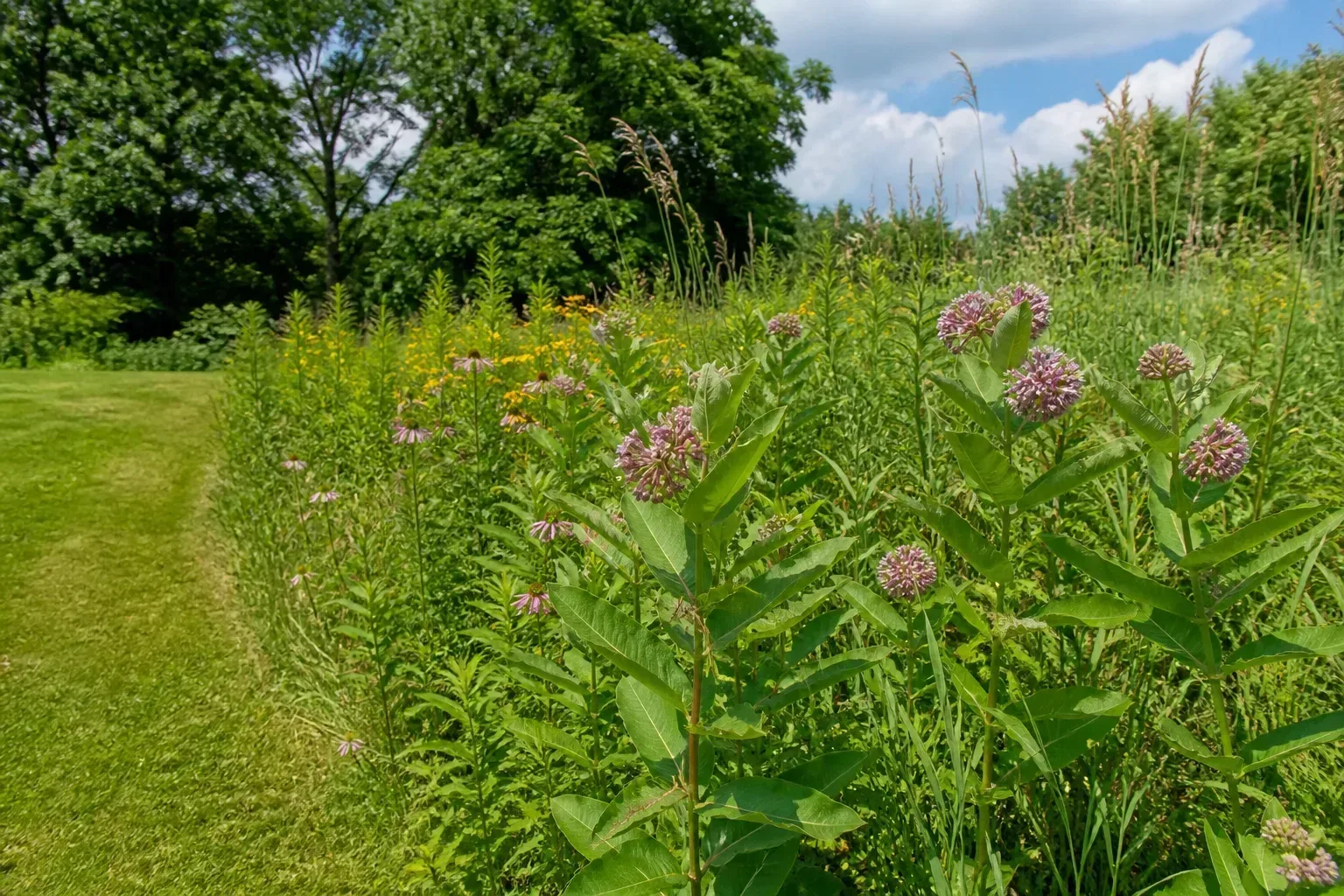
Transplant container-grown seedlings or dormant rhizome sections in early spring after frost, or sow seed in late fall directly where plants should grow. Space plants 18 to 24 inches apart if you want a filled patch within two seasons; rhizomes will close gaps faster than you expect.
Aim for at least six stems in one visual cluster — multiple plants improve the odds that searching females find leaves and that caterpillars have enough foliage through instar stages. Scatter additional milkweed species native to your region if space allows; diversity extends the host-plant season. Our monarch milkweed guide walks through pairing host plants with nectar flowers that bloom before and after milkweed peaks.
Plant away from areas treated with lawn herbicides or systemic insecticides. Monarch Joint Venture emphasizes that pesticides applied anywhere on the property can drift or persist in nectar and foliage, harming butterflies and caterpillars. A milkweed patch beside a chemically treated lawn is a trap, not habitat.
Add a shallow water source nearby — a birdbath saucer with a stone landing pad — if no natural moisture exists. Refresh water every few days and use mosquito dunks labeled safe for wildlife if standing water is unavoidable.
Growing Common Milkweed From Seed
Seed propagation is the cheapest way to establish large colonies and avoids disturbing taproots.
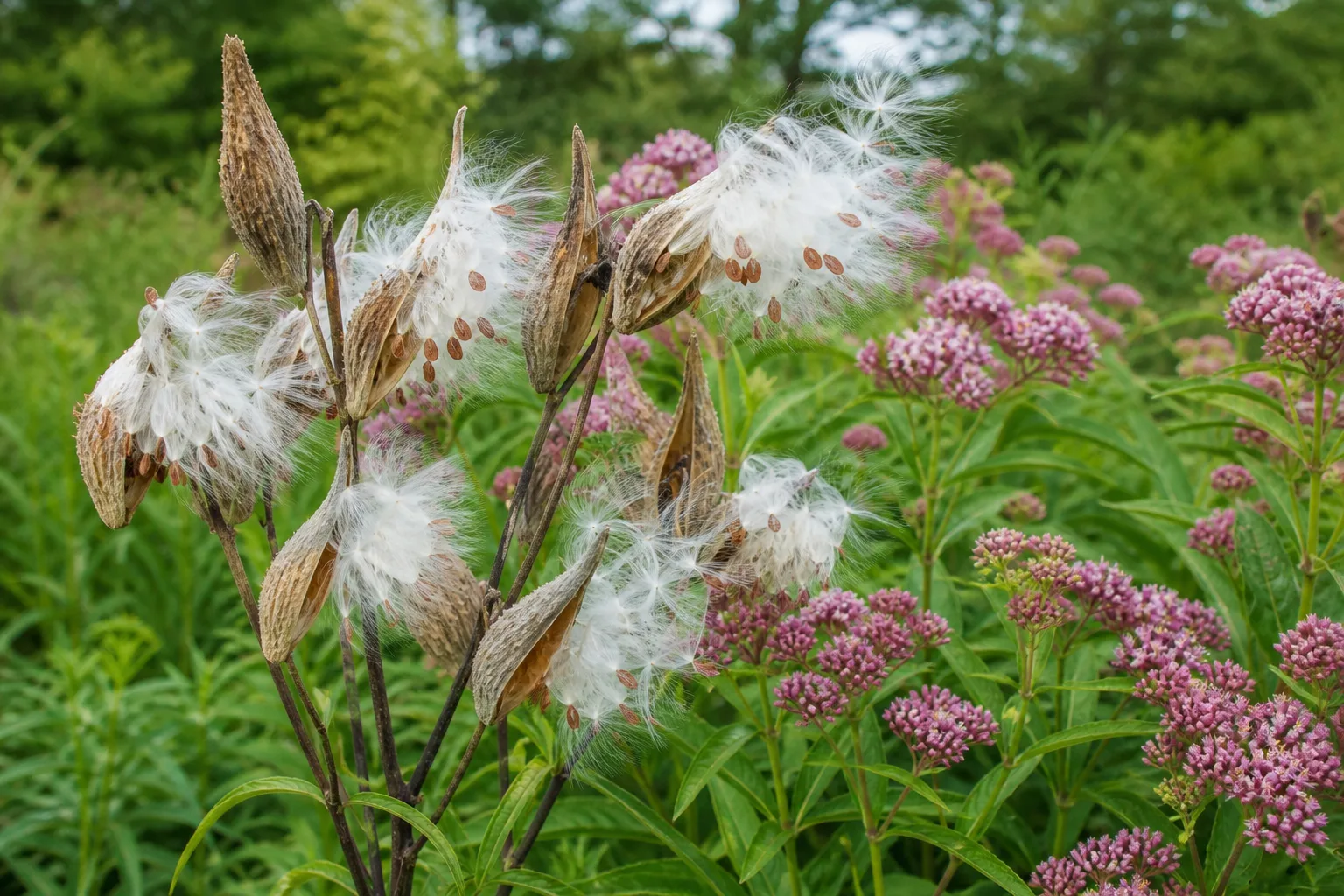
Collect pods in early fall when they turn brown and feel leathery. Split pods indoors over paper bags; dry seeds one to two weeks in open air. Discard weevil-damaged seeds (small holes in the seed coat).
Milkweed seeds require cold moist stratification for reliable germination. Without it, germination rates plummet.
Fall Direct Sowing and Indoor Stratification
Fall direct sowing (simplest method): Scatter seeds on weed-free soil in late fall after a hard frost. Press seeds into the surface and cover with no more than ¼ inch of soil or a light mulch. Winter freeze-thaw cycles stratify naturally. Seedlings appear in late spring when soil warms — often May in northern zones.
Indoor stratification: Wrap seeds in a damp paper towel or mix with moist perlite in a zip bag. Refrigerate 30 to 60 days at 35–40°F. Sow stratified seeds in peat pots or deep cells filled with seed-starting mix, cover with ¼ inch soil, and keep at 65–75°F under bright light. Bottom-water trays to avoid dislodging seeds. Expect sprouts within two weeks. Transplant peat pots directly into the ground in spring so taproots are not disturbed.
First-year seedlings often stay vegetative. Blooms commonly appear in year two or three as roots mature. Label first-year plants so you do not mistake them for weeds.
Propagating Common Milkweed From Stem Cuttings
Stem cuttings offer faster expansion than seed when you already have a source plant and want clones for a new bed the same summer.
Take 4-inch cuttings from green stems in midsummer when growth is soft, not woody. Choose stems with three to five leaf nodes. Remove lower leaves, dip cut ends in rooting hormone, and stick cuttings upright in a moist 80/20 perlite-to-peat mix. Keep pots in bright shade, not direct sun, and maintain even moisture.
Roots form in six to ten weeks. Transplant rooted cuttings into the ground before fall frost so rhizomes can anchor. Cuttings bypass seed dormancy but still produce the same rhizomatous spread as parent plants — site them where runners are welcome.
Division by digging taproots is possible but difficult; deep roots break easily. Cuttings and seed are more practical for most gardeners.
Pesticides, Nectar Plants, and Butterfly Garden Design
Host plants alone do not complete a butterfly garden. Adult monarchs need nectar from diverse flowers during migration and breeding. Pair common milkweed with late-summer natives — goldenrod, asters, blazing star — in a perennial flower garden layout that sequences bloom from spring through fall.
Never apply insecticides, fungicides, or herbicides on or near milkweed. Systemic products applied to lawns can translocate through soil and harm non-target plants. Even organic pyrethrin sprays kill caterpillars on contact. If aphids or beetles appear, use a strong water spray or hand removal after checking for monarch eggs and larvae.
Butterfly gardens succeed when neighbors cooperate. Talk to adjacent property owners about reducing spray schedules during peak caterpillar season — July and August in much of the eastern range. A single treated hedge can undo a careful milkweed patch.
Pests, Diseases, and Milkweed Aphids
Common milkweed attracts a predictable guild of specialists. Orange-and-black large milkweed bugs and small milkweed bugs feed on seeds in developing pods — annoying if you collect seed, rarely fatal to plants. Milkweed leaf beetles chew small holes; hose them off if numbers are high.
Oleander aphids (Aphis nerii) — bright orange clusters on stems and pods — are the pest gardeners notice most. They suck sap and produce sticky honeydew. Moderate aphid loads coexist with monarch caterpillars; beneficial insects often follow aphids. Remove aphids by spraying with water or rubbing them off only after confirming no eggs or caterpillars are on the same stem.
Snails and slugs damage young seedlings; iron phosphate bait around — not on — plants protects starts without the toxicity older metaldehyde baits posed to wildlife. Established stands outgrow occasional slug browsing.
Fungal leaf spots and occasional root rot appear in crowded, wet plantings. Improve air flow and avoid overhead irrigation rather than spraying fungicides near caterpillars. NC State Extension reports no serious disease problems on healthy specimens in appropriate sites.
Seed Pods and Self-Seeding Management
After bloom, spherical clusters give way to warty follicles. Each pod holds dozens of brown seeds attached to silky comas that float on the slightest breeze — the same mechanism as dandelion clocks, but launched in fall when cold stratification happens naturally in soil.
If you want more plants, let pods split and self-sow. If you want to limit spread, remove pods when they turn brown and before seams open. Wear gloves; sap irritates skin. Pods dry well for winter arrangements.
Volunteer seedlings appear in unexpected corners the following spring. Transplant them while young — taproots lengthen quickly — or pull them if they land in vegetable beds or lawn. One season of pod removal dramatically cuts long-distance seed escape without eliminating the colony.
Toxicity to Pets, Livestock, and Humans
All parts of common milkweed — leaves, stems, flowers, seeds, and sap — contain cardiac glycosides that defend caterpillars and threaten mammals. The ASPCA lists Asclepias species as toxic to dogs, cats, and horses. Ingestion can cause vomiting, weakness, diarrhea, abnormal heart rhythm, and death in severe cases.
Milky latex irritates skin and eyes on contact. Wear gloves when cutting stems or handling pods if you are sensitive. Teach children not to drink sap or eat seeds.
Plant milkweed away from pet run areas if animals chew vegetation. Call ASPCA Animal Poison Control at (888) 426-4435 or your veterinarian immediately if you suspect pet ingestion. Livestock grazing native meadows with milkweed should be managed through fencing or mowing before animals browse — the same toxins that protect monarchs harm grazing animals.
Coastal Planting, Migration, and Tropical Milkweed Risks
Not every region should add milkweed. Along southern coastal zones where monarchs overwinter — particularly southern California and the Gulf Coast — planting milkweed can interrupt natural migration cues and encourage year-round breeding where parasites accumulate. Conservation groups recommend nectar-rich native flowers instead of host plants in those overwintering areas. Check regional guidance from the Xerces Society and local native-plant societies before planting.
Tropical milkweed (Asclepias curassavica), often sold as annual bloodflower, is a separate issue. It stays evergreen in frost-free climates, hosts parasites when used year-round, and may delay migration when monarchs find lush leaves late in fall. It is not a substitute for native common milkweed in eastern meadows. Where tropical milkweed is already planted in warm zones, cutting it to the ground in fall mimics dormancy and reduces parasite load.
Common milkweed itself is native and dies back to the ground in winter across most of its range — appropriate for eastern and midwestern monarch breeding habitat. Match species to your ecoregion rather than planting whatever the big-box store labels “butterfly weed.”
Troubleshooting: Late Spring, Flopping Stems, No Caterpillars
Late spring absence is the most common panic. Crowns stay dormant until soil warms consistently — often mid to late May in zones 4–5, later after cold springs. Wait before digging. The stake you placed in fall is your best insurance.
Flopping stems usually mean too much shade, excess nitrogen from nearby lawn fertilizer, or overcrowded colonies competing for light. Move new plantings to a sunnier site in early spring or thin neighboring plants to improve air and light penetration.
No caterpillars despite healthy plants can reflect local monarch numbers, pesticide exposure nearby, timing mismatches between your bloom peak and female arrivals, or patches too small to notice. Expand to at least six stems, eliminate sprays, add nectar sources, and observe over multiple seasons — monarchs are migrants, not calendar appointments.
No blooms in year one is normal for seedlings. Mature rhizome divisions may bloom the first summer if they carried enough stored energy. Patience is part of milkweed culture.
Conclusion
Common milkweed is the monarch host plant that asks for space and returns with fragrance, caterpillars, and a meadow ecology no manicured hybrid can copy. Give it full sun and well-drained soil, plant six or more stems where rhizome spread is manageable, stratify seed or sow in fall, and keep the garden pesticide-free. Clip seed pods if volunteers are unwelcome, mark dormant crowns so spring weeding does not erase your work, and choose swamp milkweed or butterflyweed where common milkweed’s runners would cross a line you cannot redraw. Done with eyes open, it is one of the highest-impact native perennials you can add to eastern and midwestern habitat — rough around the edges, essential at the center of the monarch story.



