How to Grow and Care for Swamp Milkweed
Grow swamp milkweed for monarch butterflies: planting depth, rain garden placement, winter sowing, container tips, and how it compares to common milkweed.
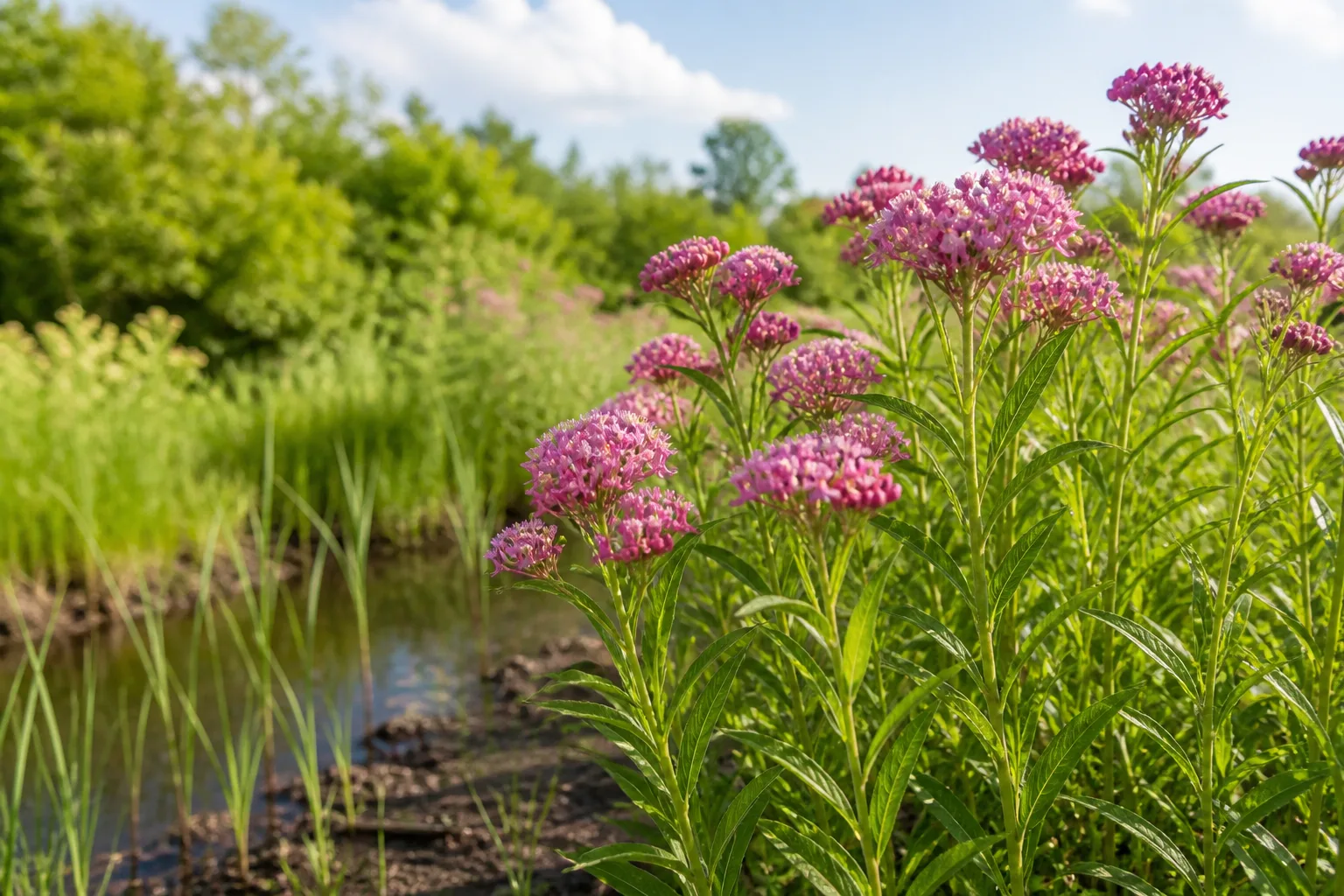
Swamp milkweed (Asclepias incarnata) is the wetland-native milkweed that gives monarch butterflies a nursery without taking over your entire border the way common milkweed often does. Clusters of vanilla-scented pink to mauve flowers rise on upright 3- to 5-foot stems from midsummer into early fall, feeding adult butterflies while leaves feed their caterpillars. If your garden has a low spot, rain-garden basin, or simply soil that never quite dries out, this is usually the milkweed to plant first.
This guide covers where swamp milkweed outperforms its cousins, how to plant and water it through establishment, seed stratification that actually works, and the deadheading decision most monarch articles skip.
Why Swamp Milkweed Belongs in a Native Garden
Monarch populations have declined sharply enough that the species landed on the IUCN Red List as endangered in 2022 and remains a candidate for U.S. federal listing. Backyard plantings will not reverse habitat loss alone, but they do supply critical host plants along migration corridors. Female monarchs lay eggs only on milkweed leaves; caterpillars eat nothing else before pupating.
Swamp milkweed fills a specific niche: it is native to sunny wetlands, stream margins, and wet meadows across much of North America, yet it adapts to average garden beds when moisture is reliable. NC State Extension lists it as deer-resistant, low-maintenance, and valuable from late spring through early fall bloom. Unlike common milkweed (A. syriaca), which spreads aggressively by rhizomes, swamp milkweed forms polite clumps and expands mainly by seed — easier to manage in suburban beds paired with other natives like purple coneflower in a perennial flower garden layout.
Pollinators beyond monarchs visit the nectar-rich umbels: bees, wasps, and butterflies of many species work the flowers from July through September in most regions. Seed pods split in fall, releasing silky-tufted seeds that ride the wind — a show in themselves and a free propagation source if you collect responsibly.
Swamp Milkweed at a Glance
| Feature | Details |
|---|---|
| Common names | Swamp milkweed, rose milkweed, pleurisy root, white Indian hemp |
| Botanical name | Asclepias incarnata (Apocynaceae) |
| Plant type | Herbaceous perennial |
| Mature size | 3–5 ft. tall, 2–3 ft. wide |
| Sun | Full sun to light partial shade |
| Soil | Clay or loam; moist to wet; tolerates average moisture when established |
| Soil pH | Acidic to alkaline (roughly 6.0–8.0) |
| Bloom time | Mid- to late summer into early fall |
| Flower color | Pink, mauve, rose-purple; white cultivars available |
| Hardiness | USDA zones 3–9 (NC State Extension) |
| Native range | North America — wet open areas, marshes, prairies |
| Toxicity | Toxic to humans, dogs, cats, and horses (ASPCA) |
| Wildlife value | Monarch larval host; nectar for diverse pollinators |
One correction worth stating plainly: some care tags still list zones 3–6 only. Reliable extension data supports zones 3–9. In zone 9, provide afternoon shade and extra moisture during dry spells.
Swamp Milkweed Versus Common Milkweed and Butterflyweed
All three are monarch host plants, but they solve different garden problems. Choosing the wrong one is the main reason gardeners complain about invasiveness or poor blooms.
Common milkweed (A. syriaca) runs by rhizomes and can colonize large areas. It suits meadows and restoration projects where spread is welcome. Stems are single and thick; fragrance is strong; dry soil tolerance is better than swamp milkweed’s.
Swamp milkweed (A. incarnata) clumps rather than carpets. It prefers consistent moisture, produces multiple stems per crown, and self-seeds modestly when pods mature. Most gardeners who want monarch habitat in a mixed border pick this species first.
Butterflyweed (A. tuberosa) demands sharp drainage and tolerates drought. Orange flowers attract adults; taproots make it the hardest to transplant. Pair it on berms or sandy edges while swamp milkweed handles the damp middle of a rain garden or wet-area planting.
When Swamp Milkweed Is the Better Pick
Choose swamp milkweed when your site stays moist after rain, you want upright pink flower clusters for cutting, or you need a monarch host plant that will not invade the neighbor’s yard. Skip it for dry slopes, xeric beds, or containers you forget to water — butterflyweed or common milkweed fits those conditions better.
Light and Site Selection
Full sun produces the stoutest stems and heaviest bloom. Six or more hours of direct light is ideal. Swamp milkweed tolerates light afternoon shade, especially in hot southern zones, but too much shade yields leggy stems that flop when flower clusters form.
Site selection matters because this plant develops a deep taproot and resents repeated moves. Plant it where it can stay for years — back of a pollinator border, along a fence line visible from the kitchen window, or in the lowest zone of a rain garden where water pools briefly after storms. Monarchs locate host plants visually; avoid hiding milkweed behind dense shrubs that block the silhouette of leaves.
Mark the planting spot with a short stake or labeled marker in fall. Swamp milkweed is notoriously slow to emerge in spring, often lagging weeks behind peonies and daylilies. Many gardeners accidentally weed it out in April because they forgot it was there.
Soil, Moisture, and Rain Garden Placement
In the wild, swamp milkweed grows in clay and loam that stays damp — marshes, fens, wet prairies, and stream banks. NC State Extension notes good drainage alongside moisture tolerance, which surprises gardeners who picture standing water 24/7. The goal is evenly moist root zones, not submerged crowns.
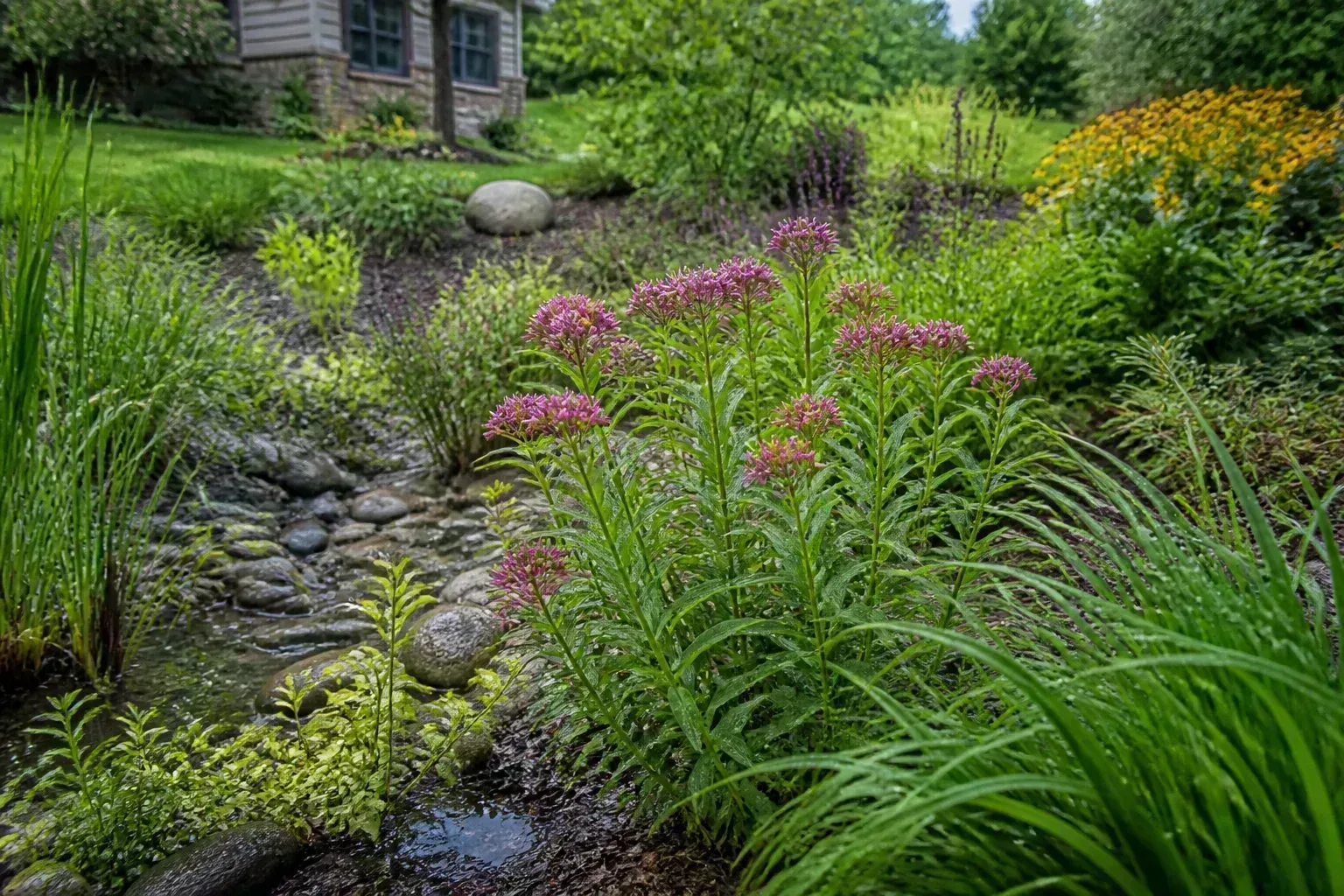
Rain gardens are a natural fit: plant in the mid or lower basin where soil drains within 24 hours but never bakes dry for weeks. Edge plantings along ponds and swales work equally well. Organic matter improves water retention in sandy sites; heavy clay usually needs no amendment beyond compost at planting.
Adapting Swamp Milkweed to Average Garden Soil
Once established — usually after one full growing season — swamp milkweed often survives in typical border soil if you water during drought. The first year is not negotiable: roots are building the taproot that carries the plant through dry spells later. Do not plant in pure sand on a hot slope and expect wetland performance.
If your yard is uniformly dry, invest in mulch and drip irrigation rather than fighting the plant’s biology. Alternatively, sink a shallow reservoir berm around the crown during establishment to hold moisture after watering.
Planting Swamp Milkweed in the Ground
Plant container-grown or bare-root swamp milkweed in spring after the last frost, or in early fall at least six weeks before your first hard freeze so roots settle in. Fall planting reduces first-summer watering demand in cold-winter regions.
Dig a hole twice the width of the root ball and just as deep. Set the crown at soil level — burying stems invites rot. Backfill with native soil mixed with compost; tamp gently and water deeply. Space plants 18 to 24 inches apart if you want a drift effect; 30 inches apart if you plan to let self-seeding fill gaps over time.
Bare-root plants shipped in spring may look dormant or shriveled. Soak roots in water for an hour, plant promptly, and keep soil consistently moist until new shoots appear. Do not fertilize at planting; excess nitrogen pushes foliage at the expense of flowers and can weaken stems.
Growing Swamp Milkweed in Containers
Containers control spread for small patios and rented yards. Use a pot at least 14 inches wide and deep with drainage holes. Terra cotta is heavier and less likely to tip when 4-foot stems bloom. Fill with quality potting mix — not garden clay — and place the pot where it receives full sun.
Container culture demands more attention than in-ground planting. Soil dries faster; plan to water when the top inch feels dry, sometimes daily in midsummer. Repot when roots circle the pot or emerge from drainage holes, but expect some transplant shock because of the taproot. Slide the plant out, move to a slightly larger pot, and water thoroughly.
In zones 3–6, sink pots in the ground before winter or insulate the container with burlap and bubble wrap so roots do not freeze solid. Roots in above-ground pots experience more freeze-thaw damage than crowns planted in soil.
Watering Through the First Year and Beyond
New plantings need about 1 inch of water per week from rain or irrigation during the first growing season. Deep, infrequent soaking trains roots downward better than light daily sprinkles. After establishment, in-ground plants in moist sites often need little supplemental water except during extended drought.
Overwatering in heavy clay without drainage can rot crowns — another reason rain-garden depth placement matters. Yellowing lower leaves with soggy soil signal too much water, not too little. Mulch with shredded bark or leaf mold to slow evaporation and keep soil temperatures steady.
Straight Species Versus Cultivars for Monarchs
The straight species Asclepias incarnata is the reference ecotype for regional monarch interactions. Cultivars bred for garden performance — ‘Ice Ballet’ (white flowers) and ‘Cinderella’ (deep pink with white centers) — offer longer bloom display and uniform height in design-focused beds.
Research on nativars is mixed: some studies suggest certain double flowers or altered petal forms reduce pollinator access, while many single-flowered cultivars perform well. For maximum ecological confidence, plant straight species from regional native nurseries. For a formal border where you still want monarch visits, single-flowered cultivars are a reasonable compromise. Avoid heavily doubled flowers that restrict nectar access.
Pruning, Deadheading, and Late-Season Cleanup
Swamp milkweed needs no pruning during the growing season. Deadheading spent umbels keeps beds tidy and can prolong flowering on some plants, but it removes developing seed pods and reduces self-seeding. If monarch caterpillars are present, leave flowers and foliage alone — stripping leaves starves larvae.
After frost kills stems, cut dead stalks to 2–3 inches or leave them standing for winter interest and insect habitat. Leave the marker stake in place for spring. Compost only pest-free material; discard stems coated with heavy aphid infestations if you treat chemically elsewhere in the garden.
Propagating Swamp Milkweed From Seed
Seed propagation is the most reliable way to grow large numbers cheaply and the least traumatic to taproots compared with division.
Collect pods in early fall when they turn brown and begin to split along one side. Open pods indoors over paper bags; dry seeds one to two weeks. Discard seeds damaged by weevils — small holes and frass inside the pod are the tell.
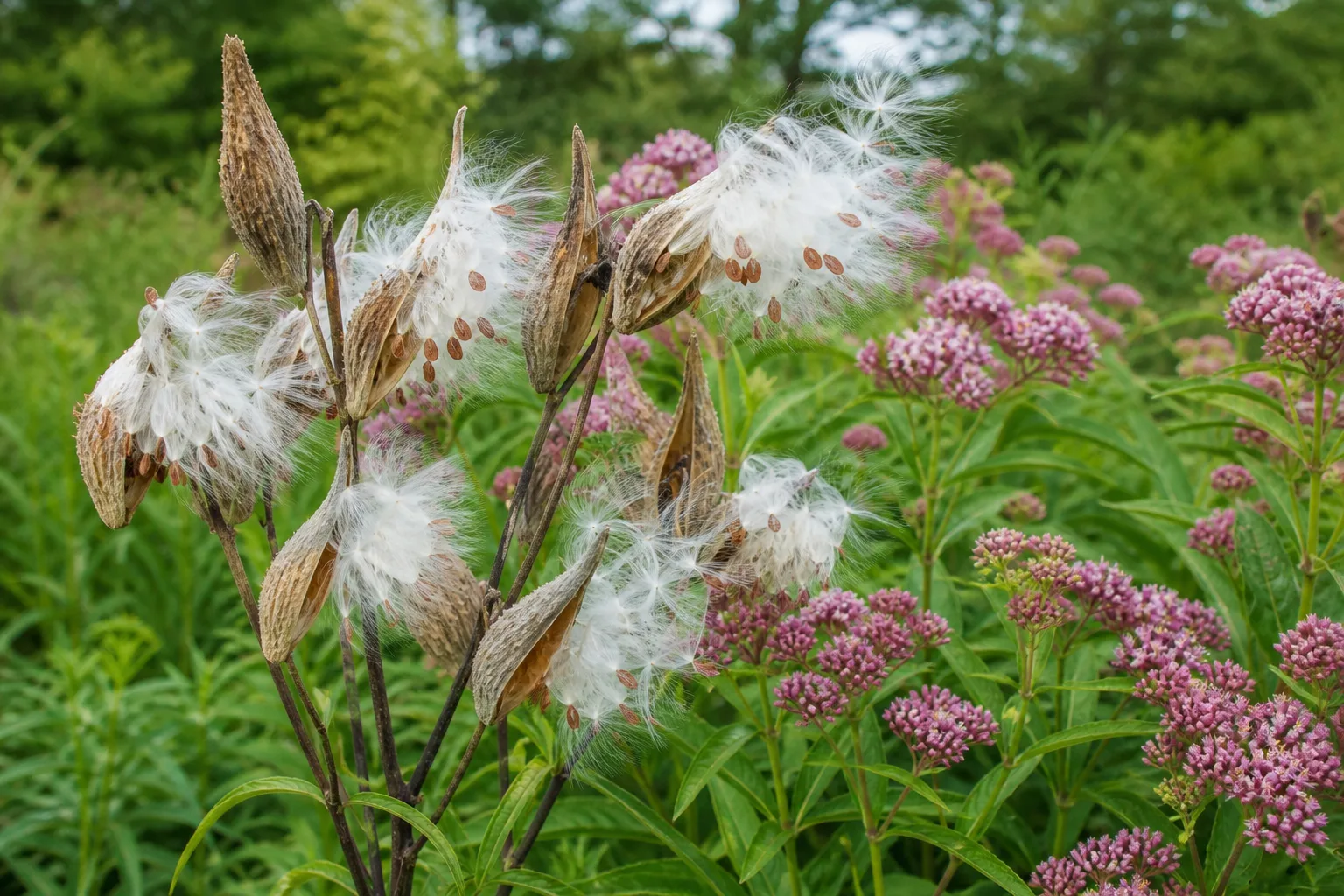
Milkweed seeds need cold moist stratification. Mix seeds with damp perlite or sand in a zip bag and refrigerate 4 to 12 weeks at 35–40°F. Sow stratified seeds indoors 4 to 8 weeks before last frost in deep cells (2 inches wide, 4 inches deep). Press seeds lightly into moist seed-starting mix, cover with a thin soil layer, and keep at 65–75°F under bright light. Germination drops above 85°F.
Transplant seedlings outdoors after the last frost when they have at least one set of true leaves. Harden off for a week before setting plants in their permanent spots. First-year seedlings often stay vegetative — blooms commonly appear in year two or three as roots mature.
Winter Sowing and Cold Stratification
Winter sowing skips the refrigerator: plant seeds in ventilated milk jugs or pots outdoors in late fall or winter. Freeze-thaw cycles stratify naturally. This method works well in zones 4–7 where consistent outdoor cold is reliable. Label jugs clearly — you will not see sprouts until late spring, and patience is part of the process.
Dividing and Managing Spread
Swamp milkweed spreads by short rhizomes and by wind-borne seed, but it is not considered invasive in its native range. Clumps widen slowly; rogue seedlings pull easily when young.
Division is possible in early spring when shoots are 2–3 inches tall, but the taproot makes success uneven. Slice through the crown with a sharp spade, replant divisions immediately, and water faithfully. Many gardeners prefer leaving established clumps intact and propagating by seed instead.
If self-seeding is unwanted, remove pods before they split or deadhead flowers in late summer. In loose, moist soil, expect a few volunteers each spring — share them with neighbors building pollinator patches.
Pests, Diseases, and Monarch Caterpillars on Your Plants
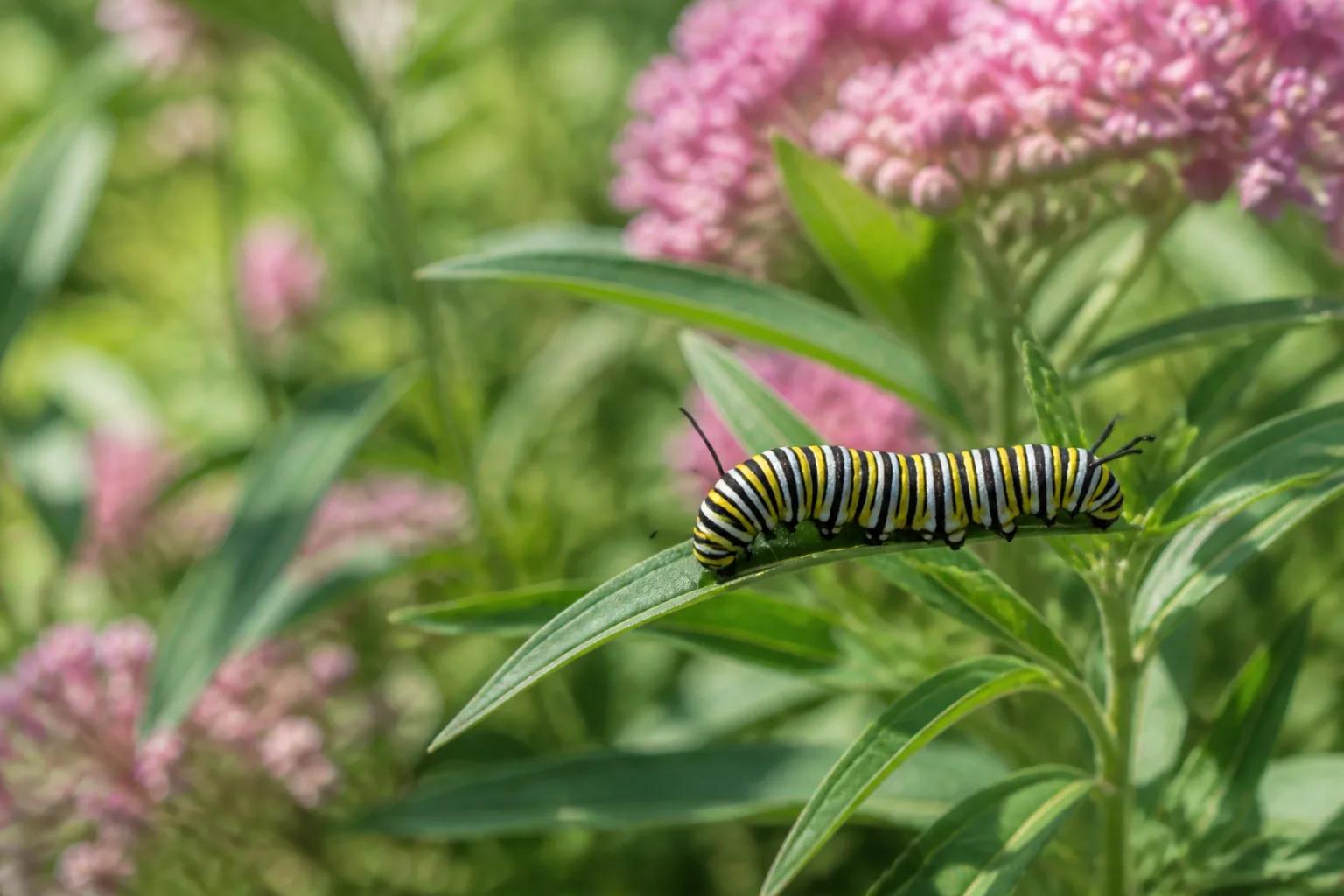
Swamp milkweed attracts the usual milkweed guild. Orange-and-black milkweed leaf beetles chew small holes; a strong hose spray dislodges light infestations. Aphids cluster on stems and pods — monarch caterpillars coexist with moderate aphid loads, and over-spraying insecticides kills the larvae you planted milkweed to support.
Large and small milkweed bugs pierce seeds in developing pods and can reduce viable seed. Handpick or accept some loss if you are not collecting seed. Milkweed tussock moth caterpillars eat leaves alongside monarchs; they rarely defoliate healthy stands alone.
Fungal leaf spots appear in crowded, wet foliage. Improve air circulation by thinning neighboring plants rather than spraying preventively. NC State Extension reports no significant disease problems on healthy specimens.
When you find monarch caterpillars, watch but do not rescue unless numbers are extreme — birds and parasitoids are part of the ecosystem. Moving caterpillars indoors requires fresh milkweed daily and clean rearing containers to prevent disease spread.
Troubleshooting: No Blooms, Flopping Stems, and Yellow Leaves
No blooms in year one is normal. The plant invests in roots before flowering. If mature plants fail to bloom, suspect excess nitrogen from lawn fertilizer runoff, drought stress, or too much shade. Hold off on high-nitrogen feeds near milkweed.
Flopping stems usually mean insufficient sun, overcrowding, or overly rich soil pushing soft growth. Stake temporarily or relocate to a sunnier site in early spring.
Yellow leaves on lower stems often indicate overwatering or natural senescence in fall. Yellowing with crispy edges points to drought. Adjust water before reaching for fertilizer.
Late spring absence is the most common “problem” — the plant is not dead. Wait until soil warms consistently in May (later in cold zones) before declaring loss.
Toxicity to Pets, Livestock, and Humans
All milkweed parts contain cardiac glycosides (cardenolides) that protect caterpillars from predators and pose real risk to mammals. The ASPCA lists Asclepias species as toxic to dogs, cats, and horses. Ingestion can cause vomiting, weakness, diarrhea, abnormal heart rhythm, and in severe cases death. Stems exude a milky sap when cut that irritates skin and eyes — wear gloves if sensitive.
Plant milkweed away from pet play areas if animals chew plants. Teach children not to drink sap or eat seeds. Call ASPCA Animal Poison Control at (888) 426-4435 or your veterinarian promptly if you suspect ingestion. Livestock grazing near wet meadows with native milkweed should be managed by fencing or mowing before animals browse — the same toxins that make monarchs unpalatable to birds affect grazing animals.
Conclusion
Swamp milkweed rewards gardeners who match it to moisture and sun: upright pink blooms, manageable clumps, and a front-row seat to monarch biology. Plant the straight species or a single-flowered cultivar in a permanent spot, keep soil moist through the first year, stratify seeds before sowing, and mark the bed so spring lateness does not become an accidental weeding. Pair it with well-drained natives on the berm and wet-tolerant companions in the basin, and you build a pollinator garden that functions through summer droughts without handing the yard over to rhizome runners. Leave some flowers for caterpillars, collect a few pods if you want more plants, and treat the sap with the respect a potent native perennial deserves.