Fast-Growing Plants That Crowd Out Other Plants
Six popular garden plants grow fast enough to crowd out neighbors. Compare spread habits, containment tools, and safer alternatives before you plant.

A bare slope, an empty shade strip, or a new privacy hedge can make fast-growing plants feel like the obvious answer. They fill space in a season, block views, and give you something green where nothing else wanted to grow. The trouble starts when that same vigor becomes a competition problem: roots under the lawn, shoots in the vegetable bed, seedlings in the neighbor’s hedge, or a 60-foot evergreen wall you did not budget time to manage.
The six plants below are popular for good reason. They are not automatic mistakes. They are aggressive growers that reward planning and punish casual planting. This guide explains how each one spreads, what containment actually requires, and when the maintenance cost outweighs the benefit.
If you are standing in the nursery aisle weighing a fast filler against a slow shrub, start with one question: how does this plant move when nobody is watching? The answer determines whether you need a pot, a barrier, a pruning calendar, or a different plant entirely.
Why Vigorous Growers Solve One Problem and Create Another
Fast growth is a feature until it becomes the only feature you notice. Aggressive plants outcompete neighbors by combining rapid top growth with one or more spread tools: horizontal rhizomes, surface runners that root where they touch soil, heavy seed crops moved by birds, or simply a mature size that shades and dries everything within reach.
That is different from a slow shrub that eventually gets big. These plants expand the footprint every year unless you intervene. A mint patch does not stay a patch. Running bamboo does not respect a property line drawn on paper. Leyland cypress does not stop at the height you imagined when the liners were knee-high.
Aggressive vs Invasive: Labels That Change Your Plan
Invasive is a legal and ecological term. A plant is typically classified invasive when it is non-native and documented to cause environmental or economic harm—displacing natives in wild habitats, altering fire regimes, or clogging waterways. State noxious-weed lists and regional invasive-plant councils track those species.
Aggressive describes garden behavior: the plant spreads quickly within cultivated ground, jumps beds, or becomes difficult to remove even if it rarely escapes into natural areas. Many bamboo cultivars fit the second category more cleanly than the first. Golden bamboo (Phyllostachys aurea) is listed invasive in several states and by the NC Invasive Plant Council, yet the everyday homeowner problem is usually property management, not wilderness invasion.
Knowing which label applies changes your strategy. Invasive status may affect what you can legally plant or transport in your state. Aggressive status means you need barriers, spacing, and a calendar whether or not the plant appears on a government list.
How to Spot a Plant That Will Crowd Neighbors
Before you blame “bad soil” or “too much rain,” look at how the plant moves. Three mechanisms cover most takeover stories in residential gardens.
Rhizomes, Runners, and Bird-Spread Seed
Rhizomes are underground stems. Running bamboo, lily of the valley, and mint all use them. New shoots can appear feet from the parent clump because the rhizome traveled horizontally while you were not looking. Even a thumbnail-sized rhizome fragment can restart growth after digging.
Stolons and surface runners are stems that run along or just under the soil and root at nodes. Mint also spreads this way when stems flop over bed edges. Japanese anemone expands through creeping roots as well as crown growth—delicate flowers above, persistent network below.
Seed rain is the third path. English holly (Ilex aquifolium) produces berries birds eat and deposit elsewhere. You may never plant holly in the back corner, yet find seedlings along fences and under trees. Seedlings are easier to pull young; ignored, they become second-generation hedges.
Site Conditions That Speed Takeover
Moist, fertile, partly shaded soil accelerates most of these plants. Lily of the valley naturalizes easily and NC State Extension notes it may become weedy and aggressive in regions with moist, cool winter climates, with reports of invasiveness in Wisconsin and Arkansas (NC State Extension: lily of the valley). Mint thrives in damp loam. Bamboo pushes hardest when water and organic matter are steady.
Disturbed soil—fresh beds, construction scrapes, new slopes—gives rhizomes an open runway. Edges matter: lawn meeting bed, bed meeting path, your soil meeting the neighbor’s. Those seams are where escape happens first.
A useful pre-plant test: imagine the bed in five years at peak summer growth. If the answer includes “I will deal with it then,” you are probably looking at an aggressive plant and should plan containment now, while the hole is still open and the barrier trench is still easy to dig.
Containment Strategies Worth Installing Before You Plant
Reactive digging after a plant has spread costs more than front-loaded containment. Match the tool to the mechanism.
Root Barriers, Sunken Pots, and Trench Lines
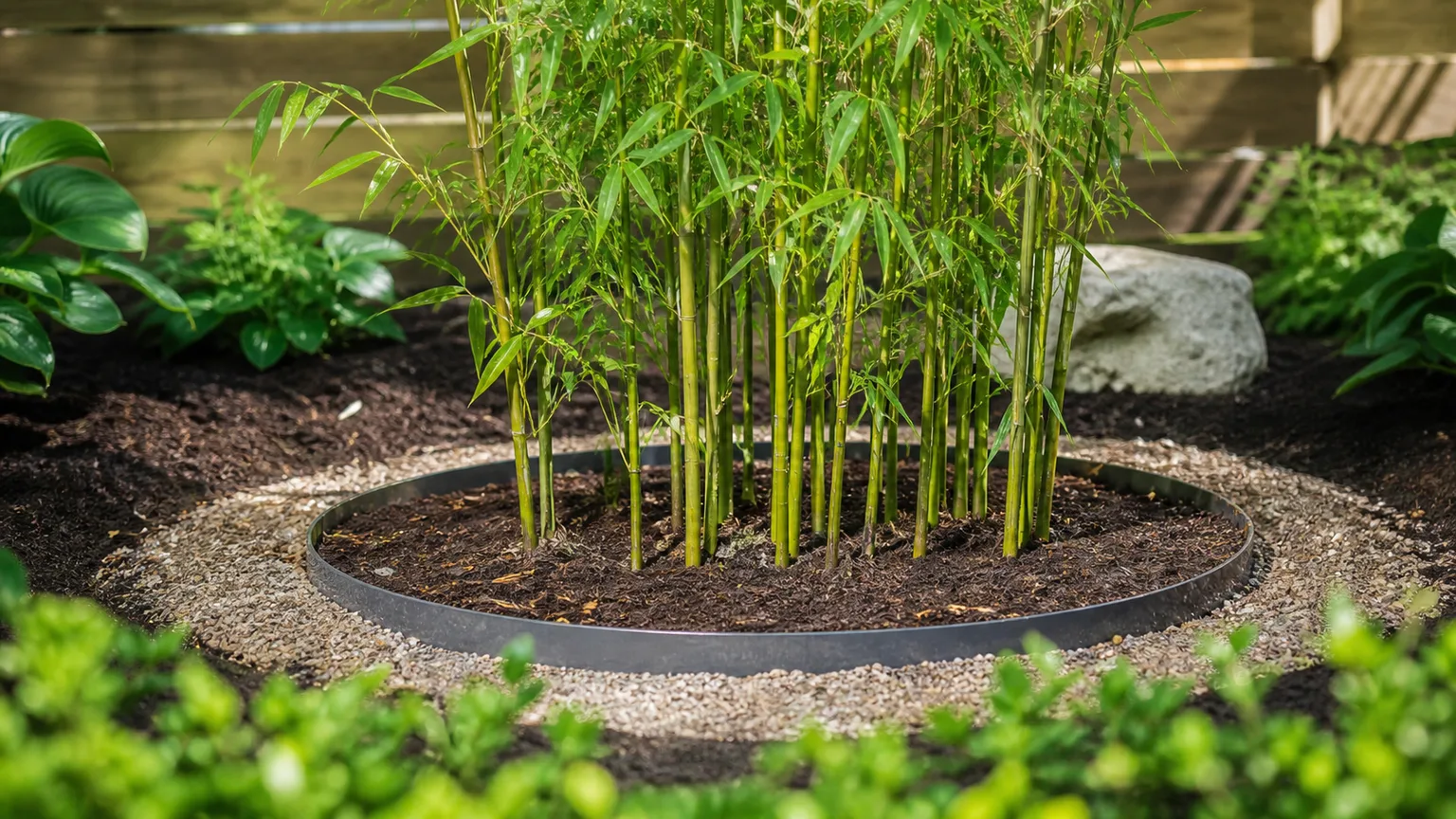
For running rhizomes, install a continuous HDPE root barrier 60–80 mil thick in a trench 24–30 inches deep, with 2 inches above soil so jumping rhizomes show themselves before they cross (biologyinsights.com bamboo control synthesis). Overlap seams according to manufacturer specs; a gap is an invitation.
For mint and smaller rhizome spreaders, a sunken pot works: place a container with drainage holes into the soil so the rim sits 1–2 inches above grade, preventing stems from rooting outside. Raised beds with root-proof liners are the scaled-up version.
For seed spreaders like holly, containment is partly behavioral: prune before berries form if you do not want volunteers, and scout fence lines each spring for seedlings.
Trench maintenance—an annual slice with a spade along a declared border—helps slow but does not stop strong rhizomes alone. Combine trench checks with barriers or pots for plants in the “high risk” tier.
The Maintenance Rhythm Aggressive Plants Demands
Vigorous plants need seasonal attention, not one heroic weekend.
- Spring: walk bed edges; kick or cut mint runners; identify bamboo shoots outside the barrier lip.
- Summer: mow or cut stray bamboo shoots weekly during peak push; deadhead holly if berry drop is a concern.
- Fall: divide Japanese anemone and lily of the valley only when you have time to remove all fragments; refresh mulch without burying barrier tops.
- Winter: plan removals; mark bamboo stands you intend to starve next season.
Skip a year and you are not “a little behind.” You are renegotiating bed ownership with a plant that does not forget.
Running Bamboo and Golden Bamboo Screens

Bamboo is the poster child for fast vertical cover and fast horizontal escape. Running types—notably many Phyllostachys species including golden bamboo—send rhizomes that can travel many feet per year and sprout shoots far from the original planting (NC State Extension: golden bamboo). NC State describes plants reaching 10–20 feet commonly, up to 30 feet, forming large stands that prevent native plants from establishing.
Bamboo is excellent for a contained privacy screen on a large lot with hardscape on all sides and a maintained barrier. It is a poor impulse buy for a shared suburban lot line without a written maintenance plan.
Running vs Clumping: The Purchase Decision That Matters Most
Running bamboo (monopodial) has long, thin rhizomes that extend horizontally before shooting upward. Clumping bamboo (sympodial)—many Fargesia types—expands slowly in tight clumps, often only inches per year. The nursery tag matters less than the rhizome type on the label.
If you want bamboo aesthetics without running risk, choose clumping species and still allow mature width. If you choose running bamboo, budget for barrier installation the same week you plant—not after shoots appear in the lawn.
Ongoing control for running types combines barrier monitoring, shoot cutting outside the line, and—for established escapes—multi-year starvation mowing (cut new shoots every one to two weeks until rhizome reserves collapse) or targeted systemic herbicide on fully leafed regrowth as a last resort on your own property, following label law.
Before you buy, ask the nursery for the botanical name and whether the plant is running or clumping. Common names like “bamboo” or “timber bamboo” do not tell you enough. A running Phyllostachys on a 40-foot suburban lot line is a different commitment than a clumping Fargesia in a back corner with paving on three sides.
Mint and Other Mentha Herbs
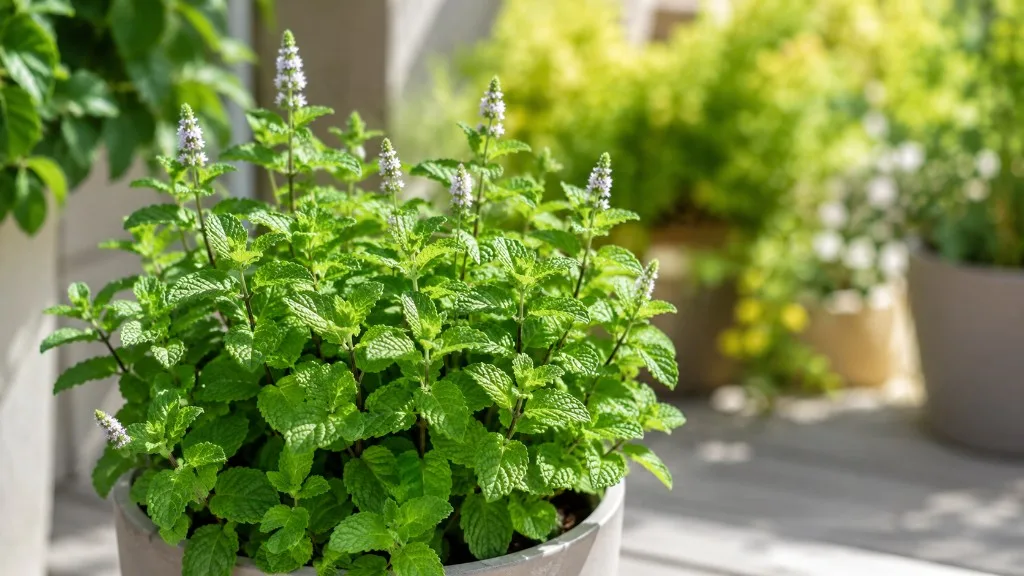
Mint (Mentha spp.) is the herb gardeners regret planting in open ground most often. Square stems, underground rhizomes, and stems that root where they touch soil let a single pot become a bed-wide mat in one growing season. The flavor is wonderful; the boundary discipline is not.
Default rule: grow mint in containers or sunken pots, not directly in mixed borders. If you must plant in soil, use a dedicated mint patch separated from vegetables and perennials by paving or a deep root barrier—and harvest aggressively so stems do not lean across the line. For variety comparisons and pot setup detail, see our types of mint and grow mint in pots or ground guides.
Mint in the ground near a lawn is how “I only planted a little” turns into mowing mint for years.
Peppermint and spearmint are the usual offenders, but all common culinary mints spread the same way. Variegated and novelty cultivars are not magically well-behaved. If you want mint flavor without mint geography, treat every Mentha as a container plant unless you have a paved mint ghetto with no shared soil.
English Holly and Self-Sown Seedlings
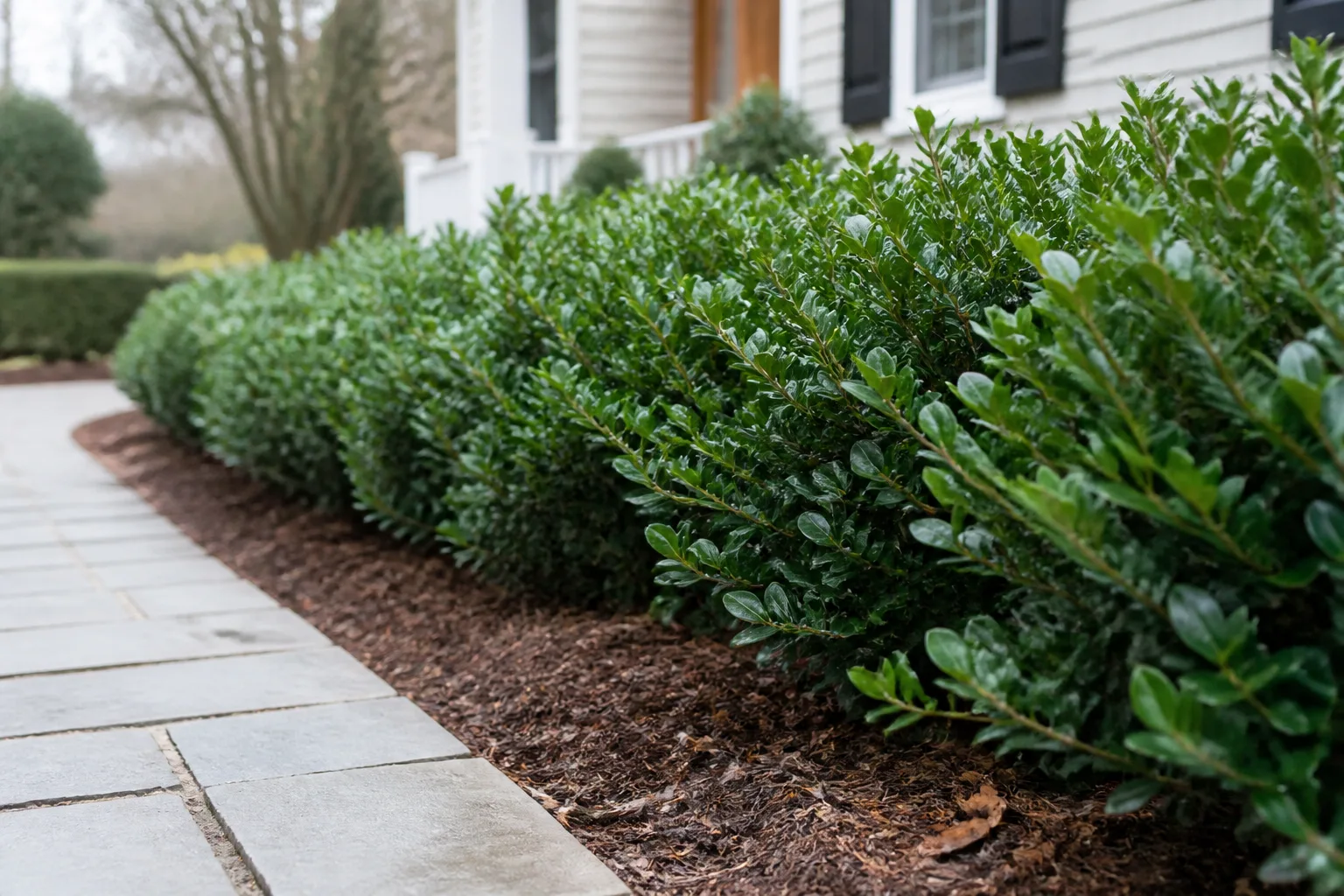
English holly (Ilex aquifolium) sells on glossy evergreen leaves and red winter berries. It tolerates sun or shade and a wide soil range—traits that help it establish beyond the hedge you meant to keep.
Birds distribute seeds. Seedlings appear in beds, fence lines, and occasionally neighboring yards. Female plants need a male pollinator for berries; once berries form, your control job includes seedling patrol, not just pruning height.
NC State lists English holly among plants with invasive potential in some regions; treat it as a managed hedge, not a plant-it-and-forget shrub (NC State Extension: English holly). Prune for size, remove volunteers while stems are pencil-thin, and consider native hollies such as American holly (Ilex opaca) where berry interest and evergreen structure are the goal but self-sowing is less welcome.
Mature English holly also competes for water in dry summers. A dense holly hedge can leave the bed on its sun-facing side noticeably drier—a secondary way “fast evergreen” becomes a neighbor to struggling perennials even without new seedlings.
Japanese Anemone in Mixed Borders
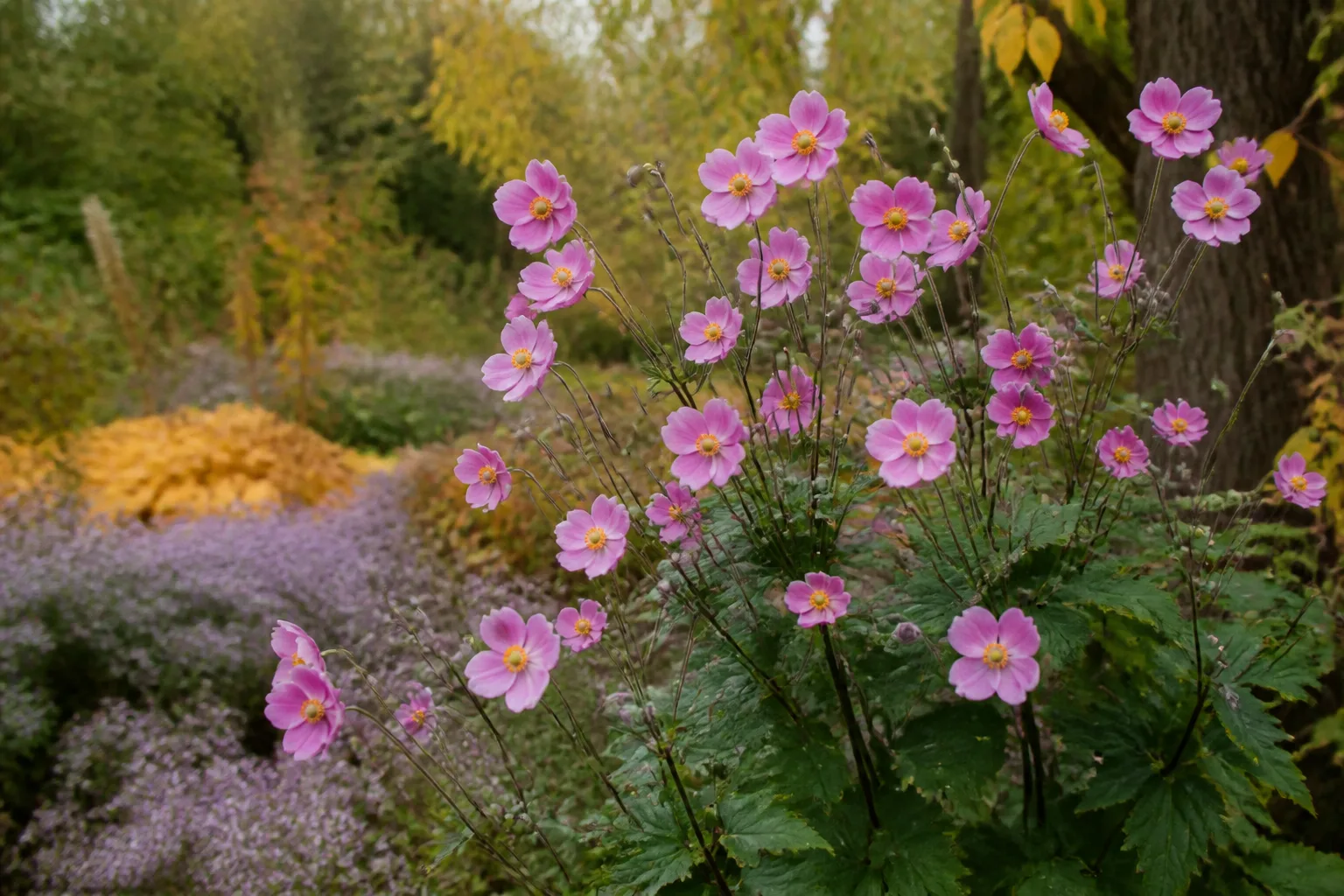
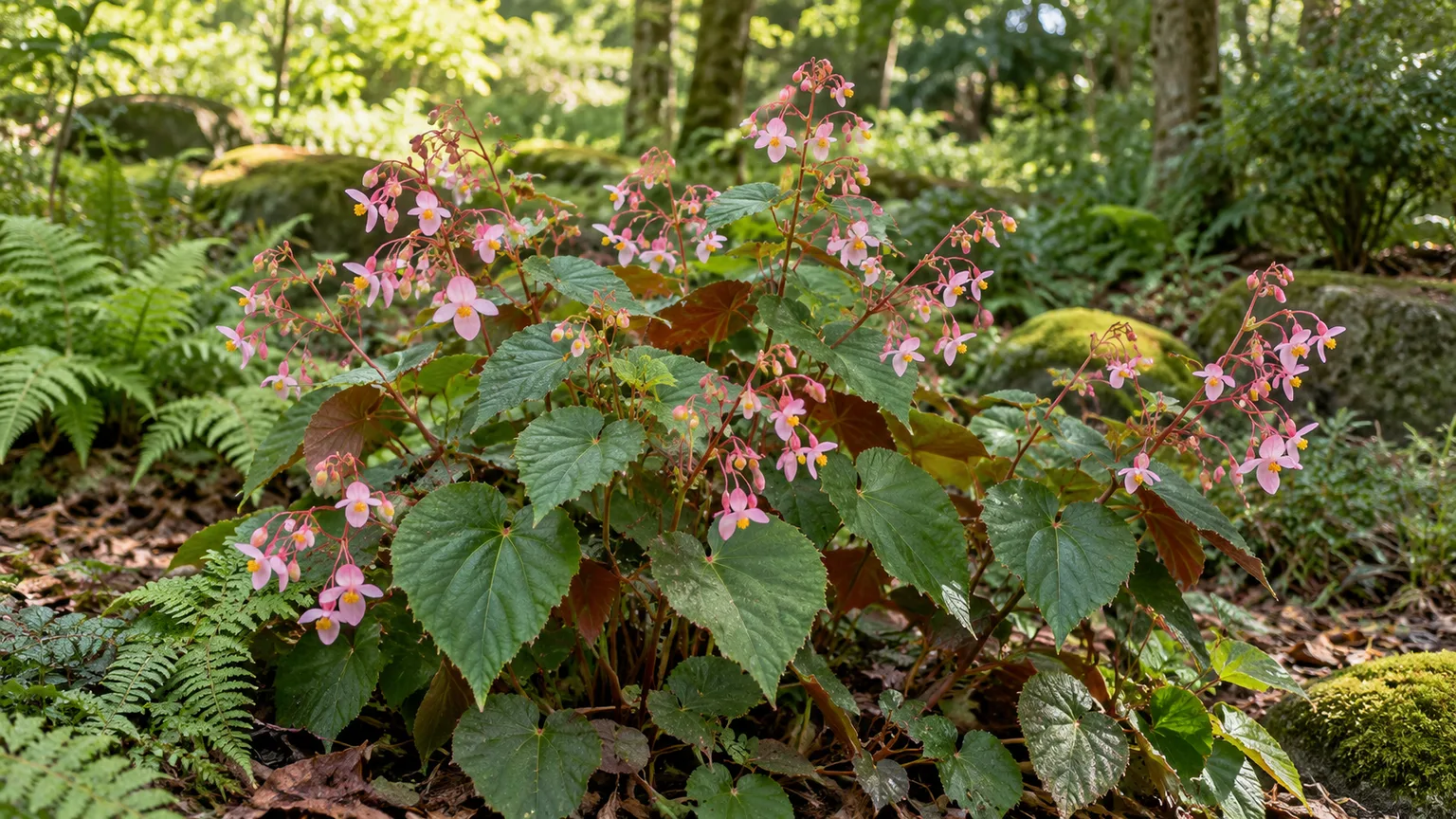
Japanese anemone (Eriocapitella × hybrida, formerly Anemone hybrids) brings late-season color to partial shade—tall stems, simple flowers after many perennials finish. Under that cottage-garden charm is a vigorous root system that expands clumps and sends up shoots at a distance.
Control is diligent division and excavation, not light deadheading. Every few years—or sooner if beds feel tight—dig entire clumps in cool weather. Remove wandering roots; assume any fragment left behind will resprout. If you love the flower but not the chase, confine plants to a raised bed or a zone bordered by paving where escape is visible early.
Pair with less competitive shade partners; do not interplant with slow woodland ephemerals you hope will persist without intervention.
Leyland Cypress for Fast Privacy
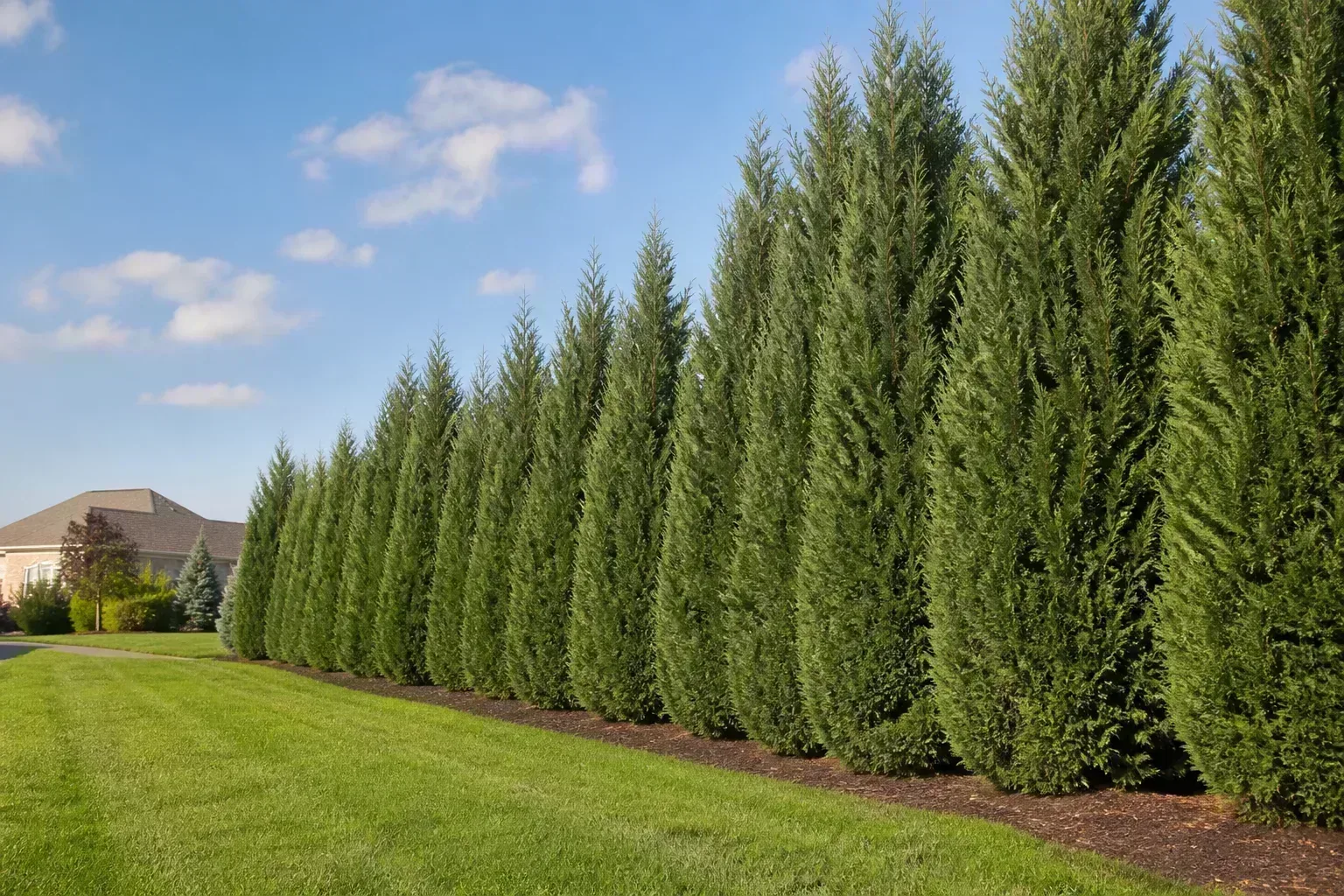
Leyland cypress (× Hesperotropsis leylandii) promises a tall evergreen screen fast—often 2–4 feet of height per year when young, with mature heights commonly 60–70 feet and spreads 10–15 feet (our Leyland cypress guide summarizes extension ranges). That speed is the selling point and the problem.
A row planted too close becomes a wall of shaded, dry soil beneath. Shallow roots compete with lawn and garden beds. Poor airflow between crowded trunks invites canker and dieback issues that show up years after the “instant privacy” photo.
Plant at least 10 feet apart, farther if cultivar width or maintenance access demands it. Keep trees away from structures, power lines, and property lines you do not own. Plan annual side pruning from youth; topping old, bare interior wood does not recreate a tidy hedge.
For small yards, a slower, narrower evergreen—or a fence plus a restrained shrub—is usually cheaper in time than a Leyland row you fight for two decades.
If you already inherited a Leyland screen, your realistic options are annual side thinning, accepting the mature footprint, or phased replacement with a species that matches the strip width. Waiting until trunks are wrist-thick and the row is 40 feet tall turns a spacing mistake into an arborist invoice.
Lily of the Valley as Woodland Ground Cover
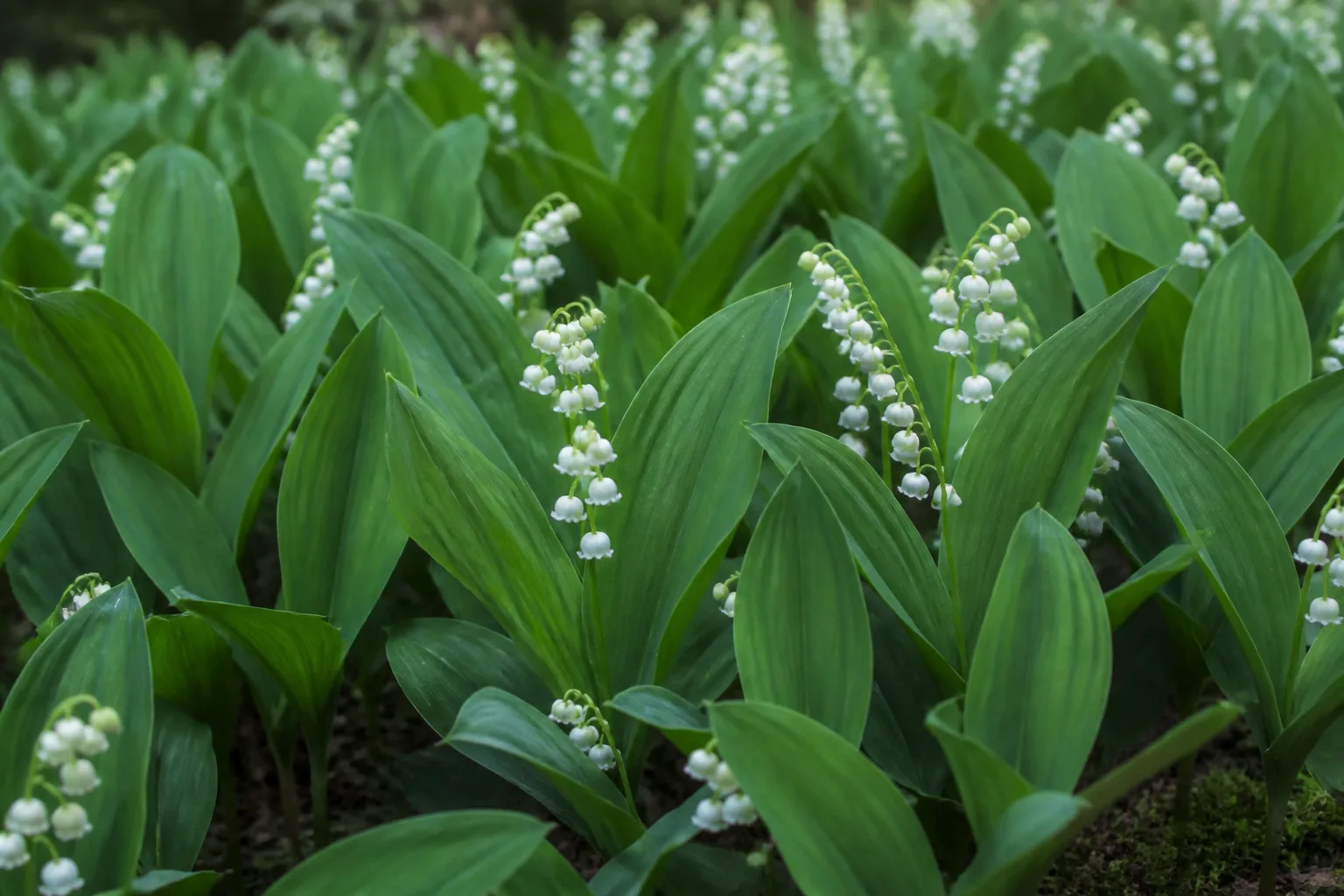
Lily of the valley (Convallaria majalis) is a rhizomatous shade ground cover with fragrant white bells in spring. In the right spot—deep shade, moist organic soil, isolated from delicate neighbors—it is charming and deer-resistant. NC State notes dense rhizomes can spread and choke out other plants in ideal conditions (NC State Extension: lily of the valley).
Treat it as single-purpose: one zone you want entirely lily-of-the-valley, not a filler between prized hostas. Barriers extending at least 6 inches deep (deeper is better) or isolated beds with hard edges reduce escape. Remember toxicity: NC State classifies it as low-severity poison for pets and people if ingested—relevant if dogs dig beds or children sample berries.
Native woodland alternatives NC State suggests for similar niches include wild ginger (Asarum canadense) and foamflower (Tiarella cordifolia) where you want ground cover without the same choke risk.
When a Fast Grower Is Still Worth the Risk
Aggressive plants earn their place when you name the job and own the maintenance.
- Large rural lot, contained bamboo screen: running bamboo behind pavement and a monitored HDPE barrier.
- Dedicated mint patch for tea, far from vegetables, with paved border.
- Isolated shade bank where lily of the valley is the intended monoculture.
- Long rural driveway where Leyland cypress width and height fit the site and you prune yearly.
Skip them when the site is small, shared, or already planted with a diverse mix you do not want to defend. Fast cover from a restrained native grass, clumping bamboo, or a properly spaced mixed hedge often arrives one season later and leaves ten fewer years of regret.
Removing an Established Spreader
Removal is a project, not a afternoon.
Bamboo and mint: cut top growth; dig rhizomes where feasible; for large bamboo stands, combine digging with two to three years of weekly shoot mowing to starve reserves, or labeled systemic herbicide on fully leafed regrowth if mechanical control fails on your property. Expect regrowth from fragments—monitor the same zone next spring before declaring victory.
Do not compost rhizome pieces from mint or bamboo unless your pile reliably reaches temperatures that kill vegetative propagules. Bagging and municipal yard-waste disposal is safer when you are actively eradicating.
Japanese anemone and lily of the valley: dig when soil is moist; sift for white roots; bag fragments for disposal rather than composting. Replant only after a season of watching for resprouts.
Holly seedlings: pull young; cut and paint or dig older volunteers before they berry.
Leyland cypress: if the row is too tall or diseased, consult an arborist for selective reduction or replacement; do not assume you can “shorten” a 50-foot tree into a 12-foot hedge without permanent gaps.
Document what you planted where before the next owner—or future you—repeats the cycle.
Conclusion
Fast-growing plants that crowd out everything else are not villains. They are tools with aggressive defaults: bamboo for height, mint for kitchen abundance, holly and Leyland cypress for evergreen structure, Japanese anemone and lily of the valley for shade color and cover. The mistake is treating vigor like a free bonus instead of a maintenance contract.
Read spread type before purchase—rhizome, runner, or seed. Install barriers or pots at planting time. Match mature size to the lot you actually have, not the lot you wish you had. When a plant has already crossed the line, plan multi-season removal instead of one round of pulling.
Get those decisions right and you can keep the speed without handing your beds to a single species. Get them wrong and you will spend the next decade gardening against a plant that never forgot its advantage.