32 Easy Shade Perennials for Summer Color
Thirty-two easy shade perennials ranked by real bloom windows, moisture needs, and zones—plus combos that keep color going from June through August.
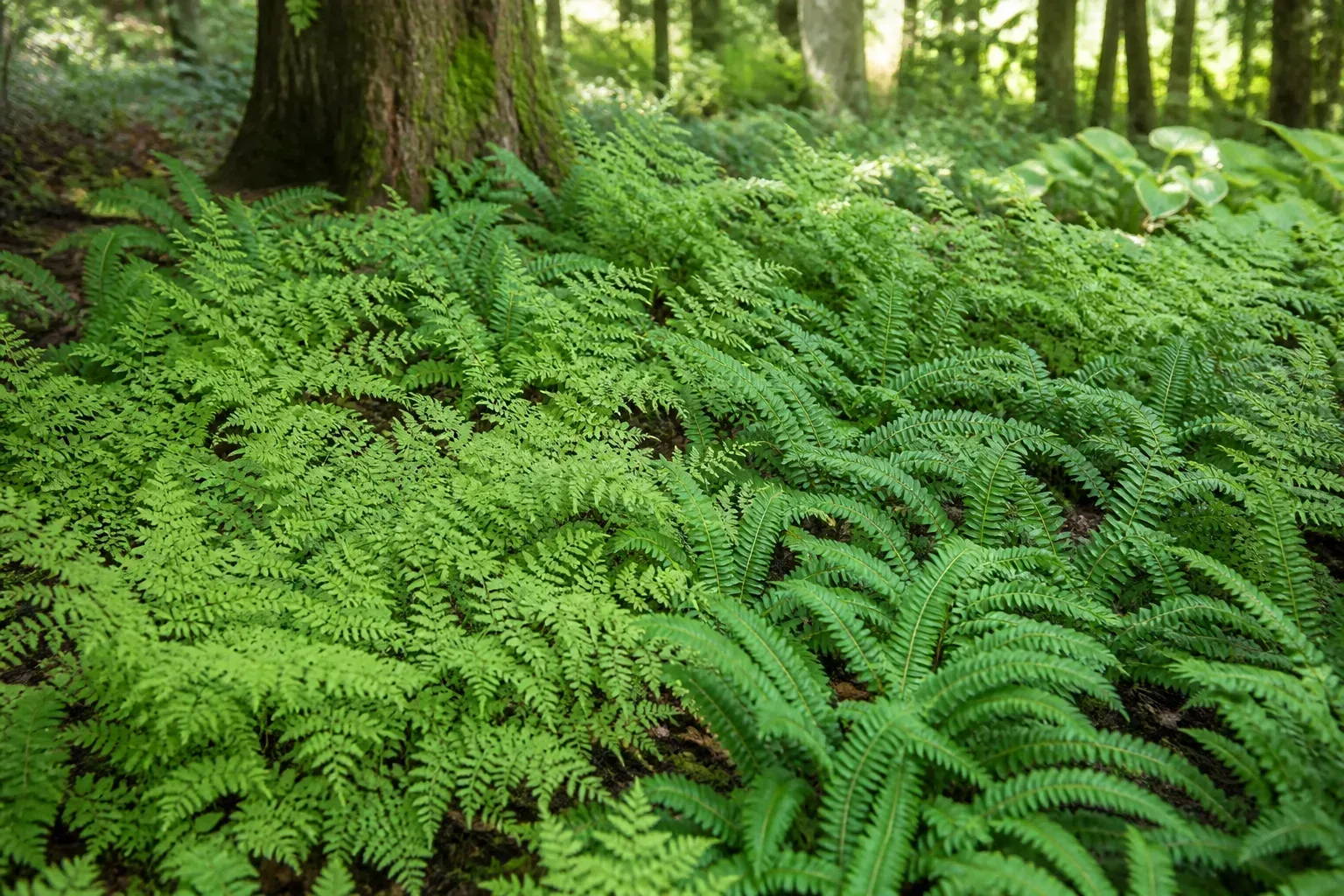
A north-facing foundation bed or a strip under mature maples does not have to fade into green by July. The trick is not finding one magic plant that flowers nonstop from Memorial Day through Labor Day — that plant barely exists in shade gardens. The trick is choosing easy perennials for shade with overlapping bloom windows, matching each one to your actual light and moisture, and accepting that foliage and late-season flowers matter as much as June petals.
The thirty-two perennials below are genuinely easy once sited correctly. They are grouped by how long they flower, how much sun they need, and whether they prefer moist woodland soil or the tougher conditions under thirsty tree roots. Use the tiers to build a border that reads colorful all summer even when no single species is in peak bloom every week.
What “All Summer” Really Means in a Shade Garden
Marketing tags love the phrase “blooms all summer.” Experienced gardeners translate it as weeks of visible flowers or colorful buds between June and August, often with a second flush after deadheading or shearing. In shade, the calendar runs cooler and slower. A plant that peaks for four weeks in partial shade may only give you two in heavy shade — and that is normal, not failure.
Peak Weeks Versus Continuous Color
Peak bloom is when a plant looks its absolute best: astilbe plumes in June, hosta flower scapes in July, turtlehead spikes in August. Extended color means new buds keep opening while older flowers fade — the pattern you see in hardy geranium, yellow corydalis, and coral bells when soil stays evenly moist. Our guide to perennials that bloom all summer explains the same distinction for sunny borders; shade beds follow the same logic with shorter individual flushes.
Daylily flowers last one day, yet the scape keeps producing buds for weeks. Hydrangea holds developing clusters that deepen in color through midsummer. Golden star (Chrysogonum virginianum) can flower from May into October in cool, moist partial shade — one of the closest things to a true summer-long bloomer on this list. Plan for overlapping windows, not one plant doing everything.
Why Shade Shortens the Bloom Calendar
Shade changes plant metabolism. The RHS shade gardening guidance separates shade avoiders that stretch toward light from shade tolerators with broader leaves and higher chlorophyll. Tolerators survive in low light, but flower production often drops when energy goes into foliage instead of buds.
Cool, humid air also favors slugs and fungal leaf spots — especially on hostas and lungwort — while deer treat many shade favorites as salad. A bed that looks effortless in a catalog photo may need netting, repellent, or species swaps in real yards. For siting basics before you shop, start with our shade garden tips.
Read Your Shade Before You Buy Anything
Nursery tags say “part shade” the way cereal boxes say “natural” — vaguely and optimistically. Spend one sunny day watching the bed at 8 a.m., noon, and 4 p.m. Count direct sun hours at midsummer. Note whether tree canopies are open in spring and closed by June. Pale walls and light pavement add reflected brightness even when no beam hits soil.
Moist Woodland Shade Versus Dry Shade Under Trees
Moist woodland shade — along a north wall with decent soil, beside a downspout, or at the edge of a woods with leaf litter — suits astilbe, lungwort, cardinal flower, rodgersia, and turtlehead. These plants wilt fast in dry air and compete poorly with mature tree roots without help.
Dry shade under trees is the harder job: roots steal water, rain may not reach soil, and organic matter breaks down slowly. Colorado State PlantTalk recommends tough performers like barrenwort, hellebore, and bigroot geranium for dry shade once established. On this list, prioritize hellebore foliage, bigroot geranium, established hostas with drip irrigation, and yellow corydalis in cooler zones — not moisture-hungry ligularia cousins like cardinal flower without a water plan.
Partial Shade Versus Full Shade
Partial shade usually means three to six hours of direct sun, often gentle morning light. This is where most “shade perennials” actually bloom best: hydrangea, daylily, foxglove, bleeding heart, and bellflower all want some sun for a heavy flower show.
Full or heavy shade means less than two hours of direct sun — common under dense evergreens or deep eaves. Foliage plants excel here: hosta, dead nettle, heuchera, and golden star. Flowers still appear on yellow corydalis, toad lily, and actaea, but often in lighter flushes than they would in dappled light. Our bright perennials for shade guide goes deeper on seven high-color picks for similar conditions.
Tier 1: Perennials That Stretch Color Through Midsummer
These are the backbone plants if your goal is visible flowers across June, July, and August in moist partial to full shade. None is zero-maintenance in year one — water through the first dry summer — but all are forgiving once roots establish.
Yellow Corydalis, Hardy Geranium, and Coral Bells
Yellow corydalis (Corydalis lutea) self-sows politely in cool climates (zones 5–7) and produces yellow tubular flowers from late spring well into fall in moist shade. It handles full shade better than most true summer bloomers and is deer-resistant in many gardens.
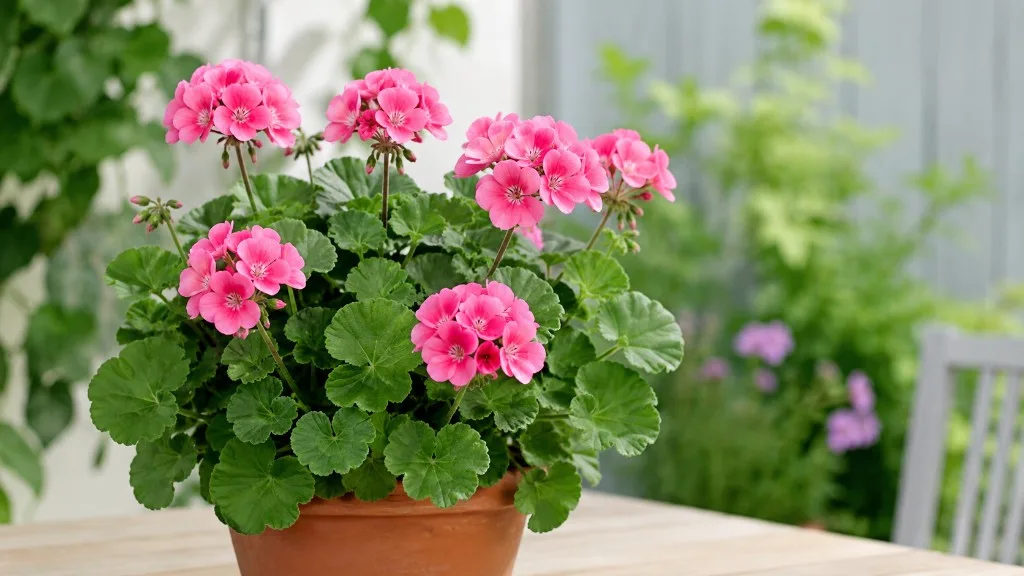
Hardy geranium (Geranium spp., cranesbill — not bedding pelargoniums) blooms from early summer into fall in partial shade with deadheading. ‘Rozanne’ and ‘Biokovo’ are workhorses; ‘Johnson’s Blue’ needs more sun to flower heavily. Partial shade also stretches time between waterings.
Coral bells (Heuchera) and heucherella (heuchera × tiarella hybrids) lead with foliage color but send up wiry flower stems for six to eight weeks from mid-summer. Deadheading extends the show. Divide clumps every three to four years when the crown rises above soil.
Spiderwort, St. John’s Wort, and Dead Nettle
Spiderwort (Tradescantia) opens purple, pink, or white flowers from late spring into early summer and tolerates an unusually wide light range — full sun to full shade — though bloom is heaviest with morning sun. Cut plants back after the first flush for tidier foliage.
St. John’s wort (Hypericum) blooms from June into September in partial shade; too much hot afternoon sun can wilt leaves. Some cultivars add red berries after flowers — attractive, but check invasiveness for your region before planting.
Dead nettle (Lamium maculatum) is a low, silvery groundcover with pink or white flowers from late spring through early summer. It excels in dry partial shade once established and spreads steadily — contain it near walkways. Pair with taller summer bloomers so the bed does not go flat after lamium finishes its first flush.
Tier 2: Extended Bloomers That Want Partial Shade
These plants appear on nearly every shade list — including misleading ones — because they tolerate shade, not because they prefer it. Give them morning sun and afternoon protection and they reward you with the longest flower displays in this article.
Hydrangea, Daylily, and Bigroot Geranium
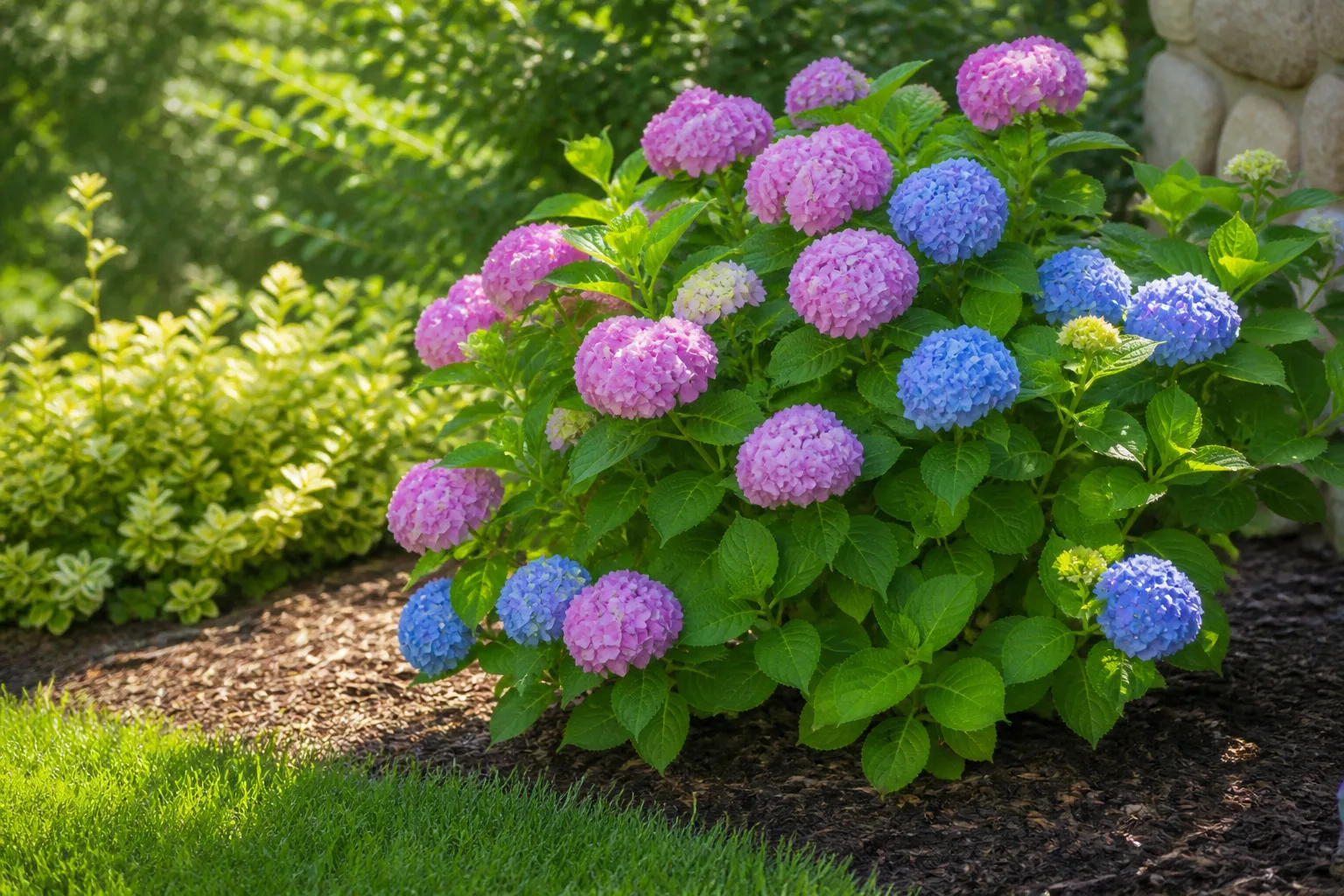
Hydrangea — especially bigleaf and smooth types — produces large summer clusters in partial shade with steady moisture. Macrophylla types bloom on old wood in many climates; panicle types bloom on new wood and tolerate more sun. See our bigleaf hydrangea care guide for soil and pruning specifics. Hydrangea is technically a shrub, but every shade-garden list includes it because the bloom period carries the border.
Daylily (Hemerocallis) blooms heavily in June and July for four to five weeks; each flower lasts one day but scapes keep coming. Reblooming cultivars extend the season in partial shade. Hot climates need afternoon shade; northern gardens can handle more sun.
Bigroot geranium (Geranium macrorrhizum) handles dry partial shade once established and flowers from April into July with spicy-scented foliage that deer usually avoid. It is one of the best bridges between dry shade and summer color.
Foxglove, Bellflower, and Cardinal Flower
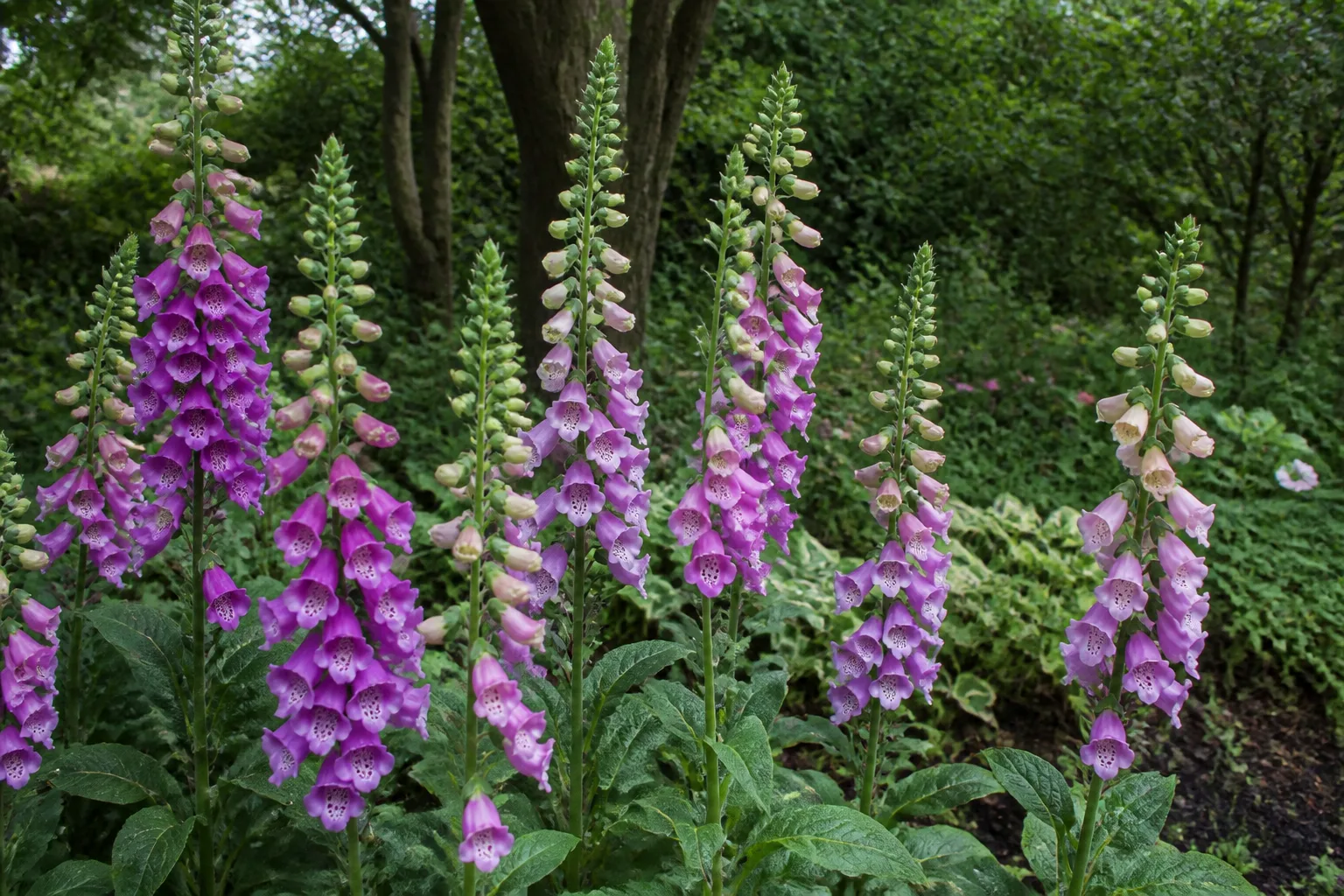
Foxglove (Digitalis purpurea) sends up tall spires for two to three months in early to midsummer with partial sun. It is often biennial or short-lived but self-sows in undisturbed beds. Important: the ASPCA lists foxglove as toxic to dogs, cats, and horses. Skip it where pets browse or children handle flowers casually.
Carpathian bellflower (Campanula carpatica) and other campanulas bloom from June through August in cool partial shade with deadheading. Low carpatica types edge paths; taller species need staking.
Cardinal flower (Lobelia cardinalis) delivers intense red spikes in July and August in moist partial shade — a hummingbird magnet. It is not a dry-shade plant. Divide every two years to maintain vigor.
Tier 3: Succession Plants That Fill the Gaps
Even the best shade border has quiet weeks. These plants peak at different times so the whole bed never goes dull at once.
Early Summer: Astilbe, Bleeding Heart, and Foamflower
Astilbe produces feathery plumes from late spring into midsummer in moist partial to full shade. It is a perennial, not an annual — despite what some listicles claim — and prefers acidic to neutral soil that never dries out. NC State Extension notes arendsii hybrids as the most common garden types. Mulch after fall frost and divide every three to four years. Pair with later bloomers from our astilbe companion plants guide.
Bleeding heart (Dicentra spectabilis and hybrids) flowers for four to six weeks in late spring and early summer, then goes dormant — leave the space for a later emergent like turtlehead or hosta foliage. Fringed bleeding heart (D. eximia) reblooms lightly if kept moist.
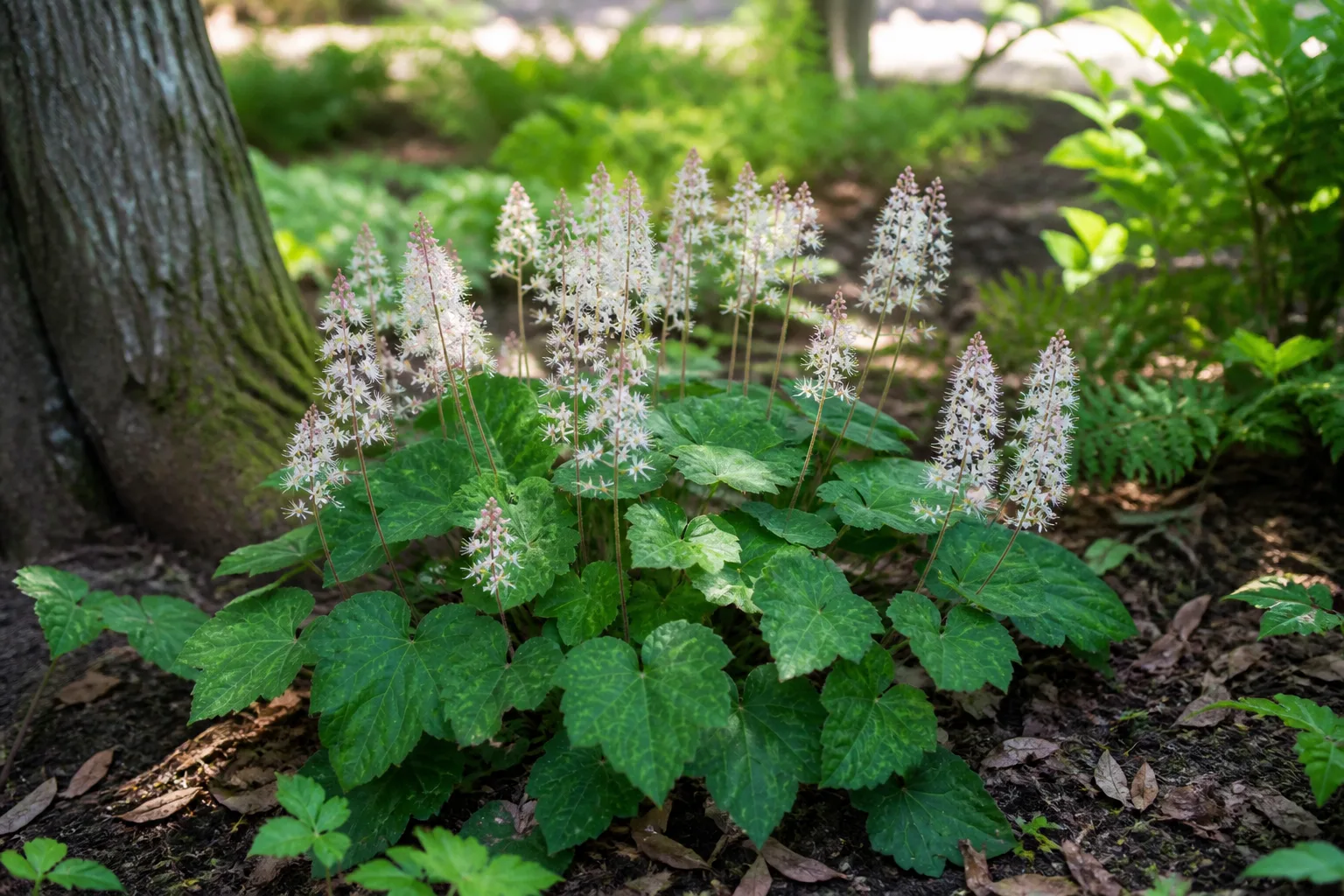
Foamflower (Tiarella) and its hybrid heucherella bloom for about six weeks in spring to early summer with bottlebrush flowers above maple-like foliage. They are native woodland plants that naturalize under trees when soil is rich and moist.
Late Summer Into Fall: Turtlehead, Aster, and Toad Lily
Turtlehead (Chelone) starts in August and flowers for up to six weeks into fall in moist soil. Pinch shoot tips in late spring for bushier plants with more spikes. Full sun produces the heaviest bloom, but partial shade is workable.
Aster (Symphyotrichum spp.) brings color from August into October in partial shade — invaluable for end-of-season pollinators. Taller species need space; compact cultivars suit small borders.
Toad lily (Tricyrtis) opens orchid-like spotted flowers in late summer and early fall in partial to full shade. It is one of the best answers to “what blooms after hostas finish?” in moist sites.
Foliage-First Perennials Worth Planting Anyway
Some plants on every “summer bloom” list flower briefly — or not in summer at all — yet earn their space by carrying the bed between flushes.
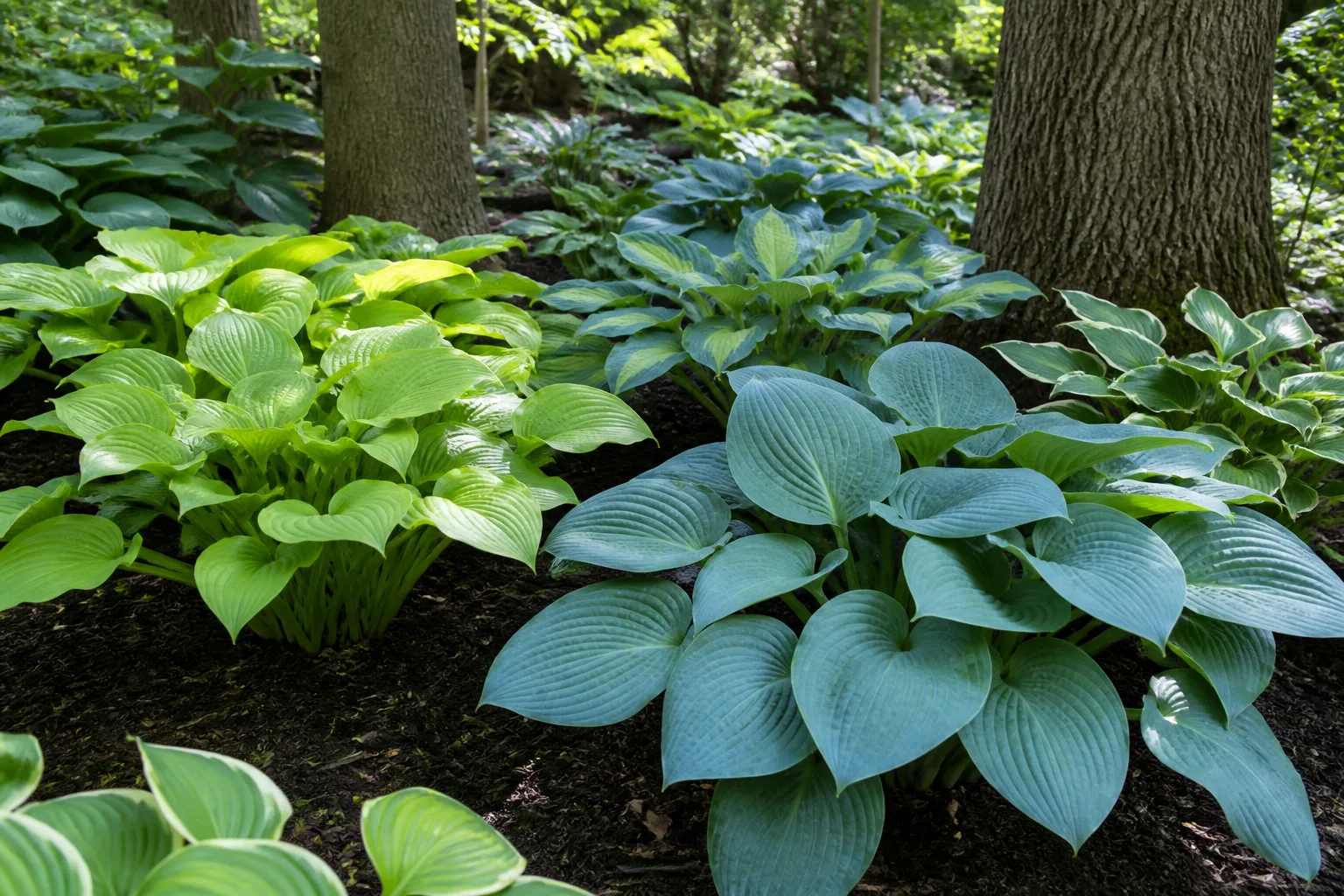
Hosta sends up pale flower scapes for two to four weeks in midsummer, but the real show is foliage from spring through frost. NC State Extension lists hundreds of cultivars from miniatures to giants. Slugs and deer are the main enemies; see how to keep deer away from hostas and our hosta planting guide.
Hellebore blooms in late winter and spring, then provides evergreen or semi-evergreen foliage through summer — not a midsummer flower, but invaluable for early color before astilbe wakes up.
Lungwort (Pulmonaria) flowers pink or blue in spring for about four weeks; silver-spotted leaves stay attractive for months afterward. It self-seeds in moist shade — divide in spring or fall to control spread.
Lady’s mantle (Alchemilla mollis) blooms lime-green clusters in late spring to early summer and self-seeds aggressively — deadhead before seeds drop if you want control.
Actaea (bugbane, formerly Cimicifuga) produces fragrant white or pink spikes on tall stems in late summer in partial to full shade — dramatic when earlier flowers have finished.
Rodgersia blooms June into July with large plumes above bold leaves; it needs moist soil and at least partial sun for the best display.
Giant Himalayan lily (Cardiocrinum) takes years to bloom but rewards patience with towering summer flowers — specialist plant, not a beginner border filler.
The Full Directory: 32 Easy Shade Perennials at a Glance
Use this table to shortlist plants by bloom window and site needs. “Summer-long” means extended or repeat bloom through June–August, not literal nonstop flowers on every stem.
| Plant | Best light | Moisture | Bloom window | Zones | Notes |
|---|---|---|---|---|---|
| Astilbe | Partial–full shade | Moist | Late spring–midsummer | 3–8 | Divide every 3–4 years |
| Hosta | Full–partial shade | Evenly moist | Midsummer (foliage all season) | 3–9 | Deer and slug magnet |
| Hellebore | Partial shade | Moist | Late winter–spring (foliage summer) | 4–9 | Not a summer bloomer |
| Begonia (hardy types) | Partial shade | Moist | Summer–frost | 9–10 | Treat as annual in cold zones |
| Coral bells (Heuchera) | Partial shade | Medium | Mid–late summer | 4–9 | Deadhead for longer bloom |
| Bleeding heart | Partial shade | Moist | Late spring–early summer | 3–9 | Goes dormant after bloom |
| Lungwort | Partial–full shade | Moist | Spring (~4 weeks) | 3–8 | Foliage carries the bed |
| Foxglove | Partial sun | Medium | Early–midsummer | 4–10 | Toxic to pets |
| Hydrangea | Partial shade | Moist | Spring–fall | 5–9 | Shrub; anchor plant |
| Rodgersia | Partial sun | Moist | June–July | 5–7 | Needs space |
| Flowering ginger | Partial shade | Moist | Late spring–fall | 7–10 | Warm climates |
| Daylily | Partial shade | Medium | June–July+ | 3–10 | Rebloomers extend season |
| Yellow corydalis | Partial–full shade | Medium | May–September | 5–7 | Best true long bloomer |
| Dead nettle | Partial–full shade | Medium | Late spring–early summer | 4–8 | Spreading groundcover |
| Turtlehead | Partial sun | Moist | August–fall | 3–9 | Late-season color |
| Aster | Partial shade | Medium | August–October | 3–8 | Fall pollinator plant |
| Lady’s mantle | Partial shade | Medium | Late spring–early summer | 3–8 | Self-seeds freely |
| St. John’s wort | Partial shade | Medium | June–September | 3–8 | Check species invasiveness |
| Drumstick allium | Partial shade | Well-drained | Midsummer–fall | 3–8 | Bulb; deer resistant |
| Bigroot geranium | Sun–partial shade | Dry–medium | April–July | 4–8 | Dry shade tolerant |
| Toad lily | Partial–full shade | Moist | Late summer–fall | 4–8 | Orchid-like flowers |
| Golden star | Partial shade | Moist | May–October | 4–8 | Long bloom in cool sites |
| Cardinal flower | Partial shade | Wet–moist | July–September | 2–9 | Needs consistent water |
| Carpathian bellflower | Partial shade | Medium | June–August | 3–8 | Deadhead for rebloom |
| Hardy geranium | Sun–partial shade | Medium | Early summer–fall | 3–9 | Shear after first flush |
| Heucherella | Partial shade | Medium | Early–mid summer | 4–9 | Foamy flower spikes |
| Spiderwort | Sun–full shade | Medium | Late spring–early summer | 4–12 | Cut back after bloom |
| Actaea | Partial–full shade | Medium | Late summer–fall | 4–8 | Tall fragrant spikes |
| Fuchsia | Partial shade | Moist | Spring–fall | 10–11 | Container or annual in cold zones |
| Giant Himalayan lily | Partial shade | Moist | June–August (after years) | 7–9 | Slow to first bloom |
| Sweet alyssum | Partial shade | Medium | Spring; rebloom in fall | 5–9 | Often grown as annual |
| Foamflower (Tiarella) | Full–partial shade | Moist | Spring–early summer | 3–8 | Native woodland plant |
Also worth mentioning from woodland lists: flowering ginger (Hedychium) for warm zones; spotted dead nettle already covered; and drumstick allium (Allium sphaerocephalon) for vertical interest when earlier perennials fade.
Design Combinations for Non-Stop Summer Interest
One plant rarely carries a shade border alone. Build in three layers — early, midsummer, and late — plus foliage that looks good between flushes.
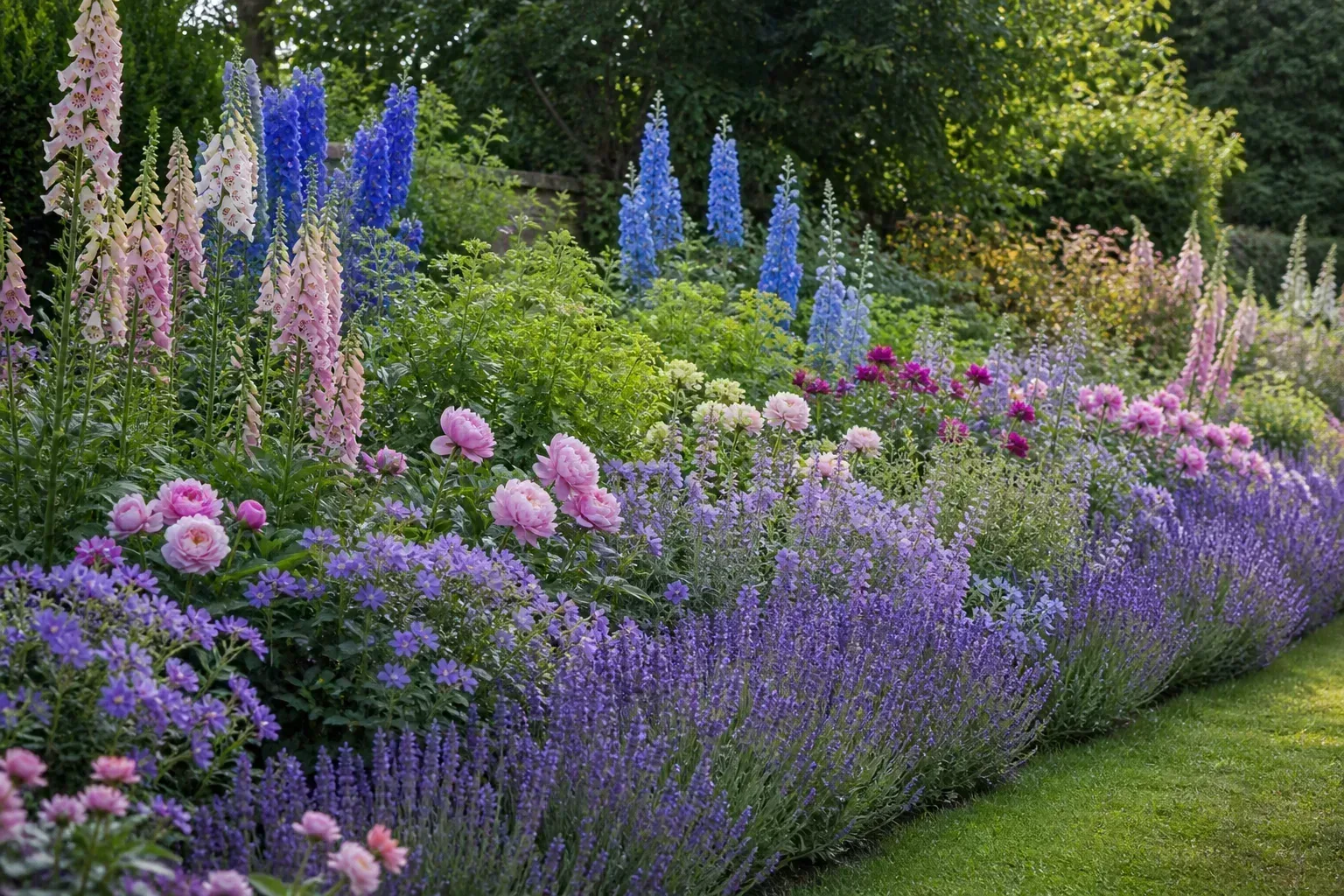
Moist partial shade combo: hellebore (winter–spring) → astilbe (June) → hardy geranium and coral bells (midsummer) → turtlehead and toad lily (August–September). Underplant with dead nettle or golden star to cover soil.
Dry shade under oaks: bigroot geranium (spring–early summer) → hosta foliage (all season) → spiderwort (late spring) → aster (fall). Add drip irrigation the first two years; mulch with shredded leaves, not piled against trunks.
Partial shade with morning sun: hydrangea shrub at the back, daylilies and foxglove in the middle (skip foxglove if pets browse), yellow corydalis and bellflower at the front. The Missouri Botanical Garden’s low-maintenance perennials guide emphasizes matching plants to conditions over chasing individual “easy” names — sound advice for shade, where siting matters more than variety.
For containers in deep shade, tender fuchsia and begonia deliver summer color in warm zones; in cold climates treat them as annuals or move pots indoors. See full shade plants for containers and shade annuals for overlap options.
Common Shade Perennial Mistakes
Treating all shade as the same. A moist north border and dry soil under a sugar maple need different plants. Putting astilbe or cardinal flower in dry shade guarantees wilt and replacement.
Expecting every “shade perennial” to bloom all summer. Hellebore, lungwort, tiarella, and bleeding heart are seasonal performers or foliage plants. They belong in the border — but not because they flower through August.
Planting sun lovers in heavy shade. Foxglove, daylily, and hydrangea tolerate shade; they do not prefer deep shade. Without three to four hours of direct or very bright filtered light, flower count drops sharply.
Ignoring year-one watering. Gardening Know How and extension guides agree: even drought-tolerant shade plants need consistent moisture while roots establish. Tree roots outcompete new transplants for water — plan drip lines under the canopy.
Skipping wildlife planning. Hostas attract deer; lungwort and hosta attract slugs. Choose bigroot geranium, yellow corydalis, and drumstick allium where deer pressure is high, or fence the bed.
Planting foxglove near pets. Digitalis toxins affect heart rhythm in dogs and cats. Choose non-toxic alternatives like astilbe or bellflower in pet yards.
Summer Maintenance for Shade Beds
Deadhead coral bells, hardy geranium, bellflower, and spiderwort after the first flush to encourage rebloom. Shear spiderwort and spent lady’s mantle to the ground for fresh foliage. Leave astilbe plumes if you like winter texture, or cut at soil level in late fall.
Water new plantings deeply once or twice a week during dry spells — morning is best to reduce leaf diseases in humid shade. Mulch two to three inches with shredded bark or leaf mold, keeping material off crowns.
Divide fast spreaders like dead nettle, lungwort, and hardy geranium in spring or fall. Watch for slugs on hosta and lungwort; hand-pick at dusk or use iron phosphate baits labeled for garden use.
Fertilize lightly in spring if a soil test shows need; heavy feeding in shade produces leggy growth with fewer flowers. Woodland soil rebuilt with compost at planting time usually suffices for years.
UGA Extension Master Gardener volunteers in wooded North Georgia yards report that layered plantings — ferns, hostas, and ajuga groundcover — succeed when designers match each plant to moisture under the canopy rather than forcing one watering schedule on the whole bed. That same principle applies whether you are in Atlanta or Minneapolis: group moisture lovers, group dry-shade survivors, and irrigate accordingly.
Conclusion
Thirty-two easy perennials for shade can keep your garden colorful through summer if you stop hunting for one plant that blooms nonstop and start building overlapping seasons instead. Lead with yellow corydalis, hardy geranium, and coral bells in moist shade; add hydrangea, daylily, and bellflower where morning sun reaches the bed; fill late-season gaps with turtlehead, aster, and toad lily; and let hosta, heuchera, and hellebore carry the weeks between flushes.
Measure your shade, test your soil moisture, and plant for succession — not for a slogan on a nursery tag. Do that and the shady corner of your yard becomes the coolest room in the landscape, with flowers worth staying outside to see from June well into fall.



