11 Container Plants That Thrive in Shade
Coleus, impatiens, fuchsia, and eight more container plants for full and partial shade. Learn how to measure light, design pots, and avoid common shade mistakes.
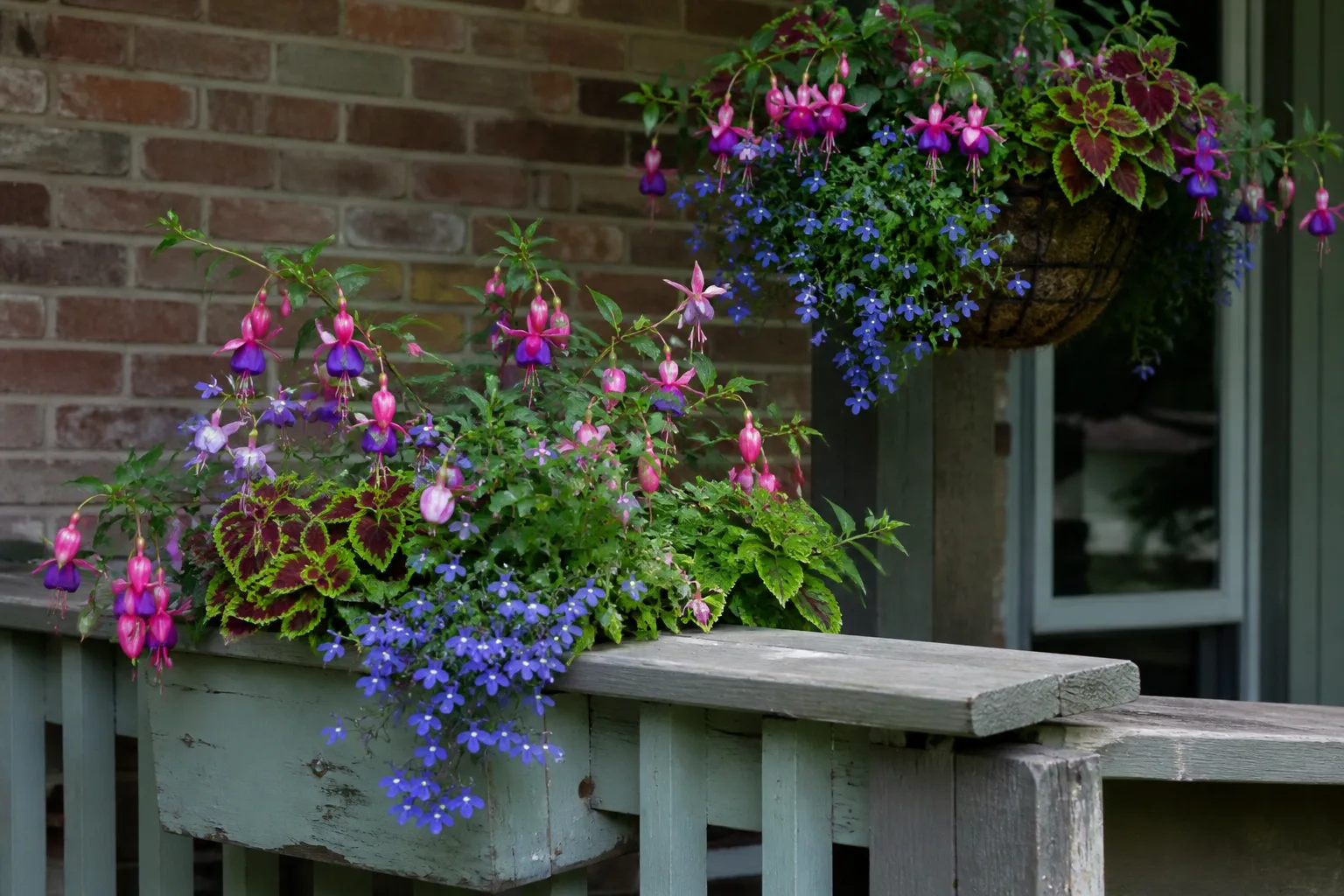
A north-facing porch, a covered patio, or the strip under a mature maple can feel like wasted space until you realize shade containers behave differently from sunny ones — and so do the plants inside them. The flat of petunias that exploded on your south steps will sulk here. Impatiens, coleus, and fuchsia will not.
This guide covers 11 container plants that thrive in shade, from reliable bloomers to foliage workhorses and trailing spillers. More importantly, it shows you how to measure your actual light, set up pots that drain properly in slow-drying shade, and combine plants so the finished container looks designed rather than accidental. If you want a broader list of shade annuals beyond containers, see our shade annuals guide — this page stays focused on pots, baskets, and window boxes.
Why Shade Containers Need a Different Plant List
Shade does not just mean less light. It usually means cooler soil, slower evaporation, and less wind — conditions that favor foliage plants and shade-adapted bloomers but punish sun lovers. A container under an eave may get almost no rain even when the rest of your yard is soaked, while a pot tucked under tree roots can dry out faster than you’d expect from the label “shade.”
The most common failure I see is buying plants tagged “shade” without confirming whether the tag means true full shade (under four hours of direct sun) or partial shade (roughly three to six hours, often morning only). A fuchsia labeled “part shade” will fry in hot afternoon sun on a west-facing railing but thrive on an east-facing porch. A coleus pushed into deep shade under dense evergreens may grow pale and leggy even though coleus is famous for shade tolerance.
Containers amplify every mistake. Roots can’t reach deep soil moisture. There is no neighbor plant to hide a bare spot. In shade, color comes from leaves and texture as often as from flowers — and the best shade pots lean into that instead of fighting it.
How to Measure and Classify Your Shade
Before you spend money at the nursery, spend one sunny day watching your spot. Note when direct sun hits the container and how long it stays. Take photos at 8 a.m., noon, and 4 p.m. if that helps. A location that looks “dark” at noon may receive two hours of gentle morning sun — enough for partial-shade bloomers, not enough for sun annuals.
Full Shade, Partial Shade, and Dappled Light Defined
Garden writers and plant tags use overlapping terms. These working definitions match how most shade container plants are sold and perform:
Full sun means six or more hours of direct sunlight on most days. Partial shade (also called part shade) typically means three to six hours of direct sun, ideally in the morning with protection from harsh afternoon rays. Full shade does not mean zero light — almost no flowering plant survives in total darkness. It means fewer than four hours of direct sun, often with bright indirect light the rest of the day. Dappled shade is the shifting light under deciduous trees: brighter in early spring, much dimmer by midsummer when the canopy fills in.
Morning sun is cooler and gentler than the same number of afternoon hours. Two hours of west-facing sun after 3 p.m. can scorch impatiens leaves that would be fine with two hours of east-facing morning sun. Match plants to hours and timing, not just the word “shade” on a tag.
Container Setup That Shade Plants Actually Need
Shade containers fail in the pot before they fail in the plant. Start with a drainage hole — non-negotiable for begonias, impatiens, and fuchsia, which rot quickly in waterlogged mix. Use a quality potting mix labeled for containers, not garden soil, which compacts and suffocates roots in a pot.
Pot size matters. A single 4-inch annual in a 20-inch bowl looks lost and stays too wet. A general rule: the combined root mass of all plants should fill roughly two-thirds of the pot at maturity. For a 14-inch mixed container, that usually means one thriller, two to three fillers, and two spillers — not one six-pack stretched across the entire surface.
Shade pots under roof overhangs dry out slower than sunny ones but may never receive rain. Check moisture with your finger two inches down, not on a calendar. Elevate pots on pot feet if they sit on stone or decking so water does not pool underneath.
Designing Shade Pots With Thriller, Filler, and Spiller
The thriller-filler-spiller framework works in shade when you swap the usual sun choices for shade performers:
- Thriller (height): Persian shield, upright fuchsia, coleus with strong vertical habit, or a tall rex begonia.
- Filler (middle): Impatiens, wax begonia, heuchera, torenia, or oxalis.
- Spiller (edge): Trailing lobelia, dichondra ‘Silver Falls’, creeping jenny, or cascading fuchsia.
In deep shade, lean on foliage contrast — chartreuse coleus against purple Persian shield, silver dichondra against pink impatiens — because flower count may drop when light is very low. In partial shade, you can push bloom harder with fuchsia, torenia, and lobelia.
Pack pots more densely than you would in a garden bed. Shade growth is often slower; tight planting looks full from day one. You can always trim back in July if something dominates.
Coleus: Foliage Color Without a Single Bloom
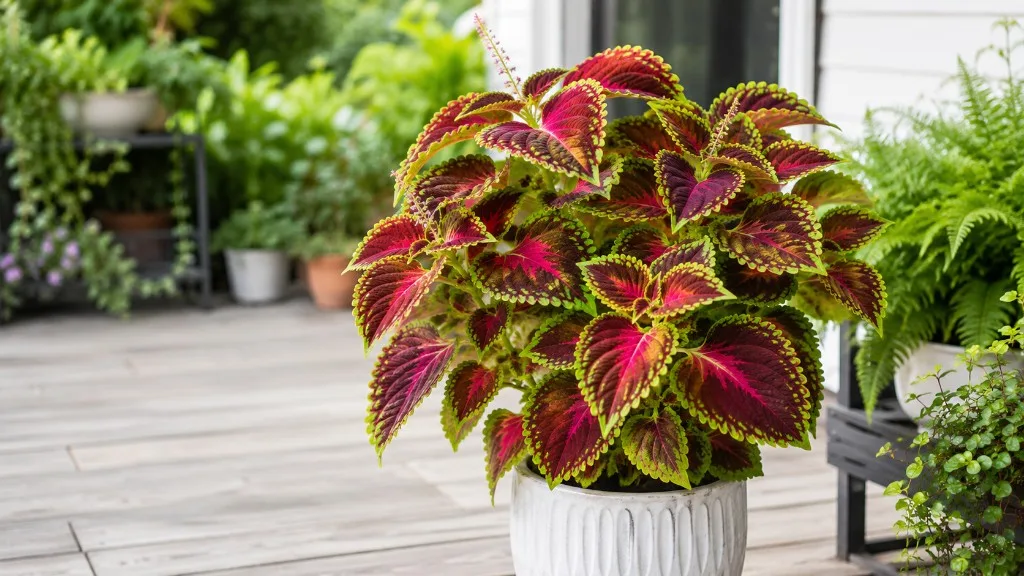
Coleus (Plectranthus scutellarioides) is the shade container plant I recommend most often when someone says “I have no sun and I want color.” Grown for wildly variegated leaves in lime, burgundy, orange, pink, and near-black, coleus genuinely thrives in full shade — though newer cultivars may tolerate more sun if kept well watered (University of Minnesota Extension).
In containers, pinch stem tips every two to three weeks through June to keep plants bushy. Remove flower spikes when they appear; blooming diverts energy from foliage and the leaves often look tired afterward. Feed at half-strength every three to four weeks — shade slows growth, so full-strength fertilizer produces soft, floppy stems.
Container role: thriller or filler depending on variety height. Light: full shade to partial shade; check tag for sun-tolerant series. Water: keep evenly moist; wilts dramatically but recovers if you catch it early. USDA zones: 10–11 as perennial; grown as annual elsewhere.
Pair chartreuse types with purple heuchera or Persian shield. For deeper care on light and watering, see our coleus care guides.
Impatiens: Deep-Shade Blooms and the Downy Mildew Reality
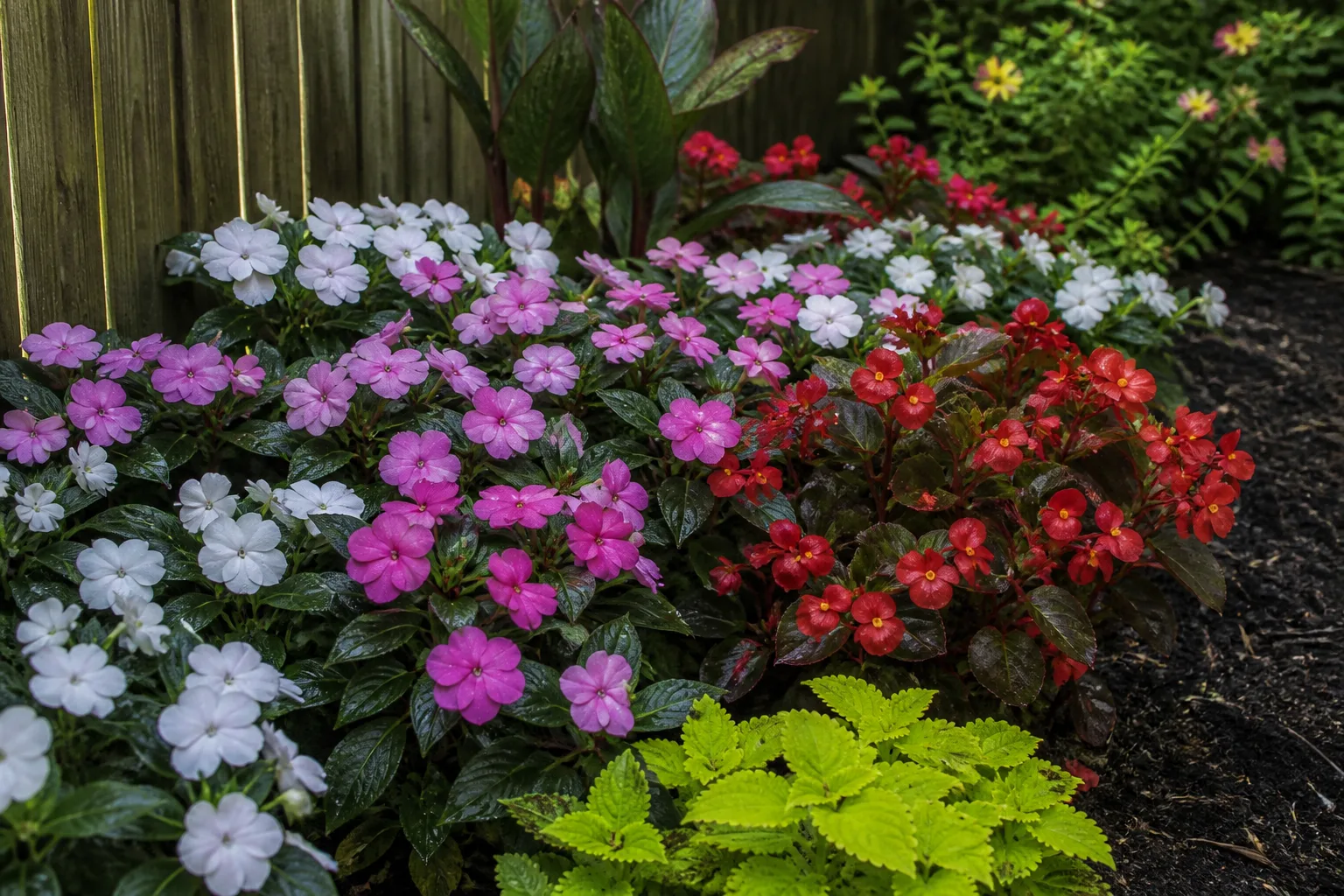
Impatiens (Impatiens walleriana) remains one of the few annuals that delivers steady flower color in true full shade — mounding plants in pink, red, coral, purple, and white that fill a pot without demanding deadheading.
That reliability came with a serious caveat. Impatiens downy mildew, caused by the water mold Plasmopara obducens, devastated garden beds across much of the U.S. starting in the 2010s (Wisconsin Horticulture). Infected plants yellow, drop leaves and flowers, and collapse. The pathogen spreads by wind and splashing water and can persist in soil.
Containers change the risk calculus. Growing impatiens in pots with fresh commercial potting mix — not garden soil — avoids many soil-borne spores. Hanging baskets elevated away from infected bed plantings are safer than in-ground mass plantings. Still, choose downy-mildew-resistant series such as Beacon or Imara XDR when available, inspect plants before purchase, and remove any that show yellowing leaves with white fuzzy growth underneath.
Alternatives if you skip impatiens: wax begonias, torenia, coleus, and New Guinea impatiens (Impatiens hawkeri), which show resistance or tolerance to the disease. New Guinea types want a bit more light than walleriana impatiens but handle partial shade well.
Container role: filler. Light: partial to full shade. Water: likes consistent moisture; do not let pots go bone-dry. Note: listed as non-toxic to dogs and cats by the ASPCA — a plus for pet households compared to begonias and coleus.
Fuchsia: Cascading Color for Porches and Hanging Baskets
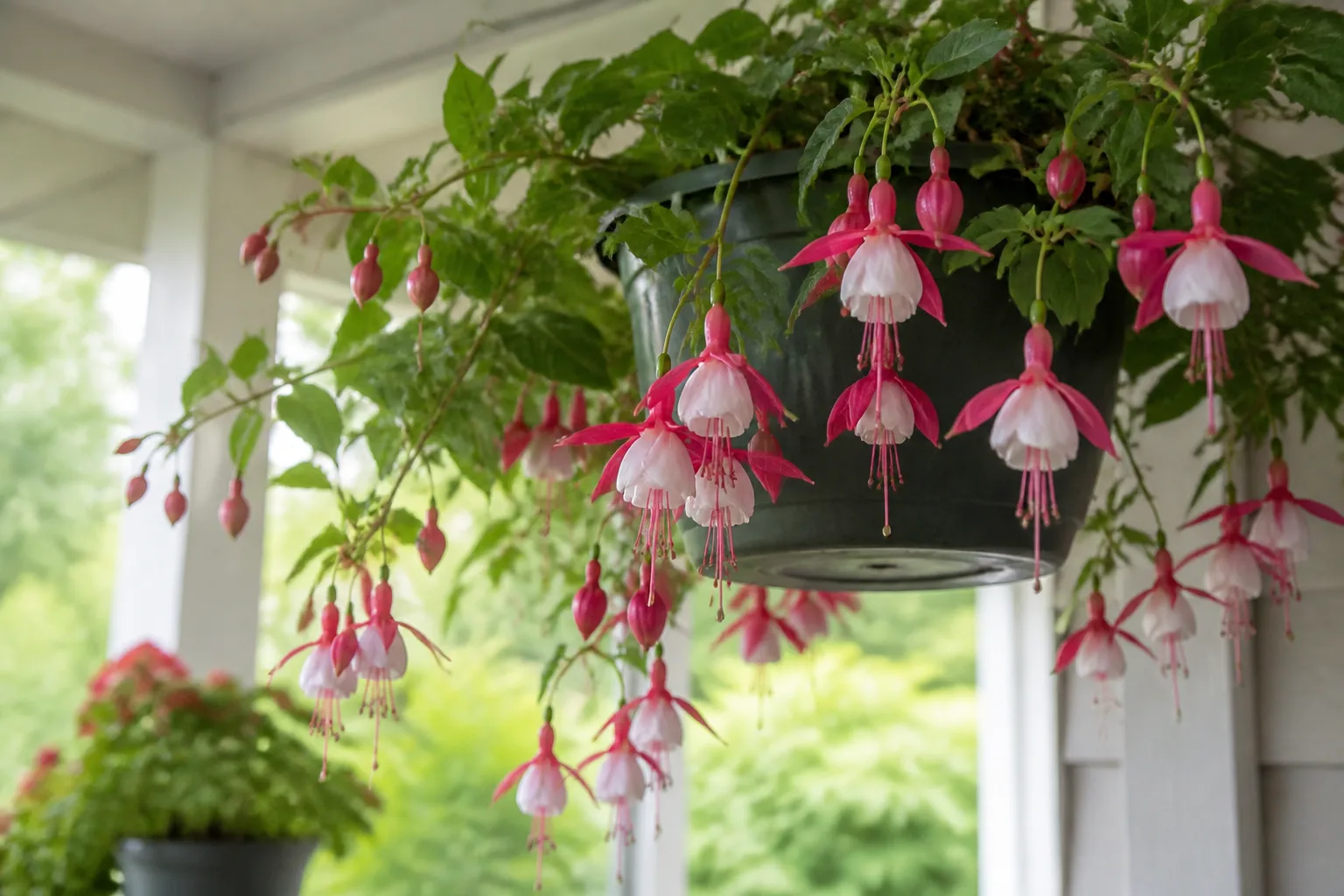
Fuchsia brings pendant, two-toned flowers that hummingbirds visit — one of the most elegant choices for shaded hanging baskets and tall patio pots where stems can trail over the rim. Hundreds of species and hybrids exist; trailing types suit containers best.
Fuchsias want cool roots, steady moisture, and protection from hot afternoon sun and drying wind. In containers, that usually means partial shade with morning light or bright open shade. Let the top inch of mix dry slightly between waterings, then soak thoroughly. Feed with diluted liquid fertilizer every two weeks during active bloom. Pinch growing tips in late spring for bushier plants.
In cold-winter climates, bring pots indoors before frost if you want to overwinter — a cool bright window or frost-free garage with occasional water works for some varieties. Treat as a disposable annual if that sounds like too much work; they earn their keep in one season.
Container role: thriller in upright forms, spiller in trailing forms. Light: partial shade to bright shade. USDA zones: typically 9–11; annual elsewhere.
Begonias: Rex, Tuberous, and Wax Types for Shade Pots
The begonia genus is enormous, but three groups dominate shade containers:
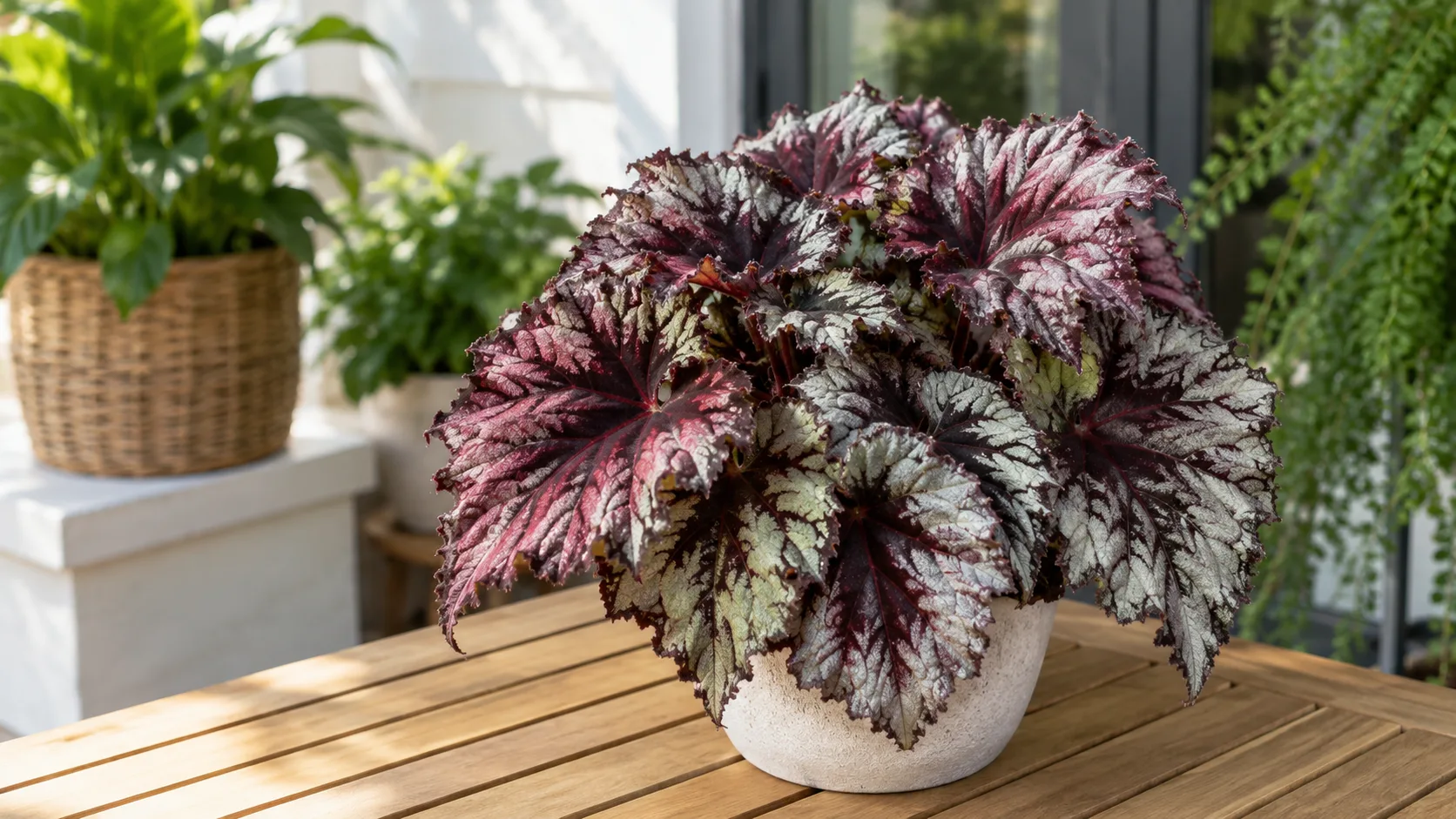
Wax begonias (Begonia × semperflorens-cultorum) are the workhorses — compact, waxy leaves, continuous small flowers in white, pink, and red. They handle partial shade better than full deep shade but are tough and forgiving in mixed pots.
Rex and rhizomatous begonias are grown for surreal foliage — spirals, metallics, and textures that outshine most flowers. They want bright shade, fast-draining mix, and careful watering; soggy soil causes rhizome rot quickly. Use them as thriller focal points in 12-inch bowls.
Tuberous and angel-wing begonias offer larger flowers and arching stems. They need regular feeding and excellent drainage. Many flower heavily from midsummer until frost in partial shade.
Container role: filler or thriller by type. Light: partial shade to bright shade; rex types scorch in direct sun. Caution: begonias are toxic to dogs and cats (ASPCA) — elevate pots if pets chew plants.
Torenia (Wishbone Flower): Underrated Summer Blooms
Torenia (Torenia fournieri), called wishbone flower for the curved stamens inside each bloom, is one of the most underused shade annuals. It flowers all summer in humid, bright shade without deadheading, trails nicely over pot edges, and comes in purple, blue, pink, and bicolor forms.
Plants stay short — 6 to 18 inches — and spread outward rather than upward. They excel in window boxes and railing planters where you want color at the rim. Keep soil evenly moist; torenia wilts in heat if allowed to dry out completely. In very hot climates, site pots where they get morning sun and afternoon shade for best performance.
Container role: filler and spiller. Light: partial shade to full shade. USDA zones: grown as annual in all zones; perennial only in frost-free climates.
Coral Bells (Heuchera): Perennial Structure You Can Replant
Heuchera, or coral bells, is a shade-garden perennial that doubles as one of the best foliage fillers in containers. Ruffled leaves come in caramel, purple, lime, silver, and burgundy. Small flower spikes appear in late spring; many gardeners remove them to keep the focus on leaves.
In pots, heuchera adds mounding structure that annuals alone lack. Use a well-draining mix and water when the top inch dries — heuchera rots in constant sogginess but tolerates drier conditions than impatiens once established. At season’s end in zones 4–9, transplant heuchera into a shaded garden bed rather than composting it; the plant returns next year.
Container role: filler. Light: partial shade to bright shade; leaf color is richest with some morning sun. USDA zones: 4–9 depending on cultivar (Missouri Botanical Garden).
Persian Shield and Oxalis: Foliage Drama for Shade
Persian shield (Strobilanthes dyerianus) is the shade container thriller I reach for when a pot needs height and iridescent purple leaves that look almost metallic in low light. Plants can reach 3 to 4 feet in a large pot. Pinch tips in May and June to branch; remove flower spikes if you prefer foliage focus. Persian shield tolerates part shade but bleaches in hot direct sun — ideal for covered patios.
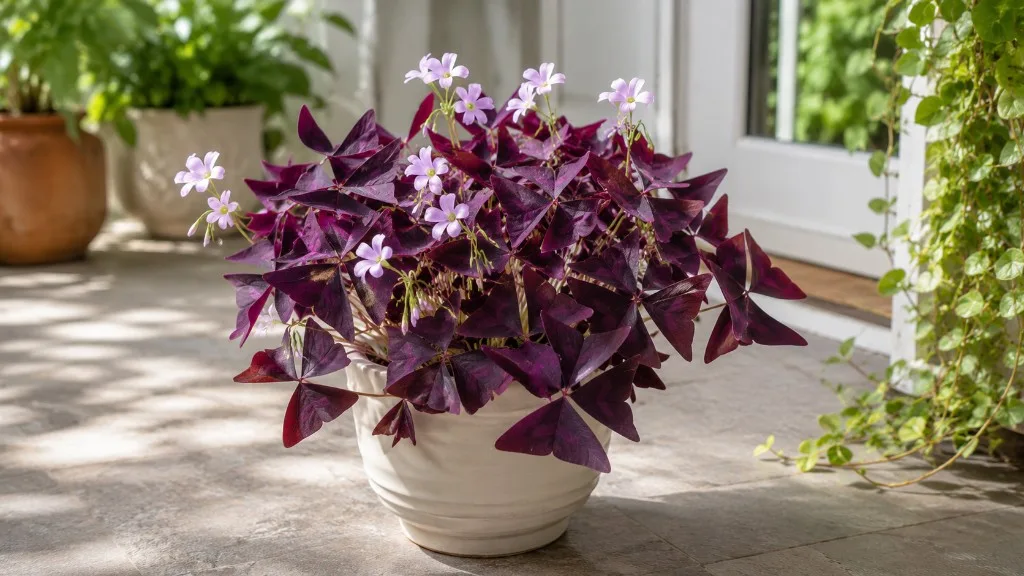
Oxalis — often sold as shamrock or purple wood sorrel — brings delicate trifoliate leaves and small flowers that open and close with light levels. Oxalis triangularis with purple foliage is a container favorite; O. tetraphylla offers green leaves with dark centers. Oxalis goes dormant if stressed by drought; restore watering and it usually resprouts. In cold climates, pots can move indoors to a bright window for winter greenery.
Container roles: Persian shield = thriller; oxalis = filler. Light: partial shade to bright shade. Water: evenly moist, not waterlogged.
Best Spillers for Shade: Lobelia, Dichondra, and Creeping Jenny
Trailing plants soften pot rims and make shade containers look finished. Three reliable choices:
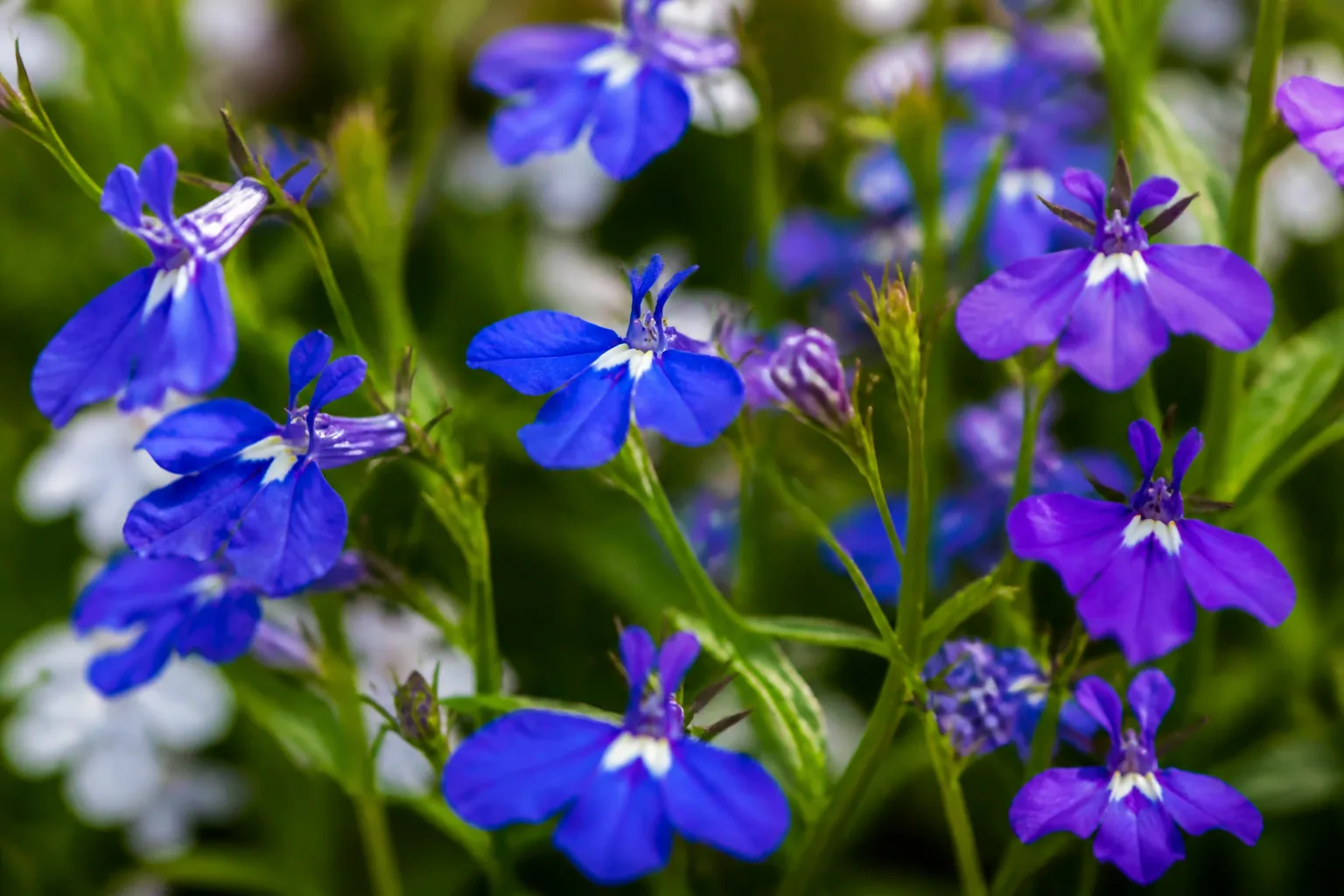
Trailing lobelia (Lobelia erinus var. pendula) produces clouds of tiny blue, purple, or white flowers. It prefers cool partial shade and often pauses bloom in midsummer heat even in shade — expect a second flush in early fall when nights cool. Keep evenly moist and trim lightly if plants look tired in August.
Dichondra ‘Silver Falls’ (Dichondra argentea) sends silvery stems up to 4 feet over container edges. It is grown for foliage, not flowers. Though labeled a sun lover, it tolerates partial shade if given an hour or two of morning sun or very bright open shade; in deep shade it grows thinner but still cascades. Do not let containers dry out — silver leaves crisp quickly.
Creeping jenny (Lysimachia nummularia) offers chartreuse coin-shaped leaves on stems to 2 feet long. It is nearly indestructible in partial shade and brightens dark corners. Keep it in containers only if you garden where it is invasive in beds — it spreads aggressively in moist soil when planted in the ground.
Container role: spiller for all three. Pairing tip: silver dichondra + purple impatiens + lime coleus is a classic shade combination.
Three Ready-Made Shade Container Recipes
Use these as templates; swap plants based on your light audit.
Recipe 1 — Full-shade porch pot (14-inch bowl): Persian shield (thriller) + impatiens in two colors (filler) + creeping jenny (spiller). Works on a north-facing entry with no direct sun.
Recipe 2 — Morning-sun hanging basket: Trailing fuchsia (thriller/spiller) + torenia (filler) + dichondra ‘Silver Falls’ (spiller). Hang where plants get eastern light until noon.
Recipe 3 — Foliage-focused deck planter: Coleus ‘Trusty Rusty’ or similar (thriller) + heuchera ‘Palace Purple’ (filler) + oxalis triangularis (filler) + lobelia (spiller at rim). No flowers required for impact.
Watering, Feeding, and End-of-Season Care
Shade containers dry more slowly than sun pots but are not self-watering. Check moisture twice a week in cool weather, daily during heat waves if pots hang under eaves. Water when the top inch of mix feels dry; soak until water runs from the drainage hole, then empty saucers so roots are not standing in water.
Fertilize at half the label rate every two to four weeks. Shade reduces growth rate; overfeeding produces weak leggy stems susceptible to aphids and mildew. Groom regularly — pinch coleus, remove spent fuchsia flowers, trim leggy lobelia.
At frost, compost true annuals (impatiens, coleus, torenia). Overwinter fuchsia, oxalis, and rex begonias indoors if desired. Transplant heuchera and creeping jenny into garden beds. Scrub pots before reuse to reduce disease carryover — especially important if you grew impatiens.
Conclusion
Shade containers reward gardeners who measure light first and choose plants by role — thriller, filler, and spiller — rather than grabbing whatever flat is nearest the checkout. Coleus and impatiens anchor most full-shade pots; fuchsia, begonias, and torenia extend the bloom window in partial shade; heuchera, Persian shield, and oxalis supply foliage drama; and lobelia, dichondra, and creeping jenny finish the edges. Set up drainage and potting mix correctly, respect impatiens downy mildew history in your region, and your low-light patio can look as intentional as any sunny stoop — without a single hour of afternoon blast.