Sorrel Care Guide: Growing Common Sorrel (Rumex acetosa)
Rumex acetosa
Learn how to grow common sorrel in sun or partial shade, water it according to its planting conditions, harvest its tart leaves, and distinguish it from French sorrel.
Sorrel Care Guide: Growing Rumex acetosa
Start with wateringThe most common care mistake for SorrelWatering guide →Sorrel care essentials
Light
Water
Keep seedlings and newly planted sorrel watered during dry spells until they are well rooted. Established plants in garden soil generally need extra water only during exceptionally prolonged dry weather; container compost needs more frequent checks and should stay evenly moist without becoming waterlogged.
Soil
Fertile, moisture-retentive but well-drained soil gives the best leaf crop. Sorrel tolerates most soil types; the species profile lists chalk, loam, and sand.
Humidity
Temperature
Fertilizer
About Sorrel
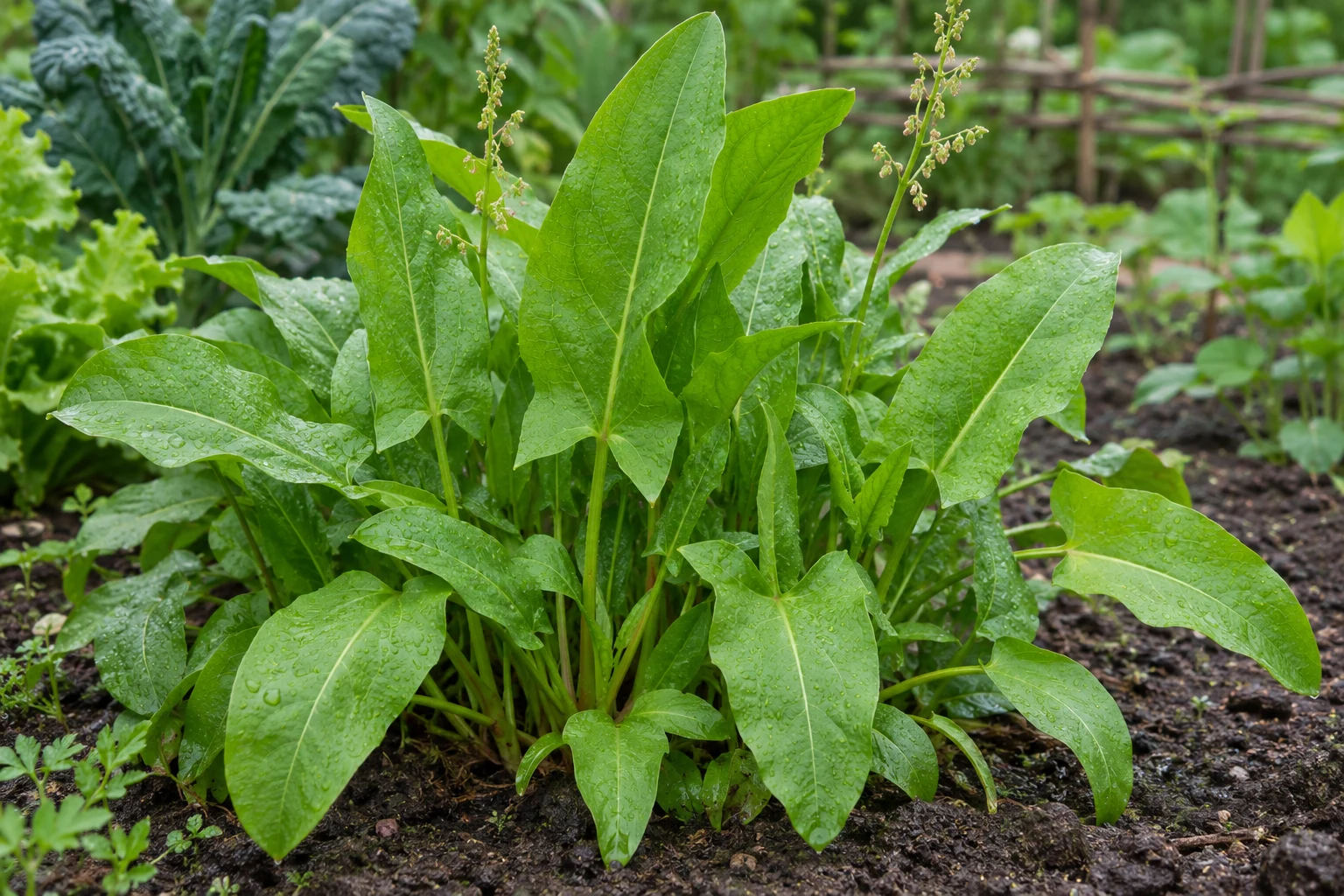
Sorrel is native to Northern temperate regions, typically reaches 50–100 cm tall and 10–50 cm wide as a leafy clump; flower stems can reach about 1.2 m indoors, with mature size reached in about 2–5 years growth. Sorrel has a hardy, clump forming herbaceous perennial herb growth habit and part of the Polygonaceae family. It is also known as Common sorrel, Garden sorrel, Broad-leaved sorrel, Sour dock, and Sharp dock.
| Detail | Information |
|---|---|
| Also known as | Common sorrel, Garden sorrel, Broad-leaved sorrel, Sour dock, Sharp dock |
| Native region | Northern temperate regions |
| Mature size | 50–100 cm tall and 10–50 cm wide as a leafy clump; flower stems can reach about 1.2 m |
| Growth rate | Mature size reached in about 2–5 years |
| Growth habit | Hardy, Clump Forming Herbaceous Perennial Herb |
| Scientific name | Rumex acetosa |
| Family | Polygonaceae |
How to care for Sorrel?
When should you water Sorrel?
Keep seedlings and newly planted sorrel watered during dry spells until they are well rooted. Established plants in garden soil generally need extra water only during exceptionally prolonged dry weather; container compost needs more frequent checks and should stay evenly moist without becoming waterlogged.
- For containers - Established plants in garden soil generally need extra water only during exceptionally prolonged dry weather; container compost needs more frequent checks and should stay evenly moist without becoming waterlogged.
- check the compost regularly and keep it evenly moist - Established plants in garden soil generally need extra water only during exceptionally prolonged dry weather; container compost needs more frequent checks and should stay evenly moist without becoming waterlogged.
- allowing excess water to drain. In garden soil - Established plants in garden soil generally need extra water only during exceptionally prolonged dry weather; container compost needs more frequent checks and should stay evenly moist without becoming waterlogged.
- water established plants only during exceptionally prolonged dry spells - Established plants in garden soil generally need extra water only during exceptionally prolonged dry weather; container compost needs more frequent checks and should stay evenly moist without becoming waterlogged.
- Drain excess water - Keep seedlings and newly planted sorrel watered during dry spells until they are well rooted.
What soil works best for Sorrel?
Fertile, moisture-retentive but well-drained soil gives the best leaf crop. Sorrel tolerates most soil types; the species profile lists chalk, loam, and sand.
- 50% peat-free soil-based compost - Fertile, moisture-retentive but well-drained soil gives the best leaf crop.
- 50% peat-free multi-purpose compost
Grower notes for Sorrel
Common sorrel and French sorrel are different plants
This hub covers common or garden sorrel, Rumex acetosa, a hardy perennial grown for its sour, arrow-shaped leaves. French sorrel is Rumex scutatus, a separate species; Missouri Botanical Garden notes its leaves are less acidic and that some cooks prefer it.
Give the clump light and moisture-retentive soil
Grow common sorrel in full sun or partial shade. It tolerates a range of soils, but rich, moisture-retentive, well-drained soil supports a better leaf crop. In a pot, use a container at least 30 cm wide and 20 cm deep.
Adjust watering to where it grows
Seedlings and newly planted sorrel need water during dry spells until rooted. Established in-ground plants generally need additional water only through exceptionally prolonged dry weather. Check containers regularly in warm weather and keep their compost evenly moist without waterlogging it.
Harvest leaves and manage flower stems
Pick young leaves from spring into autumn; regular picking encourages more tender growth. Young leaves can be used raw, while older leaves can be cooked like spinach. Remove flower stems if you want the plant to focus on leaves and to limit self-seeding.
Plan for a persistent perennial
Sorrel forms a clump, self-seeds readily if flowers are allowed to set seed, and develops deep taproots that can make it difficult to remove. Growing it in a container can help keep it from spreading into nearby beds. Divide established clumps every four or five years to rejuvenate them.
Keep pets from eating the plant
Gardeners’ World flags Rumex acetosa as potentially toxic to cats and dogs, and the RHS says it can be harmful to pets if eaten in large amounts. Keep pets from chewing it; the cited horticulture sources do not specify a dose or symptoms.
Is Sorrel safe for pets?
Gardeners’ World flags Rumex acetosa as potentially toxic to cats and dogs, and the RHS advises that it can be harmful to pets if eaten in large amounts. Keep pets from chewing the plant.
Horticulture sources flag Rumex acetosa as potentially toxic to cats and dogs and harmful to pets if eaten in large amounts. They do not specify a dose or symptoms; prevent chewing and contact a veterinarian if a pet eats the plant.
Watering Sorrel
For Sorrel, for containers, check the compost regularly and keep it evenly moist, allowing excess water to drain. In garden soil, water established plants only during exceptionally prolonged dry spells. and water water new plants during dry spells while they establish; check containers regularly in warm weather and water as needed to keep the compost evenly moist. Container compost dries faster in warm weather, so check it more often then. Established in-ground plants usually need no routine supplemental watering except in prolonged dry spells.
| Detail | Information |
|---|---|
| How often | Water new plants during dry spells while they establish; check containers regularly in warm weather and water as needed to keep the compost evenly moist. |
| How to check | For containers, check the compost regularly and keep it evenly moist, allowing excess water to drain. In garden soil, water established plants only during exceptionally prolonged dry spells. |
| Seasonal changes | Container compost dries faster in warm weather, so check it more often then. Established in-ground plants usually need no routine supplemental watering except in prolonged dry spells. |
Soil & potting for Sorrel
Use a mix of 50% peat-free soil-based compost, 50% peat-free multi-purpose compost for Sorrel. Use well-drained soil and do not let container roots sit in waterlogged compost. Target soil pH around Acid to neutral, according to the RHS species profile. Repot no routine potting interval is specified; divide established, congested plants every 4–5 years to rejuvenate the clump and maintain leaf production., ideally in spring or autumn for dividing established plants.
| Detail | Information |
|---|---|
| Recommended mix | 50% peat-free soil-based compost, 50% peat-free multi-purpose compost |
| Drainage | Use well-drained soil and do not let container roots sit in waterlogged compost. |
| Soil pH | Acid to neutral, according to the RHS species profile. |
| Repotting frequency | No routine potting interval is specified; divide established, congested plants every 4–5 years to rejuvenate the clump and maintain leaf production. |
| Best season to repot | Spring or autumn for dividing established plants. |
Signs it needs repotting
- the clump has become congested
- leaf production has declined in an established clump
- the container is becoming difficult to manage as the plant spreads