How to Grow Sourwood: Planting, Care, and Pruning
Learn how to grow sourwood in acidic, well-drained soil, choose a suitable planting site, water young trees, prune lightly, and solve common care problems.
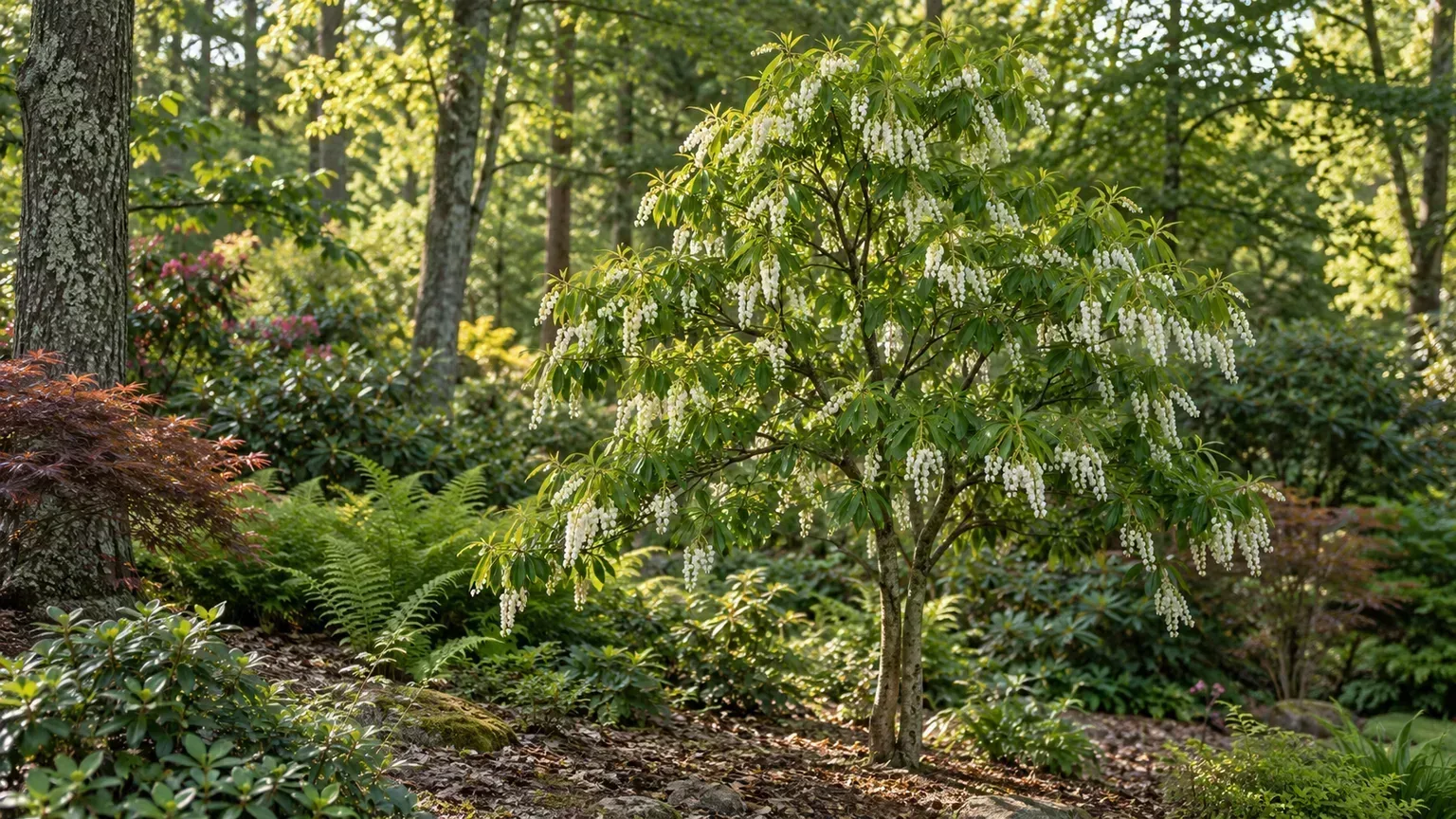
Sourwood (Oxydendrum arboreum) is a small deciduous tree native to the eastern and southern United States. Its glossy summer leaves, hanging white flower clusters, and red to reddish-purple fall color make it a strong specimen for a woodland edge or native garden. The deciding factor is usually underground: sourwood wants acidic soil that stays moist without becoming waterlogged, and it can sulk after root disturbance. NC State Extension’s plant profile describes it as intolerant of pollution and difficult to transplant, so the right site matters more than a complicated maintenance routine.
If your soil is alkaline, compacted, or chronically wet, planting sourwood may be an expensive experiment. If you can offer the acidic, drainable conditions it prefers, choose a young nursery-grown tree, give it room, and protect its root zone while it establishes. Once settled, sourwood needs little pruning or feeding; it rewards patience with a distinctive shape, summer nectar, and a second season of interest in fall.
Sourwood at a Glance
| Trait | What to expect |
|---|---|
| Botanical name | Oxydendrum arboreum |
| Other names | Sourwood, sorrel tree, lily-of-the-valley tree |
| Mature size | Commonly 20–30 feet tall and 10–15 feet wide; local form varies |
| Growth habit | Slow-growing, deciduous, often upright or pyramidal when young |
| Light | Full sun to part shade; shade tolerant, but flowering is often stronger with more sun |
| Soil | Acidic, organic, moist, and well-drained |
| Flowers | Small, fragrant, white bell-shaped flowers in drooping panicles in summer |
| Fall display | Red to reddish-purple leaves; yellow and purple tones may also appear |
| Range | Eastern and southern United States; hardiness varies by location and site |
The name “sorrel tree” refers to the leaves’ sour taste, not a recommendation to use them like culinary sorrel. NC State Extension notes that sourwood leaves contain oxalic acid, so do not treat landscape foliage as a food or tea ingredient. Use size as a planning range rather than a promise. A tree growing at a woodland edge may have a different outline from one in a sunny, exposed yard, and local soil and climate influence both height and spread. NC State Extension lists sourwood across USDA zones 5a through 9b, but a zone label only describes average winter minimums; it does not account for alkaline fill, urban heat, drought, or poor drainage.
Sourwood is not a fast privacy screen or a tree to plant where it must be repeatedly sheared. It works better as a single specimen, a small grouping, or a light understory layer beneath taller trees. The limited cultivar list includes selections such as ‘Chameleon’ and ‘Mt. Charm’; ask a nursery what traits that particular stock is selected for rather than assuming every sourwood has identical autumn color or shape.
Is Sourwood the Right Tree for Your Garden?
Sourwood fits gardens that can mimic its native setting without being dense forest: a sheltered edge with filtered light, organic matter, and soil that drains after rain. Its relatively modest mature size suits many residential yards, and its branches, flowers, and seed capsules offer seasonal interest without the broad canopy of a large shade tree. It can support pollinators, too, because bees and other insects visit its summer flowers.
Think twice if your property has limestone-derived soil, a persistently high soil pH, compacted construction fill, or heavy road pollution. NC State Extension notes that sourwood does not perform well in polluted urban conditions, while the Morton Arboretum flags the difficulty of growing it in northern Illinois where the required acidic soil can be a challenge. The Morton Arboretum’s profile also describes the species as drought-sensitive, a useful reminder that tolerance reported by one source does not mean it is a dependable choice for a hot, dry site.
Before buying, check the soil rather than relying on nearby plants as a pH test. A county extension soil test can tell you whether your soil is acidic and whether nutrients need correction. If the result is strongly alkaline or the planting bed is poorly drained, choose a better-matched native tree or ask a local extension horticulturist whether a raised planting area is realistic; don’t assume repeated doses of an acidifying product will permanently change unsuitable soil.
Choose a Site That Matches the Tree
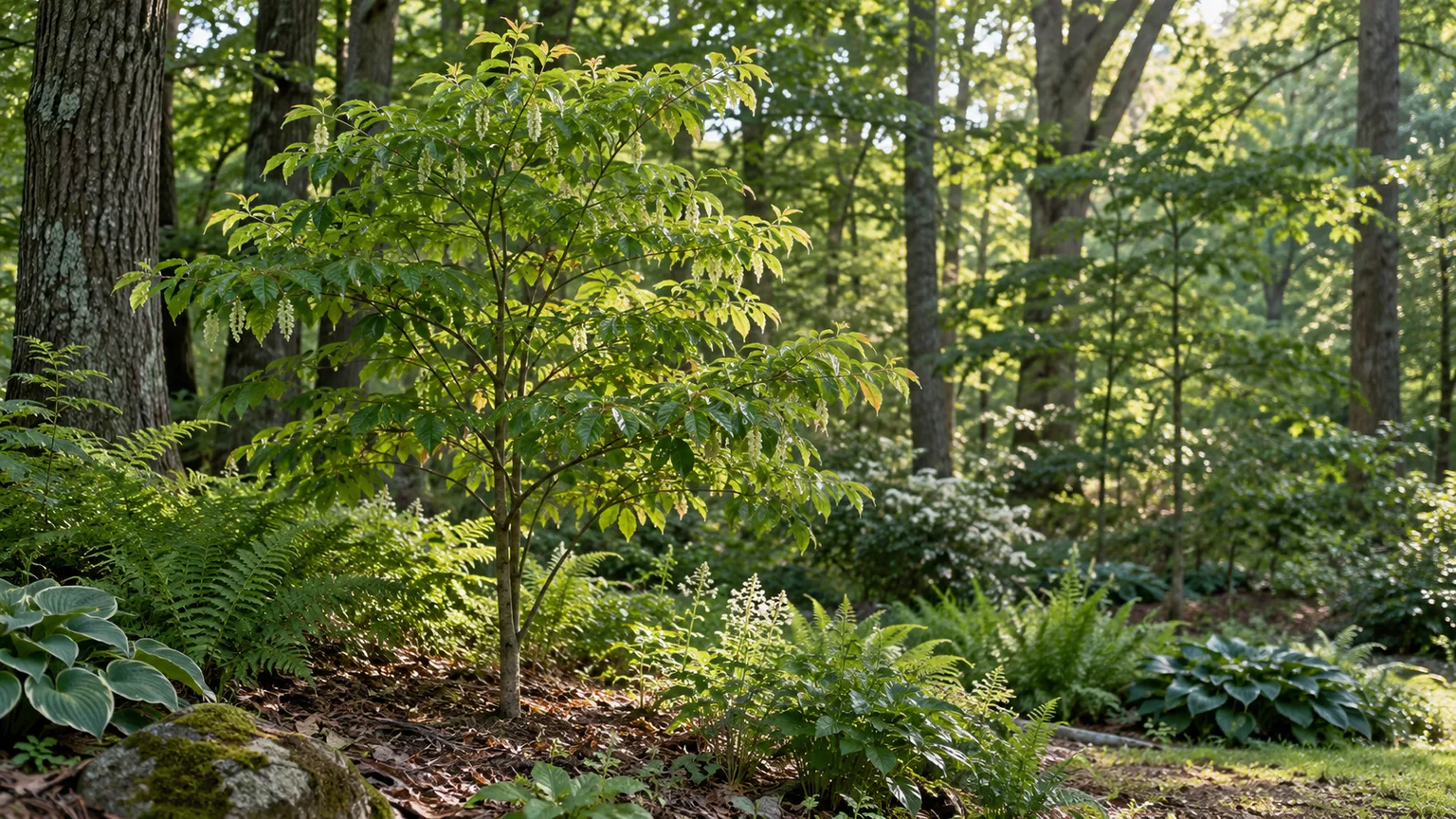
Sunlight and climate
Sourwood grows in full sun to part shade and can persist in shade, but these are not identical outcomes. A brighter site generally supports more flowering and vivid autumn color when roots can access steady moisture. In a warmer or drier location, morning sun with afternoon protection may reduce stress; a woodland edge gives light without the exposure of a paved, reflected-heat site. Fine Gardening likewise recommends sun or partial shade and notes that flowering is best in full sun in its sourwood profile.
USDA hardiness information is a useful first screen, not a guarantee. Sourwood’s native range and the guidance from NC State Extension encompass a wide band of eastern and southern climates, but local extremes still matter. Avoid a wind tunnel, a heat-reflecting wall, or a low pocket where cold air and water collect. In the cooler edge of its range, protect the young tree from desiccating wind and choose a location with good summer light and root-zone moisture.
Mature size and placement
Allow space for roughly 10 to 15 feet of width, and more if a local nursery indicates that its stock tends to grow broader. Keep the trunk well away from foundations, paving, overhead wires, and property boundaries where later pruning would be needed to force the crown into a narrow shape. Sourwood grows slowly, but slow growth does not make it a permanent miniature tree.
Its natural habit can be irregular. NC Cooperative Extension notes that trees in dense shade often have slender trunks and smaller crowns, while more open-grown trees may lean or divide into several major limbs. That variation is part of its character, not necessarily a defect. Use sourwood where a graceful native form can develop rather than demanding a perfectly symmetrical street-tree silhouette.
Soil Acidity, Drainage, and Root Zone
Sourwood’s main soil requirement is an acidic root zone. NC State Extension classifies it as preferring acid soil, and describes its ideal conditions as acidic, peaty, moist, and well-drained. Leaf litter and other organic matter help create the woodland-floor conditions the species is adapted to, but a deep layer of rich compost cannot correct a fundamentally alkaline site.
Drainage matters alongside moisture. Water should reach the root zone and then move through it; sourwood should not sit in a saturated hole after rain. If a planting area stays puddled or clay is tightly compacted, choose a naturally better-drained position or improve the broader bed before planting. Don’t dig a deep, amended pocket that acts like a bowl inside dense soil, because the tree’s roots still encounter the surrounding ground as they spread.
Avoid aggressive pH correction without a soil test. Adding sulfur, peat, or an acid-loving-plant fertilizer by guesswork may change soil chemistry unpredictably and can harm other plants. If the test shows a mismatch, compare the cost and maintenance of changing the whole root zone with the simpler choice of planting sourwood in a different bed or selecting another tree adapted to your soil.
Planting a Young Sourwood Tree
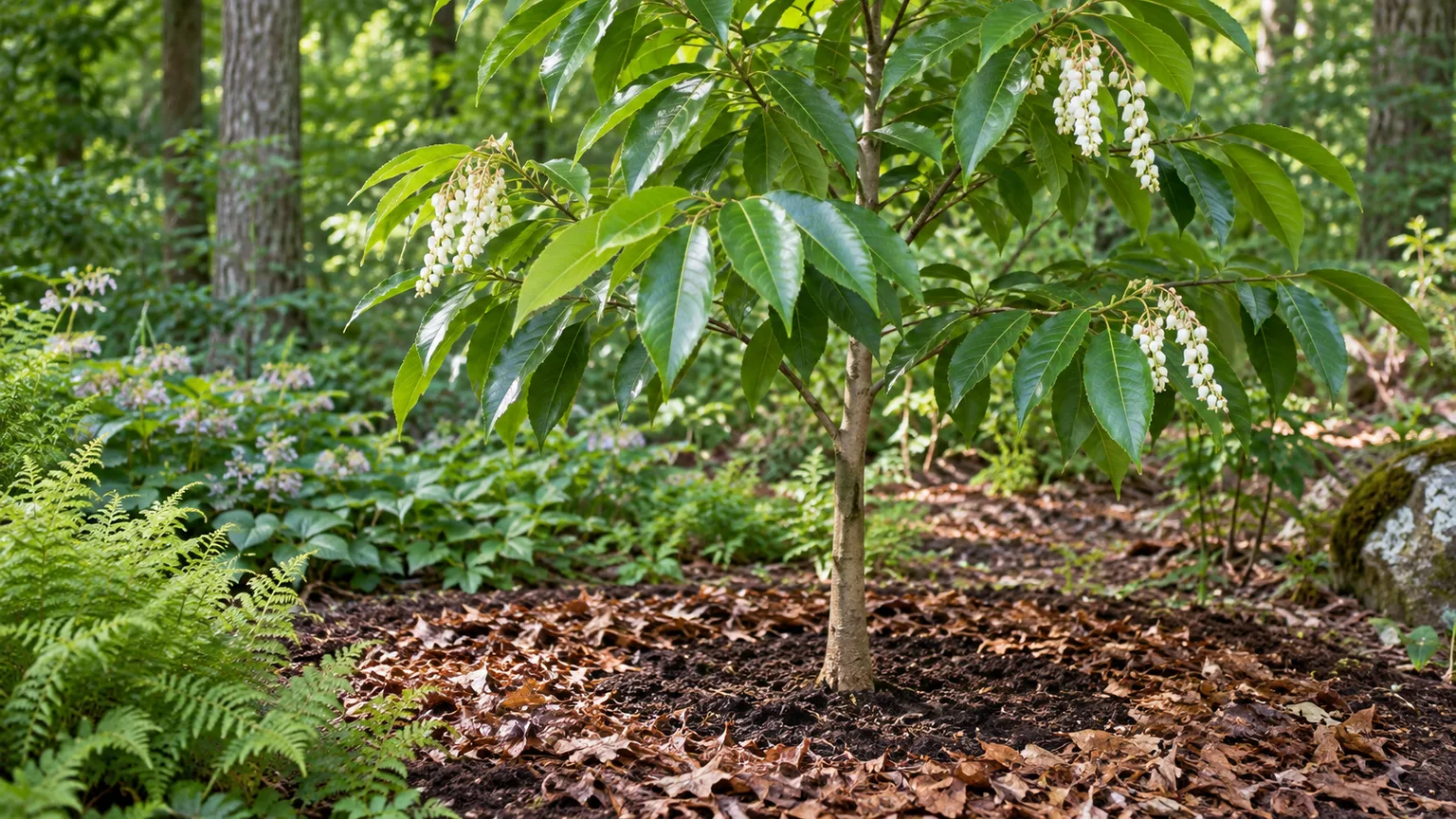
Choose a young, container-grown nursery specimen with a sound trunk, evenly distributed branches, and roots that have not circled tightly around the pot. A smaller tree is usually the safer purchase than an overgrown one: sourwood is known for poor transplant tolerance, and moving a large root system increases the amount of stress a tree must overcome. Never dig a wild sourwood from a woodland. Its shallow, sensitive roots make establishment unreliable, and removing a native tree damages the habitat where it is already growing.
In most regions, plant in fall after peak heat or in early spring before the tree pushes new growth. In climates with severe winters, favor spring if a late-fall planting would leave little time for roots to settle before the ground freezes. The soil should be workable, not waterlogged. Avoid planting during a heat wave or when the ground is frozen, and water the root ball before it dries while you work.
Set the tree so the root flare is at or just above the finished soil surface; the top of the root ball should not be buried under several inches of fill. Make the planting area broad enough for roots to move into loosened surrounding soil, but no deeper than the root ball needs. Remove the container, tease apart a few circling roots if they can be corrected without tearing the root mass, backfill with the excavated soil, and water slowly to settle air pockets. Keep mulch away from the trunk and avoid staking unless the tree cannot remain stable in wind.
Watering While It Establishes
A newly planted sourwood needs closer attention to water than an established one. For the first growing season, check the root ball and nearby soil every few days during dry or hot weather; water deeply when the root zone begins to dry rather than waiting for leaves to wilt. The surface can look damp while the container-grown root mass is dry, so check below the mulch and near the original root ball, not just at the soil surface.
Use a slow soak that wets the full root ball and the soil just beyond it. Then let excess water drain. The goal is evenly moist soil, not permanent saturation. In a rainy week, skip watering if the root zone is already damp; in a hot, windy spell, the same young tree may need another check much sooner than a calendar schedule would suggest.
Continue checking moisture through the second growing season, especially during drought. Sourwood can tolerate some dry soil once established, but its preference for moist soil and the Morton Arboretum’s drought-sensitivity rating argue against treating it as a xeric tree. If leaves curl, scorch, or drop in summer, check moisture several inches down first. If soil is wet and the tree still declines, stop adding water and inspect drainage instead.
Mulch and Fertilizer
Spread a thin layer of organic mulch over the root zone to conserve moisture and moderate soil temperature. Keep it a few inches away from the trunk and maintain a broad, shallow ring rather than piling mulch against the bark. As the tree grows, extend the mulched area outward rather than making a deeper mound at the base; roots spread beyond the trunk’s immediate footprint.
Sourwood is slow-growing, so do not try to force fast growth with routine fertilizer. Excess nitrogen can push leafy growth without solving a soil-pH problem, drainage issue, or root-establishment setback. Fine Gardening describes sourwood as low-maintenance and advises pruning only for a healthy framework; a similar restrained approach applies to feeding. Start with a soil test if growth is persistently weak, leaves show a repeated nutrient pattern, or flowering is poor after the tree has matured. Apply amendments only when the test or a local extension recommendation supports them.
Keep turf, string trimmers, and repeated digging away from the trunk. Sourwood’s shallow roots are vulnerable to physical disturbance, and lawn competition can make a young tree’s moisture needs harder to judge. A mulched bed with compatible native groundcovers is easier to manage than grass cut right to the trunk.
Flowers, Sourwood Honey, and Fall Color
Sourwood’s best-known display is a cascade of small, white, urn-shaped flowers hanging from branch tips in summer. Bloom timing varies with climate, but NC Cooperative Extension reports flowering from June into August in North Carolina. NC State Extension notes that trees grown from seed may need four to five years to flower; a nursery tree’s age and prior growing conditions vary, so the first bloom is not a reliable purchase-year promise.
The flowers attract bees and butterflies, and the nectar is the source of prized sourwood honey. That reputation does not mean every tree or every flowering season will produce a local honey crop: honey depends on flowering conditions, weather, nearby forage, and beekeeping. Treat it as an added ecological and cultural benefit rather than a harvest guarantee. NC Cooperative Extension’s sourwood honey overview describes the tree’s role as a native ornamental and a nectar source in North Carolina.
Autumn color ranges from red to reddish purple, with yellow or purple tones possible. Light, weather, and the tree’s health all affect the show; a shaded tree may still color, but often less vividly than one receiving more sun. After leaves fall, the small dry capsules can persist into winter and add subtle structure. Don’t fertilize or prune heavily just to chase brighter color: a well-suited site is more valuable than a quick cosmetic intervention.
Pruning for a Natural Shape
Sourwood does not need annual pruning to stay healthy. In its first years, inspect the structure and remove only dead, broken, rubbing, or badly placed branches that threaten the developing crown. Preserve a strong main stem if one forms naturally, but don’t force a narrow single leader by removing every low or irregular branch; the species can grow with a naturally varied outline, particularly in open settings.
For structural work, prune during the dormant season before spring growth begins, using clean, sharp tools and cuts just outside the branch collar. Remove a competing branch at its point of origin rather than leaving a stub, and avoid taking off a large share of the live canopy in one session. Sourwood is not a hedge and should never be topped to hold it below its expected size.
If flowering matters, remember that flower clusters form at branch ends; cutting off many shoot tips removes potential bloom sites. Avoid routine shearing or late-season shaping. For a mature tree with large limbs, dieback high in the crown, or a major split, consult a qualified arborist rather than climbing or making large cuts yourself. Fine Gardening’s species guidance is concise: prune sourwood only to maintain a healthy framework.
Propagating Sourwood
Sourwood is usually easiest to buy as nursery-grown stock. Propagation takes patience, and young trees are difficult to transplant, so starting many seedlings makes most sense when you want additional native trees and have room to grow them on. The two routes commonly described are seed and semi-ripe cuttings; neither promises a quick, uniform landscape tree.
Seed-grown plants may vary from named cultivars and take years to reach flowering size. Cuttings can preserve the parent plant’s traits, but rooting is less predictable for home gardeners. If a named cultivar matters, buy a correctly labeled tree from a reputable nursery rather than relying on seed from a cultivar.
Start with seed
Collect dry seed capsules in fall when they have matured and begun to open, before wind scatters the tiny seeds. Keep the material dry while you separate the seeds, then store them in a labeled paper packet in a cool, dry place if you are not sowing immediately. Because seed is fine, use a clean, fine-textured seed-starting mix and press it onto the surface or cover it only very lightly; deep planting makes emergence harder.
Sow in a pot or tray with drainage holes, water gently, and keep the medium evenly damp rather than soaked. A protected outdoor cold frame or an unheated greenhouse can provide natural winter conditions; Fine Gardening recommends autumn sowing in a cold frame. Germination can be uneven, so keep the pot marked and continue monitoring instead of discarding it after a short wait. When seedlings are large enough to handle, pot them individually and grow them on in bright, sheltered conditions.
Let seedlings build roots before moving them into the landscape. Keep the soil evenly moist, protect the small pots from drying wind and hard freezes, and avoid strong fertilizer. Transplant while the plants are still young, ideally when dormant, because sourwood becomes harder to move as the root system expands. Expect a multi-year process before a seedling becomes a small landscape tree.
Try semi-ripe cuttings
Fine Gardening lists semi-ripe cuttings taken in summer as another propagation method. Use a healthy current-season shoot that has begun to firm but is not fully woody, and take several cuttings because not every one will root. Remove the lower leaves, place the cut end in a moist, airy propagation medium, and keep the leaves humid while the medium remains damp and drains freely.
Rooting success varies with shoot maturity, temperature, humidity, and the condition of the parent plant. A sealed cover can help retain humidity, but ventilate it and keep the cutting out of harsh direct sun so it does not overheat. Once new growth and roots indicate establishment, pot the cutting separately and grow it on before planting out. If you need a reliable specimen on a schedule, buying nursery stock is more predictable than waiting for cuttings.
Pests and Diseases
Sourwood is not generally known for severe pest or disease pressure, but “few problems” does not mean every damaged leaf is harmless or every insect needs spraying. NC State Extension identifies fall webworm as an occasional pest, with leaf spot and twig blight occurring infrequently. First look at how much of the tree is affected and whether symptoms are spreading; that determines whether simple observation, sanitation, or professional diagnosis makes sense.
Take a photo of the whole tree and a close view of the affected leaves or branch tips. Note whether the damage appeared after drought, a recent transplant, a wet spell, or pruning. This context is often more useful than reacting to one discolored leaf, which may be old, sun-scorched, or part of the normal seasonal change.
Fall webworm
Fall webworms make conspicuous silken tents over branch tips and feed on leaves within the web. A small web on a vigorous tree is usually a limited, seasonal problem, not a reason to treat the whole canopy. If a small tent is within safe reach, remove the web and affected material or open the web so predators can reach larvae; don’t burn it or use a pesticide without checking local extension guidance and the product label.
On a tall tree, leave high nests to a professional. Spraying a broad-spectrum insecticide can harm beneficial insects visiting the flowers, while treatment may be unnecessary if the tree is otherwise healthy. If defoliation is heavy, repeats across years, or affects many trees nearby, send clear photos to your county extension office for an identification and a proportionate response.
Leaf spot and twig blight
Leaf spots usually appear as scattered marks or blotches and may be more noticeable after prolonged wet weather. If only a few leaves are involved and the tree keeps growing normally, avoid stripping the canopy; collect fallen infected leaves if practical and water at soil level so foliage dries quickly. Persistent spotting, widespread early leaf drop, or symptoms that recur every year call for a diagnosis before fungicide is considered.
Twig blight can show as dead leaves or shoots at branch ends. Confirm that the wood is actually dead by checking for live buds or green tissue below the affected area, then prune a small dead branch back to healthy wood in dry weather. Clean tools between cuts if disease is suspected and dispose of infected debris rather than leaving it under the tree. Don’t add fertilizer as a default treatment: first determine whether the underlying issue is disease, drought, poor drainage, or root injury.
When Sourwood Struggles
When sourwood looks unhealthy, check the site and root zone before reaching for fertilizer or a spray. Brown leaf edges during hot weather can point to dry soil or transplant stress; yellowing combined with persistently wet ground suggests poor drainage may be limiting root function. Weak growth across several seasons can also reflect soil that is too alkaline, competition from lawn grass, or a location exposed to heat and pollution.
Use this quick sequence: check soil moisture below the surface; inspect drainage after rain; review the soil-test pH; look for root or trunk damage; then identify insects or disease. Change one factor at a time so you can tell whether the tree responds. For a recently planted sourwood, water and root disturbance are more likely first checks than an immediate nutrient deficiency.
A tree that has no flowers may simply be young, shaded, or still recovering from planting. NC State Extension says seed-grown sourwood may take four to five years to flower, and reduced light can also reduce bloom. Check age, sunlight, and whether pruning removed terminal shoots before treating the tree as deficient. If the tree’s condition worsens, branches die back progressively, or the site is not acidic and well-drained, ask a local extension office or arborist to evaluate it before making major changes.
Conclusion
Sourwood is a rewarding small native tree when the site suits it: acidic soil, good drainage, steady moisture while young, and enough light for flowers and fall color. Buy a young nursery-grown specimen, plant it carefully, mulch broadly without touching the trunk, and water according to the root zone rather than a fixed calendar. Once established, keep care light: protect the shallow roots, prune only for sound structure, and treat minor webworm or leaf damage in proportion to what the tree is actually experiencing.
The most important decision happens before planting. If your soil and climate fit, give sourwood room to take its naturally graceful form and be patient while it establishes; if they do not, choose a tree that matches the site instead of trying to force this one to adapt.