How to Identify and Remove Boxelder Trees
Learn when a boxelder is worth keeping, how to pull young seedlings, why stumps can resprout, and when to hire a certified arborist.
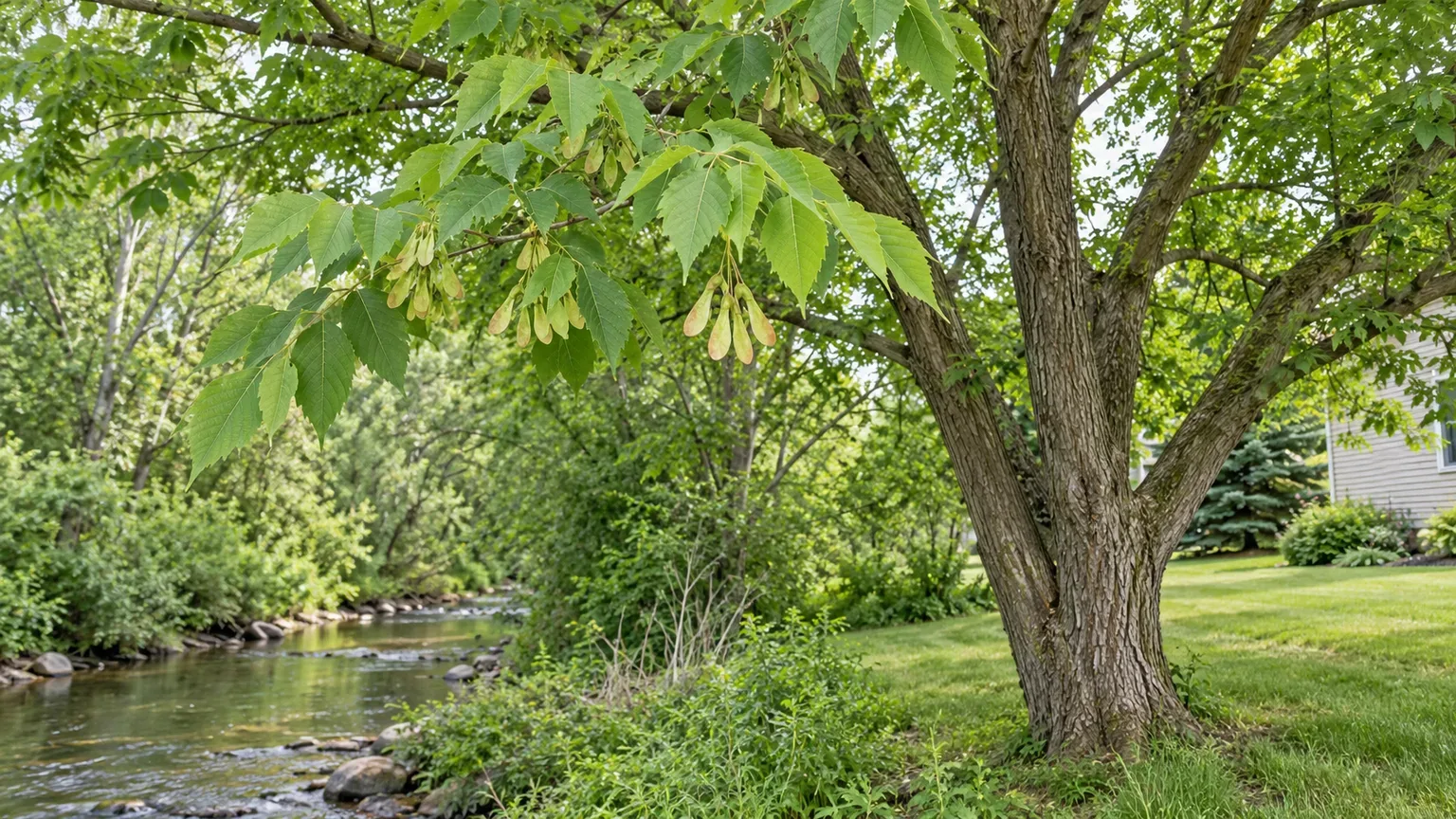
A boxelder can be a useful native tree in one yard and an unwanted seedling factory in another. Before cutting anything, make sure the tree is actually boxelder, check whether your local agency considers it invasive, and decide whether the problem is the tree itself or something it attracts. Small seedlings are usually manageable by hand; a mature boxelder is a different job because its wood is weak and its branches can break.
Quick Answer: Identify the Tree, Then Match Removal to Its Size
Boxelder (Acer negundo) is a deciduous maple with opposite branches and pinnately compound leaves, usually with three to five leaflets. Female trees form paired winged seeds called samaras. If a seedling is small enough to pull with its roots intact, remove it when the soil is moist and check the area again later. For a thicker sapling, a large trunk, a leaning tree, or any tree near a building, road, or power line, use an experienced tree professional. Do not treat every boxelder as invasive or assume removing one tree will solve a boxelder-bug problem.
Decide Whether the Boxelder Needs to Go
Start with the reason you are considering removal. A volunteer in a vegetable bed, a seedling in a foundation crack, and a mature tree shading a stream bank are not the same problem. The first two may be easy to resolve; the third may provide shade, habitat, and soil stability that would take years to replace.
In North Carolina, the NC State Extension Plant Toolbox describes boxelder as a fast-growing, relatively short-lived maple that can be weedy, but also notes its uses in naturalized areas, rain gardens, and streamside settings. That is a useful distinction: “weedy” describes how readily a tree may volunteer; it does not mean the tree is harmful or legally invasive in every place it grows.
Consider removal when the tree is growing where it will damage hardscape, block a planned project, crowd a more suitable tree, or repeatedly spread into areas you need to keep clear. A dead, split, or structurally compromised tree near a target also deserves prompt assessment. If it is healthy and well placed, you may prefer to keep it and remove only seedlings that appear in unwanted spots.
Make the decision over the tree’s full life, not just the handful of samaras you see this year. A mature boxelder provides shade and habitat now; removing it can expose a house or garden bed to more sun and wind, and may require a replacement plan. On the other hand, a seed-bearing female beside a small patio may create a cleanup chore every autumn. If the only complaint is seedlings, a yearly sweep of the beds and pavement edges may be easier and less disruptive than removing a healthy tree. If the tree crowds a walkway or has repeatedly broken branches above a place people use, get an arborist to assess its structure before deciding whether pruning or removal is the better answer.
Check Its Status in Your Area Before Removing It
Boxelder is native to much of North America, but a plant’s status changes by region. It may be treated as an undesirable volunteer in one landscape, while being a native tree or useful riparian plant in another. Local rules can also restrict clearing near wetlands, streams, conservation easements, or protected trees.
Search your state or provincial invasive-species list and ask a cooperative extension office, conservation district, or local natural-resources agency if the answer is unclear. A national gardening article cannot tell you whether a specific county regulates removal on a stream bank or whether a native-plant program values the tree in your area. Check before applying herbicide or removing vegetation near water, where runoff and erosion matter.
Identify Boxelder by Leaves, Branches, and Seeds
Use more than one trait. Compound leaves can resemble those of other trees, and young seedlings may not yet show mature bark or fruit. The best identification combines branch arrangement, leaf structure, and fruit when present. If those clues disagree, wait for another season or ask a local extension educator to confirm it.
Start with the Opposite Branches and Compound Leaves
Look at a healthy twig and follow it from the tip toward the trunk. Boxelder’s leaves and buds are arranged opposite one another: two leaf stalks emerge at the same level on opposite sides of the twig. This pattern is often easier to see in winter after leaves drop. Many other trees with compound leaves have alternate branching, so this is a valuable first check.
Each leaf is made of several leaflets attached along one central stalk, or rachis. NC State lists three to five leaflets as a common quick-identification clue, though leaflet count and lobing can vary. The leaflets are green, often irregularly lobed or toothed, and can give a young tree an untidy, “ash-like” outline. A single leaflet is not a separate leaf: trace the whole structure back to its attachment on the twig.
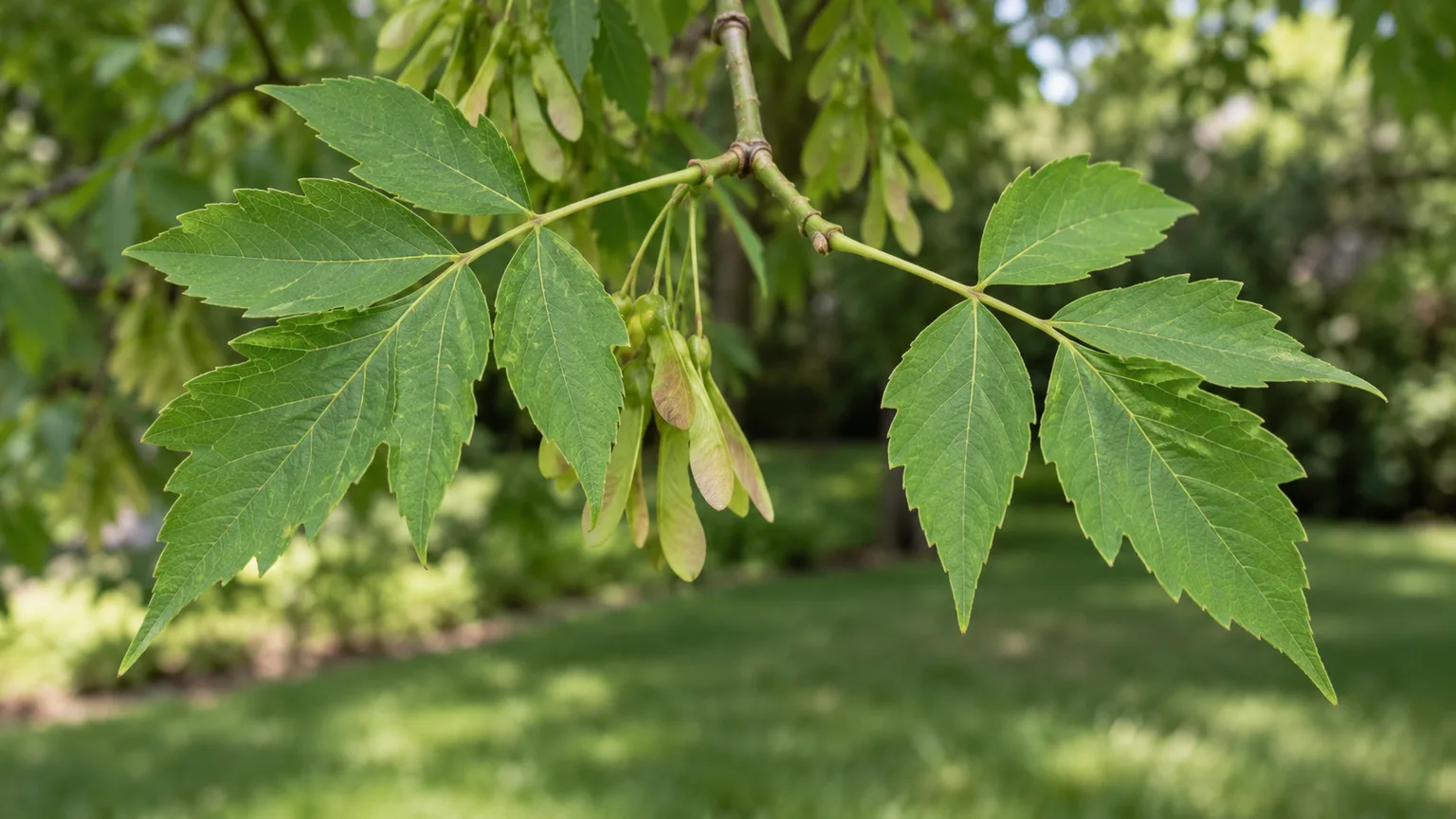
Check the Twigs, Bark, Flowers, and Samaras
Young twigs can look green, blue-green, or purplish, then become browner as they mature. Bark changes with age: smaller stems are smoother; older trunks become furrowed and gray-brown. Bark alone is a weak identifier because many common trees share a similar color and texture.
Flowers appear before or around leaf emergence in spring. Boxelder is dioecious, meaning individual trees are male or female. A female tree may carry drooping clusters of paired samaras; the two narrow wings split apart like a shallow V. The seeds often persist into fall or winter. Male trees do not produce samaras, so the absence of fruit does not rule out boxelder.
The NC State Extension profile describes boxelder samaras as longer than those of many other maples and notes that they can remain on the tree into winter. Use the fruit as a confirming clue, not the only clue: samaras are shared across the maple genus.
Identify It When the Tree Is Leafless
Winter identification is possible, but it is less certain on a very young plant. Look for opposite buds and twigs, a branching structure that matches nearby boxelders, and any paired samaras still hanging from female branches or scattered beneath them. Check the tree’s location too: seedlings growing below a known seed-bearing boxelder are more likely to be its offspring, although wind can carry seeds beyond the immediate canopy.
If you cannot see enough detail, mark the spot and revisit when leaves emerge. Removing an uncertain tree because its leafless silhouette “looks like a maple” risks taking out a desirable species. A clear photo of the twig, leaf attachment, and whole plant can help an extension service or arborist identify it.
Tell Boxelder Apart From Poison Ivy, Ash, and Other Look-Alikes
Boxelder and poison ivy can both show three leaflets, which is why “leaves of three” is not enough to diagnose a plant. Poison ivy is a vine or low shrub with alternate leaves; boxelder is a woody tree with opposite leaves attached along its twigs. On mature boxelder, the compound leaf sits on a branch with a visible woody stem and eventually develops maple-like paired samaras. Do not touch a suspicious vine to test the difference; if you are uncertain, photograph it or ask an expert.
Ash trees can also have opposite, compound leaves, but often carry more leaflets and have different buds, bark, and fruits. Some ash species have fewer leaflets than the common range, so count alone is not decisive. Sumacs also have compound leaves, but their leaves are generally alternate and their fruit forms upright clusters rather than paired maple samaras. When identification affects a large removal, consult a reliable regional tree key instead of relying on one feature or a phone-app guess.
Understand Female Trees, Seeds, and Boxelder Bugs
Only female boxelders produce seeds, but a male tree can still be boxelder. The seeds may be messy, germinate in beds and pavement cracks, and prompt homeowners to remove a female tree. That is a landscape decision, not proof that the tree is unhealthy or harmful.
Boxelder bugs feed on seeds from female trees and may also use other maples, ash, or fruit plants. Their presence can be annoying, especially when insects gather on sunny walls or enter buildings to overwinter, but it does not automatically mean the tree needs to be felled. Davey Tree’s arborist blog notes that the insects can travel long distances; removing the boxelder on your property may not solve the problem if trees nearby continue to support them.
If bugs are your main concern, first identify where they gather and how they enter the home. Seal obvious exterior gaps and use the site’s boxelder-bug guide for household exclusion and cleanup. Keep the tree question separate: remove it only if its location, condition, or seed production creates a problem worth the loss of its shade and habitat.
Pull Small Boxelder Seedlings Before They Establish
The easiest time to remove a volunteer is while the stem is still thin and the soil is workable. After rain or a thorough watering, grip the seedling close to the soil line and pull slowly while rocking it gently. The goal is to lift out the root rather than break the stem at the surface. If it resists, loosen the soil around it with a hand fork or narrow trowel, then pull again.
For a cluster in a garden bed, remove seedlings individually so you can see where each root goes. Avoid yanking near the stems of plants you want to keep. In lawn or groundcover, cut seedlings below the crown only if digging would cause more damage; then revisit the location and remove any regrowth promptly. Wear gloves and eye protection when working around stiff stems, mulch, or debris, and keep tools pointed away from your body.
Collect seedlings and samaras rather than leaving seed-bearing branches where they can scatter. Local yard-waste rules differ: some municipalities allow woody material in green-waste pickup, while others require bundling or prohibit certain invasive species. If boxelder is listed as regulated where you live, follow the agency’s disposal instructions instead of composting it at home.
Remove a Larger Sapling Without Creating a Bigger Problem
Once a volunteer has a woody stem, a longer root, or multiple stems from one base, do not assume it will come out with a quick tug. First decide whether the sapling is on your land, whether underground utilities cross the area, and whether it is near a retaining wall, irrigation line, or desirable plant. Call your local utility-locating service before digging where buried lines may be present; in the United States, 811 routes requests to the appropriate regional service.
If the sapling is still small enough to handle from the ground, loosen soil around the base and expose the root collar before cutting or lifting. Use a sharp hand pruner or lopper only on stems within the tool’s rated capacity. Do not twist a loaded tool toward your face, brace a branch against your leg, or stand on a ladder to reach a stem. When the plant is too thick for hand tools or you cannot expose the root safely, ask a landscaper or arborist for a removal plan.
A cut sapling may send up shoots from the remaining stump or roots. A flush cut alone does not guarantee eradication. If you choose repeated cutting, remove new shoots as soon as you can do so safely and continue checking through the growing season. For an established sapling that keeps returning, a certified professional can discuss mechanical options and any locally permitted, label-compliant treatment. Avoid homemade recipes, salt, fuel, bleach, or unlabelled chemical mixtures; they can damage nearby soil and plants without reliably killing the tree.
Leave Mature Tree Felling to a Certified Arborist
A mature boxelder can reach roughly 30 to 50 feet tall and wide in the NC State Extension profile. The species’ fast growth and weak, brittle wood make branch failure a meaningful consideration, especially during wind or heavy snow. A tall trunk can also have a broad crown and limbs that are difficult to predict from the ground. Cutting it down is not a safe extension of seedling removal.
The International Society of Arboriculture’s tree-owner guidance says removal and pruning—particularly of large trees—can be dangerous and should be handled by people trained and equipped for tree work. Hire an ISA Certified Arborist or qualified local tree-care professional if the tree is mature, leaning, damaged, decayed, close to a house or road, or entangled with overhead wires. Do not climb it, cut from a ladder, pull it down with a vehicle, or fell it toward an open space you have not assessed.
Ask the contractor to explain the scope: whether they will remove the trunk only, grind the stump, haul away debris, protect nearby planting, and assess any damage or regrowth risk. Get proof of insurance and check local permit requirements. A second estimate is reasonable for substantial work. If the tree is near a utility line, contact the utility first; crews may need to coordinate or perform the work themselves.
Check Utilities, Property Lines, and Waterways Before Work
Before a shovel or saw enters the ground, confirm who owns the tree and whether its trunk, branches, or roots cross a boundary. A tree that straddles a property line can create a dispute if one neighbor removes it without agreement. Local rules vary, so ask the city, county, or an attorney if the ownership or permit question is significant.
For digging, request utility marking through the local 811 system or equivalent service. Call 811 before you dig; buried utilities can be only a few inches below the surface. Marking programs may not locate private irrigation, lighting, or drain lines, so check your property records and locate those separately. Do not guess based on where pipes “should” run.
Take extra care beside streams, drainage channels, wetlands, and steep banks. Boxelder can grow in moist sites and may contribute to a naturalized buffer. Removing one tree can expose soil or change shade, so ask a local conservation office or extension educator whether replacement planting or erosion control is needed before disturbing the area.
Choose What to Do With the Stump
Once a tree is safely down, decide whether the stump needs to disappear. A low stump away from paths may be allowed to decay in place, but it can resprout, obstruct mowing, or become a trip hazard. Grinding removes much of the stump below grade but does not excavate every root. Digging out a large root crown can disturb a broad area and may damage utility lines or nearby plants.
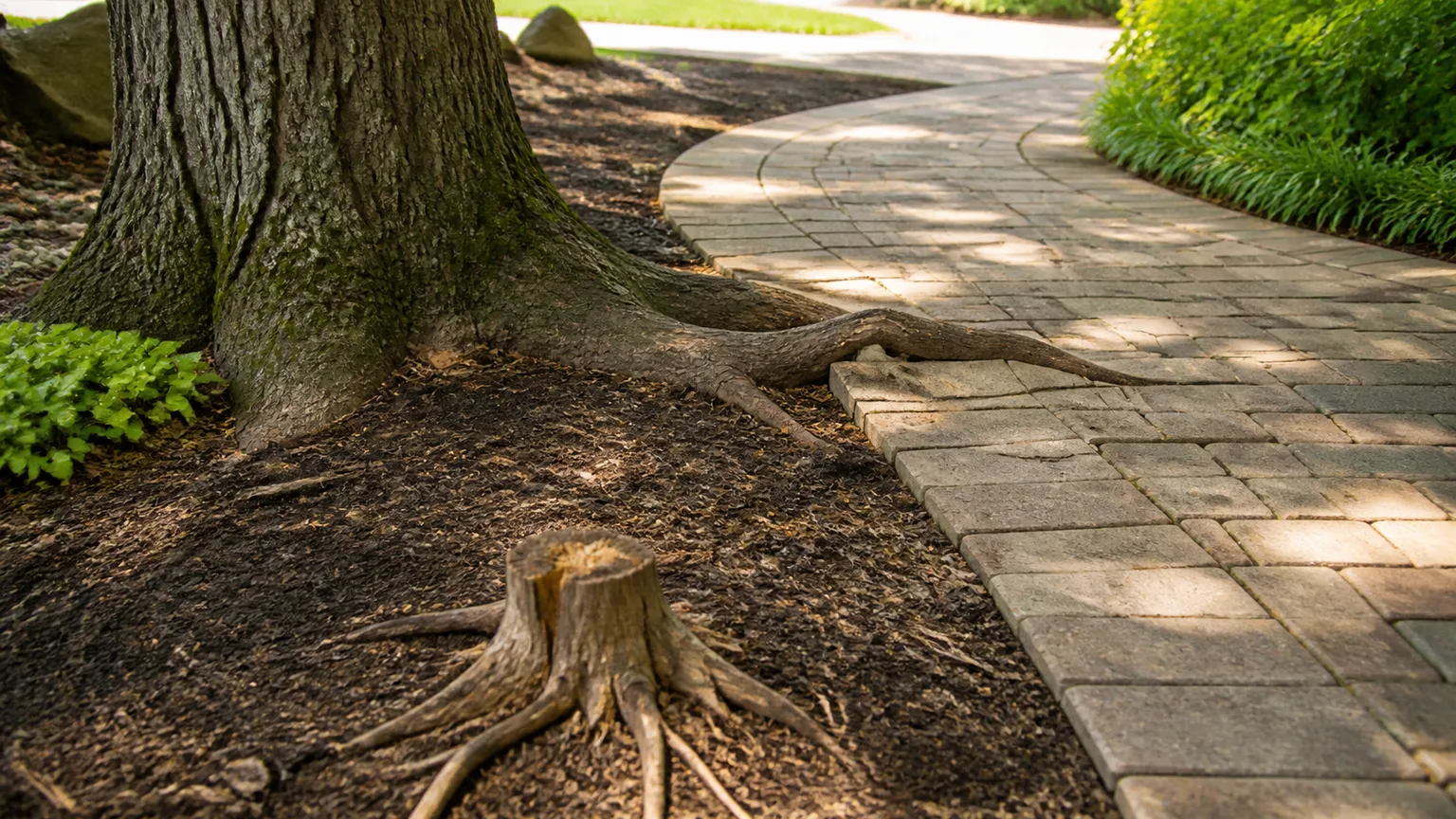
Gardening Know How’s tree-stump guidance describes grinding as a way to remove the stump and notes that sprouts can return from a living stump. For a large boxelder, hiring a stump-grinding service is usually safer than renting heavy equipment without experience. Ask what depth they grind to, what happens to the wood chips, and whether they will fill the hole with topsoil or leave it for you to restore.
If you leave a stump, keep it visible until it is low enough not to catch a mower or trip someone. Do not burn it or pour chemicals into it without checking local rules and product directions. For a detailed comparison of options, see the site’s guide to tree-stump removal.
Monitor for Stump Sprouts and Root Suckers
Check the stump and the surrounding area several times during the next growing season. Shoots emerging from the stump are stump sprouts; shoots coming up from a root some distance away are often called root suckers. Either can be mistaken for a new seedling. If the shoot is attached to a surviving root system, mowing it once may only remove the top while leaving the source alive.
Cut sprouts close to their point of origin when they are small enough for safe hand tools, then repeat as needed. Do not cut into the soil blindly to chase a root, especially near structures, utilities, or desirable trees. If sprouts continue across a wide area, ask an arborist to diagnose whether they are connected to the stump or are new seedlings from a nearby female tree. The treatment differs, and the right diagnosis saves repeated work.
Some stump-control products are labeled for cut surfaces, but what is legal and appropriate depends on the active ingredient, site, and local restrictions. Read the complete label and keep any treatment away from water, drains, pets, and desirable plants as directed. A licensed applicator or local extension office can help determine whether a chemical treatment is warranted; there is no single household recipe that is safe for every site.
Restore the Site After Removal
After removal, rake away loose debris and level the ground without burying the root flare of nearby trees. If stump grinding leaves a depression, use clean soil to bring the area close to grade and allow it to settle before adding more. Wood chips can be useful as mulch, but avoid piling them against trunks or covering lawn seed with a thick layer.
If you want to replace the tree, choose a species suited to the site’s mature size, soil moisture, light, and local climate. Do not plant another large tree directly over the old stump or root mass; give the replacement room to establish and keep it clear of overhead wires, foundations, and utility corridors. In a streamside or wet area, select locally appropriate native plants and preserve the buffer rather than converting the site to bare lawn.
For ongoing prevention, scan beds and pavement edges in spring and after samaras fall. Pulling a few young volunteers is much easier than dealing with a sapling several seasons later. A recurring seedling does not mean the removal failed; a nearby tree may still be releasing seeds, so prevention can be a continuing, low-effort task.
Conclusion
Identify boxelder using the whole pattern: opposite branching, compound leaves with several leaflets, and paired samaras on female trees. Then make a local, site-specific decision instead of treating every boxelder as invasive or hazardous. Pull small seedlings while their roots are accessible, monitor any cut sapling for regrowth, and leave mature-tree felling and risky stump work to trained professionals. If bugs are the only concern, address the insects and building entry points before deciding whether the tree itself should go.