How to Get Rid of Boxelder Bugs in Your Yard
Boxelder bugs rarely threaten healthy trees, but they can swarm walls and enter homes. Use this seasonal plan to reduce them without unnecessary pesticide spraying.
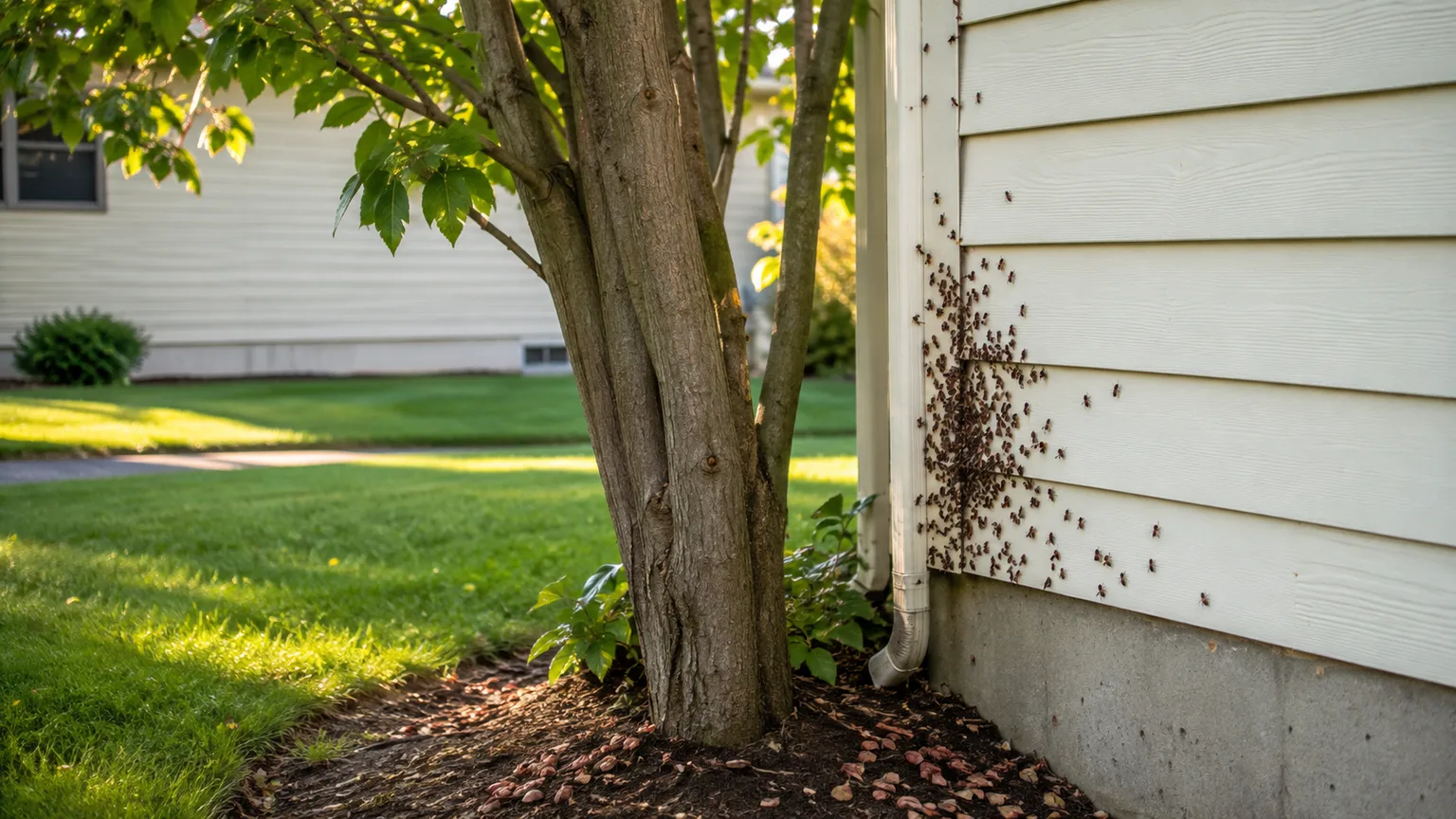
If red-and-black bugs are covering a sunny wall, tree trunk, patio, or window, start by identifying the pest and locating the host tree. Most boxelder bug outbreaks are a nuisance problem rather than a tree-health emergency, so the most effective response is usually a sequence of water, sanitation, and exclusion rather than an automatic yard-wide insecticide spray.
The order matters. Knock down exposed clusters, remove the seeds and debris that let them gather, then seal the openings they use to reach the house. Consider tree removal or a labeled pesticide only when the infestation is repeated, concentrated, and causing a clearly defined problem.
First decide whether you have a boxelder bug problem
Count the bugs less than you count the location and timing. A few adults on a maple in summer usually need observation; hundreds on a south- or west-facing wall in late summer or fall deserve a prevention pass because the insects may be looking for cracks in which to overwinter.
There are three different situations that homeowners often lump together. Bugs clustered on a host tree are usually feeding or gathering around seeds. Bugs on exterior walls are warming themselves or searching for shelter. Bugs inside living rooms, attics, or wall voids are a home-exclusion problem, and killing the visible insects will not close the route behind them.
If a fruit tree is involved, inspect the fruit rather than assuming every bug is causing damage. Boxelder bugs rarely injure established ornamental trees, but feeding on young fruit can sometimes cause dimpling, puckering, deformation, or drop. If leaves are badly skeletonized, sticky, or covered in webbing, you may be looking at a different pest.
Identify boxelder bugs before treating
Adult boxelder bugs are about one-half inch long, mostly black or charcoal gray, with red-orange lines on the thorax and wing edges. Their wings lie flat and form a subtle X-like pattern over the back; the abdomen is red underneath. Young nymphs are brighter red-orange, wingless, and gradually develop dark markings and wing pads.
The name is used across regions for closely related boxelder bugs. Extension references identify the eastern species as Boisea trivittata and the western species as Boisea rubrolineata, while older material may use related genus spellings. The useful field marks are the same: three red-orange lines behind the head, red edging, and a strong association with seed-bearing boxelder trees.
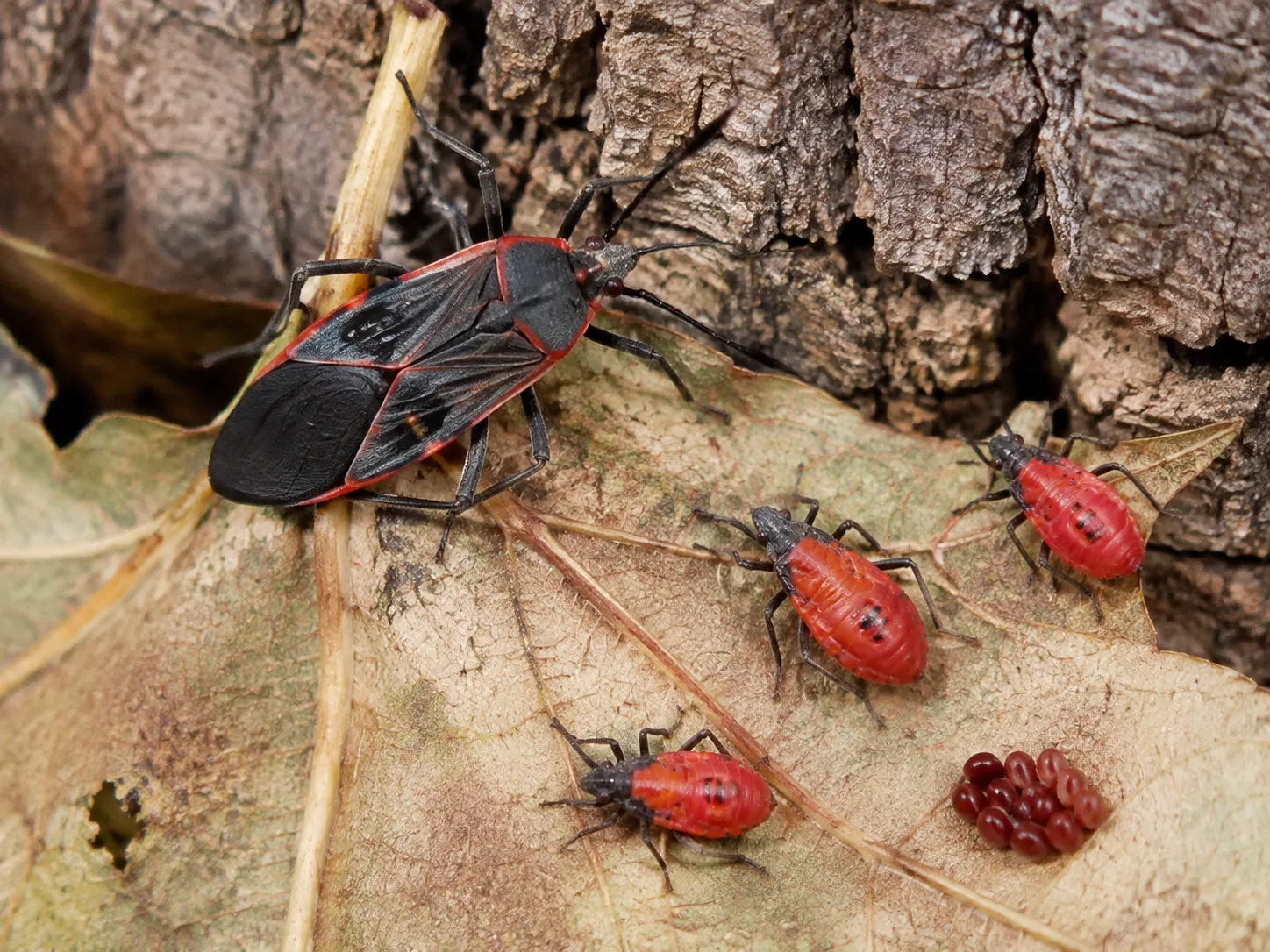
The red-and-black color is not enough for a diagnosis. Take a close photograph of the back, legs, and host plant, and check whether the insects are on boxelder, maple, ash, or fallen seeds. For a large or unusual outbreak, send that information to your local extension service rather than treating a look-alike by guesswork.
Boxelder bugs versus common look-alikes
| Feature | Boxelder bug | Stink bug | Squash bug or leaf-footed bug |
|---|---|---|---|
| Body | Flattened, narrow oval | Shield-shaped or broad oval | Often broader, with a more angular outline |
| Markings | Red-orange lines behind the head and along wings | Species-specific spots, bands, or marbling | Usually brown or gray with different leg and body details |
| Host clues | Boxelder seeds, maple, ash, warm walls | Many plant hosts, often fruit or vegetables | Squash-family plants or fruiting plants, depending on species |
| Odor when crushed | Unpleasant odor possible | Often strong odor | Varies; crushing is still a poor identification method |
| Indoor behavior | Seeks shelter; does not reproduce in living quarters | May shelter in buildings | May enter or shelter, but life cycle differs |
This distinction matters because a control aimed at a boxelder congregation may miss the actual cause of distorted squash leaves, fruit damage, or webbing. Do not spray a whole tree simply because a red insect is present; match the treatment to a confirmed pest and its life stage.
Where boxelder bugs come from and why they cluster
Female boxelder trees produce the seeds that make a yard especially attractive. Boxelder bugs also feed on other maples and ash, and they may visit almond, apple, cherry, peach, pear, plum, grape, or kiwi fruit, but large numbers are most often associated with a nearby seed-bearing boxelder.
The yearly pattern explains the sudden swarms. Adults leave protected overwintering sites in spring, feed, mate, and lay eggs on bark, foliage, or old seeds. Nymphs develop through the warm season, and a later generation often becomes conspicuous in August and September before adults seek dry shelter in September and October. Depending on region and weather, there may be one or two generations.
Sunlight is the other half of the explanation. In fall and on warm winter days, adults gather on light-colored south- and west-facing walls, concrete, rocks, and tree trunks because those surfaces warm quickly. A house can therefore look like the source even when the host tree is at the back of the property or across a nearby lot.
What damage boxelder bugs actually cause
The phrase “major damage” overstates the usual risk. UC IPM describes boxelder bugs as primarily a nuisance and says they do little damage to ornamental trees; the more serious plant symptoms are occasional fruit distortion or damage when feeding is concentrated on susceptible young fruit.[1]
The practical damage is often indirect. Large outdoor aggregations are unpleasant around doors and patios, and insects that enter can stain curtains, upholstery, paper, carpets, and light-colored walls with reddish fecal spots. Crushing them can release an odor and smear the stain, so the cleanup method matters as much as the kill method.
They do not bite people, damage the structure of a house, or reproduce in normal living spaces. Adults trapped indoors usually die because the warm, dry conditions do not suit them, but the dead insects still create odor and cleanup problems. That is why prevention at the exterior is more valuable than chasing every bug inside.
The best control order for a yard infestation
Use the least disruptive method that fits the situation, and repeat it during the short period when bugs are exposed. The sequence below is more reliable than choosing a “strongest” product first because it addresses both the current cluster and the next entry route.
1. Knock down exposed clusters
Use a forceful stream from a garden hose on bugs gathered on tree trunks, siding, foundation walls, fences, or patio surfaces. Boxelder bugs are susceptible to drowning, and the stream breaks up the warm, sheltered cluster before the insects can move toward a door or window. Direct runoff away from door thresholds and drains when possible, and do not use a pressure washer on siding, caulk, or delicate bark.
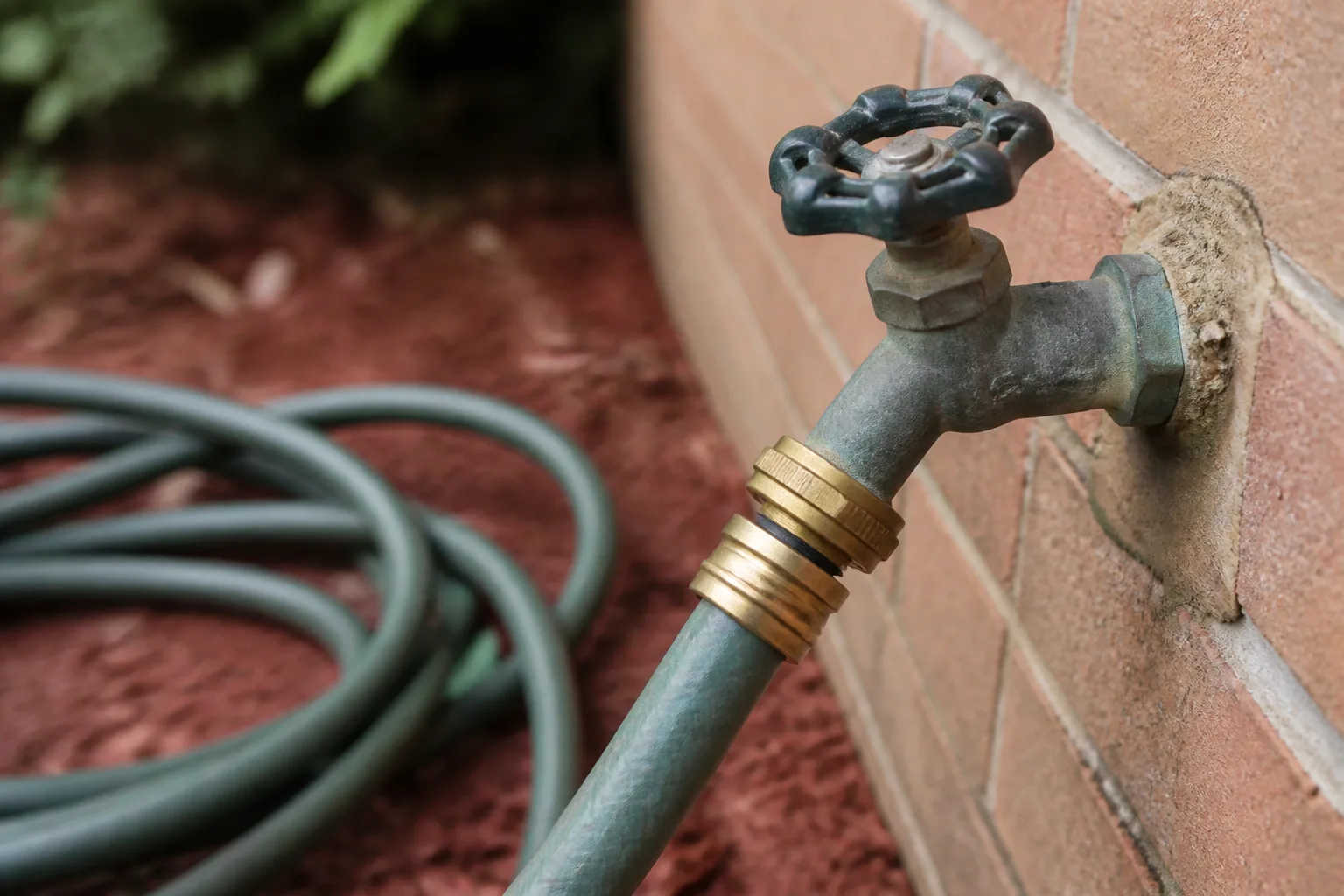
Hosing is a contact tactic, not a permanent barrier. Check the same sunny surfaces again the next day and after the next warm spell. If the cluster reforms in the same spot, move to seed cleanup and exclusion instead of increasing water pressure.
2. Remove seeds and nearby hiding debris
Rake or sweep up boxelder, maple, and ash seeds where the bugs are congregating, especially beneath a female boxelder or along the foundation. A shop vacuum can collect seeds from hard surfaces and some lawn areas; empty it promptly so dead insects and plant material do not begin to smell inside the canister.
Remove leaf piles, loose boards, rock piles, and dense debris immediately beside the house. UC IPM recommends a clean strip roughly 6 to 10 feet wide around the foundation, with extra attention on the sunny south and west sides.[1] This does not sterilize the yard or eliminate every bug, but it removes convenient shelter right where the insects are most likely to enter.
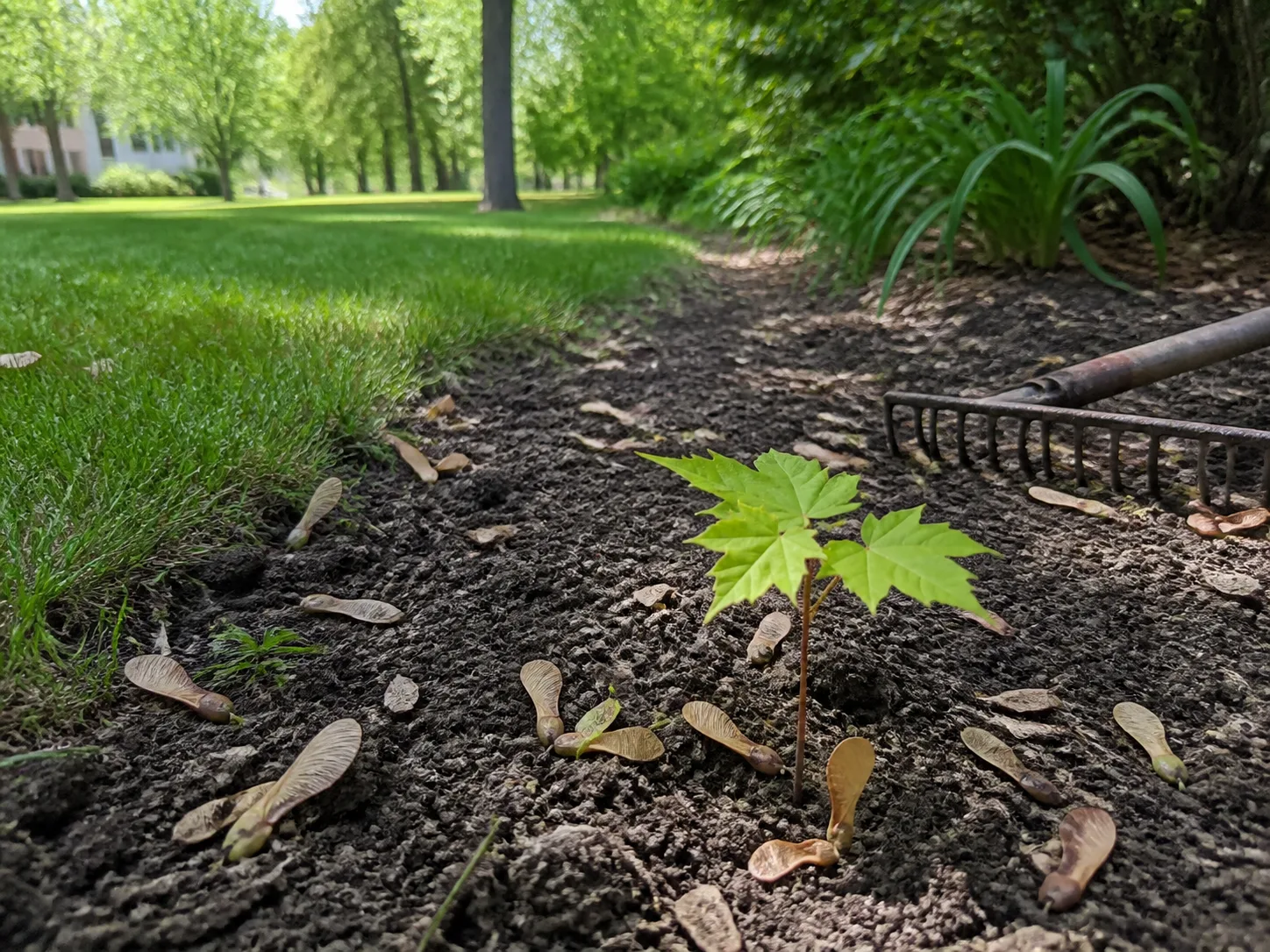
Do not confuse sanitation with removing every leaf from a healthy garden. The goal is a targeted buffer beside the building and cleanup of the seeds the insects are visibly using. Leave useful mulch and habitat farther from the foundation unless inspection shows it is acting as the main shelter.
3. Make the house harder to enter
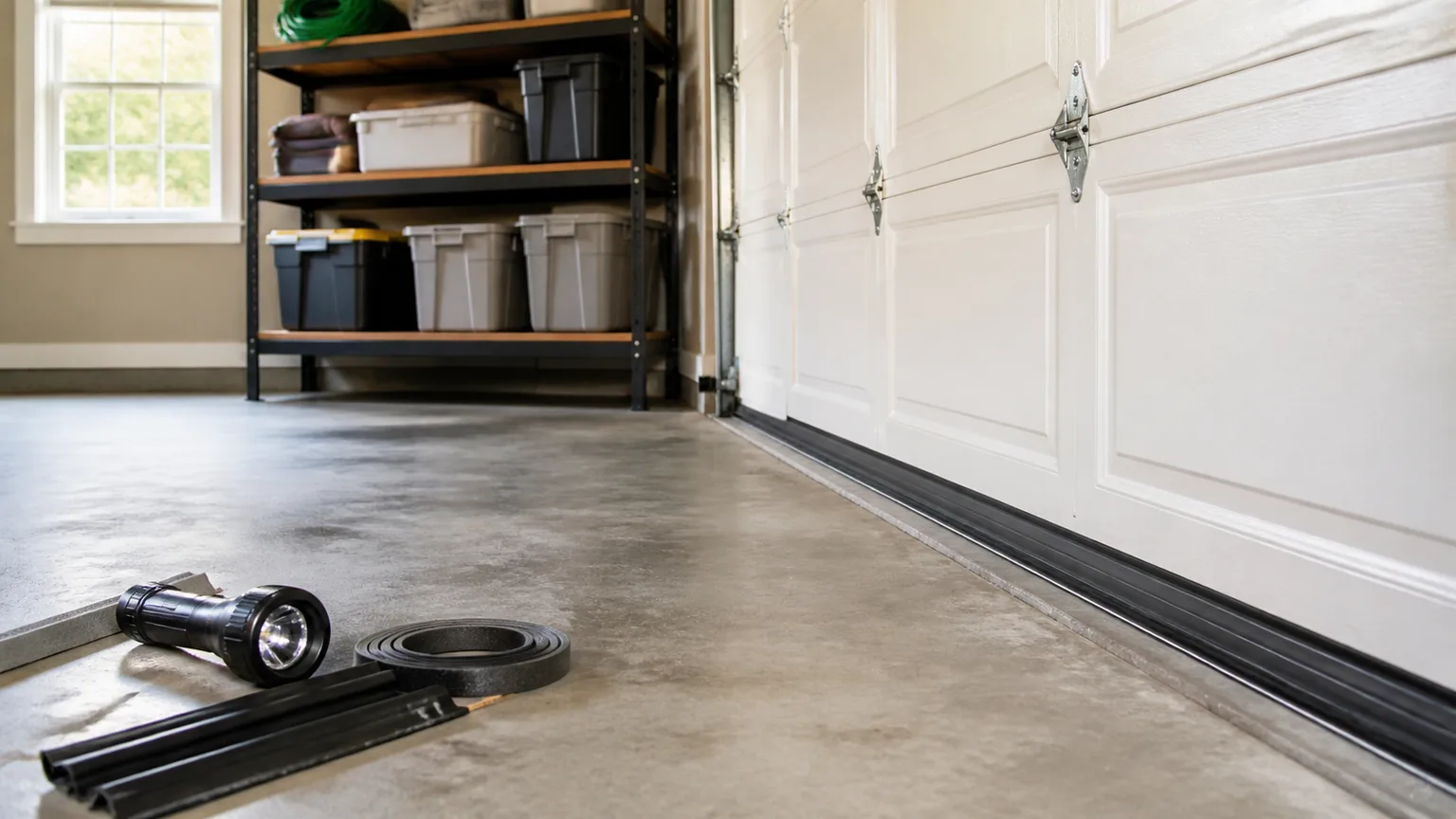
Walk the exterior in daylight and look for gaps at doors, windows, siding seams, foundation joints, vents, utility lines, hose bibs, and attic or basement openings. Replace torn screens, repair weatherstripping, install a tight door sweep, and seal appropriate cracks with caulk, mesh, or another material suited to the opening.
A visible line of daylight under a closed door is a clear priority. So are gaps around pipes and wires, damaged vent screens, and cracks at the corners of window frames. Start on the south and west sides if time is limited, then work around the entire foundation before fall migration.
Do not seal vents that must remain open for building safety, and do not block weep holes or drainage paths with improvised material. If the entry point is part of masonry, roofing, or a wall assembly, use the appropriate building repair or ask a qualified professional; pest control cannot compensate for a moisture or ventilation problem.
Should you remove a boxelder tree?
Tree removal can reduce a local source, but it is not automatically the best answer. Female boxelder trees are the strongest attractant because of their seed crops, yet adults can fly in from nearby trees. Removing one tree on your property may reduce the number of bugs you see without ending the seasonal arrival.
When removal is reasonable
Consider an arborist’s assessment when one seed-bearing tree repeatedly supports large clusters, drops seeds against the home, has weak or hazardous structure, or is directly tied to annual indoor invasions despite careful exclusion. Virginia Cooperative Extension specifically notes that removing boxelder trees is not necessary in every case because they can be valuable shade trees and are not a nuisance every year.[3]
If you choose removal, plan the replacement and the cleanup. A new tree that produces abundant seeds can recreate a similar attraction, and leaving a stump, fallen branches, or seed piles beside the foundation can preserve shelter. Never climb, fell, or heavily prune a mature tree as a pest-control experiment; use a qualified tree professional for hazardous work.
What to do if the host tree is next door
Focus on the part of the problem you can control. Keep your foundation buffer clean, prune branches that touch or overhang the house when pruning is appropriate, repair screens and seals, and hose exposed aggregations before they reach the wall openings.
Talk with the neighbor using specific observations rather than blame: identify the tree, show where the bugs gather, and explain that winged adults can move between properties. A shared plan for tree health, seed cleanup, and building exclusion is more realistic than expecting one household to eliminate a mobile insect from a whole neighborhood.
When insecticidal soap makes sense
Insecticidal soap can reduce a concentrated outdoor aggregation when the spray directly contacts the bugs. Virginia Cooperative Extension lists insecticidal soap as a contact spray option for large groups, alongside a strong hose stream.[3] The limitation is important: soap has little residual effect, so insects that arrive later are not controlled by a dried film.
Use a product specifically labeled for the site and pest, and follow its label rather than improvising a dish-soap recipe. Household detergents vary in strength and additives and can injure foliage, especially in heat, drought, or full sun. Test any labeled plant application on a small area first, avoid open flowers and active pollinators, and never spray a flowering or edible crop unless the label permits that use and gives the required harvest interval.
Treat the bugs on the surface they occupy, not the entire landscape. Shield nearby waterways, drains, ponds, pets, and people from drift and runoff, and avoid spraying when wind or rain will carry the solution away. If the only reason to spray is that a few bugs are visible on a healthy ornamental tree, hosing and monitoring are usually the better trade-off.
Why broad pesticide spraying often disappoints
Boxelder bugs spend much of their difficult-to-reach time in cracks, bark crevices, debris, wall voids, or other protected places. UC IPM says insecticides are rarely justified because spraying is often no more effective than vacuuming or hosing and may require repeat applications.[1]
Late fall is also a poor time to expect a dramatic pesticide cure. NC State Extension notes that bugs are more susceptible in late spring and summer than when cool weather has them preparing to hibernate.[2] A perimeter treatment may be an option for an annual, intolerable invasion, but it should be a labeled outdoor use applied at the correct time, often by a licensed professional, with special care to prevent runoff into storm drains.
Never use an outdoor foundation spray inside living spaces, and never fog or broadcast a pesticide through an attic or wall void without a professional assessment and a product label that expressly allows the application. “Natural” does not mean harmless: soap, oils, dusts, and plant-derived insecticides can still harm plants, beneficial insects, aquatic life, pets, or people when misapplied.
A seasonal boxelder bug prevention calendar
The goal is to act before the most visible swarm, not to wait for thousands of bugs on the wall.
| Season | What to inspect | Best action |
|---|---|---|
| Spring | Overwintered adults near host trees and old seeds | Identify the host, remove seed piles, and note where adults gather |
| Early summer | Nymphs, eggs, and feeding on boxelder or maple | Monitor rather than spraying automatically; hose small exposed groups |
| Late summer | New adults and the second generation in warm regions | Finish screen, caulk, weatherstripping, and foundation-buffer repairs |
| Fall | Adults on sunny walls, trunks, rocks, and door areas | Hose outdoor clusters, vacuum indoor strays, and keep entry points closed |
| Winter warm spells | Bugs sunning on south or west walls | Remove visible bugs without crushing; inspect for missed gaps |
Weather shifts the calendar. A mild winter can make adults visible earlier, while a cold snap can kill many nymphs and leave adults sheltered. Use the bugs’ location and life stage as your cue rather than treating a particular month as a guarantee.
If boxelder bugs are already inside
Use a vacuum, soft brush, or hand collection to remove them without crushing them on fabric or painted walls. Empty the canister or bag promptly outdoors; NC State Extension warns that dead bugs can create a foul odor as they decay.[2] If you use a wet collection method, seal the material in an outdoor garbage container.
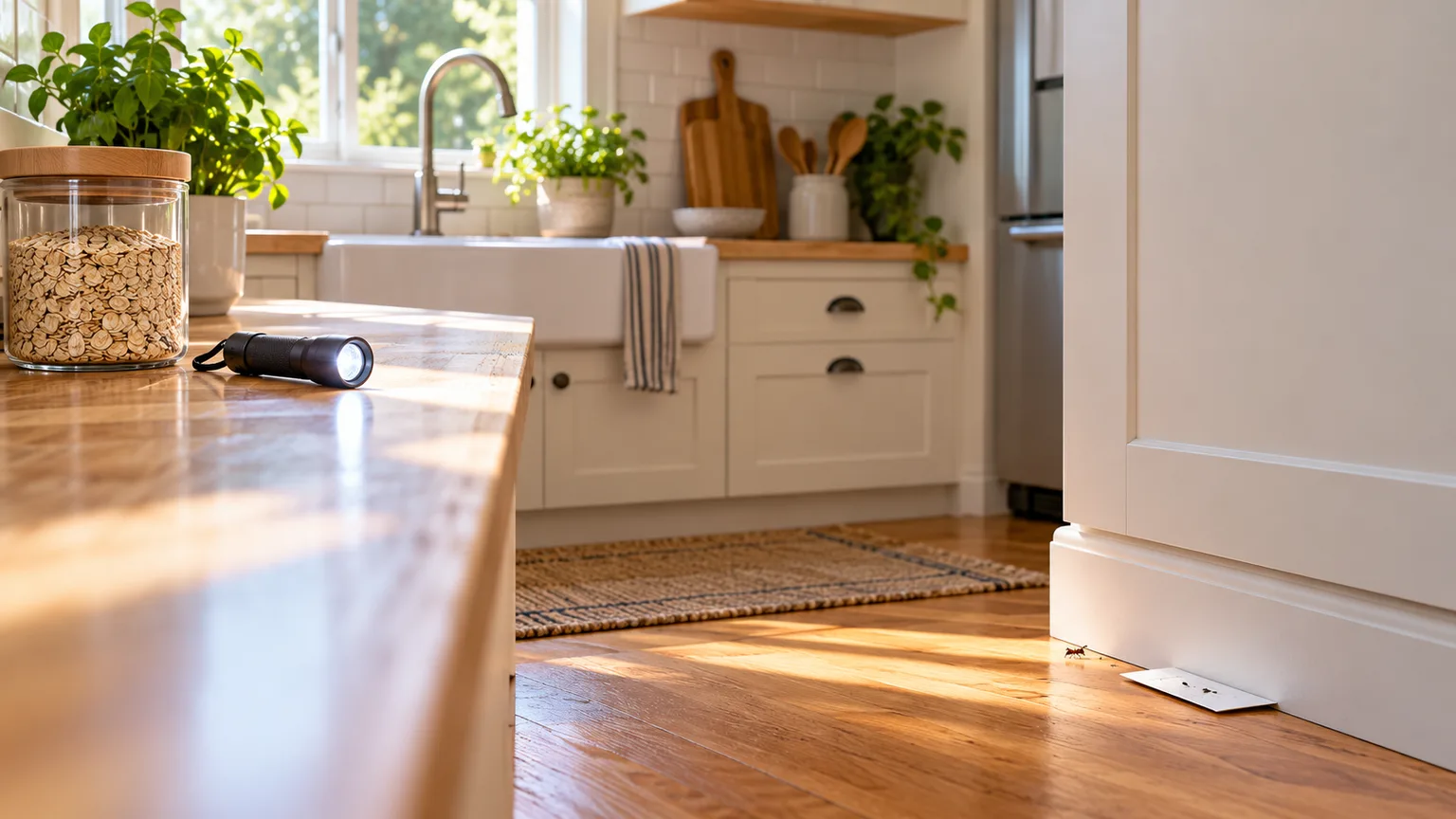
Do not expect indoor pesticide spraying to solve the invasion. Boxelder bugs do not breed in normal living quarters, so the durable fix is to inspect the exterior and close the route they used. If insects are emerging from a wall, attic, or vent and the opening is not obvious, have the building entry point assessed rather than spraying blindly into the void.
For stains, vacuum first, then clean a small hidden area with a suitable mild cleaner before treating a visible surface. Porous upholstery, wallpaper, and delicate fabrics may need a specialist because rubbing a crushed bug deeper into the material can spread the mark.
Troubleshoot a recurring invasion
If hosing works for only a day, the cluster is being replenished. Look for a seed-bearing host tree, a seed pile beneath a nearby maple or ash, or a warm wall that offers both sun and a crack. Repeat sanitation and exclusion before changing products.
If removing your boxelder did not solve the problem, check the property line and nearby riparian or wooded areas. Adults can travel from neighboring trees, so a missing tree on your lot does not prove that the original diagnosis was wrong or that stronger chemical treatment is needed.
If bugs are damaging young fruit, record the crop, fruit stage, exact location, and feeding pattern. Fruit deformation can have several causes, and UC IPM’s agricultural guidance shows that treatment decisions depend on the crop, region, timing, and pest pressure rather than a universal homeowner spray.[1]
If the insects do not have the red lines of a boxelder bug, occur mainly on squash or beans, leave webbing, or cause chewing holes instead of stippling or punctures, pause and re-identify them. A local extension office, master gardener program, arborist, or licensed pest professional can help when the evidence does not fit the boxelder bug pattern.
Conclusion
The fastest sensible way to get rid of boxelder bugs in a yard is to hose exposed clusters, clear the seeds and debris they use, and seal the house before the next warm fall day. Most healthy ornamental trees tolerate boxelder bugs, so cutting down a tree or spraying the whole yard should be a considered decision, not the first reaction.
Start where the evidence points: the host tree, the sunny congregation site, or the building gap. Repeat the simple controls during the season, protect waterways and beneficial insects from unnecessary pesticide exposure, and bring in an arborist or licensed pest professional when a hazardous tree, annual indoor invasion, or meaningful fruit damage makes the problem larger than a hose-and-caulk job.