Does Epsom Salt Help Hibiscus Bloom More?
Does Epsom salt help hibiscus bloom? Learn when magnesium sulfate is useful, how to spot deficiency, and what actually keeps flowers coming through fall.
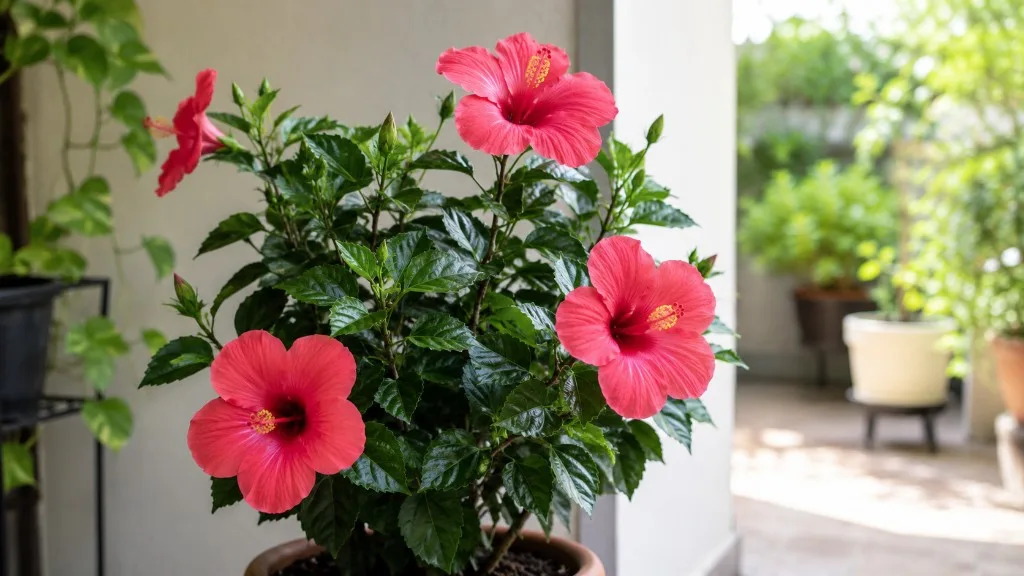
The short answer: Epsom salt is not a routine bloom booster
Usually, no. Epsom salt is magnesium sulfate, so it supplies magnesium and sulfur. Those nutrients matter when a plant is deficient, but adding them to a healthy hibiscus does not switch on a hidden “more flowers” setting. If the plant already has enough magnesium, the crystals are more likely to add unnecessary salts than to extend the bloom season.
That distinction matters because hibiscus can look like it needs fertilizer when the real problem is light, water, heat, cold, roots, or pests. For a better chance of flowers before fall, check the plant’s type, give it the strongest suitable light, keep the root zone evenly moist but aerated, and use a complete fertilizer according to its label. Reach for Epsom salt only when a soil or tissue test, together with the leaf pattern, points to magnesium.
The research behind this is not a hibiscus-specific promise that magnesium creates flowers. A peer-reviewed review of magnesium nutrition across many plant species found the biggest gains when plants began deficient; that supports correcting a shortage, not routinely dosing every plant. The review also reinforces why “more” is not the same as “better.”
Identify your hibiscus before changing its fertilizer
“Hibiscus” covers plants with different seasons, sizes, and winter habits. A container from the garden center is often tropical or Chinese hibiscus (Hibiscus rosa-sinensis), while a large perennial that disappears after frost and returns from the ground is more likely hardy rose mallow (Hibiscus moscheutos or a related hybrid). Rose of Sharon (Hibiscus syriacus) is a woody shrub that drops its leaves but keeps its branches.
This is more than a botanical footnote. A tropical plant may pause after a cold night or a sudden move indoors, while hardy rose mallow may simply be between its normal flushes. Fertilizer cannot erase a seasonal limit. Clemson Cooperative Extension and NC State Extension both separate these types because their light, temperature, pruning, and winter expectations are not interchangeable.
Hardy rose mallow follows a seasonal rhythm
Hardy hibiscus is the type most likely to be flowering heavily from midsummer into fall in a garden bed. Rose mallow prefers a sunny site and plentiful moisture, and Clemson notes that many varieties produce large flowers from summer into fall. Individual flowers may last only a day, but a healthy plant can open new buds continuously enough that the bed still looks full of color.
Do not mistake a late start for a nutrient emergency. Hardy hibiscus often emerges slowly in spring, then grows rapidly once the soil warms. If it is leafy, upright, and beginning to form buds, adding Epsom salt will not make the plant flower earlier. Concentrate on water during dry spells, full sun, and keeping tall stems from breaking in wind.
Tropical hibiscus has a different container problem
Tropical hibiscus is a warm-weather shrub with glossy leaves and flowers on new growth. In a frost-prone climate, it may live in a pot outdoors during summer and come inside before cold weather. Its most common late-season limitations are not a lack of magnesium but a container that dries too fast, a dim indoor location, salt buildup from repeated feeding, or shock from moving between very different conditions.
Fine Gardening’s plant guide describes Chinese hibiscus as a tender plant for containers that prefers consistently moist, rich soil and full sun. That combination explains why a plant can produce buds in a bright patio position yet stall after a move to a darker room. Confirm the type and growing setup before choosing a nutrient remedy.
What Epsom salt actually adds to the root zone
Epsom salt is not a complete plant food. It contains magnesium and sulfur, but it does not supply nitrogen, phosphorus, potassium, calcium, iron, or the other nutrients a fast-growing hibiscus uses. A tablespoon dissolved in water is still a two-nutrient amendment, not a substitute for a complete fertilizer.
Magnesium has an essential role in chlorophyll and photosynthesis, which is why a shortage can make older leaves lose their green color between the veins. Sulfur is also a plant nutrient, although a routine sulfur shortage is not the first explanation for a hibiscus that has healthy dark foliage but few flowers. RHS guidance on nutrient deficiencies notes that most garden soils contain enough of many secondary nutrients and that container, pH, wetness, dryness, and soil type can all limit uptake.
The Farmers’ Almanac makes the same useful distinction in its garden summary: Epsom salt is not an all-purpose fertilizer and is most defensible when a plant is genuinely short of magnesium or sulfur. Treat that as a general reminder, not a hibiscus-specific prescription.
The useful mental model is “corrective tool,” not “bloom booster.” If a test shows low magnesium and the plant has matching symptoms, Epsom salt may help restore leaf function. If the plant is green and growing but not flowering, the better questions are how much direct sun it receives, whether its roots are stressed, and whether its regular fertilizer is appropriate.
Why extra magnesium does not automatically create flowers
Flowering is a whole-plant outcome. Hibiscus needs enough light to make carbohydrates, enough water to keep new growth from repeatedly wilting, functional roots to absorb nutrients, and temperatures that suit its type. Magnesium can support photosynthesis when it is short, but it cannot compensate for a shady patio, saturated potting mix, a cold snap, or a plant that is spending its energy recovering from root damage.
The “bloom booster” idea also encourages a common nutrient mistake: treating one mineral as the answer to every disappointing flower count. Too much of one nutrient can change the balance of others. The RHS notes that overfeeding with high-potassium products can reduce magnesium uptake in some situations, while the page’s broader lesson is to diagnose the soil and plant together rather than pile on amendments.
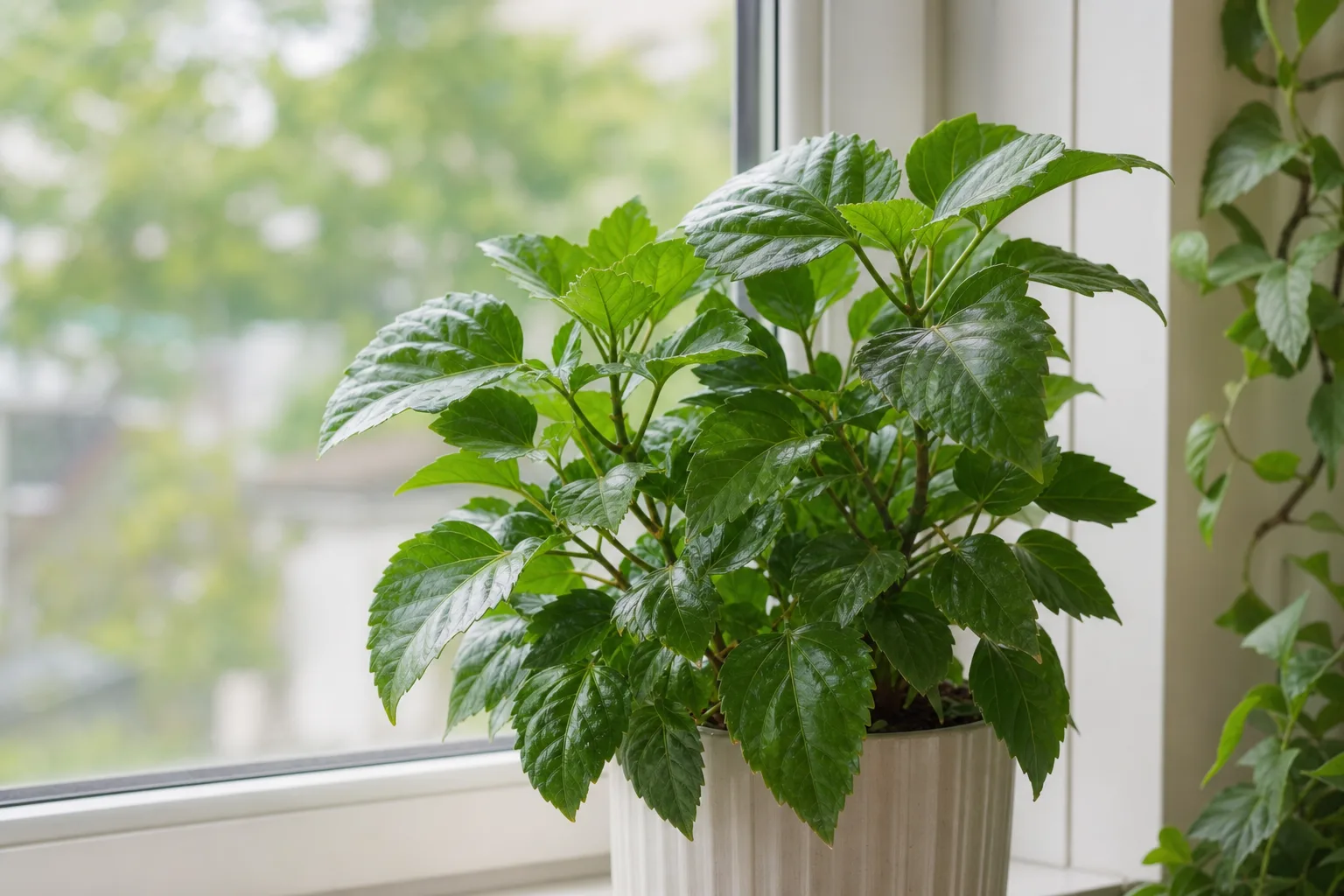
If your hibiscus has deep green leaves, sturdy stems, and no obvious stress, Epsom salt is a poor first experiment. Move the plant into better light or correct the watering pattern first, then give it time to respond. A healthy plant may also be between flower flushes, especially after pruning or a temperature change.
Recognize a true magnesium deficiency
Magnesium deficiency usually begins on older, lower leaves because the plant can move magnesium toward newer growth. The tissue between the veins turns pale or yellow while the veins remain noticeably greener, creating a netted or striped appearance. As the problem progresses, older leaves may develop brown dead patches and drop early.
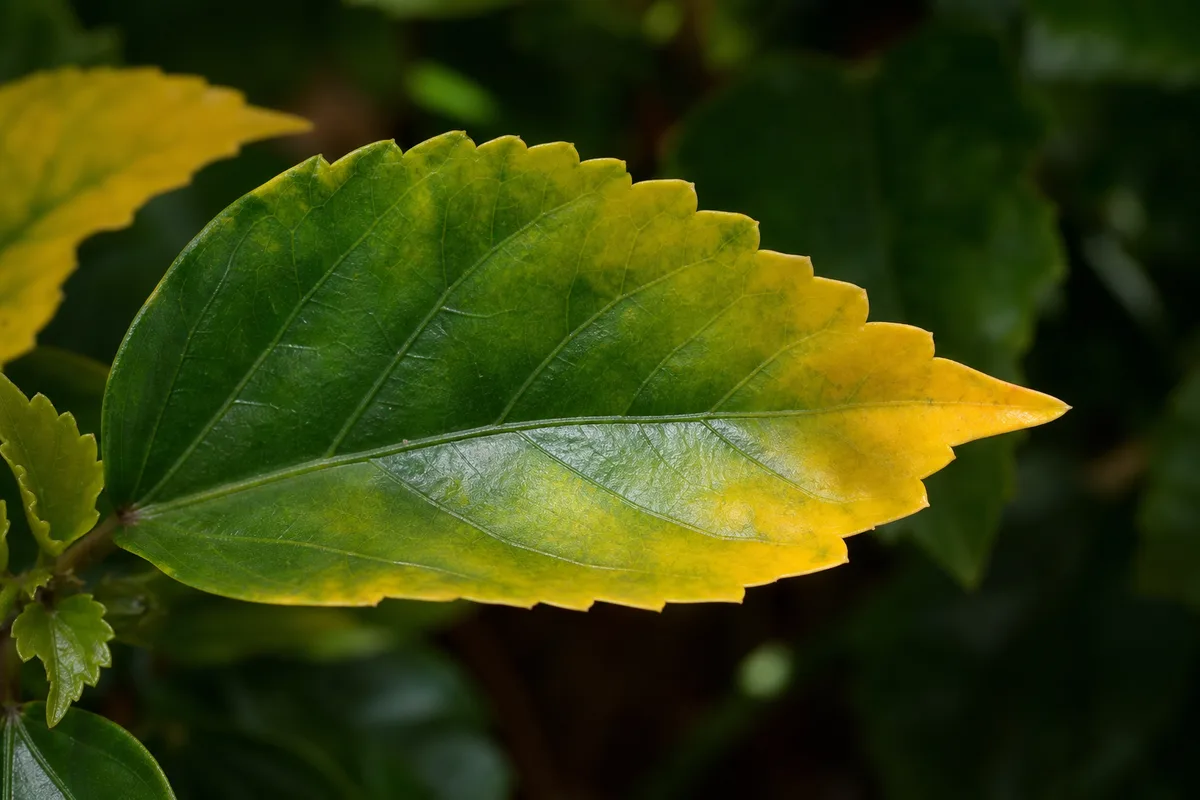
The pattern is a clue, not proof. Yellowing that starts on new leaves can point toward iron or another problem; uniform pale foliage may fit nitrogen shortage; crispy edges often follow drought, heat, or salt injury; and yellow lower leaves in wet mix often reflect stressed roots. RHS describes magnesium deficiency as yellowing between leaf veins, often on older leaves, but it also warns that poor conditions can resemble nutrient deficiency.
Use three questions before dosing:
- Are the affected leaves older, and are the veins staying green?
- Is the plant growing in light, sandy, exhausted, or container media where nutrients may be limited?
- Has a soil, irrigation-water, or tissue test identified magnesium as low or unavailable?
If you can answer only the first question, keep investigating. The pattern becomes more convincing when it appears alongside a credible test and when watering, drainage, light, pests, and temperature do not explain the decline.
Test the soil and correct the root zone together
A soil test is more useful than a guess based on a single leaf. Ask for pH and available nutrients, including magnesium, and sample the root zone according to the lab’s instructions. For a container, the growing media itself may be more informative than surrounding garden soil; for an in-ground plant, take several cores from the active root area rather than scraping one spot beside the stem.
The RHS soil analysis service illustrates what a useful report can include: texture, pH, organic matter, and major nutrients such as potassium, phosphorus, and magnesium, followed by recommendations. In the United States, a local land-grant university extension lab can usually direct you to an appropriate soil test. Do not compare a home test strip with a laboratory number as if they were interchangeable.
Water and drainage determine nutrient uptake
Roots need a balance of water and oxygen. A dry root ball cannot move nutrients into the plant, but a saturated root ball can lose the air spaces roots need to function. In a pot, check that water exits freely from drainage holes and that the saucer is not holding the plant in standing water. In a bed, look for compacted soil, a low spot that stays puddled, or a small amended hole that collects water around the roots.
Fix that condition before adding magnesium. Water a dry hibiscus deeply, then establish a repeatable interval based on pot size, sun, wind, and weather. For a waterlogged plant, allow the mix to drain, improve the container setup or planting site, and inspect roots if wilt continues. A plant cannot use Epsom salt efficiently while its roots are damaged or oxygen-starved.
pH and nutrient competition can mimic a deficiency
Soil reaction changes how available nutrients are to roots. A soil that is too acidic or alkaline for the plant can create a deficiency-like pattern even when the nutrient is present. In a container, an old mix can also accumulate fertilizer salts while losing the balance of nutrients the plant needs.
Magnesium is not isolated from the rest of the root zone. Large, repeated doses of one amendment can interfere with calcium or potassium uptake, and a high-salt solution can draw water away from sensitive roots. Let the test report and the fertilizer label guide the correction. Avoid trying to force pH with Epsom salt: magnesium sulfate is not a reliable pH-adjustment product.
Use complete hibiscus fertilizer for routine bloom support
For an actively growing hibiscus with no confirmed deficiency, choose a complete fertilizer made for flowering plants or hibiscus and follow the label. A complete product supplies more than magnesium and sulfur, and its analysis tells you how much nitrogen, phosphorus, and potassium you are applying. The right product depends on whether the plant is in a container, in the ground, newly planted, or already receiving nutrients from compost or slow-release granules.
Avoid assuming that the highest phosphorus number is the best path to flowers. Hibiscus needs phosphorus, but extra phosphorus does not fix low light or stressed roots and can build up in a container or soil. Likewise, too much nitrogen can produce a handsome, leafy plant with fewer flowers. A moderate, label-directed feed during active warm-season growth is more defensible than alternating several products in search of a dramatic result.
For containers, dilute liquid fertilizer only as the label directs and apply it to already-moist media. Slow-release granules can work when mixed or top-dressed according to the product instructions, but do not add a second fertilizer every week on top of them. For garden hibiscus, improve soil with organic matter and use a granular or liquid product only when the test or plant’s growth history supports it.
Pause routine feeding when a tropical hibiscus comes indoors and growth slows in lower light. Resume when days lengthen and the plant is actively producing new growth. If leaf tips brown after repeated feeding, treat fertilizer burn or salt accumulation as a stronger possibility than magnesium deficiency.
Put light ahead of any fertilizer fix
Hibiscus is a sun-demanding bloomer. Outdoors, aim for a bright position with several hours of direct sun, while adjusting for extreme heat and reflected light. Indoors, place tropical hibiscus at the brightest window available or use supplemental lighting if the room is not bright enough for active growth.
Watch the growth pattern. Long spaces between leaves, thin stems, dark green foliage, and few buds often point to insufficient light rather than a missing mineral. A plant placed behind a porch screen, under a dense tree, or several feet from a bright window may stay alive but lack the energy for a strong flower cycle.
Make light changes gradually. A plant moved from a dim room into intense midday sun can scorch even though it ultimately needs more light. Start with morning sun or filtered exposure, then increase direct exposure over several days. Feeding a recently scorched plant does not speed recovery; protect the leaves and stabilize the root zone first.
Keep moisture steady through summer heat
Hibiscus uses water quickly when it is warm, sunny, and actively making leaves and buds. Container plants can dry out much faster than plants in the ground, especially in dark pots on hot patios or in windy balconies. Check the upper layer of mix and the pot’s weight instead of watering by a fixed calendar.
When the top layer has begun to dry, water thoroughly until some drains from the bottom. Empty the saucer so the roots are not left in standing water. In a garden bed, water slowly enough to wet the root zone, then use mulch to reduce evaporation while keeping mulch away from the stem or crown.
Repeated wilt can trigger bud drop even if the plant looks fine the next morning. Repeated saturation can do the same by injuring roots. The goal is not permanently wet soil; it is a predictable cycle in which the root zone dries slightly at the surface while remaining moist deeper down.
If testing supports it, apply Epsom salt cautiously
Use Epsom salt only when the test and symptoms support a magnesium or sulfur correction, and treat the test report or product label as the controlling instruction. Do not copy a dose from a different plant, a different pot size, or a different soil type. A recipe that is tolerable for a large outdoor bed can be excessive in a small container.
Choose plain, unscented magnesium sulfate intended for horticultural use. Measure it accurately, dissolve it fully, and keep the solution off hard surfaces that could collect residue. Apply to a plant that is actively growing and whose root zone is already adequately moist; do not feed a dormant, wilted, freshly transplanted, or badly root-rotted hibiscus.
The conservative approach is one correction followed by observation, not a standing monthly habit. New leaves will tell you whether growth is improving, but already yellowed leaves may not turn green again. If the new growth looks healthy and the test no longer calls for magnesium, stop adding it.
Soil drench versus foliar spray
A soil application fits a confirmed root-zone deficiency when the media is draining well. A foliar spray may act faster on a confirmed shortage because leaves can absorb nutrients, but it is easier to apply too strongly or at the wrong time. Bright sun, hot weather, wet foliage that stays wet overnight, and an overly concentrated solution can all create new leaf damage.
If a qualified recommendation calls for a foliar treatment, apply it in the cool part of the day, test a small portion first, and keep the solution off flowers when possible. Do not mix Epsom salt with insecticides, oils, or other fertilizers unless the product labels specifically permit the combination. RHS cautions that foliar feeds can scorch leaves in sunny conditions and should be used carefully.
The same caution applies to “sprinkle it around the drip line” advice. Dry crystals can create a concentrated pocket as they dissolve, especially in a pot or during drought. A measured, fully dissolved application guided by a test is easier to control than a handful scattered by eye.
What to do after overapplying Epsom salt
Stop all supplemental Epsom salt and other fertilizer until you know how much was applied and how the plant is responding. Look for a white crust on the soil, brown leaf margins, sudden wilt despite damp media, or a sharp decline after feeding. These clues do not prove salt injury, but they make more fertilizer a bad next step.
If the plant is in a pot with good drainage, slowly flush the media with clean water so it drains freely from the bottom, then empty the saucer. Do not flush a pot that stays waterlogged or has blocked drainage; fix the drainage problem first. A severely affected container plant may need fresh mix and a root inspection, but repotting adds stress, so reserve it for poor drainage, extreme buildup, or damaged roots.
For an in-ground plant, do not dump large volumes of water into a poorly draining bed. Allow normal rainfall and irrigation to move salts through only when the site drains, and use a soil test to decide whether any nutrient is actually low. Keep the plant in stable light and moisture while new growth reveals whether it is recovering.
Diagnose bud drop before feeding again
Bud drop is a stress signal, not a magnesium diagnosis. Check what changed in the week or two before buds fell: a missed watering, a saturated pot, a move, an abrupt temperature swing, intense reflected heat, low indoor light, or pests clustered on new growth and buds. Tropical hibiscus is particularly sensitive to environmental changes, while hardy types can lose buds to drought, heat, wind, or root stress.
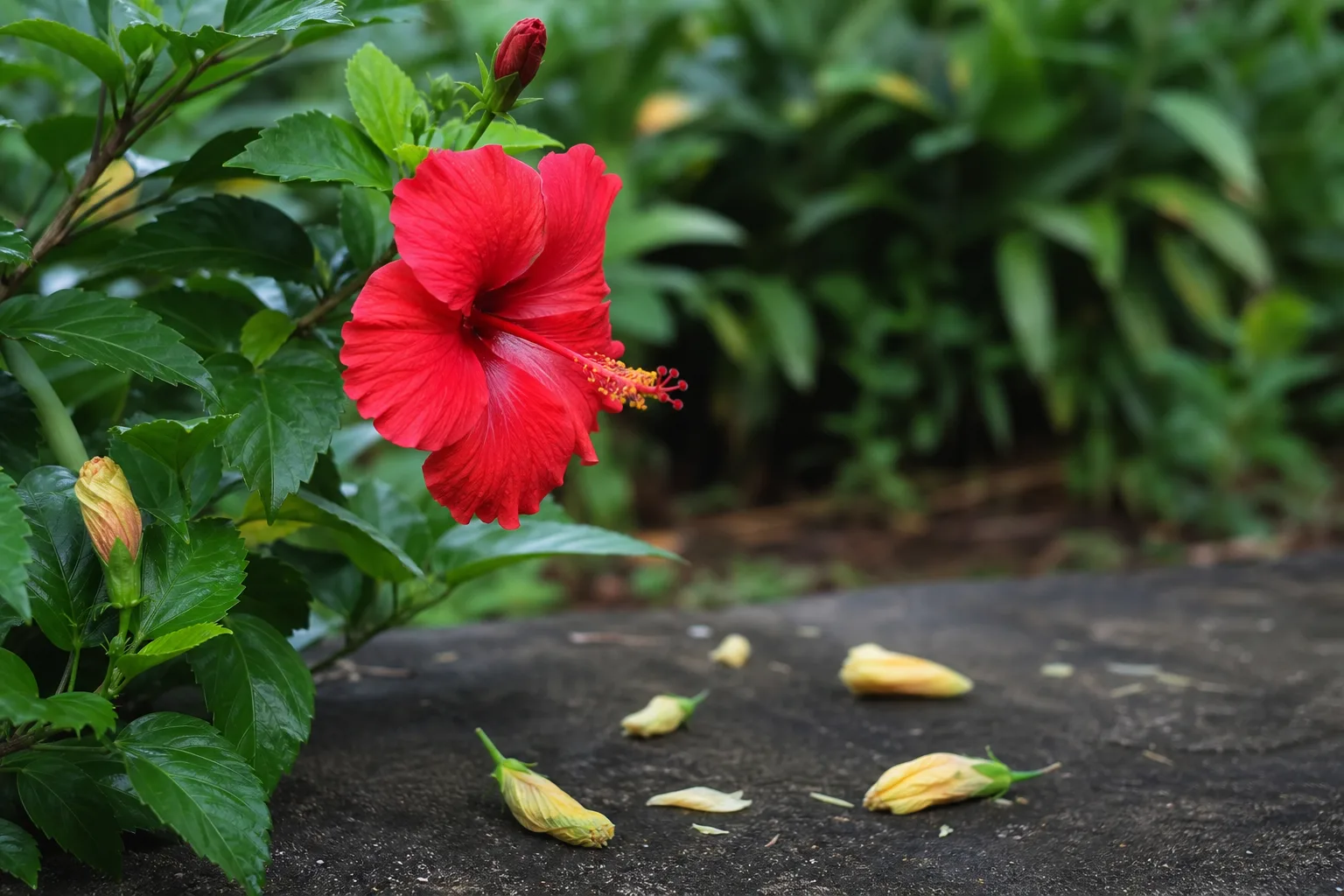
Use this order of operations:
- Check moisture: Is the root ball dry, or has it stayed wet for days?
- Check roots and drainage: Does water leave the pot, and does the plant wilt while the mix is wet?
- Check light and heat: Is the plant getting enough direct light without baking against a wall or window?
- Check temperature and recent moves: Did a tropical plant experience a cold night or sudden indoor transition?
- Check pests: Look under leaves and around buds for aphids, whiteflies, mites, or sticky honeydew.
- Check feeding history: Was fertilizer recently doubled, mixed with another product, or applied to dry roots?
Only after those checks should you revisit nutrients. UF/IFAS lists aphids, whiteflies, and mealybugs among hibiscus pests and advises careful label reading; it also specifically warns against malathion on hibiscus. If a pest or disease diagnosis is unclear, use a local extension service rather than responding to bud drop with repeated fertilizer.
When conditions are stable, remove spent flowers and let new buds develop. Hardy hibiscus can have a seasonal flush rather than a constant stream of flowers, while tropical hibiscus may continue blooming as long as warmth, light, water, and nutrition remain steady. Judge success by new bud formation over several weeks, not by whether a single flower lasts more than a day.
Conclusion
Epsom salt can be useful for a hibiscus with a confirmed magnesium or sulfur shortage, especially when older leaves show yellow tissue between green veins and the root zone is otherwise healthy. It is not a routine bloom booster, and adding it to a dark, drought-stressed, waterlogged, cold-shocked, or already well-fed plant will not solve the reason it is skipping flowers.
For more blooms before fall, identify the hibiscus first, then work through light, moisture, drainage, roots, temperature, pests, and complete fertilizer. If a test supports magnesium, make one measured correction and watch the new growth. That sequence keeps the DIY in its proper place: a targeted nutrient tool, not a shortcut around the care conditions that make hibiscus flower.