Do Chrysanthemums Keep Pests Away? What Really Works
Do chrysanthemums deter pests? Learn which mums contain pyrethrins, what planting can and cannot do, and how to protect pollinators with IPM.
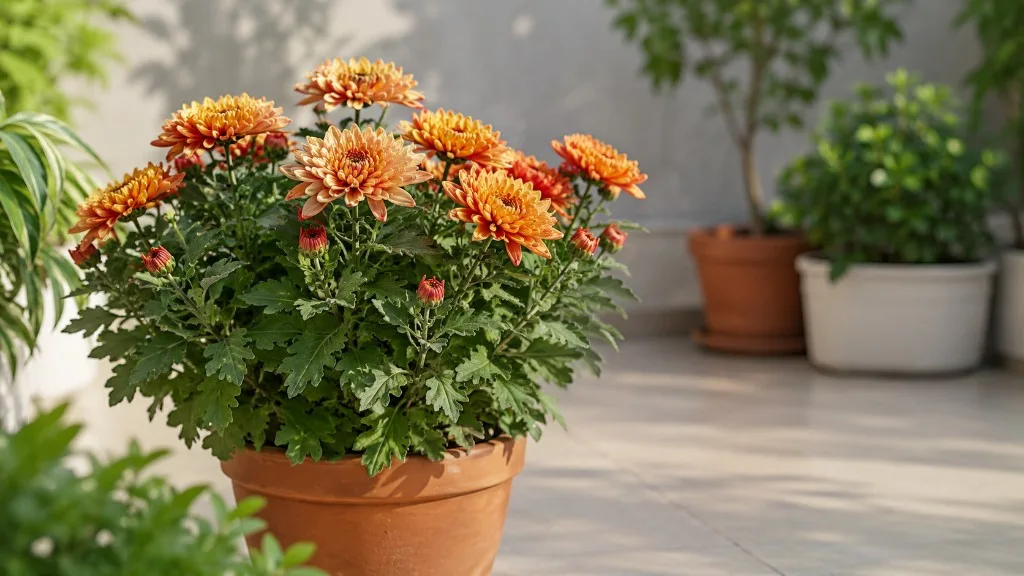
If you bought a chrysanthemum because its strong scent was supposed to create a bug-free patio, the honest answer may be disappointing: a living mum is not a force field. Chrysanthemums can contribute useful chemistry to pest management, but the result depends on the species, the pest, how the plant is used, and whether you are talking about a flower in a pot or an insecticide made from a concentrated extract.
That distinction matters because “mum” is a common name for many ornamental chrysanthemums. The cushion mum sold in a grocery-store fall display is not automatically the same thing as the pyrethrum-producing daisy used to make botanical insecticides. Planting either can add color and habitat value, but neither should replace identifying the pest, protecting the plant from stress, or choosing a targeted control when damage crosses your action threshold.
The Short Answer: Yes, But Not Every Mum Works the Same
Do chrysanthemums deter pests? Sometimes, modestly—but ordinary garden mums should be treated as a supporting plant, not a pesticide. Certain chrysanthemums contain pyrethrins, a group of insect-toxic compounds. In a manufactured product or a properly regulated agricultural formulation, those compounds can knock down and kill susceptible insects. A live ornamental mum releases a far smaller, variable amount, and the evidence for simply surrounding a vegetable bed with mums is much thinner than the evidence for pyrethrum extract.
There is good evidence that pyrethrum can repel mosquitoes at a distance under experimental conditions. A peer-reviewed study found that pyrethrum extract activated mosquito odor receptors and produced spatial repellency in laboratory tests (the study in PMC). That finding explains why the idea has a scientific foundation. It does not prove that one potted florist mum will protect everyone sitting on a deck, or that a border of mixed garden mums will stop aphids from finding lettuce.
Think of a mum as a useful piece of a garden system. It can provide late-season flowers, add structural diversity, and—when it is the right species—contain compounds worth studying or extracting. The plant becomes a disappointing pest-control tool only when a gardener asks it to do the job of scouting, exclusion, sanitation, and a labeled treatment all at once.
Distinguish Garden Mums From Pyrethrum Daisies
The word “chrysanthemum” covers a broad group of plants. The familiar autumn cushion mums are usually selected for compact growth and abundant flowers, while the plant most closely associated with natural pyrethrin production is Tanacetum cinerariifolium, formerly called Chrysanthemum cinerariifolium. It is commonly known as the Dalmatian daisy or pyrethrum daisy and has white, daisy-like flowers with yellow centers.
Why the Plant Name Matters
The National Pesticide Information Center, an Oregon State University Extension Service partner, describes pyrethrins as a mixture of six insect-toxic chemicals found naturally in some chrysanthemum flowers (NPIC’s pyrethrins fact sheet). The careful wording is important: some flowers, not every plant sold under the name mum. Concentration also varies with species, plant genetics, growing conditions, harvest timing, and processing.
Painted daisies are sometimes discussed alongside Dalmatian daisies as another source of pyrethrum chemistry, but a nursery tag that simply says “chrysanthemum” is not enough to establish useful pyrethrin content. If pest control is your main reason for buying the plant, look for an accurately identified species from a specialist nursery rather than assuming that a red, yellow, or bronze bedding mum has the same chemistry.
This is also why a product label matters more than a marketing phrase. Pyrethrins are natural compounds. Pyrethrum can refer to the extract or whole, crushed flower material. Pyrethroids are synthetic chemicals modeled on natural pyrethrins and are not interchangeable with a living plant. Treating those terms as synonyms leads to bad expectations and unsafe home experiments.
What Pyrethrins Actually Do
Pyrethrins act on an insect’s nervous system after contact or ingestion. NPIC explains that they excite the nervous system, which can lead to paralysis and death. That makes them insecticides, not merely fragrant repellents. The same fact sheet lists mosquitoes, fleas, flies, moths, ants, and many other pests among their uses, and notes that pyrethrins are found in sprays, dusts, foggers, and other registered products.
The phrase natural insecticide should not be mistaken for “harmless.” Natural describes the source, not the complete risk profile. Formulation, dose, exposure route, weather, target organism, and application method all matter. A crushed flower in a garden bed is not chemically equivalent to a concentrated product, but inhaling dusty plant material or spraying an extract still creates exposure that the plant’s presence alone does not.
Pyrethrins also break down relatively quickly in sunlight on soil and plant surfaces. That shorter persistence can be an environmental advantage over some longer-lasting products, but it creates a practical limitation: quick breakdown can mean shorter control, repeat applications, or poor performance when the spray never reaches the pest. NPIC reports that pyrethrins do not readily move within plants, so a leaf-surface application cannot be expected to protect new growth from the inside.
Repellent and Insecticidal Action Are Different
Garden conversations often use “repel” to mean three different things: the insect avoids the smell, the insect is knocked down after contact, or the plant becomes less attractive as a place to feed or lay eggs. Those mechanisms are not interchangeable.
Pyrethrum extract can create spatial repellency for mosquitoes in controlled tests, meaning the insects avoided an area without touching the treated material. The study above examined mosquito behavior and chemistry, not a backyard border of ornamental mums. For other garden pests, the strongest evidence may be for contact toxicity rather than a reliable odor barrier.
That is why a mum beside a tomato plant can still have aphids on it, and why mosquitoes may still land near a patio decorated with mums. Air movement, temperature, plant size, flower stage, pest pressure, and the insect’s behavior can overwhelm a faint plant odor. A scent that is noticeable to a person is not automatically present at a concentration that changes insect behavior outdoors.
Which Pests Are Realistic Targets?
If you are using chrysanthemums as part of a pest plan, start with a realistic target instead of a promise that “bugs” will disappear. Pyrethrin products can affect many exposed, soft-bodied or flying insects, including aphids, thrips, whiteflies, flies, mosquitoes, and ants. The effect is usually strongest when the labeled product makes direct contact with the pest.
Expect less from the plant itself against pests that are protected in soil, inside stems, under waxy coverings, or deep in a dense canopy. Slugs, snails, many soil-dwelling larvae, plant diseases, weeds, and vertebrate pests are not solved by placing a mum nearby. Caterpillars may also require a different approach depending on the species and where they are feeding.
The best question is not “What pests do mums repel?” It is “What is feeding, where is it feeding, and what control reaches it without causing more damage than the pest?” A hand lens and a two-minute inspection often save more plants than a row of unexamined flowers.
Can Planting Mums Protect a Vegetable Garden?
Possibly as a small influence, but the evidence is not strong enough to promise crop protection. Companion planting can change the visual texture, scent, shelter, and insect traffic of a bed. It can also make it easier to grow flowering plants that support beneficial insects. But the presence of a mum does not guarantee that a pest will choose another plant.
Research on pyrethrum repellency supports the chemistry of the plant, while research on mixed garden plantings asks a harder question: does this exact arrangement reduce damage under real weather and pest pressure? Those are separate questions. A carefully designed study of an extract or a particular species should not be converted into a universal rule for every seasonal pot sold at retail.
Practical horticulture writers make the same useful distinction from the garden side: GardenersPath’s chrysanthemum pest-control guide treats companion planting as promising but under-researched, while Gardening Know How’s placement advice presents mums as a possible border or container aid rather than a substitute for identifying the pest. That is the right level of confidence for a home trial.

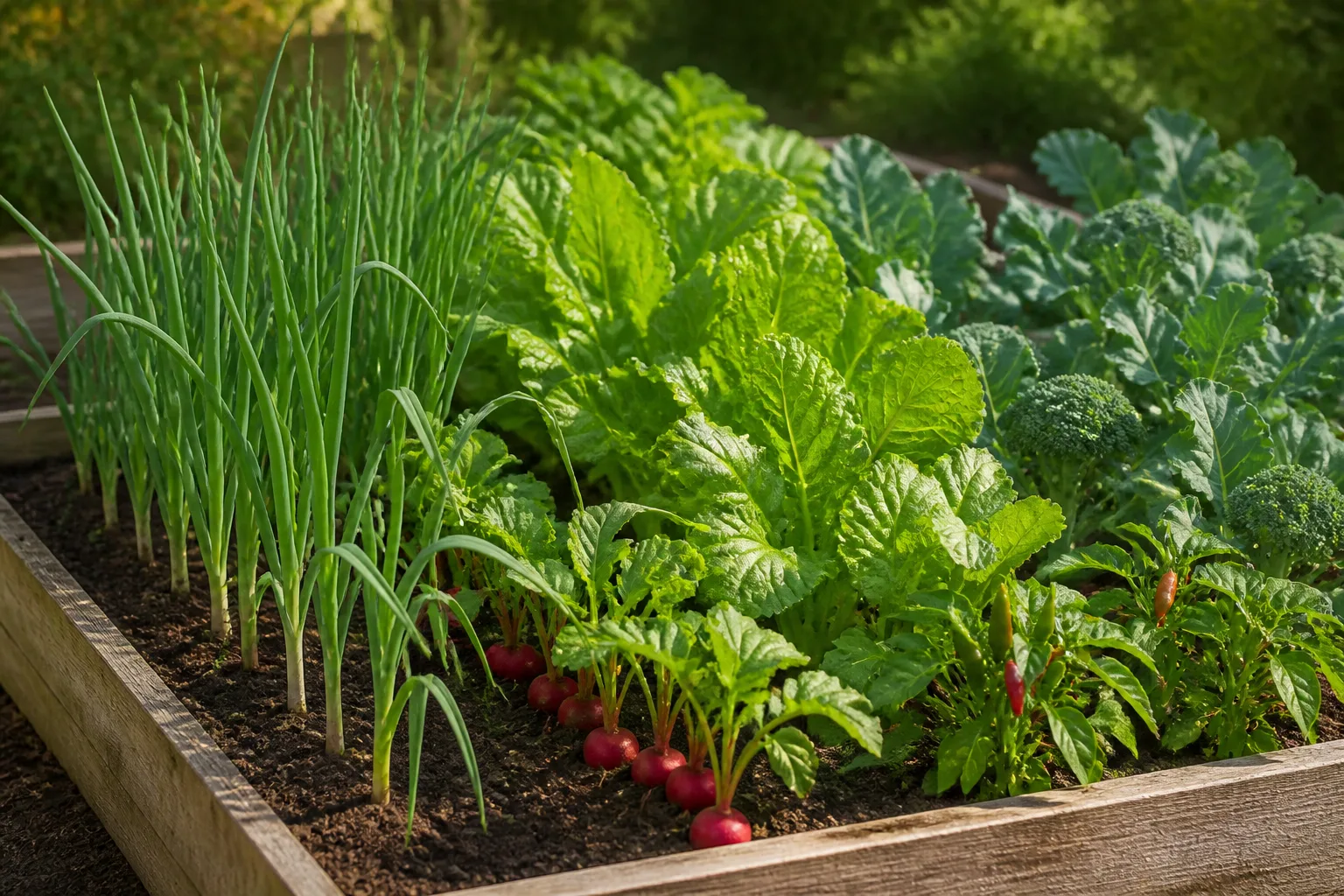
Use mums near vegetables because you like the flowers and can give them the conditions they need. If they also make a pest problem less convenient, consider that a bonus. Keep the vegetables easy to inspect, leave enough airflow around both crops, and avoid turning a flower border into a dense wall that creates a humid hiding place.
How to Place Mums for a Fair Garden Trial
A simple trial will tell you more than a blanket claim. Choose two similar sections of a bed, or two containers with the same crop and light. Put a healthy, correctly labeled chrysanthemum near one section and leave the other as a comparison. Count or photograph the target pest and the damage on both plants once or twice a week for several weeks.
Place the mum where it receives the light and airflow it needs, not wedged against the vegetable stems. A container beside a seating area may be useful for observing mosquitoes or nuisance flies, but the result will be highly local: a pot does not treat the whole yard. In a vegetable bed, use a loose border or interplanting pattern that does not crowd the crop.
Record weather, irrigation, plant growth, and any other controls you use. If you rinse aphids from one bed, add row cover to another, and place a mum in a third, you will not know which factor changed the result. A fair comparison is especially important for companion planting because natural pest populations rise and fall even when you change nothing.
Grow the Plant Well Before Expecting Any Benefit
Stressed plants are poor garden experiments. Give chrysanthemums bright light, well-drained soil or potting mix, consistent water, and enough space for air to move through the foliage. In hot climates, morning sun with some afternoon protection can keep containers from drying too quickly; in cooler areas, more direct sun may support stronger growth and flowering.
Avoid leaving a nursery mum in a waterlogged decorative sleeve. Empty the cachepot after watering, and do not let the root ball swing from bone-dry to saturated. A plant that is wilting, root-bound, or shaded may produce fewer flowers and less noticeable fragrance, while its weakened growth can attract or fail to tolerate pests.
For perennial garden mums, pinch young shoots early in the growing season if you want a bushier plant, then stop pinching in time for flower buds to develop. Deadheading can extend the display, but it does not turn a common ornamental into a high-pyrethrin crop. Pruning is a shape and bloom-management tool, not a way to manufacture pesticide chemistry.
Why Scent Alone Is a Weak Pest Shield
The scent of a chrysanthemum can be obvious to a person standing close to it and still be too weak, too intermittent, or too localized to redirect insects in an open garden. Wind disperses volatile compounds. Rain changes the leaf and flower surface. A vigorous pest population may simply overwhelm any mild avoidance response.
The mosquito study gives the most useful nuance: pyrethrum’s repellency involved specific components and insect sensory pathways, not just “a strong smell.” That is promising science, but it does not establish a dose, spacing rule, or duration for whole ornamental plants in every climate. Treat the scent idea as a possible edge, never as a guarantee.
Build Chrysanthemums Into an Integrated Pest-Management Plan
The U.S. Fish and Wildlife Service describes integrated pest management for pollinator settings as a process that combines prevention, monitoring, and targeted control rather than defaulting to routine spraying (U.S. Fish and Wildlife Service pollinator IPM guidance). Chrysanthemums fit best in that broader approach.
Start With Identification and Monitoring
Inspect new plants before they join a bed, then check leaf undersides, shoot tips, flower buds, and the soil surface. Look for the pest itself, sticky honeydew, stippling, chewed edges, webbing, frass, or distorted new growth. Take a clear photo and compare the pattern over time. Yellow leaves alone are not a pest diagnosis; they can also indicate water stress, root damage, nutrient problems, or natural aging.
Once you know the pest, set a threshold. A few aphids on a vigorous chrysanthemum may feed lady beetles and lacewings without changing the plant’s appearance. A rapidly expanding colony on tender shoots, or pests moving into a food crop, may justify a more active response. Start with the least disruptive effective measure: rinse exposed aphids, hand-pick larger insects, remove badly infested tips, improve airflow, or use physical exclusion where practical.
Protect Beneficial Insects and Waterways
Pyrethrins are generally low in toxicity to people and other mammals compared with many pesticides, but that does not make them pollinator-safe by default. NPIC reports that pyrethrins are highly toxic to honey bees and highly to very highly toxic to fish and aquatic invertebrates. The same fact sheet notes that sunlight and rapid breakdown can limit some risk, but drift and runoff still matter (NPIC environmental information).
The practical rule is simple: do not spray open flowers while bees or other pollinators are foraging, do not let spray drift into ponds or drains, and do not apply a product to a crop or pest unless its label allows that use. A product labeled “botanical,” “natural,” or “organic” still needs responsible handling. Follow the label for protective equipment, mixing, re-entry, harvest intervals, storage, and disposal.
Should You Make Pyrethrum From Homegrown Flowers?
For most home gardeners, no—not as a casual DIY spray or dust. Homegrown flower material has no reliable concentration, no tested formulation, no label directions, and no clear way to calculate plant, human, pet, bee, or aquatic exposure. Grinding dried flowers can put fine particles into the air, and a homemade liquid can spread unpredictably across foliage and soil.
Some gardening publications describe drying and crushing pyrethrum flowers, but practical instructions do not solve the central problem: dose and exposure are unknown. The fact that a compound came from a plant does not make a homemade preparation equivalent to a registered product. It is also easy to confuse a true pyrethrum species with a decorative mum that does not contain a useful level of pyrethrins.
If you want to grow Tanacetum cinerariifolium, grow it as a flowering perennial and learn its horticultural needs. If you need insect control, choose a product registered for your location and the specific crop or ornamental, then follow its label. Those are two different gardening decisions.
Safer Rules for a Commercial Pyrethrin Product
If monitoring shows that a pyrethrin product is warranted, read the label before buying it. Confirm the target pest, the plant or crop, application rate, required protective equipment, re-entry interval, and harvest interval. Do not increase the concentration because the first application seemed weak; poor coverage, weather, pest stage, or resistance may be the real issue.
Apply only under conditions the label permits. Avoid windy weather, open blooms, standing water, and periods when pollinators are active. Keep people and pets away as directed. NPIC notes that exposure can happen through breathing spray or dust, skin or eye contact, and swallowing residues, and recommends following label instructions and minimizing exposure (NPIC exposure guidance).
Remember that contact insecticides work only where the spray reaches. Thorough coverage can improve performance, but more spray is not automatically better. If the pest is hidden, protected, or misidentified, repeated applications can harm beneficial insects without solving the original problem.
What If Pests Are Still on Your Chrysanthemums?
That is not evidence that chrysanthemums are useless; it is evidence that the plant is still a plant. Mums can host aphids, thrips, spider mites, whiteflies, and other pests, especially when they are crowded, drought-stressed, overfertilized, or newly moved from a greenhouse into outdoor conditions.
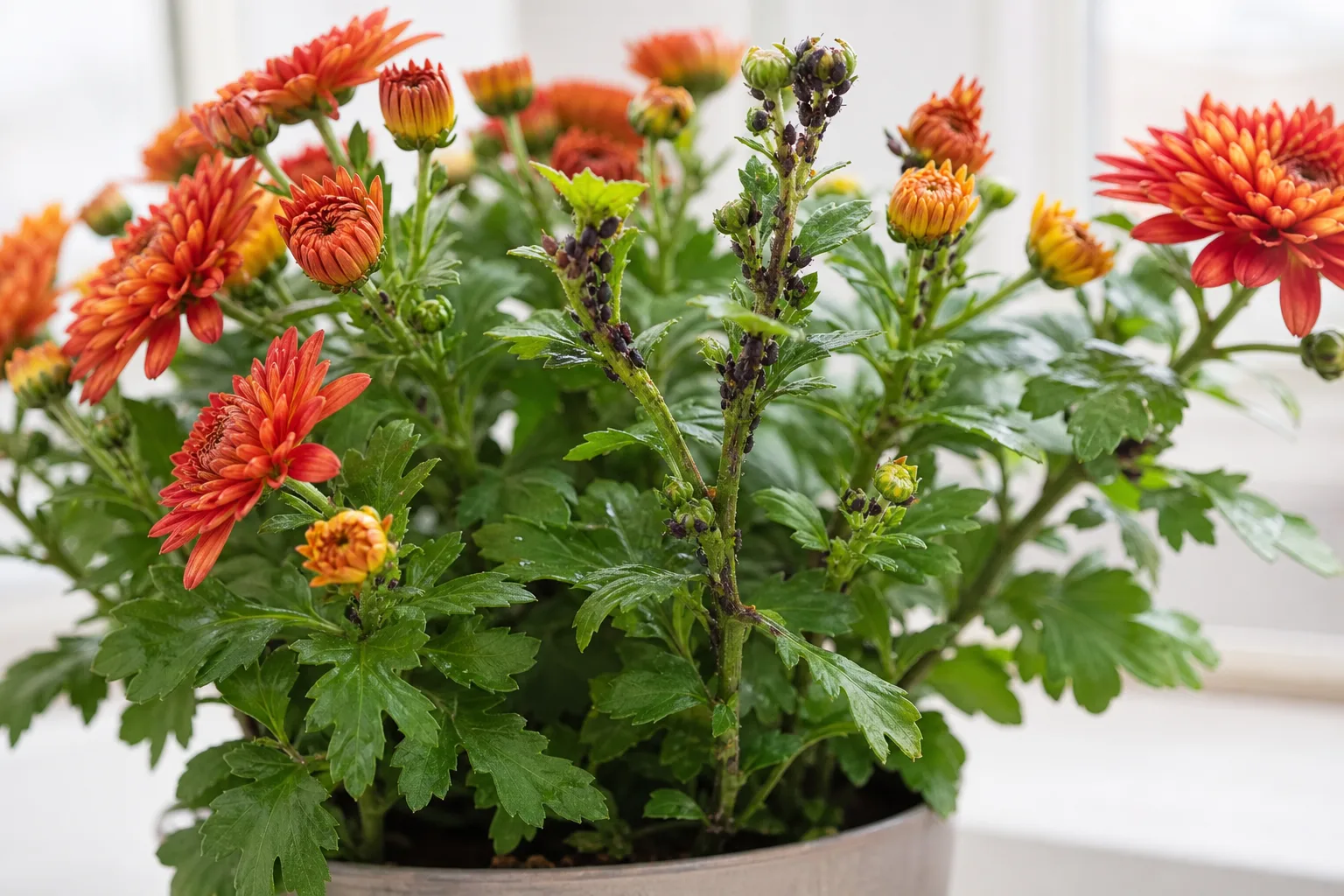
First, isolate a heavily infested container from other plants and inspect the newest growth. Rinse small colonies with a firm but gentle stream of water, prune a badly infested tip if the plant can spare it, and repeat the inspection after a few days. Look for predators before reaching for a spray; ants farming aphids can interfere with that natural control, so reducing the ant activity may help.
If the problem continues, identify the insect and choose a control that matches its location and life stage. A product that works on exposed aphids may not solve mites, larvae, or a disease that merely resembles insect damage. Mums can be attractive flowers and still need ordinary plant care and pest management.
Common Mistakes That Make Mums Seem Ineffective
Buying any fall mum and expecting pyrethrum-level chemistry. The common retail name does not identify a high-pyrethrin species or guarantee a useful concentration.
Treating a border as a barrier. Outdoor scent is diluted by wind, and pests can approach from above, below, or inside the canopy. Use a border for diversity and observation, not as a sealed perimeter.
Using a source plant as if it were a spray. Pyrethrin extract and a living flower have different concentrations, delivery, persistence, and safety considerations.
Spraying because an insect was seen. Some insects are harmless visitors or beneficial predators. Identify the pest and estimate damage before applying a broad-spectrum control.
Ignoring the flowers’ pollinator value. A blooming mum can attract visitors while a pyrethrin application can harm them. Separate the decision to grow flowers from the decision to treat a pest.
Making a homemade concentrate without measuring exposure. Variable chemistry and airborne dust make DIY extraction a poor trade for a home garden. A labeled product provides instructions and legal use parameters that a kitchen recipe cannot.
Conclusion
Chrysanthemums can help with garden pest management, but the truthful answer to “do chrysanthemums deter pests?” is conditional. Pyrethrum-producing Tanacetum cinerariifolium is the important source plant for natural pyrethrins; an ordinary garden mum is primarily an ornamental, with an uncertain and usually modest deterrent effect when planted nearby. Extracts can repel or kill certain insects, but that evidence does not make a retail mum a reliable pesticide or mosquito shield.
Use chrysanthemums because they bring color, structure, and possible supporting value to a diverse garden. Pair them with scouting, healthy growing conditions, physical barriers, beneficial-insect protection, and a carefully chosen labeled treatment only when the problem justifies it. That combination gives you something a flower alone cannot: a pest plan that works even when the wind changes, the aphids arrive, or the mum turns out to be exactly what its nursery tag promised—a beautiful mum.