13 Weeds With Yellow Flowers and How to Identify Them
Learn to identify 13 weeds with yellow flowers by their leaves, growth habits, and roots, then choose the right way to remove or manage each one.
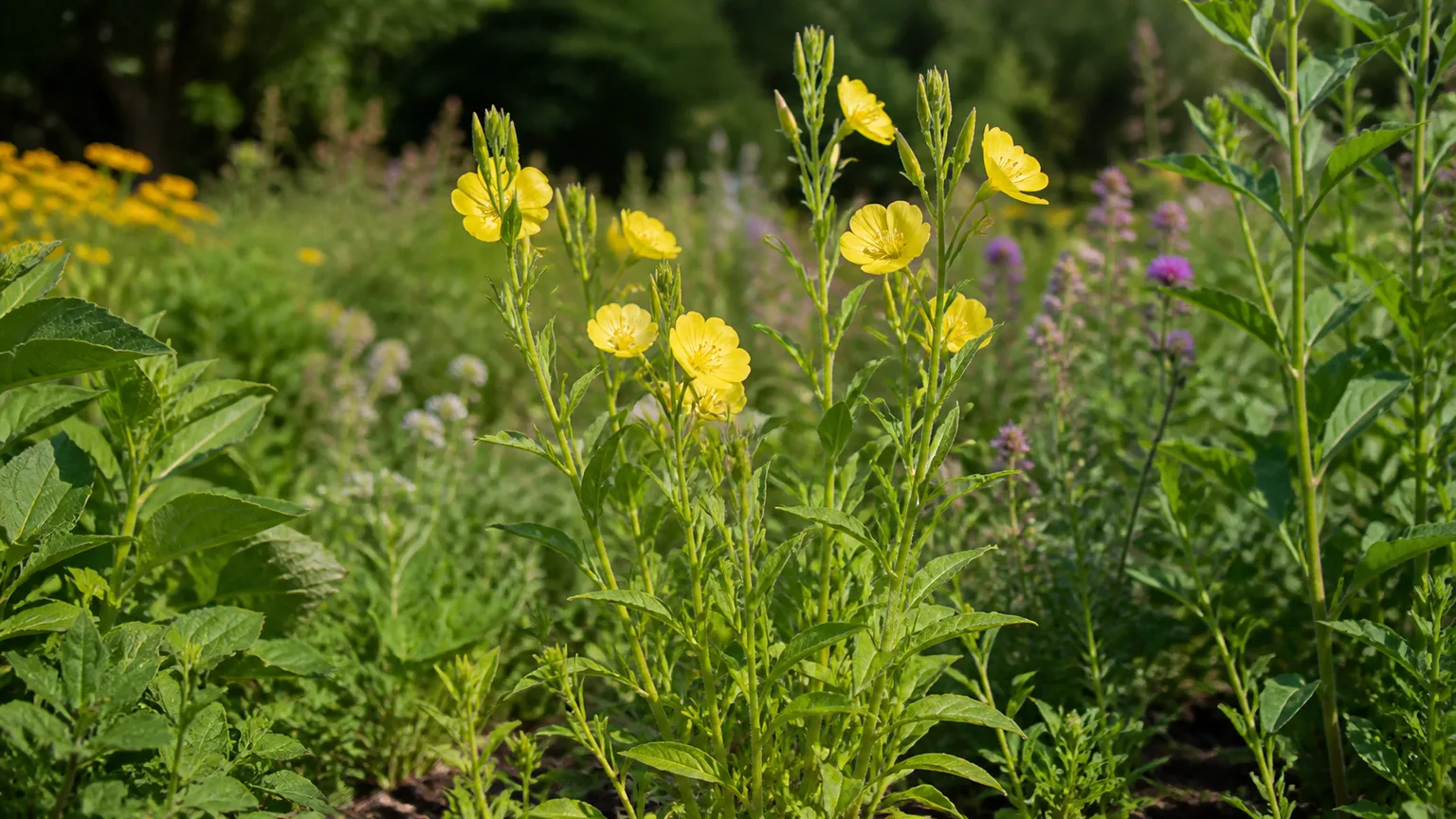
A yellow flower is an inviting clue, but it is not an identification. Dandelion, creeping buttercup, yellow wood sorrel, goldenrod, and several desirable native wildflowers can all look like “the yellow weed” from a standing position. The useful question is not only what color the bloom is; it is how the plant grows before and after it flowers.
Use the guide below to compare the leaf shape, height, stem habit, root system, and growing site of 13 common yellow-flowered plants. Some are easy to remove with one careful pull. Others return from stolons, rhizomes, or a persistent taproot. A few are plants you may reasonably keep in a meadow edge or pollinator planting, even if they would be a nuisance in a tidy border.
Start with the plant’s shape, not the flower color
Before reaching for a weed killer, take one photo from above and one from the side. Note whether the leaves form a flat rosette, a low mat, a clump, or a tall upright stem. Then check the soil: is it compacted lawn, moist shade, a dry path edge, rich disturbed ground, or an open bed?
The five clues that narrow an identification
- Flower structure: A single composite head can resemble a tiny sun; a branched plume, five-petaled cup, or dangling slipper-shaped flower points elsewhere.
- Leaves: Look for teeth, hairs, three-part leaflets, succulent blades, or a basal rosette. Leaves are often more dependable than a fading flower.
- Growth habit: A plant that hugs the ground and roots at stem nodes behaves very differently from a one-stemmed annual.
- Below-ground parts: A taproot, rhizome, or stolon predicts why a casual pull may fail.
- Seed behavior: Windborne tufts, explosive capsules, and abundant small seeds each call for different timing.
The scientific names here are useful because common names vary by region. The USDA PLANTS Database is a useful starting point for checking accepted names and distribution, but local identification still matters. If a plant may be edible, medicinal, or toxic, do not taste it based on a photograph; confirm the species with a local extension service or botanist first.
Quick comparison of 13 yellow-flowered weeds
| Plant | Best first clue | Habit | Typical first response |
|---|---|---|---|
| Dandelion | Toothed rosette | Taprooted perennial | Dig the whole root before seed |
| Creeping cinquefoil | Five-fingered leaflets and runners | Perennial mat | Trace and remove rooted runners |
| Common purslane | Fleshy leaves and red stems | Annual creeper | Pull before seed; remove fragments |
| Goldenrod | Branched yellow plumes | Tall colony-former | Cut seed heads; dig rhizomes where needed |
| Mouse-ear hawkweed | Hairy rosette and stolons | Low perennial mat | Dig small patches or smother larger ones |
| Black-eyed Susan | Daisy head with dark center | Upright wildflower | Deadhead or keep in a chosen area |
| Yellow wood sorrel | Heart-shaped leaflets | Annual/perennial spreader | Pull before pods; remove rhizomes |
| Black medic | Small clover-like leaflets | Low annual | Improve turf or bed density; prevent seed |
| Yellow wild violet | Several flowers above a low clump | Rhizomatous perennial | Dig crowns and rhizomes where unwanted |
| Yellow jewelweed | Cornucopia-shaped bloom | Shade-loving annual | Pull before capsules mature |
| Evening primrose | Tall second-year stem | Biennial | Dig the taproot before seed drop |
| Creeping buttercup | Shiny cup-shaped flower | Moist-site perennial | Remove stolons; correct wetness |
| Greater celandine | Lobed leaves and yellow poppy-like flowers | Rhizomatous perennial | Wear gloves; dig crown and rhizomes |
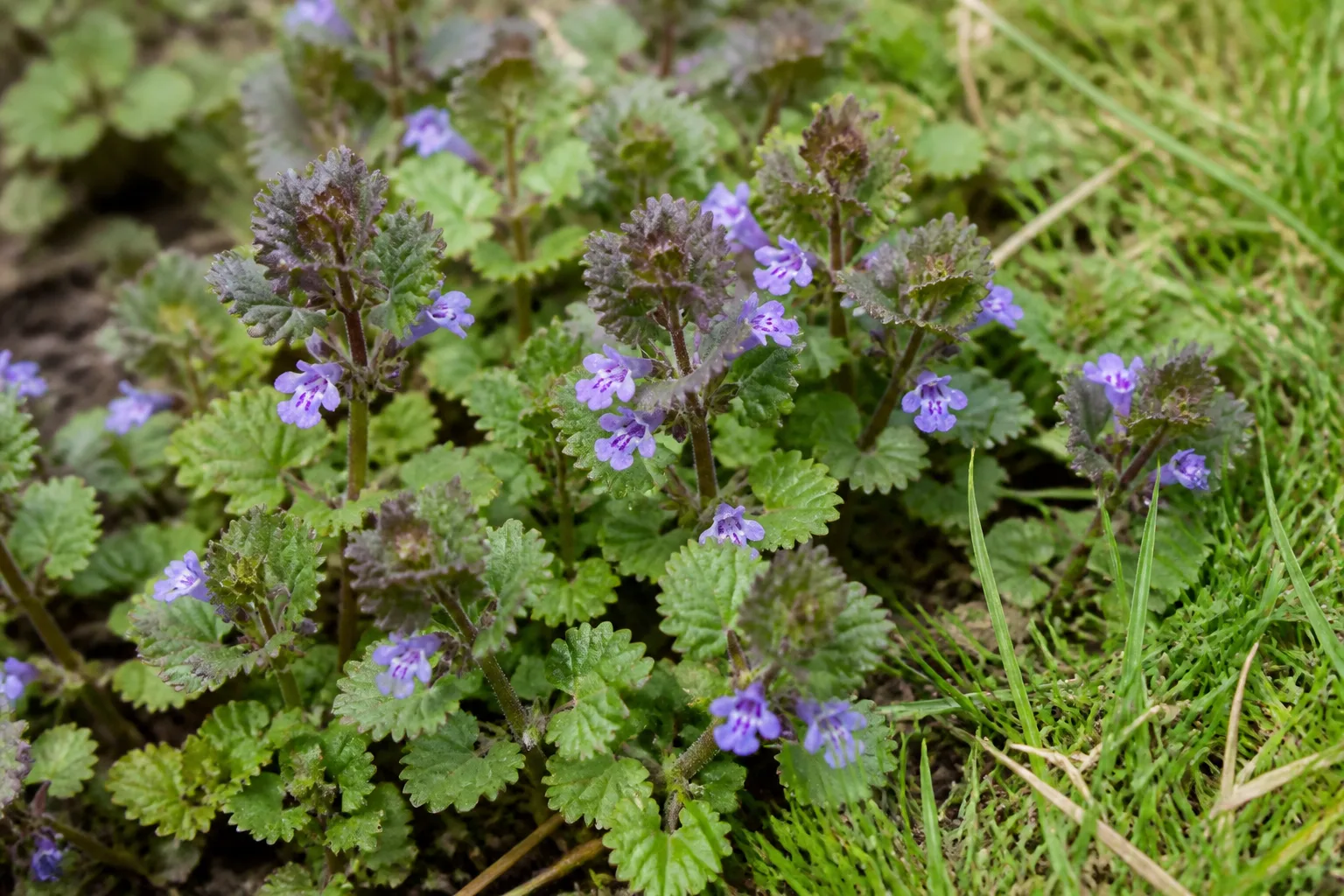
Dandelion: the taprooted rosette
Common dandelion (Taraxacum officinale) starts as a flat rosette of sharply toothed leaves. The hollow flower stalk rises from the center, and the familiar yellow head becomes a wind-dispersed puffball. That combination—rosette, hollow stalk, and deep central root—is more useful than the flower alone.
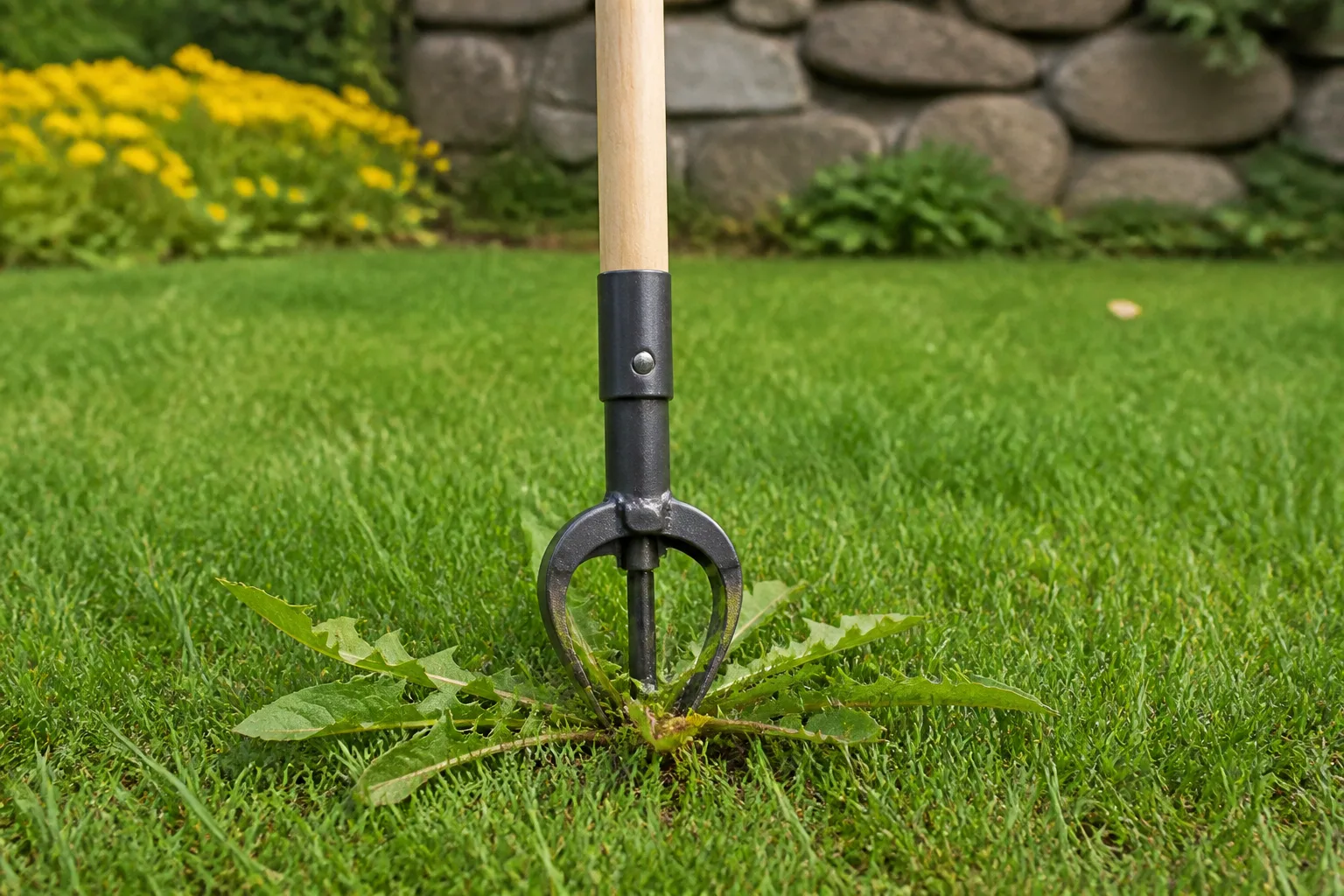
Dandelions are perennial, so mowing removes the visible flower but does not solve the plant. In a bed or a small lawn patch, loosen the soil and use a narrow weeder to follow the taproot downward. Pulling off the crown while leaving a long root section behind often produces regrowth. Bag flowers that have already turned to seed rather than carrying them across the garden.
Creeping cinquefoil: a runner that roots as it travels
Creeping cinquefoil (Potentilla reptans) has low stems that run across the soil and root at nodes. Its leaves are divided into five toothed leaflets, giving the plant a hand-like appearance. Small five-petaled yellow flowers appear above the mat, which can make it look like a harmless groundcover until it reaches a border or lawn.
Watering the soil the day before removal makes tracing the runners easier. Do not simply tug the flower stems: follow each runner to every rooted node, lift the crown, and check the excavated soil for pale root pieces. Recheck the area because a fragment left in a moist bed can restart the patch.
Common purslane: succulent leaves at soil level
Common purslane (Portulaca oleracea) is a warm-season annual with thick, smooth, succulent leaves and often reddish, spreading stems. The yellow flowers are small and may open in bright conditions, so the fleshy foliage is the better clue. It commonly appears in compacted paths, vegetable beds, and hot bare soil.
Pull purslane when the soil is slightly damp and remove the entire plant from the bed. Treat detached stems as live material: purslane can root or continue developing seed after it has been pulled and left on warm soil. Mulch or fill the open spot afterward, because a bare patch is exactly where the next generation is most likely to establish.
Goldenrod: a tall colony-former with plume-like flowers
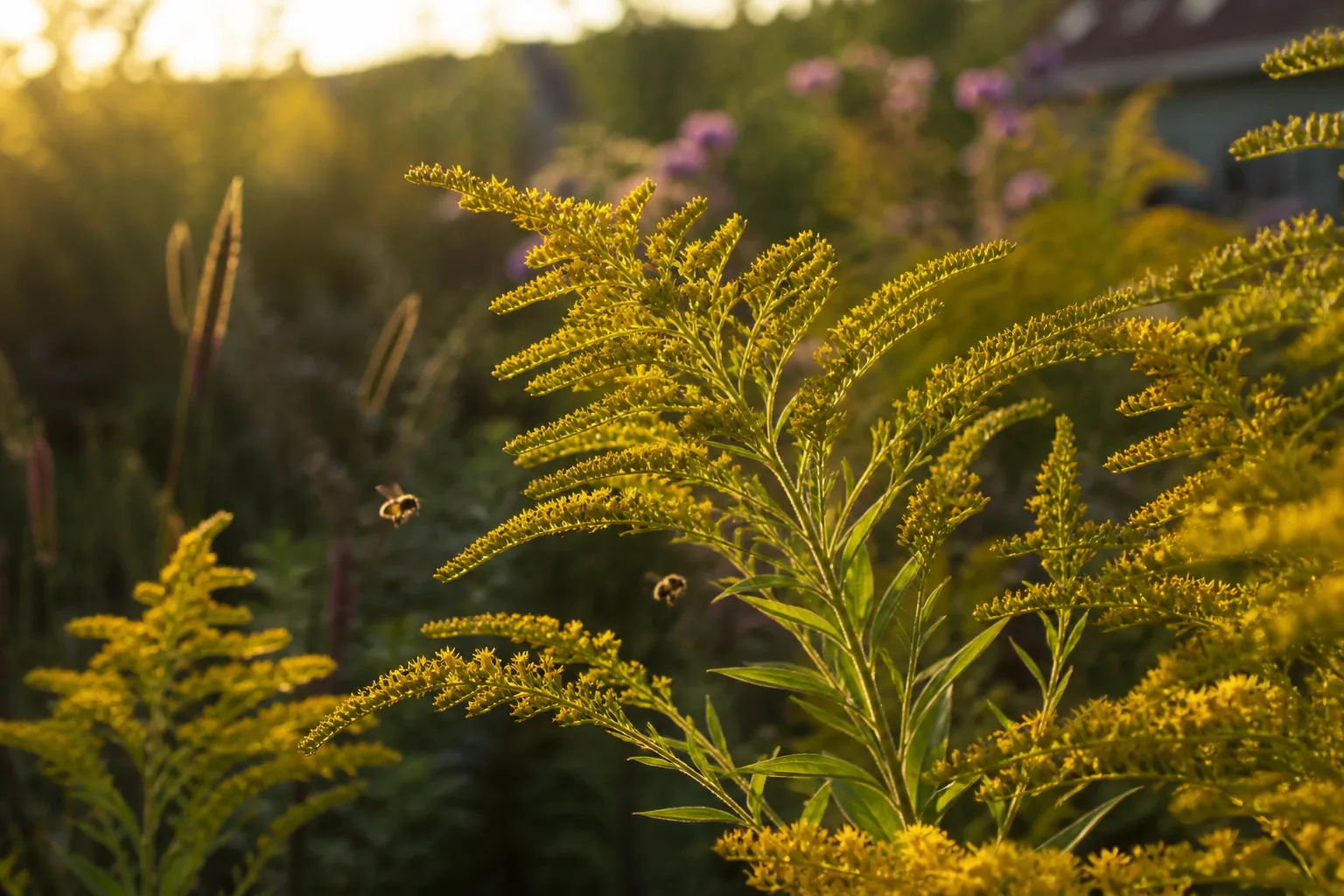
Goldenrod (Solidago species) is an upright perennial recognized by branching sprays of many tiny yellow flowers. It may be an intentional native planting, a useful late-season nectar source, or an unwelcome colony at the edge of a manicured bed. The site and your design goal matter as much as the name.
If you want to keep it, give it a defined area and remove spent flower clusters before seed dispersal. If it is spreading into a border, dig when the soil is workable and remove the crown and rhizome fragments. Repeated cutting can reduce its presence, but cutting after seed heads mature only moves the problem around. Goldenrod is often blamed for seasonal allergies, but wind-pollinated ragweed is the more common culprit; flower timing alone is not proof of a plant’s effects.
Mouse-ear hawkweed: the hairy mat in thin turf
Mouse-ear hawkweed (Hieracium pilosella) forms a low rosette of hairy leaves and sends out stolons that create daughter rosettes. The flowers resemble small dandelions, but the plant’s ability to knit itself into a mat is the giveaway. It tolerates poor, thin soil where denser turf or groundcover has little competitive advantage.
Dig small infestations while the soil is moist and collect every rosette and runner. For a larger patch, covering the area with an opaque, well-anchored material can be more controlled than scattering fragments with a hoe. Improve the growing conditions for the wanted turf or groundcover afterward; removal without filling the gap often produces another hawkweed flush.
Black-eyed Susan: weed, wildflower, or keeper?
Black-eyed Susan (Rudbeckia hirta) has daisy-like yellow rays around a dark, raised center. It is commonly grown as an ornamental or native-friendly flower, but it can appear where it was not planted because it self-seeds. Calling it a weed is a management decision, not a botanical diagnosis.
Keep a clump if it fits the site and supports your planting goal. Deadhead before mature seed falls if you want to contain it, or dig the crown when the soil is damp if it is crowding a small perennial. Avoid treating every self-seeding wildflower as an emergency: a defined patch can be easier and more beneficial than repeated excavation.
Yellow wood sorrel: clover-like leaves with explosive seed pods
Yellow wood sorrel (Oxalis stricta) has three heart-shaped leaflets and small yellow flowers. It is not a true clover, even though its foliage invites that comparison. The plant can spread by seed capsules that fling seed when ripe, and some forms also persist through underground structures.
Pull or hoe it before capsules develop, then inspect the soil for crowns or rhizome-like pieces. Vinegar and other contact treatments may scorch exposed leaves but can also injure wanted plants and do not reliably solve a below-ground or seed-bank problem. In a lawn, a dense, healthy stand of grass is a more durable defense than repeated spot spraying.
Black medic: a low annual that signals thin soil
Black medic (Medicago lupulina) has three rounded leaflets and small yellow flower clusters. It often appears low in turf, along dry edges, or in compacted soil. The plant is a legume, so its presence is frequently associated with weak competition rather than a mysterious lawn disease.
If only a few plants are present, remove them before seed set. Then correct the opening that allowed them in: reduce compaction, choose a suitable grass or groundcover, and avoid scalping the lawn. Fertilizing blindly can create runoff or excessive growth; soil testing and better coverage are more targeted than adding nutrients by guesswork.
Yellow wild violets: pretty, persistent, and rhizomatous
Some wild violets (Viola species) have yellow flowers, although violet colors vary by species and region. They form low clumps with several flowers and can spread by seed and short rhizomes. Their soft appearance hides a plant that is difficult to eradicate from established turf without patience.
Decide first whether the clump is actually a problem. In a naturalized edge, violets may be a welcome seasonal groundcover. In a formal lawn or narrow border, dig out the crowns and attached rhizomes when the ground is moist, then monitor for seedlings. Avoid confusing a flowering violet with a dandelion or buttercup simply because all three are low and yellow at a distance.
Yellow jewelweed: a shade-loving annual that shoots its seed
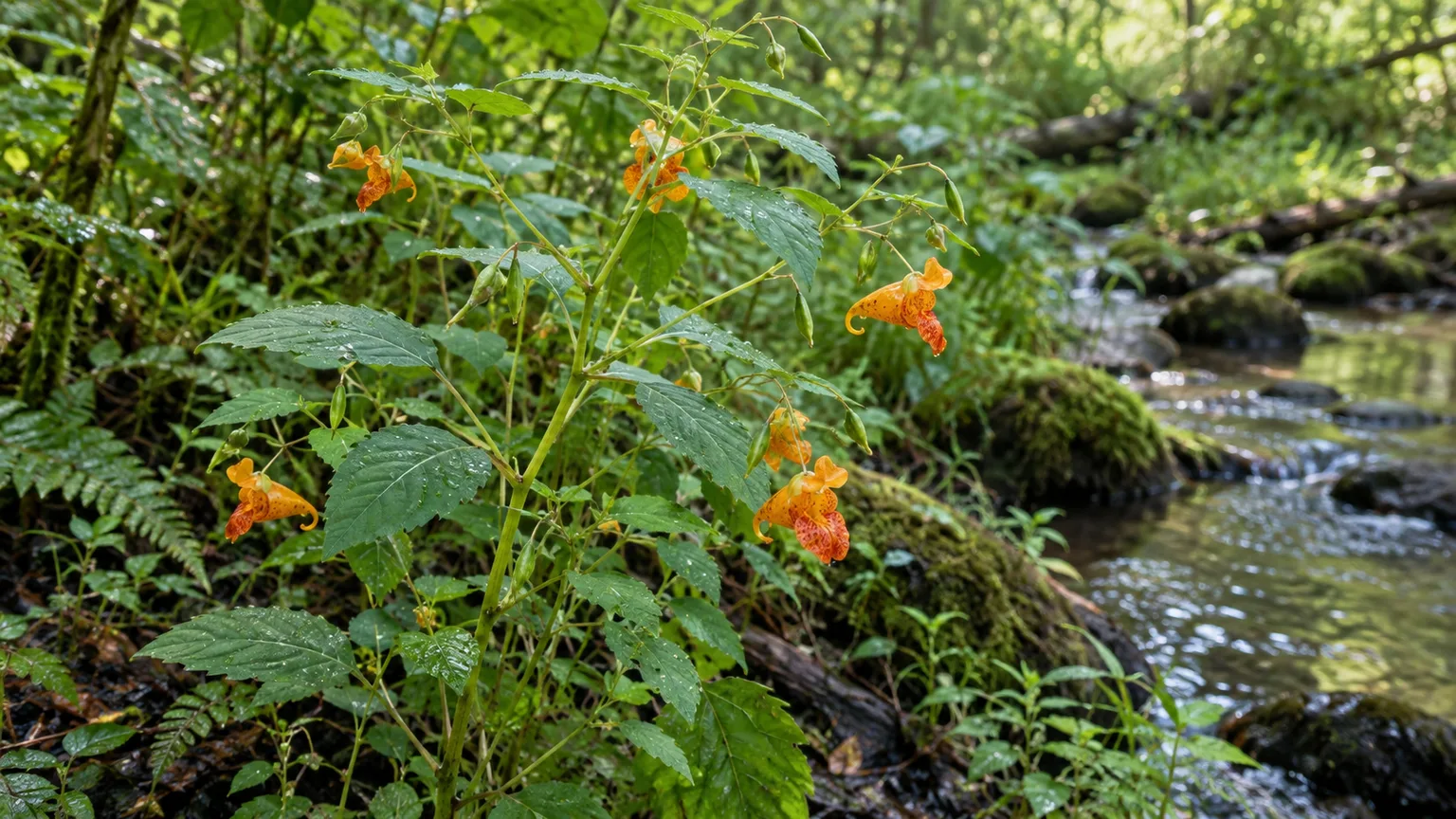
Yellow jewelweed (Impatiens pallida) has pale yellow, slipper- or cornucopia-shaped flowers and succulent, somewhat translucent stems. It favors damp shade and is often taller than the low lawn weeds on this list. Its seed capsules can spring open when touched, which is why early removal matters.
Pull plants while they are young and before capsules are plump. Wetting the soil makes the shallow root system easier to lift, but handle the plants gently and bag mature capsules rather than tossing them onto the compost pile. Leave a chosen patch if it fits a moist woodland planting; remove it where seedlings compete with a desired shade perennial.
Evening primrose: a tall second-year stem
Evening primrose (Oenothera biennis) spends its first year as a basal rosette and usually flowers in its second year on a tall, branched stem. The yellow flowers open late in the day and close during bright daytime conditions, an excellent clue when you are trying to separate it from a dandelion. A long taproot anchors it.
Dig rather than yank a mature plant. The top can break away while the taproot remains, and a plant left to flower can scatter many seeds. Some gardeners keep evening primrose in a wild edge, but contain it intentionally and cut seed heads before they dry if you do not want it moving through the garden.
Creeping buttercup: glossy flowers in damp ground
Creeping buttercup (Ranunculus repens) has shiny, deep-yellow, cup-shaped flowers and a creeping habit. Its three-part leaves and runners that root at nodes help distinguish it from a dandelion. It is especially likely where soil stays moist, drainage is poor, or turf borders a wet bed.
Lift the whole plant, including runners, and correct the site if practical. Better drainage and a denser, well-adapted planting can reduce reinvasion, while repeated shallow hoeing may leave rooted nodes behind. Do not assume a glossy yellow flower is safe to handle or eat; many buttercup relatives can irritate skin and are not suitable for casual consumption.
Greater celandine: a shade weed with orange sap
Greater celandine (Chelidonium majus) is a poppy relative with lobed leaves, yellow flowers, and yellow-orange sap when damaged. It can establish in shaded beds and persist through both seed and underground parts. The sap is a reason to use gloves and avoid touching your face while removing it.
Dig after wetting the soil and remove the crown and rhizomes before seed production. Bag flowering or seed-bearing material rather than composting it at home unless your compost reaches conditions capable of destroying viable seed. If the plant is dense, inaccessible, or repeatedly returns from a property edge, ask a local extension service about identification and the least disruptive control plan.
Choose control by roots, site, and seed timing
The safest first action is usually the one that matches the plant’s biology and the surrounding plants. A taprooted dandelion calls for a narrow digging tool. A runner-forming buttercup or cinquefoil calls for tracing stems. A seed-flinging jewelweed or oxalis calls for early removal. A goldenrod or black-eyed Susan may call for a boundary and deadheading rather than eradication.
In a vegetable or flower bed, hand removal is often the most precise option. In turf, improve density and mowing height before assuming a chemical treatment is necessary. For a large infestation, a label-approved herbicide may be appropriate, but read the product label for the exact site, target, protective equipment, weather limits, re-entry interval, and restrictions around water or edible crops; the National Pesticide Information Center explains why product choice and label directions matter. “Natural” does not mean selective or harmless: salt can damage soil, vinegar is non-selective, and boiling water can burn people and wanted roots.
Do not mow or till a mature seed-bearing patch simply because it is faster. Mowing can scatter seed and tillage can expose buried seed while fragmenting runners or rhizomes. If a plant is unfamiliar, sap-bearing, dense, or growing where you cannot safely stand, pause and get local identification before escalating control.
Prevent the next flush without bare-soil mistakes
Prevention is not a promise that no weed will ever return. It is a way to make the next plant easier to spot and less likely to establish. University extension integrated weed-management guidance emphasizes combining prevention, site improvement, mechanical removal, and carefully chosen treatments rather than relying on one repeated tactic. Keep desired plants close enough to shade soil without crowding their roots, mulch at a sensible depth without burying crowns, repair thin turf, and remove weeds before flowers become mature seed heads.
Scout the same places on a schedule: bed edges, fence lines, compost areas, downspouts, and spots where irrigation or foot traffic leaves soil wet or bare. Clean soil from tools before moving from a weedy patch to a vegetable bed, and do not place pulled plants with ripe seed capsules on a casual compost pile. If a site stays wet, compacted, or chronically bare, fix that condition rather than fighting each symptom one plant at a time.
Conclusion: identify first, then remove only what needs removing
Thirteen plants can share yellow flowers while behaving like thirteen different management problems. The quickest reliable identification comes from combining the bloom with leaf shape, height, runners or roots, seed behavior, and the conditions where the plant is growing.
Once you know what you have, choose the smallest effective intervention: dig a taproot, trace a runner, pull an annual before seed, deadhead a useful wildflower, or improve the soil and plant cover that will outcompete the next seedling. That approach protects wanted plants, limits unnecessary herbicide use, and turns a confusing yellow patch into a manageable garden decision.