8 Perennial Vegetables to Plant Once and Harvest for Years
Learn which perennial vegetables return for years, how long each takes to establish, what parts to harvest, and which crops need containment.
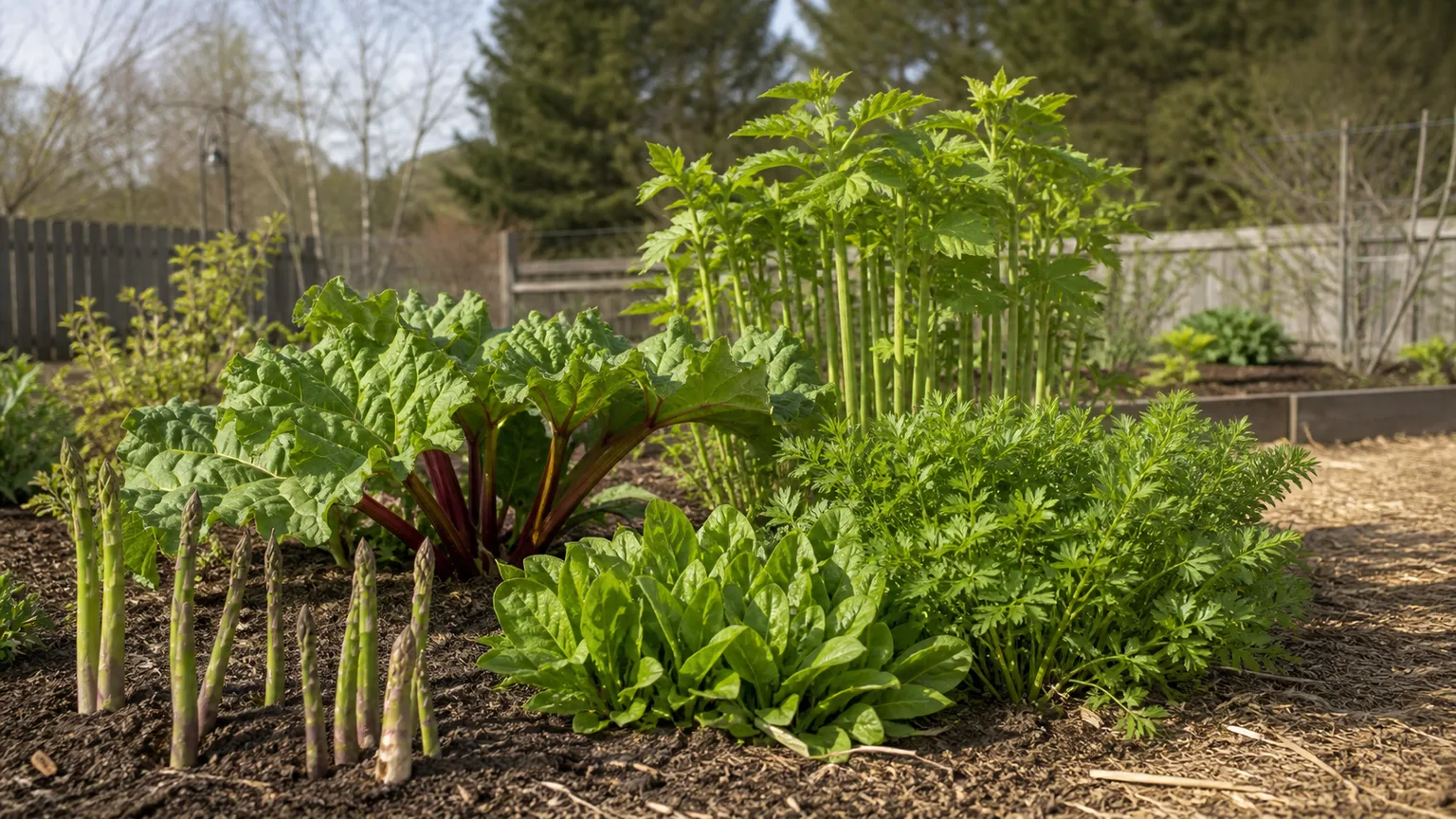
Perennial vegetables can make an edible garden feel less like a yearly reset. Instead of clearing every bed, starting every crop from seed, and waiting for a new root system to develop, you keep a productive plant in place and harvest from it season after season.
That does not mean these crops grow unattended. A perennial vegetable still needs water while it establishes, room to reach mature size, mulch, weed control, and sensible harvesting. The real advantage is that the work shifts from replanting to maintaining a permanent food-producing patch.
The eight crops below are worth considering because they offer different kinds of harvests: asparagus spears, rhubarb stalks, pungent roots, edible tubers, leafy greens, young shoots, flower buds, and culinary herbs. Choose by climate and garden space first; flavor comes second.
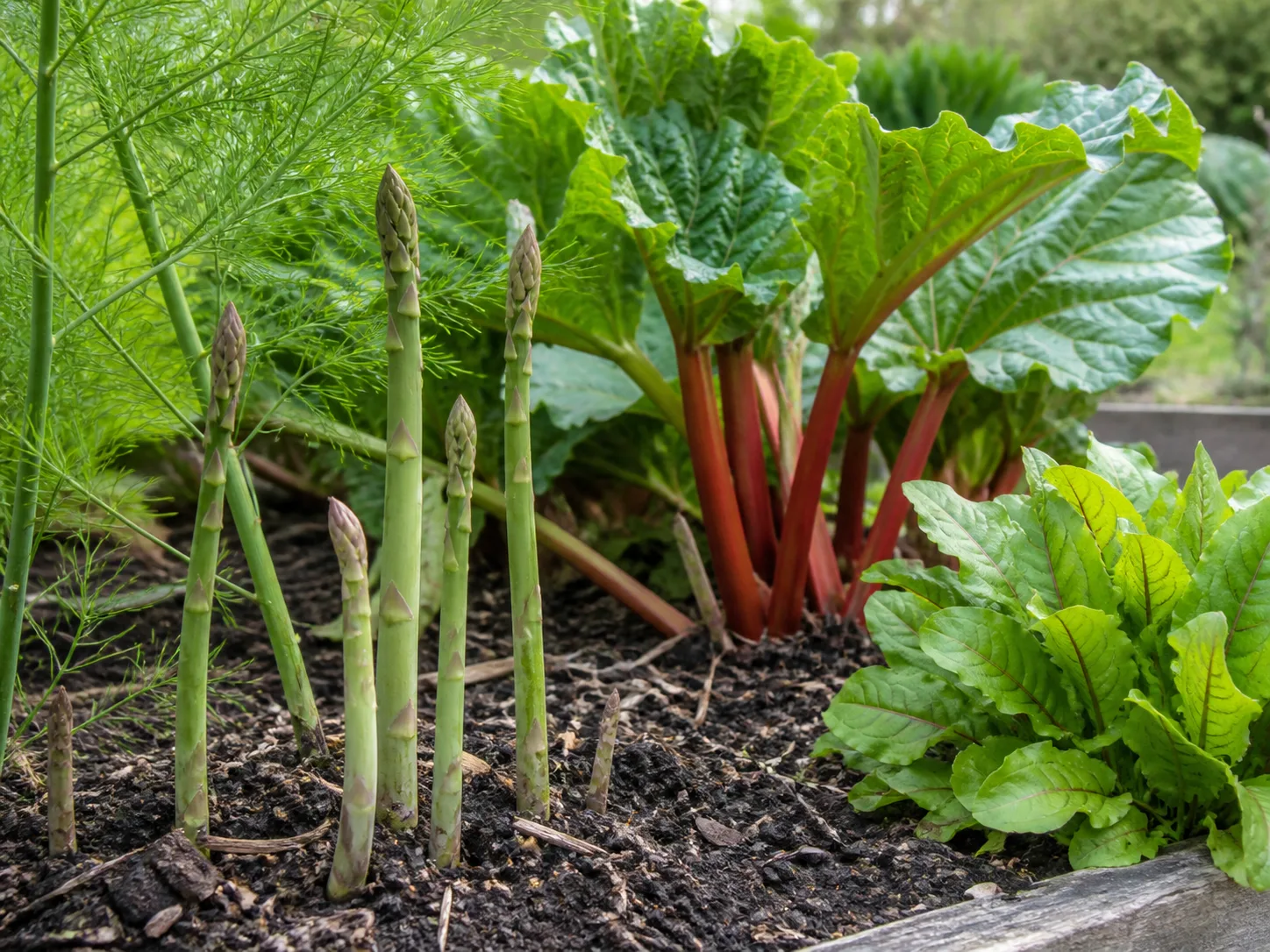
What makes a vegetable perennial?
A perennial vegetable is a crop whose crown, root system, bulb, rhizome, or tuber survives the dormant season and sends up new edible growth later. That definition is climate-dependent: a globe artichoke may live for years in a mild winter region but behave like an annual where freezing temperatures kill the crown. The same plant can therefore be perennial in one garden and seasonal in another.
Perennials also vary in how quickly they pay you back. Sorrel and lovage can provide light leaf harvests relatively soon, while asparagus needs a long establishment period before you can take a substantial crop. A useful way to judge the trade is to ask whether you are willing to reserve space now for a harvest that may improve over several years.
Choose the site before you choose the crop
Match the plant to your climate and microclimate
Start with your hardiness zone, but do not stop there. A plant’s survival rating does not guarantee a good harvest in a hot, humid summer, a wet clay bed, or a frost pocket. A south-facing wall, raised bed, windbreak, winter mulch, or protected patio can change the result, while poor drainage can undo an otherwise suitable zone match.
Most of the cool-temperate crops on this list prefer full sun and soil that drains freely while holding some moisture. Asparagus, for example, is listed by the RHS as a full-sun herbaceous perennial for moist but well-drained soil, and Penn State recommends avoiding compacted ground for asparagus production (RHS asparagus plant profile; Penn State Extension’s asparagus production guide).
Globe artichoke is the clearest climate exception. It appreciates a long growing season and mild winters, so gardeners in colder areas may need a protected site, winter mulch, or a willingness to grow it as an annual. By contrast, rhubarb, asparagus, sorrel, and lovage are usually better bets for gardens with real winter dormancy, although cultivar and local conditions still matter.
Give permanent crops permanent space
Do not squeeze a perennial into the middle of a bed you plan to rotate through tomatoes, beans, or lettuce. A mature rhubarb can occupy several square feet, asparagus develops a wide crown-and-root mat, and lovage becomes a tall clump. Put these plants at the edge of the kitchen garden, in a dedicated bed, or in an edible border where you can reach them without digging up their neighbors.
Prepare the soil before planting rather than trying to repair it around an established crown. Remove perennial weeds, loosen compaction, mix in finished organic matter, and fix drainage first. Mulch helps later, but it cannot turn a waterlogged planting hole into a healthy perennial bed.
Compare the eight perennial vegetables at a glance
| Crop | Main harvest | Best fit | First-year reality | Main caution |
|---|---|---|---|---|
| Asparagus | Spring spears | Dedicated sunny bed | Establishment, little harvest | Do not overharvest young crowns |
| Rhubarb | Leaf stalks | Cool climates, sun or light shade | No harvest in year one | Leaves are not edible |
| Horseradish | Roots | A contained sunny corner | May produce a usable root quickly | Tiny root pieces can resprout |
| Jerusalem artichoke | Fall tubers | Dedicated bed or barrier | Often productive early | Spreads aggressively |
| Lovage | Leaves and stems | Sun or partial shade with room | Light harvest after establishment | Large, tall clump |
| Sea kale | Shoots, leaves, buds | Cool coastal-style or well-drained sites | Slow to find and establish | Specialty plant; avoid wet soil |
| Sorrel | Tender leaves | Sun to partial shade | Light harvest can start early | Leaves become sharper as plants flower or age |
| Globe artichoke | Flower buds | Long, mild growing seasons | May need a second season | Winter cold can kill the crown |
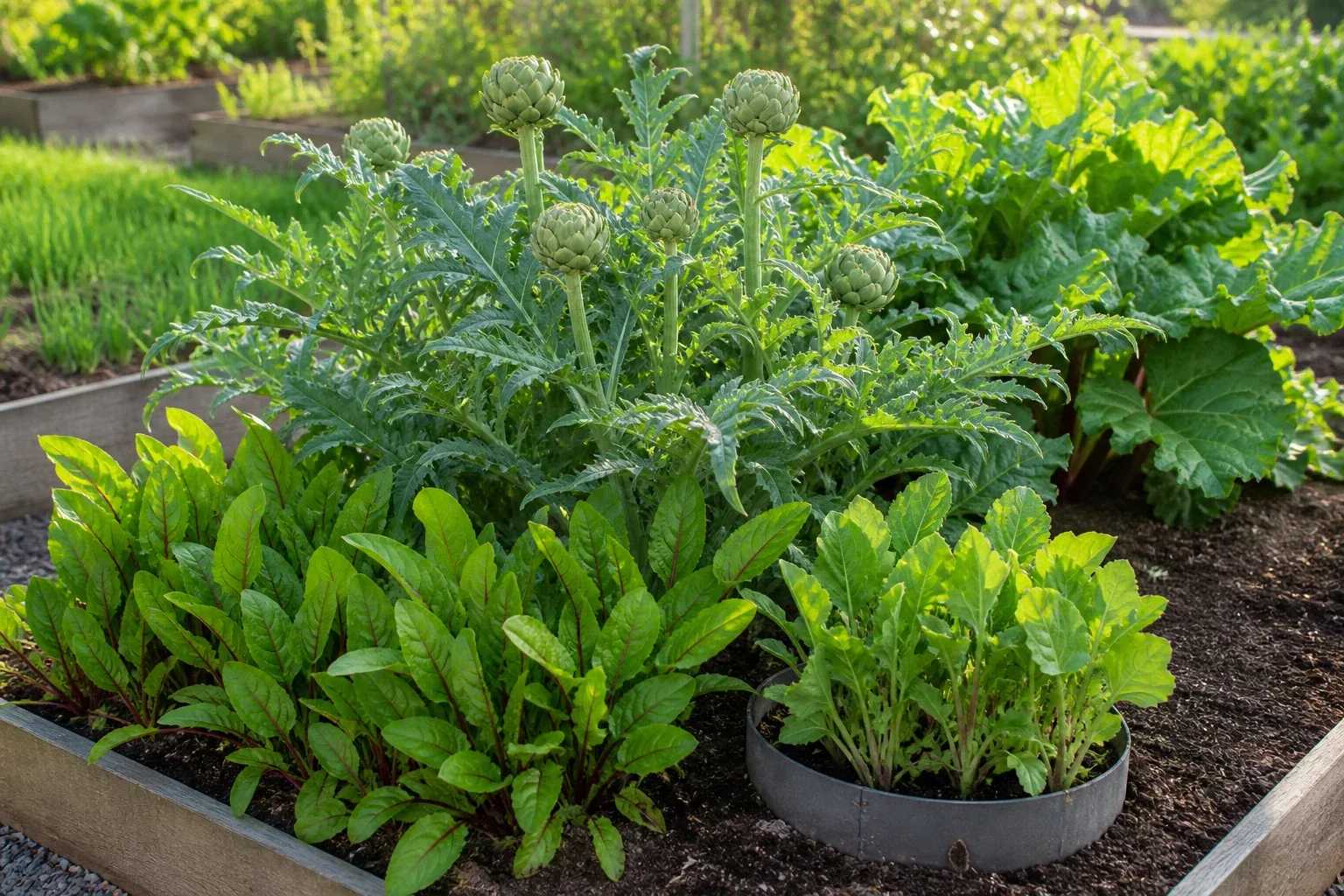
A mixed perennial bed can combine long-lived crowns with leafy crops, but give spreading plants their own contained space.
1. Asparagus rewards patience with a spring harvest
Asparagus is the classic long-term perennial vegetable. A well-planned bed can remain productive for 20 years or more, but the payoff depends on treating the first seasons as root-building years rather than as an all-you-can-eat harvest. University of Illinois Extension recommends a permanent location because the bed can last two or three decades, and notes that crowns planted in early spring are typically harvested beginning in the third year (University of Illinois Extension’s asparagus guide).
Buy one-year crowns from a reliable nursery and plant them in prepared, well-drained soil in full sun. All-male hybrids are often chosen for home beds because female plants spend energy producing berries and seedlings; the RHS also notes that seed-grown asparagus takes longer and may not produce the better-performing male plants (RHS asparagus cultivation guidance).
Do not judge a new asparagus bed by the thickness of its first spears. The crowns are building storage reserves below ground, and cutting too much too soon leaves the plant with less energy for the following year. If you want a faster start, crowns are usually a better choice than seed because seed adds another establishment season.
Protect the fern so next year’s spears return
After the spring harvest window, let the remaining spears expand into their tall, feathery fern. That foliage is not wasted growth; it is the plant’s solar panel, feeding the crown for the next spring. Keep the bed weed-free, water deeply during dry spells, and remove yellowed tops after frost if your local guidance recommends it.
Harvest mature spears when they are firm and several inches tall, snapping or cutting them at soil level. Penn State describes a gradually lengthening harvest season as plants mature, from a very short first harvest to roughly six or seven weeks once the bed is fully established (Penn State Extension’s asparagus production guide). Stop when the spears become thin or the planned harvest window ends; leaving the fern is part of the crop, not a sign that you missed your chance.
2. Rhubarb is productive, ornamental, and easy to overharvest
Rhubarb earns a permanent spot in both vegetable plots and ornamental borders. Its broad leaves and colored stalks make a strong early-season focal point, while the tart stalks work in pies, sauces, crisps, jams, and savory dishes. Penn State Extension describes rhubarb as a long-lived, low-care perennial that performs best in full sun, fertile well-drained soil, and a site with enough room for its mature spread (Penn State Extension’s rhubarb guide).
Plant a crown or division in spring or early fall, keeping the buds close to the soil surface rather than burying them deeply. Water regularly during the first couple of years and mulch around—not over—the crown to suppress weeds and reduce moisture swings. Remove a flower stalk at its base if one appears, because flowering takes energy away from leaf-stalk production.
Harvest the stalks safely
The patient approach matters here: take nothing in the first year and only a small amount in the second. From the third year onward, pull mature stalks with a slight twist, remove the leaf immediately, and stop harvesting when the remaining stalks become thin. Utah State University Extension recommends leaving a substantial share of the stalks in place so the crown can rebuild its reserves (USU Extension’s rhubarb guide).
Only the stalks belong in the kitchen. Do not eat rhubarb leaves; both Penn State and USU warn that the leaves contain toxic levels of oxalic acid. Discard the leaves safely or add them to a managed compost pile, and never use them as animal feed.
3. Horseradish is easy to grow but hard to remove
Horseradish is for gardeners who want a strong harvest and can commit to containment. The plant is forgiving about ordinary garden conditions, but its roots branch and spread; a small piece left behind during digging can produce another plant. The Missouri Botanical Garden recommends a quiet, sunny corner because horseradish can crowd neighboring plants and become difficult to eliminate (Missouri Botanical Garden’s horseradish profile).
Start with a root cutting or crown division in early spring. A buried container, isolated raised bed, or dedicated strip makes future harvesting easier and reduces the chance that root fragments will travel into a mixed vegetable bed. Utah State University Extension describes planting root cuttings on an angle and notes that buried containers can help limit spread (USU Extension’s horseradish guide).
Harvest in fall after cool weather, digging as completely as practical and saving clean side roots for replanting. Do not choose horseradish for a tiny garden simply because it is “low maintenance”; a crop that is easy to grow but hard to remove can become a long-term maintenance problem.
4. Jerusalem artichoke gives a big tuber crop with one major catch
Jerusalem artichoke, also called sunchoke, is a sunflower relative grown mainly for its knobbly underground tubers. It can produce a useful crop without the slow establishment period of asparagus, and the tall yellow flowers add late-season height. The crop is often listed among the hardiest perennial vegetables, but its vigor is exactly why it needs a dedicated location.
Plant clean tubers in spring in loose, reasonably fertile soil. Harvest the tubers in fall after the tops die back or after cool weather improves their flavor, then leave a few healthy pieces in the bed to regrow. Dig carefully and follow the crop over the next season; missed tubers can become volunteers.
Containment is not optional in a small mixed bed. Use a dedicated patch, a real root barrier, or a large bottomless container installed before planting, and keep the bed edge easy to inspect. If you do not want a plant that may spread beyond its original footprint, choose rhubarb, sorrel, or lovage instead.
One culinary caveat is worth knowing: sunchokes contain inulin, which can cause digestive discomfort for some people when eaten in large amounts. Cook a small portion first and see how you tolerate it rather than filling a basket on the first harvest.
5. Lovage supplies celery-like leaves and stems
Lovage is a tall, hardy herbaceous perennial with a strong celery-like flavor. The RHS describes it as a low-maintenance plant that forms a large clump, sends up flower stems, and can grow in a herb garden, vegetable plot, or flower border in sun or partial shade (RHS guide to growing lovage).
Give it more room than you think a packet of seed suggests. Leaves and young stems are useful in soups, stocks, sauces, and savory dishes, but the flavor is concentrated; you can use less lovage than you would celery. Regularly harvesting outer leaves keeps the plant useful, while a light mulch and deep watering during prolonged dry weather support the crown.
Lovage is a strong choice for a gardener who wants a reliable leafy crop but has some shade. It is a poor choice for a narrow path or a small container that will dry out quickly because the mature clump becomes large and top-heavy.
6. Sea kale brings edible shoots to a perennial border
Sea kale is a cool-climate perennial brassica with blue-green foliage and a mounding habit. Its young shoots, leaves, and flower buds can be eaten, and its silvery foliage can look at home in an ornamental edible border. It is less widely stocked than asparagus or rhubarb, so finding correctly identified plants or seed may be the hardest part of growing it.
Choose a sunny, sharply drained site and avoid treating it like a thirsty cabbage in heavy, wet soil. A light mulch protects the crown from temperature swings without burying it. In a small garden, place sea kale where its mature mound can expand without blocking a path.
Harvest lightly while the plant is establishing, taking young shoots and leaves without stripping the crown. If you want a reliable first perennial vegetable rather than a specialty experiment, start with asparagus, rhubarb, or sorrel and add sea kale after you have a suitable permanent bed.
7. Sorrel is the quickest leafy green on this list
Sorrel gives a perennial garden something the root and crown crops cannot: tender leaves for frequent small harvests. French sorrel has a clean lemony tang that works in salads, sauces, soups, and compound butter. It tolerates sun or partial shade, which makes it useful at the front of a perennial bed or under the edge of taller plants.
Start with a plant or division if you want a quicker harvest. Pick the outer leaves and leave the central growing point intact, then water during dry spells so new foliage stays tender. Removing flower stalks can help keep the plant focused on leaves, although sorrel will naturally slow or change flavor as the season becomes hot.
The main limitation is culinary rather than horticultural: sorrel’s acidity is assertive, and the leaves contain oxalic acid. Use it as a flavoring green rather than a bulk salad crop, and if you have a medical reason to limit oxalates, ask a qualified clinician how it fits your diet.
8. Globe artichoke is a perennial where winters cooperate
Globe artichoke is both a vegetable and a structural garden plant. The edible part is the immature flower bud, harvested while the bracts are still tight; if you let the buds open, the plant produces dramatic purple thistle-like flowers instead of dinner.
It is the most climate-sensitive crop in this group. In a mild winter region with a long growing season, a healthy plant can return for several years. In colder regions, a crown may need deep winter protection or may not survive reliably, so a gardener who wants predictable perennial behavior should check local cultivar recommendations rather than relying on a generic hardiness label.
Start with a nursery plant or a cultivar suited to your season. Give it full sun, fertile well-drained soil, and enough room for a broad plant. Harvest the central bud first, then smaller side buds as they reach usable size; leaving some buds to flower is worthwhile if the plant is also part of an ornamental border.
Build a low-maintenance perennial vegetable routine
What to do during the first year
The first year is when “low maintenance” is most often misunderstood. A new perennial crop has not yet built the deep or wide root system that lets an established plant handle short dry periods, so consistent watering and weed control matter more now than they will later.
Use this first-year sequence:
- Prepare the permanent bed. Remove perennial weeds, improve drainage, and mix in finished organic matter before planting.
- Label each crop. This prevents accidental digging, especially when a dormant crown disappears under mulch.
- Water deeply and check the soil. Keep the root zone evenly moist while new roots establish, but do not leave crowns sitting in saturated soil.
- Mulch after the soil warms. Keep mulch a few inches away from crowns and stems so the center does not stay wet.
- Resist the first big harvest. Let asparagus fern, rhubarb leaves, and leafy perennials build reserves before you begin taking more than a light crop.
After the first season, the routine becomes simpler: weed before plants are tall, refresh mulch, water during extended drought, remove spent or frost-damaged tops, divide crowded clumps when productivity drops, and inspect the edges of spreading crops. That is a manageable list, but it is still a list.
How to harvest without weakening the crown
Harvesting is a form of pruning. When you take a spear, stalk, leaf, shoot, or tuber, you remove stored energy or the tissue that would have fed the crown. The right question is not “Is this part edible?” but “Can this plant replace what I am taking before dormancy?”
For asparagus, stop early enough to let fern grow. For rhubarb, leave plenty of stalks and never eat the leaves. For sorrel and lovage, harvest outer leaves rather than stripping the center. For horseradish and sunchokes, dig thoroughly but leave only intentional planting pieces behind. For artichokes and sea kale, take the young edible parts while keeping enough foliage for the plant to recover.
If a plant produces thin stalks, small spears, sparse leaves, or weak regrowth, treat that as a harvest warning before you treat it as a fertilizer problem. Reduce harvesting, check moisture and drainage, clear weeds, and give the crown a full recovery season.
Conclusion
The best perennial vegetable is not the one that promises the least work; it is the one that matches your climate, cooking habits, and willingness to reserve space. Asparagus and rhubarb are dependable long-term anchors, sorrel and lovage give quicker leafy harvests, and horseradish or Jerusalem artichoke can be excellent only when you plan for their spread.
Start with one or two crops, prepare their permanent bed properly, and protect the crown during its establishment years. A small, well-managed perennial patch will give you more reliable food than a crowded collection of plants that never had enough room to mature.



